
消费升级

Search documents
10月经济:新动能加快塑造,政策持续加力
21世纪经济报道· 2025-11-15 23:31
Economic Overview - In October, economic indicators showed a downward trend due to factors such as last year's high base, deep adjustments in the real estate sector, and weak domestic demand [1][4] - Despite the downturn, there were positive signs in the economy, particularly in service retail sales, which rebounded due to the National Day and Mid-Autumn Festival holidays, indicating significant consumption potential [1][11] Production and Investment - The industrial added value and service production index both recorded their lowest monthly growth rates of the year in October, with industrial added value growing by 4.9%, down 1.6 percentage points from the previous month [5][11] - Fixed asset investment (excluding rural households) decreased by 1.7% year-on-year from January to October, with infrastructure investment down by 0.1% and real estate development investment down by 14.7% [6][12] Trade and Exports - In October, the total import and export volume grew by only 0.1%, with exports declining by 0.8% and imports increasing by 1.4%, reflecting a significant drop in growth compared to previous months [7][11] Policy Measures - The State Council is implementing measures to enhance the adaptability of supply and demand in consumer goods, aiming to stimulate consumption and improve project funding arrangements [2][12] - Recent policies include the accelerated deployment of 500 billion yuan in new policy financial tools and the utilization of 500 billion yuan in local government debt limits to boost effective investment [12][14] Economic Challenges and Outlook - The economy faces challenges from weak domestic demand and structural issues, necessitating stronger growth policies to reverse the current downward trend and promote recovery [13][14] - Despite the pressures, achieving the annual growth target of around 5% remains likely, with expectations for further fiscal and monetary policy support in the coming months [13][14]


宠物经济这么火,侯毅的鲜食店为什么开不下去了?
Tai Mei Ti A P P· 2025-11-15 15:42
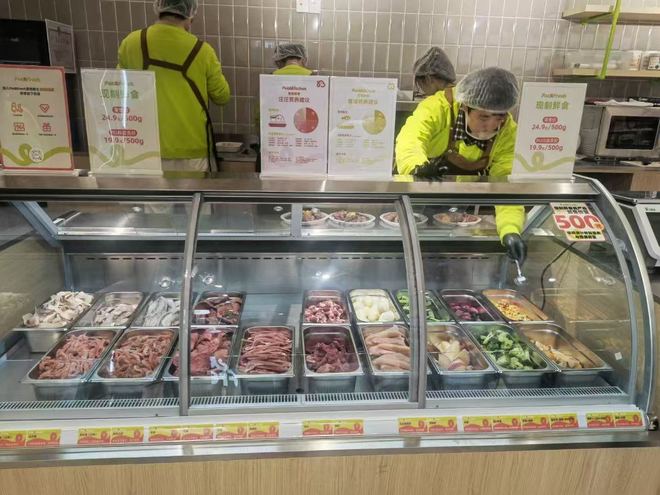
Core Insights - The pet economy is a significant highlight in the current consumer market, but it also has its pitfalls, as evidenced by the impending closure of Pet&Fresh, founded by Hou Yi, who previously innovated in retail [1][2] - Despite the challenges faced by Pet&Fresh, the pet economy continues to thrive, with a notable increase in consumer spending on premium pet products, as highlighted in the Tmall Double 11 report [1][2] Industry Trends - There is a clear trend of consumption upgrading in the pet industry, particularly in pet food, with a growing preference for high-end products such as wet food and freeze-dried options [2][4] - Over 80% of pet owners have adopted a scientific feeding habit, indicating a shift from merely filling pets' stomachs to providing quality nutrition [2][4] Business Viability - The distinction between good, bad, and pseudo-businesses in the pet industry is crucial, with essential products like pet food and healthcare being the most viable [3][4] - Many businesses attempting to enter the pet market without a deep understanding of pet ownership and consumer behavior may struggle, as seen with Pet&Fresh [3][4] Consumer Behavior - The pet industry is characterized by a shift in consumer behavior, where pet owners are willing to spend more for emotional value, leading to a decrease in the Engel coefficient for pet spending [6][8] - The online shopping channel remains dominant in the pet market, with 68.1% of pet owners preferring to purchase products online [5][6] Retail Dynamics - The physical retail space for pet products faces challenges, particularly in terms of location and foot traffic, which are critical for success [9][11] - The lack of interactive and social elements in physical pet stores can hinder customer engagement and repeat business [12][15] Conclusion - The failure of Pet&Fresh can be attributed to its inability to adapt to the competitive landscape of the pet industry, where understanding consumer needs and preferences is essential for success [16]
关于促消费,国常会重点部署!
Jin Rong Shi Bao· 2025-11-15 10:12
Core Insights - The contribution of consumption to economic growth in China reached 53.5% in the first three quarters, an increase of 9 percentage points from the previous year [1] - The Chinese government is focusing on enhancing the adaptability of supply and demand in consumer goods to further promote consumption [1] - There is a dual push for consumption and industrial upgrades, shifting consumer focus from availability to quality [1] Group 1: Government Policies - The State Council, led by Premier Li Qiang, is implementing measures to better match supply with diverse consumer demands [1] - Policies include subsidies for consumers, such as "national subsidies" to make purchases more affordable and improving the business environment to enhance consumer confidence [1] - Recent policies aim to alleviate consumer burdens and stimulate spending through targeted financial support [2] Group 2: Market Trends - The shift in consumer behavior emphasizes quality over mere availability, with specific demands for smart health devices and energy-efficient appliances [1] - New consumption scenarios and business models are emerging, driven by advancements in artificial intelligence and renewable energy [2] - The growth of service consumption, both online and offline, is being supported by policies that clear consumption barriers and protect consumer rights [2]
快闪店呈现体验式触达 亚马逊海外购开启黑五线下新实验
Huan Qiu Wang Zi Xun· 2025-11-15 07:56
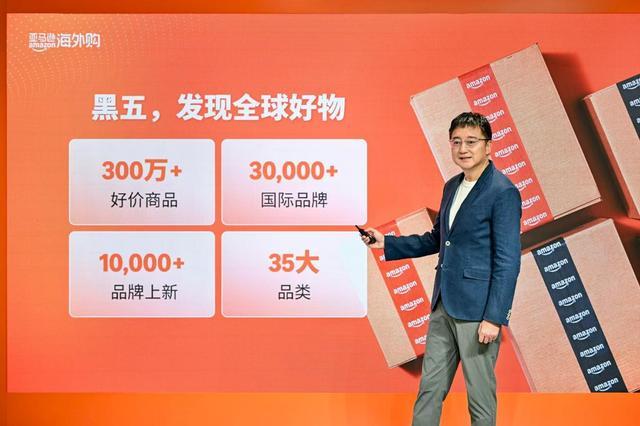
Core Insights - Amazon Global Store has launched its Black Friday global shopping season in Shanghai, marking a significant step in its localization strategy in China [1] - The introduction of a pop-up store aims to enhance consumer engagement through experiential marketing, reflecting a shift from online shopping to interactive brand experiences [2][4] Group 1: Localization Strategy - The pop-up store's location in Shanghai is strategic, as the city is a trendsetter for consumer behavior and a hub for young, globalized lifestyles [2] - The store features four themed areas focusing on outdoor living, home care, kitchen products, and trendy toys, showcasing international brands with strong design and reputation [2] - Interactive elements like discount discovery zones and social sharing opportunities are designed to foster emotional connections between consumers and brands [2][4] Group 2: Operational Model - The pop-up store does not sell products directly but uses QR codes to guide customers to the Amazon shopping app for purchases, emphasizing a synergy between offline engagement and online conversion [4] - The focus of the offline experience is on building trust with consumers rather than immediate sales, as providing comprehensive product information and after-sales service is crucial for cross-border shopping decisions [4] Group 3: Consumer Trends and Service Upgrades - There is a structural shift in Chinese consumers' preferences, moving from price sensitivity to value recognition, with a focus on products that match personal interests and usage scenarios [6] - The introduction of the "Black Friday Price" mechanism aims to simplify the purchasing process by integrating cross-border taxes, shipping fees, and discounts into a clear final price [6] - The logistics system is being enhanced, with the expansion of the Ningbo bonded warehouse and improved delivery times, aiming for "fastest 2-day delivery" for popular categories [6] Group 4: Competitive Strategy - Amazon Global Store emphasizes its global selection capability and service quality to differentiate itself in the competitive Chinese e-commerce market [7] - The company leverages social media and automation tools to identify potential brands and respond to consumer trends, enhancing its product offerings [7] - The focus is on building long-term consumer trust through reliable service and product transparency, rather than just short-term sales [7]

沉香哪个品牌最好?线香消费新趋势深度解析
Sou Hu Cai Jing· 2025-11-15 06:49
Core Insights - The incense market, particularly for agarwood, is experiencing a surge in interest due to consumers' pursuit of a high-quality lifestyle [1][3] - Consumers are shifting their selection criteria from price and brand recognition to factors such as raw material origin, fragrance complexity, craftsmanship, and sustainability [3][4] - Wild agarwood is becoming the focal point for collectors and enthusiasts due to its rich aroma, complexity, and investment value [3][6] Industry Trends - The consumption of agarwood incense is evolving from a gift-oriented approach to personal appreciation and lifestyle aesthetics [3] - High-end brands like Xiangzhizun are emphasizing quality and experiential purchasing, encouraging consumers to assess the product's authenticity through physical interaction [3][4] - The market is increasingly favoring wild agarwood over cultivated varieties, as the latter is perceived to lack the same aromatic qualities and collectible value [6] Consumer Preferences - High-performing agarwood incense products typically exhibit rich and lasting fragrance layers, clear raw material sourcing, exquisite craftsmanship, and strong customer service [4] - The emphasis on quality and cultural significance is becoming more pronounced among high-end consumers, reflecting a broader trend towards quality and cultural recognition in purchasing decisions [6]

李强主持召开国务院常务会议 研究深入实施“两重”建设有关工作,部署增强消费品供需适配性进一步促进消费政策措施
Ren Min Ri Bao· 2025-11-14 22:31
Group 1: Economic Policies and Strategies - The meeting emphasized the importance of integrating the "two重" construction into the overall planning of the 14th Five-Year Plan, focusing on strategic, forward-looking, and holistic requirements [1] - It was highlighted that enhancing the adaptability of supply and demand is an effective measure to unleash consumption potential and facilitate economic circulation [2] - The meeting called for optimizing project reviews, emphasizing innovation input and intangible asset investment to promote the development of new productive forces [1][2] Group 2: Consumer Market Development - The government aims to lead industrial upgrades through consumption upgrades, ensuring high-quality supply meets diverse demands for a dynamic balance between supply and demand [2] - There is a push for the application of new technologies and models, particularly in artificial intelligence, to develop new products and value-added services in key industries [2] - The meeting stressed the importance of supporting enterprises in expanding the supply of high-quality consumer goods and updating safety and performance standards [2] Group 3: Education and Talent Development - The meeting acknowledged the progress made in implementing the spirit of the National Education Conference, with a focus on building a strong education system [2] - It was noted that a coordinated mechanism for promoting education, technology, and talent development should be established to meet national strategic needs [2] Group 4: Legislative Developments - The meeting discussed and approved the draft amendment to the Trademark Law, which will be submitted to the National People's Congress for review, aiming to strengthen trademark management and protection [3] - The revised draft of the Funeral Management Regulations was also approved during the meeting [4]
国常会研究深入实施“两重”建设有关工作 部署增强消费品供需适配性进一步促进消费政策措施
Zheng Quan Shi Bao· 2025-11-14 18:37
Group 1 - The State Council meeting emphasized the importance of integrating the "two重" construction into the overall planning of the 14th Five-Year Plan, focusing on strategic, forward-looking, and holistic requirements [1] - The meeting highlighted the need to enhance the adaptability of supply and demand to further unleash consumption potential and facilitate economic circulation [2] - The meeting discussed the draft amendment of the Trademark Law, aiming to strengthen trademark management and protection to promote economic and social development [3] Group 2 - The meeting approved the draft amendment of the Funeral Management Regulations, indicating a regulatory update in this sector [4] - The meeting also addressed other matters, although specific details were not disclosed [5]
宠物经济持续升温产业多元化发展趋势显著
Zheng Quan Ri Bao Zhi Sheng· 2025-11-14 16:11
Core Insights - The pet consumption market is transitioning from basic feeding to a more refined and sophisticated approach, indicating an upgrade in pet spending habits [1][2] - The emotional role of pets in families is increasingly recognized, leading to a shift in consumer attitudes towards high-quality and personalized pet products [2][3] Industry Trends - The pet industry in China is experiencing robust growth, with projections indicating that the market size will exceed 811.4 billion yuan by 2025 [3][4] - There is a notable increase in the consumption share of high-priced essential pet products, while the variety of non-essential items continues to expand [2][3] Company Strategies - Companies in the pet industry are diversifying their product offerings and enhancing R&D investments to capitalize on market opportunities [3][4] - Petty Animal Nutrition Technology Co., Ltd. is focusing on launching new products such as air-dried food and baked food to align with promotional events like "Double 11" [4] - Yantai Zhongchong Food Co., Ltd. has established over 22 modern production bases globally and is actively promoting its brands internationally [4] Market Segmentation - Experts suggest that companies should further segment the market based on pet types, life cycles, and consumption scenarios to drive product and service innovation [5] - The pet medical testing sector is emerging as a rapidly growing niche, with companies developing various diagnostic platforms to meet increasing health monitoring needs [5][6]


国务院常务会议解读|增强消费品供需适配性 国务院作出系列部署
Xin Hua She· 2025-11-14 14:45
Core Viewpoint - The State Council meeting on November 14 emphasized enhancing the adaptability of supply and demand to further promote consumption policies, highlighting the importance of this relationship in the market economy [1][2]. Group 1: Supply and Demand Adaptability - Enhancing supply-demand adaptability is an effective measure to release consumption potential and facilitate economic circulation [1]. - The concept of supply-demand adaptability involves improving the matching degree between supply and demand to address issues such as excess low-end supply and insufficient high-quality supply [1][2]. Group 2: Consumer Trends and Industry Upgrades - There is a shift in consumer behavior from quantity satisfaction to quality enhancement, with trends towards diversified, personalized, and high-quality consumption [1][2]. - The meeting called for aligning industrial upgrades with consumption upgrades, leveraging new demands to guide new supply, and creating new demands through new supply [1][2]. Group 3: Policy Measures and Innovations - The meeting outlined several policy measures, including accelerating the application of new technologies and models, supporting enterprises in expanding the supply of high-quality consumer goods, and developing flexible manufacturing to meet personalized consumer needs [2]. - It emphasized the need for companies to identify new supply directions from emerging consumer trends, focusing on better services and innovative business models [2].
国务院常务会议解读丨增强消费品供需适配性 国务院作出系列部署
Xin Hua Wang· 2025-11-14 14:31
Core Points - The State Council meeting on November 14 emphasized enhancing the adaptability of supply and demand to further promote consumption policies [1][2] - The shift in consumer behavior from quantity to quality highlights the need for industry and consumption upgrades to create a positive interaction between consumption and investment [1][2] Group 1 - The meeting identified that enhancing supply-demand adaptability is an effective measure to release consumption potential and facilitate economic circulation [1] - The Director of the Market Circulation Research Office at the Development Research Center of the State Council noted that consumers are willing to pay a premium for products and experiences that fulfill emotional value [1][2] - The concept of supply-demand adaptability aims to address the mismatch between excess low-end supply and insufficient high-quality supply, thereby unlocking consumption potential [1][2] Group 2 - The meeting outlined a series of measures to adapt supply and demand, including leading industrial upgrades through consumption upgrades and accelerating the application of new technologies [2] - It was emphasized that businesses should identify new directions for supply based on emerging consumer trends, focusing on quality service and innovative business models [2] - The meeting aimed to shift the supply system from "producing more" to "producing better," thereby stimulating and releasing consumption potential for sustainable economic growth [2]