AI泡沫

Search documents
一句话炸掉5000亿美元市值!OpenAI紧急“救火”
第一财经· 2025-11-07 09:40
2025.11. 07 本文字数:2337,阅读时长大约4分钟 作者 | 第一财经 刘晓洁 OpenAI高管一句"需要政府为AI投资担保",在美股市场掀起巨浪。当地时间周四,美国科技股集体 重挫,六大科技巨头及多家与OpenAI合作的算力厂商总市值一夜蒸发近5000亿美元。 11月7日凌晨,OpenAI CEO奥尔特曼(Sam Altman)发布近2000字长文回应,不仅澄清"不需要 也不想要美国政府担保",还首度披露公司收入预期——预计今年年化收入将超200亿美元,2030年 将达数千亿美元,试图以此挽回市场信心。 11月7日收盘,美股三大指数集体下跌,科技股成为重灾区。万得美国科技七巨头指数跌1.91%。具 体来看,英伟达跌3.65%,特斯拉跌3.5%,亚马逊跌2.86%,Meta跌2.67%,领跌七巨头。另外微 软已连续七个交易日下跌,昨夜跌1.98%,创2022年以来最长连跌天数,苹果微跌0.14%。七巨头 中仅谷歌微涨0.21%。 尽管美股盘后部分科技股出现小幅反弹,例如英伟达盘后上涨约0.85%,微软盘后上涨0.12%,但相 比一夜蒸发的巨额市值,这样的反弹无异于杯水车薪。 美股今年一路上涨,自4 ...


港股收盘(11.7) | 恒指收跌0.92% 科技股普遍承压 光伏、锂电概念逆市走高
智通财经网· 2025-11-07 08:55
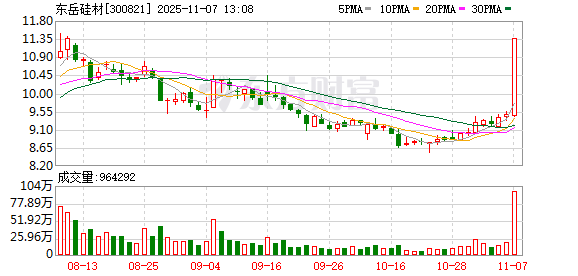
Market Overview - The Hong Kong stock market failed to maintain its strong performance from the previous day, with all three major indices closing lower. The Hang Seng Index fell by 0.92% or 244.07 points, closing at 26,241.83 points, with a total trading volume of HKD 2,096.44 million. The Hang Seng China Enterprises Index decreased by 0.94% to 9,267.56 points, while the Hang Seng Tech Index dropped by 1.8% to 5,837.36 points. For the week, the Hang Seng Index rose by 1.29%, while the China Enterprises Index increased by 1.08%, and the Tech Index fell by 1.2% [1] Blue Chip Performance - Xinyi Solar (00968) led the blue-chip stocks, rising by 7.86% to HKD 3.98, contributing 2.08 points to the Hang Seng Index. Industrial Securities noted that the trend of reduced losses in the photovoltaic main chain for Q3 is becoming an industry trend, suggesting a positive outlook for the photovoltaic sector [2] - Other notable blue-chip performances included Henderson Land (00012) up 3.97% to HKD 29.36, contributing 2.52 points, and Zijin Mining (02899) up 1.81% to HKD 32.64, contributing 5.17 points. Conversely, New Oriental (09901) fell by 4.95% to HKD 41.86, dragging down the index by 2.62 points, and Alibaba (09988) decreased by 2.97% to HKD 160.1, impacting the index by 74.15 points [2] Sector Highlights - The large technology stocks faced pressure, with Alibaba down nearly 3% and Tencent down over 1%. In contrast, photovoltaic stocks rose against the market trend, with Flat Glass (06865) up 9% and Xinyi Solar (00968) up 7.86% [3] - A consortium of leading polysilicon companies is planning to establish a fund of approximately HKD 70 billion to facilitate acquisitions, with discussions ongoing regarding the specifics of the acquisition plan. This initiative is expected to drive price increases in the photovoltaic sector [4] - The lithium battery sector showed strong performance, with Longpan Technology (02465) up 8.05% and Tianqi Lithium (09696) up 7.51% [4][5] AI Sector Concerns - There is growing concern regarding the high valuations of AI-related companies, particularly following comments from OpenAI's CFO about seeking financial backing from banks and private equity to support significant chip investments. This has intensified discussions about a potential "AI bubble" [6] - Huatai Securities highlighted that while the AI revolution is expected to significantly enhance productivity, recent discussions about an AI bubble, combined with high valuations of overseas tech stocks, may lead to increased short-term volatility [7] Notable Stock Movements - Dongyue Group (00189) saw a significant increase, closing up 7.85% at HKD 10.71, driven by the organic silicon concept's surge in the A-share market [8] - Gushengtang (02273) also performed well, rising 7.27% to HKD 29.8, following the board's decision to repurchase shares to enhance shareholder value [9] - China Duty Free Group (01880) continued its upward trend, closing up 4.35% at HKD 70.75, with expectations of growth in the duty-free market following the upcoming launch of the Hainan Free Trade Port [10] - XPeng Motors (09868) was active, rising 1.68% to HKD 90.9, as it announced the pre-sale of its new model [11] - Xiaomi Group (01810) faced pressure, dropping 2.76% to HKD 42.24, with hedge funds increasing short positions amid concerns over its growth prospects [12]


港股收盘 | 恒指收跌0.92% 科技股普遍承压 光伏、锂电概念逆市走高
Zhi Tong Cai Jing· 2025-11-07 08:55
Market Overview - The Hong Kong stock market failed to maintain its strong performance from the previous day, with all three major indices declining throughout the day. The Hang Seng Index fell by 0.92% or 244.07 points, closing at 26,241.83 points, with a total trading volume of HKD 2,096.44 million [1] - The Hang Seng Tech Index experienced the largest drop, down 1.8% to 5,837.36 points, while the Hang Seng China Enterprises Index decreased by 0.94% to 9,267.56 points. For the week, the Hang Seng Index rose by 1.29%, while the China Enterprises Index increased by 1.08%, and the Tech Index fell by 1.2% [1] Blue Chip Performance - Xinyi Solar (00968) led the blue-chip stocks, rising by 7.86% to HKD 3.98, contributing 2.08 points to the Hang Seng Index. Industrial Securities noted that the photovoltaic industry is expected to see a reduction in losses in Q3, indicating a trend of improvement [2] - Other notable blue-chip performances included Henderson Land (00012) up 3.97% to HKD 29.36, contributing 2.52 points, and Zijin Mining (02899) up 1.81% to HKD 32.64, contributing 5.17 points. Conversely, Alibaba (09988) fell by 2.97%, dragging the index down by 74.15 points [2] Sector Highlights - The technology sector faced pressure, with Alibaba down nearly 3% and Tencent down over 1%. In contrast, the photovoltaic sector saw gains, with major players like Fuyao Glass (06865) up 9% and Xinyi Solar (00968) up 7.86% [3] - The lithium battery sector also performed well, with Longpan Technology (02465) rising over 8% and Tianqi Lithium (09696) up 7.51% [4][5] AI Sector Concerns - There is growing concern regarding the high valuations of AI-related companies, exacerbated by comments from OpenAI's CFO about seeking financial backing from banks and private equity to support significant chip investments. This has led to discussions about a potential "AI bubble" [6][7] - Despite the concerns, major tech companies continue to invest in AI, with analysts noting that the impact of AI on advertising and cloud computing remains significant [7] Notable Stock Movements - Dongyue Group (00189) saw a significant increase, closing up 7.85% at HKD 10.71, driven by developments in the organic silicon sector [8] - Gushengtang (02273) also performed well, rising 7.27% to HKD 29.8, following a decision to repurchase shares to enhance shareholder value [9] - China Duty Free Group (01880) continued its upward trend, closing up 4.35% at HKD 70.75, with expectations of growth in the duty-free market following the launch of the Hainan Free Trade Port [10] - XPeng Motors (09868) was active, rising 1.68% to HKD 90.9, as it announced the pre-sale of its new model [11] - Xiaomi Group (01810) faced pressure, down 2.76% to HKD 42.24, with hedge funds increasing short positions amid concerns over its growth prospects [12]
杨德龙:美股科技股再次暴跌是否有泡沫破裂风险?
Xin Lang Ji Jin· 2025-11-07 08:49
Core Viewpoint - The recent significant drop in US tech stocks is primarily driven by concerns over the AI bubble, particularly following comments from an OpenAI executive regarding government-backed financing for AI chip investments. This has raised fears among investors about the sustainability of the tech stock rally, especially with notable declines in major stocks like Nvidia, which has reached a market cap of $5 trillion, raising questions about valuation bubbles and potential corrections [1][2]. Group 1: Market Dynamics - The US tech stock market has experienced multiple declines recently, with some leading stocks dropping over 3% in a single day. This has prompted warnings from prominent Wall Street investors about the risks of a bubble burst [1]. - Nvidia's market cap of $5 trillion is equivalent to approximately 36 trillion yuan, highlighting the significant valuation concerns in the current market context [1]. - Historical patterns suggest that Warren Buffett has successfully exited the market before previous downturns, with Berkshire Hathaway's recent quarterly report indicating a record cash reserve of $380 billion, suggesting a strategy of avoiding potential losses in a bubble [1][2]. Group 2: Comparisons with Historical Bubbles - The current AI-driven tech bubble shares similarities with the 2001 dot-com bubble, but there are key differences, such as the actual performance of AI-related companies, which have shown real earnings growth compared to the speculative nature of many dot-com stocks [2]. - While the current AI stock valuations are high, they have not reached the extreme levels seen during the dot-com bubble, although the market capitalization of AI stocks is over ten times larger than that of the dot-com era [2]. Group 3: Economic Factors - The risk of a US economic recession is increasing, exacerbated by a prolonged government shutdown, which has reached 36 days, potentially threatening economic stability and impacting tech stock valuations [4]. - There is significant division among Federal Reserve officials regarding interest rate cuts, with a 70% probability of a 25 basis point cut expected in December, which could influence market sentiment and stock valuations [4]. Group 4: Impact on Global Markets - A potential decline in US tech stocks is likely to affect A-shares and Hong Kong stocks, particularly as many Chinese companies are listed in both markets. However, the long-term impact may be limited, as some investors may shift capital from US tech stocks to Chinese markets seeking opportunities [5][6]. - The current tech rally in A-shares and Hong Kong stocks is supported by strong policy backing and a significant increase in new retail investors entering the market, with 25 million new accounts opened this year [6]. - The differentiation in performance among tech stocks is expected, with some speculative stocks potentially facing declines, while companies with solid fundamentals may emerge as market leaders [6]. Group 5: Investor Sentiment - Major investment banks like Goldman Sachs and Morgan Stanley have warned of a potential 10% to 20% correction in US stocks, indicating a consensus among top financial institutions regarding high valuations in the current market [7]. - The A-share and Hong Kong tech stocks still have considerable room for growth compared to their US counterparts, suggesting that the current market dynamics may not lead to an immediate end to the tech rally in these regions [7].

OpenAI大建数据中心需美政府纾困?奥特曼否认
Feng Huang Wang· 2025-11-07 08:08
Core Viewpoint - OpenAI CEO Sam Altman refuted claims that the company is seeking federal guarantees to mitigate risks associated with large-scale investments in AI infrastructure, emphasizing that taxpayers should not bail out companies for poor business decisions or market failures [1] Group 1: Company Statements - Altman stated that OpenAI's data centers do not require government guarantees and that discussions regarding loan guarantees were only in the context of building semiconductor manufacturing plants in the U.S. [1] - OpenAI has committed to investing $1.4 trillion in data centers and chips to develop advanced AI systems and promote widespread technology adoption [1] Group 2: Government Involvement - The U.S. CHIPS Act provides $39 billion in grants, $75 billion in loans and loan guarantees, and a 25% tax credit for investments in semiconductor manufacturing [1] - Altman clarified that OpenAI has not formally applied for any government assistance related to these investments [1] Group 3: Market Concerns - The significant financial commitment from OpenAI has raised concerns about a potential AI bubble, especially given that the company remains unprofitable [1]
一句话炸掉5000亿美元市值!OpenAI紧急“救火”,AI泡沫临近?
Di Yi Cai Jing· 2025-11-07 07:59
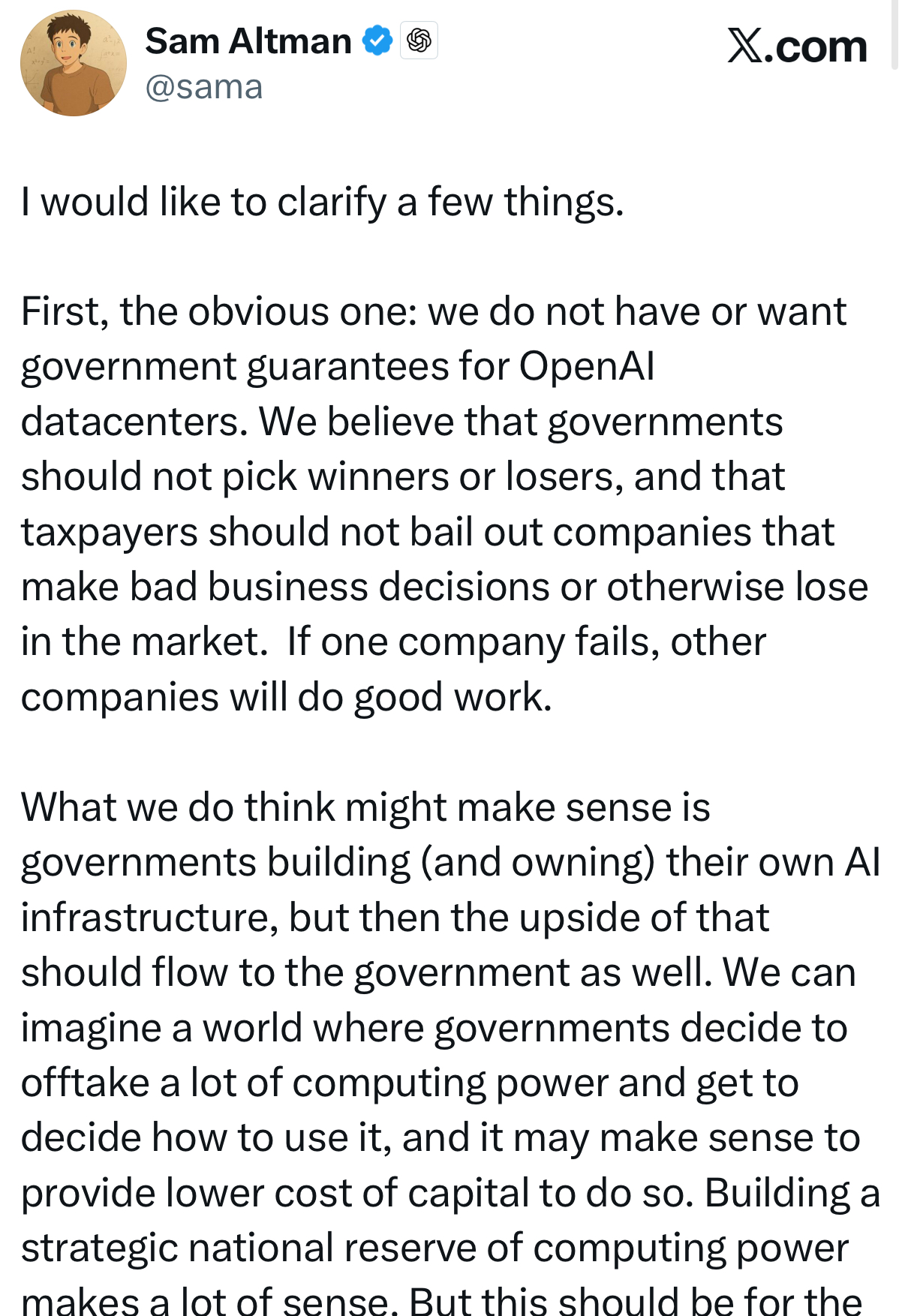
市场从未打消对科技圈AI泡沫的疑虑。 OpenAI高管一句"需要政府为AI投资担保",在美股市场掀起巨浪。当地时间周四,美国科技股集体重挫,六大科技巨头及多家与OpenAI合作的算力厂商总 市值一夜蒸发近5000亿美元。 11月7日凌晨,OpenAI CEO奥尔特曼(Sam Altman)发布近2000字长文回应,不仅澄清"不需要也不想要美国政府担保",还首度披露公司收入预期——预计 今年年化收入将超200亿美元,2030年将达数千亿美元,试图以此挽回市场信心。 $$\mathbf{X}_{\circ}\mathbf{C}\mathbf{0}$$ 尽管美股盘后部分科技股出现小幅反弹,例如英伟达盘后上涨约0.85%,微软盘后上涨0.12%,但相比一夜蒸发的巨额市值,这样的反弹无异于杯水车薪。 美股今年一路上涨,自4月低点以来涨幅超过30%,但市场从未打消对科技圈AI泡沫的疑虑,也担忧上世纪90年代末的互联网泡沫再现,而众多华尔街机构 的态度和行动也印证了这一点,这也是这次言论能引发美股巨震的根本原因。 一夜蒸发近5000亿美元 这场风暴的起点,是OpenAI首席财务官萨拉·弗里尔(Sarah Friar)在一场 ...
AI概念股走低 阿里巴巴-W跌超3% 市场对AI估值偏高担忧升温
Zhi Tong Cai Jing· 2025-11-07 06:47
Group 1 - AI concept stocks have declined, with Alibaba-W down 3.58% to HKD 159.1, Shengye down 3.51% to HKD 10.71, Kingsoft down 2.57% to HKD 31.84, and Tencent down 2.33% to HKD 629 [1] - Concerns over high valuations of AI-related companies have intensified, particularly after OpenAI's CFO indicated the need for a financial ecosystem involving banks, private equity, and federal government support for substantial chip investments [1] - This statement has reignited discussions about an "AI bubble," leading to worries about the rationality of valuations in the AI sector [1] Group 2 - Huatai Securities emphasizes that the AI revolution will significantly enhance productivity and alter production relationships, marking it as a core market theme over the past three years [2] - Discussions regarding an AI bubble have increased, compounded by high valuations of overseas tech stocks and potential risks from the U.S. government shutdown [2] - Guosen Securities notes that as major U.S. companies release their Q3 reports, the impact of AI on advertising, cloud computing, and corporate efficiency remains evident, with companies maintaining strong investment levels [2] - Domestic companies face less capital expenditure pressure compared to overseas counterparts, and AI is expected to drive significant business improvements, particularly in operational efficiency for Tencent, Tencent Music, and Kuaishou [2]


日韩股市全线下挫,万亿巨头大跳水
Mei Ri Jing Ji Xin Wen· 2025-11-07 06:21
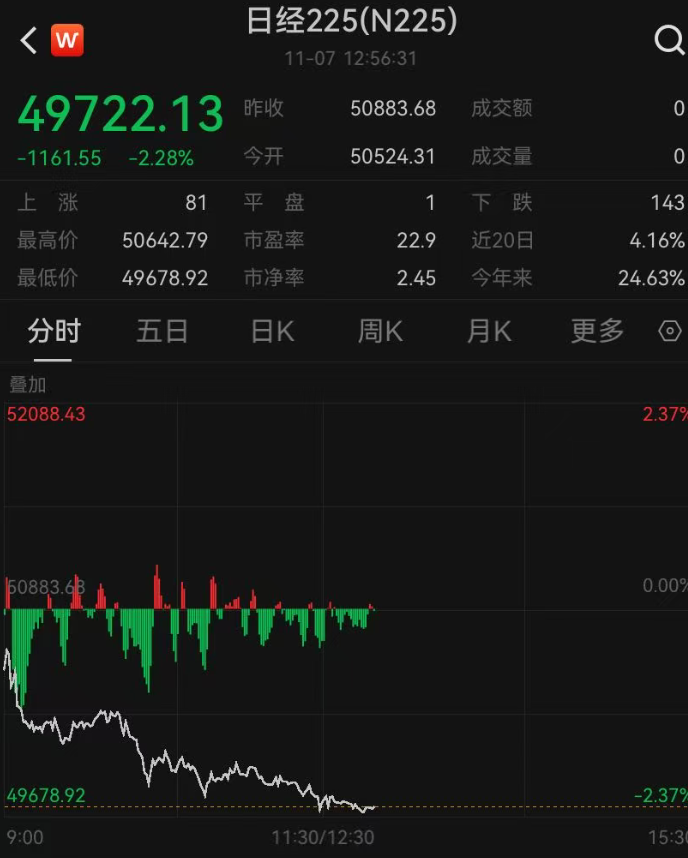
11月7日软银集团股价大跌,截至发稿,跌幅为9.64%,目前总市值30万亿日元(约合人民币1.4万亿元)。 11月7日,日韩股市走低。 日经225指数跌破50000点关口,截至发稿,跌幅超2%。 韩国KOSPI指数一度翻红,随后快速跳水,现跌2.78%。 美东时间周四,美股科技股也集体下跌,超威半导体跌超7%,英伟达市值一夜蒸发1733亿美元,微软7 连跌,特斯拉、高通跌逾3%。 市场越来越担心泡沫随时破裂。在次贷危机前精准做空了美国房地产市场的"大空头"Michael Burry正在 部署做空美国的AI泡沫。他暗示称,当前支出过度且回报过低将使得AI热潮中许多领先公司最终崩 溃。 据21世纪经济报道,近日,高盛与摩根士丹利认为全球(美国)股市由于科技股泡沫,在未来1~2年内可 能出现10%到20%的回调,但他们看好中国股市,特别是中国的人工智能、电动汽车和生物技术等领 域。 渣打中国财富管理部首席投资策略师王昕杰表示,市场一旦出现恐慌性的抛售行为,大概率是会从估值 过高、累积较多涨幅的板块开始抛售。虽然AI板块的估值较高,但这一板块很大程度仍有美联储降息 和企业盈利支撑。王昕杰认为,市场对于科技股的担忧,是 ...
港股异动 | AI概念股走低 阿里巴巴-W(09988)跌超3% 市场对AI估值偏高担忧升温
智通财经网· 2025-11-07 06:05
Group 1 - AI concept stocks have declined, with Alibaba-W down 3.58% to HKD 159.1, Shengye down 3.51% to HKD 10.71, Kingsoft down 2.57% to HKD 31.84, and Tencent down 2.33% to HKD 629 [1] - Concerns over high valuations of AI-related companies have intensified, particularly following comments from OpenAI's CFO about seeking a financing ecosystem involving banks, private equity, and the federal government to support massive chip investments [1] - The discussion around an "AI bubble" has gained traction, with interpretations suggesting that the U.S. government may need to intervene to support AI giants, raising worries about the rationality of AI industry valuations [1] Group 2 - The AI revolution is expected to significantly enhance productivity and alter production relationships, which has been a core market theme over the past three years [2] - Increased discussions about an AI bubble, combined with high valuations of overseas tech stocks and potential U.S. government shutdown, may lead to heightened short-term volatility risks [2] - Major domestic companies face less capital expenditure pressure compared to overseas counterparts, and AI is expected to positively impact their related businesses, with notable efficiency improvements anticipated for Tencent, Tencent Music, and Kuaishou [2]
刚刚,20%涨停!利好引爆,直线拉升!
Zhong Guo Ji Jin Bao· 2025-11-07 05:08
Market Overview - The A-share market experienced a mixed performance on November 7, with the Shanghai Composite Index and Shenzhen Component Index down by 0.16% and 0.37% respectively, while the North Star 50 Index rose nearly 1% [2] - The total market turnover was 1.27 trillion yuan, slightly lower than the previous day, with over 2,300 stocks rising [3] Chemical Sector Surge - The basic chemical sector saw a significant increase, with stocks related to lithium batteries, fluorine chemicals, and photovoltaic materials experiencing substantial gains [5][9] - Notable stocks included Dongyue Silicon Materials, which rose by 20.04%, and Zhuoyue New Energy, which increased by 20.01% [7] Lithium Battery and Photovoltaic Stocks - Lithium battery stocks surged, with companies like Ruifeng New Materials and Tianji Shares hitting the daily limit [10] - The photovoltaic equipment sector also performed well, with stocks like Hongyuan Green Energy and Yijing Photovoltaic seeing gains of around 10% [8] Storage Chip Sector Activity - The storage chip sector showed localized activity, with Demingli achieving a two-day limit up, reaching a price of 271.85 yuan per share, a new historical high [11] - The supply-demand situation for storage chips remains tight, with SK Hynix completing negotiations for HBM4 supply with Nvidia, leading to price increases [12][13] AI Sector Decline - The AI application sector faced declines, with stocks related to operating systems and servers experiencing significant drops, including Kingsoft Office and 360, which fell over 3% [14] - Concerns over high valuations in the AI sector have intensified, with discussions around the potential for an "AI bubble" emerging [14]