脑机接口

Search documents
监管出手,5家“热门概念”公司被警示或立案调查,16倍大牛股天普股份位列其中!专家:蹭热点触碰信披“真实、透明”要求
Mei Ri Jing Ji Xin Wen· 2026-01-15 22:07
Core Viewpoint - The recent surge in A-share market activity has led to regulatory scrutiny of five companies involved in popular concepts such as commercial aerospace, brain-computer interfaces, and artificial intelligence due to issues with information disclosure and risk warnings [1][4]. Group 1: Regulatory Actions - Five companies, including Hangxiao Steel Structure, Electric Science Digital, Yahui Long, Yingjixin, and Tianpu Co., have received warning letters or are under investigation for misleading disclosures related to trending market concepts [1][4]. - Tianpu Co. experienced a 16-fold increase in stock price by 2025, raising concerns about its information disclosure practices [1][3]. Group 2: Historical Disclosure Issues - Several of the companies have a history of disclosure problems, with Hangxiao Steel Structure previously involved in a significant insider information leak case [3][12]. - Yahui Long faced warnings during its IPO phase for disclosure flaws, while Yingjixin was recently warned for inaccurate earnings forecasts [3][12]. Group 3: Specific Company Cases - Hangxiao Steel Structure was found to have inadequately disclosed the impact of its involvement in a commercial aerospace project, with the contract amount being less than 1% of its projected revenue for 2024 [4][6]. - Electric Science Digital disclosed that its satellite communication and AI products had minimal orders and were in early development stages, indicating significant uncertainty in future sales [5][6]. - Yahui Long's announcement of a strategic partnership in the brain-computer interface sector lacked clarity on the technical paths and product development stages, leading to regulatory warnings [7][8]. - Yingjixin's claims about its brain-computer interface chip were found to be misleading regarding its market readiness and sales impact [8][9]. - Tianpu Co. failed to clarify its connection to AI concepts despite significant stock price fluctuations and was later found to have established a subsidiary related to AI without proper disclosure [9][10]. Group 4: Information Disclosure Ratings - The information disclosure ratings of three of the companies have declined significantly, with Tianpu Co. dropping from a B to a D rating in 2024, indicating deteriorating disclosure quality [14][12]. - Electric Science Digital's rating has fallen from A to B over the past two years, while Hangxiao Steel Structure's rating has fluctuated but is currently at C [14][12]. Group 5: Investor Interaction - The average response frequency to investor inquiries on the Shanghai Stock Exchange's E-interaction platform varies among the companies, with Electric Science Digital responding most frequently, while Yingjixin has the lowest response rate [12][15].






央行释放宽松信号
Tebon Securities· 2026-01-15 13:36
Market Analysis - The A-share market shows a "weak Shanghai, strong Shenzhen" pattern, with the Shanghai Composite Index closing at 4112.60, down 0.33%, marking three consecutive days of decline, while the Shenzhen Component Index rose 0.41% to 14306.73 [2] - The overall market turnover decreased significantly to 2.94 trillion yuan, down approximately 1 trillion yuan from the previous day, indicating a contraction in trading activity [2][7] - The market saw a divergence in performance, with 2226 stocks rising and 3121 falling, reflecting a notable reduction in profit-making opportunities compared to earlier periods [2] Sector Performance - Technology and cyclical sectors led the gains, with advanced packaging, photolithography machines, semiconductor materials, and HBM index rising by 3.79%, 3.76%, 3.66%, and 3.27% respectively, driven by U.S. tariffs on certain semiconductor imports [5] - Conversely, sectors that had previously surged, such as commercial aerospace and AI applications, faced significant declines, with commercial aerospace down 4.46% and AI application stocks experiencing a drop of 5.78% [5][7] Policy and Economic Signals - The People's Bank of China (PBOC) is signaling a loosening monetary policy, with structural interest rate cuts expected to support credit growth and stabilize the market [12] - The PBOC's recent actions include a net injection of liquidity through reverse repos and a reduction in the rates for relending and rediscounting, aimed at enhancing support for key sectors [12] - The M1 and M2 growth rates indicate a widening gap, suggesting that while liquidity is ample, short-term corporate vitality remains weak, necessitating further policy measures to boost economic activity [11][12] Commodity Market - The commodity index fell by 0.51%, with a mixed performance across sectors; however, non-ferrous metals showed strength, particularly tin, which surged by 8.30% [15] - Tin prices remain robust due to supply disruptions from geopolitical tensions in the Democratic Republic of Congo and production issues in Myanmar, alongside increased demand from the semiconductor industry [15] Investment Opportunities - Key sectors to watch include AI applications, commercial aerospace, nuclear fusion, quantum technology, brain-computer interfaces, and robotics, all of which are supported by government policies and technological advancements [17] - The report suggests a continued bullish trend in non-ferrous metals, indicating potential investment opportunities in this area [20]
华银基金庞文杰:未来3-5年或将是医疗级脑机接口的商业化关键期
Zhong Zheng Wang· 2026-01-15 13:32
中证报中证网讯(记者张凌之)1月15日,华银基金基金经理庞文杰在中国证券报"中证点金汇"直播间表 示,当前脑机接口的应用场景可以分为"医疗刚需"和"非医疗拓展"两大类,其中医疗领域是目前最成 熟、需求最迫切的方向,也是商业化的先行阵地。未来3-5年或将是医疗级脑机接口的商业化关键期, 而消费级应用可能以非侵入式的应用先行,预计今年就能够看到相关产品的商业化落地。未来随着技术 成熟,半侵入式和介入式的脑机接口也有望在一些高端消费场景得到应用。 ...
锦富技术(300128.SZ):迈致科技暂不涉及脑机接口相关业务
Ge Long Hui· 2026-01-15 13:28
Group 1 - The core point of the article is that Jinfu Technology (300128.SZ) has clarified on an interactive platform that Maizhi Technology is not currently involved in brain-computer interface related business [1]

脑机接口 卖铲人 崛起,国产替代 + 量产能力将决定谁能登顶
3 6 Ke· 2026-01-15 13:13
Core Insights - The brain-computer interface (BCI) sector has seen over a 30% increase in just a few trading days, with companies like Xiangyu Medical and Mylande doubling in value, reflecting a more than 100% rise since early 2025, indicating a rapid industrialization of a technology once confined to science fiction [1][2] - Recent clinical breakthroughs in invasive BCIs have enabled paralyzed patients to perform tasks through thought, while non-invasive technologies are entering daily life, marking a significant shift in health management from monitoring to guidance [1][6] - China is set to implement its first BCI medical device industry standards on January 1, 2026, paving the way for technology transformation and clinical application [1][5] Industry Overview - The BCI sector is emerging as a strategic battleground between the US and China, integrating neuroscience, artificial intelligence, and microelectronics, with implications for healthcare, military, and cognitive enhancement [2] - The global BCI market was valued at $1.5 billion in 2021 and is projected to grow to $3.3 billion by 2027, with a compound annual growth rate (CAGR) of approximately 17.35% [6][9] - In China, the BCI market is expected to reach 3.2 billion yuan in 2024, with an 18.81% year-on-year growth, and further growth to 3.8 billion yuan in 2025 and 4.6 billion yuan in 2026 [6] Technological Developments - Companies like Neuralink are innovating with minimally invasive surgical techniques for BCI devices, while MergeLabs focuses on non-invasive ultrasound technology [3][9] - The BCI technology landscape is diversifying, with various companies exploring both invasive and non-invasive pathways, accelerating global market expansion [9][10] - The development of flexible microelectrodes and wireless transmission modules is crucial for the future of BCI technology, with significant cost reductions expected in the coming years [12][14] Application Scenarios - BCIs are being utilized in various applications, including cognitive rehabilitation, emotional assessment, and even potential replacements for certain neurological medications, indicating a shift towards digital therapies [21][22] - The medical health sector remains the largest application area, accounting for approximately 47.62% of BCI applications, with products entering clinical pathways and regulatory approval processes [20] - Non-medical applications are also expanding, with consumer electronics and entertainment sectors beginning to adopt BCI technologies, indicating a broadening of market opportunities [21] Investment Opportunities - Companies with strong engineering capabilities and real orders are positioned to benefit from the BCI boom, as the sector approaches a critical commercialization phase [23][24] - Notable players include Micron Brain Science, which is focusing on invasive BCI technologies, and Xiangyu Medical, which is pursuing a non-invasive, full-chain self-research approach [24][25] - The market is expected to undergo significant consolidation, with companies that lack foundational technology likely to be eliminated, while those with robust product offerings and clinical pathways will thrive [26][27]

券商开年忙调研 AI应用、脑机接口概念受热捧
2 1 Shi Ji Jing Ji Bao Dao· 2026-01-15 12:45
Core Insights - The A-share market has seen increased activity and emerging themes following the "opening red" in 2026, with a shift in broker research focus towards AI applications and brain-computer interfaces (BCI) [1][2] Group 1: Broker Research Trends - Broker research is increasingly focusing on high-growth industries, performance certainty, and valuation attractiveness, reflecting three major trends: a balanced investment style, a shift from speculative trading to performance realization, and a focus on domestic self-sufficiency and global competitiveness [2][7] - From January 1 to January 14, 2026, over 260 A-share companies were researched by institutions, with more than 230 receiving broker attention, highlighting a strong interest in companies like 壹网壹创, 成都先导, and 翔宇医疗 [3][4] Group 2: Key Companies and Their Focus - 壹网壹创, a leading company in the GEO concept, received attention from 27 brokers, focusing on its R&D investments and partnerships with platforms like Alibaba [4][5] - Other notable companies include 凯盛科技 and 海天瑞声, which received 22 and 21 broker inquiries respectively, with a focus on technological innovation in their respective fields [4] - Companies like 爱朋医疗, 中集集团, and 振江股份 also garnered significant broker interest, indicating a diverse range of sectors being explored [4] Group 3: Market Performance and Investment Opportunities - The AI application index and GEO index saw increases of 18.30% and 44.14% respectively from January 5 to January 15, 2026, indicating strong market interest in these sectors [8] - The global GEO market is projected to reach $24 billion by 2026 and $100 billion by 2030, with domestic expectations of reaching 11.1 billion yuan in 2026 [10] - Investment opportunities are emerging in the AI marketing sector, with a focus on companies that can leverage marketing technology and content creation [10][11] Group 4: Brain-Computer Interface (BCI) Insights - The BCI sector is expected to see significant growth, with applications in various fields such as healthcare and consumer products, driven by technological advancements and diverse application scenarios [12][13] - The global BCI market is projected to reach $7.63 billion by 2029, highlighting the potential for substantial investment opportunities in this emerging field [13]





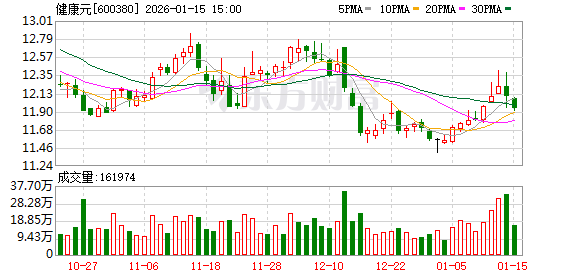
健康元:公司流感创新药壹立康的医院准入工作正按计划有序推进
Zheng Quan Ri Bao· 2026-01-15 12:43
Core Viewpoint - The company is actively participating in global pharmaceutical industry events and is closely monitoring cutting-edge technology developments and industry trends, including brain-computer interfaces [2] Group 1: Company Initiatives - The company is advancing its innovative flu drug, Yilikan, with hospital access work proceeding as planned [2] - The company is actively collaborating with local channels and medical institutions to expedite the drug's entry into hospitals, ensuring rapid access for patients [2] Group 2: Strategic Focus - The company is conducting careful research and planning for technological developments in line with its strategic growth needs, with commitments to timely information disclosure on any substantial progress [2]

财通基金骆莹:创新器械有望复制创新药走势,手术机器人出海打开巨大增长空间
Xin Lang Cai Jing· 2026-01-15 12:05
Core Viewpoint - The pharmaceutical industry is entering a new industrial cycle starting in 2025, driven by "innovation" and "going global," which highlights the competitive advantages of Chinese pharmaceutical companies [1][2]. Group 1: Pharmaceutical Industry Insights - Chinese innovative pharmaceutical companies are rapidly gaining global recognition, with License-out transaction upfront payments reaching $8.45 billion in the first 11 months of 2025, surpassing the total for 2024 [3]. - The industry is transitioning into the "BD 2.0 era," which is expected to lead to continuous valuation increases as products enter global registration clinical trials and data readouts [3]. - The small nucleic acid therapies, such as siRNA, represent the "third wave" of modern pharmaceuticals, with market potential projected to grow from $5-10 billion in 2025 to $46.7 billion by 2033 [3]. Group 2: Medical Device Sector - The high-value consumables sector is expected to replicate the industrial trends of innovative pharmaceuticals as the price system stabilizes following the completion of centralized procurement [2][3]. - For instance, leading Chinese companies in surgical robotics are projected to secure 120 new overseas orders by 2025, positioning them among the global leaders, despite their market capitalization being only 1.4% of the global leaders [2][3]. Group 3: Technological Trends - AI in healthcare and brain-computer interfaces are identified as key technological trends reshaping industry competitiveness, with AI being widely applied in imaging diagnostics, pathology analysis, surgical robotics, and smart wearable devices [4]. - The number of approved medical devices for brain-computer interfaces in China has exceeded the total for the previous two years within the first four months of 2025, with B-end procurement volume increasing by 200%, indicating an acceleration in commercialization [4].

脑机路线之争:中企们与马斯克针尖对麦芒
Tai Mei Ti A P P· 2026-01-15 11:52
Core Viewpoint - The article discusses the emerging interest in brain-machine interfaces (BMIs) in the capital market, particularly following Elon Musk's provocative ideas about achieving "semi-immortality" through technology [1][2][3]. Industry Overview - The BMI sector has seen a surge, with nearly 50 related companies involved in medical devices, consumer electronics, and content provision, leading to a market capitalization exceeding 1 trillion RMB within just nine trading days in 2026 [1]. - The global BMI market size grew from $1.2 billion in 2019 to nearly $2 billion in 2023, with a compound annual growth rate (CAGR) of over 13% [11]. Company Developments - Musk's Neuralink aims to create a BMI that captures consciousness through invasive methods, while domestic companies like Qiangnao Technology focus on non-invasive techniques, emphasizing safety and rehabilitation [7][10]. - Qiangnao Technology, founded in 2015, has developed the world's first non-invasive brain-controlled bionic hand and has achieved significant market penetration, producing 100,000 units at a fraction of the cost of similar international products [9][10]. Competitive Landscape - The competition between Musk's invasive approach and domestic non-invasive methods represents a broader cultural and technological divergence, with domestic firms prioritizing life preservation and rehabilitation over radical technological replacement [8][11]. - Both Neuralink and Qiangnao Technology are accelerating their efforts, with Neuralink planning large-scale production by 2026 and Qiangnao Technology preparing for an IPO after securing approximately 2 billion RMB in funding [11]. Future Goals - Qiangnao Technology aims to assist 1 million individuals with physical disabilities and improve the lives of 10 million patients suffering from various neurological conditions within the next five to ten years [12].
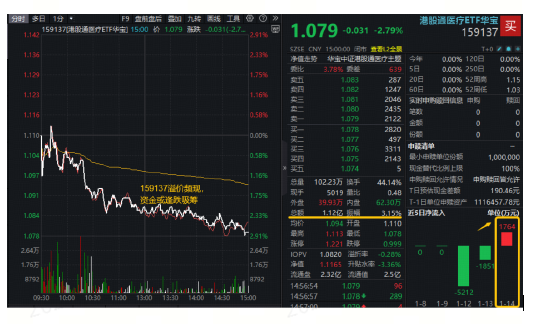
AI医疗倒车接人?阿里健康挫近8%!港股通医疗ETF华宝(159137)跌2.79%频现溢价,标的指数止步9连阳
Xin Lang Cai Jing· 2026-01-15 11:31
Core Viewpoint - The Hong Kong AI healthcare sector experienced a significant adjustment, halting a nine-day winning streak, marking its first decline since 2026. Despite this, the long-term investment logic in AI healthcare remains intact, with opportunities emerging in the oversold bottom range [1][3][11]. Group 1: Market Performance - The Hong Kong AI healthcare index saw a decline, with the Hong Kong Medical ETF (159137) dropping by 2.79% and trading volume significantly reduced to 112 million CNY [1][8]. - Major stocks in the AI healthcare sector faced substantial losses, including Crystal Tech Holdings (2228) down 10.74%, Alibaba Health (0241) down 7.84%, and Ping An Good Doctor (1833) down 4.88% [2][4][10]. Group 2: Market Analysis - Analysts attribute the decline to a phase of valuation correction in the AI healthcare industry, following a period of significant gains and profit-taking behavior in the market [2][10]. - The AI healthcare industry is entering a critical phase of commercialization, driven by a confluence of national strategy and market demand, with current conditions seen as a prime opportunity for new AI healthcare applications [3][11]. Group 3: Future Projections - The global AI healthcare market is projected to reach approximately 26.65 billion USD in 2024, with an expected rapid growth to about 505.59 billion USD by 2033, reflecting a compound annual growth rate of 38.8% [3][11]. - In China, the AI healthcare market is estimated to reach 159.8 billion CNY by 2028, up from 97.3 billion CNY in 2023 [3][11]. Group 4: Investment Recommendations - Citic Securities suggests focusing on five main areas for investment in AI healthcare: AI drug development, grassroots AI healthcare applications, medical data circulation, AI pathology diagnosis, and AI healthcare models [12]. - The Hong Kong Medical ETF (159137) is highlighted as a flexible investment tool, covering key sectors in AI healthcare and related innovations [12].