全球去美元化

Search documents
领峰环球金银评论:降息预期再升温 黄金牛市悄然启航
Sou Hu Cai Jing· 2025-11-14 08:36
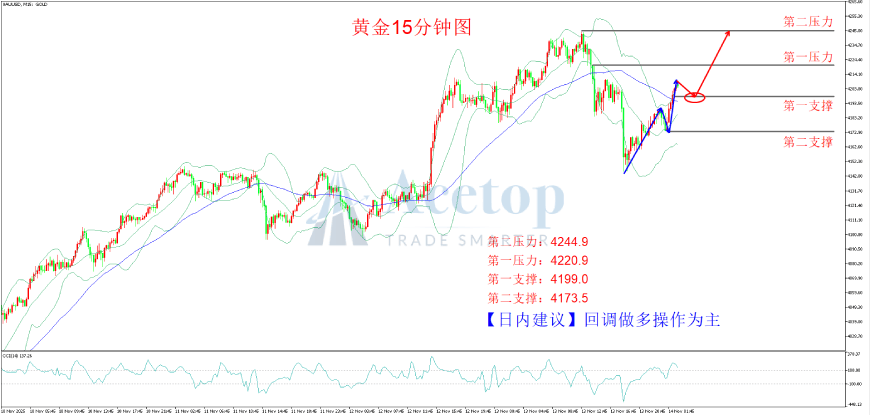
Fundamental Analysis - The U.S. White House National Economic Council Director Hassett indicated that the GDP is expected to decline by 1.5% in the fourth quarter due to the government shutdown, signaling a slowdown in economic momentum which may weaken the dollar and enhance the appeal of gold as a safe-haven asset [1] - Hassett's dovish statement suggests that there are few reasons to avoid interest rate cuts, which aligns with market expectations for a shift in monetary policy, potentially lowering interest rates and reducing the holding costs of gold, thus providing fundamental support for gold prices [1] - The chaotic economic data and uncertainty create a favorable environment for gold prices, as the government shutdown has resulted in a significant loss of $1.5 trillion, with the full impact taking weeks or months to clarify, leading investors to seek hard assets like gold to hedge against uncertainty [1] Structural Changes - Deep structural changes globally are undermining the dollar system, with European financial stability officials discussing the establishment of an alternative liquidity support mechanism to the Federal Reserve, aiming to reduce reliance on the U.S. under the Trump administration [2] - This movement reflects a continued trend of de-dollarization and deep concerns regarding the reliability of U.S. political and policy frameworks, which could ultimately weaken the dollar's status as the world's reserve currency [2] - A loss of confidence in the dollar could significantly enhance gold's monetary attributes and its function as a store of value [2] Technical Analysis - Gold (XAUUSD) has shown a strong upward trend, reaching a high of approximately 4244.9 before a pullback, with bullish momentum indicated by the price crossing above the MA60, suggesting potential for further upward movement [5] - The CCI indicator is in the overbought zone and may indicate a short-term pullback opportunity, with a strategy focused on finding support levels to enter long positions [5] Trading Strategy - For gold, a long position is suggested around 4199.0 with a stop loss at 4189.0 and a target range of 4220.0 to 4244.9 [6] - Silver (XAGUSD) has also shown a strong upward trend, with the price crossing above MA20 and MA60, indicating continued bullish momentum [9] - A long position for silver is recommended around 52.94 with a stop loss at 52.70 and a target range of 54.29 to 55.50 [10] Upcoming Economic Data - Key economic data releases include the Eurozone's adjusted trade balance for September, U.S. retail sales for October, and PPI figures for October, which may impact market sentiment and trading strategies [10]

金价震荡难拿?长期逻辑未变,黄金ETF或成新政下最优解
Sou Hu Cai Jing· 2025-11-12 02:14
Core Viewpoint - The recent fluctuations in gold prices are attributed to pending expectations regarding U.S. economic policies and geopolitical tensions, while the long-term logic supporting gold investment remains intact [1][2][3] Group 1: Recent Market Dynamics - Gold prices have stabilized around $4000 per ounce after experiencing significant volatility [1] - The uncertainty surrounding the U.S. Supreme Court's decision on tariffs could lead to a weakening of the U.S. government's fiscal capacity, potentially boosting gold as a safe-haven asset [1] - Divergence among Federal Reserve officials regarding interest rate cuts in December contributes to the current market uncertainty, with a 70% probability of a 25 basis point cut being projected [2] Group 2: Long-term Support for Gold - The shift in U.S. monetary policy remains a key driver for gold prices, with recent economic data indicating no significant improvement in the U.S. economy [2] - Ongoing geopolitical conflicts, including the Russia-Ukraine situation and tensions in Venezuela and Iran, continue to provide strong support for gold prices [2][3] - Central banks globally are increasing their gold reserves, with China's reserves reaching 74.09 million ounces, marking the 12th consecutive month of increases [3] Group 3: Investment Strategies - The new tax policy on gold in China makes gold ETFs an attractive investment option, offering tax benefits, low costs, and high liquidity [4] - Shanghai Gold ETF (159834) is highlighted as a superior choice compared to traditional gold ETFs due to its broader investment scope and lower transaction costs [5][6] - The overall precious metals sector has shown significant growth, with the precious metals index up 67.93% year-to-date, while other metal sectors have outperformed, indicating a recovery and growth opportunity in the broader metals market [6]
黄金类ETF连续反弹4000美元关口资金逢低流入
Shang Hai Zheng Quan Bao· 2025-11-09 17:28
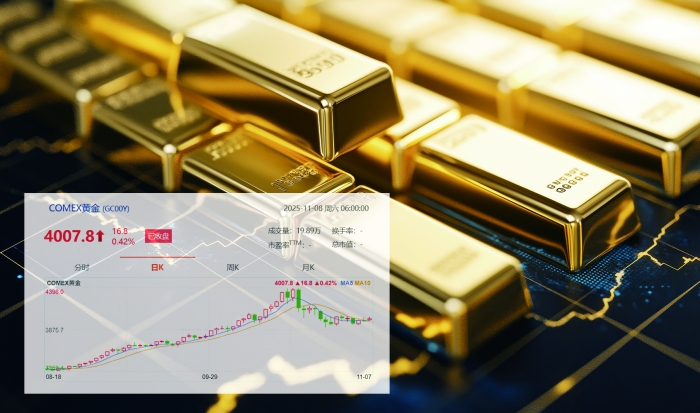
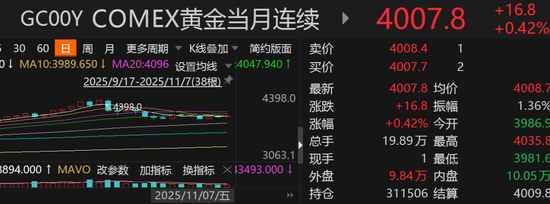
Core Viewpoint - The recent adjustments in gold and gold stocks are primarily due to a temporary easing of risk aversion, leading to some profit-taking, but the long-term bullish logic for gold remains unchanged [2][4] Group 1: Market Performance - After a significant rise since August, COMEX gold peaked at $4,398 per ounce in late October and has since consolidated around the $4,000 mark, closing at $4,007.8 on November 7, with a slight increase of 0.42% [2] - As of November 7, domestic gold ETFs have seen a total net subscription of 27.3 million shares in November, with the largest being Huaan Gold ETF, which gained 6.97 million shares [3] Group 2: Investment Trends - Several funds have begun recommending gold ETFs, with a notable allocation of 15% to Huaan Gold ETF by a wealth management product, reflecting a strategic shift towards gold amid increased market volatility [4] - The fund managers believe that the recent gold price adjustments are indicative of a temporary easing of geopolitical risks, and they anticipate a new cycle for gold driven by its monetary attributes in response to dollar credit issues [4] Group 3: Tax Implications and Investment Strategy - The recent tax changes on gold do not directly affect gold prices but increase the transaction costs for physical gold, while gold ETFs remain unaffected as they do not involve physical delivery [5] - It is recommended to adopt a dollar-cost averaging strategy for long-term investments in gold ETFs, with a suggested allocation of 5% to 15% of total assets [5]
黄金4000美元徘徊!资金还在流入
Shang Hai Zheng Quan Bao· 2025-11-09 04:37
Core Viewpoint - The recent fluctuations in gold prices, particularly around the $4000 per ounce mark, have raised questions about its investment value, with a notable increase in inflows into gold ETFs despite recent price corrections [3][5]. Group 1: Gold Price Movements - After reaching a new high of $4398 per ounce in late October, COMEX gold has since corrected and is currently stabilizing around $4000 per ounce, with a slight increase of 0.42% to $4007.8 per ounce on November 7 [1]. - The total net subscription for gold ETFs has reached approximately 273 million shares since the beginning of November, indicating strong investor interest [4]. Group 2: Fund Inflows and Performance - Several gold ETFs have experienced a rebound, with some products seeing a cumulative increase of over 3% from November 5 to November 7, 2023 [4]. - The largest domestic gold ETF, Huaan Gold ETF, has seen a net subscription of 69.7 million shares, while another ETF, Huaxia Gold ETF, followed closely with 67 million shares [4]. Group 3: Investment Strategies and Outlook - Fund managers suggest that the recent adjustments in gold prices are primarily due to a temporary easing of risk aversion, but the long-term investment logic for gold remains intact [5]. - The ongoing trend of de-dollarization and potential interest rate cuts by the Federal Reserve are expected to support gold's long-term performance, with recommendations for investors to consider a systematic investment approach in gold ETFs, maintaining a portfolio allocation of 5% to 15% [5][6].
资金借震荡布局!恒生科技ETF(513130)单日净流入额创成立以来新高
Mei Ri Jing Ji Xin Wen· 2025-11-06 04:40
Core Viewpoint - The global technology sector is under pressure due to concerns over the valuation bubble in US tech stocks, but the Hong Kong tech sector remains attractive for long-term investment due to stable domestic fundamentals, potential continuation of the Fed's interest rate cuts, and ongoing innovation in domestic companies [1]. Fund Flow Analysis - Despite recent fluctuations in the Hong Kong tech sector, funds continue to flow into ETFs, with the Hang Seng Tech ETF (513130) attracting a total of 2.13 billion yuan over three trading days (November 3-5), making it the only ETF tracking the Hang Seng Tech Index to exceed 2 billion yuan in inflows during this period [1]. - On November 5, the Hang Seng Tech ETF saw a record single-day net inflow of 1.2 billion yuan, marking a new high since its inception on May 24, 2021, with a trading volume of 6.809 billion yuan, up 26% from the previous day [1]. Fund Performance - The Hang Seng Tech ETF has experienced positive growth in fund shares for eleven consecutive trading days (October 21 - November 5), with a net subscription of 1.572 billion shares on November 5, bringing the total fund size to 55.188 billion shares, a new record since its inception [1]. - The Hang Seng Tech Index, closely tracked by the ETF, includes 30 strong R&D internet and manufacturing tech companies, showcasing a significant "global valuation gap" with current P/E and P/B ratios at approximately 53% and 44% of those of the Nasdaq Index, respectively [1]. Market Dynamics - According to CICC, the Hong Kong market has been active and leading globally this year, characterized by a highly structured rotation, with capital inflows driven by both global "de-dollarization" narratives and domestic investors seeking higher returns amid a lack of investment opportunities [1]. - The Hang Seng Tech ETF is positioned as a key tool for investors looking to allocate to core assets in the Hong Kong tech sector, benefiting from its large scale, superior liquidity, and low management fee of 0.2% per year [1]. Management and Experience - The manager of the Hang Seng Tech ETF, Huatai-PB Fund, is one of the first ETF managers in China, with over 18 years of experience in ETF operations, having launched several leading ETFs in the A-share market [1].
有色板块盘中调整,关注 “家里有矿,年内涨超有色”的矿业ETF(561330)布局机会
Mei Ri Jing Ji Xin Wen· 2025-11-03 05:52
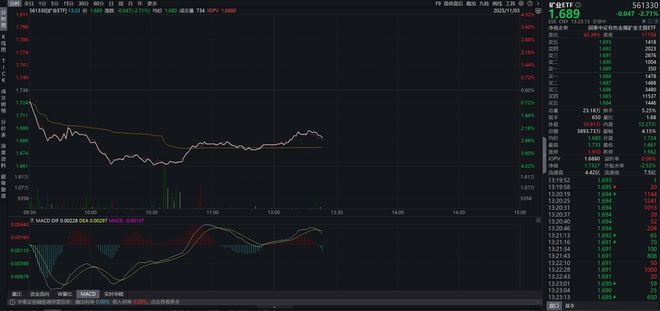
Core Viewpoint - The non-ferrous metal mining sector is experiencing a correction, but the mining ETF (561330) has shown a year-to-date increase of over 80%, indicating potential for re-entry after the pullback [1]. Group 1: Copper Market Insights - The copper market is facing supply disruptions, with Antofagasta, a major Chilean copper producer, announcing that its 25-year copper production may only meet the lower guidance limit due to inflation-related capital expenditure cuts [3]. - Several projects, including Kamoa-Kakula and Grasberg, have lowered their medium-term production guidance by nearly 500,000 tons, leading to a significant reduction in copper supply growth compared to last year [3]. - The mid-term copper supply is expected to remain tight, providing upward support for copper prices [3]. Group 2: Gold Market Dynamics - After a rapid increase over the past two months, gold prices are experiencing heightened volatility, but the long-term upward trend remains intact [3]. - Factors such as excessive money supply, fiscal deficit monetization, and global geopolitical instability are driving demand for gold as a safe-haven asset [3]. - The combination of a potential Federal Reserve interest rate cut cycle, increased macroeconomic uncertainty abroad, and a global trend towards de-dollarization is expected to support gold prices in the medium to long term [3]. Group 3: Non-Ferrous Metals Sector Outlook - According to Dongfang Securities, the non-ferrous metals sector is entering a new cycle driven by supply-demand balance, resource strategic importance, and the transformation of old and new industries [4]. - Industrial metals like copper are gaining attention due to improved supply-demand dynamics, while strategic resources such as lithium and rare earths are seeing sustained demand growth amid the energy transition [4]. - Overall, the non-ferrous metals industry is benefiting from structural supply-demand contradictions and the overlapping demands of new and old industries, exhibiting independent operational characteristics [4]. Group 4: Mining ETF (561330) Performance - The mining ETF (561330) has outperformed the CSI Non-Ferrous Index by nearly 10% year-to-date as of October 31, 2025, due to its concentrated holdings in leading companies [5]. - The ETF tracks the CSI Non-Ferrous Metals Mining Theme Index, which consists of 37 components, with the top ten stocks accounting for 7.26% of the index, indicating a more precise capture of market trends compared to the broader index [5]. - The higher concentration of gold, copper, and rare earths in the mining ETF, which makes up 54.9% of the index, enhances its responsiveness to favorable catalysts in these sectors [8].
黄金“高台跳水”七日大跌500美元 深蹲还是转向?
2 1 Shi Ji Jing Ji Bao Dao· 2025-10-29 09:14
Core Viewpoint - The recent significant decline in gold prices, dropping nearly $500 per ounce in seven trading days, is attributed to improved risk appetite due to easing U.S.-China trade tensions and potential central bank gold sales [1][2][4]. Group 1: Gold Price Movement - As of October 28, spot gold prices fell to $3,886.3 per ounce, down from a peak of $4,381.11 per ounce [1]. - Gold-related ETFs experienced declines, with 14 ETFs dropping over 3.5%, and the largest decline seen in the gold fund ETF (159812) at 3.66% [1]. - The price of silver also dropped significantly, with a decline of 3.36% followed by an additional 2.2% drop, bringing its price down from $54.453 per ounce to around $46 per ounce, marking a maximum retracement of 16% [4]. Group 2: Market Sentiment and Analysis - Analysts suggest that the easing of U.S.-China trade relations and reduced risk aversion are key factors contributing to the decline in gold prices [2][6]. - Despite the recent downturn, long-term factors such as expectations of Federal Reserve rate cuts may support gold prices in the future [2][6]. - Market analysts believe that the current price adjustments are a temporary consolidation phase rather than a signal of a peak in gold prices, with expectations of a potential rise above $4,500 per ounce next year [6][7]. Group 3: Company Performance - Despite the drop in gold prices, companies like Zijin Mining reported a revenue of 254.2 billion yuan for the first three quarters, a year-on-year increase of 10.33% [5]. - Hunan Gold's third-quarter revenue reached 127.58 billion yuan, up 117.91% year-on-year, with a net profit increase of 63.13% [6]. - The performance of gold companies remains strong, with significant year-on-year growth in revenues and profits, indicating resilience despite market fluctuations [5][6].
黄金“高台跳水”
2 1 Shi Ji Jing Ji Bao Dao· 2025-10-28 23:08
Core Viewpoint - The recent sharp decline in gold and silver prices is attributed to a combination of easing U.S.-China trade tensions and reduced risk appetite among investors, despite the long-term bullish outlook for gold due to expectations of a Federal Reserve easing cycle [1][2][3]. Price Movements - Gold prices have dropped nearly $500 per ounce over the past week, falling from a peak of $4,381.11 to around $3,886.3, with significant support levels breached [2]. - Silver prices have also seen a substantial decline, with a maximum drop of 16% this month, falling from $54.453 to approximately $46 per ounce [3]. ETF and Stock Performance - Gold-related ETFs have suffered losses, with 14 ETFs declining over 3.5%, and the largest gold ETF, SPDR, reducing its holdings by 19.74 tons since October 22 [2][4]. - Gold mining stocks have experienced notable declines, with companies like Yuguang Gold Lead and Chifeng Jilong Gold seeing drops of 5.55% and 4.3%, respectively [2]. Market Sentiment and Analysis - Analysts suggest that the recent price drop is a temporary correction rather than a long-term trend reversal, with expectations that gold prices may rise again due to ongoing economic uncertainties and central bank policies [3][6][7]. - The market remains sensitive to central bank actions regarding gold reserves, as indicated by comments from former central bank officials about potential gold sales [3]. Company Performance - Despite the recent price declines, companies in the gold sector have reported strong financial performance, with Zijin Mining's revenue for the first three quarters reaching 254.2 billion yuan, a year-on-year increase of 10.33% [5]. - Hunan Gold's third-quarter revenue was 12.758 billion yuan, up 117.91% year-on-year, driven by significant increases in gold and other product prices [6].

黄金“高台跳水”:七日跌了500美元,深蹲还是转向?
2 1 Shi Ji Jing Ji Bao Dao· 2025-10-28 12:57
Core Insights - The recent sharp decline in gold and silver prices is attributed to a combination of easing U.S.-China trade tensions and reduced risk appetite among investors, despite the long-term bullish outlook for gold due to expectations of a Federal Reserve easing cycle [3][4][8] - Gold prices have dropped significantly, with a decline of nearly $500 per ounce over the past seven trading days, falling from a peak of $4,381.11 to around $3,886.3 [3][5] - Silver prices have also experienced a substantial drop, with a maximum retracement of 16% this month, reflecting a similar trend to gold [4][5] Market Reactions - Gold-related ETFs have seen significant declines, with 14 gold ETFs dropping over 3.5%, and the largest gold ETF, SPDR, reducing its holdings by 19.74 tons since October 22 [3][5] - Major gold mining stocks have also retreated, with companies like Yuguang Gold Lead and Chifeng Jilong Gold experiencing declines of 5.55% and 4.3%, respectively [3][4] Company Performance - Despite the recent price corrections, companies in the gold sector have reported strong financial performance. For instance, Zijin Mining's revenue for the first three quarters reached 254.2 billion yuan, a year-on-year increase of 10.33% [6][7] - Hunan Gold reported a 117.91% year-on-year increase in revenue for Q3, driven by a 41.04% rise in gold sales prices [7] - The overall sentiment in the market suggests that the recent price adjustments are viewed as a temporary consolidation rather than a signal of a peak, with expectations for gold prices to potentially rise above $4,500 per ounce next year [7][8]
黄金7天狂泻500美元,专家:倒车接人
2 1 Shi Ji Jing Ji Bao Dao· 2025-10-28 12:38
Core Viewpoint - The recent sharp decline in gold and silver prices is attributed to a combination of easing U.S.-China trade tensions and reduced risk appetite among investors, despite the long-term bullish outlook for gold due to potential Federal Reserve easing [1][4][5]. Price Movements - Gold prices have dropped nearly $500 per ounce over the past week, falling from a peak of $4,381.11 to a low of $3,886.3 [3]. - Silver prices have also seen significant declines, with a maximum drop of 16% this month, from $54.453 to around $46 per ounce [5]. ETF and Stock Performance - Gold-related ETFs have suffered, with 14 ETFs showing declines of over 3.5%, and the largest gold ETF, SPDR, reducing its holdings by 19.74 tons [4][5]. - Gold mining stocks have also retreated, with notable declines in companies like Yuguang Gold Lead and Chifeng Jilong Gold, both experiencing drops exceeding 4% [4]. Market Sentiment and Analysis - Analysts suggest that the recent price drop is a temporary correction rather than a sign of a trend reversal, with expectations for gold prices to potentially rise above $4,500 per ounce in the future [13]. - The ongoing global de-dollarization and central banks' continued accumulation of gold are seen as strong underlying support for gold prices [13]. Jewelry Price Adjustments - Domestic gold jewelry prices have also adjusted, with significant reductions observed, dropping below 1,200 yuan per gram [7]. Company Performance - Despite the recent price declines, gold companies have reported strong earnings, with Zijin Mining's revenue for the first three quarters reaching 254.2 billion yuan, a year-on-year increase of 10.33% [10]. - Other companies like Zhaojin Mining and Hunan Gold have also shown impressive growth in revenue and net profit, indicating resilience in their financial performance despite market fluctuations [10].