
创新生态

Search documents
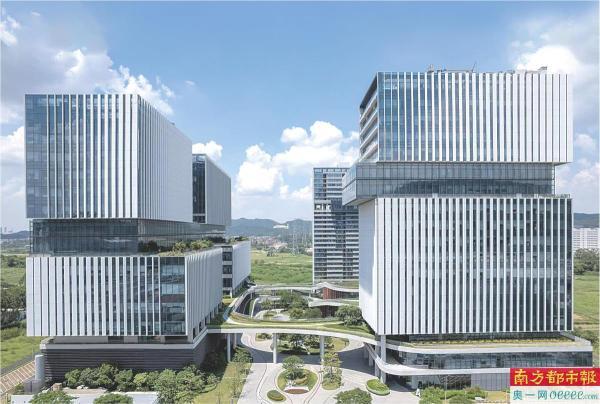
光明以先锋姿态,探寻科学与产业深度融合新范式
Nan Fang Du Shi Bao· 2025-09-18 23:15
Core Viewpoint - The article highlights the rapid development of the Guangming Science City in Shenzhen, emphasizing its role as a hub for scientific innovation and collaboration within the Greater Bay Area, aiming to integrate science and industry for future advancements [4][14]. Group 1: Scientific Innovation and Research - Guangming Science City is positioned as a key area for national strategic scientific development, focusing on major technological innovations and deep integration of science and industry [4][8]. - The Shenzhen Bay Laboratory, part of Guangming Science City, has established nearly 100 research teams in the life sciences, aiming to advance biomedical research and applications [6][10]. - The laboratory's research team, led by Zhou Yaoqi, focuses on teaching computers to understand the "design language" of biological macromolecules, particularly RNA, to develop new medical tools and accelerate drug discovery [6][10]. Group 2: Infrastructure and Talent Development - Guangming Science City hosts 23 major technological innovation platforms, including 8 major scientific infrastructures and 11 interdisciplinary research platforms, which are crucial for attracting domestic and international scientific talent [7][10]. - The city has established a collaborative ecosystem that includes research institutions, universities, and innovative enterprises, fostering a conducive environment for high-risk, high-reward original research [8][11]. Group 3: Industry Integration and Economic Impact - The city has attracted over 130 companies in the synthetic biology sector, with a total valuation exceeding 40 billion yuan, positioning Guangming as a core area for synthetic biology development in Shenzhen [10][11]. - Guangming Science City is actively exploring new paradigms for deep integration of science and industry, aligning with national strategies to enhance productivity and innovation [8][14]. Group 4: Collaborative Initiatives and Regional Development - Guangming Science City collaborates with other scientific hubs like Songshan Lake Science City and the He Tao Cooperation Zone to strengthen regional innovation and resource sharing [14][15]. - The establishment of the Guangming Science City He Tao Innovation Center aims to enhance cooperation among research institutions, technology enterprises, and investment organizations, promoting resource exchange and innovation [16].

潮评丨让“黑土地”跑出更多创新黑马
Sou Hu Cai Jing· 2025-09-16 23:31
Group 1 - Zhejiang is being positioned as a "black land" for innovation and entrepreneurship, emphasizing the need for a vibrant innovation ecosystem [2][4] - The development of the world's first "Bone 02" bone glue by Zhejiang University Shao Yifu Hospital highlights the region's innovative capabilities [2] - The global ranking of Hangzhou at 13th in the World Intellectual Property Organization's 2025 Global Innovation Index reflects the region's growing prominence in innovation [2] Group 2 - Over 50 significant technological achievements in fields such as artificial intelligence and new materials were reported in the first half of the year, showcasing the diverse sources of innovation [3] - The concept of "equal opportunity" is crucial for fostering innovation in Zhejiang, allowing various entities to thrive regardless of their size or background [3][4] - The supportive policies and funding for private enterprises in Zhejiang are driving the growth of technology-driven companies [4] Group 3 - There is a recognized need for further reforms to enhance the innovation environment, including breaking down institutional barriers and improving intellectual property protection [5] - The emphasis on creating a more inclusive culture for researchers is essential for providing better growth opportunities and evaluation systems [5] - The ongoing efforts to cultivate Zhejiang's "black land" for innovation are expected to yield more innovative outcomes and successful startups [6]

以创新集群织密创新生态(连线评论员)
Ren Min Ri Bao· 2025-09-16 22:02
Core Viewpoint - The Guangdong-Hong Kong-Macao Greater Bay Area (GBA) has been strategically positioned as an "International Technology Innovation Center" by General Secretary Xi Jinping, with the "Shenzhen-Hong Kong-Guangzhou" innovation cluster ranking first in the 2025 Global Innovation Index released by the World Intellectual Property Organization [1][2]. Group 1: Innovation Ecosystem - The GBA's core competitiveness lies in its efficient collaborative innovation ecosystem, which connects laboratories with production lines and integrates large enterprises with small businesses [1][2]. - The GBA has established a full-chain innovation ecosystem that promotes high-efficiency collaboration across regions, markets, and industries, leveraging national and local laboratories to drive innovation [2][3]. Group 2: Unique Advantages - The GBA's unique advantage stems from its "one country, two systems, three tariff zones" framework, which transforms institutional differences into benefits, enhancing financial empowerment and fostering a closed-loop of "technology + capital" [2][3]. - The GBA has initiated the Innovation Application Scenario Center (Qianhai) to provide rich scenarios for innovation implementation, accelerating the landing, promotion, and iteration of technological innovations [2][3]. Group 3: National Integration - China has 24 innovation clusters in the global top 100, with the GBA playing a significant role in releasing national innovation potential through collaboration with other regions like the Yangtze River Delta and Beijing-Tianjin-Hebei [3][4]. - The GBA's innovation strategy emphasizes regional and industrial collaboration, building a comprehensive national innovation ecosystem that supports high-quality development across China [4][5]. Group 4: Shenzhen's Role - Shenzhen, as a core engine of the GBA's international technology innovation center, has seen its R&D investment reach 223.66 billion yuan, growing by 18.9% year-on-year, maintaining double-digit growth for nine consecutive years [3][4]. - The city focuses on reform, platform development, and openness to global innovation networks, aiming to attract top-tier research talent and capital [3][4].
对话浙江省科技厅前厅长周国辉:杭州何来“六小龙”
Jing Ji Guan Cha Bao· 2025-09-16 12:24
Group 1 - The core idea of the articles revolves around the emergence of the "Hangzhou Six Little Dragons" and the unique innovation ecosystem in Hangzhou, which is attributed to a combination of government support, market conditions, talent, and culture [2][4][10] - The "innovation formula" proposed by Zhou Guohui emphasizes that success is a result of the interplay between government (sunshine), market (soil), talent (seeds), and culture (climate) [2][4] - Zhou Guohui's book "Effective and Effective: Decoding the Innovation Ecosystem Behind the 'Hangzhou Six Little Dragons'" provides insights into how Hangzhou has become a fertile ground for innovative enterprises [1][2] Group 2 - The "New Zhejiang Merchants" are characterized by a shift from cost-driven expansion to innovation-driven growth, focusing on core technologies and entering advanced fields such as digital economy and life sciences [4][5] - The government plays a crucial role in supporting innovation by understanding industry needs and providing tailored services rather than just financial incentives [6][7] - Hangzhou's innovation ecosystem is compared to Silicon Valley, with a focus on building a unique model that leverages local strengths rather than simply replicating existing models [8][14] Group 3 - The investment strategies of Zhejiang capital emphasize early-stage investments in technology, with a focus on artificial intelligence, smart manufacturing, new materials, and life sciences [11][12] - The concept of "特色小镇" (characteristic towns) is highlighted as a key driver for innovation, promoting a collaborative environment that integrates production, living, and ecology [12][13] - The "Eight-Eight Strategy" continues to evolve, focusing on high-quality development, artificial intelligence, green development, and global integration [18]
对话浙江省科技厅前厅长周国辉:杭州何来“六小龙”
经济观察报· 2025-09-16 12:11
Core Viewpoint - The article emphasizes that the success of innovation ecosystems, such as the "Hangzhou Six Little Dragons," is not due to a single advantage but rather a systemic ecological result involving government support, market cultivation, talent aggregation, and cultural climate [4][10][18]. Group 1: Innovation Ecosystem - The "Hangzhou Six Little Dragons" phenomenon highlights the city's emergence as a hub for technology entrepreneurship, driven by a conducive innovation ecosystem [2][4]. - An "innovation formula" is proposed: Success = Government (Sunshine) × Market (Soil) × Talent (Seeds) × Culture (Climate), indicating the interdependence of these elements in fostering innovation [4][10]. - Hangzhou's ranking in the Global Innovation Index rose to 13th in 2025, reflecting its progress in innovation compared to previous years [11]. Group 2: Role of Government - Government plays a crucial role in supporting innovation by understanding industry needs and providing tailored support rather than just financial incentives [10][14]. - The government should adapt its support strategies to align with the evolving economic landscape, focusing on technology trends and market needs [14][22]. - A market-oriented approach is encouraged, leveraging the insights of venture capital to identify promising projects and companies [13][15]. Group 3: New Entrepreneurs and Business Models - The new generation of Zhejiang entrepreneurs, termed "New Zhejiang Merchants," is characterized by a shift towards innovation-driven growth, focusing on technology and sustainable development [9][10]. - These entrepreneurs are moving into advanced fields such as digital economy, life sciences, and new materials, positioning themselves as leaders rather than mere participants in the supply chain [9][10]. - The "特色小镇" (Characteristic Town) model is highlighted as a successful framework for fostering innovation, integrating production, living, and ecological development [16][17]. Group 4: Investment Strategies - Zhejiang's venture capital landscape emphasizes early-stage investments in technology, with a focus on understanding the founders and their vision rather than just business plans [15][16]. - Key investment areas include artificial intelligence, smart manufacturing, new materials, and life sciences, reflecting a strategic alignment with national development goals [16][22]. - The investment approach is characterized by rigorous analysis and a deep understanding of industry trends, ensuring alignment with government policies and market demands [15][16]. Group 5: Future Directions - The focus for future development in Zhejiang is on "Artificial Intelligence+" to enhance the economy and improve public services [22][23]. - The "八八战略" (Eight-Eight Strategy) will continue to evolve, emphasizing high-quality development, innovation, and sustainable practices [23][24]. - Collaboration between Zhejiang and Anhui is encouraged, leveraging their complementary strengths to foster regional innovation [20][21].
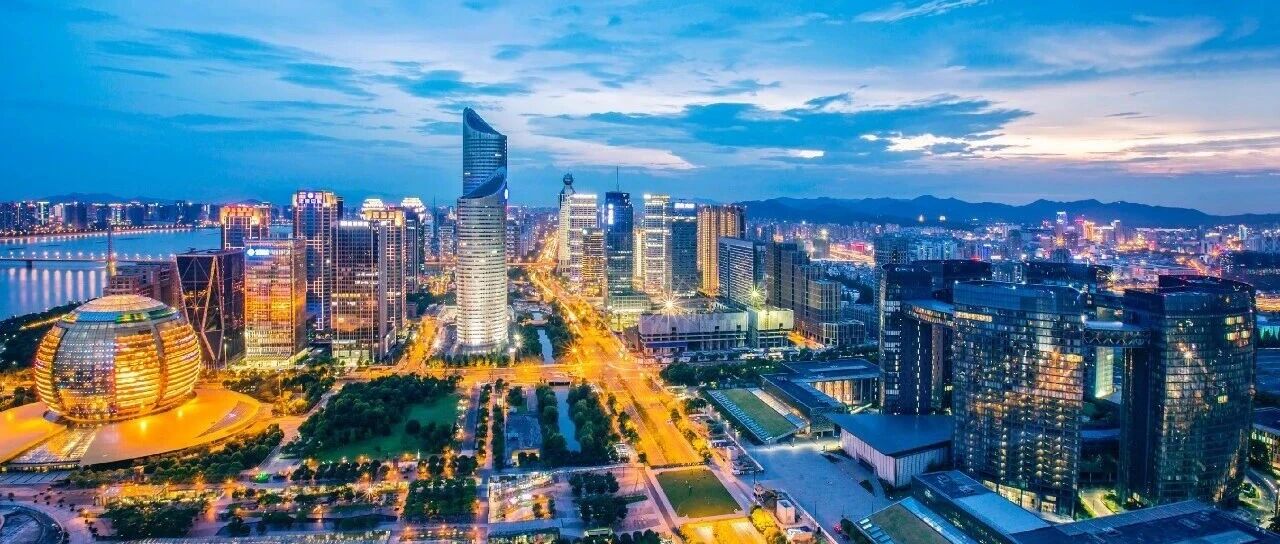
周国辉:杭州何来“六小龙”,“懂”比“给”更重要
Jing Ji Guan Cha Wang· 2025-09-16 09:20
Group 1 - The emergence of the "Hangzhou Six Little Dragons" signifies a new wave of technological entrepreneurship in Hangzhou, building on the city's historical significance in e-commerce initiated by Alibaba [1][2] - Zhou Guohui's book "Effective and Capable: Decoding the Innovation Ecosystem Behind the 'Hangzhou Six Little Dragons'" provides insights into how Hangzhou has become a fertile ground for innovative enterprises [1][2] Group 2 - Zhou Guohui proposes an "innovation formula" that combines government support, market cultivation, talent aggregation, and cultural environment to create a nurturing ecosystem for innovation [2][4] - The "new Zhejiang merchants" are characterized by innovation-driven growth, entering advanced fields such as digital economy and high-end equipment, and aligning their missions with national strategies for common prosperity [4][5] Group 3 - Government's role in attracting companies like Qiangnao Technology involves understanding industry needs and providing tailored support rather than just financial incentives [6][7] - The innovation ecosystem in Hangzhou is more about understanding and respecting industry needs than merely offering better policies compared to other regions [7] Group 4 - Zhou Guohui highlights the importance of learning from Silicon Valley while emphasizing that Hangzhou should focus on its unique characteristics and not merely replicate existing models [8] - In the 2025 Global Innovation Index, Hangzhou ranks 13th, reflecting its progress in becoming a significant innovation cluster [8] Group 5 - The investment strategies of Zhejiang's venture capital focus on rigorous evaluation, understanding industry trends, and aligning with government-supported sectors [9][11] - Prominent sectors for investment include artificial intelligence, smart manufacturing, new materials, and life sciences, with a focus on assessing each company's specific potential [11] Group 6 - The "characteristic town" model in Zhejiang promotes the integration of production, living, and ecology, creating a conducive environment for innovation and entrepreneurship [12] - This model addresses common issues faced by traditional industrial parks, such as separation of production and living spaces, and aims to foster a vibrant community for talent [12] Group 7 - Zhou Guohui suggests that the "Hangzhou model" should be viewed as a flexible paradigm rather than a rigid template, encouraging learning and adaptation rather than direct replication [13] - The government should focus on planning and differentiation to avoid homogenized competition and ensure effective resource allocation [16] Group 8 - The "Eight-Eight Strategy" continues to evolve, emphasizing high-quality development, integration of artificial intelligence, and sustainable practices in response to environmental constraints [17]
顶尖科技人才超50万城市:印度4个,中国3个,美国0个
吴晓波频道· 2025-09-16 00:21
Core Viewpoint - The article emphasizes that talent is the fundamental factor determining a city's future competitiveness, surpassing traditional industrial strength [2][7]. Group 1: Global Innovation Clusters - The "Shenzhen-Hong Kong-Guangzhou" cluster has surpassed the "Tokyo-Yokohama" cluster to become the world's leading innovation cluster [12][13]. - In 2024, the Shenzhen-Hong Kong-Guangzhou region is projected to have a total of 113,000 invention patents authorized, accounting for 12.1% of the national total, and 19,000 PCT international patent applications, making up 27.5% of the national total [13]. - Asia dominates the list of cities with over 500,000 tech talents, with India and China leading the way [8][12]. Group 2: Talent Concentration and Its Impact - Cities that gather over 100,000 talents transition from mere industrial clusters to ecosystems capable of innovation and system reconstruction [3][4]. - The article highlights that as talent clusters grow from 100,000 to 300,000 and then to 500,000, each leap significantly enhances the city's innovation ecosystem [6][29]. - The future competition among cities will hinge on who can attract and retain talent, as this will redefine the rules of the game [7][31]. Group 3: Talent Ecosystems in Different Industries - Talent clusters are not exclusive to the tech industry; they exist across various sectors, such as Hollywood for film and the e-commerce hub in Hangzhou [17][21]. - The Philippines has emerged as a leading destination for business process outsourcing (BPO) due to its large pool of English-speaking talent [22]. - Yiwu has transformed from a small commodity wholesale market into a global e-commerce talent cluster, showcasing the power of talent in reshaping traditional industries [23][24]. Group 4: Future City Competitiveness - Attracting talent is just the first step; retaining and activating talent to create a positive feedback loop is crucial for a city's future competitiveness [31][32]. - The article introduces a framework for evaluating a city's talent attractiveness and development ecosystem, highlighting cities like Suzhou and Jinan as emerging talent-friendly locations [32]. - The essence of talent clusters lies in their ability to foster innovation through density, structure, and effective connections among talents [39][41].

立足创新化解大城市病
Jing Ji Ri Bao· 2025-09-16 00:04
Group 1 - The core viewpoint emphasizes the importance of building vibrant innovation cities to enhance economic competitiveness and address urban challenges, marking a new phase in urban modernization with Chinese characteristics [1][3] - The cultivation of an innovation ecosystem is essential, requiring collaboration among government, enterprises, universities, research institutions, and private capital to create a supportive environment for innovation [1] - The shift from traditional development models reliant on land finance and resource consumption to innovation-driven growth is crucial, focusing on nurturing emerging industries like AI, biomedicine, and new energy while upgrading traditional industries [1] Group 2 - High-quality urban renewal is necessary to optimize spatial layout and address issues like land resource scarcity, traffic congestion, and environmental pollution, emphasizing a balanced approach to urban transformation [2] - The synergy between technological innovation and industrial innovation is vital for forming core competitiveness, necessitating the establishment of a comprehensive transformation system from laboratories to industrial parks [2] - Strengthening urban planning and management, developing public transportation, and promoting green buildings are essential for improving resource utilization efficiency and exploring sustainable development paths to alleviate urban challenges [2]
北京怀柔重点产业领域5个共性技术服务平台合作项目签约落地
Bei Jing Shang Bao· 2025-09-14 10:58
Core Insights - The event "Open Sharing, Linking International" held in Huairou District aims to enhance international cooperation and development opportunities for the region [1][2] - Huairou District is focusing on technological innovation to drive industrial innovation, launching a "1+N" innovation policy system and establishing over 10 specialized parks and 46 innovation platforms [1] - A strategic cooperation agreement was signed between the China International Chamber of Commerce and the Huairou District People's Government to promote high-quality trade and investment development [2] Group 1 - The event gathered representatives from various sectors to discuss cooperation and development opportunities, injecting new vitality into Huairou's international collaboration [1] - Huairou District is implementing a development model that integrates large facilities with small platforms to foster enterprise growth [1] - The establishment of the Huairou International Chamber of Commerce aims to support local enterprises in international market engagement and cross-border cooperation [1] Group 2 - Five collaborative projects focusing on common technology service platforms in key industries such as traditional Chinese medicine modernization and high-precision manufacturing were signed to boost industrial development in Huairou [2] - The district plans to continue building a scientific city and create a more internationalized and market-oriented innovation ecosystem to attract global innovation institutions, enterprises, and talent [2]
怀柔区国际商会、怀柔仪器一区一平台揭牌
Bei Jing Ri Bao Ke Hu Duan· 2025-09-14 07:18
Core Viewpoint - The "Open Sharing, Linking International" cooperation exchange meeting held in Huairou District aims to foster international collaboration and innovation opportunities among various stakeholders [1][4]. Group 1: Event Overview - The cooperation exchange meeting took place on September 14 at Shougang Park, organized by the Huairou District People's Government, with participation from the China International Chamber of Commerce, Beijing Municipal Bureau of Commerce, and representatives from innovative enterprises [1][2]. - The event included the unveiling of the Huairou District International Chamber of Commerce and the Huairou Instrument One District One Platform, focusing on international business development and resource integration [6]. Group 2: Innovation Policies and Platforms - Huairou has implemented a "1+N" innovation policy system, establishing over 10 characteristic parks and 46 innovation platforms, promoting a development model that integrates large devices with small platforms [2]. - The Huairou Science City has set up 37 technology facility platforms, which are open to global sharing, aimed at accelerating the transformation of scientific achievements into productive forces [6]. Group 3: Strategic Collaborations - A strategic cooperation agreement was signed between the China International Chamber of Commerce and the Huairou District People's Government, focusing on international exchange, investment promotion, and publicity [6]. - Five collaborative projects in key industries such as modern Chinese medicine, high-end precision manufacturing, and new materials testing were also signed during the event [6]. Group 4: Expert Discussions - Experts and scholars from various research institutions and key enterprises engaged in discussions on the theme of "shared platforms empowering enterprise cooperation development," covering topics like resource integration and global R&D collaboration [7].
