AI芯片

Search documents
燧原科技科创板IPO获受理 腾讯系AI芯片独角兽冲刺科创板
2 1 Shi Ji Jing Ji Bao Dao· 2026-01-26 23:28
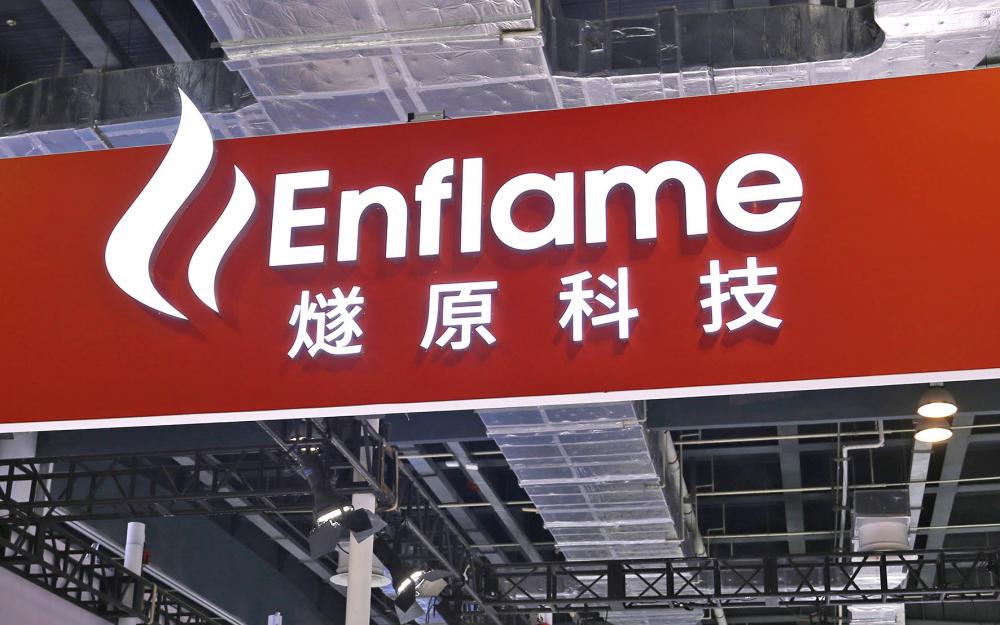
Core Viewpoint - Shanghai Suyuan Technology Co., Ltd. has received acceptance for its IPO application on the Sci-Tech Innovation Board, marking it as another leading domestic AI chip company entering the secondary market after several others [1] Group 1: IPO and Fundraising - The company plans to issue no less than 43.04 million shares and no more than 68.35 million shares, aiming to raise approximately 6 billion yuan for the development and industrialization of its AI chip series products [1] - The estimated valuation of Suyuan Technology is 18.2 billion yuan as of August 2025 [1] Group 2: Shareholding Structure - Suyuan Technology has no single controlling shareholder, with co-founders Zhao Lidong and Zhang Yalin collectively controlling 28.1% of the voting rights through direct holdings and employee stock ownership platforms [2] Group 3: Strategic Partnerships - Tencent is the largest shareholder, holding 20.26% of the shares, and has been a significant customer and capital supporter, providing strong backing for the commercialization of Suyuan's AI chips [4] - The collaboration with Tencent dates back to 2020, with Suyuan's first training chip being tested and launched on Tencent Cloud [4] Group 4: Revenue and Client Dependency - A significant portion of Suyuan's revenue comes from Tencent, with 57.28% of sales directly to Tencent and 71.84% when including designated final customers [5] - As of September 2025, accounts receivable from Tencent accounted for 29.92% of Suyuan's total accounts receivable [5] Group 5: Research and Development - Suyuan Technology has high R&D expenditures, with 9.88 billion yuan, 12.29 billion yuan, and 13.12 billion yuan spent from 2022 to 2024, totaling 35.29 billion yuan, which is over 316% of its revenue during the same period [6] - The company reported net losses of 1.15 billion yuan, 1.57 billion yuan, and 1.50 billion yuan for the years 2022 to 2024 [7] Group 6: Market Position and Product Development - Suyuan Technology focuses on building its own chip ecosystem, differentiating itself from competitors that rely on NVIDIA's CUDA ecosystem [8] - The company has developed a full-stack AI computing and programming software platform called "Yusuan TopsRider" to enhance the performance of its hardware products [9] - Suyuan's AI accelerator card sales reached 38,800 units, capturing approximately 1.4% of the Chinese AI accelerator card market in 2024 [9] Group 7: Future Outlook - The company is expected to reach breakeven by 2026, assuming no significant changes in external trade conditions [7] - Suyuan is actively expanding into government-led intelligent computing center projects, with significant revenue contributions expected from these initiatives [5]

腾讯系AI芯片独角兽冲刺科创板
2 1 Shi Ji Jing Ji Bao Dao· 2026-01-26 23:18
Core Viewpoint - Shanghai Suyuan Technology Co., Ltd. has received acceptance for its IPO application on the Sci-Tech Innovation Board, marking it as another leading domestic AI chip company entering the secondary market after several others [1] Company Overview - The company plans to issue no less than 43.04 million shares and no more than 68.35 million shares, aiming to raise approximately 6 billion yuan for the development and industrialization of its AI chip series products [1] - As of August 2025, the company's valuation is projected to be 18.2 billion yuan [1] Shareholding Structure - Suyuan Technology has no single controlling shareholder, with co-founders Zhao Lidong and Zhang Yalin collectively controlling 28.1% of the voting rights [2] Strategic Partnerships - Tencent is the largest shareholder, holding 20.26% of the shares, and has been a significant customer and capital supporter, enhancing Suyuan's commercial viability [4] - The collaboration with Tencent dates back to 2020, with Suyuan's first-generation training chip being tested and utilized within Tencent's cloud services [4] Revenue and Client Dependency - A significant portion of Suyuan's revenue comes from Tencent, with 57.28% of sales directly to Tencent and 71.84% when including designated final customers [5] - The company anticipates that its high sales dependency on Tencent will continue, which poses risks if Tencent's procurement strategy changes [5] Financial Performance - Suyuan Technology has incurred substantial losses, with net losses of 1.15 billion yuan, 1.57 billion yuan, and 1.50 billion yuan from 2022 to 2024 [7] - The company has negative cash flow from operating activities, with net cash flow of -0.99 billion yuan, -1.21 billion yuan, and -1.80 billion yuan during the same period [7] Research and Development - The company has invested heavily in R&D, with expenses of 0.99 billion yuan, 1.23 billion yuan, and 1.31 billion yuan from 2022 to 2024, accounting for over 316% of its revenue during that period [6] - Suyuan aims to reach breakeven by 2026, assuming no significant changes in external conditions [7] Technology and Product Development - Suyuan Technology focuses on building its own chip ecosystem, emphasizing specialized AI accelerators rather than following the GPGPU technology route [8] - The company has developed a comprehensive technology system, including hardware, software, and computing cluster solutions, to support AI applications [8] - The fourth-generation training and inference chip, "Sui Si 400," is set to meet the demands of large-scale AI models, supporting low-precision computing and extensive interconnectivity [10] Market Position - In 2024, the overall shipment of AI accelerator cards in China is expected to exceed 2.7 million units, with Nvidia holding a 70% market share [9] - Suyuan's sales of AI accelerator cards reached 38,800 units, capturing approximately 1.4% of the market [9]
GPU vs ASIC的推理成本对比
傅里叶的猫· 2026-01-26 14:42
Core Insights - The article emphasizes that the competition in AI chips is increasingly focused on cost-effectiveness, particularly during the inference stage, which is crucial for the commercial viability of AI applications [5][6]. - Goldman Sachs' report provides a framework for analyzing the competitive landscape between GPU and ASIC chips, revealing that while all chip types are experiencing declining inference costs, the rate of decline varies significantly among manufacturers [6]. Group 1: Inference Cost as a Key Competitive Factor - The competition among AI chips is no longer solely about performance; cost-effectiveness during the inference phase is now a critical metric for assessing core competitiveness [6]. - Companies that can achieve a competitive edge in inference costs will likely secure greater market share [6]. Group 2: Competitive Landscape Among Major Players - Google and Broadcom's TPU have shown strong competitive momentum, with inference costs dropping by approximately 70% from TPU v6 to TPU v7, making it comparable to NVIDIA's flagship product [9]. - NVIDIA maintains its leadership position due to its product release schedule and the robust CUDA software ecosystem, which creates high switching costs for customers [10]. - AMD and Amazon's Trainium are currently lagging in the inference cost competition, with estimated cost reductions of only about 30% [12]. Group 3: Technological Trends - As chip architecture optimization reaches its limits, future performance improvements and cost reductions in AI chips will rely on innovations in networking, memory, and packaging technologies [15]. - NVIDIA and Broadcom have established a first-mover advantage in these technological areas, which will support their continued leadership in the market [17]. Group 4: Industry Evolution Paths - Goldman Sachs outlines four potential scenarios for the future of the AI industry, each affecting the competitive dynamics between GPUs and ASICs differently [18]. - In the most optimistic scenario, both consumer and enterprise AI will experience strong growth, benefiting NVIDIA due to its dominant position in the training market [19]. - The competition between GPU and ASIC represents a broader struggle between generalization and customization, with implications for performance, cost, and ecosystem dynamics [19].

ASMPT宣布计划剥离SMT业务 聚焦半导体业务
Zheng Quan Ri Bao· 2026-01-26 13:45
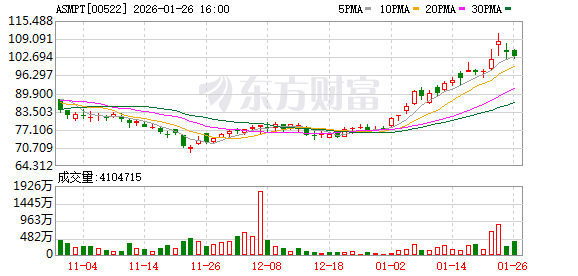
Group 1 - ASMPT is evaluating options for its Surface Mount Technology (SMT) business, which may involve sale, joint venture, spin-off, or public listing [2] - The company plans to divest its overseas non-semiconductor businesses to focus entirely on the semiconductor core sector and optimize its asset structure [4] - ASMPT's acquisition of Siemens' SMT business in 2011 positioned it as a leading player in the global SMT equipment market, opening significant opportunities in automotive and consumer electronics [4] Group 2 - ASMPT's key technologies, such as Thermal Compression Bonding (TCB) and Hybrid Bonding, are crucial for manufacturing High Bandwidth Memory (HBM) and enhancing chip interconnect density [4] - The divestiture of SMT is expected to free up cash flow and management resources, which will be redirected towards semiconductor packaging R&D [4] - Industry insiders believe that ASMPT's strategic shift reflects confidence in the Chinese market, which is the largest semiconductor consumer market and a key battleground for AI applications [5]

金价十年涨四倍,钻戒身价却暴跌,两者为何背道而驰
Di Yi Cai Jing· 2026-01-26 12:37
Group 1 - The price of gold has increased nearly fourfold over the past decade, while the diamond price index has dropped over 45% from its peak, indicating a significant divergence in their market trends [1][4] - Major diamond companies like De Beers have had to reduce prices significantly, with recent cuts of 10% to 15%, marking the largest historical decline [4][5] - The stock performance of leading diamond brands has suffered, with some companies experiencing over an 80% drop from historical peaks, while gold companies have seen substantial increases in market capitalization [7][6] Group 2 - The decline in the diamond market is attributed to a reversal in supply and demand dynamics, particularly a decrease in wedding-related demand globally [8][9] - The rise of lab-grown diamonds, which are cheaper to produce and indistinguishable from natural diamonds, is reshaping the industry and contributing to the decline in traditional diamond prices [9][10] - The market for lab-grown diamonds is expanding rapidly, with projections indicating significant growth in the coming years, potentially impacting the traditional diamond market further [10][14] Group 3 - Analysts suggest that the divergence between gold and diamond prices is likely to continue in the short term, with gold benefiting from macroeconomic factors such as debt concerns and potential interest rate cuts [12][13] - Despite the challenges, there are emerging opportunities for diamonds in new markets, such as AI chip cooling solutions, which could provide a new growth avenue [14]
ASML:别忘了 DUV 光刻机,评级 “跑赢大盘”
2026-01-26 02:49
Summary of ASML Holding NV Conference Call Company Overview - **Company**: ASML Holding NV - **Industry**: Semiconductor Equipment - **Rating**: Outperform - **Price Target**: EUR 1,400 (previously EUR 1,300) [2][6] Key Insights DUV and EUV Demand - The upside potential for DUV (Deep Ultraviolet) technology is currently underestimated, with investors focusing more on EUV (Extreme Ultraviolet) forecasts [3][12] - DUV is expected to remain approximately 50% of total lithography spending over the next two years, driven by increased EUV shipments [3][14] - The consensus forecast of EUV revenue increasing by EUR 2.3 billion while DUV revenue declines by EUR 1 billion is seen as inconsistent [3][14] China Market Dynamics - China’s DUV revenue is expected to remain flat rather than decline, supported by a sixfold increase in advanced logic capacity over the next three years to meet local AI chip production needs [4][35] - The forecast for China’s wafer fabrication equipment (WFE) spending is projected to reach approximately USD 50 billion in 2026, driven by advanced logic expansions and strong local AI chip demand [35][40] - ASML's sales in China have historically been low due to a focus on mature nodes, but recent trends indicate a rise in intensity and demand [36][40] Financial Forecasts - Revenue growth is forecasted at 16% in 2026 and 17% in 2027, primarily driven by higher DUV sales [5][55] - The earnings per share (EPS) estimate for 2027 has been raised to EUR 39.7, which is 16% above consensus [5][56] - The company’s market cap is approximately EUR 438.1 billion, with a year-to-date performance of 22.5% [8] Capacity Expansion - Significant capacity expansion in advanced logic and DRAM is anticipated, with an increase of 400-500 Kwpm expected next year [57] - TSMC is ramping up its 3nm capacity to meet soaring AI chip demand, which will drive aggressive capacity expansion [31][57] Investment Implications - ASML is rated as a top pick with a price target reflecting a 23% upside potential [6][56] - The company is trading at a trough relative valuation compared to other semiconductor equipment (SPE) companies [5][56] Additional Important Points - The DUV:EUV spending ratio is expected to remain approximately 1:1, indicating that for every USD 1 billion spent on EUV, there is a corresponding USD 1 billion in DUV capex [18][57] - The resilience in DUV demand is supported by strong capacity growth in both advanced logic and memory segments, despite a slower growth rate in mature logic and NAND [57] - ASML's historical P/E premium over the semiconductor index has decreased, indicating a potential buying opportunity [66][68] This summary encapsulates the critical insights and financial forecasts from the ASML conference call, highlighting the company's strategic positioning within the semiconductor industry and its outlook for growth in the coming years.

大芯片,再度崛起?
智通财经网· 2026-01-25 06:24
Core Insights - In early 2025, significant developments in the AI chip sector were reported, including Elon Musk's confirmation of Tesla's (TSLA.US) revival of the Dojo 3 supercomputer project, aiming to become the largest AI chip manufacturer globally, and Cerebras Systems' multi-year procurement agreement with OpenAI worth over $10 billion, promising 750 megawatts of computing power by 2028 [1][2]. Group 1: AI Chip Evolution - The evolution of AI chips is characterized by two distinct designs: Cerebras' wafer-scale integration and Tesla's Dojo, which represents a hybrid approach between single-chip and GPU clusters [3]. - The divergence stems from different solutions to the "memory wall" and "interconnect bottleneck" challenges, with traditional GPU architectures facing limitations in memory bandwidth compared to computational power [3][4]. Group 2: Cerebras' Innovations - Cerebras' WSE-3 chip features 40 trillion transistors, 900,000 AI cores, and 44GB of on-chip SRAM, achieving a bandwidth of 214 Pb/s, significantly outperforming NVIDIA's H100 [4]. - The design addresses yield issues associated with large wafers by minimizing the size of each AI core and employing redundancy to maintain performance despite defects [4]. Group 3: Tesla's Strategic Shift - Tesla's Dojo project faced setbacks but was revived with a new focus on "space AI computing," moving away from its original goal of competing with NVIDIA's GPU clusters [7][8]. - The AI5 chip, designed with a 3nm process, is expected to be produced by the end of 2026, aiming for performance comparable to NVIDIA's Hopper architecture [8]. Group 4: Market Dynamics and Competition - The AI chip market is becoming increasingly crowded, with competitors like AMD and NVIDIA rapidly advancing their offerings, which poses challenges for alternative architectures like wafer-scale systems [16][19]. - Cerebras aims to differentiate itself by focusing on low-latency inference systems, capitalizing on the growing demand for real-time AI applications [16][14]. Group 5: Strategic Partnerships - Cerebras' partnership with OpenAI, involving a $10 billion commitment for computing power, highlights the increasing importance of low-latency inference capabilities in the AI landscape [11][12]. - The collaboration reflects a broader trend of established tech companies integrating promising AI chip startups into their ecosystems, which may reshape the competitive landscape [20][21].

大芯片,再度崛起?
半导体行业观察· 2026-01-25 03:52
Core Insights - The article discusses significant developments in the AI chip sector, highlighting Tesla's revival of the Dojo 3 supercomputer project and Cerebras Systems' multi-billion dollar agreement with OpenAI for AI computing power [1][10]. Group 1: AI Chip Developments - Tesla's Dojo 3 project aims to position the company as a leading AI chip manufacturer, with a focus on "space artificial intelligence computing" rather than traditional training models [6][8]. - Cerebras Systems has secured a contract with OpenAI worth over $10 billion, promising to deliver 750 megawatts of computing power by 2028, emphasizing the growing demand for low-latency inference capabilities [10][11]. Group 2: Chip Architecture and Performance - The distinction between two types of large chips is made: Cerebras' wafer-scale integration and Tesla's wafer-scale system, each addressing the "memory wall" and "interconnect bottleneck" challenges differently [2][4]. - Cerebras' WSE-3 chip boasts 40 trillion transistors and 900,000 AI cores, achieving a memory bandwidth of 21 PB/s, significantly outperforming NVIDIA's H100 [3][11]. Group 3: Strategic Shifts - Tesla's shift in strategy reflects a recalibration of resources, moving away from competing directly with NVIDIA's GPU clusters to focusing on specialized applications in space computing [7][8]. - Cerebras' approach to positioning itself as a provider of dedicated inference machines allows it to capitalize on the emerging demand for low-latency processing, differentiating itself from traditional training platforms [15][19]. Group 4: Market Dynamics and Competition - The AI chip market is becoming increasingly crowded, with competitors like AMD and NVIDIA rapidly advancing their offerings, which poses challenges for alternative architectures like those from Cerebras and Tesla [15][19]. - The collaboration between OpenAI and Cerebras is seen as a strategic move to secure a foothold in the burgeoning inference market, which is expected to dominate AI computing needs in the future [10][19]. Group 5: Future Outlook - The advancements in packaging technology, such as TSMC's CoWoS, are expected to blur the lines between large and small chip architectures, potentially reshaping the competitive landscape [16][19]. - The article concludes that both Tesla and Cerebras are not merely trying to replicate NVIDIA's success but are instead seeking to find value in niches overlooked by general solutions, indicating a long-term battle for survival and innovation in the AI chip market [20].
AI芯片格局
傅里叶的猫· 2026-01-24 15:52
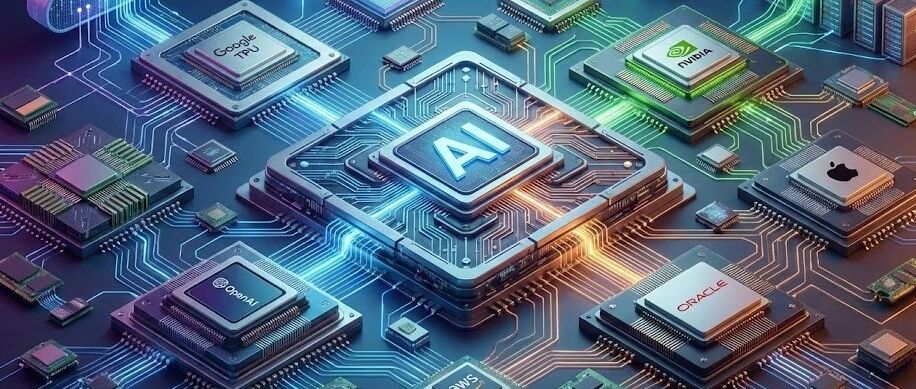
Core Insights - The article discusses the evolving landscape of AI chips, particularly focusing on the rise of TPU and its implications for major tech companies like Google, OpenAI, and Apple [3][5][7]. TPU's Rise - TPU is gaining traction as a significant player in the AI training and inference market, challenging NVIDIA's long-standing GPU dominance [3]. - Major companies like OpenAI and Apple are increasingly adopting TPU for their core operations, indicating a shift in the competitive landscape [3][4]. - The transition from GPU to TPU involves complex technical adaptations, which can lead to high costs and extended timelines for companies [4][6]. Supply and Demand Challenges - There is currently a 50% supply gap in the global AI computing power market, driven by surging demand for TPU [5]. - This supply shortage is causing delays in projects and increasing costs for companies relying on TPU, particularly affecting TSMC, the main foundry for TPU [5]. - The immature software ecosystem surrounding TPU, particularly its incompatibility with the widely used CUDA framework, poses additional challenges for widespread adoption [5][6]. TPU vs. AWS Trainium - Google’s TPU has a hardware-level optimization for matrix and tensor operations, providing significant efficiency advantages over AWS's Trainium, which lacks such integration [7]. - Trainium's reliance on external libraries for operations increases resource consumption and limits efficiency, particularly in large-scale deployments [7]. - Both companies have different strengths in network adaptation, with Google focusing on vertical scaling and AWS on horizontal scaling, leading to a differentiated competitive landscape [8]. Oracle's Unexpected Rise - Oracle has emerged as a key player in the chip market by leveraging government policies and strategic partnerships to secure high-end chip supplies [9][10]. - The company has formed partnerships with government entities and other service providers to monopolize certain chip markets, creating a dual resource barrier [10]. - Oracle's collaboration with OpenAI for a $300 billion computing resource deal highlights its strategy to profit from reselling computing power [10]. OpenAI's Financial and Operational Challenges - OpenAI faces a significant funding gap, with annual revenues of approximately $12 billion against a projected investment need of $300 billion for expansion [14]. - The company’s reliance on venture capital and the increasing costs of computing power exacerbate its financial pressures [14]. - OpenAI's business model struggles with low profitability in its core LLM inference business, necessitating a delicate balance between pricing and user retention [15]. Future of Large Models - The industry is witnessing diminishing returns on performance improvements as model sizes increase, while the costs of computing power rise exponentially [17]. - Resource constraints, particularly in power supply and dependency on NVIDIA, are becoming critical bottlenecks for large model development [17][18]. - Future developments in large models are expected to focus on more efficient and diverse technological paths, moving away from mere parameter competition [18][19]. Conclusion - The competition in AI chips and computing power is a battle for industry dominance, with companies like Google, Oracle, and OpenAI navigating complex challenges and opportunities [19][20]. - The market is expected to stabilize as supply chains improve, but the ability to monetize technology and integrate it into practical applications will be crucial for long-term success [20].

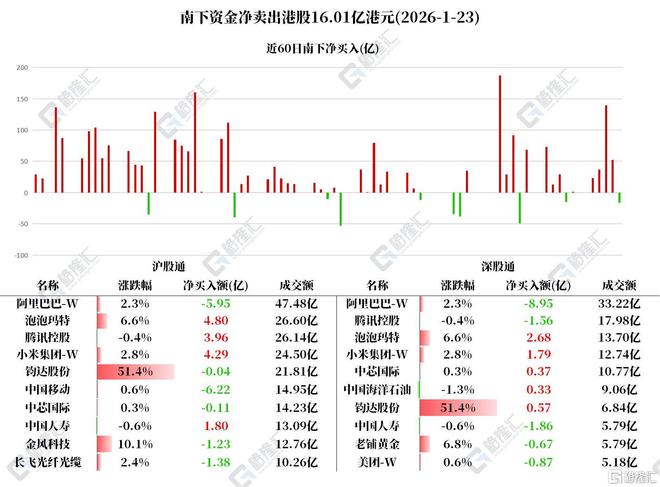
资金动向 | 北水抛售阿里近15亿港元,连续6日加仓小米
Ge Long Hui· 2026-01-23 12:50
Group 1 - Southbound funds had a net sell of HKD 1.601 billion in Hong Kong stocks on January 23 [1] - Notable net purchases included Pop Mart at HKD 747 million, Xiaomi Group-W at HKD 608 million, and Tencent Holdings at HKD 240 million [2] - Significant net sells included Alibaba-W at HKD 1.49 billion, China Mobile at HKD 621 million, and Changfei Optical Fiber at HKD 138 million [2] Group 2 - Southbound funds have recorded a cumulative net inflow of approximately HKD 23.523 billion this week, which is an increase of HKD 13.5 billion compared to the previous week [5] - Xiaomi has seen continuous net purchases from southbound funds for six consecutive days, totaling HKD 3.07384 billion [4] - China Mobile has experienced net sells for 15 consecutive days, amounting to HKD 11.71603 billion [4] Group 3 - Pop Mart recently launched a Valentine's Day limited edition blind box series, which sold out quickly and generated significant social media buzz [6] - Xiaomi Group plans to repurchase up to HKD 2.5 billion of its Class B ordinary shares, with the buyback program starting on January 23 [6] - Tencent Holdings announced measures to combat false marketing and misinformation on its platform, enhancing governance of misleading content [6] Group 4 - Alibaba is preparing for the independent listing of its AI chip subsidiary, Pingtouge, with plans for internal restructuring and potential IPO exploration [6] - China Mobile has established a "Computing Power Special Office" to coordinate its computing power strategy and layout [7] - Changfei Optical Fiber is involved in the development of 6G technology, with over 300 key technology reserves formed in the first phase of trials [7]