
美元指数

Search documents
美联储政治化:历史和未来演绎
Dong Zheng Qi Huo· 2025-09-10 07:14
1. Report Industry Investment Rating - The rating for the US dollar is bearish, with an expected decline of 5 - 15% in the short, medium, and long - term [7]. 2. Core Viewpoints of the Report - The politicalization of the Federal Reserve is a special product of special times. To solve serious problems of the government or cope with extreme economic pressure, the Fed will sacrifice relatively unimportant parts of monetary policy (usually inflation and the value of the domestic currency) to achieve relatively low interest rates and economic growth [4][75]. - It is expected that the Fed will use inflation to exchange for economic growth again. The US dollar index will trend downwards due to long - term low real interest rates and high inflation. The market underestimates the degree of the Fed's politicalization, and the US dollar is expected to be weaker in 2026 [3][5][76]. 3. Summary According to the Directory 3.1 Fed Politicalization 3.1.1 Fed Politicalization during World War II - To finance the war, the US government needed to issue a large amount of national debt and have huge fiscal expenditures, which would lead to high interest rates and high inflation. The Fed implemented the yield curve control (YCC) policy, setting the 10 - year interest rate cap at 2.5% and the short - term Treasury bill rate at 0.375% [14][17]. - The YCC policy stabilized the interest rate level and reduced the government's financing cost, but it could not solve the inflation problem. The US also adopted production control, price and wage control, increased marginal tax rates, and export and foreign exchange controls, but inflation still rose significantly [18]. - The high inflation was mainly caused by the government's fiscal deficit. The Fed printed money to fill the gap. The US was in a wartime economic state of high deficit, high inflation, high money growth, and low unemployment. The Fed gave up inflation management to serve government financing [25][32]. - After the war, the Fed and the Treasury had a conflict over interest rate control. In 1951, the Fed won, and the Treasury absorbed investors' losses by replacing long - term US bonds [33]. 3.1.2 Fed Politicalization during the Stagflation Period in the 1970s - Nixon pressured Fed Chairman Burns to prioritize the economy over inflation. Burns cut interest rates, which helped Nixon's re - election but led to rising inflation. Later, the Fed raised interest rates, but inflation was not well - controlled due to the loss of credibility [34][37]. - Carter also pressured the Fed to maintain low interest rates to reduce unemployment. The Fed's monetary policy remained loose, and the M1 growth rate was very high, resulting in long - term high inflation [39]. - The Fed's politicalization in the 1970s led to a large - scale stagflation. The US dollar weakened significantly, financial assets performed poorly, and commodities, especially precious metals, outperformed stocks, bonds, and foreign exchange. This also promoted the replacement of Keynesianism with monetarism and the rise of central bank independence [49]. 3.1.3 Post - COVID - 19 Fed Politicalization Trend - The COVID - 19 pandemic led to a collapse of the global economic growth framework. The US government's large - scale fiscal stimulus increased government debt and inflation. The Fed raised interest rates, increasing the government's debt interest payments and making the US debt problem more prominent [51]. - The Trump administration's tariff policy increased inflation pressure. The Fed is expected to prioritize maintaining low interest rates, tolerate inflation, and may introduce yield curve control to reduce the interest rate center and relieve the US debt pressure [54][62]. - The current US economic situation has differences and similarities with the previous two Fed politicalization periods. The Fed's politicalization degree is expected to increase gradually, and the introduction of yield curve control will be a sign of accelerated politicalization [63]. 3.2 Summary - The Fed's politicalization is a special response to special economic situations. It sacrifices inflation and the value of the domestic currency for low interest rates and economic growth. The process is painful for the public, and the Fed's reputation is at risk [4][75]. 3.3 Investment Suggestions - Due to the expected long - term low real interest rates and high inflation, the US dollar index will trend downwards. It is recommended to hold precious metals and non - ferrous commodities. The market underestimates the Fed's politicalization, and the US dollar is expected to be weaker in 2026 [5][76].
外储再超3.3万亿美元央行连续10个月增持黄金
Zheng Quan Shi Bao· 2025-09-07 18:27
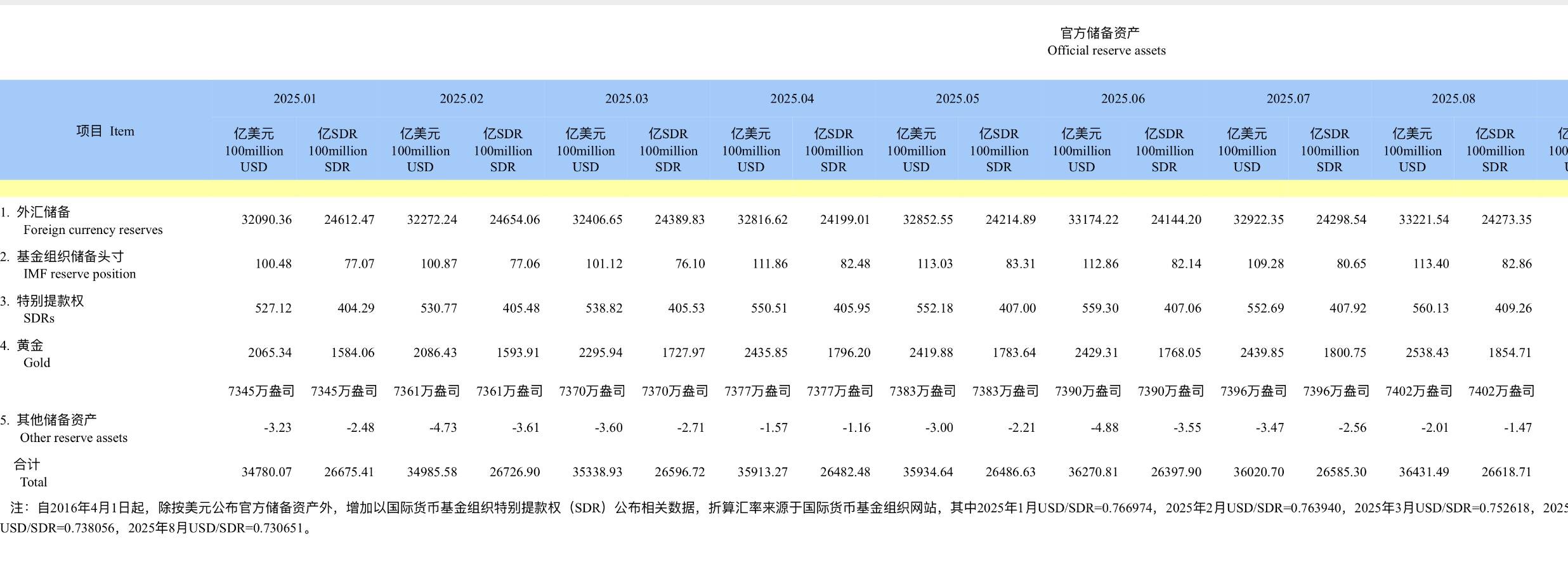
国家外汇管理局9月7日发布的最新统计数据显示,截至8月末,中国外汇储备规模为33222亿美元,较7 月末上升299亿美元,升幅为0.91%。外汇储备规模继6月末后再次站上3.3万亿美元关口。 对于当月外汇储备规模变动,外汇局指出,8月受主要经济体货币政策预期、宏观经济数据等因素影 响,美元指数下跌,全球金融资产价格总体上涨。汇率折算和资产价格变化等因素综合作用,当月外汇 储备规模上升。 对于8月美元指数下滑,多数市场机构分析美元指数走势受当月公布的美国经济数据走弱、市场对美联 储降息预期再度升温等因素影响。过去一个月,美国非农就业人数大幅低于市场预期,反映出近期美国 劳动力市场疲软;美国通胀水平企稳,缓解了市场对美国通胀的担忧;美联储主席鲍威尔在杰克逊霍尔 央行年会上的发言,则进一步强化了市场对美联储在9月降息的预期。 往后看,美联储降息节奏仍有较大不确定性。北京大学国民经济研究中心认为,尽管市场对9月美联储 降息预期升温,但4月以来美国通胀率持续上升、失业率依然相对较低,实际经济数据并不支持降息开 启。 目前,我国外汇储备规模已连续第21个月保持在3.2万亿美元以上。外汇局指出,我国经济运行稳中有 进,展现 ...
8月末我国外汇储备规模升至33222亿美元
Zheng Quan Ri Bao· 2025-09-07 16:26
Core Viewpoint - As of the end of August 2025, China's foreign exchange reserves reached $332.22 billion, marking an increase of $29.9 billion from the end of July, reflecting a growth rate of 0.91% [1] Group 1: Foreign Exchange Reserves - The increase in foreign exchange reserves is attributed to the decline in the US dollar index and the overall rise in global financial asset prices, influenced by monetary policy expectations and macroeconomic data [1][2] - The foreign exchange reserves have reached a new high since 2016, indicating China's enhanced ability to mitigate various shocks [1] - The depreciation of the US dollar by 2.21% in August contributed to the increase in reserves, as non-US currencies appreciated, leading to a higher valuation of reserves when converted to USD [1] Group 2: Economic Resilience - China's economy is showing strong resilience and vitality, which supports the stability of foreign exchange reserves despite external uncertainties [3] - The country has a rich set of macroeconomic tools and ample policy space to tap into domestic demand potential [3] - The diversification of trade regions and the optimization of trade structures, along with the increasing attractiveness of RMB assets to international capital, contribute to maintaining a balanced international payment situation [3] Group 3: Gold Reserves - As of the end of August, China's gold reserves stood at 74.02 million ounces (valued at $25.38 billion), with an increase of 60,000 ounces from July, marking the 10th consecutive month of gold accumulation by the central bank [3] - The proportion of gold reserves to total foreign exchange reserves rose to 7.64%, a historical high, indicating a steady diversification of international reserve assets [3] - Gold has surpassed the euro to become the second-largest international reserve asset after the US dollar [3]
权威数读|多重因素综合作用,8月外汇储备规模上升
Xin Hua She· 2025-09-07 11:18
Core Insights - As of the end of August 2025, China's foreign exchange reserves reached 33,222 billion USD, an increase of 29.9 billion USD from the end of July, representing a growth rate of 0.91% [1][4]. Group 1 - The increase in foreign exchange reserves is attributed to a combination of exchange rate adjustments and changes in asset prices [7]. - The stable performance of China's economy demonstrates strong resilience and vitality, which supports the maintenance of foreign exchange reserves at a stable level [1].


中国7月外汇储备规模环比上涨0.91%,央行连续第10个月增持黄金
Sou Hu Cai Jing· 2025-09-07 10:20
Group 1: Foreign Exchange Reserves - As of August 2025, China's foreign exchange reserves reached $332.2154 billion, an increase of $29.9 billion from the end of July, representing a growth rate of 0.91% [1] - The increase in foreign exchange reserves is attributed to factors such as changes in major economies' monetary policies and macroeconomic data, leading to a decline in the US dollar index and an overall rise in global financial asset prices [2] Group 2: Gold Reserves - The People's Bank of China has increased its gold reserves for the 10th consecutive month, with a total of 74.02 million ounces (approximately 2,098 tons) as of the end of August, reflecting a month-on-month increase of 6,000 ounces (about 1.7 tons) [1] - Since November of the previous year, China has cumulatively purchased 1.22 million ounces (approximately 38 tons) of gold [1] - Gold has emerged as one of the strongest-performing major commodities this year, with a price increase exceeding 30% and reaching a historical high recently [3] Group 3: Market Influences - Factors such as central bank purchases, expectations of interest rate cuts by the Federal Reserve, and political pressures on the Fed have contributed to the recent surge in gold prices [3] - The World Gold Council reports that geopolitical risks will continue to support demand from official sectors, despite a slowdown in the accumulation of gold by central banks as prices rise [5]
央行连续10个月增持黄金,外储止跌回升创近十年新高
第一财经· 2025-09-07 07:55
2025.09. 07 本文字数:2529,阅读时长大约4分钟 作者 | 第一财经 杜川 封图 | AI生成 9月7日,国家外汇管理局公布的数据显示,截至2025年8月末,我国外汇储备规模站上3.3万亿美元,创下2016年1月以来新高。 外汇局表示,8月,受主要经济体货币政策预期、宏观经济数据等因素影响,美元指数下跌,全球金融资产价格总体上涨。汇率折算和资产价格变化等 因素综合作用,当月外汇储备规模上升。 与此同时,央行连续10个月增持黄金储备,8月净增持6万盎司,占外汇储备的比重升至7.64%的历史新高。 外储规模的增长,背后是多重因素共同作用的结果。中银证券全球首席经济学家管涛对第一财经表示,受主要经济体货币政策预期、宏观经济数据等因 素影响,美元指数重回下跌态势,全球金融资产价格总体上涨,非美元货币对美元升值和资产价格上涨对我国外储产生正估值效应。 东方金诚宏观首席分析师王青将外储规模上升的原因概括为两点。首先,美联储释放出清晰的降息信号,这一罕见举动直接引发美元指数快速下跌,当 月跌幅达2.2%。由于我国外汇储备中包含大量非美元资产,美元指数的下跌使得这些非美元资产价格上涨,成为外储规模上升的主要推手 ...

我国外储重回3.3万亿美元大关 黄金储备“十连涨”
2 1 Shi Ji Jing Ji Bao Dao· 2025-09-07 06:39
9月7日,国家外汇管理局统计数据显示,截至2025年8月末,我国外汇储备规模为33222亿美元,较7月 末上升299亿美元,升幅为0.91%。这是我国外汇储备今年第二次站上3.3万亿美元大关,且创下2016年1 月以来新高。 国家外汇局表示,2025年8月,受主要经济体货币政策预期、宏观经济数据等因素影响,美元指数下 跌,全球金融资产价格总体上涨。汇率折算和资产价格变化等因素综合作用,当月外汇储备规模上升。 我国经济运行稳中有进,展现出强大韧性和活力,为外汇储备规模保持基本稳定提供支撑。 东方金诚首席宏观分析师王青解读称,8月外汇储备升高背后主要是年初以来美元大幅贬值,美债收益 率大幅走低,以及全球主要股指上涨带动。按不同标准测算,当前我国略高于3万亿美元的外储规模都 处于适度充裕水平。在外部环境波动加大的背景下,适度充裕的外储规模将为保持人民币汇率处于合理 均衡水平提供重要支撑,也能成为抵御各类潜在外部冲击的压舱石。 黄金储备方面,央行连续第10个月增持黄金。央行公布数据显示,8月末黄金储备报7402万盎司(约 2302.28吨),环比增加6万盎司(约1.86吨)。数据还显示,截至8月末,我国持有黄金储备余 ...
中国8月末外汇储备较7月末上升299亿美元
第一财经· 2025-09-07 04:05
Group 1 - As of the end of August 2025, China's foreign exchange reserves reached 332.22 billion USD, an increase of 29.9 billion USD from the end of July, representing a growth rate of 0.91% [1] - The rise in foreign exchange reserves in August 2025 was influenced by expectations regarding monetary policies of major economies and macroeconomic data, leading to a decline in the US dollar index and an overall increase in global financial asset prices [1] - The stability of China's economic operation, demonstrating strong resilience and vitality, has supported the maintenance of foreign exchange reserves at a stable level [1]

8月末中国外汇储备规模为33222亿美元,较7月末上升299亿美元
Sou Hu Cai Jing· 2025-09-07 02:43
Core Viewpoint - As of the end of August 2025, China's foreign exchange reserves reached 33,222 billion USD, reflecting an increase of 29.9 billion USD from the end of July, marking a growth rate of 0.91% [1] Group 1: Foreign Exchange Reserves - China's foreign exchange reserves increased due to the impact of major economies' monetary policy expectations and macroeconomic data, leading to a decline in the US dollar index and an overall rise in global financial asset prices [1] - The rise in foreign exchange reserves is supported by the stability and resilience of the Chinese economy, which has shown progress [1] Group 2: Economic Indicators - The increase in foreign exchange reserves is attributed to a combination of exchange rate adjustments and changes in asset prices [1] - The data indicates that the Chinese economy is maintaining a stable performance, which is crucial for sustaining the foreign exchange reserve levels [1]
美元指数跌0.56%,报97.74
Mei Ri Jing Ji Xin Wen· 2025-09-05 23:04
Core Points - The US dollar index decreased by 0.56% to 97.74, indicating a weakening of the dollar against other currencies [1] - Most non-US currencies appreciated, with the euro rising by 0.58% to 1.1719 against the dollar [1] - The British pound increased by 0.55% to 1.3509 against the dollar [1] - The Australian dollar gained 0.60% to 0.6557 against the dollar [1] - The dollar fell by 0.71% to 147.4090 against the Japanese yen [1] - The dollar increased slightly by 0.07% to 1.3826 against the Canadian dollar [1] - The dollar decreased by 0.94% to 0.7980 against the Swiss franc [1]