
黄金投资

Search documents
投资课卖12888元 名额售罄!李蓓却被谭珺连环怼 本人最新回应:我不认识她
Mei Ri Jing Ji Xin Wen· 2025-12-31 14:01
Core Viewpoint - The recent public course offering by renowned fund manager Li Bei has sparked significant market discussion, highlighting the evolving dynamics of the asset management industry and the rise of knowledge monetization in finance [1][15]. Group 1: Course Offering and Pricing - Li Bei announced a high-priced investment course titled "Learn Investment from Scratch," priced at 12,888 yuan for four sessions, targeting high-level professionals and affluent individuals [4][7]. - Despite the controversy, the course has reportedly sold out, with potential revenue estimated at approximately 2.58 million yuan if 200 spots were filled [9]. Group 2: Industry Reactions and Criticism - Former analyst Tan Jun has publicly criticized Li Bei's investment philosophy, particularly her views on AI and real estate, suggesting they reflect a misunderstanding of market trends [8][12]. - Tan Jun's critiques include claims that Li Bei's course model resembles that of problematic financial products, indicating a tendency to "precisely harvest conservative wealthy individuals" [8][12]. Group 3: Knowledge Monetization Trend - The rise of knowledge monetization in the finance sector has become a trend, with many former financial professionals leveraging their expertise to create paid content, often at higher price points than typical knowledge products [14]. - This trend reflects a broader shift in the asset management industry, where personal branding and social media presence are increasingly important for professional visibility and engagement [15].


“全民买金”背后:重估黄金投资叙事|2025招商证券“招财杯”ETF实盘大赛
Sou Hu Cai Jing· 2025-12-31 13:46
Core Viewpoint - The article discusses the rising interest in gold investments, particularly through ETFs, driven by central bank purchases and changing perceptions of the dollar's credibility, highlighting the importance of understanding market dynamics and investment strategies in this context [1][14][24]. Group 1: Gold Market Dynamics - Since 2022, central banks have significantly increased their gold purchases, which has been a primary driver of the recent rise in gold prices [14]. - The traditional relationship between gold prices, the US dollar index, and US Treasury yields has been disrupted, particularly after significant geopolitical events [11][13]. - The current gold price dynamics are influenced by a combination of traditional market indicators and new factors, such as the credibility of the US dollar and global economic conditions [12][13]. Group 2: Investment Strategies - Investors are encouraged to adopt a long-term perspective on gold investments, utilizing strategies like dollar-cost averaging to mitigate short-term price volatility [24][26]. - The recommended allocation of gold in an investment portfolio typically ranges from 10% to 20%, depending on individual risk tolerance [25]. - Gold ETFs offer liquidity advantages over physical gold, allowing for easier buying and selling based on real-time market prices [3][4]. Group 3: Market Sentiment and Risks - Short-term market sentiment can lead to price fluctuations, but the long-term bullish outlook for gold remains intact despite these temporary movements [6][7]. - The unique risks associated with gold ETFs include potential price discrepancies between the ETF's market price and its net asset value, which investors should monitor [9]. - The independence of the Federal Reserve is a critical factor influencing market confidence and, consequently, gold prices [15][17]. Group 4: Broader Market Influences - The rise in prices for other metals like copper and silver is also linked to global monetary and fiscal easing, alongside their specific supply and demand dynamics [20][21]. - The interplay between gold and risk assets can lead to simultaneous price movements during liquidity crises, but this does not diminish gold's role as a safe-haven asset [22][23].

黄力晨:黄金跌势逐渐放缓 保持高位震荡调整
Sou Hu Cai Jing· 2025-12-31 13:10
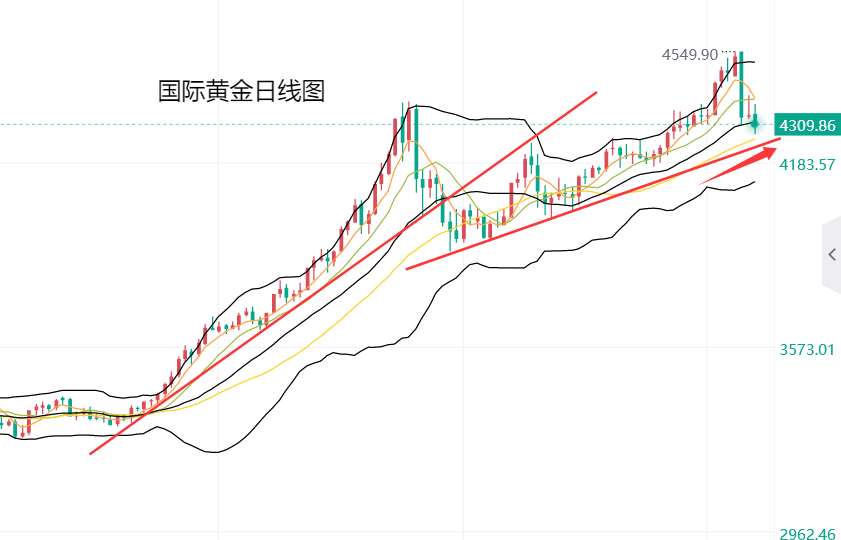
昨日周二我们认为,近期黄金大涨,投资者选择获利了结,造成金价单日大幅下跌,且年关之际假期交易清淡,市场流 动性减少,这加剧了短期的波动性,因此操作上建议大家,下方支撑关注4300美元整数位置,黄金站稳这里,短线有反 弹机会,上方压力关注4350美元附近的突破情况,向上突破关注4400美元整数位置。 日线图上,黄金刷新历史新高后,短线大幅回撤,虽然近期跌势放缓,逐渐企稳调整,但走势仍相对承压。黄金下方支 撑,可以关注4300美元整数位置,其次本周低点4274美元,若短线继续回落,主要关注4200美元整数位置,也是周线 MA10均线位置;黄金上方压力,关注周线MA5均线4335美元附近,这里也是金价从日内低点反弹遇阻位置,向上突破 关注日内高点4373美元,以及4400美元整数位置。5日均线接近形成死叉,MACD指标死叉,KDJ与RSI指标死叉,短期 技术面显示黄金仍存在下行风险。 黄金日内参考:尽管黄金在单日大跌之后,跌势逐渐放缓,但金价短期仍相对承压,反弹略显乏力。操作上建议震荡思 路对待,下方支撑可以关注4300美元,其次4274美元,继续回落则关注4200美元,上方压力可以关注4335美元,向上突 破则关 ...
12888元的投资课名额售罄,李蓓却被谭珺连环怼,本人最新回应
Mei Ri Jing Ji Xin Wen· 2025-12-31 10:33
Core Viewpoint - The recent move by renowned fund manager Li Bei to publicly sell investment courses has sparked significant market discussion, highlighting the evolving dynamics of the asset management industry in the social media era [1][12][14] Group 1: Course Offering and Pricing - Li Bei's investment course, titled "Learn Investment from Scratch," consists of four sessions priced at 12,888 yuan, targeting high-level professionals and affluent individuals [1][3] - The course has reportedly sold out, with potential revenue from 200 participants estimated at approximately 2.58 million yuan [8] Group 2: Market Reactions and Criticism - Former analyst Tan Jun has publicly criticized Li Bei's investment philosophy, particularly her views on AI and real estate, suggesting they reflect a misunderstanding of market trends [4][6] - Tan Jun's critiques include claims that Li Bei's course model resembles that of problematic financial products, indicating a tendency to "precisely harvest conservative wealthy individuals" [6][14] Group 3: Knowledge Payment Trend in Finance - The rise of knowledge payment in the finance sector has become a trend, with many former financial professionals leveraging their expertise to monetize insights through platforms like knowledge circles [12][13] - This trend has led to high pricing for specialized financial knowledge, often exceeding typical knowledge payment products, raising concerns about pricing disputes and service quality [12][13] Group 4: Industry Implications - The controversy surrounding Li Bei's course reflects broader ecological logic within the asset management industry, emphasizing the importance of personal branding and professional content in the social media landscape [14] - The ongoing debate about financial professionals selling courses is likely to persist, with the accuracy of investment views ultimately determined by market performance over time [14]

黄金白银行情巨震!一夜浮亏15万,这车还敢上吗?
Sou Hu Cai Jing· 2025-12-31 10:11
最近黄金、白银这走势,给我整得心跳突突的! 就说12月29日到30日这两天,行情跟坐过山车似的:现货黄金29日一天跌了超5%,失守4310美元/盎 司;白银更狠,29日内便跌超10%,直接跌破71美元。 有人一夜之间就浮亏了15万,这波震荡下来,不少人都慌了神:到底要不要卖? 卖了怕踏空,毕竟今年涨得太猛;不卖又怕再跌,这种心脏骤停式的巨震实在扛不住。 有人一夜浮亏15万!黄金白银这波暴涨暴跌,现在到底是落袋为安,还是再赌一把? 先回顾下今年的行情,你就知道大家为啥纠结了。现货黄金年初才2600多美元,最高冲破4500美元/盎 司,年内涨幅超70%;白银更夸张,最高飙到83美元/盎司,年内涨幅接近150%。 股票这边也不示弱,黄金股里的山东黄金、紫金矿业今年股价都涨了不少,紫金矿业的股价更是涨了 121%;白银股里的盛达资源今年的股价从11块涨到了30块,涨幅超155%,兴业银锡的股价今年涨幅更 是达到了230%。 要是年初拿1万块买了相关标的,现在已然翻倍,这收益谁看了不心动?可面对眼下这忽上忽下的行 情,大家的观点直接掰成了两半:有人说赶紧卖,落袋为安最实在;也有人坚信还能涨,毕竟业内人士 都预判,说明年 ...
YiwealthSMI|11月基金视频号高赞内容升级,深度解读受青睐
Di Yi Cai Jing Zi Xun· 2025-12-31 10:00
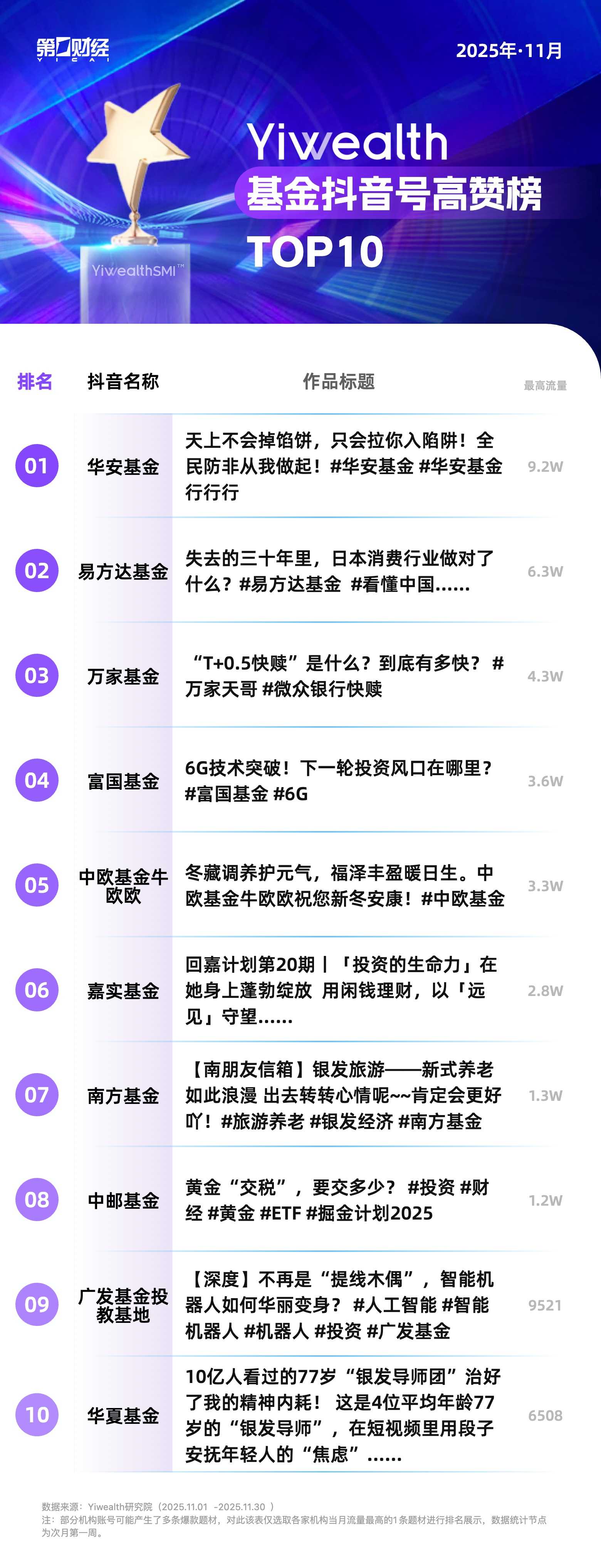
Group 1 - The top three fund companies in November are China Europe Fund, Huaxia Fund, and Fuguo Fund, with several companies like Xingzheng Global Fund and Morgan Fund making it to the top 20 list [1] - Notable educational content on Douyin includes anti-fraud warnings, practical financial knowledge, and industry hot topic analyses, which received significant user engagement [1] - Huaxia Fund's video on financial fraud received nearly 100,000 likes, while E Fund's analysis of Japan's "lost thirty years" garnered 63,000 likes, indicating a trend towards deeper, more professional content [1][6] Group 2 - The November high-view content on fund video accounts shows a trend towards lightweight, engaging formats focusing on industry insights and market outlooks [9] - The high-view live broadcasts on wealth accounts primarily revolve around market hot topics and asset allocation strategies, reflecting a consistent engagement pattern [11] - The public account rankings feature content mainly focused on promotional activities and product advertisements, highlighting a marketing-driven approach [13]
金饰克价一年“暴涨”560元,有人庆幸,“年初买俩镯子省了3万6”
3 6 Ke· 2025-12-31 08:07
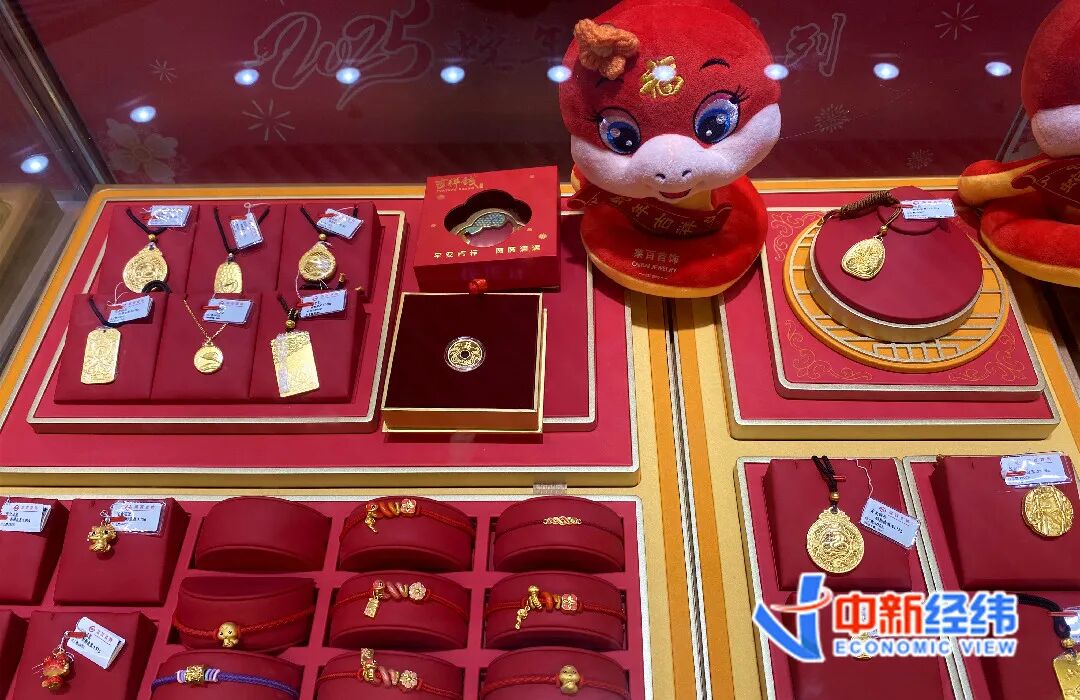
Core Insights - Gold has emerged as a key investment theme for 2025, with spot gold prices reaching $4,373.499 per ounce, marking a 67% increase for the year and over 50 historical highs [1][2]. Price Trends - The price of spot gold has shown significant volatility in 2025, breaking the $3,000 per ounce mark on March 14, surpassing $3,500 in April, and reaching over $4,000 by October 8, eventually exceeding $4,500 by late December [2]. - The price of gold jewelry in China increased from approximately 800 yuan per gram at the beginning of the year to around 1,360 yuan per gram by year-end, reflecting a rise of about 560 yuan per gram [2]. Market Drivers - The strong performance of gold in 2025 is attributed to multiple factors, including heightened geopolitical and economic uncertainties, a weakening dollar, and persistent upward momentum in gold prices. Central banks and investors are increasing their gold holdings for asset diversification and stability [4]. - Key drivers for the rise in gold prices include the Federal Reserve's easing cycle, changes in the credibility of the dollar, and global geopolitical risks [4]. Future Outlook - Market consensus for 2026 leans towards a bullish outlook for gold, although there are differing opinions on the pace and extent of price increases. Potential scenarios include a range of price fluctuations depending on economic conditions, with estimates suggesting gold could reach over $5,000 per ounce [5]. - The World Gold Council's report outlines four potential scenarios for the gold market in 2026, ranging from a mild decline to significant gains depending on economic conditions [5]. Consumer Behavior - The fluctuations in gold prices have influenced consumer decisions, with many individuals sharing experiences of purchasing gold at various price points throughout the year, leading to significant savings compared to current prices [6][9]. - The demand for gold jewelry and investment products remains strong, with notable increases in gold consumption in China, particularly in jewelry and gold bars [10]. Investment Strategies - Different investment channels for gold cater to various investor profiles, including physical gold bars for long-term holders, bank accumulation gold for flexible investment, and gold ETFs for high liquidity [11][12]. - Investors are advised to approach gold investments with a long-term perspective, focusing on asset diversification and risk hedging, while avoiding impulsive trading behaviors [14].
许安丰:12/31黄金调整未结束,回踩不破继续做多
Sou Hu Cai Jing· 2025-12-31 03:59
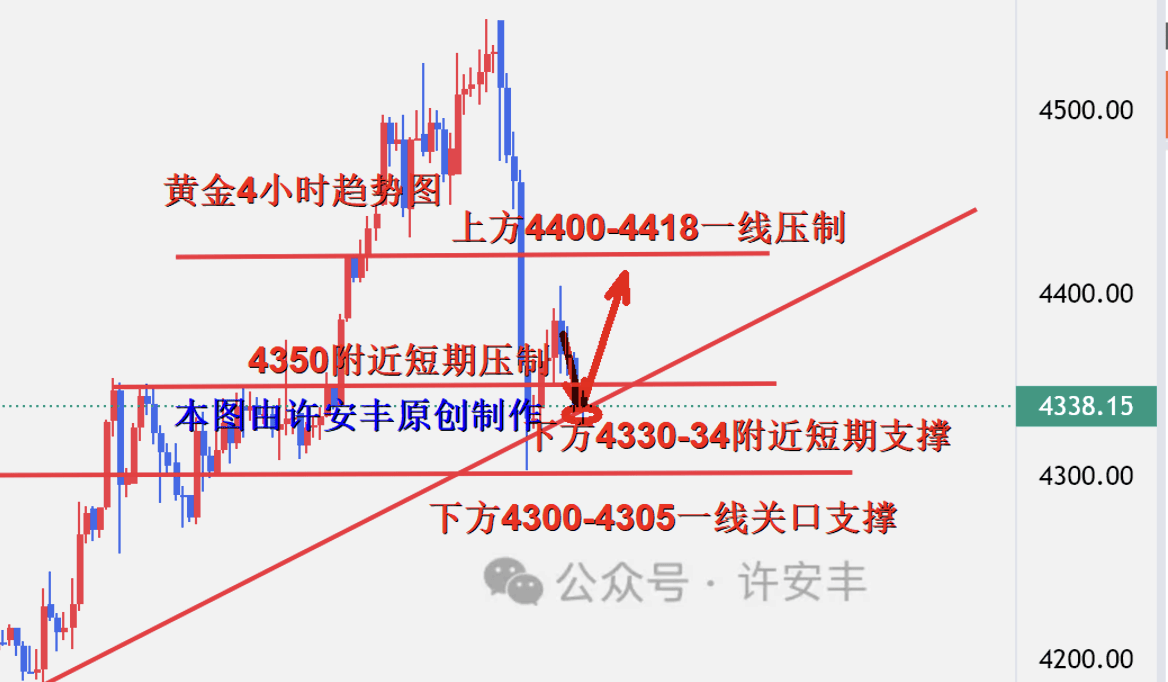
黄金具体行情思路: 方案一:金价回踩4330-4336区间布局多,回撤4320-23附近补仓多,损点4311附近,方向4380-4385区间内,破位看4400-4418区间附近。 注:以上文章由许安丰原创,转载请注明出处。许安丰温馨提示,投资有风险,入市需谨慎。 黄金自3886美元低点反抽后,首轮止步4245美元,第二轮冲高至12月1日承压4265美元,未出现预期二次下跌,多重利多推动下转为震荡整理,本轮调整仅 以价格震荡完成,未达理想回落位,我们没有抓到很低的价格,做上了末班车。但短期上车成本不影响长期看涨逻辑,当前黄金主升核心支撑依然明确:全 球央行持续购金、地缘局势扰动、美联储降息周期延续及全球经济弱复苏,底层逻辑未变则看涨根基不动。2026年我们坚定看好两轮上涨行情,2026上半 年:金价有望冲击5000-5100美元,对应国内金价目标1160-1200,整体上半年延续强势上涨格局。 黄金今天开盘在4332一线,最低回踩至4328一线反弹,我们在盘也是直接给了4330-34附近的多单,目前黄金已经反弹4353附近震荡,早盘虽有回调,但是 多头趋势依旧没有本质的发生变化,回踩不破继续做多,小时线指标平缓 ...
金荣中国:黄金市场经历了剧烈的过山车行情
Sou Hu Cai Jing· 2025-12-31 03:53
基本面: 周三(12月31日)亚盘时段,现货黄金震荡收窄并继续受限承压,目前暂交投于4352美元附近。尽管周二(12月30日)现货黄金价格一度强劲反弹,但最终 涨幅收窄,这反映出市场对避险资产的持续需求与美元走强之间的拉锯。然而,纵观全年,黄金价格已累计上涨66%,有望成为自1979年以来表现最为亮眼 的一年。这一现象不仅源于美联储的货币政策调整,还受到央行购金、资金流入以及国际热点事件的综合影响。 进入2025年末,黄金市场经历了剧烈的过山车行情。周一,现货黄金从上周五创下的历史高点4549.71美元/盎司大幅回落,最低触及4303美元附近,创下自 10月21日以来的最大单日百分比跌幅。这一回落主要源于获利了结的压力,投资者在连续上涨后选择锁定利润,导致市场短期调整。然而,这种下跌迅速吸 引了逢低买盘的介入,推动黄金在周二展开强劲反弹。现货黄金一度上涨1.64%,触及4404美元/盎司附近,显示出市场对黄金避险属性的持续认可。避险买 盘的涌入,进一步强化了这一反弹势头,因为投资者重新关注全球地缘政治和经济风险,将黄金视为安全的港湾。 美元和美国国债收益率的走势,直接影响了黄金的定价机制。周二,美元指数上涨0 ...
12月31日,黄金股票ETF(517400)涨超1.6%,中长期依然看多黄金
Mei Ri Jing Ji Xin Wen· 2025-12-31 03:35
中信建投指出,黄金的VIX指数近期均出现抬升,激发了市场对黄金和铜等有色金属的做多热情。 在经济偏弱、美元走弱以及黄金需求增加的背景下,中长期依然看多黄金。整体来看,弱美元环境及技 术性因素共同推动贵金属价格走强。 中长期看,黄金价格中枢仍有望上行,投资者或可考虑后续回调参与、逢低分批布局。关注直接投 资实物黄金,免征增值税的黄金基金ETF(518800),覆盖黄金全产业链股票的黄金股票ETF (517400)。 风险提示:提及个股仅用于行业事件分析,不构成任何个股推荐或投资建议。指数等短期涨跌仅供 参考,不代表其未来表现,亦不构成对基金业绩的承诺或保证。观点可能随市场环境变化而调整,不构 成投资建议或承诺。提及基金风险收益特征各不相同,敬请投资者仔细阅读基金法律文件,充分了解产 品要素、风险等级及收益分配原则,选择与自身风险承受能力匹配的产品,谨慎投资。 每日经济新闻 (责任编辑:董萍萍 ) 【免责声明】本文仅代表作者本人观点,与和讯网无关。和讯网站对文中陈述、观点判断保持中立,不对所包含内容 的准确性、可靠性或完整性提供任何明示或暗示的保证。请读者仅作参考,并请自行承担全部责任。邮箱: news_cent ...