元宇宙

Search documents
AI竞争压顶,Meta终于杀入风投
虎嗅APP· 2025-07-07 10:36
Core Viewpoint - Meta's CEO Mark Zuckerberg is under pressure to enhance the company's AI capabilities and is adopting a more hands-on approach to management, including the establishment of a Corporate Venture Capital (CVC) unit to attract top talent and improve performance in the AI sector [2][8]. Group 1: Meta's Current Challenges - Zuckerberg's recent management style has shifted to a more direct and micro-level approach, reallocating resources to the GenAI team to boost the performance of LLaMA [2][4]. - There is a growing concern about talent retention at Meta, with reports of AI engineers leaving for competitors like OpenAI and Anthropic, often with offers exceeding $2 million [6][7]. - The AI landscape is becoming increasingly competitive, with Meta's LLaMA struggling to keep pace with rivals like Qwen and DeepSeek, leading to a perception of stagnation in Meta's AI initiatives [6][12]. Group 2: Establishment of CVC - Historically, Meta has not had a dedicated CVC, relying instead on its corporate development teams for acquisitions [4][5]. - The decision to form a CVC is part of Zuckerberg's broader strategy to create a "superintelligence unit" aimed at revitalizing Meta's AI efforts [8][10]. - Meta's investment in the venture fund NFDG, led by Daniel Gross, is a strategic move to gain access to top talent and innovative projects in the AI space [9][12]. Group 3: Financial Implications and Market Dynamics - The AI investment landscape is currently dominated by corporate investments, which accounted for approximately 75% of the total funding in 2023, indicating a scarcity of available high-quality targets [12][13]. - Meta's recent acquisition of Scale AI for $14.8 billion is seen as a critical step in its strategy to bolster its AI capabilities [7][12]. - The overall number of AI startups has decreased significantly, with a reported 81% drop in new AI companies since the peak in 2021, complicating Meta's efforts to secure talent and technology [12][13].



复旦大学郑长忠:稳定币,影响数字时代全球金融格局的新棋子
Guan Cha Zhe Wang· 2025-07-07 07:13
Core Viewpoint - The rise of stablecoins is reshaping the global financial landscape in the digital age, reflecting a dual tension between market credit and state credit, and leading to a new equilibrium in monetary functions and governance [1][2][10]. Group 1: Nature of Stablecoins - Stablecoins represent a compromise between market and state credit, allowing for the issuance of "quasi-currency" under regulatory frameworks in places like the US and Hong Kong [11]. - The evolution of stablecoins has transitioned from algorithmic stability and collateralized assets to a mainstream model anchored by fiat currencies, indicating a reliance on state credit for stability [10][11]. Group 2: Impact on Global Financial System - Stablecoins may lead to a redefinition of monetary functions, pushing sovereign currencies to reassess their roles and promoting a "functional division" in the global monetary system [12]. - The distribution of financial power could shift, with the potential emergence of a multi-currency system comprising "sovereign currencies + scenario-based stablecoins," challenging the dominance of a single currency [13]. - Stablecoins signify a transformation in the relationship between state, market, and technology, suggesting that monetary power is no longer solely state-controlled but is influenced by technological intermediaries [14]. Group 3: US Interest in Stablecoins - The US's enthusiasm for stablecoins is closely tied to maintaining the dollar's dominance, as stablecoins can convert market credit into monetary power, especially in light of rising national debt [15][16]. - The use of short-term US Treasury bonds as collateral for stablecoins could alleviate liquidity pressures on US debt, reinforcing the dollar's global status [15]. - The US is positioning itself to dominate the "metaverse currency" landscape, with stablecoins potentially becoming the universal currency in digital economies, thereby extending dollar hegemony into the digital realm [18]. Group 4: China's Strategic Response - China should develop a stablecoin strategy that aligns with its economic context, focusing on supply chain advantages and ensuring that stablecoins serve the real economy [19][20]. - Collaboration between stablecoins and the digital yuan is essential, with both aiming to enhance the integration of digital and real economies [20]. - A strategy of "innovation-led + inclusive collaboration" is recommended for developing a stablecoin ecosystem that balances risk and efficiency while leveraging China's manufacturing strengths [21].
小扎启动「元宇宙2.0」惹怒硅谷!烧光600亿继续天价挖人,比C罗还贵
创业邦· 2025-07-06 23:57
小扎最近人送外号「硅谷挖掘机」、「最强猎头」、「无情的送财机器」和「AI军阀」。 最近小扎挖人着实有些不是很「体面」。 来源丨新智元(ID:AI_era) 编辑丨 定慧 图源丨Midjourney 活久见,科技圈的「程序员」身价第一次超过C罗了。 这位OpenAI的华人AI研究者Jiahui Yu,在「转会」到Meta的过程中,扎克伯格开出了1亿美金的天 价! 先是逼的OpenAI的奥特曼怒喷:「雇佣兵是战胜不了传教士的,Meta的行事方式,搞得AI圈子乌烟 瘴气」。 然后万年隐身消失的大神Ilya也被逼的出来喊话自封CEO,话里话外,都是亲手送走「叛徒」那味道 ——SSI的创始成员,前CEO Daniel Gross被小扎挖走了。 「你们知道的」、「这叛徒和我一起的时间一直在降低」、「他不再属于SSI的一分子」。 「CEO我先当着了,我谢谢你啊扎克伯格,但别来碰瓷了,我们有钱、有卡,我们的征途是星辰大 海」。 估计Ilya内心都是这种声音,能让一向平和的Ilya用一种向「三体世界喊话」的劲头来发帖。 扎克伯格,真的目前独一份。 扎克伯格如此疯狂的组建他的「超级智能」团队,已经让硅谷的剧情从一流科技风渐渐偏离 ...

奥飞数据: 上市保荐书
Zheng Quan Zhi Xing· 2025-07-06 16:14
Core Viewpoint - Minsheng Securities Co., Ltd. has been appointed as the sponsor for Guangdong Aofei Data Technology Co., Ltd.'s issuance of A-shares to specific investors in 2025, indicating the company's strategic move to raise capital for its growth initiatives [1][2]. Company Overview - Guangdong Aofei Data Technology Co., Ltd. is a leading provider of integrated solutions for internet cloud computing and big data services in China, focusing on building a multi-cloud, multi-network, and multi-end digital industrial ecosystem [3][4]. - The company was established on September 28, 2004, with a registered capital of RMB 985.12 million and is listed on the Shenzhen Stock Exchange under the stock code 300738 [3][4]. Business Operations - Aofei Data offers a wide range of services including IDC (Internet Data Center) services, cloud computing, and big data technology, with operations covering over 30 cities in China [4][5]. - The company has established partnerships with major telecom operators such as China Telecom, China Unicom, and China Mobile, providing essential services like cabinet leasing and bandwidth rental [4][5]. Core Technologies - The company emphasizes research and development, with a focus on proprietary technologies such as AI container storage, edge-cloud collaborative scheduling platforms, and SD-WAN solutions [5][6][7]. - Aofei Data's R&D team consists of 85 members, accounting for 21.3% of the total workforce, with a strong emphasis on hiring talent from top domestic universities [15][18]. Financial Performance - The company's R&D expenditure has shown an upward trend, with a reported investment of RMB 1,459.02 million in the first quarter of 2025, reflecting its commitment to innovation and technology development [18]. - The R&D expenses as a percentage of operating revenue indicate a strategic focus on maintaining a competitive edge in the high-tech industry [18].

从3D到元宇宙空间,网上山东抗日战争纪念馆焕新六大亮点抢先看
Qi Lu Wan Bao· 2025-07-06 12:38
Core Viewpoint - The online Shandong Anti-Japanese War Memorial Hall has undergone a comprehensive upgrade and will officially open to the public on July 7, coinciding with the 80th anniversary of the victory in the Chinese People's Anti-Japanese War and the World Anti-Fascist War [1] Group 1: Upgrade Focus - The upgrade focuses on three dimensions: technology application, content system, and experience model, aiming to create a new platform for red culture dissemination that combines historical depth with contemporary relevance [3] - The new museum achieves a systematic upgrade from traditional exhibitions to immersive experiences and from one-way communication to interactive red education [3] Group 2: Technological Enhancements - The project has improved user experience significantly by upgrading the technical engine to the latest version, allowing for seamless browsing across multiple devices without the need for large downloads [6] - The upgrade employs WebGL 3D graphics rendering and cloud rendering technology, enabling smooth operation on computers, mobile devices, and VR equipment [6] - The immersive experience allows visitors to participate in real-time interactions and collaborative tasks, breaking traditional time and space barriers [6] Group 3: Historical Representation - High-precision 3D scanning and modeling allow for 360-degree panoramic displays of precious historical artifacts, enhancing the detail and engagement of the exhibits [7] - The new exhibits include nearly 100 panels, over 30 books, 20 videos, and more than 10 artifacts, expanding the museum's focus from historical display to contemporary relevance [11] Group 4: Interactive Experience - The upgrade features innovative interactive experiences designed for younger audiences, including holographic projections for "time-space dialogues" and interactive games that simulate historical battles [13] - An AI digital guide named "Guan Guan" has been introduced, capable of answering historical questions and customizing visitor routes based on interests [14] - A historical knowledge graph system has been launched, integrating over 5,000 historical nodes for dynamic visualization and intelligent retrieval [15] Group 5: Cultural Impact - The new museum's exploration of innovative forms and broad audience engagement is seen as significant, enhancing historical recognition and national sentiment among visitors, particularly youth [16]

新书|《一本书学会Manus: AI智能体实战指南》
未可知人工智能研究院· 2025-07-06 12:30
Core Viewpoint - The book "Learn Manus: Practical Guide to AI Agents" aims to transition readers from passive AI users to proactive AI agents, emphasizing the core principles, design philosophy, and practical applications of general AI agents like Manus [1][3][10]. Group 1: Book Overview - The book provides a systematic explanation of the core principles and practical applications of general AI agents, using Manus as a case study [1][3]. - It includes 18 official classic use cases of Manus and offers over 100 ready-to-use prompt templates across four major areas: business operations, education, content creation, and personal life [5][10]. - The authors, led by Dr. Du Yu, have extensive experience in AI and have contributed to national AI projects, ensuring the book's authority and relevance [7][8]. Group 2: Practical Applications - Manus is highlighted for its "actionability," allowing it to decompose tasks, utilize tools, and deliver complete results, unlike traditional chatbots [3][10]. - The book emphasizes practical learning, enabling even zero-based readers to quickly grasp the concepts through case studies and task chain designs [10][11]. - It aims to enhance work efficiency by providing a problem-oriented knowledge chain that connects various concepts and applications [8]. Group 3: Expert Endorsements - Experts in the field have praised the book for its forward-thinking approach and practical insights, indicating its potential to significantly improve work efficiency and provide a vision for the future of AGI [8][10].

山东千万资金助力文艺精品创作孵化
Qi Lu Wan Bao· 2025-07-04 21:09
Group 1: Policy Measures and Support - Shandong Province has introduced a series of policies to support the deep integration of culture and technology, consisting of 23 measures across five areas including project construction, market entities, talent cultivation, financial services, and ecological optimization [1][2] - Financial support for cultural technology enterprises includes R&D expense reimbursements and funding for original cultural technology projects, with awards for notable cultural metaverse products [1][2] Group 2: Action Plan and Goals - The "Cultural Industry Technology Innovation Action Plan (2025-2027)" aims to develop over 20 key technologies with independent intellectual property rights and establish around 20 key enterprises in cultural and technological integration by 2027 [2] - The plan emphasizes the creation of benchmark application scenarios and the cultivation of cultural and technological integration enterprises with Shandong characteristics [2] Group 3: Digital Products and Innovations - Shandong has developed 1,659 high-end software products and 73 first-of-their-kind electronic products, including 16 innovative metaverse products and 18 application scenarios [3] - The province has implemented initiatives that have led to a 91% digital transformation coverage among large-scale industrial enterprises [3] Group 4: Cultural Gene Database and Resources - The province is advancing the "Cultural Gene Decoding and Utilization Project," creating a database to digitize and commercialize cultural resources, with plans for a comprehensive rollout across the province [6] - The initiative aims to develop immersive cultural tourism projects and digital products, facilitating the transformation of cultural resource value through copyright transactions and partnerships [6]
朝阳前瞻布局元宇宙,未来显示产业园等成果批量上新
Bei Jing Ri Bao Ke Hu Duan· 2025-07-04 13:02
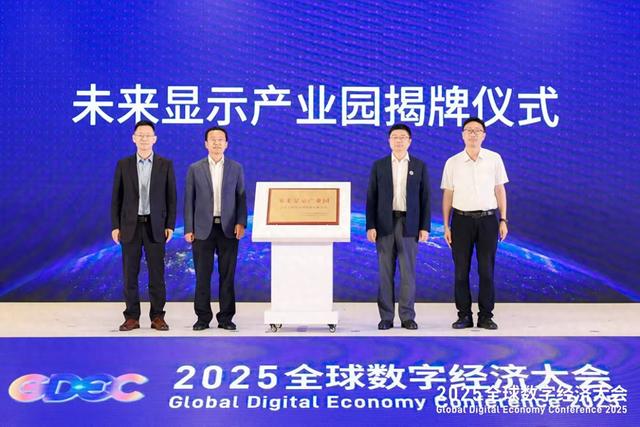
Core Insights - The metaverse is a key future industry for Beijing, with Chaoyang District hosting the largest and most complete metaverse ecosystem in China, highlighted by the 2025 Global Digital Economy Conference focusing on AIGC and metaverse integration [1][2] Group 1: Metaverse Development - Chaoyang District has launched several benchmark application scenarios for the metaverse, including ULive, 798 VR cinema, and digital night tours, which have been recognized as exemplary applications [2] - The district has identified 27 benchmark scenarios and driven 32 key core technology breakthroughs, creating a resource pool of hundreds of solutions across AI and metaverse sectors [2][5] Group 2: Professional Parks and Ecosystem - The newly inaugurated BOE Future Display Industrial Park in Chaoyang aims to leverage cultural media resources and BOE's leadership in the global display industry, focusing on application expansion and creating a comprehensive operational ecosystem [3] - Over the past three years, Chaoyang has attracted more than 1,400 metaverse-related enterprises and established leading companies such as BlueFocus and UINO, completing 32 key technology breakthroughs [5] Group 3: Technological Innovation and Integration - Chaoyang is focusing on the integration of AIGC and metaverse industries, promoting innovations in AI, virtual reality, and ultra-high-definition technologies to transform content production and foster new digital economy business models [6]
科技“魔棒” 续航城市灯火
Jin Rong Shi Bao· 2025-07-04 06:32
Group 1: Overview of SoReal Theme Park - SoReal theme park, located in Shijingshan District, Beijing, has transformed a century-old blast furnace into a space exploration-themed sci-fi park, attracting nearly one million visitors in its first year of operation in 2024 [1][3] - The park integrates advanced technologies such as AI, AR, VR, and 5G to create immersive experiences, blending culture, entertainment, and education [2][3] Group 2: Technological Integration - The park utilizes 5G and XR technologies to enhance visitor experiences, allowing for virtual interactions and immersive storytelling [2][3] - SoReal aims to combine technology and culture, creating a unique aesthetic experience that resonates with visitors [2][3] Group 3: Economic Impact - The sci-fi industry in Beijing has seen significant growth, with over 780 sci-fi enterprises generating approximately 48 billion yuan in total revenue by 2024 [7][8] - The Shijingshan District has established itself as a hub for sci-fi enterprises, contributing to the local economy with a projected income of 15.3 billion yuan from the sci-fi industry in 2024 [8] Group 4: Cultural and Technological Development - The integration of culture and technology is emphasized in the "14th Five-Year Plan for Cultural Development," promoting the modernization of cultural production and dissemination [5] - The Shijingshan District is focusing on building a modern industrial system that combines cultural and technological elements, enhancing its economic landscape [8][11] Group 5: Future Prospects - The company plans to expand its offerings with new projects, including the "SoBattle" esports module, aiming to establish a thousand physical stores by 2025 [4] - The ongoing development of the sci-fi industry in Beijing is supported by government initiatives to foster innovation and technological advancement [6][10]
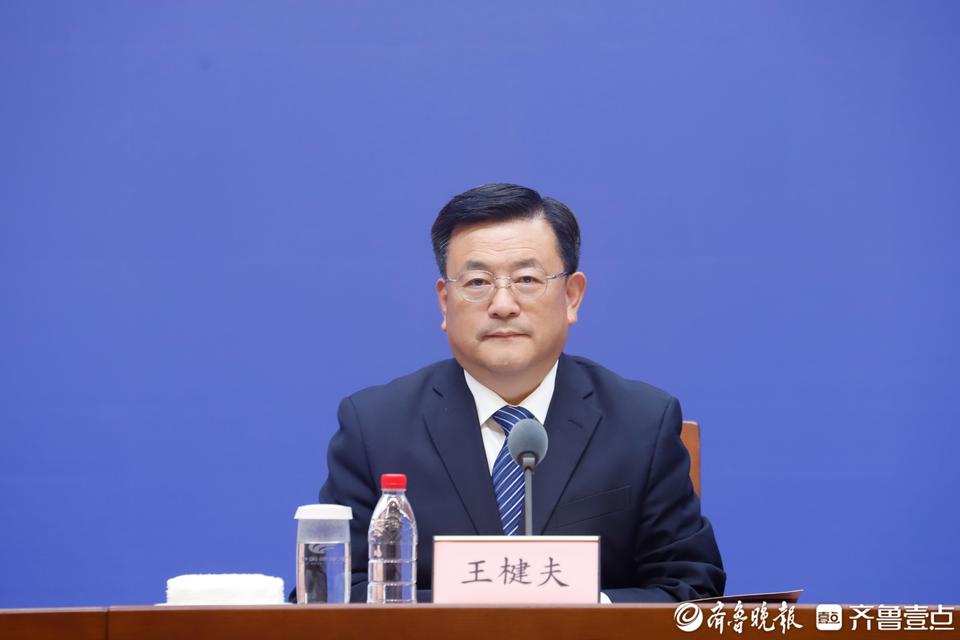
山东:培育齐鲁文化大模型等在内的首版次高端软件1659个
Qi Lu Wan Bao Wang· 2025-07-04 03:11
Core Viewpoint - The Shandong provincial government is actively promoting the integration of culture and technology through a series of supportive policies, emphasizing the importance of information technology in driving innovation and development in these sectors [1][3]. Group 1: Achievements in Information Technology - Shandong has made significant progress in developing its information technology sector, with a projected revenue of 2.2 trillion yuan in 2024 and a revenue of 693.37 billion yuan from January to May this year, representing an 18.8% year-on-year growth [3][4]. - Key companies such as Inspur and GoerTek lead in global markets, with Inspur's AI server shipments and GoerTek's high-end virtual reality headsets holding top positions globally [3][4]. Group 2: Market Entities Supporting Integration - Shandong has over 40,000 industrial enterprises, including 1,093 electronic information manufacturing companies, which are crucial for supporting the integration of culture and technology [4]. - The province has established 46 national-level industrial internet platforms, the highest in the country, and has created the first digital transformation promotion center for small and medium-sized enterprises [4]. Group 3: Digital Products and Innovations - The province has developed 1,659 high-end software products, 73 first-of-their-kind electronic products, and 16 innovative "name brands" in the metaverse, significantly enhancing the digital transformation of cultural enterprises [4][5]. - The implementation of various initiatives has led to a 91% coverage rate of digital transformation among large-scale industrial enterprises in Shandong [4]. Group 4: Future Initiatives - The provincial government plans to strengthen technology supply in the cultural sector by enhancing manufacturing innovation centers and supporting cultural enterprises in adopting new technologies [5][6]. - There will be a focus on cultivating leading enterprises in the integration of culture and technology, promoting the application of metaverse technologies, and expanding 5G network coverage in key cultural areas [6].