数智化转型

Search documents
持续改善!国家统计局最新发布
证券时报· 2025-05-27 08:00
Core Viewpoint - The industrial profits of large-scale enterprises in China showed a year-on-year growth of 3.0% in April, indicating a continuous improvement in profit growth for the year [1][4]. Group 1: Industrial Profit Growth - In the first four months of the year, the profit growth of large-scale industrial enterprises was 1.4%, accelerating by 0.6 percentage points compared to the first quarter [4]. - In April alone, the profit growth was 3.0%, which is an increase of 0.4 percentage points from March [4]. - Among 41 major industrial sectors, 23 sectors experienced year-on-year profit growth, indicating a growth rate of nearly 60% [4]. Group 2: Sector-Specific Performance - The equipment manufacturing and high-tech manufacturing sectors saw significant profit growth, with equipment manufacturing profits increasing by 11.2% and high-tech manufacturing profits rising by 9.0% in the first four months [4]. - The profit growth in high-tech manufacturing was 7.6 percentage points higher than the average for all large-scale industrial enterprises [4]. - Specific industries related to "artificial intelligence+" and smart products saw profits more than double, such as semiconductor device manufacturing (105.1% growth), smart vehicle equipment manufacturing (177.4% growth), and smart unmanned aerial vehicle manufacturing (167.9% growth) [6]. Group 3: Economic Outlook - Despite uncertainties in the international trade environment and pressures from global economic downturns, China's economic resilience is strong, supported by policy initiatives and industrial upgrades [7]. - The manufacturing sector is expected to continue its transformation towards high-end, intelligent, and green development, with high-tech and high-value-added industries projected to maintain rapid growth [7].


当艾芬达遇上数智化 引领企业发展新风向
Zheng Quan Ri Bao Wang· 2025-05-27 06:50
Core Insights - Intelligent manufacturing has become a key aspect of enterprise transformation in the digital age, leading to significant changes in business models [1] - Jiangxi Aifenda Heating Technology Co., Ltd. (Aifenda) has proactively entered the intelligent manufacturing sector, significantly enhancing production efficiency and product quality through advanced technology [1][2] - Aifenda has been recognized as a leading enterprise in the electric towel rack industry and has received multiple honors for its smart manufacturing and green manufacturing capabilities [1] Group 1 - Aifenda's revenue for 2024 is projected to reach 1.05 billion yuan, representing a year-on-year growth of 26.41%, while its net profit after deducting non-recurring items is expected to be 128 million yuan, up 46.01% year-on-year [1] - The company has seen a steady increase in R&D investment over the past three years, mastering eight core technologies and holding a total of 736 patents, including 87 invention patents by the end of 2024 [2] - Aifenda has established the first intelligent unmanned production line for electric towel racks in China, incorporating advanced automated production lines to enhance efficiency and optimize processes [2][3] Group 2 - Aifenda emphasizes that intelligent manufacturing encompasses more than just equipment upgrades; it also involves the integration of advanced digital systems for comprehensive process management [3] - The company has developed a MES digital platform to achieve real-time tracking and management of production data, ensuring a closed-loop management system [3] - As consumer preferences shift towards comfort, safety, fashion, and intelligence in bathroom products, Aifenda aims to strengthen its position and continue leading the industry in the heating and ventilation sector [3] Group 3 - On May 26, Aifenda submitted a change in its IPO review status to "submitted for registration" on the Shenzhen Stock Exchange's Growth Enterprise Market, with Zheshang Securities as its sponsor, aiming to raise 664.68 million yuan [4]
2025年全球贸易投资促进峰会举行,泸州老窖携手国际社会共话数智时代发展
Xin Jing Bao· 2025-05-27 04:52
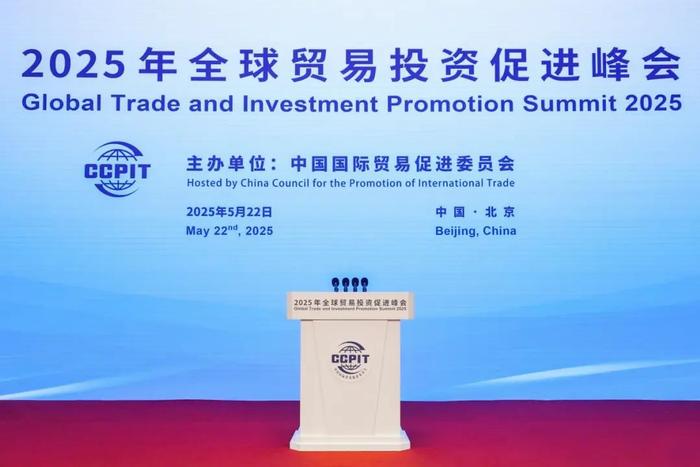
5月22日,由中国贸促会主办的2025年全球贸易投资促进峰会在北京举行。峰会主题为"拥抱数智时代, 携手共同发展"。全球贸易投资促进峰会自2022年创办以来,已经连续举办三届,逐渐成为全球工商界 对话交流、深化互信、共谋合作、共话发展的重要机制性平台。 本次峰会,来自48个国家和地区的政府部门、贸促机构和商协会及企业代表,以及国际组织负责人等 800余人线下参会。与会嘉宾谈合作、话机遇,推动国际社会共迎挑战、共创未来。泸州老窖股份有限 公司首席数字官、泸州老窖国际发展(香港)有限公司董事长苏王辉出席峰会并作主题分享。 推进数智化转型升级 泸州老窖主要实施了"三大行动"。一是实施数智赋能管理提升行动。通过做好数智化顶层架构规划设 计,推进营销数字化、管理数字化、酿酒生产数字化、供应链数字化、人才和组织数字化升级,实现订 单流、资金流、信息流、物流和行政流的"五流贯通",构建起了高效畅通的跨体系、跨部门、跨单位协 同机制。 二是实施数智赋能生产行动。泸州老窖黄舣酿酒生态园充分运用人工智能、仿真技术、工业机器人技术 等手段,将优秀人工操作技术整理成数据参数,实现了智能化、自动化操作,固态酿造生产智能化水平 居行业前 ...

前4个月半导体器件专用设备制造、电子电路制造、集成电路制造等行业利润分别增长105.1%、43.1%、42.2%
news flash· 2025-05-27 01:36
Core Insights - High-tech manufacturing industry profits increased by 9.0% year-on-year from January to April 2025, accelerating by 5.5 percentage points compared to the first quarter, and outpacing the average profit growth of all industrial enterprises by 7.6 percentage points [1] Industry Performance - Profits in the biopharmaceutical manufacturing and aircraft manufacturing sectors grew by 24.3% and 27.0% year-on-year, respectively, reflecting the ongoing advancement of high-end manufacturing [1] - The "Artificial Intelligence+" initiative has driven significant profit increases in several sectors: - Semiconductor device manufacturing profits surged by 105.1% - Electronic circuit manufacturing profits rose by 43.1% - Integrated circuit manufacturing profits increased by 42.2% [1] - Intelligent products are facilitating digital transformation, with profits in related sectors showing remarkable growth: - Smart vehicle-mounted equipment manufacturing profits soared by 177.4% - Smart unmanned aerial vehicle manufacturing profits jumped by 167.9% - Wearable smart device manufacturing profits increased by 80.9% [1]
AI时代驱动联接升级,F5G-A万兆全光网成为园区新标配
Sou Hu Cai Jing· 2025-05-26 07:27
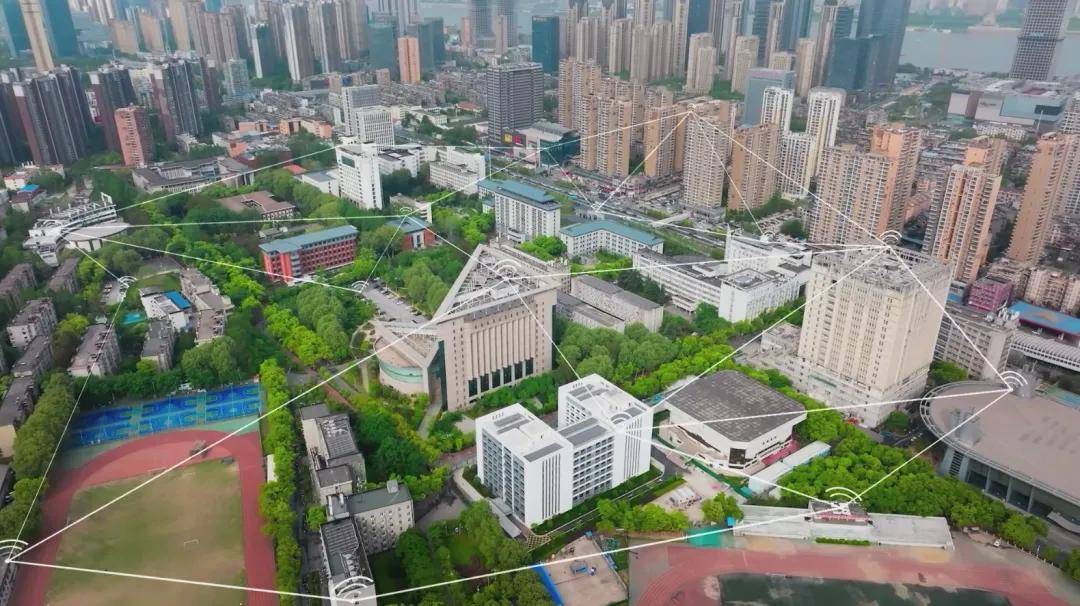
Core Insights - The deployment of F5G-A 10G optical networks is driving digital transformation across various sectors, including education, healthcare, and manufacturing, by providing high-speed, low-latency, and reliable connectivity [1][10][11] - Huawei is enhancing F5G full optical parks through upgrades in bandwidth, scenarios, operations, and planning, aiming to create smart campuses, hospitals, and factories [2][10] - The increasing application of AI technologies in sectors like education and healthcare necessitates the construction of networks with larger bandwidth, lower latency, and higher reliability [3][10] Education Sector - Hubei University has implemented a comprehensive digital network to support high-definition video teaching and large-scale online courses, addressing challenges such as insufficient bandwidth and complex operations [5][9] - The university's F5G-A optical campus network allows for seamless connectivity, enabling advanced applications like 3D scene downloads and AI integration in research projects [11][13] Healthcare Sector - Nanshan Hospital is integrating AI throughout its diagnostic processes, supported by a robust optical network that enhances data transmission speeds and reliability [7][9][11] - The hospital's collaboration with Huawei aims to upgrade its traditional network to a full optical architecture, meeting the demands of modern healthcare applications [9][10] Manufacturing Sector - XCMG Power is leveraging F5G-A optical networks to facilitate real-time data uploads for quality inspection, ensuring precision in AI-driven processes [10][13] - The company has achieved network integration across production, office, and design networks, enhancing data security and operational efficiency [13] Industry Trends - The Chinese government is promoting the rollout of 10G optical networks through pilot programs, emphasizing the integration of AI and optical technologies in various applications [6][10] - The F5G-A optical network is positioned as a foundational infrastructure for the digital transformation of industries, supporting a wide range of AI applications [10][11]
从“论吨卖”到“按颗售”——中国锡产业创新驱动提速应对市场挑战
Xin Hua Cai Jing· 2025-05-26 06:38
Core Viewpoint - The Chinese tin industry is accelerating its strategic transition towards "resource efficiency - technological breakthroughs - ecological reconstruction" in response to global high-end manufacturing competition and supply chain restructuring [1] Group 1: Industry Demand and Supply Dynamics - Tin is widely used in semiconductor chips, military defense, 5G, and electronics, with a significant role in emerging fields like renewable energy and AI [2] - The global semiconductor sales are projected to reach $627.6 billion in 2024, a 19.1% increase from $526.8 billion in 2023, with tin consumption in semiconductor packaging expected to grow by 5% to 7% by 2025 [2] - Global refined tin consumption is expected to grow by approximately 0.5% this year, despite challenges in the supply chain due to disruptions in tin mining [2][3] Group 2: Supply Chain Challenges - The tin supply chain faces multiple challenges, including disruptions from mining operations in Myanmar and the Democratic Republic of Congo, which significantly impact global tin production [2][3] - The "demand surge - supply constraint" scenario poses challenges for companies, prompting them to enhance supply chain resilience through various strategies [3] Group 3: Technological Innovation and Market Positioning - The Chinese tin industry is focusing on technological innovation to overcome existing weaknesses, particularly in high-value-added products in the new materials sector [4] - The deep processing output value of tin products in China has increased from 35% to nearly 60% since 2020, with high-end products contributing 70% to profit growth [6] - Companies like Yunxi Group are advancing in micro-level solder materials, achieving significant production efficiencies and entering high-end supply chains [5][7] Group 4: Strategic Initiatives and Future Outlook - The Chinese tin deep processing product export volume is expected to grow by 28% in 2024, with solar welding strips capturing over 40% of the global market share [7] - Companies are implementing management reforms and technological upgrades to meet the rising demand in high-end manufacturing sectors [7][8] - Yunxi Group plans to implement over 100 new technology projects by 2025, focusing on key technologies in high-performance tin-based electronic materials [8]
大模型在会计行业的应用仍处于技术导入期
Xin Hua Cai Jing· 2025-05-25 11:42
Core Insights - The forum hosted by Shanghai National Accounting Institute revealed the top ten information technologies impacting the Chinese accounting industry by 2025, with AI general models ranking first and multimodal data analysis making its debut [1][2] - The five potential impact technologies identified include generative AI (AIGC), financial multimodal vertical models, AI agents, digital employees with intelligent scheduling management, and the integration of finance, taxation, and data [1][2] - The rapid evolution of information technology and the proactive adoption of new technologies by accounting professionals indicate a significant shift in the industry [1][3] Group 1: Current and Potential Technologies - AI general models are currently in the technology introduction phase within the accounting sector, but their disruptive potential is widely recognized by experts and the public [1][2] - Multimodal models are reshaping the entire financial management process by integrating structured and unstructured data [2] - The application of AI technology in the medical sector illustrates the need for balancing safety and ethics, emphasizing the importance of human intervention in intelligent decision-making [2] Group 2: Industry Transformation and Challenges - The emergence of new AI models like DeepSeek is accelerating the digital transformation of the accounting industry, shifting financial functions from traditional accounting to strategic empowerment [2][3] - Financial digital employees are transitioning from pilot testing to large-scale implementation, indicating a significant evolution in the accounting profession [2] - The integration of advanced technologies necessitates a recognition that machines cannot replace human business insight, highlighting the importance of a collaborative future between humans and machines [2]
华能智慧招采平台:AI“招采管家”上线
Zhong Guo Neng Yuan Wang· 2025-05-24 03:41
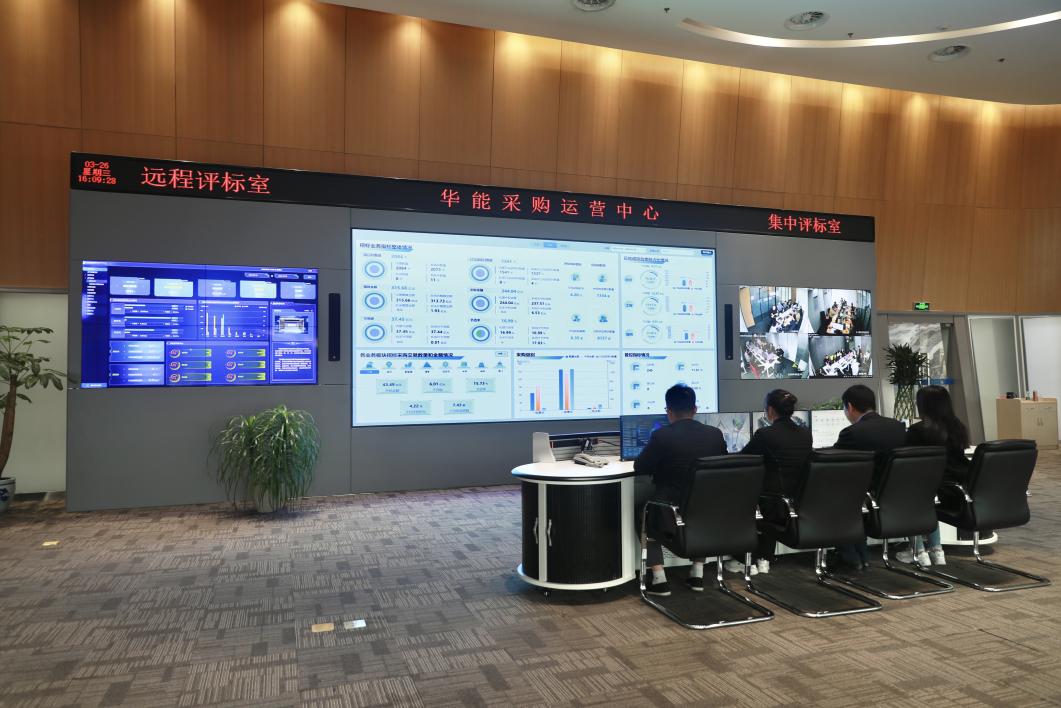
Core Viewpoint - Huaneng's procurement platform has successfully integrated the DeepSeek AI model, completing evaluations for 300 procurement projects, significantly enhancing the digitization of the procurement process [1][3]. Group 1: AI Model Development - Huaneng's bidding company initiated the development of an AI procurement model six months ago, becoming a pioneer in embedding AI into the procurement business chain across the country [3]. - The DeepSeek model has greatly improved the comprehensive analytical capabilities of the AI procurement model, with over 400 bidding projects in trial operation by the end of March, achieving a verification accuracy rate of 90% and a 50% increase in manual review efficiency [3][4]. Group 2: Challenges in Procurement Evaluation - The evaluation process for bids is lengthy and labor-intensive, requiring experts to review extensive documents within a limited timeframe, which can lead to incomplete information extraction and subjective biases [3]. - Huaneng's bidding company aims to enhance evaluation quality and efficiency while mitigating subjective biases and identifying risks of collusion through AI [3][4]. Group 3: Data Utilization and Model Training - Developing a specialized AI model for procurement involves extensive data training, with the team compiling over 200 categories of data and more than 100,000 Q&A pairs to address the model's adaptation challenges [5]. - The AI model has undergone over 30 iterations to improve its ability to analyze various document types, including PDFs and scanned files, and to understand industry terminology [7]. Group 4: Impact on Procurement Process - The implementation of the AI model in the evaluation phase has reduced the average review period from three days to between 1.5 and 2 days, allowing personnel to focus on strategic decision-making rather than repetitive tasks [7]. - In the first quarter, Huaneng completed 10,961 procurement projects, enhancing the quality of service for China Huaneng's procurement operations and promoting the "Huaneng Procurement" brand in the market [8]. Group 5: Future Prospects - The ongoing advancements in computational power and intelligent algorithms are expected to further upgrade and transform the procurement process in the cloud [8].

泰康资产:筑牢数智化转型基石,锚定数字金融高质量发展
经济观察报· 2025-05-23 14:00
站在资产管理规模突破四万亿元的全新发展阶段,泰康资产的 数字金融发展也逐步迈上新台阶。 作者: 李言 封图:图片资料室 数字金融是建设金融强国的底座,数智化转型是金融业高质量发展的必由之路。泰康资产 作为行业领先的 保险 资管机构, 面对业务条线复杂、资产 管理密度大、协同性要求高等业态特征,始终将数智化转型作为公司发展的核心战略之一。 经过多年实践探索,泰康资产数字金融发展多点突破,赋能投资研究能力,提升业务承载能力和整体运作效率,降低资产管理规模增长的边际成本, 夯实 合规 稳健经营,护航高质量发展。 赋能投研体系升级,锻造核心竞争力 近年来,伴随 经济环境变化和产业发展迭代 , 传统 投资 研究模式 面临一定挑战,打造适应时代要求的投资研究体系成为行业共识。数字金融为投 研体系的升级提供强大的技术支撑和数据基础。 泰康资产 通过 "人+AI+数据+平台"的深度融合 ,成为资管机构投研体系数智化迭代升级的成功案例。公司 投研团队和科技团队组成数智化投研小 组,支持宏观、固收、权益等投资研究体系的线上沉淀和迭代,形成 "宏观-中观-微观"数字化研究体系, 全力支持 构建穿越大周期的投研能力。 此外 ,泰康资 ...

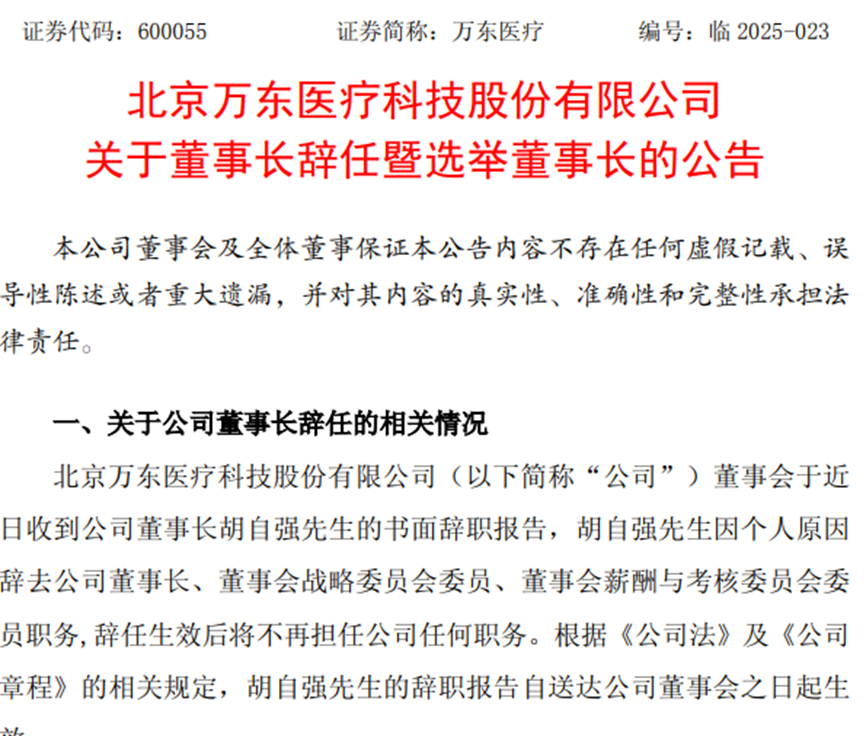
医学影像龙头万东医疗董事长辞职,美的系老将马赤兵接棒
Guo Ji Jin Rong Bao· 2025-05-23 13:05
Core Viewpoint - The resignation of Hu Ziqiang as chairman of Wandong Medical marks a significant personnel change, indicating Midea Group's deeper strategic integration in the medical sector since acquiring Wandong Medical in 2021 [1][5]. Group 1: Leadership Changes - Hu Ziqiang resigned due to personal reasons and performance decline, with his departure being the second major personnel adjustment since Midea's acquisition [1][5]. - The new chairman, Ma Chibing, has over 20 years of experience at Midea Group and emphasizes an "AI + Medical" strategy [5][6]. Group 2: Financial Performance - Wandong Medical's 2024 total revenue is projected at 1.524 billion yuan, a year-on-year increase of 23.26%, while net profit is expected to decline by 16.54% to 157 million yuan [5]. - The company's gross margin has decreased by 5.52 percentage points, reflecting challenges in maintaining profitability [5]. Group 3: Strategic Direction - Midea Group has elevated "Health Care" to a core business segment, alongside smart home and industrial technology, indicating a strategic shift towards ecosystem building rather than just equipment manufacturing [6][9]. - Wandong Medical aims to position itself as a provider of "Chinese solutions" in the global medical imaging field, moving away from merely replicating competitors [7][9]. Group 4: Market Challenges and Opportunities - The company faces declining sales in its main DR products, with shipments dropping from 1,800 units to 1,272 units, a nearly 30% decrease [9]. - Despite challenges, Wandong Medical's new "helium-free" MRI technology is gaining attention, with significant advancements in imaging speed and cost efficiency [11][12]. Group 5: Global Expansion - Wandong Medical's international sales have increased, with overseas revenue rising from 12% in 2021 to 28% in 2024, reflecting a successful global strategy [12].