食品安全

Search documents
没秘密吃得更安心—— 探访浣熊食堂后厨直播
Zhong Guo Zhi Liang Xin Wen Wang· 2025-05-27 06:58
Core Viewpoint - The article highlights the implementation of the "Internet + Bright Kitchen" model in the food delivery industry, specifically through the example of the Raccoon Canteen, which enhances food safety transparency and consumer trust in the food delivery process [1][2][3]. Group 1: Implementation of "Internet + Bright Kitchen" - The Raccoon Canteen has adopted a real-time kitchen live-streaming feature, allowing customers to see the cooking process when ordering food [1]. - This initiative aligns with the Chinese government's push for enhanced food safety regulations, as outlined in the recent policy document from the Central Committee and the State Council [1][2]. - Major restaurant brands such as Quanjude, Laoxiangji, and Yunhaiyao have already joined this model, indicating a broader industry trend towards transparency [1]. Group 2: Consumer Trust and Safety Measures - Consumers express increased confidence in food safety due to the ability to view live kitchen operations, as evidenced by a local resident's comments on the impact of the "Bright Kitchen" model [2]. - The Raccoon Canteen has established a comprehensive safety management system, including a "Food Safety Diary" that documents inspection logs and cleaning records [2]. - The initiative aims to transform the perception of hidden kitchens into transparent ones, thereby enhancing public trust in food safety [3]. Group 3: Financial Support for Small Businesses - Meituan is providing full subsidies for hardware and installation costs to small and medium-sized food businesses to facilitate the "Bright Kitchen" transformation, with an initial funding pool of 50 million yuan [3]. - Small businesses can achieve a "zero-cost" transformation if they meet the requirement of 120 hours of live streaming within a month [3]. - This financial support is part of a broader strategy to innovate restaurant management and ensure comprehensive quality assurance from sourcing to delivery [3].

山东省威海市食品安全监督抽检信息通告(2025年第5期)
Zhong Guo Zhi Liang Xin Wen Wang· 2025-05-26 08:49
Core Viewpoint - The Weifang Municipal Market Supervision Administration has conducted a special food safety inspection focusing on traditional festival foods, particularly rice dumplings, ahead of the Dragon Boat Festival, ensuring compliance with national food safety laws and regulations [3]. Group 1: Food Safety Inspection - The inspection was organized in accordance with the Food Safety Law of the People's Republic of China and the city's food sampling plan for 2025 [3]. - The inspection specifically targeted categories such as pastries (rice dumplings) and egg products [3]. - The results of the inspection will be publicly disclosed by the market supervision department, which is responsible for interpretation and accepting public supervision [3]. Group 2: Consumer Guidance - Consumers are encouraged to report any food safety issues encountered by calling the complaint hotline 12345 (12315) [3]. - The announcement emphasizes the establishment of a unified food safety information platform for public disclosure of food safety information [3]. Group 3: Product Sampling Information - The document includes a detailed table of sampled products, including brand names, production dates, and specifications, indicating a thorough approach to monitoring food safety [3]. - Specific products listed include various types of rice dumplings from different manufacturers, highlighting the diversity of products under scrutiny [3].

抽检40批全部合格,济南市场监管开展粽子类食品安全专项检查
Qi Lu Wan Bao Wang· 2025-05-26 06:40
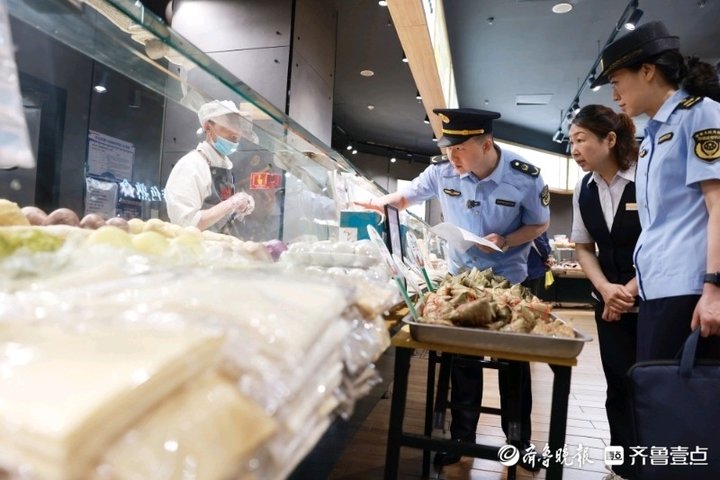
"冰柜设置的温度是多少?要去掉遮挡物,能清楚地看到温度显示屏才行。"由于冰柜外部粘贴了装饰 层,无法看到设置的温度,超市工作人员取来测温器现场实测。经测量,冰柜内温度约为-23℃,符合 ≤-18℃的储存条件。 "这款常温粽子保质期只有2天,今天卖不完的话,怎么处理?"执法人员询问。"下班前会降价促销卖 掉。"销售人员答。"一定不能冻起来,明天解冻后再卖。多次复冻、解冻可能会导致食品变质。" 齐鲁晚报齐鲁壹点记者李培乐 端午佳节临近,粽子等节令食品进入销售高峰期。为保障市民节日期间"舌尖上的安全",近日,济南市 市场监管局执法人员对部分食品经营单位开展了粽子类食品安全专项检查。 在消费者眼中,粽子分为蜜枣、豆沙、八宝、猪肉、咸蛋黄等不同口味或品牌;在市场监管执法人员看 来,粽子则分为散装、礼盒、小包装,冷冻、常温、热加工等不同包装和存储类型。针对不同类型粽子 的特点,执法人员重点对供货商资质、标识标签、检验报告、外包装、储藏条件等方面开展了检查。 "像这种已经煮好的热粽子,旁边可以放一个夹子或者保鲜袋,避免消费者挑选时直接用手拿,对食品 造成污染。"随后,熟食区销售人员对暴露在外面的即食商品加盖了透明遮罩,并摆 ...
西安市鄠邑区市场监督管理局关于第10期食品监督抽检产品信息的通告(2025年第10号)
Zhong Guo Zhi Liang Xin Wen Wang· 2025-05-23 09:11
Overall Situation - A total of 51 batches of food were tested, with 49 batches passing the safety inspection, indicating a high compliance rate of approximately 96.08% [1] - All categories of convenience foods, fruits, seasonings, candies, vegetables, biscuits, dining foods, grain products, dairy products, oils, beverages, starches, meat products, and snacks were found to be compliant [1] Non-compliant Products - Two batches of edible agricultural products were found non-compliant: - Line pepper from Lixia Vegetable Store had a pesticide residue (Aldicarb) of 0.25 mg/kg, exceeding the standard limit of 0.2 mg/kg [2] - Bananas from Zhudong Supermarket had a pesticide residue (Thiamethoxam) of 0.030 mg/kg, exceeding the standard limit of 0.02 mg/kg [2] Compliant Products - The report includes a list of compliant products from various manufacturers, including: - Gancao Apricot from Huaxia Food Co., Ltd. [3] - Iodized refined salt from Hubei Changzhou Salt Chemical Co., Ltd. [3] - Da Bai Tu Milk Candy from Shanghai Guanshengyuan Tianshan Food Co., Ltd. [3]
重庆市铜梁区市场监督管理局关于109批次食品安全抽检情况的通告(2025年第2号)
Zhong Guo Zhi Liang Xin Wen Wang· 2025-05-23 09:08
Summary of Key Points Core Viewpoint - The Chongqing Tongliang District Market Supervision Administration conducted a food safety inspection of 109 batches of edible agricultural products, revealing that 107 batches passed while 2 batches failed the safety standards [2]. Group 1: Inspection Results - A total of 109 samples were tested, with 107 passing and 2 failing the safety standards [2]. - The specific failures included one sample of loach with enrofloxacin residue at 276 μg/kg, exceeding the standard limit of 100 μg/kg [2]. - Another failure involved longan with a sulfur dioxide residue of 0.181 g/kg, surpassing the permissible limit of 0.05 g/kg [2]. Group 2: Regulatory Actions - The local market supervision authority initiated legal actions against the non-compliant products as per the Food Safety Law of the People's Republic of China [2]. - Risk control measures were implemented, including tracing the product flow, recalling, and removing the non-compliant products from the market [2]. - The authorities are also analyzing the causes of the failures and enforcing corrective actions [2].
山姆又出事!全批次下架封存!
券商中国· 2025-05-23 08:12
Core Points - A consumer reported finding a suspected glass foreign object in a "Fresh Meat Bun" purchased from Sam's Club, raising concerns about food safety [1] - Walmart responded to the incident by conducting an internal investigation and confirmed that no abnormalities were found in the same batch of products, but the item was removed from shelves as a precaution [1] - There have been multiple reports of food safety issues at Sam's Club, including complaints about spoiled milk and foreign objects found in other food products [2] Group 1 - A consumer named Xu reported finding a transparent foreign object in a "Fresh Meat Bun" from Sam's Club, which costs 48.9 yuan for a pack of 20 [1] - Walmart stated that they are taking the matter seriously and are in communication with affected members while investigating the source of the foreign object [1] - Previous incidents at Sam's Club include reports of live insects found in products and foreign objects in food items, indicating a pattern of food safety concerns [2]


陕西省 渭南市市场监督管理局关于15批次食品不合格的通告(2025年第6期)
Zhong Guo Zhi Liang Xin Wen Wang· 2025-05-22 08:50
Core Viewpoint - The Weinan Market Supervision Administration announced that 15 out of 145 food samples tested were found to be non-compliant with national food safety standards, highlighting issues such as pesticide residue, excessive use of food additives, and microbial contamination [3][11]. Summary by Category Non-compliant Products - Celery sold by Fuhai Jialiyuan Self-service Supermarket in Chengcheng County had a pesticide residue (Thiacloprid) level of 0.16 mg/kg, exceeding the standard limit of 0.04 mg/kg [3]. - Ginger sold by Yangguang Life Shopping Plaza in Pucheng County had a Thiacloprid level of 3.1 mg/kg, exceeding the standard limit of 0.2 mg/kg [4]. - Mango sold by Zanduoduo Supermarket in Pucheng County had a pesticide residue (Pyraclostrobin) level of 0.082 mg/kg, exceeding the standard limit of 0.05 mg/kg [5]. - Banana sold by Zanduoduo Supermarket in Pucheng County had a pesticide residue (Thiacloprid) level of 0.037 mg/kg, exceeding the standard limit of 0.02 mg/kg [6]. - Bean sprouts sold by Yang Gaitao's vegetable shop in Fuping County had a residue of 4-Chlorophenoxyacetic acid (as 4-Chlorophenoxyacetic acid) at 53.4 μg/kg, which is not permitted [7]. - Ginger sold by Weinan Fenghui Honest Man Commercial Development Co., Ltd. had a Thiacloprid level of 0.55 mg/kg, exceeding the standard limit of 0.2 mg/kg [8]. - Plates used by Zhang Yongliang's restaurant in Tongguan County had an anionic synthetic detergent (as Sodium dodecylbenzenesulfonate) level of 0.0144 mg/100 cm², which is not permitted [8]. - Vegetable buckets used by the same restaurant had both anionic synthetic detergent (as Sodium dodecylbenzenesulfonate) and coliform bacteria detected, which are not permitted [8]. - Green peppers sold by Cheng Meng's dried vegetable distribution store in Tongguan County had a Thiacloprid level of 0.67 mg/kg, exceeding the standard limit of 0.05 mg/kg [9]. - Celery sold by Kangmei Vegetable Distribution Store in Tongguan County had a Thiacloprid level of 0.072 mg/kg, exceeding the standard limit of 0.04 mg/kg [10]. - Rice noodles sold by Weinan High-tech Zone South North Alley Dried Vegetable Condiment Store had aluminum residue (dry sample, as Al) at 358 mg/kg, exceeding the standard limit of 200 mg/kg [10]. - Green bean sprouts sold by Weinan High-tech Zone Runhe Family Life Supermarket had a residue of 4-Chlorophenoxyacetic acid (as 4-Chlorophenoxyacetic acid) at 17.0 μg/kg, which is not permitted [10]. - Licorice apricot meat sold by the same supermarket had a sulfur dioxide residue level of 0.538 g/kg, exceeding the standard limit of 0.35 g/kg [10]. - Green bean sprouts sold by Shaanxi Meilian Society Discount Supply Chain Management Co., Ltd. had a residue of 4-Chlorophenoxyacetic acid (as 4-Chlorophenoxyacetic acid) at 25.7 μg/kg, which is not permitted [11]. - White angelica sold by Shaanxi Jinhui Shangyue Lejia Trading Co., Ltd. had a sulfur dioxide residue level of 1.04 g/kg, which is not permitted [11]. Regulatory Actions - The Weinan Market Supervision Administration has instructed local market supervision departments to conduct investigations and take risk control measures such as product recalls and removals from shelves for the non-compliant products [11].
“巴黎水”丑闻调查报告公布,曾被曝光涉“粪便”细菌污染,雀巢最新回应
21世纪经济报道· 2025-05-21 15:27
Core Viewpoint - Nestlé is facing a significant scandal regarding its Perrier mineral water brand, with allegations of consumer fraud and inadequate regulatory oversight by the French government [1][3][4]. Summary by Sections Scandal Overview - The French Senate's investigation revealed that Nestlé's Perrier brand engaged in illegal water treatment practices, failing to meet "natural mineral water" standards and posing health risks due to contamination [3][4]. - The scandal was first reported by French media in early 2024, leading to the establishment of a special committee for investigation [3]. Financial Impact - Prior to the scandal, Perrier was a high-end bottled water brand, but its sales have been declining. In Q1 2025, Nestlé's water business revenue grew by only 1.6% to 809 million Swiss francs (approximately 706.4 million RMB), accounting for just 3.5% of total revenue [6][7]. - In 2024, the water business revenue declined by 1.0% to 318 million Swiss francs (approximately 277.69 million RMB), maintaining a 3.5% share of total revenue [7][9]. Market Context - The overall bottled water market in China is contracting, with competitors like Nongfu Spring reporting a 21.3% decline in revenue in 2024 [9]. - The high-end water segment is particularly affected, with a 16% drop in offline sales in 2024 [9]. Brand and Market Position - Despite the scandal, the overall impact on Nestlé's total sales may be limited due to the relatively small size of the water business [10][12]. - The Perrier brand, once known for its natural purity, is now facing challenges in maintaining its market position amid increasing competition and price wars [10][12]. Leadership Changes - Nestlé China is undergoing a leadership transition, with a new market head appointed to address growth pressures in the region [13][16]. - The company is focusing on operational efficiency and marketing investments to enhance its product portfolio and adapt to market demands [14][15].

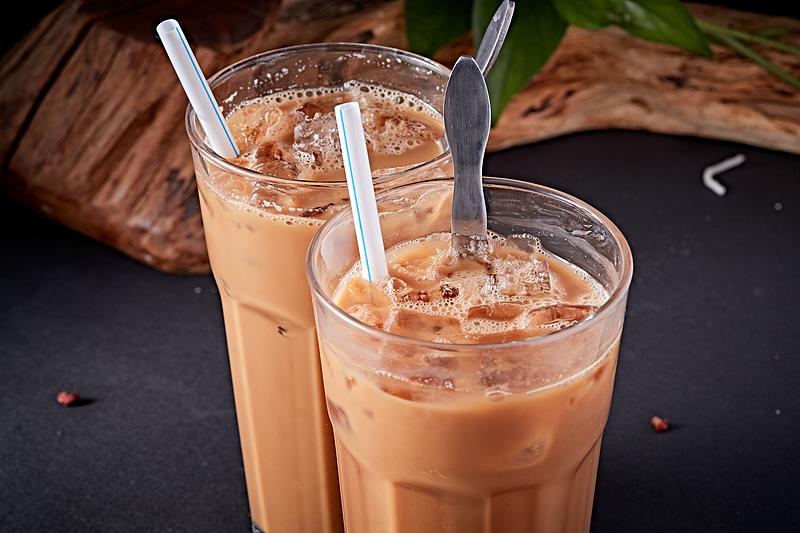
奶茶真的最好在2小时内喝完!否则……
Yang Shi Xin Wen· 2025-05-21 12:55
奶茶是现代生活中备受喜爱的饮品,不仅口感丰富,还能让人心情轻松愉悦。 经常买奶茶的人肯定看到过很多奶茶包装上印有"请尽快饮用""2小时之内饮用""1小时内饮用完毕"等字样,有些 店员也会提醒"尽快饮用,否则影响口感"。 那奶茶真的必须"2小时"之内饮用吗? 先说答案:现制奶茶最好尽快喝完,最好不超过2小时。 奶茶里有什么? 奶茶,顾名思义就是奶+茶为主做成的饮料。 奶茶通常由茶叶、牛奶做成,现在为了调节口感,还会加入糖、奶油、奶酪、水果、奶精等调味,让口感更多 样,也能满足不同人的口感需求。 奶:常见的有牛奶,还有加入奶油、植脂的,还有加奶酪的。 茶:红茶、绿茶、清茶等等,都可以,还可以加入各种茶粉。 糖:有加白糖的,也有加果葡糖浆的,最近还有用代糖的,如赤藓糖醇、阿斯巴甜等。 盐:内蒙古有些传统奶茶味道是咸的,在制作过程中会加盐。 水果:很多奶茶还会加入各种新鲜水果,比如草莓、葡萄、芒果等,也会让奶茶更香甜。 奶茶到底应该多久喝完? 一杯奶茶到底要多长时间内喝完呢?从安全和口感来说,两个小时是个不错的选择。 安全 在危险温度区停留不超过2小时(包括准备、储存和陈列)的食品可以放回冰箱冷藏(保存在5℃以下)或 ...
陕西省市场监督管理局关于7批次食品不合格情况的通告(2025年第11期)
Zhong Guo Zhi Liang Xin Wen Wang· 2025-05-21 08:59
| | 陕西吉梦 | 西安市三桥街办高堡子 | 西咸新区泾河新城 | 陕西省西安市西咸新区泾河 | 红糖 | 克/ | 旺隆 | 总糖分 ║49.85g/100g║≥85.0g/100g | | --- | --- | --- | --- | --- | --- | --- | --- | --- | | | 商贸有限 | 村西双五路中段28号院 | 典隆大乐城商贸有 | 新城崇文镇崇文佳苑二区 | | 袋 | 达和 | | | 公司 | | | 限公司 | H101-H201号 | | | 图形 | | | 6 | 湖北润祥 食品有限 | 湖北省荆州市荆州开发 区深圳大道1号佳海浙商 | 西安市莲湖区杨帆 | 西安市莲湖区白家口冷冻市 | 清水黄 | 2千 | 世鸿 | 2024-10-24 二氧化硫残留量 | | | | | | | | 克/ | 和图 | | | 公司 | | 科技园内A2 | 副食经销部 | 场东区F-110号 | 花菜 | 袋 | 形 | ║1.70g/kg║不得使用 | | 7 | 山东正派 味食品有 | 山东省潍坊市临朐县东 城街道刘家庄村东阳路 | 商洛乐之然商贸有 | 陕西省 ...