生成式AI

Search documents
美联储理事Barr:人工智能将改变经济,但结局有许多种可能性
Sou Hu Cai Jing· 2025-11-12 04:25
Core Viewpoint - The Federal Reserve Governor Michael Barr highlighted that while artificial intelligence (AI) will transform the economy, the outcomes could vary significantly [1] Group 1: AI Scenarios - Barr outlined two fundamental scenarios regarding the impact of generative AI: one where it enhances existing tasks and roles, and another where it leads to transformative changes in work and leisure, improving efficiency and reshaping business models [1] - He emphasized the difficulty in predicting which scenario will prevail, or if a combination of scenarios might occur [1] Group 2: Employment and Economic Impact - A survey from the New York Fed indicated that AI has already led employers to reduce hiring plans, which may result in a slowdown in job growth [1] - Barr did not comment on the near-term outlook for monetary policy but noted that significant capital expenditure plans in the data center sector, amounting to trillions of dollars, could drive substantial economic changes, including productivity improvements [1]
新质生产力崛起:港股科技板块成“估值洼地”与成长引擎
Mei Ri Jing Ji Xin Wen· 2025-11-12 03:10
Core Viewpoint - The Hong Kong technology sector is entering a critical phase of value reassessment, driven by a surge in domestic generative AI user adoption, with over 90% of users preferring local models, benefiting local tech companies significantly [1] Group 1: Market Dynamics - The leading technology companies in Hong Kong are not only users of AI technology but also core builders of the industry chain, covering high-growth areas such as software and hardware, new energy vehicles, and innovative pharmaceuticals [1] - The Guozheng Hong Kong Stock Connect Technology Index has a significantly lower price-to-earnings ratio compared to the A-share ChiNext Index, with a horizontal discount exceeding 40%, and the vertical AH share premium index continues to converge [1] Group 2: Investment Opportunities - The influx of southbound capital resonates with global capital, driving the valuation recovery of the sector. In the fourth quarter, the Hong Kong technology sector presents both growth potential and valuation advantages, making it an ideal choice for investing in "new quality productivity" [1] - For ordinary investors, direct individual stock investments may have high thresholds and risks; therefore, investing through related ETFs is recommended. The Hong Kong Stock Connect Technology ETF (159101) closely tracks the Guozheng Hong Kong Stock Connect Technology Index, selecting 30 large-cap stocks with high R&D investment, with the top ten weighted stocks accounting for 7%, covering both internet giants like Tencent and Alibaba, as well as emerging players like Li Auto and BeiGene, thus comprehensively covering popular sectors of "software and hardware + new consumption + innovative pharmaceuticals + new energy vehicles" [1]
软银清仓英伟达(NVDA.US)后股价应声暴跌10% ! 分析师:非看淡硬件,乃加倍下注AI未来
Zhi Tong Cai Jing· 2025-11-12 02:35
Group 1 - SoftBank Group's stock price fell by over 10% after announcing the liquidation of its entire stake in NVIDIA, cashing out $5.83 billion [1] - The funds from the NVIDIA sale will be used to support a $22.5 billion investment in OpenAI [1] - SoftBank sold 32.1 million shares of NVIDIA and raised $9.17 billion by reducing its position in T-Mobile [1] Group 2 - SoftBank's CFO stated the intention to maintain financial strength while creating more investment opportunities for investors [1] - Despite the unexpected liquidation of NVIDIA shares, this is not the first time SoftBank has divested from the chip giant, having previously sold its entire stake in 2019 [1] - Analysts view the move as a bullish signal for SoftBank's commitment to generative AI, with a focus on OpenAI and strategic hardware partnerships, particularly with Arm Holdings [1] Group 3 - The sell-off has impacted several technology companies in the Asia-Pacific region, with semiconductor testing equipment manufacturer Advantest and chip production equipment maker Tokyo Electron both seeing declines of over 2% [2] - TSMC, the world's largest chip foundry, experienced a 1.39% drop in its stock price, while South Korean memory chip giant SK Hynix fell nearly 2% [2]

大联大架构调整,强调友尚、品佳未消失
半导体行业观察· 2025-11-12 01:20
Group 1 - The core point of the article is that 大联大 announced a major organizational restructuring, where its subsidiary 诠鼎 will acquire 100% of the shares of two other subsidiaries, 友尚 and 品佳, through a share conversion method to enhance operational efficiency and global presence [2][3] - The restructuring aims to consolidate resources and create two main operational units, with 诠鼎 and 世平 becoming the new dual engines of the semiconductor distribution business [2][3] - The share conversion ratio is set at 1 share of 友尚 for 2.7947 shares of 诠鼎 and 1 share of 品佳 for 1.2222 shares of 诠鼎, with a base date of January 1, 2026 [3] Group 2 - Following the restructuring, 诠鼎's revenue is projected to reach approximately $11.48 billion, with shareholder equity around $930 million and an employee count of about 1,900 [3] - 大联大 reported its Q3 financial results, with revenue of NT$244.467 billion, a net profit of NT$5.35 billion, and a net income of NT$3.178 billion, marking significant year-on-year growth [3] - The strong financial performance is attributed to the rapid development of generative AI, which has increased demand for electronic components across various product categories [3]


延世大学爆发“AI作弊风暴”,ChatGPT成集体“考友”?教授震怒:自首者0分,否认者停学
3 6 Ke· 2025-11-11 11:49
Core Points - The incident at Yonsei University highlights the challenges posed by AI tools like ChatGPT in academic integrity, as over a hundred students are suspected of using these tools during an online exam [1][4] - The university's response includes strict measures, with students who confess receiving a zero score, while those who deny but are found guilty face suspension [5][6] - The rapid adoption of AI in education has outpaced the establishment of clear guidelines and regulations, leading to a regulatory vacuum in many South Korean universities [6][8] Group 1: Incident Overview - A significant cheating scandal occurred in a popular course on "Natural Language Processing and ChatGPT" at Yonsei University, with over 600 students enrolled [3][4] - The professor implemented stringent measures to prevent cheating, including requiring students to record their exams, but many students found ways to circumvent these rules [3][4] - Initial reviews of the exam recordings revealed numerous suspicious behaviors, indicating potential use of AI tools during the exam [4][5] Group 2: Academic Integrity and AI - The incident is not isolated, as collective cheating has been a recurring issue in South Korean universities, exacerbated by the ease of access to AI tools [6][7] - A survey indicated that 91.7% of university students in South Korea had used AI for assignments, yet 71.1% of institutions lacked any regulations regarding AI usage [6][7] - The current situation places student use of AI in a gray area, with some using it for legitimate purposes while others engage in outright cheating [7][8] Group 3: Responses and Recommendations - Public discourse in South Korea reflects a divide, with some calling for strict penalties for students while others argue for clearer guidelines on AI usage in academia [8][9] - Educational experts advocate for the development of comprehensive guidelines to distinguish between acceptable and unacceptable uses of AI in academic settings [8][9] - In contrast, U.S. universities have taken proactive steps, with some banning AI tools in exams and reverting to traditional testing methods to mitigate AI's influence [9]

LLM只是“黑暗中的文字匠”?李飞飞:AI的下一个战场是“空间智能”
3 6 Ke· 2025-11-11 10:22
Core Insights - The next frontier for AI is "Spatial Intelligence," which is crucial for understanding and interacting with the physical world [1][4][14] - Current AI systems lack the ability to comprehend spatial relationships and physical interactions, limiting their effectiveness in real-world applications [1][12][26] - The development of a "world model" is essential for achieving true spatial intelligence in AI, enabling machines to perceive, reason, and act in a manner similar to humans [14][15][20] Group 1: Importance of Spatial Intelligence - Spatial intelligence is identified as a missing component in AI, which could lead to significant advancements in capabilities, particularly in achieving Artificial General Intelligence (AGI) [3][12] - The limitations of current AI systems are highlighted, emphasizing their inability to perform basic spatial reasoning tasks, which hinders their application in various fields [12][26] - The potential of spatial intelligence to revolutionize creative industries, robotics, and scientific exploration is underscored, indicating its broad implications for human civilization [1][4][10] Group 2: Development of World Models - The concept of world models is introduced as a new paradigm that surpasses existing AI capabilities, focusing on understanding, reasoning, and generating interactions with the physical world [14][15] - Three core capabilities for effective world models are outlined: generative ability to create realistic environments, multimodal processing of diverse inputs, and interactive capabilities to predict outcomes based on actions [15][16][17] - The challenges in developing these models include creating new training objectives, utilizing large-scale training data, and innovating model architectures to handle complex spatial tasks [18][19][20] Group 3: Applications and Future Prospects - The applications of spatial intelligence span various fields, including creative industries, robotics, and healthcare, with the potential to enhance human capabilities and improve quality of life [21][26][27] - The World Labs initiative is highlighted as a key player in advancing spatial intelligence through the development of tools like the Marble platform, which aims to empower creators and enhance storytelling [20][22] - The long-term vision includes transforming how humans interact with technology, enabling immersive experiences and fostering collaboration between humans and machines [28][29]
第四范式(06682):决策AI紧扣企业智能化需求,融合生成AI加速落地
Mai Gao Zheng Quan· 2025-11-11 08:31
Investment Rating - The report assigns a "Buy" rating to the company, with a target price of 72.80 HKD based on a P/S valuation method [3][5]. Core Insights - The company, Fourth Paradigm (6682.HK), focuses on decision AI integrated with generative AI to meet the growing demand for intelligent decision-making in enterprises, addressing challenges such as understanding AI capabilities and deployment complexities [1][3]. - The company is positioned to benefit from the accelerating trend of enterprise intelligence over the next decade, leveraging its leading advantages in machine learning platforms and model development [3][8]. - Fourth Paradigm's revenue is projected to grow significantly, with estimates of 6.894 billion RMB in 2025, reflecting a year-on-year growth of 31.05% [5][79]. Summary by Sections 1. AI Supply and Demand Matching in Enterprise Intelligence - Enterprises are shifting from digitalization to intelligent decision-making, focusing on how to embrace AI effectively [13]. - Fourth Paradigm combines a foundational technology platform with vertical solutions and AI-generated systems to empower "AI+" initiatives [21][22]. 2. Benchmark Client Expansion - The company has seen a steady increase in benchmark clients, with revenue from these clients accounting for approximately 61.6% in the first half of 2025 [79][80]. - The intelligent agent technology enhances service capabilities across various sectors, including real estate, legal, manufacturing, and healthcare, demonstrating significant operational improvements [80][81]. 3. Advantages from Policy and Ecosystem - The company benefits from a favorable policy environment promoting AI adoption, with government initiatives aiming for over 90% application penetration of new intelligent terminals by 2030 [8][9]. - Fourth Paradigm's Prophet platform shows a strong market presence and scalability in the machine learning platform sector [8][9]. 4. Profit Forecast - The company is expected to turn profitable in 2025, with a projected net profit of 57 million RMB, marking a significant turnaround from a loss of 269 million RMB in 2024 [5][79]. - Earnings per share (EPS) are forecasted to improve from -0.52 RMB in 2024 to 0.11 RMB in 2025, indicating a positive trend in profitability [5][79].
“熊出没”频发 日本相关假视频增多引担忧
Xin Hua She· 2025-11-11 07:24
Core Viewpoint - The increase in fake videos related to bear incidents in Japan, particularly those generated by AI, raises concerns about misinformation and public safety [1][2] Group 1: Fake Videos and Misinformation - A surge in fake videos depicting bears causing damage, such as destroying solar panels and stealing pets, has been noted, particularly since late October [1] - Experts highlight that these videos, despite being clearly fabricated, can be misleading when mixed with a large volume of content [1] - The presence of watermarks from OpenAI's video generation model Sora in some videos indicates the use of advanced AI technology in creating these fakes [1] Group 2: Public Safety Concerns - Bear research experts warn that these fake videos could lead to dangerous misinterpretations of bear encounters in the wild [2] - A specific incident in Akita Prefecture involved a fabricated video of a bear in a supermarket, which local officials confirmed was false, potentially causing unnecessary public anxiety [2] - Data from Japan's Ministry of the Environment shows that as of November 5, there have been a record 13 fatalities due to bear attacks this year, with over 20,000 reported incidents from April to September, the highest in five years [2]
2025年生成式+AI+全球研究报告
Sou Hu Cai Jing· 2025-11-11 02:14
Core Insights - Generative AI (GenAI) is rapidly transforming global industries since the launch of ChatGPT in late 2022, becoming a key driver for productivity enhancement, customer experience innovation, and operational efficiency [1][2] - Despite recognizing its potential, many companies face challenges in management, integration, and talent during the practical application of GenAI [1][2] Group 1: Adoption and Benefits - Nearly 90% of surveyed organizations reported improved employee experience and satisfaction after adopting GenAI [1] - Over 80% of companies achieved reduced operational costs and increased customer retention rates [1] - Early adopters of GenAI have seen significant benefits, indicating a positive trend in productivity and innovation [2] Group 2: Challenges in Implementation - Approximately 40% of companies encountered difficulties with technology integration, while about one-third faced high implementation costs [1][2] - Data privacy and security management are major concerns, with 75% of users expressing worries about these issues [1][2] - Only 10% of organizations are adequately prepared for relevant regulations, highlighting a lack of robust governance frameworks [2][15] Group 3: Strategic Focus for Success - Successful implementation of GenAI requires focusing on four core strategies: enhancing management mechanisms, strategic deployment, technology system integration, and expert resource support [2][13] - More than half of the companies admitted to a shortage of internal expertise, particularly in healthcare, public sectors, and manufacturing [2][15] - Over 80% of organizations plan to increase investments in GenAI soon, with one-fifth intending to fully deploy the technology at the enterprise level [2]

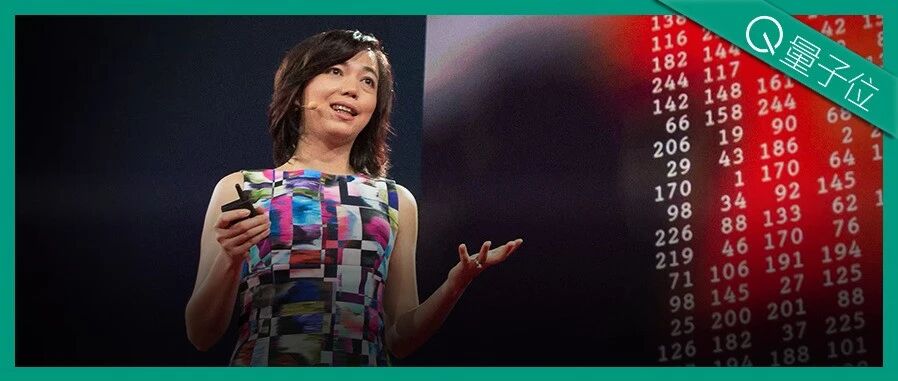
李飞飞最新长文火爆硅谷
量子位· 2025-11-11 00:58
Core Viewpoint - Spatial intelligence is identified as the next frontier for AI, with the potential to revolutionize creativity, robotics, scientific discovery, and more [2][4][10]. Group 1: Definition and Importance of Spatial Intelligence - Spatial intelligence is described as a foundational aspect of human cognition, enabling interaction with the physical world and driving reasoning and planning [20][21]. - The evolution of spatial intelligence is linked to the development of perception and action, which are crucial for understanding and interacting with the environment [12][13][14]. - Historical examples illustrate how spatial intelligence has driven significant advancements in civilization, such as Eratosthenes' calculation of the Earth's circumference and the invention of the spinning jenny [18][19]. Group 2: Current Limitations of AI - Current AI models, including multimodal large language models (MLLMs), have made progress in spatial perception but still fall short of human capabilities [23][24]. - AI struggles with tasks involving physical representation and interaction, lacking the holistic understanding that humans possess [25][26]. Group 3: World Models as a Solution - The concept of "world models" is proposed as a new generative model that can surpass the limitations of current AI by understanding, reasoning, generating, and interacting with complex virtual or real worlds [28][30]. - World models should possess three core capabilities: generative, multimodal, and interactive [31][34][38]. - The development of world models is seen as a significant challenge that requires innovative methodologies to coordinate semantic, geometric, dynamic, and physical aspects [39][41]. Group 4: Applications and Future Potential - The potential applications of spatial intelligence span various fields, including creativity, robotics, science, healthcare, and education [56][57]. - In creativity, platforms like World Labs' Marble are enabling creators to build immersive experiences without traditional design constraints [52][53]. - In robotics, achieving spatial intelligence is essential for robots to assist in various environments, enhancing productivity and human collaboration [60][62]. Group 5: Vision for the Future - The vision for the future emphasizes the importance of AI enhancing human capabilities rather than replacing them, with spatial intelligence playing a crucial role in this transformation [47][50]. - The exploration of spatial intelligence is framed as a collective effort that requires collaboration across the AI ecosystem, including researchers, innovators, and policymakers [51][63].