
改革开放

Search documents
青岛|青岛发布“十四五”成绩单,地区生产总值预计今年突破1.7万亿元
Da Zhong Ri Bao· 2025-12-10 01:19
Economic Growth - Qingdao's GDP is expected to exceed 1.7 trillion yuan this year, achieving an average annual growth rate of 5.9% over the past five years [2] - The per capita GDP has increased to 161,000 yuan, a cumulative growth of 21.3%, reaching approximately 23,000 USD [2] - The total retail sales of consumer goods have grown at an average annual rate of 6.4%, surpassing 650 billion yuan, ranking second among northern cities after Beijing [2] Industrial Development - Qingdao has focused on developing the real economy, with a "10+1" innovative industrial system and a modern service industry contributing significantly to economic growth [3] - The city ranked seventh among the top 100 advanced manufacturing cities in China for three consecutive years from 2021 to 2023, aiming to rise to sixth place in 2024 [3] - High-tech manufacturing value added has grown at an average annual rate of 15.9%, with significant contributions from leading enterprises like BOE and Haier [3] Marine Economy - The marine economy in Qingdao has seen a production value exceeding 550 billion yuan, accounting for 33% of the GDP, ranking third among coastal cities in China [4] - Qingdao Port's cargo and container throughput have reached fourth and fifth globally, respectively, with a strong performance in international shipping [4] Innovation and Reform - Qingdao has prioritized technological innovation, with R&D expenditure growing at an average annual rate of 11.6% over the past four years [5] - The city has established numerous national and provincial key laboratories, significantly enhancing its innovation capabilities [5] - A total of 352 national and provincial reform pilot projects have been implemented, improving the business environment [6] Urban Development and Social Welfare - Qingdao's urbanization rate has reached 78.87%, with significant investments in infrastructure and urban renewal projects benefiting nearly 480,000 residents [7] - The city has maintained over 70% of its fiscal expenditure on social welfare, completing 72 municipal livelihood projects [7] - The average life expectancy in Qingdao has increased to 82.21 years, reflecting improvements in healthcare and living conditions [7]
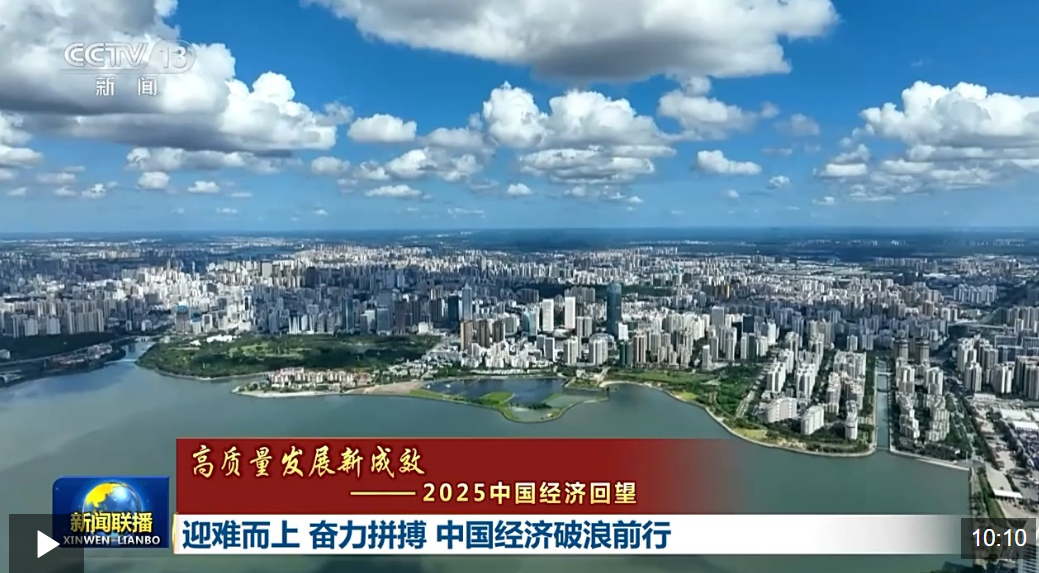
高质量发展新成效丨迎难而上 奋力拼搏 中国经济破浪前行
Yang Shi Xin Wen Ke Hu Duan· 2025-12-10 00:40
Group 1 - The year 2025 marks the conclusion of the "14th Five-Year Plan" and the beginning of the "15th Five-Year Plan," with a focus on high-quality development and economic stability amid complex international and domestic challenges [2][10] - China's economy is expected to achieve a GDP of approximately 140 trillion yuan, with a year-on-year growth of 5.2% in the first three quarters, contributing about 30% to global economic growth [13][19] - The OECD has raised its forecast for China's economic growth in 2025 for the third time within the year, indicating a positive outlook for the Chinese economy [15] Group 2 - The automotive industry is undergoing significant transformation, with over 80% of manufacturing sectors adopting advanced technologies like AI and digital twins, leading to increased production efficiency [4] - The Hainan Free Trade Port is set to officially launch, enhancing China's high-level openness and serving as a crucial gateway for international trade [6] - The Guangdong-Hong Kong-Macao Greater Bay Area has emerged as the world's largest innovation cluster, attracting global innovation resources [7] Group 3 - Fiscal policy has shifted to a more proactive stance, with the issuance of 1.3 trillion yuan in long-term special bonds to support infrastructure projects and stimulate domestic demand [19] - The introduction of the "Private Economy Promotion Law" and the reduction of market access restrictions are part of ongoing reforms aimed at enhancing economic vitality [23] - The energy supply capacity has improved, with China maintaining its position as the world's largest goods trading nation, with a 3.6% year-on-year increase in trade volume [19][21] Group 4 - The transition towards greener energy is evident, with a decrease in energy consumption per unit of GDP and an increase in the share of non-fossil energy consumption [25] - The innovation index of China has entered the global top ten, with significant growth in high-tech manufacturing and digital industries, indicating a shift towards new productive forces [27] - Consumer spending continues to drive economic growth, with retail sales expected to exceed 50 trillion yuan, reflecting a robust recovery in consumption [28]

中共四川省委关于制定四川省国民经济和社会发展第十五个五年规划的建议
Si Chuan Ri Bao· 2025-12-09 20:44
——区域城乡发展更加协调。成渝地区双城经济圈带动能力明显增强,五大片区协调发展水平持 续提升,城乡融合发展扎实推进,粮食等重要农产品保供能力稳步增强,巩固拓展脱贫攻坚成果 同乡村振兴有效衔接任务全面落实,39个欠发达县域托底性帮扶成效显著。 ——改革开放取得新的突破。具有四川特色的原创性差异化改革形成一批标志性成果,政务服 务"高效办成一件事"提质增效,进出口总额迈上万亿级台阶、居中西部第一位,成都大运会、世 园会、世运会和金熊猫奖等国际赛事与重大活动成功举办。 ——绿色低碳转型步伐加快。降碳减污扩绿增长协同推进,长江经济带污染治理深入实施,生态 环境突出问题整改取得实效,长江黄河上游生态屏障更加巩固。 中共四川省委十二届八次全体会议深入学习贯彻党的二十届四中全会精神和习近平总书记对四川 工作系列重要指示精神,就制定四川省国民经济和社会发展"十五五"规划提出以下建议。 一、坚定沿着习近平总书记指引的方向谱写中国式现代化四川新篇章 1."十四五"时期四川发展取得重大成就。"十四五"时期是四川发展历程上具有里程碑意义的五 年。习近平总书记对四川工作高度重视、寄予厚望,特别是2022年、2023年连续两年亲临四川视 ...
来华海外游客暴增,带来的远不只是旅游收入
虎嗅APP· 2025-12-09 13:38
Core Viewpoint - The article highlights the significant resurgence of inbound tourism in China, projecting a robust recovery trajectory for the industry, with a notable increase in both visitor numbers and spending, particularly from Western tourists [3][6]. Group 1: Inbound Tourism Growth - Inbound tourist numbers in China are expected to exceed 35 million in 2025, marking a historical high, with a year-on-year increase of over 100% [3]. - The first eight months of 2025 saw 25.58 million inbound foreign tourists, indicating a strong recovery trend [3]. - Shanghai received 6.326 million inbound tourists in the first three quarters of 2025, a 37.14% increase year-on-year [4]. Group 2: Economic Impact - The tourism sector is projected to generate approximately $150 billion in revenue from foreign tourists in 2025, contributing significantly to China's economy [7]. - Guangdong province reported a 27% increase in tourism foreign exchange income, amounting to 160 billion yuan, while Guangxi and Beijing saw even higher growth rates [6]. - The tourism industry is positioned as a crucial contributor to China's balance of payments, especially in the context of global trade challenges [7]. Group 3: Factors Driving Inbound Tourism - The unique appeal of Chinese culture, modern infrastructure, and the introduction of visa-free policies for over 50 countries are key factors attracting foreign tourists [9][11]. - The affordability of services in China compared to developed countries enhances the attractiveness for tourists seeking value [11]. - Improved safety and hospitality in China contribute to a welcoming environment for international visitors [11]. Group 4: Broader Implications - The influx of foreign tourists is seen as a means to enhance China's global image and foster mutual understanding between nations [15][16]. - The article emphasizes the importance of continued openness and reform in sustaining the growth of inbound tourism and addressing internal economic challenges [16][17].

非凡五年,广东把“逆风局”打成“高端局”
21世纪经济报道· 2025-12-09 00:34
Core Viewpoint - The article discusses how Guangdong province has managed to maintain economic growth and resilience despite facing significant challenges over the past five years, including the pandemic and global trade tensions. The province's GDP has consistently surpassed key milestones, demonstrating its ability to adapt and innovate in a changing economic landscape [3][4]. Economic Performance - Guangdong's total economic output has crossed the thresholds of 12 trillion, 13 trillion, and 14 trillion yuan, maintaining its position as the largest economy in China for 36 consecutive years [3]. - The average annual GDP growth rate for Guangdong during the first four years of the 14th Five-Year Plan is 4.7%, which, while seemingly modest, represents a significant marginal increase compared to previous decades [6]. Industrial Transformation - The province is focusing on transforming traditional industries and fostering emerging sectors, having initiated digital transformation for over 44,000 industrial enterprises [7]. - Guangdong produces a quarter of the country's new energy vehicles and over a third of industrial robots, with its core AI industry accounting for one-third of the national total [9]. Technological Innovation - More than one-third of provincial funding for technological innovation has been directed towards basic research, leading to Guangdong's top ranking in regional innovation capabilities [10]. - Key technological breakthroughs include advancements in high-end chips and surgical robots, showcasing the province's commitment to innovation [10]. Reform and Openness - Guangdong leads in several indicators of private sector development and has been recognized for its favorable business environment for four consecutive years [10]. - The province's total import and export volume has exceeded 9 trillion yuan, with a diverse range of international trade partnerships [10]. Regional Development and Sustainability - Guangdong is implementing a "full map development" strategy to promote balanced regional growth, transferring over 300 manufacturing projects to less developed areas [12]. - The province has achieved significant improvements in environmental quality, with record levels of air quality and water quality [12]. Social Welfare - Over 6 million new urban jobs have been created in Guangdong during the 14th Five-Year Plan, with a 4.9% average annual increase in per capita disposable income [12]. - The province has achieved near-complete coverage of pension insurance and has facilitated educational access for children of migrant workers [12].
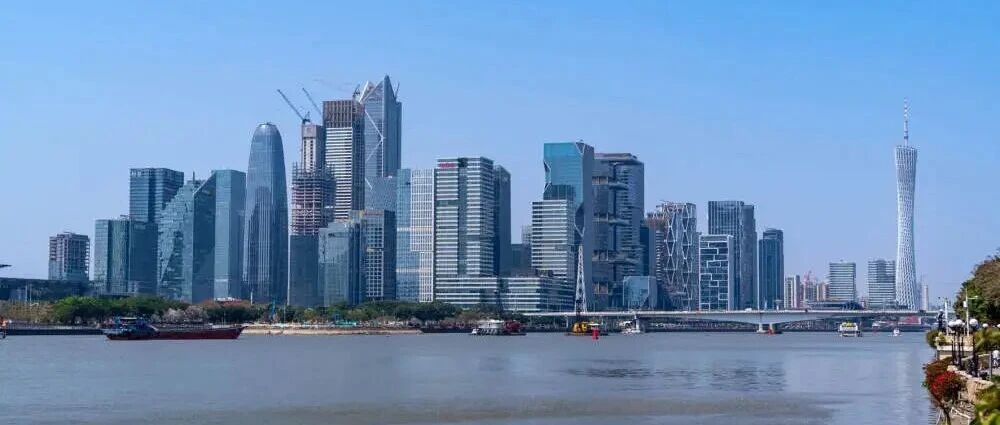
彭博:中国将提振内需列为2026年首要目标
彭博· 2025-12-08 15:37
Investment Rating - The report provides a positive investment rating for the industry, emphasizing growth potential and favorable market conditions [12]. Core Insights - The industry is expected to prioritize domestic demand and build a strong domestic market, which will drive consumption and improve investment returns [12]. - Innovation is highlighted as a key driver for new growth, with a focus on accelerating the cultivation of new growth drivers through technological advancements [12]. - The report emphasizes the importance of reform efforts to strengthen the vitality of high-quality development and promote coordinated urban-rural integration [12]. - There is a strong push for opening-up policies to foster win-win cooperation and stabilize foreign trade and investment [12]. - The report outlines a commitment to a comprehensive green transition, aiming to cut carbon emissions and expand the green economy while improving social security and people's livelihood [12].
非凡五年,广东把“逆风局”打成“高端局”
2 1 Shi Ji Jing Ji Bao Dao· 2025-12-08 08:15
Core Insights - Guangdong has successfully navigated a challenging economic environment over the past five years, achieving significant economic milestones despite difficulties such as the pandemic and global trade tensions [3][5][12] Economic Performance - Guangdong's total economic output has consistently surpassed 12 trillion, 13 trillion, and 14 trillion yuan, maintaining its position as the largest economy in China for 36 consecutive years, surpassing developed countries like South Korea and Australia [3][5] - The average annual GDP growth rate during the first four years of the 14th Five-Year Plan was 4.7%, which, while modest, represents a significant marginal increase compared to previous years [5][6] Industrial Transformation - The province has initiated a transformation of traditional industries and fostered emerging sectors, with over 44,000 industrial enterprises undergoing digital transformation [6][8] - Guangdong produced a quarter of the country's new energy vehicles and over a third of industrial robots, with its core AI industry accounting for one-third of the national scale [8][9] Technological Innovation - More than one-third of provincial science and technology innovation funds have been allocated to basic research, leading to Guangdong's top ranking in regional innovation capabilities [9][11] - Key technological breakthroughs include advancements in high-end chips and surgical robots, supported by the establishment of major research facilities [9][11] Reform and Openness - Guangdong has maintained a leading position in various indicators of private economy and has been recognized for its favorable business environment for four consecutive years [9][11] - The province's total import and export volume exceeded 9 trillion yuan, with a diverse range of international trade connections [9][11] Social and Environmental Development - The province has focused on balanced and green development, with significant improvements in air and water quality, and a commitment to social welfare [11][12] - By 2024, the per capita disposable income of urban and rural residents is projected to show a notable increase, reflecting improved living standards [11][12] Future Outlook - As Guangdong enters the 15th Five-Year Plan, the focus will be on transforming individual breakthroughs into systemic advantages to better navigate future uncertainties [12]
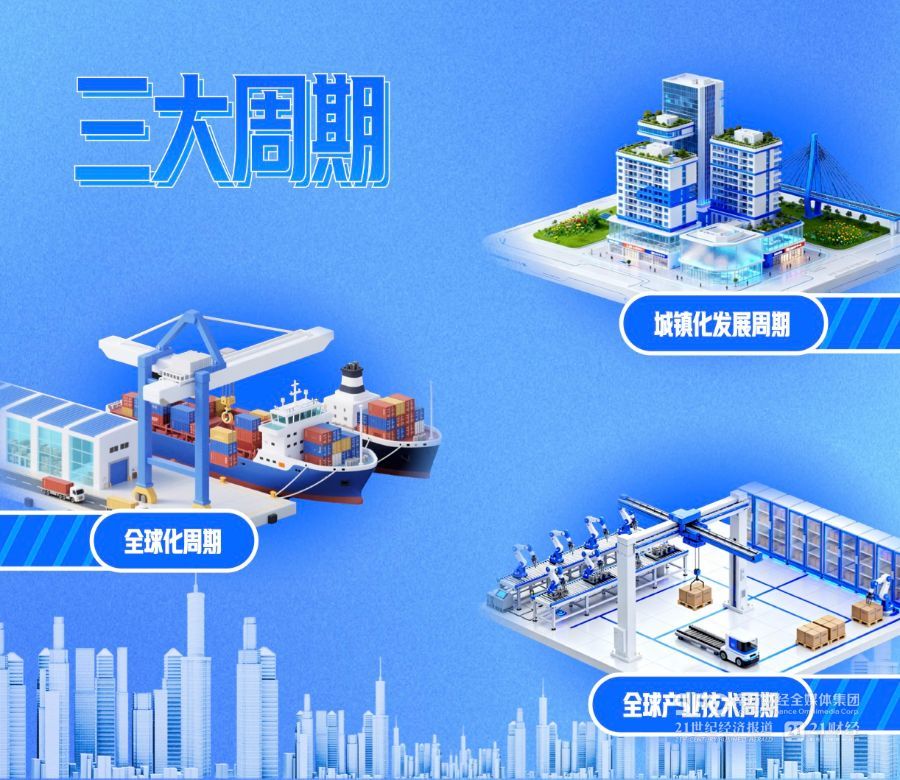
经济大省挑大梁丨非凡五年,广东把“逆风局”打成“高端局”
2 1 Shi Ji Jing Ji Bao Dao· 2025-12-08 08:04
Core Viewpoint - Guangdong has successfully navigated a challenging economic environment over the past five years, achieving significant growth and laying a solid foundation for future development during the "14th Five-Year Plan" period [1][3]. Economic Performance - Guangdong's total economic output has consistently crossed the thresholds of 12 trillion, 13 trillion, and 14 trillion yuan, maintaining its position as the top economy in China for 36 consecutive years, surpassing developed countries like South Korea and Australia [3]. - The average annual GDP growth rate for Guangdong during the first four years of the "14th Five-Year Plan" is 4.7%, which, while seemingly modest, represents a significant marginal increase compared to previous years [5]. Industrial Transformation - Guangdong is focusing on transforming traditional industries and nurturing emerging sectors, having promoted digital transformation for over 44,000 industrial enterprises [6]. - The province aims to establish nine trillion-yuan industrial clusters by 2024, contributing to its industrial diversification [6]. Technological Innovation - Over one-third of provincial technology innovation funds have been allocated to basic research, with Guangdong leading the nation in regional innovation capabilities [8]. - Key technological breakthroughs include advancements in high-end chips, nuclear magnetic resonance equipment, and surgical robots [8]. Reform and Openness - Guangdong has maintained a leading position in various indicators of private economy and has been recognized for four consecutive years as having the best business environment in China [9]. - The province's total import and export volume has exceeded 9 trillion yuan, with connections established with over 230 ports globally [9]. Regional Development and Environmental Sustainability - Guangdong is implementing a "full map development" strategy to promote industrial transfer to less developed areas, with over 300 projects and an investment exceeding 110 billion yuan in the "Yuexi North" region [11]. - The province has achieved significant improvements in environmental quality, with the best air quality recorded and a high water quality rate of 93.2% across national monitoring sites [11]. Social Welfare - Over 6 million new urban jobs have been created in Guangdong during the "14th Five-Year Plan," with a real annual growth of 4.9% in per capita disposable income [12]. - The province has achieved near-complete coverage of pension insurance and ensured that over 90% of migrant workers' children can attend public schools [12].

中共山东省委关于制定山东省国民经济和社会发展第十五个五年规划的建议
Bei Jing Ri Bao Ke Hu Duan· 2025-12-08 00:15
Core Viewpoint - The "15th Five-Year Plan" period is crucial for Shandong Province to establish itself as a modern socialist strong province, building on the achievements of the "14th Five-Year Plan" and addressing new challenges in the evolving international and domestic landscape [2][4][5]. Group 1: Achievements and Progress - During the "14th Five-Year Plan" period, Shandong achieved significant economic growth, with GDP surpassing 10 trillion yuan, and major economic indicators outpacing national averages [2][3]. - The province has made strides in modernizing its industrial system, enhancing technological innovation, and maintaining its position as a leader in agriculture and manufacturing [2][3][4]. - Social welfare has improved, with a focus on public service enhancements and a steady increase in residents' disposable income [2][3][4]. Group 2: Historical Context and Future Direction - The "15th Five-Year Plan" is positioned as a decisive phase for Shandong to solidify its role in national modernization and economic growth, aiming for a strong economy and improved living standards by 2035 [4][5]. - The plan emphasizes the importance of deepening reforms, implementing the Yellow River strategy, and fostering a high-level open economy [4][5][6]. Group 3: Challenges and Opportunities - Shandong faces a complex international environment with rising geopolitical tensions and economic uncertainties, but it also possesses strong foundational advantages such as a large market and robust industrial capabilities [5][6]. - The province aims to leverage its strengths in innovation and infrastructure to navigate these challenges and enhance its economic resilience [5][6][7]. Group 4: Economic and Social Development Goals - The guiding principles for the "15th Five-Year Plan" include prioritizing high-quality development, deepening reforms, and ensuring effective governance while focusing on the needs of the people [7][8]. - Key objectives include enhancing economic strength, technological capabilities, and social welfare, with a commitment to sustainable development and ecological protection [8][9][10]. Group 5: Industrial and Technological Advancements - Shandong plans to focus on building a modern industrial system, emphasizing smart, green, and integrated development across various sectors [12][13]. - The province aims to foster emerging industries and enhance the resilience of its supply chains, ensuring a robust foundation for future growth [14][15][16]. Group 6: Infrastructure and Investment - Investment in infrastructure is a priority, with plans to enhance transportation networks and digital infrastructure to support economic activities [22][23][24]. - The province seeks to attract both domestic and foreign investments, promoting a favorable business environment and facilitating cross-border trade [32][33].
确保我国经济航船乘风破浪、行稳致远
Ren Min Ri Bao· 2025-12-07 20:39
回望2021年—2025年,开启全面建设社会主义现代化国家新征程的第一个五年,"极不寻常、极不平 凡"—— 在以习近平同志为核心的党中央坚强领导下,在习近平新时代中国特色社会主义思想科学指引下,"十 四五"我国经济实力、科技实力、综合国力跃上新台阶,中国式现代化迈出新的坚实步伐,第二个百年 奋斗目标新征程实现良好开局。 "实现社会主义现代化是一个阶梯式递进、不断发展进步的历史过程,需要不懈努力、接续奋斗。"习近 平总书记的重要讲话,蕴含着深邃的历史观和辩证法。 党的二十届四中全会审议通过"十五五"规划建议,擘画了未来五年宏伟发展蓝图,新时代中国作出乘势 而上、接续推进中国式现代化建设的又一次总动员、总部署。 踔厉奋发,勇毅前行。用新的伟大奋斗创造出新的历史伟业,在人类的伟大时间历史中创造中华民族的 伟大历史时间。 领航—— "党中央集中统一领导是做好经济工作的根本保证" 高质量发展,"十四五"乃至更长时期我国经济社会发展的主题。 中华民族伟大复兴的征程,以势不可挡的姿态向前推进。 长江流域,尽显高质量发展新气象。 上游青海,保护冰川、治理黑土滩、恢复湿地,"中华水塔"水源涵养量持续提升,发展绿意盎然。 中游湖 ...