
数据要素市场化

Search documents
数据产业已成为数字经济发展新增长点
Zheng Quan Ri Bao· 2025-08-14 23:10
为更好地推进数据流通,基础设施建设必不可少。国家数据局副局长夏冰表示,面向"十五五"规划,国 家数据局将进一步聚焦高质量的标准构建、大规模的设施部署、市场化的生态运营,持续打造便捷高 效、自主安全、世界领先的国家级数据基础设施,有效支撑数字经济发展、科技创新和全国统一大市场 建设。 作为人工智能发展的三大核心要素之一,数据在推动"人工智能+"过程中发挥着关键作用,特别是高质 量数据集的建设至关重要。 本报记者 杜雨萌 "我国数据产业处于快速发展阶段,市场空间大,已成为数字经济发展的新增长点。"8月14日,国家发 展改革委党组成员、国家数据局局长刘烈宏在国新办举行的"高质量完成'十四五'规划"系列主题新闻发 布会上表示,据国家数据发展研究院研究,2024年,全国数据企业数量超过40万家,数据产业规模达 5.86万亿元,较"十三五"规划末增长117%,预计未来几年仍将保持较高的增长水平。 数据产业主要包括数据采集汇聚、计算存储、流通交易、开发利用、安全治理和数据基础设施建设及服 务等业态,是促进数据要素市场化价值化的新兴产业。近年来,不仅数据产业规模快速增长,数据产业 链亦加速形成。 刘烈宏称,当前,数据技术正从 ...
国家数据局相关负责人在回答中证报记者提问时表示 今年底数据流通节点城市将扩大到50个左右
Zhong Guo Zheng Quan Bao· 2025-08-14 22:18
Group 1 - The core viewpoint of the news is that during the "14th Five-Year Plan" period, China's digital infrastructure has achieved world-leading status in terms of scale and technology, significantly contributing to the development of the digital economy and data circulation [1][2][3] - As of June 2023, the total number of high-quality data sets built in China exceeds 35,000, with a total volume of over 400PB, which is approximately 140 times the digital resources of the National Library of China [4][5] - By the end of 2023, the number of data circulation node cities in China is expected to expand to around 50, covering 80% of provinces, laying a foundation for large-scale cross-regional data circulation [3][4] Group 2 - The National Data Bureau has introduced over 10 new systems, including data property rights, as part of a comprehensive policy approach to promote the market-oriented allocation of data elements [2] - The number of 5G base stations is projected to grow fivefold by June 2025 compared to 2020, reaching 4.55 million, while the number of gigabit broadband users is expected to increase 34 times to 226 million [2] - The digital economy is expected to see software revenue grow by 80% by the end of 2024 compared to 2020, and the added value of the electronic information manufacturing industry is projected to increase by over 70% [2] Group 3 - The National Data Bureau has established data infrastructure guidelines and technical specifications to support the construction and operation of data infrastructure, with over 2,000 entities connected to the infrastructure [3] - The trial of "data corpus pricing as equity" is being implemented to encourage enterprises to convert high-quality data sets into equity investments [5] - The National Data Bureau plans to continue promoting the construction of high-quality data sets and enhance the recognition of data element value across society [5]
数字中国建设取得显著成就(锐财经)
Ren Min Ri Bao Hai Wai Ban· 2025-08-14 22:10
Core Insights - The Chinese government has made significant progress in digital infrastructure and the digital economy during the "14th Five-Year Plan" period, focusing on digitalization, networking, and intelligence [1][2][3] Digital Infrastructure Development - By June 2025, the number of 5G base stations is expected to reach 4.55 million, a fivefold increase from 2020, while gigabit broadband users will grow 34 times to 226 million [2] - China's total computing power ranks second globally, indicating a strong position in digital infrastructure [2] - The investment in digital infrastructure has created substantial market demand, fostering growth in the information and communication technology industry, including integrated circuits and communication network equipment [3] Data Industry Growth - The data industry in China is projected to reach a scale of 5.86 trillion yuan, a 117% increase compared to the end of the "13th Five-Year Plan" [5] - By 2024, the number of data enterprises is expected to exceed 400,000, with an average R&D investment increase of 79% compared to the end of the "13th Five-Year Plan" [5] - The Yangtze River Delta has become a significant growth area, accounting for 22.6% of the national data industry scale, with over 100,000 data enterprises [5] Digital Services and Public Welfare - The number of internet users in China has reached 1.123 billion, with an internet penetration rate of 79.7%, leading to more accessible digital services for the public [6] - Smart healthcare services have expanded, with over 1 billion annual services provided by internet hospitals and 1.07 billion electronic social security cards issued [6] - Digital education and social security services have also seen significant improvements, enhancing the quality of life for citizens [6] Social Governance and Efficiency - The "One Network for All Services" initiative is being advanced, improving the efficiency of government services [7] - The focus is on leveraging data to enhance public services, digital living, and social governance, aiming to improve the well-being of the population [7]


国家数据局:数据产业已成为数字经济发展新增长点
Zheng Quan Ri Bao· 2025-08-14 16:12
Group 1 - The data industry in China is experiencing rapid growth, with the number of data enterprises expected to exceed 400,000 and the industry scale reaching 5.86 trillion yuan by 2024, representing a 117% increase from the end of the 13th Five-Year Plan [1] - The data industry encompasses various sectors including data collection, storage, circulation, development, and infrastructure, contributing to the marketization and valuation of data elements [1] - Data technology is evolving from business intelligence (BI) to artificial intelligence (AI), leading to a new industrial ecosystem characterized by deep data mining, algorithmic computing power, and high data integration [1] Group 2 - The National Data Bureau plans to deploy data industry aggregation zone pilot projects to optimize industrial layout and accelerate the formation of industrial ecosystems and scale advantages [2] - High-quality data sets are crucial for the development of artificial intelligence, and the construction of data infrastructure is essential for promoting data circulation [2] - In the first half of this year, 3,328 new data products were launched by major data trading institutions, marking a 70% year-on-year increase, with high-quality data sets in the AI sector growing by 2.8 times [2] Group 3 - As of June 30, over 35,000 high-quality data sets have been established in China, totaling over 400 PB, which is approximately 140 times the digital resources of the National Library of China [3] - The demand for data trading has surged due to the training of artificial intelligence models, with a cumulative transaction value of nearly 4 billion yuan for high-quality data sets by June 30 [3] - The National Data Bureau aims to enhance the construction of high-quality data sets and promote the recognition of data element value across society [3]
国家数据局:上半年主要数据交易机构新挂牌上架数据产品达3328个 同比增长70%
智通财经网· 2025-08-14 03:33
Core Viewpoint - The rapid development of data trading and infrastructure in China is significantly enhancing the digital economy and facilitating the integration of data resources across various sectors, particularly in artificial intelligence [1][3][29]. Group 1: Data Trading and Infrastructure Development - In the first half of the year, 3,328 new data products were launched by major data trading institutions, marking a 70% year-on-year increase, with a notable performance in the artificial intelligence sector [1][29]. - By the end of this year, the number of data circulation node cities is expected to expand to around 50, covering 80% of provinces and regions, establishing a solid foundation for large-scale cross-domain data circulation [1][20]. - The cumulative transaction volume of high-quality data sets reached nearly 4 billion yuan by the end of June, with new models being piloted in cities like Shanghai and Tianjin to convert high-quality data into equity [1][20][25]. Group 2: Digital Infrastructure and Technology Innovation - As of June 2025, the number of 5G base stations has increased fivefold compared to 2020, reaching 4.55 million, while gigabit broadband users have grown 34 times to 226 million [4]. - The digital infrastructure investment has stimulated significant market demand, fostering the development of the information and communication technology industry chain [4]. - The integration of digital technology and the real economy has deepened, with software revenue expected to grow by 80% by the end of 2024 compared to 2020 [6]. Group 3: Data Resource Development and Utilization - The data industry is projected to reach a scale of 58.6 trillion yuan by 2024, with the number of data enterprises exceeding 400,000, reflecting a 117% increase from the end of the 13th Five-Year Plan [10][36]. - The average R&D investment of listed data companies is expected to increase by 79% compared to the end of the 13th Five-Year Plan, indicating a sustained enhancement in innovation vitality [10]. - The development of high-quality data sets has been prioritized, with over 35,000 high-quality data sets constructed by June, totaling more than 400 petabytes [25]. Group 4: Public Services and Social Governance - Digital public services have become more accessible, with over 1 billion services provided through internet hospitals and more than 1.07 billion electronic social security cards issued [15][16]. - The integration of data resources has improved social governance efficiency, with initiatives like "one network for all services" enhancing public service delivery [16]. - The application of data in various sectors, such as agriculture and healthcare, has led to significant improvements in operational efficiency and service delivery [6][16]. Group 5: Market and Policy Environment - The establishment of clearer institutional rules has facilitated the growth of the data market, with over 50 supporting policies implemented since the introduction of the "data twenty articles" [28]. - The data supply has become more abundant, with a 2.8-fold increase in high-quality data products launched in the first half of the year [29]. - The market ecosystem has diversified, with nearly 500 new digital technology companies established by central enterprises, and over 2,600 new supply and demand entities added in the second quarter alone [30].
为数据市场建设定规立矩
Jing Ji Ri Bao· 2025-08-11 22:00
Core Insights - The article emphasizes the importance of data as a key production factor, comparable to land and capital, with predictions indicating that a 10% increase in data flow can lead to a 0.2% GDP growth [1] - The construction of a data market is identified as a crucial pathway for advancing the digital economy in China, with a projected data production total of 41.06 ZB by 2024 [1] Data Market Overview - The data market consists of raw data, processed data, and standardized data service products, with diverse supply sources including businesses, government agencies, and data brokers [2] - The demand for data spans various sectors, including enterprises for marketing and risk management, and government for urban governance and policy-making [2] Differences from Traditional Markets - Data markets differ from traditional markets primarily in pricing and trading mechanisms, with various pricing models such as pay-per-use and subscription [3] - Innovative trading modes include platform trading, over-the-counter trading, and data sharing pools within data alliances [3] Regulatory Framework - Establishing a data market requires a robust regulatory framework, including standardized data classification and a unified data language to facilitate transactions [4] - The recent policy direction from the Chinese government highlights the need for clear data ownership, market transactions, and rights protection [4] Cultivating Data Operators - Data operators, or "data merchants," are essential for the development of the data market, providing services in data production, management, and trading [5] - Encouraging the opening of high-value public data and integrating data resources into asset management systems are key strategies for fostering data operators [5] Infrastructure Support - The transaction of data requires foundational infrastructure, including network, computing, and security facilities, to enable safe and efficient data flow [6] - A multi-layered data market system is proposed to facilitate data movement across regions and sectors [6] International Cooperation - Expanding into international data markets is crucial for enhancing China's digital competitiveness, necessitating the integration of cross-border data flow into economic development plans [7] - Collaboration on data protection legislation and standards is essential to balance data sovereignty with global data sharing [7]
赋能实体经济,长沙国企数据资源专区上线
Chang Sha Wan Bao· 2025-08-09 00:51
Core Viewpoint - Changsha is taking significant steps in advancing the development and utilization of state-owned enterprise (SOE) data resources, marking a key milestone in the establishment of the national data element comprehensive pilot zone in Hunan Province [1][2][4] Group 1: Data Resource Development - The launch of the "State-owned Enterprise Data Special Edition" by the Changsha Public Data Authorization Operation Platform includes the release of the first batch of SOE data resource directories, featuring over 20 categories of high-value data resources [1][2] - The initiative is part of a broader strategy to accelerate the development of public and SOE data, with Changsha undertaking 29 provincial pilot tasks within the year [2][4] Group 2: Addressing Challenges - A working group has been established to tackle issues such as the mismatch between data supply and demand, conducting over 20 policy training sessions and forming chief data officer teams in 13 SOEs [3] - The newly created SOE data zone organizes 20 categories of data resources, encompassing 341 information items and over 74 billion data entries, focusing on key areas like transportation and urban services [3] Group 3: Future Directions - Changsha aims to expand data coverage by encouraging more than 10 SOEs to open their data resource directories, targeting comprehensive coverage in transportation, energy, and livelihood sectors [4] - The city plans to develop over 20 data products focused on smart cities and digital economy scenarios, facilitating the transformation of data from "resources" to "assets" [4] - There is an emphasis on institutional innovation, exploring mechanisms for data property registration and revenue distribution, with the goal of creating 3 to 5 replicable "Changsha experiences" [4]
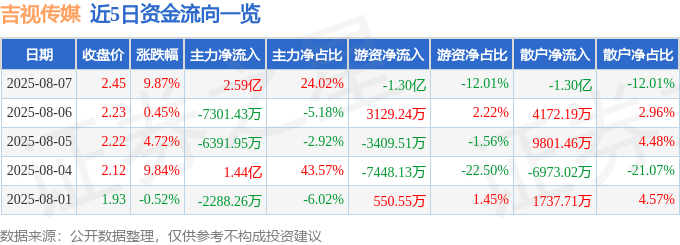
8月7日吉视传媒(601929)涨停分析:IPTV资产整合、AI智能体研发、影视IP合作驱动
Sou Hu Cai Jing· 2025-08-07 07:22
Group 1 - The stock of Jishi Media reached a closing price of 2.45 yuan on August 7, with a significant increase of 9.87% [1] - The stock experienced a total of 7 trading halts, with a closing order fund of 7930.61 million yuan, accounting for 0.93% of its market capitalization [1] - Key factors contributing to the stock's performance include a successful strategic transformation, completion of a 768 million yuan IPTV asset injection, and a strengthened integrated operation model [1] Group 2 - Research and development investment increased significantly by 86.8%, with 1532 projects signed in government and enterprise business, including a major contract worth 180 million yuan [1] - The company is actively involved in AI intelligent agent development and the marketization of data elements, leveraging the Jilin Provincial Data Element Service Center for public data asset services [1] - Strategic cooperation with Changying Group for film IP development, including participation in projects like "731," is expected to enhance market expectations during the summer film season [1] Group 3 - On August 7, the net inflow of main funds was 259 million yuan, accounting for 24.02% of the total transaction volume, while retail investors saw a net outflow of 130 million yuan [1] - Over the past five days, the stock has shown fluctuating trends in fund flows, with varying net inflows and outflows from main and retail investors [1] - The stock is categorized under domestic chips, medical information technology, and IP economy concepts, with respective increases of 1.3%, 1.14%, and 0.69% on the same day [3]

上半年钢铁产量同比减少 行业利润合理回升
Jing Ji Ri Bao· 2025-08-07 00:09
Core Viewpoint - The Chinese steel industry has experienced a reduction in production and a significant increase in profits in the first half of the year, driven by government policies and industry self-discipline [1][2]. Group 1: Economic Performance - In the first half of the year, the total revenue of key steel enterprises was 29,985 billion yuan, a decrease of 5.79% year-on-year, while the total profit reached 592 billion yuan, an increase of 63.26% [2]. - The average profit margin for the steel industry was 1.97%, up by 0.83 percentage points year-on-year [2]. - The crude steel production was 515 million tons, down 3.0% year-on-year, aligning with national industrial control policies [2]. Group 2: Inventory and Market Dynamics - The average month-end steel inventory for key steel enterprises was 18.91 million tons, the lowest level in nearly four years [3]. - The industry is witnessing structural development opportunities despite an overall reduction in production, with increasing demand for high-end manufacturing materials and green low-carbon materials [3]. Group 3: Environmental and Technological Advancements - Investment in energy conservation and environmental protection by key steel enterprises accounted for 28.9% of total investment, an increase of 4.3 percentage points year-on-year [4]. - The total energy consumption decreased by 1.5% year-on-year, and the comparable energy consumption per ton of steel fell by 0.6% [4]. - The industry is advancing in intelligent production and digital transformation, with companies like Shougang and Nanjing Steel implementing AI applications and innovative practices [5]. Group 4: Industry Challenges and Future Outlook - The steel industry is in a deep adjustment period, facing strong supply capabilities and weakened demand, leading to a recovery in profits but with insufficient sustainability [6]. - The Ministry of Industry and Information Technology has issued new guidelines for the steel industry, focusing on improving basic indicators and promoting structural adjustments [6]. - The industry is expected to benefit from the central government's policies aimed at expanding domestic demand, which will provide a favorable environment for development [7].
综合试验区建设持续推进,数据要素有望加速落地
Changjiang Securities· 2025-07-28 09:50
Investment Rating - The report maintains a "Positive" investment rating for the software and services industry [6]. Core Insights - The construction of national data element comprehensive pilot zones is progressing, which is expected to accelerate the landing of data elements and lead to a revaluation of their value across the entire industry chain [2][10]. - The pilot zones, established in ten locations including Beijing, Zhejiang, and Anhui, aim to explore market-oriented and value-oriented paths for the data industry, addressing core issues within the data element sector [10]. - The report suggests focusing on companies with vast data resources and those with strong capabilities in data processing, management, and analysis as potential investment opportunities [2][10]. Summary by Sections Event Description - On July 25, the National Data Bureau held a press conference to introduce the progress of the comprehensive pilot zone construction for data elements [4]. Event Commentary - The pilot work is gradually being carried out, with the expectation that it will address core issues in the data element industry and accelerate its landing process [10]. Policy and Market Development - Related policies are being developed to support the circulation of data elements, with various local governments issuing guidelines to standardize data transactions [10]. - Different pilot zones are applying unique approaches based on local conditions, which will contribute to the exploration of data elements in various scenarios [10].