林下经济

Search documents
山西长治因地制宜做优林下富民产业
Zhong Guo Chan Ye Jing Ji Xin Xi Wang· 2025-07-09 00:17
Core Insights - The development of the under-forest economy in Changzhi City, particularly in Tunliu District, is transforming ecological advantages into economic benefits through the cultivation of forsythia fruit and other forest products [1][2][3] Group 1: Economic Development - Tunliu District has developed a large-scale forsythia cultivation industry, utilizing its 520,000 acres of forest land to enhance the under-forest economy [1] - Changzhi City is promoting a "forest + " development model, focusing on four major systems: under-forest planting, breeding, collection and processing, and forest tourism [1][2] - The city has established six major models including forest medicine, forest grass, forest fungi, forest poultry, forest livestock, and forest honey, aiming to convert ecological advantages into development advantages [1][2] Group 2: Mechanisms and Strategies - The city is revitalizing the under-forest economy through collective management, large-scale operations, cooperatives, and enterprise-led initiatives, enriching product supply and extending the industrial chain [2] - A targeted approach is being adopted with a focus on regional characteristics, implementing specific development plans for different counties [2] - Demonstration bases for under-forest economic development are being established to promote the overall growth of the sector [2] Group 3: Current Status and Future Plans - The available planting area for the under-forest economy in Changzhi City is approximately 297,500 acres, with 224,000 acres for breeding [3] - The city plans to develop an additional 45,000 acres of medicinal herbs and 2,000 head of livestock this year, with an expected annual output value of 339 million yuan from forest product processing [3] - Changzhi City is moving towards industrialization, scale, and integration of the under-forest economy, contributing to rural revitalization [3]
340年古荔林下“伞”花开!惠州博罗紫灵芝迎来采收时节
Nan Fang Du Shi Bao· 2025-07-06 00:19
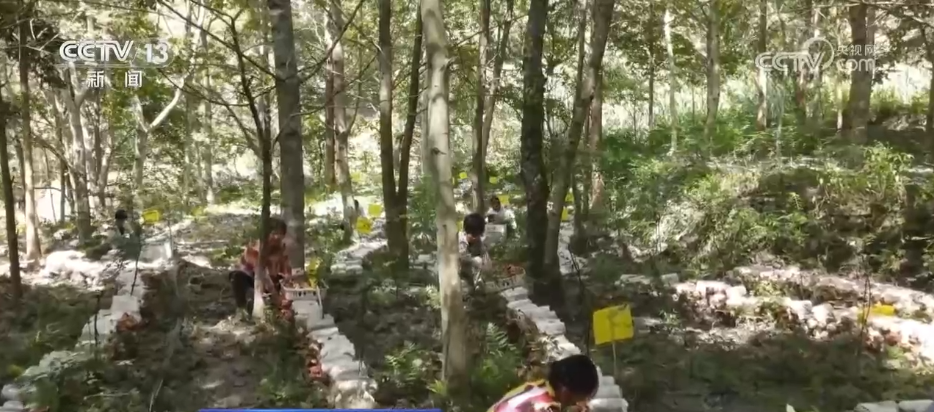
Core Viewpoint - The article highlights the successful harvesting of purple ganoderma (lingzhi) in a 340-year-old lychee forest in Huizhou, showcasing the potential of under-forest economy and the benefits it brings to local communities [1][2]. Group 1: Economic Development - The ancient lychee forest in Tai Mei Town has been utilized to cultivate over 3,500 purple ganoderma, employing a fully simulated wild ecological planting technique, resulting in high-quality and nutritious products [1]. - In 2024, the village successfully harvested two batches of ganoderma, generating an income of 200,000 yuan for the village collective [1]. Group 2: Community Engagement - Local citizens participated in the harvesting event, expressing excitement and enjoyment, which indicates a strong community interest in the under-forest economy [1][2]. - The town's party secretary announced plans to develop the ancient lychee forest into an ecological demonstration base that integrates tourism, education, and harvesting, aiming to enhance public engagement and awareness of the under-forest economy [2].
湖北竹溪农商银行为县域中药材产业发展赋能加力
Zheng Quan Ri Bao· 2025-07-03 02:02
Core Insights - The article highlights the growth of the traditional Chinese medicine (TCM) industry in Hubei's Zhuxi County, which is becoming a pillar for rural revitalization [1][2] - Zhuxi Rural Commercial Bank plays a crucial role in supporting the TCM industry by providing financial assistance and innovative services to local farmers [1][2] Group 1: Industry Development - Zhuxi County is known for its rich natural resources, producing various medicinal herbs, earning titles such as "Home of Huanglian" and "Qinba Medicine Valley" [1] - The TCM industry is experiencing significant growth, with local farmers increasingly engaging in herb cultivation, leading to improved livelihoods [2] Group 2: Financial Support - Zhuxi Rural Commercial Bank has issued over 20 million yuan in loans this year to support the TCM industry, with total loans exceeding 60 million yuan [2] - The bank's financial support has enabled farmers like Yang Benqing to expand their operations from 50 acres to 3,000 acres, demonstrating the impact of timely financial assistance [1][2] Group 3: Future Initiatives - The bank plans to conduct industry customer visits to better understand the financial needs of TCM growers and tailor credit products accordingly [2] - The initiative aims to enhance the bank's service offerings and support the growth of both farmers and pharmaceutical companies in the region [2]
林药共生打开绿色富矿 ——对广西河池市东兰县的调查
Jing Ji Ri Bao· 2025-07-01 22:15
Core Viewpoint - The development of under-forest medicinal herb planting in Donglan County, Guangxi, is positioned as a key driver for rural revitalization, leveraging unique ecological advantages and rich medicinal resources to create economic opportunities while promoting ecological protection [1][5][11]. Summary by Sections Industry Overview - The under-forest economy has been highlighted as a significant opportunity for farmers' income growth, with the national planting area expected to reach 38.5 million acres and annual output value surpassing 104.8 billion yuan by 2024 [1][6]. - Donglan County, despite its ecological fragility, boasts a forest area of 2.8978 million acres and a forest coverage rate of 75.78%, making it a notable area for medicinal herb cultivation [1][2]. Current Developments - Donglan County has established itself as a key area for the cultivation of various medicinal herbs, with 768 species identified, including core varieties like Yao Huang Lian and Tie Pi Shi Duo [2][3]. - The county has implemented a "company + cooperative + base + farmer" model to enhance the scale and standardization of under-forest medicinal herb planting, resulting in over 180,000 acres of medicinal herb cultivation [3][4]. Economic Impact - The under-forest medicinal herb industry is providing new income channels for farmers, with examples of significant earnings from crops like grass coral and Bai Bu, leading to annual output values exceeding 4,000 yuan per acre [5][6]. - The local government has invested over 5 million yuan annually in the development of the under-forest economy, aiming to stimulate further investment and support for the industry [9][11]. Challenges and Opportunities - Despite the growth, challenges such as immature planting techniques, market information lag, and limited sales channels hinder further development [10][11]. - The county plans to enhance its medicinal herb industry by establishing a trading platform, promoting good agricultural practices, and developing a regional brand to improve market presence and pricing power [11]. Future Prospects - Donglan County aims to integrate traditional medicine with tourism and health industries, leveraging its unique resources to create a comprehensive economic model that benefits local communities [7][11]. - The establishment of a medicinal herb industry park with a total investment of 586 million yuan is underway, with a focus on production and processing capabilities to enhance economic returns [6][11].
年产量超2亿吨!我国多地森林食物迎来夏季采收
news flash· 2025-07-01 21:02
Core Viewpoint - Forest food has become the third largest agricultural product in China, following grains and vegetables, with significant growth in production due to government support and local initiatives [1] Group 1: Production and Economic Impact - In Jiangxi Province, a cooperative has established a sprinkler irrigation system covering over 1,000 acres, resulting in a 10% increase in edible mushroom production [1] - In Yunnan Province, local residents have cultivated 20 acres of bamboo fungus under rubber trees, tapping into the potential of the forest economy [1] - The diverse supply of woody oil and food, along with various high-quality forest products such as forest poultry, livestock, mushrooms, and honey, has greatly enriched the diet of the population [1] Group 2: Scale and Distribution - Over 2,400 out of more than 2,800 counties in China are engaged in the cultivation of economic forests, contributing to an annual production of over 200 million tons of various forest foods [1]
南农晨读 | 荔动黔西南 惠享好食光
Nan Fang Nong Cun Bao· 2025-07-01 01:35
Group 1 - The National Audit Office reported that 175 counties intercepted over 4.1 billion yuan in agricultural subsidies, affecting nearly 3 million key groups who missed out on benefits [3] - The report highlighted issues in key livelihood sectors such as education, elderly care, high-standard farmland, and agricultural subsidies [3] Group 2 - The development of the under-forest economy is emphasized as a new initiative post-collective forest rights reform, playing a significant role in job preservation, improving livelihoods, and increasing income in mountainous areas [4] - The central government's recent documents have outlined plans for the development of the under-forest economy, indicating its importance in rural revitalization [4] Group 3 - Guangdong Province is advancing its modern marine ranching strategy with the breeding of high-quality marine species such as red-spotted grouper and tiger grouper, which are referred to as "marine chips" [6] - The initiative aims to enhance the ecological system of the South China Sea through sustainable practices [8][9] Group 4 - The harvesting of Huangpi fruit in Gaozhou has begun, with prices ranging from 4 to 5 yuan per kilogram, and premium fruits reaching 7 yuan per kilogram, indicating a positive trend in farmer income [11] - Gaozhou is recognized as a major production area for Huangpi, with over 20,000 acres of cultivation [12] Group 5 - The "Highzhou Lychee Fresh to Chang'an" promotional event showcased the historical significance and modern innovation of lychee, contributing to rural revitalization and regional development [14] - This event reflects Guangdong Province's commitment to high-quality development initiatives in rural areas [14] Group 6 - Guangdong Province is distributing one million fish seedlings to local modern marine ranching enterprises and typical village aquaculture operators as part of its development strategy [18] - This initiative is aligned with the "Hundred Counties, Thousand Towns, and Ten Thousand Villages" high-quality development project [18]


林下经济“点绿成金” “林+”模式为乡村振兴增添绿色动能
Yang Shi Wang· 2025-06-30 04:23
Core Insights - Forest food is the third largest agricultural product in China, following grains and vegetables, with many regions currently harvesting forest foods during the summer [1] - The development of the forest economy is diversifying from single crop cultivation to multi-faceted production, enhancing the added value of forest products [7][8] Group 1: Forest Food Production - In Jiangxi Province, a cooperative has established a 1,000-acre edible mushroom cultivation base, resulting in a 10% increase in mushroom yield due to a new irrigation system supported by the government [1] - In Yunnan's Mengla Town, 20 acres of bamboo fungus are being cultivated under rubber trees, showcasing the potential of forest under-economy [3] - Nationally, over 2 billion tons of various forest foods are produced annually, with more than 2,400 out of 2,800 counties engaged in economic forest cultivation [5] Group 2: Value Addition and Processing - The local mango industry in Lijiang, Yunnan, has developed deep processing capabilities, producing mango juice, dried mango, and frozen fruit blocks, with a sales network extending nationwide and internationally [10] - The processing of fresh fruit into high-value medicinal materials has increased the value of products like bitter orange by over five times through 14 processing steps [12] Group 3: Ecological and Tourism Development - The forest landscape is being utilized to create economic value, with various regions expanding their ecological product value transformation channels [15] - In Zhejiang's Tiantai County, a forest wellness industry has been developed, attracting tourists for health and recreation, with multiple forest wellness bases established [17] - In Heilongjiang's Yichun, the region is leveraging its ecological resources to develop a forest wellness tourism cluster, which has spurred growth in related sectors like homestays and cultural products [19] Group 4: Economic Impact - Since 2018, the National Forestry and Grassland Administration has launched several national forest tourism routes, contributing to an annual output value of approximately 1 trillion yuan from the forest economy, benefiting millions of forest farmers [21]
打好“四张牌”!探寻绿美广东“林下生金”密码
Nan Fang Nong Cun Bao· 2025-06-30 02:32
Core Viewpoint - The article emphasizes the development of the "under-forest economy" in Guangdong, highlighting its significance in promoting employment, improving livelihoods, and increasing income in mountainous and forested areas. The government is actively supporting this initiative through policies and reforms aimed at enhancing forest quality and optimizing land use [2][4][10]. Group 1: Policy Support - The central government has prioritized the development of the under-forest economy, as indicated in key documents such as last year's Central No. 1 Document and this year's government work report [3][4]. - Guangdong has a substantial forest area, covering over 1.62 billion acres, with a forest stock volume of 578 million cubic meters, which is approximately double the national average [5][6]. - The province has established a solid foundation for the under-forest economy due to its rich ecological resources and ongoing reforms in collective forest rights [8][9]. Group 2: Economic Achievements - As of 2024, the operating area of the under-forest economy in Guangdong has reached 32.41 million acres, generating a total output value of 52.71 billion yuan [23][24]. - The province has created various demonstration bases and industrial parks, including one national forestry industry demonstration park and 30 provincial-level bases [24][25]. - The development of the under-forest economy has been supported by a series of policies since 2012, focusing on various models such as "forest medicine," "forest fruits," and "forest poultry" [28][30][32]. Group 3: Reform Initiatives - The collective forest rights reform has been crucial in activating the under-forest economy, allowing for more flexible land use and management [38][45]. - The implementation of the "three rights separation" policy aims to innovate forest management and improve land transfer regulations [50][51]. - The active transfer of collective forest land has been increasing, providing opportunities for local communities to engage in profitable agricultural practices [53][54]. Group 4: Diversification of Under-Forest Economy - The under-forest economy in Guangdong has diversified, with various models emerging, including the cultivation of edible fungi and medicinal herbs [64][66][70]. - Local initiatives have been established to integrate different industries, such as "forest + health care" and "forest + agriculture," to enhance economic resilience [68][72]. - The province is leveraging its ecological resources to develop a multi-faceted under-forest economy, including tourism and deep processing of forest products [75][76]. Group 5: Brand Development - The lack of large leading enterprises has hindered the formation of influential brands in the under-forest economy, making it difficult to achieve premium pricing for high-quality products [90][91]. - The Guangdong Forestry Bureau is focusing on brand building and has initiated various promotional activities to enhance the visibility of local products [93][94][100]. - The establishment of a product traceability system and a trading platform aims to elevate the economic value of forest products and promote sustainable development [105][106].
(乡村行·看振兴)荒沟变花海:内蒙古闲置地育出“花漾经济”
Zhong Guo Xin Wen Wang· 2025-06-10 15:43
Core Viewpoint - The transformation of previously idle land in Inner Mongolia into a flourishing peony flower economy demonstrates the successful integration of agriculture and tourism, enhancing both ecological and economic benefits for the local community [1][2]. Group 1: Economic Development - The peony flower industry has created over 100 jobs, with villagers earning an additional annual income of 40,000 to 50,000 yuan through land transfer and participation in flower care and tourism services [2]. - The flower garden, covering over 1,500 acres, was previously an abandoned area that has now become a significant source of income for local farmers [1][2]. Group 2: Agricultural Innovation - The introduction of a forestry technology company has led to the cultivation of peonies and other flowers in previously unused land, enhancing the area's agricultural productivity [1]. - The peony flowers are not only for ornamental purposes but also have medicinal value, with plans to establish procurement agreements with enterprises for the roots once they mature [2]. Group 3: Tourism and Cultural Integration - The first Peony Cultural Festival was held, showcasing local agricultural products and promoting the integration of flower cultivation with tourism, thereby addressing the challenge of reduced visitor numbers after the flower season [3]. - The development of seasonal picking tourism projects and the establishment of standardized greenhouses for various fruits and vegetables aim to attract visitors year-round, ensuring continuous economic activity [3].
向沙地要“产值”——辽宁科尔沁沙地兴绿见闻
Ren Min Ri Bao· 2025-06-04 01:55
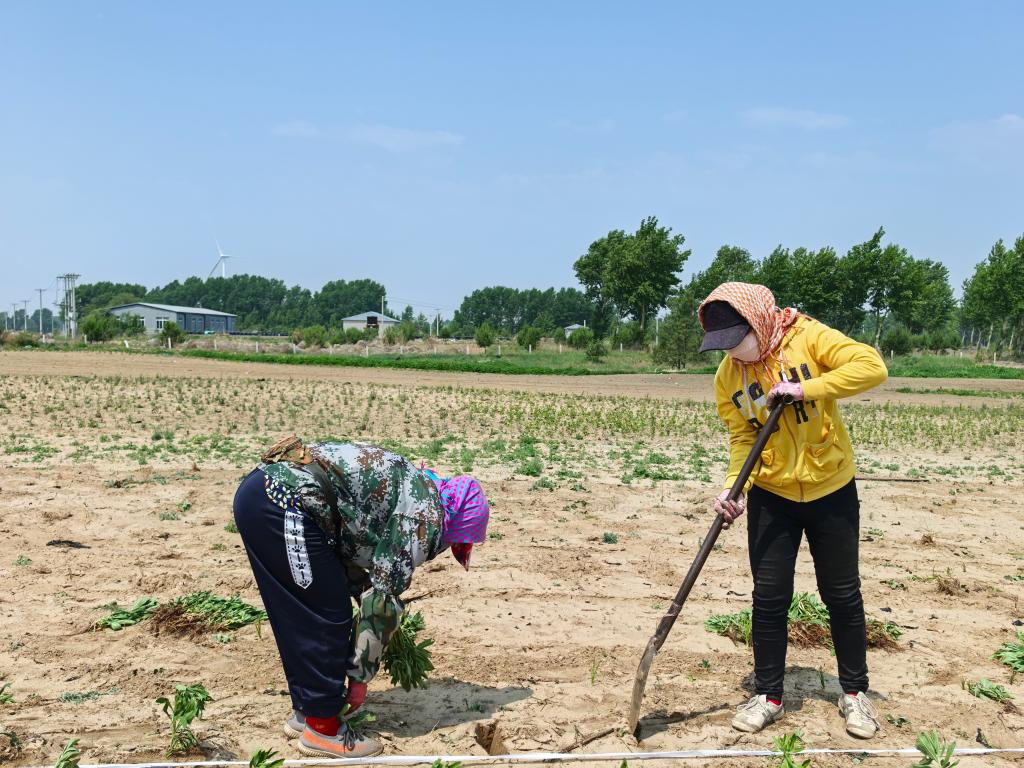
Group 1 - The core idea is the development of medicinal herb cultivation in sandy areas of Liaoning province, specifically in Zhangwu County, to enhance economic value and combat land degradation [1][2] - Zhangwu County has a history of land desertification, with 96% of its area affected, prompting local efforts to integrate forestry and under-forest economies for better economic returns [1][2] - The local government is implementing a model combining party leadership, cooperatives, and enterprises to encourage villagers to plant drought-resistant medicinal herbs, with expected annual income of 19,000 yuan per acre during the peak production period [1] Group 2 - In 2024, Zhangwu County will release a five-year development plan focusing on forestry and under-forest economies, aiming for a diversified development model that includes medicinal herbs, seedlings, flowers, vegetables, fungi, and silkworm farming [2] - Since 2023, Liaoning province has invested 2.4 billion yuan in combating desertification, achieving comprehensive management of 9.92 million acres and exploring green and prosperous development through projects like grafting Chinese red pine onto other species [2] - In Changtu County, a forest farm has completed afforestation of over 125,000 acres, protecting surrounding farmland and generating significant economic benefits through grafting red pine onto other trees [2]