
流动性管理

Search documents
促进货币政策与财政政策相互协同
Sou Hu Cai Jing· 2025-11-19 02:15
Core Insights - The People's Bank of China (PBOC) has announced the resumption of open market operations for government bonds, which is a significant move to enhance the financial function of government bonds and improve the coordination between monetary and fiscal policies [1][2] Group 1: Market Operations - The net injection of 20 billion yuan in government bonds in October indicates the resumption of operations that were paused since January [1] - The PBOC's bond trading is a conventional monetary policy tool aimed at managing liquidity and base currency, allowing for both buying and selling to enhance short- to medium-term liquidity management [1][3] Group 2: Economic Implications - Analysts suggest that the resumption of bond trading signals a supportive stance for long-term liquidity in the banking system, which is expected to stabilize macroeconomic operations in Q4 2023 and Q1 2024 [2] - The current 10-year government bond yield has risen to around 1.8%, indicating a widening yield spread and overall positive performance in the bond market [2] Group 3: Policy Signals - The PBOC's operation reflects a moderately loose monetary policy direction, balancing the need to avoid liquidity tightness while not signaling excessive easing [2][3] - The relatively low net purchase of 20 billion yuan is seen as a cautious approach to avoid overly influencing market expectations [3]
流动性短期承压,央行加码投放稳预期;现货黄金跌破4000美元/盎司 | 金融早参
Sou Hu Cai Jing· 2025-11-18 23:33
NO.2北京:支持金融机构依法合规与社交电商、直播电商等开展合作 中国人民银行北京市分行等12部门印发《金融支持北京市提振和扩大消费的实施方案》,其中提出,发 挥信贷支持主渠道作用。辖内各银行、消费金融公司、汽车金融公司等金融机构要找准自身功能定位, 发挥自身优势,为消费领域提供差异化、特色化、便捷化的金融服务。支持金融机构依法合规与社交电 商、直播电商等开展合作,积极满足商户和消费者融资需求。 |2025年11月19日 星期三| NO.1央行开展4075亿元7天期逆回购操作 11月18日,央行公开市场开展4075亿元7天期逆回购操作,操作利率1.40%,与前次持平。当日有4038 亿元逆回购到期。 点评:央行此次开展4075亿元7天期逆回购操作,旨在稳定短期流动性并对冲到期逆回购规模,保持市 场资金平稳。这一操作反映出央行对当前经济环境的关注以及对流动性管理的精准把控,有助于维护金 融市场稳定。 NO.4现货黄金跌破4000美元/盎司 11月18日,现货黄金盘中跌破4000美元/盎司关口,现跌1.13%。 点评:由于美元升值以及市场对美联储12月降息的预期进一步降温,现货黄金连续调整。11月18日下 午,伦 ...
美联储结束缩表
2025-11-18 01:15
Summary of Federal Reserve's Actions and Market Implications Industry Overview - The document discusses the Federal Reserve's monetary policy actions, particularly focusing on the end of the balance sheet reduction (quantitative tightening) and interest rate adjustments in October 2025 [2][3][10]. Key Points and Arguments 1. **Interest Rate Cut and Balance Sheet Policy** The Federal Reserve announced a 25 basis point interest rate cut, lowering the federal funds rate target range to 3.75%-4% and decided to stop the balance sheet reduction starting December 1, 2025 [2][3][10]. 2. **Impact of Balance Sheet Reduction** Since the beginning of the balance sheet reduction in 2022, the Fed's balance sheet shrank from $8.9 trillion to $6.5 trillion, a total reduction of approximately $2.4 trillion, which included a $1.5 trillion decrease in U.S. Treasuries and $670 billion in mortgage-backed securities (MBS) [10][26]. 3. **Liquidity Tools Utilized** To maintain market liquidity, the Fed employed overnight reverse repurchase agreements (with a cap of $500 billion at a rate of 4%) and overnight reverse repos (with a cap of $160 billion at a rate of 3.75%) [2][6][10]. 4. **Reinvestment Strategy** Post-December 1, 2025, the Fed will reinvest all maturing U.S. Treasury and agency securities into U.S. Treasuries, indicating a potential increase in holdings of U.S. government debt over time [4][7]. 5. **Market Reactions** The announcement of the interest rate cut and the halt of the balance sheet reduction led to a mixed market reaction, with the Dow Jones and S&P 500 indices initially declining, while U.S. Treasury yields rose and the dollar index rebounded [8][9]. 6. **Liquidity Concerns** The decision to end the balance sheet reduction was primarily driven by significant declines in bank system liquidity, which had fallen to approximately $2.8 trillion, leading to upward pressure on money market rates [10][26]. 7. **Historical Context** The Fed's actions were influenced by past experiences, particularly the liquidity crisis in September 2019, which prompted the need for timely interventions to prevent similar occurrences [10][13]. 8. **Use of SRF and FIMA** The Fed's Standing Repo Facility (SRF) was utilized to provide short-term liquidity, with operations reaching $50 billion at the end of October 2025. The Foreign Central Bank Liquidity Swap (FIMA) was also highlighted as a tool to stabilize global dollar financing [20][21][23]. Other Important but Overlooked Content - The Fed's careful management during the balance sheet reduction aimed to avoid significant market volatility or abnormal interest rate spikes, demonstrating a proactive approach to monetary policy [26][27]. - The historical effectiveness of the FIMA tool during crises, such as the liquidity support provided to the Swiss National Bank during the Credit Suisse crisis, underscores its importance in maintaining global financial stability [21][23].
前三季度银行业实现净利润1.9万亿元 不良率微升至1.52%
2 1 Shi Ji Jing Ji Bao Dao· 2025-11-17 14:37
Core Insights - The banking sector in China reported a net profit of 1.9 trillion yuan for the first three quarters of 2025, with stable profitability levels indicated by an average capital return rate of 8.18% and an average asset return rate of 0.63% [1] - There was an increase in non-performing loans (NPLs) in the third quarter, with the NPL balance rising to 3.5 trillion yuan and the NPL ratio increasing to 1.52% [1] - The banking sector's risk compensation capacity strengthened, with loan loss provisions reaching 7.3 trillion yuan and a provision coverage ratio of 207.15% [1] Banking Sector Performance - By the end of Q3 2025, the liquidity coverage ratio for commercial banks was 149.73%, and the net stable funding ratio was 127.67%, indicating improved liquidity management [2] - The total assets of the banking sector reached 474.3 trillion yuan, growing by 7.9% year-on-year, with large commercial banks showing a 10% increase in total assets [3] Insurance Sector Performance - The insurance sector's comprehensive solvency adequacy ratio stood at 186.3%, with property insurance companies showing a ratio of 240.8% [2] - The total assets of insurance companies and asset management companies reached 40.4 trillion yuan, reflecting a 12.5% increase from the beginning of the year [3] Financial Services and Support - The banking sector increased support for inclusive finance, with loans to small and micro enterprises reaching 36.5 trillion yuan, a year-on-year growth of 12.1% [4] - Insurance companies reported a premium income of 5.2 trillion yuan for the first three quarters of 2025, marking an 8.5% increase [4]
前三季度银行业实现净利润1.9万亿元,不良率微升至1.52%
2 1 Shi Ji Jing Ji Bao Dao· 2025-11-17 13:37
Core Insights - The banking sector in China reported a net profit of 1.9 trillion yuan for the first three quarters of 2025, with stable profitability levels indicated by an average capital return rate of 8.18% and an average asset return rate of 0.63% [1] - There was an increase in non-performing loans (NPLs) in the third quarter, with the NPL balance rising to 3.5 trillion yuan and the NPL ratio increasing to 1.52% [1] - The banking industry's risk compensation capacity has strengthened, with a loan loss provision balance of 7.3 trillion yuan and a provision coverage ratio of 207.15% [2] Banking Sector Performance - As of the end of Q3 2025, the total assets of China's banking sector reached 474.3 trillion yuan, reflecting a year-on-year growth of 7.9% [3] - Large commercial banks accounted for 43.9% of total banking assets, with a total of 208.1 trillion yuan, growing by 10% year-on-year [3] - The asset growth rate for insurance companies accelerated, with total assets reaching 40.4 trillion yuan, a 12.5% increase from the beginning of the year [3] Financial Services and Support - The banking sector has increased its support for inclusive finance, with loans to small and micro enterprises reaching 36.5 trillion yuan, a year-on-year growth of 12.1% [4] - Insurance companies reported a premium income of 5.2 trillion yuan for the first three quarters of 2025, marking an 8.5% increase year-on-year [4] - The number of new insurance policies issued reached 846 billion, reflecting a growth of 7.9% [4]
人民银行开展8000亿元买断式逆回购操作
Bei Jing Shang Bao· 2025-11-17 02:50
Core Viewpoint - The People's Bank of China (PBOC) has conducted a 800 billion yuan reverse repurchase operation to maintain liquidity in the banking system, with a six-month term [1] Group 1 - The operation was executed using a fixed amount, interest rate bidding, and multiple price level bidding methods [1] - The total amount of the reverse repurchase operation is 800 billion yuan [1] - The term for this operation is set at six months [1]
央行加量续做8000亿逆回购,流动性护航稳增长
Huan Qiu Wang· 2025-11-15 03:11
【环球网财经综合报道】中国人民银行宣布,为保持银行体系流动性充裕,将于11月17日开展8000亿元6个月期买断式逆 回购操作。由于本月有3000亿元同期逆回购到期,此举将实现净投放5000亿元。这是央行连续第六个月加量续做买断式 逆回购,凸显了其维护流动性合理充裕、支持实体经济的坚定决心。 中信证券首席经济学家明明的分析则提供了另一视角,他认为11月份有9000亿元MLF到期,买断式逆回购的净投放增 加,也可能是为了缓解MLF的续做压力,体现了央行在多种货币政策工具间的灵活搭配与精准调控。 展望未来,央行的货币政策立场清晰明确。《报告》在下一阶段主要思路中强调,将实施好适度宽松的货币政策,根据 经济金融形势的变化,做好跨周期和逆周期调节,持续营造适宜的货币金融环境。市场普遍预计,央行本月将对到期的 9000亿元MLF进行小幅加量续作,并继续综合运用买断式逆回购和MLF等工具,确保流动性合理充裕。 本次操作后,结合月初对7000亿元3个月期买断式逆回购的等量续做,11月份央行通过买断式逆回购工具已合计净投放 5000亿元,规模较10月份增加1000亿元。这一系列精准操作,有效对冲了多重因素对银行体系流动性的影响 ...

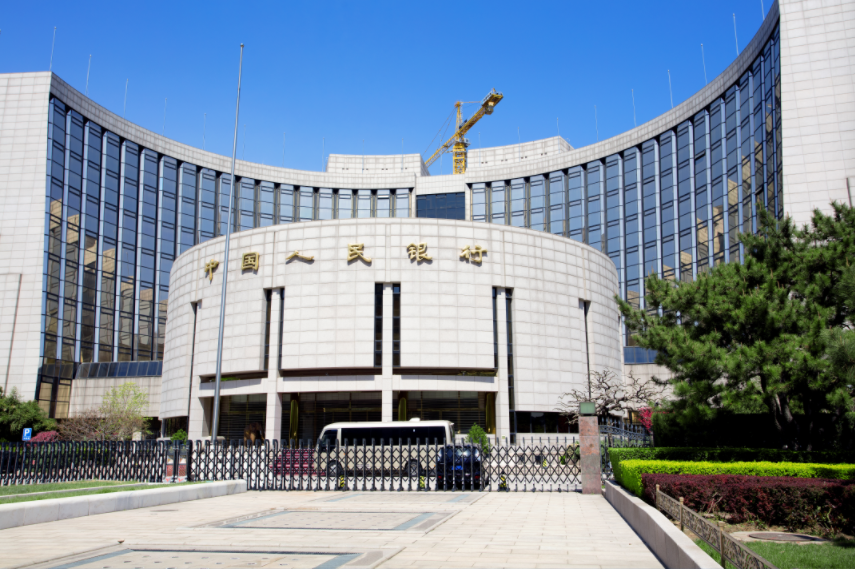
呵护流动性宽松 央行下周一进行8000亿元买断式逆回购
Shang Hai Zheng Quan Bao· 2025-11-14 18:39
Core Viewpoint - The People's Bank of China (PBOC) is implementing measures to maintain ample liquidity in the banking system, including a significant increase in reverse repurchase agreements (repos) to support financial stability and credit growth [1][2]. Group 1: Reverse Repo Operations - On November 17, the PBOC will conduct an 800 billion yuan reverse repo operation with a six-month term, which is an increase of 500 billion yuan compared to the previous month [1]. - The total amount of reverse repos for November is expected to reach a net injection of 500 billion yuan, marking the highest monthly net injection since February [2]. - The PBOC has been consistently using reverse repos to inject medium-term liquidity into the market for six consecutive months [1]. Group 2: Monetary Policy Tools - The PBOC is expected to utilize a combination of reverse repos and Medium-term Lending Facility (MLF) to continuously inject medium-term liquidity into the market [2]. - There is a possibility of a slight increase in MLF operations to alleviate the pressure of MLF renewals, as 900 billion yuan of MLF is set to mature in November [2]. - The PBOC has also restarted open market operations for government bonds, which is another method to inject liquidity into the market [2]. Group 3: Year-End Liquidity Management - As the year-end approaches, the PBOC is likely to implement various monetary policy tools to ensure sufficient market liquidity and encourage banks to increase credit issuance [3]. - There is speculation that the PBOC may implement a new round of reserve requirement ratio (RRR) cuts before the end of the year to release long-term liquidity and reduce financing costs [3]. - Factors influencing the potential RRR cut include external economic fluctuations, domestic economic growth dynamics, and efforts to stabilize the real estate market [3].
央行将加量续做6个月期买断式逆回购
Zheng Quan Ri Bao· 2025-11-14 16:04
Core Viewpoint - The People's Bank of China (PBOC) is implementing a significant liquidity injection through a 800 billion yuan reverse repo operation to maintain ample liquidity in the banking system, with a net injection of 500 billion yuan after accounting for maturing reverse repos [1][2]. Group 1: Reverse Repo Operations - On November 17, the PBOC will conduct an 800 billion yuan reverse repo operation with a six-month term, marking a net injection of 500 billion yuan after 300 billion yuan of six-month reverse repos mature [1]. - The total net injection from reverse repos in November is expected to be 500 billion yuan, which is an increase of 100 billion yuan compared to October, indicating a continuous trend of increasing reverse repo operations for six consecutive months [1]. Group 2: Market Liquidity and Government Bonds - The increase in reverse repo operations is partly due to the issuance of 500 billion yuan in local government bonds aimed at resolving existing debt and boosting effective investment, leading to a significant rise in net financing of government bonds in November [2]. - The maturity of 9 billion yuan in Medium-term Lending Facility (MLF) in November may also necessitate additional liquidity support from the PBOC, with expectations of a slight increase in MLF renewals [2]. Group 3: Monetary Policy Framework - The PBOC has established a monthly routine for liquidity operations, including three-month reverse repos around the 5th, six-month reverse repos around the 15th, and MLF operations on the 25th, which collectively provided a net injection of 1.5 trillion yuan in the third quarter [3]. - The PBOC's monetary policy aims to maintain a moderately accommodative stance while closely monitoring changes in the global monetary policy landscape and adjusting liquidity supply accordingly [3].
人民银行将开展8000亿元买断式逆回购操作
Bei Jing Shang Bao· 2025-11-14 12:00
Core Points - The People's Bank of China (PBOC) will conduct a reverse repurchase operation of 800 billion yuan to maintain ample liquidity in the banking system [1] - The operation will be conducted on November 17, 2025, with a term of 6 months (182 days) [1] - The reverse repurchase will be executed through a fixed quantity, interest rate bidding, and multiple price level bidding method [1]