
长期投资

Search documents
政策优势与新资本市场为投资者树立了强烈的投资信心
Sou Hu Cai Jing· 2026-01-09 03:24
Group 1 - The global capital market's focus on Chinese assets is increasing, with foreign capital returning and market confidence being significantly restored due to policy dividends and the deepening of new capital market construction [2][3] - Coordinated macro policies, directional industrial policies, and stable regulatory policies create a policy advantage that injects lasting confidence into the market, with a focus on economic and market stability [3][4] - The Chinese stock market is expected to benefit from policy support, with predictions of a 14% profit growth for the MSCI China Index and the CSI 300 Index in 2026, significantly higher than the previous year's growth [4][5] Group 2 - The capital market is enhancing its institutional resilience and optimizing the balance of investment and financing, creating a more inclusive and adaptable market ecosystem that boosts investor confidence [5][6] - Institutional innovations are addressing traditional market pain points, focusing on long-term investment and improving asset quality, which supports the development of new productive forces [10][11] - The capital market's adaptability to new economic growth opportunities, particularly in technology and green development, is providing investors with significant value creation potential [7][10] Group 3 - The influx of domestic and foreign capital is driving a positive feedback loop in market confidence, with foreign investors actively increasing their positions in Chinese assets [8][9] - Long-term capital, such as insurance funds, is steadily increasing its allocation to equity assets, enhancing the stability of the market [9][10] - The shift in investor mindset from "embracing uncertainty" to "embracing certainty" is attributed to the certainty of policies, visibility of performance, asset valuation advantages, and the long-term nature of capital [9][10]


华商基金张明昕管理 华商均衡成长混合C近1年、3年业绩同类前五
Xin Lang Cai Jing· 2026-01-09 01:27
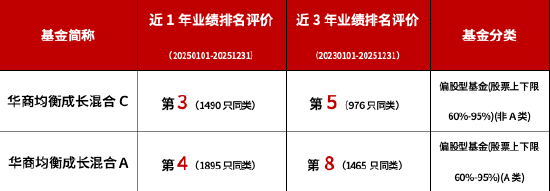
Core Viewpoint - During the "14th Five-Year Plan" period, China's economic strength, technological capabilities, and overall national power have reached new heights, leading to a vibrant capital market. Huashang Fund remains committed to prioritizing the interests of its investors, adhering to active management, and pursuing high-quality development [1][10]. Performance Summary - As of December 31, 2025, Huashang Fund's actively managed equity funds achieved a five-year absolute return of 90.58%, ranking 5th among 139 comparable companies. Over seven years, the absolute return reached 341.72%, placing it 4th among 121 peers [10]. - The company's actively managed fixed-income funds recorded a five-year absolute return of 45.22%, ranking 1st among 126 comparable firms, and a seven-year absolute return of 100.14%, also ranking 1st among 112 peers [10]. - In December 2025, Huashang Fund was awarded the "Active Equity Investment Golden Bull Fund Company Award" by China Securities Journal for its outstanding long-term performance [10]. Fund Specifics - The Huashang Balanced Growth Mixed Fund, managed by Zhang Mingxin, has shown remarkable performance, with the Huashang Balanced Growth Mixed C fund ranking 3rd in its category over the past year and 5th over the past three years [2][11]. - The Huashang Balanced Growth Mixed A fund ranked 4th in the past year and 8th over the past three years among its peers [11]. Management Philosophy - Zhang Mingxin, the General Manager of the Equity Investment Department at Huashang Fund, emphasizes that value investing is undoubtedly a sustainable investment approach. He advocates for a comprehensive value assessment and reasonable pricing to provide a good margin of safety, which is fundamental to investment [5][13]. - The company believes that only industries in an upward economic cycle can consistently reach new highs, and thorough cross-industry comparisons and in-depth research of the industrial chain are essential for identifying alpha assets that can achieve significant returns [5][13]. Future Outlook - Looking ahead, Huashang Fund will continue to prioritize the interests of its investors, adhere to the essence of the industry, deepen active management, and maintain a long-term perspective. The company aims to optimize resource allocation and fulfill its mission in the context of high-quality development [14].
“最后一公里”的变革:基金代销巨头转向长期主义
Zhong Guo Zheng Quan Bao· 2026-01-08 23:39
Core Insights - The public fund industry in China is experiencing a significant transformation, driven by regulatory changes aimed at reducing fees and promoting long-term investment strategies [1][4][6] - Internet distribution channels are becoming crucial in connecting investors with public fund products, emphasizing the need for transparency and improved investor experience [1][2] Regulatory Changes - The implementation of the "Regulations on the Management of Sales Fees for Publicly Raised Securities Investment Funds" has led to a reduction in subscription fees and sales service fees, aiming to lower investor costs and enhance market order [4] - New regulations are expected to shift the competitive landscape among institutions, encouraging a focus on long-term client retention rather than short-term trading incentives [4] Sales Strategy Evolution - Fund sales platforms are shifting their focus from short-term performance metrics to long-term investment indicators, such as three-year performance and risk-adjusted returns [2][3] - Major platforms like Ant Fund and Tiantian Fund are introducing new data presentation methods to enhance transparency and assist investors in making informed decisions [2][3] Risk Management - There is a growing emphasis on aligning fund products with investors' risk tolerance, with platforms showcasing historical volatility and performance metrics to better inform potential buyers [3] - The introduction of features that highlight real investor experiences and returns aims to create a more realistic understanding of fund performance [3] Market Trends - Sales institutions are expected to increase their focus on equity funds, aligning with policy directions that encourage long-term capital market support [5] - The shift from a sales-driven model to a service and performance-driven approach is anticipated to reduce reliance on low-risk, high-volume sales strategies [5] Long-term Investment Focus - The fund sales ecosystem is transitioning towards a long-term investment philosophy, with a focus on investor satisfaction and sustainable growth in fund holdings [6] - Companies are adopting new metrics for evaluating success, prioritizing user retention and profitability over sales volume [6] - Data indicates that users of certain fund products have experienced significantly higher returns compared to non-participants, reinforcing the benefits of a long-term investment approach [6]
“最后一公里”的变革: 基金代销巨头转向长期主义
Zhong Guo Zheng Quan Bao· 2026-01-08 22:12
Core Insights - The public fund industry in China is experiencing a significant transformation, driven by regulatory changes aimed at reducing fees and promoting long-term investment strategies [1][4][6] - Internet distribution channels are becoming crucial in connecting investors with public fund products, emphasizing the need for transparency and improved investor experience [1][2] Group 1: Regulatory Changes - The implementation of the "Regulations on the Management of Sales Fees for Publicly Raised Securities Investment Funds" aims to lower subscription and service fees, guiding the industry back to long-term investment principles [1][4] - New regulations restrict the commission structure, encouraging institutions to focus on retaining clients through enhanced service rather than frequent trading [4] Group 2: Changes in Sales Practices - Fund sales platforms are shifting their focus from short-term performance metrics to long-term indicators, such as three-year performance and risk-adjusted returns, to better inform investor decisions [2][3] - Platforms like Ant Fund and Tiantian Fund are introducing new data dimensions to enhance transparency and assist investors in making informed choices [2][3] Group 3: Emphasis on Risk Management - The sales process is increasingly incorporating risk adaptation, with platforms showcasing historical volatility to align products with investors' risk tolerance [3] - The introduction of features that highlight real investor performance aims to connect product value directly with investor satisfaction [3] Group 4: Future Trends - The industry is expected to see a shift towards equity fund sales, aligning with policy directions to support long-term capital market funding [5] - A transformation from sales-driven to service-driven models is anticipated, reducing reliance on low-risk volume sales strategies [5][6] Group 5: Long-term Investment Focus - The sales ecosystem is evolving to prioritize long-term performance over short-term gains, with a focus on investor experience and satisfaction [6] - Data indicates that users of Ant Fund's "Gold Selection" equity funds have a higher probability of achieving positive returns compared to non-"Gold Selection" users, highlighting the benefits of long-term holding [6]
基金代销巨头转向长期主义
Zhong Guo Zheng Quan Bao· 2026-01-08 20:50
Core Insights - The public fund industry in China is undergoing a significant transformation, focusing on long-term investment and enhancing investor experience through regulatory changes and new sales strategies [1][4][6] Group 1: Regulatory Changes - The implementation of the "Regulations on the Management of Sales Fees for Publicly Raised Securities Investment Funds" aims to lower subscription fees and sales service fees, guiding the industry back to long-term investment [1][4] - The new regulations restrict the proportion of client maintenance fees, which is expected to shift the competitive logic among institutions towards retaining clients for the long term [4] Group 2: Changes in Sales Strategies - Internet platforms for fund distribution are shifting their focus from short-term performance metrics to long-term indicators, such as "three-year returns" and "positive returns over three years" [2][6] - Major platforms like Ant Fund and Tiantian Fund are introducing new data presentation dimensions to enhance transparency and assist investors in making informed decisions [2][3] Group 3: Emphasis on Investor Experience - The sales process is evolving to highlight real investor experiences, with platforms showcasing metrics like user profitability and average returns to connect product value with investor satisfaction [3][4] - The focus is shifting from merely selling products to providing comprehensive services that enhance the overall investment experience [6] Group 4: Future Outlook - The industry is expected to prioritize sustainable growth in asset retention, with a shift towards a sales ecosystem centered on long-term investment principles [6] - By 2026, platforms aim to enhance user retention and profitability metrics while reducing the emphasis on sales volume, creating a new assessment framework focused on investor satisfaction [6]
牛市还亏钱?这几天的选择,决定了你的全年收益
雪球· 2026-01-08 13:00
Core Viewpoint - The article discusses the disparity between index performance and individual investor experiences during the bull market of 2025, highlighting that missing key trading days can significantly impact overall returns [5][6][8]. Group 1: Market Performance - The Shanghai Composite Index rose by 21.54% in 2025, while the CSI 500 and CSI 1000 indices saw nearly 30% gains [6]. - Despite the overall market gains, many investors reported losses, indicating a divergence in individual performance versus index performance [7][8]. Group 2: Importance of Key Trading Days - Missing the top 10 trading days in 2025 could have turned a 21.54% gain into a -1.37% loss due to the compounding effect of returns [17]. - Historical analysis from 2005 to 2025 shows that missing the best trading days consistently leads to significantly lower annual returns, with missing the top 10 days resulting in a drop from 582.66% to 220.03% in cumulative returns [22][32]. Group 3: Market Behavior Patterns - The article notes that significant market gains often occur after substantial declines, suggesting that the best days for returns are frequently found at the beginning of bull markets or the end of bear markets [36]. - A study by Hartford indicates that 78% of the highest daily returns in the S&P 500 occurred during bear markets or the first two months of a bull market [31]. Group 4: Investment Strategy Insights - The difficulty of timing the market is emphasized, as investors often react to downturns by attempting to avoid losses, which can lead to missing subsequent gains [40]. - The article suggests that maintaining a long-term investment strategy and staying invested in a diversified index can help capture significant market gains over time [46][52].

坚守与进化 “选股专家”焕新回归
中国基金报· 2026-01-08 01:29
Core Viewpoint - 2025 is identified as the "year of return" for active equity investment, with a focus on fundamental research and long-termism, leading to impressive returns for investors, particularly highlighted by the performance of Huatai-PineBridge Fund [1] Performance Summary - In 2025, Huatai-PineBridge's Hong Kong Advantage Selection A and Core Technology One-Year Holding A achieved annual returns of 112.70% and 102.40%, respectively, significantly outperforming their benchmarks of 27.63% and 27.87% [1][14] - A total of 25 active equity funds exceeded a 50% annual increase, with several funds ranking among the top in their categories [1] Long-Term Performance - Over the past three years (2023-2025), Huatai-PineBridge's Health Living One-Year Holding A ranked first among 67 funds, while the North Exchange Innovation Selection Two-Year Open A ranked second among 10 funds [2] - In the five-year period (2021-2025), the Global Mobile Internet Flexible Allocation A ranked third among 33 funds, and the Technology Innovation Flexible Allocation A was in the top 7% of 446 funds [3] Investment Philosophy - Huatai-PineBridge emphasizes a clear investment philosophy focused on in-depth fundamental analysis, selecting high-quality securities, and long-term positioning for sustainable growth [6] - The firm believes that the fundamental performance of companies is the key determinant of long-term value, advocating for a focus on quality securities to manage risks effectively [6] Research and Development System - The company has established a unique vertical integrated research and investment system, enabling efficient collaboration across various industry teams and enhancing its competitive edge [8] - This system aligns with regulatory guidance aimed at promoting high-quality development in public funds, enhancing the firm's team-based operational capabilities [8] Management Innovation - Huatai-PineBridge has implemented a rules-based investment management approach to ensure stable investment styles and controllable risks, integrating data science into the investment management process [10] - The firm has developed a closed-loop quality assurance system that aligns client needs with investment strategies, ensuring a comprehensive approach to investment management [10] Talent Development - The company focuses on building a strong team by selecting and nurturing talent from recent graduates while also attracting experienced professionals to complement its capabilities [12] - Huatai-PineBridge emphasizes a culture of integrity, passion, teamwork, and long-term thinking, fostering a cohesive and effective team environment [12] Future Outlook - The firm aims to continue enhancing its core competencies in active equity investment, solidifying its research platform, optimizing team structures, and improving service efficiency to contribute to the development of a strong financial sector [13]

华商基金张明昕管理华商均衡成长混合C近1年业绩排名同类第三
Xin Lang Cai Jing· 2026-01-07 09:36
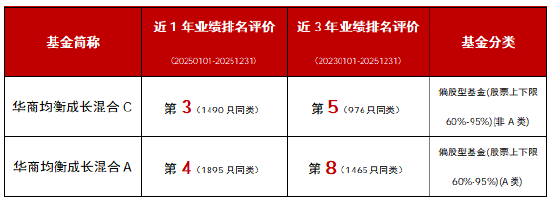
Core Viewpoint - During the "14th Five-Year Plan" period, China's economic strength, technological capabilities, and overall national power have reached new heights, leading to a vibrant capital market. Huashang Fund remains committed to prioritizing the interests of its investors, adhering to active management, and pursuing high-quality development [1][16]. Fund Performance - As of December 31, 2025, Huashang Fund's active equity funds achieved an absolute return of 90.58% over the past five years, ranking 5th among 139 comparable companies. Over seven years, the absolute return reached 341.72%, placing it 4th among 121 peers [16]. - The company's active fixed-income funds recorded a five-year absolute return of 45.22%, ranking 1st among 126 comparable firms, and a seven-year absolute return of 100.14%, also ranking 1st among 112 peers [16]. Awards and Recognition - In December 2025, Huashang Fund was awarded the "Active Equity Investment Golden Bull Fund Company Award" by China Securities Journal during the 22nd Fund Industry Golden Bull Awards, highlighting its impressive long-term performance [16]. Specific Fund Highlights - The Huashang Balanced Growth Mixed Fund, managed by Zhang Mingxin, has shown outstanding performance, ranking 3rd in its category for the past year and 5th over the past three years as of December 31, 2025 [2][17]. - The Huashang Balanced Growth Mixed C fund is classified as an equity fund with a stock allocation limit of 60%-95% [17]. Management Philosophy - Zhang Mingxin, the General Manager of the Equity Investment Department at Huashang Fund, emphasizes that value investing is a sustainable investment approach. He advocates for comprehensive value assessment and reasonable pricing to provide a good margin of safety, which is fundamental to investment [20]. - The company recognizes that its development is closely tied to the future of the Chinese economy and the call for building a strong financial nation, emphasizing the importance of high-quality development and active management [20].
【财经分析】公募基金销售新规落地 债市迎来政策红利下的结构重塑
Xin Hua Cai Jing· 2026-01-06 08:26
Core Viewpoint - The recently released official version of the "Regulations on the Management of Sales Fees for Publicly Raised Securities Investment Funds" has sparked significant discussion in the industry, with notable optimizations compared to the draft version, indicating a policy direction of "precise relaxation and pressure relief" [1][2] Summary by Relevant Sections Changes in Redemption Fee Structure - The official version allows for different redemption fee agreements for individual investors holding for 7 days or more and institutional investors holding for 30 days or more, contrasting with the draft which imposed uniform fees [2][3] - The redemption fee for bond funds has been significantly relaxed, reducing the previously anticipated redemption pressure on bond markets [3] Transition Period and Market Impact - The adjustment period has been extended to 12 months, providing more time for institutional investors and public funds to adapt, thereby alleviating the concentrated redemption pressure faced by bond funds [3][4] - Following the new regulations, the interbank bond market saw a decline in yield rates, indicating a positive market sentiment [3] Short-term, Medium-term, and Long-term Effects - In the short term, the policy relaxation is expected to repair market sentiment, with potential trading opportunities emerging in the bond market [4][5] - Medium-term structural adjustments in the bond market are anticipated, with a shift towards bond ETFs expected to attract institutional funds [5][6] - Long-term, the new regulations aim to foster a healthy market ecosystem focused on long-term investments, potentially saving investors approximately 51 billion annually in fees [6][8] Investment Strategies and Market Outlook - Despite the positive developments, the overall bond market is expected to remain in a volatile state, with a focus on structural opportunities rather than trend-based movements [7][8] - Recommendations include targeting short-term products and high-grade credit bonds, while being cautious with long-term interest rate bonds due to ongoing supply-demand imbalances [7][8]
重返4000点 A股“慢牛”人设立住
Bei Jing Shang Bao· 2026-01-05 15:29
Group 1 - The A-share market has shown a significant improvement in both major indices and the quality of listed companies, establishing a clear "slow bull" pattern, which has enhanced investor confidence [1][2] - The market has shifted from a speculative environment focused on financing to one that emphasizes value and long-term investment, supported by reforms such as the registration system and normalized delisting mechanisms [1][2] - The overall quality of listed companies has improved due to stricter IPO regulations and enhanced ongoing supervision, leading to increased dividends and share buybacks [1][2] Group 2 - The daily trading volume has stabilized above 1.5 trillion yuan, indicating active market participation and reduced speculative behavior, which is a characteristic of the current "slow bull" market [2] - The influx of long-term capital, such as pension and insurance funds, has strengthened the market's stability, while foreign investment increasingly views A-shares as a key component of global asset allocation [2] - The return of the A-share index to 4000 points signifies not just a numerical rebound but also a transformation in market ecology and investment philosophy, affirming the reality of the "slow bull" market [3]