
绿色低碳转型

Search documents
创业板新能源ETF(159261)涨超1.7%,工信部再提加快绿色低碳转型
Xin Lang Cai Jing· 2025-09-17 06:34
Group 1 - The New Energy Index of the ChiNext board has shown a strong increase of 1.76%, with significant gains in constituent stocks such as Jinlei Co., Ltd. rising by 11.47% and CATL increasing by 7.14% [1] - The opening of the BRICS New Industrial Revolution Partnership Forum emphasizes the need for BRICS countries and developing nations to collaborate on green and low-carbon transitions, particularly in sectors like new energy vehicles, photovoltaics, wind power, and hydrogen energy [1] - The ChiNext New Energy ETF has also risen by 1.77%, indicating a positive market sentiment towards the new energy sector [1] Group 2 - CITIC Construction Investment Securities highlights that the "Price Law" supports the photovoltaic industry chain, ensuring that sales do not fall below full costs, which provides strong price support [2] - Starting from September, there will be restrictions on the production and sales of silicon materials, with output expected to remain stable month-on-month, indicating a tight supply situation [2] - The top ten weighted stocks in the ChiNext New Energy Index account for 64.15% of the index, with major players including CATL, Sungrow Power Supply, and Huichuan Technology [2]


河南资本市场月报(2025年第7期)-20250917
Zhongyuan Securities· 2025-09-17 05:18
Economic Performance - In July 2025, the industrial added value in Henan province grew by 8.8%, outperforming the national average by 3.1 percentage points[20] - The total retail sales of consumer goods in Henan reached 2125.27 billion yuan, with a year-on-year growth of 4.8%, exceeding the national growth rate by 1.1 percentage points[21] - Fixed asset investment in Henan increased by 5.6% year-on-year, higher than the national growth rate of 1.6%[23] Market Trends - In August 2025, the Henan Index rose by 12.68%, surpassing the Shanghai Composite Index's increase of 7.97% and the CSI 300 Index's increase of 10.33%[55] - The cumulative increase of the Henan Index for the first eight months of 2025 was 28.59%, consistently outperforming major benchmark indices[55] Investment Landscape - As of the end of August 2025, Henan had a total of 138 listed companies, with an A-share market capitalization of 17794.34 billion yuan, reflecting a quarter-on-quarter growth of 13.34%[6] - In the first eight months of 2025, the total amount of IPOs approved nationwide was 50, with Henan having only one company in the pipeline[6] Policy Environment - In August 2025, the financial regulatory authorities introduced a series of policies aimed at expanding consumption and supporting industrial transformation[28] - The Henan provincial government launched multiple policies to support technological innovation and the development of strategic emerging industries[34]
国资委发声,将大力推动国资央企战略性专业化重组整合
Xin Lang Cai Jing· 2025-09-17 03:55
记者 辛圆 国资委副主任李镇周三在国新办举行的"高质量完成'十四五'规划"系列主题新闻发布会上表示,"十四 五"期间国资央企大力推进布局优化结构调整,以市场化的方式重组了6组10家企业,新组建设立9家中 央企业。 一是围绕服务国家战略实施重组整合。李镇表示,以服务战略大局、维护国家安全为鲜明导向,在重要 行业和关键领域加快推进重组整合,进一步增强了国有经济的战略支撑托底能力。比如,着眼加快建设 自主可控的卫星互联网,组建了中国星网。 二是围绕增强产业协同实施重组整合。他提到,以提高产业集中度为目标,既推动同类型业务的横向联 合,又加强上下游业务的纵向整合,有力推进解决重复投资、资源分散等问题,形成了"1+1>2"的效 果。比如,鞍钢集团重组本钢集团,既提高了企业竞争力,形成了"南宝武、北鞍钢"的发展格局,又发 挥了区域引领带动作用。 例如安徽省国资委、安徽证监局4月8日印发《关于加强省属企业控股上市公司市值管理若干事项的通 知》,提出十条举措。在并购重组方面,措施提到,鼓励聚焦提高科技创新能力实施并购重组,打造一 批科技领军企业。 南京市政府办公厅3月份印发《南京市关于支持企业并购重组高质量发展的若干措施》, ...


煤焦油深加工产业升级步伐加快
Zhong Guo Hua Gong Bao· 2025-09-17 02:46
Core Viewpoint - The Chinese coking industry is undergoing significant structural adjustments and green transformation, driven by tightening supply and increasing high-end demand for coal tar deep processing products [2][6]. Supply Dynamics - The recent shutdown of two coking furnaces in Tangshan has led to a reduction of 1.1 million tons of coking capacity, contributing to over 5 million tons of coking capacity being phased out since 2024 [2] - The overall coking production in China is expected to be approximately 470 million tons in 2024, reflecting a slight decrease of 0.5% year-on-year, with coal tar production estimated at around 20 million tons [2] Environmental Regulations - Stricter environmental policies are causing the closure of non-compliant small coking enterprises, which is likely to further decrease coking production and limit the supply of coal tar, leading to increased costs for deep processing companies [3] Technological Upgrades - The coal tar deep processing sector is facing pressure to upgrade its technology, with current production processes primarily relying on distillation, while hydrogenation technology is gaining traction for producing high-value products [4] - By the end of 2024, China's coal tar deep processing capacity is projected to exceed 26 million tons, with an average annual growth rate of about 3% over the past five years, although capacity utilization remains between 75% and 80% due to outdated technology [4] Market Opportunities - The coal tar deep processing industry has diverse applications, including carbon black, pharmaceutical intermediates, and new energy materials, with carbon black production expected to reach 5.5 million tons in 2024 [5] - The demand for needle coke, a key material for lithium battery anodes, is projected to grow by over 20% year-on-year, reaching 1.2 million tons in 2024, indicating a significant market opportunity [5] Future Trends - The coal tar deep processing industry is anticipated to evolve towards high-end, green, and intelligent development, focusing on product structure upgrades, energy-efficient production processes, and the integration of advanced technologies such as industrial internet and big data [6]
全球首个超稠油光热开发项目投运
Zhong Guo Hua Gong Bao· 2025-09-17 02:29
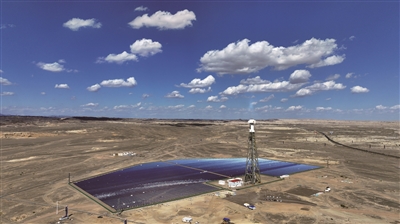
为稠油绿色开采提供"中国方案" 当前,全球超稠油开发普遍依赖热采技术,而传统工艺采用燃气或燃煤锅炉产汽热采,存在能耗高、碳 排放量大的问题。作为我国最大的整装浅层超稠油生产基地,风城油田的稠油虽品质优良,但黏稠度极 高,需借助高品质过热蒸汽进行降黏和驱动才能开采。 中国石油集团公司高级技术专家、新疆油田公司首席技术专家孙新革强调,该项目实现了稠油开采过程 中化石燃料的规模化可再生能源替代,为我国稠油绿色开发提供了可复制的新业态、新模式与新动能, 更构建了一套完整的稠油光热开采技术体系,为国际、国内稠油绿色开采树立了科学样板。 此次投产的塔式水工质高温光热项目,采光面积达5.15万平方米。项目采用先进小型定日镜聚光系统, 可稳定产出305℃的高品质过热蒸汽,直接满足稠油热采的核心需求;更具突破性的是,项目创造性地 将高温光热制蒸汽技术与稠油地下蒸汽腔储能相结合,即便在夜间无光照条件下,也能通过蒸汽腔持续 释放白天储存的热量加热油藏,实现"光尽其用,零碳采油"的经济环保目标。 风城油田作业区相关负责人介绍,该项目投运后,每年可生产5.2万吨零碳过热蒸汽,替代天然气近392 万立方米,所产蒸汽用于稠油热采可实现零碳 ...

2025年山西(太原)能源产业博览会首设绿电展区和能源科技创新展区
Zhong Guo Xin Wen Wang· 2025-09-17 00:40
Core Viewpoint - The 2025 Shanxi (Taiyuan) Energy Industry Expo will be held from September 27 to 29, focusing on "green low-carbon transformation and the construction of a new energy system" with an emphasis on internationalization, green electricity advantages, and technological innovation [1] Group 1: Event Overview - The expo will be organized by the Shanxi Provincial Department of Commerce, along with relevant provincial departments and local governments, covering an exhibition area of 50,000 square meters [1] - There will be eight exhibition zones, including thematic image, international, green electricity, energy technology innovation, central state-owned enterprises, new energy, smart energy, and energy equipment zones [1] - Over 400 domestic and international energy companies are expected to participate, showcasing new technologies, achievements, and applications in the energy sector [1] Group 2: International Participation - The expo will feature an international exhibition zone, inviting 30 international companies from 10 countries, including Tesla, ABB, Shell, and Honeywell [1] - The event will host foreign business representatives and associations, organizing roundtable discussions on foreign investment in China and clean energy international cooperation [1] Group 3: Green Electricity and Technological Innovation - A new green electricity exhibition zone will be set up to showcase the province's efforts in local green electricity resource conversion, low-carbon industrial transformation, and the construction of seven green electricity industrial parks [2] - The energy technology innovation exhibition zone will highlight new technologies and products in areas such as green intelligent coal mining, flexible coal power generation, coal-to-oil and gas, high-end chemicals, coal-based solid waste disposal, coalbed methane exploration, geothermal resource development, and new energy storage [2]


坚决遏制“两高”项目盲目上马 坚定不移走高质量发展之路
Zhong Guo Huan Jing Bao· 2025-09-16 23:19
有的地方明知上马"两高"项目违反相关规定,但在项目审批时却流于形式、默许纵容,或在监管执法时 偏宽松软,其根源就在于一些地方党委政府和有关部门没有完整、准确、全面贯彻新发展理念,把高质 量发展当做口号,仍然指望"两高"项目在短期内发挥出拉动经济的作用;一些地方在思想认识层面对经 济社会发展全面绿色转型、"双碳"目标任务的理解不深入,误解了碳达峰的真正含义;还有一些地方 对"两高"项目的监管缺乏韧劲和办法。从长期来看,"两高"项目盲目上马依然是对高耗能、高排放粗放 型发展方式的路径依赖,会加剧我国的碳排放压力,这与当前我国实现高质量发展和"双碳"目标的要求 是相背离的。 当前,我国已经进入高质量发展阶段,要实现高质量发展,一个关键环节就是要推动经济社会发展全面 绿色低碳转型。这不仅要求要发展新质生产力,促进新兴产业发展,还要推动传统产业深度转型,从而 提高经济社会发展的"含金量""含绿量"。在这一经济社会发展大趋势面前,以大量消耗资源能源为基础 的粗放型增长模式已经没有了生存的空间。加之当前决战决胜"十四五"、全面谋划"十五五"进入重要阶 段,距离"力争 2030年前二氧化碳排放达到峰值"的目标实现仅剩5年时间 ...
我国累计淘汰约62.8万吨消耗臭氧层物质
Yang Shi Xin Wen· 2025-09-16 15:37
Core Viewpoint - China has transitioned from a participant to a leader in the global effort to eliminate ozone-depleting substances, achieving significant milestones in compliance with international environmental agreements [1] Group 1: Compliance and Achievements - China has strictly fulfilled its obligations under international environmental agreements, achieving all phased compliance targets on time [1] - As of now, China has eliminated approximately 628,000 tons of ozone-depleting substances, accounting for over half of the total elimination by developing countries [1] - Over the past 30 years, China has cumulatively avoided emissions of 26 billion tons of carbon dioxide equivalent greenhouse gases through the elimination of these substances [1] Group 2: Global Leadership and Impact - China plays a crucial leadership role in the gradual phase-out of ozone-depleting chemicals and the reduction of climate-warming hydrofluorocarbons, which is vital for achieving the goals of the Montreal Protocol [1] - Currently, 99% of ozone-depleting substances have been successfully eliminated globally, and the Antarctic ozone hole is continuously healing [1] - Recent scientific assessments indicate that the Earth's ozone layer is expected to recover to levels seen before 1980 by the middle of this century [1]
参与者→引领者!中国严格履行国际环境公约义务 如期实现各阶段履约目标
Yang Shi Wang· 2025-09-16 09:30
Core Viewpoint - China has transitioned from a participant to a leader in the global effort to eliminate ozone-depleting substances, achieving significant milestones in compliance with international environmental agreements [1][4]. Group 1: Compliance and Achievements - China has strictly fulfilled its obligations under international environmental conventions, achieving all phased compliance targets on schedule [1]. - As of now, China has eliminated approximately 628,000 tons of ozone-depleting substances, accounting for over half of the total elimination in developing countries [1]. - Over the past 30 years, China has progressively phased out ozone-depleting substances, preventing the emission of 26 billion tons of carbon dioxide equivalent greenhouse gases [1]. Group 2: Global Context and Future Outlook - Globally, 99% of ozone-depleting substances have been successfully eliminated, with the Antarctic ozone hole showing signs of healing [3]. - Scientific assessments indicate that the Earth's ozone layer is expected to recover to levels seen before 1980 by the middle of this century [3]. Group 3: Leadership Role - China has played a crucial leadership role in the gradual elimination of ozone-depleting chemicals and the reduction of hydrofluorocarbons, which contribute to climate change, under the framework of the Montreal Protocol [4].
中国已淘汰消耗臭氧层物质逾60万吨,占发展中国家一半以上
Nan Fang Du Shi Bao· 2025-09-16 07:46
Group 1 - The theme for this year's International Day for the Preservation of the Ozone Layer is "From Science to Global Action" [1] - China has eliminated approximately 628,000 tons of ozone-depleting substances, accounting for over half of the total elimination in developing countries [1] - By the end of this year, China is expected to achieve an additional elimination of over 90,000 tons [1] Group 2 - The year 2025 is a critical milestone for China's compliance efforts, with the implementation of the "National Plan for China's Implementation of the Montreal Protocol (2025-2030)" [1] - China will enforce a complete ban on the use of hydrochlorofluorocarbons in specific industries starting July 1 next year, three and a half years ahead of schedule [1] - The Ministry of Ecology and Environment will enhance monitoring and enforcement, including strict import and export approvals and quota management [1][2] Group 3 - The Ministry will innovate regulatory methods and improve governance efficiency by utilizing big data and artificial intelligence [2] - There will be a focus on guiding key industries such as chemicals and refrigeration towards green and low-carbon transformations [2] - The Ministry aims to support the development of alternative technologies and promote the use of natural refrigerants [2] Group 4 - China will deepen international cooperation and share results, emphasizing an open and inclusive approach [3] - The goal is to strengthen collaboration with parties and international organizations to enhance capacity building and promote innovative applications [3] - The aim is to contribute to a fair and cooperative global environmental governance system for ozone layer protection and climate change response [3]