双碳目标

Search documents
储能展|2026年深圳国际储能电池及材料展会
Sou Hu Cai Jing· 2025-12-15 13:57
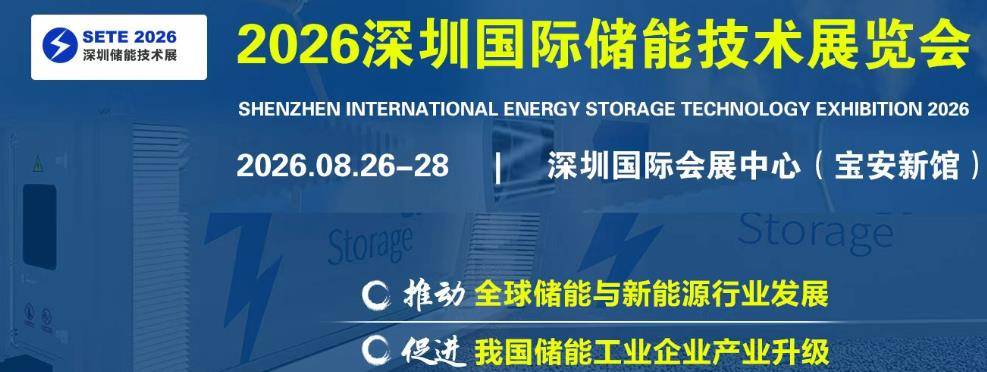
Core Insights - The Shenzhen International Energy Storage Technology Exhibition 2026 will take place from August 26 to 28, 2026, at the Shenzhen International Convention and Exhibition Center, focusing on the energy storage industry and its advancements [1][9]. Industry Overview - China, as the world's largest energy producer and consumer, has established a comprehensive clean energy equipment manufacturing industry chain, including hydropower, nuclear power, wind power, and solar energy, leading to unprecedented opportunities for the energy storage sector [1]. - According to the National Energy Administration, by the first half of 2024, the cumulative installed capacity of new energy storage projects in China reached 44.44 million kilowatts (99.06 million kilowatt-hours), representing a growth of over 40% compared to the end of 2023 [1]. Exhibition Details - The exhibition will showcase a wide range of energy storage technologies and materials, energy storage power stations, EPC engineering related facilities, liquid cooling technology, grid dispatch and automation control, and intelligent metering and electricity management systems [2]. - Over 800 leading global suppliers from the energy storage industry are expected to participate, with an exhibition area exceeding 40,000 square meters, making it the largest and most professional international energy storage event in South China [2]. Exhibition Scope - The exhibition will include various sections such as energy storage technology, energy storage systems and solutions, battery technology, battery materials and components, and hydrogen energy and fuel cell industries [6][7]. - Specific areas will feature different types of energy storage batteries, systems, and equipment, including lithium-ion batteries, sodium-sulfur batteries, supercapacitors, and various energy management systems [6][7].

环境产业迎来价值重构新机遇
Zheng Quan Ri Bao Wang· 2025-12-15 13:13
Group 1 - The conference highlighted the historical opportunity for value reconstruction in the environmental industry, focusing on three main directions: political guidance, green transformation, and high-quality development [1] - The president of the All-China Environment Service Industry Association emphasized the need for systematic restructuring around policy, technology, market, and finance to improve profitability, cash flow, and asset quality in the environmental sector [2] - The conference discussed the shift in environmental governance from addressing existing issues to integrating with national development strategies, indicating a focus on systemic and comprehensive environmental technology [2] Group 2 - The industry is facing new strategic opportunities, particularly in urban non-point source pollution control and the potential of biogas power generation under the "dual carbon" goals, which could lead to significant investment needs [3] - The All-China Environment Service Industry Association released a report on the top 50 environmental companies in China, noting the accelerated marketization process and the need for stronger comprehensive service capabilities in the sector [3] - The report indicated that the "Top 50 Environmental Companies" list was renamed to "Top 50 Environmental Enterprises by Revenue" to align with regulatory requirements and enhance credibility in the industry [3]
时隔16年重启“许可证”管理 破解中国钢铁出口双重困局
Mei Ri Jing Ji Xin Wen· 2025-12-15 13:04
Core Viewpoint - The announcement by the Ministry of Commerce and the General Administration of Customs regarding the implementation of export license management for certain steel products starting January 1, 2026, marks a significant regulatory shift in China's steel industry, aiming to address the dual challenges of increasing export volume and declining prices while managing trade disputes [1]. Group 1: Regulatory Changes - The new policy reintroduces export license management for the first time in 16 years, indicating a proactive approach to regulate the steel export market amidst rising trade barriers and anti-dumping cases [1]. - The announcement covers a wide range of products, including 300 customs commodity codes, ensuring comprehensive coverage from raw materials to finished steel products [1]. Group 2: Quality Management - A key feature of the new policy is the requirement for exporters to provide a "product quality inspection certificate" issued by the manufacturer when applying for export licenses, which is seen as a critical measure to enhance product quality and traceability [2]. - The policy emphasizes environmental standards, particularly for recycled steel materials, reflecting a strong commitment to sustainability [2]. Group 3: Management Structure - The new regulation adopts a tiered licensing model, ensuring both uniformity in oversight and flexibility in execution [3]. Group 4: Strategic Implications - The policy is aligned with national "dual carbon" goals, as 2025 marks the year the steel industry enters the national carbon market, and 2026 will see the implementation of the EU's carbon border adjustment mechanism [4]. - It aims to prioritize domestic demand for steel products, guiding the industry towards upgrading and reducing reliance on traditional markets, while promoting innovation and brand development in emerging markets [4]. - The transition to a licensed export system is expected to end chaotic competition and facilitate China's evolution from a major steel exporter to a strong exporter with higher quality and better structure [4].
台达杯国际太阳能建筑设计竞赛二十周年大会在京举办 二十载绿色创新再启新程
Zhong Guo Neng Yuan Wang· 2025-12-15 12:47
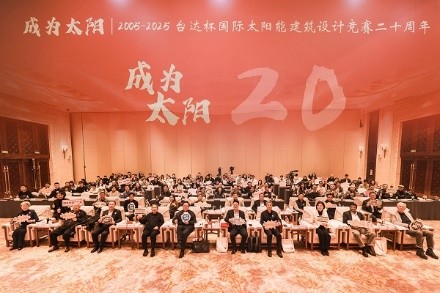
Core Viewpoint - The Delta Cup International Solar Building Design Competition celebrated its 20th anniversary, focusing on the development of solar energy buildings under the "dual carbon" goals, and fostering new momentum for industry growth [1][2]. Group 1: Competition Overview - The Delta Cup competition has attracted over 12,132 teams from more than 90 countries, collecting 2,636 valid entries, with 7 projects successfully constructed [2]. - The competition has played a significant role in promoting renewable energy building applications and has witnessed a transformative development in green architecture over the past two decades [6][7]. Group 2: Industry Impact - The competition has facilitated international cooperation and showcased China's achievements in green development, as noted by industry leaders [4]. - It has also contributed to the cultivation of a large number of green building professionals and advanced technologies, serving as a model for the industry [7]. Group 3: Future Directions - The Delta Cup will continue to focus on solar building technology innovation and practical applications, aiming to convert green low-carbon design concepts into tangible results for global sustainable development [19]. - The 2025 competition theme is "Sunshine · Urban Renewal," with significant participation from global teams, indicating ongoing engagement and interest in sustainable architecture [21].

人民日报评论员:抓住关键,完成明年经济工作的重点任务
Xin Hua She· 2025-12-15 12:40
新华社北京12月15日电 人民日报12月16日评论员文章:抓住关键,完成明年经济工作的重点任务 ——论学习贯彻中央经济工作会议精神 经济工作千头万绪,抓住关键,就能做到纲举目张,以重点带动全局。中央经济工作会议着眼于 确保"十五五"开好局、起好步,部署了"八个坚持"的重点任务,为做好明年经济工作提供了行动 指引、明确了主攻方向。 坚持内需主导、坚持创新驱动、坚持改革攻坚、坚持对外开放、坚持协调发展、坚持"双碳"引 领、坚持民生为大、坚持守牢底线,这"八个坚持",围绕建设强大国内市场、加紧培育壮大新动 能、增强高质量发展动力活力等重点领域和关键环节作出针对性部署,既注重着力解决老问题, 也重视发力应对新挑战,体现出鲜明的问题导向和目标导向。这里以"坚持内需主导"和"坚持'双 碳'引领"为例进行深入分析,以深化理解和把握。 市场是当今世界最稀缺的资源,强大国内市场是中国式现代化的战略依托。会议总结我们党做好 新形势下经济工作"五个必须"的规律性认识,排在首位的就是"必须充分挖掘经济潜能"。会议科 学分析我国经济形势,指出国内供强需弱矛盾突出,这是对问题的清醒认识和准确把握。会议 把"坚持内需主导,建设强大国内市场 ...
人民日报评论员:抓住关键,完成明年经济工作的重点任务——论学习贯彻中央经济工作会议精神
Xin Hua Wang· 2025-12-15 12:37
新华社北京12月15日电 人民日报12月16日评论员文章:抓住关键,完成明年经济工作的重点任务 ——论学习贯彻中央经济工作会议精神 绿色发展是中国式现代化的鲜明底色。会议部署"坚持'双碳'引领,推动全面绿色转型"的重点任 务,彰显了我们党带领人民持之以恒推进生态文明建设,坚定不移走生态优先、绿色发展道路的坚定决 心和务实行动。 近年来,在"双碳"目标引领下,我国经济社会发展绿色转型驶入快车道。风电、太阳能发电装机总 量提前完成2030年国家自主贡献目标;产业低碳化进程加速,累计培育国家绿色工厂6430家、绿色工业 园区491家,国家绿色工厂产值占比超20%;建成全球规模最大的碳市场,累计成交量超8亿吨、成交额 超540亿元……绿色循环低碳发展足音铿锵,美丽中国建设迈出重大步伐,国际人士评价"中国绿色创新 既造福本国,也惠及世界"。 习近平总书记强调,"实现'双碳'目标,必须立足国情,坚持稳中求进、逐步实现"。明年是从能耗 双控全面转向碳排放双控的第一年,推动经济社会发展绿色化、低碳化,需要统筹产业结构调整、污染 治理、生态保护、应对气候变化,协同推进降碳、减污、扩绿、增长,抓好重点行业节能降碳改造、加 强全国 ...
亿纬锂能、福田汽车北京成立新公司“背后”
高工锂电· 2025-12-15 10:30
Core Viewpoint - The establishment of a joint venture between Yiwei Lithium Energy and Foton Motor marks a significant step in the electrification of commercial vehicles, reflecting the strategic intent of battery manufacturers to target niche markets and collaborate with leading vehicle manufacturers to expand growth opportunities [4][12]. Group 1: Market Trends - The sales of new energy commercial vehicles in China reached 597,200 units from January to September 2025, representing a year-on-year growth of 57%, with September alone seeing a sales increase of 73% [5]. - The penetration rate of electrification is rapidly increasing across various segments, including heavy trucks, buses, and light trucks [5]. Group 2: Company Developments - The newly established joint venture has a registered capital of 500 million yuan and will focus on new material technology research, electronic materials development, and battery sales [4]. - Yiwei Lithium Energy has accumulated extensive experience in the new energy commercial vehicle sector since entering in 2016, with over one million vehicles equipped with their batteries, including more than 40,000 heavy trucks operating globally [8]. Group 3: Strategic Collaborations - The partnership with Foton Motor, a leading player in the commercial vehicle industry, is a strategic move for Yiwei Lithium Energy to secure a foothold in the market, as Foton reported a revenue of 45.449 billion yuan and a net profit of 1.113 billion yuan in Q3 2025, marking a year-on-year increase of 157.45% [6][8]. - The joint venture aims to stabilize battery supply, reduce costs, and enhance collaborative research and development, thereby strengthening product performance and cost advantages in a competitive market [9][12]. Group 4: Technological Innovations - Yiwei Lithium Energy has introduced targeted technological solutions to address challenges in commercial vehicle operations, such as the "top-bottom liquid cooling" technology to balance temperature differences in battery cells and the use of lithium manganese iron phosphate (LMFP) materials, which reportedly improve energy density by 15% and low-temperature performance by 30% [8]. - The new generation of highly integrated bottom-mounted supercharging battery systems also utilizes LMFP materials, supporting fast charging and aiming to enhance operational efficiency and reliability for commercial vehicles [8]. Group 5: Future Outlook - The electrification of commercial vehicles is gaining momentum, driven by the dual carbon goals and the implementation of electric vehicle policies across various regions [11]. - The success of the joint venture will depend on its ability to quickly launch competitive new energy commercial vehicle products and effectively address concerns regarding range, charging, cost, and durability through technological innovation [12].


能源行业ESG新趋势:绩效指标与管理层薪酬深度关联
Nan Fang Du Shi Bao· 2025-12-15 10:05
今年是我国提出"双碳目标"五周年,同样是"十四五""十五五"的承上启下之年。据生态环境部部长黄润 秋相关报告,我国"双碳"工作稳步进展、成绩斐然。 能源和产业转型成效显著 2020年9月,"碳达峰、碳中和"目标的提出,从环境角度进一步加速了ESG体系的健全与落 地。作为与"碳排放"关系最为密切的行业,能源企业通过产业转型升级、技术优化进步等措 施,在ESG领域已经取得了长足发展。不过,需求不平衡、产业内卷、气候冲击等一系列新 的挑战开始出现。 2020年,中国提出"双碳目标",承诺力争2030年前实现碳达峰,2060年 前实现碳中和。2021年10月,国务院印发《2030年前碳达峰行动方案》,围绕"十四 五"、"十五五"两大重要时间段,提出了具体目标。 "十四五"期间,产业结构和能源结构调 整优化取得明显进展,重点行业能源利用效率大幅提升,煤炭消费增长得到严格控制,新型 电力系统加快构建,绿色低碳技术研发和推广应用取得新进展,绿色生产生活方式得到普遍 推行,有利于绿色低碳循环发展的政策体系进一步完善。到2025年,非化石能源消费比重达 到20%左右,单位国内生产总值能源消耗比2020年下降13.5%,单位国内 ...

嘉泽新能:拟布局两大风电项目 追风逐日绘就绿色能源新蓝图
Zheng Quan Shi Bao Wang· 2025-12-15 09:37
Group 1 - The company, Jiaze New Energy, announced plans to invest approximately 2.366 billion yuan in two wind power projects, with the Dunhua Zerui New Energy 300MW project estimated at 1.631 billion yuan and the Longan Banlan 150MW project at 735 million yuan [1] - Additionally, the company plans to invest 3.557 billion yuan in a green hydrogen and methanol aviation fuel co-production project in Jixi City, Heilongjiang Province, entering the green chemical sector [1] - The two wind power projects are located in the Changbai Mountain area of Jilin and the Liuzhou mountainous region of Guangxi, utilizing large-capacity wind turbines of 7.7 MW and 7.5 MW respectively to enhance power generation efficiency [1] Group 2 - The company has established a comprehensive development framework in the green energy sector, including five key areas: renewable energy power station development, operation and management services, distributed rooftop photovoltaics, renewable energy industry funds, and equipment manufacturing [2] - Wind power serves as the foundation of the company's development, leveraging policy advantages from the "West-to-East Power Transmission" strategy in Ningxia, and employing a unique "full lifecycle + guaranteed power generation" operational model [2] - As of June this year, the company has a total installed capacity of 2.32 GW, with over 2 GW from wind power, 30 MW from centralized photovoltaics, and 238.268 MW from distributed rooftop photovoltaics, along with 150 MW/300 MWh of grid-connected energy storage projects [2]

瞭望 | “电动中国”越见清晰
Xin Hua She· 2025-12-15 09:26
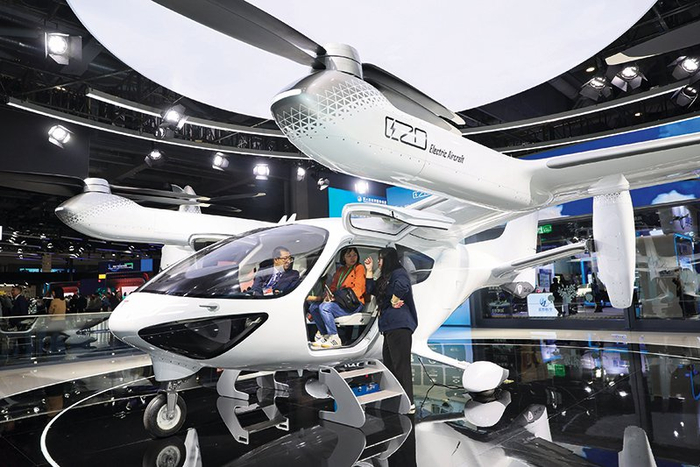
Group 1: Core Vision of "Electric China" - The core logic of "Electric China" is to reshape the energy foundation with green energy, construct a mobile energy network through transportation electrification, and achieve a societal leap in intelligence through equipment smartization [1][5][11] - The vision is driven by breakthroughs in battery technologies such as solid-state batteries, sodium-ion batteries, and perovskite batteries, which collectively accelerate the realization of the "Electric China" vision [1][15] Group 2: Energy Transition and Historical Context - The transition of energy power has historically influenced the rise and fall of great powers, with coal and oil being pivotal in the first and second industrial revolutions respectively [2] - The current technological revolution and industrial transformation are marked by the competition between the US and China, particularly in artificial intelligence, which is increasingly tied to energy [2][3] Group 3: China's Advantages in Energy and AI - China possesses significant advantages in STEM talent and AI research, with a large pool of graduates and nearly half of the world's AI researchers, which positions it favorably in the AI competition [3] - The low-cost clean energy in China's western regions significantly reduces electricity costs for large data centers, providing a competitive edge in AI development [3] Group 4: Development of New Energy Sources - China has made substantial progress in renewable energy, contributing over half of the global new installed capacity in renewable energy in 2023, with wind and solar power leading the world [6] - The construction of major hydropower projects, such as the Yarlung Tsangpo River downstream hydropower project, is set to enhance China's energy capacity significantly [6] Group 5: Growth of the New Energy Vehicle Industry - The new energy vehicle (NEV) industry in China has transitioned from a follower to a leader, becoming the largest market and technology source globally, with significant growth in production and market share [7][8] - In October 2025, NEV sales reached 1.715 million units, marking a 20% year-on-year increase and surpassing 50% of total new car sales for the first time [8] Group 6: Expansion into Low-Altitude and Maritime Sectors - The "Electric China" vision is expanding into low-altitude air transport, with significant developments in electric vertical take-off and landing (eVTOL) aircraft, indicating a new economic frontier [9] - The maritime sector is also seeing a shift towards electric vessels, with nearly 900 electric ships expected to be operational by 2025, showcasing the feasibility and economic viability of electric technology in shipping [10] Group 7: Intelligent Upgrading of Society - The integration of smart technology across various sectors, including smart cities and smart agriculture, is creating a new operational paradigm that enhances energy efficiency and decision-making [11] - The vision aims to create a fully integrated system where energy flows create value, transportation networks are interconnected, and devices contribute to a smarter society [11] Group 8: Technological Innovation and Policy Support - The realization of the "Electric China" vision requires both institutional innovation and breakthroughs in core technologies, necessitating a multi-faceted approach involving policy guidance, enterprise innovation, and research collaboration [12][15] - The focus on developing solid-state batteries, sodium-ion batteries, and perovskite solar cells is critical for advancing the energy transition and maintaining competitive advantages [15]