
绿色低碳转型

Search documents
2025山东清洁能源产业博览会,看山东如何“向绿而行”
Qi Lu Wan Bao· 2025-09-12 10:33
Core Viewpoint - Shandong province is transitioning from a traditional energy powerhouse to a leader in clean energy, with significant advancements in renewable energy capacity and a major clean energy expo scheduled for September 2025 [1][2][4]. Group 1: Clean Energy Transition - As of November 2024, Shandong's renewable energy and new energy installed capacity reached 10,642.6 MW, surpassing coal power for the first time, with a share of 46.9% of total installed capacity [2]. - By July 2023, Shandong's renewable energy capacity reached 123.24 million kW, with solar power accounting for 91.3 million kW and wind power for 27.49 million kW, contributing to 40% of the public grid's green electricity [2]. Group 2: 2025 Clean Energy Expo - The 2025 Shandong Clean Energy Industry Expo will take place from September 15 to 17 at the Yantai Bajiao Bay International Convention Center, focusing on clean energy equipment manufacturing and technology cooperation [1][3]. - The expo will cover over 40,000 square meters and will feature more than 300 exhibitors, including major industry players like State Power Investment Corporation, Huaneng, and China Nuclear [3]. Group 3: Policy and Technological Integration - The expo aims to promote the integration of policy, technology, and capital to foster high-quality development in the green and low-carbon industry [4]. - Five major exhibition areas will be established, covering the entire energy production, storage, transmission, and application chain, along with 11 high-level professional conferences [4]. Group 4: Yantai's Clean Energy Leadership - Yantai has become a clean energy demonstration city with an installed capacity exceeding 17 million kW, the highest in Shandong province [5][6]. - The city has implemented several demonstration projects, including a "zero-carbon" heating city and the first city-level virtual power plant in the country [6].
用好“环境粮票”,碳市场才能更高效
Sou Hu Cai Jing· 2025-09-12 09:25
Core Viewpoint - The article discusses the transition of China's carbon market from intensity-based control to total volume control, emphasizing the importance of carbon emission quotas as a new form of currency for environmental accountability and economic incentives [2] Group 1: Transition to Total Volume Control - The carbon market will shift from "intensity control" to "total volume control" by 2030, allowing for more precise emission reductions [2] - This new approach ensures that each company's emissions are tracked and managed, moving away from the logic of "more emissions, more profits" [2] Group 2: Paid Quotas and Market Dynamics - The transition from free quotas to paid quotas is expected to incentivize companies to actively reduce emissions, similar to the EU's experience which generated €180 billion in revenue [2] - Increasing the proportion of paid quotas will create market pressure for companies, making carbon emissions a cost and carbon reduction a benefit [2] Group 3: Fair and Efficient Allocation - The allocation of quotas must be balanced; too lenient may lead to complacency, while too strict could harm businesses, highlighting the need for "moderate flexibility" [2] - Enhanced data accounting and traceability mechanisms will ensure transparency and fairness in quota usage [2] Group 4: Future Implications - The evolution of the carbon market is set to drive China's green and low-carbon transformation, opening new avenues for industrial upgrades [2] - The carbon market is positioned to become a new engine for green development in China [2]


临港打造国际航运数字服务平台 绿色甲醇加注业务实现突破
Zhong Guo Xin Wen Wang· 2025-09-12 09:21
Group 1 - The Shanghai Lingang New Area is enhancing its international shipping services through innovative practices and digital transformation, significantly supporting high-level openness and shipping industry upgrades [1][2] - The establishment of an international shipping digital supply service platform has led to a fully electronic process for ship supply services, improving supply efficiency and reducing operational costs for shipping companies by over 30% in empty sailing rates [1] - From January to August 2025, the platform facilitated the supply of ship spare parts for 451 vessels, marking a 407% year-on-year increase, and successfully launched the first direct supply of medical supplies for cruise ships [1] Group 2 - Yangshan Port, as the core of the Lingang New Area's shipping industry, has seen its international transshipment and consolidation box volume reach 19.2% in the first half of the year, indicating steady growth compared to the previous year [2] - The Lingang New Area has made significant strides in green low-carbon transformation, becoming a key area for the commercialization of green ship fuels in China, with the first ultra-low sulfur heavy fuel oil and domestic green methanol bunkering services established [2] - Future plans include the integration of digital and green initiatives, enhancing the international shipping digital service platform, and establishing a shipping carbon emission monitoring system to provide more efficient and environmentally friendly services [2]
(活力中国调研行)临港打造国际航运数字服务平台 绿色甲醇加注业务实现突破
Zhong Guo Xin Wen Wang· 2025-09-12 08:03
Group 1 - The core viewpoint of the article highlights the significant advancements made by the Lingang New Area in Shanghai in establishing an international shipping digital service platform and achieving breakthroughs in green methanol refueling services [1][2] - The Lingang New Area has implemented a fully electronic process for ship supply services, including spare parts, bonded fuel, and green methanol, which has greatly improved supply efficiency and reduced operational costs for shipping companies by over 30% in empty sailing rates [1] - From January to August 2025, the platform facilitated ship supply for 451 vessels, marking a 407% year-on-year increase, and successfully launched the first direct supply of medical supplies to cruise ships, indicating a significant achievement in high-value shipping services [1] Group 2 - Yangshan Port, as the core carrier of the shipping industry in the Lingang New Area, has seen a steady increase in international transshipment and consolidation box volume, reaching 19.2% in the first half of the year compared to the same period last year [2] - The Lingang New Area has made notable progress in green low-carbon transformation, being the first in the country to implement ultra-low sulfur heavy fuel oil and domestic green methanol refueling services, establishing itself as a key area for the commercialization of green ship fuels in China [2] - The area is accelerating the construction of a green methanol ship management training center, fuel testing laboratory, and certification service platform, aiming to create a comprehensive green shipping service ecosystem that provides one-stop services for fuel testing, certification, training, and risk management [2]
华谊集团:子公司上海能化吴泾基地装置实行永久性停产
Xin Lang Cai Jing· 2025-09-12 07:39
Core Viewpoint - Huayi Group (600623.SH) announced the permanent shutdown of its wholly-owned subsidiary, Shanghai Huayi Energy Chemical Co., Ltd.'s Wujing base, in compliance with government requirements for industrial transformation and carbon peak initiatives [1] Group 1: Company Impact - The Wujing base primarily produces methanol, acetic acid, hydrogen, and synthesis gas, and was established a long time ago [1] - As of the end of 2024, the total assets of the Wujing base will account for 7.9% of the company's most recent audited total assets [1] - The revenue from the Wujing base is projected to represent 5.9% of the company's consolidated revenue for 2024, with a net profit of -122.352 million yuan for the same year [1] Group 2: Strategic Alignment - The shutdown is a measure to implement government directives, aligning with the national "dual carbon" strategy [1] - This action supports the company's commitment to fulfilling its social responsibility for green development and promotes its transition to a low-carbon economy [1]

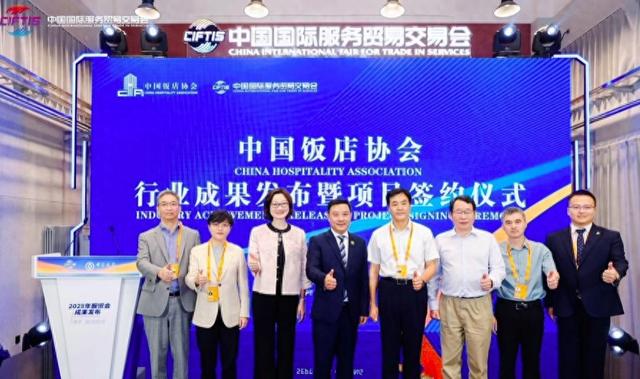
服贸会最新成果发布,倡导更多酒店开启“低碳住”
Bei Jing Ri Bao Ke Hu Duan· 2025-09-12 02:54
Core Viewpoint - The China Hotel Association is promoting sustainable development in the hospitality industry through the launch of the "Beijing Initiative for Sustainable Development of Accommodation Enterprises" and the "ESG Management System Requirements for Accommodation Enterprises" [1][4]. Group 1: Industry Trends - The accommodation and catering industry is identified as a crucial sector for expanding domestic demand, driving growth, and promoting consumption [3]. - The industry is focusing on enhancing its "green" attributes and leading high-quality transformation through standardization [3]. Group 2: ESG Initiatives - The association is actively promoting the ESG governance system and the development of green hotels, while also facilitating the digital transformation of the industry [4]. - Meituan Travel, as a drafting unit for ESG standards, has initiated a "low-carbon stay" program set to launch in June 2024, encouraging consumers and businesses to adopt low-carbon practices [3]. Group 3: Achievements and Impact - Meituan Travel has partnered with 400,000 hotels to achieve 2.57 million "low-carbon stays," resulting in a total carbon reduction of 460 tons [3]. - Over 70% of InterContinental Hotels Group's domestic outlets and nearly 9,000 outlets of Huazhu Group have already implemented the "low-carbon stay" initiative [3].
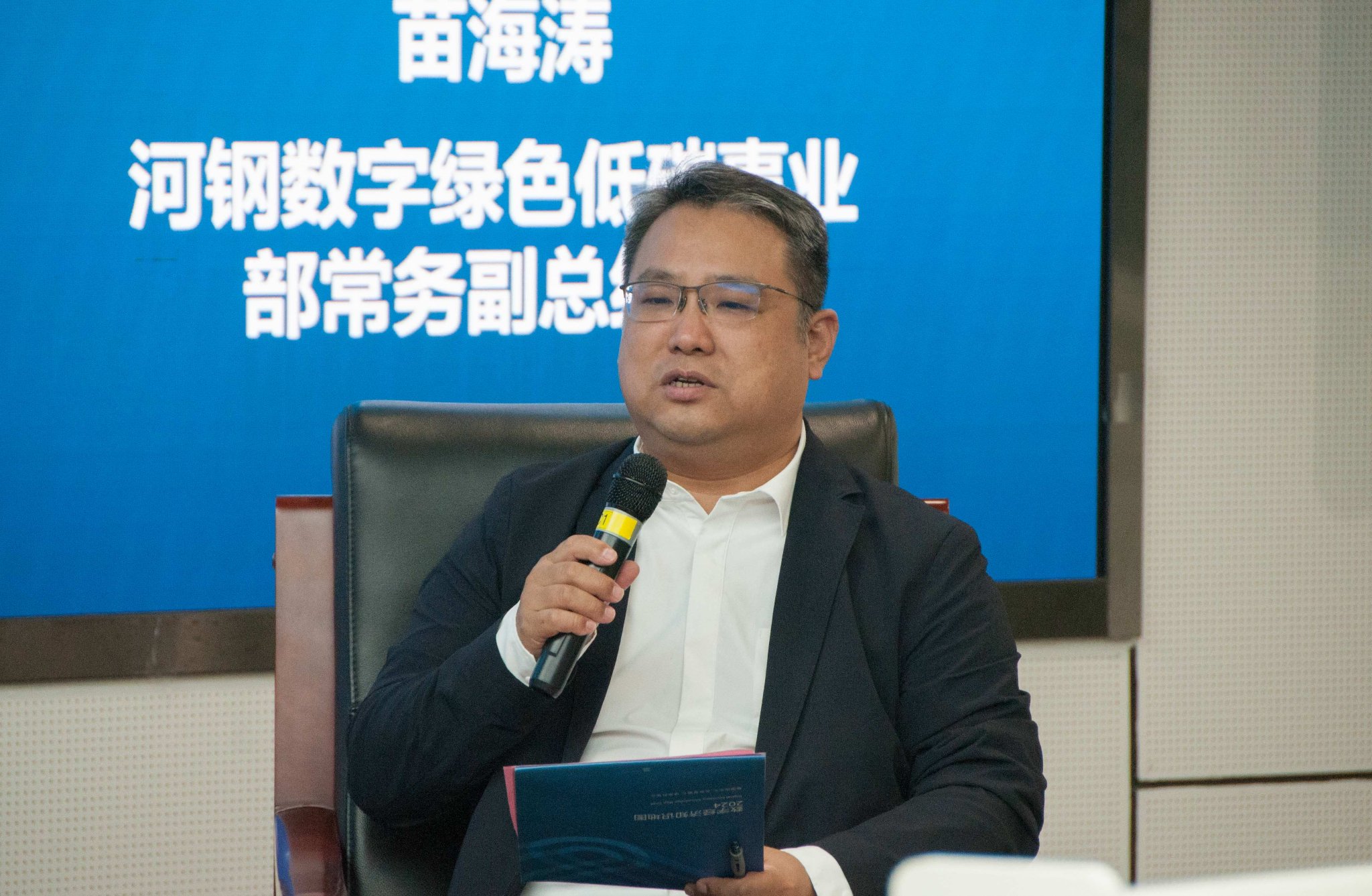
数据之声|苗海涛:以数据为核心引擎 推动钢铁行业绿色低碳转型
Zhong Guo Jin Rong Xin Xi Wang· 2025-09-12 02:29
Core Viewpoint - The event highlighted the importance of data as a core engine driving the steel industry's transition from traditional high-energy consumption models to digital, green, and intelligent transformation, emphasizing significant value in carbon management, product innovation, and supply chain collaboration [1][4]. Group 1: Company Initiatives - HeSteel Digital, a subsidiary of HeSteel Group, has been focusing on digital transformation and has recently won the "Technical Innovation Award" in the green low-carbon track at the 2024 "Data Element ×" national finals for its carbon-neutral digital solution [3][4]. - The company has launched the WesCarber carbon-neutral digital platform, which is based on the national WeShyper industrial internet platform and aims to support enterprises in energy-saving and carbon reduction strategies [4]. Group 2: Technological Advancements - The WeShyper platform has connected 530,000 devices and deployed over 3,000 industrial applications and 3,400 industrial mechanism models, providing robust IoT data access, big data analysis, and AI decision-making capabilities for the steel industry's green transformation [4]. - Data value is realized through three main aspects: creating precise carbon profiles, optimizing processes using algorithm models for energy consumption and carbon emission predictions, and promoting industry collaboration through a carbon management platform [4]. Group 3: Industry Challenges and Recommendations - Current challenges in the green low-carbon sector include an incomplete national carbon footprint database, barriers in supply chain data acquisition, and insufficient data quality and transparency affecting international recognition [5]. - Recommendations include improving the carbon footprint data system, establishing national data collection standards, implementing a policy transition period, and enhancing data quality supervision to increase credibility and international acceptance [5].
全球首个文化用纸期货期权上市 建发股份应邀出席并参与首批交易
Mei Ri Jing Ji Xin Wen· 2025-09-12 02:23
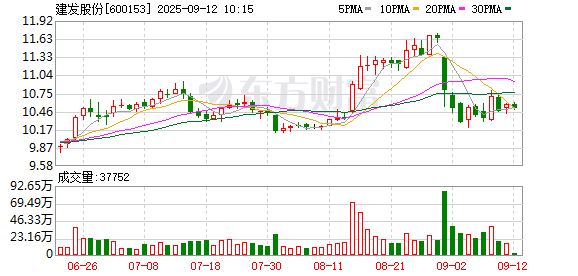
Core Viewpoint - The launch of the world's first cultural paper futures options, specifically the胶版印刷纸期货期权, marks a significant milestone in China's paper industry risk management and supports the green and low-carbon transformation of the sector [2]. Group 1: Market Impact - The introduction of胶版印刷纸期货 and期权 is expected to enhance price transparency, continuity, and public accessibility, providing better market references and risk management tools for production companies and end customers [2]. - The new financial derivatives will create a linkage with pulp futures, increasing operational flexibility and cost control for companies within the industry [2]. Group 2: Company Involvement - 建发股份 has actively participated in the initial trading of胶版印刷纸期货 and期权, demonstrating its commitment to the futures market [2]. - The company has established a comprehensive delivery network, with its subsidiaries receiving approval for胶版印刷纸期货 delivery warehouses and delivery factory qualifications [2]. Group 3: Future Outlook - 建发股份 aims to maintain a "professional, efficient, and stable" operational philosophy, ensuring the safe, standardized, and efficient operation of delivery services while promoting the prosperity of the pulp and paper futures market [3].

我国天然气行业发展韧性足 深化改革仍是主线
Zhong Guo Neng Yuan Wang· 2025-09-12 02:21
Core Insights - The global natural gas market is expected to gradually stabilize in 2024 amidst geopolitical conflicts, price fluctuations, and green transitions [1] - China, as the largest natural gas importer and consumer, has made significant achievements in consumption growth, supply security, and infrastructure development, while also showcasing distinctive features in system reform, technological innovation, and low-carbon integration [1] Group 1: Market Performance and Consumption - In 2024, China's natural gas consumption is projected to grow by 7.3% year-on-year, increasing its share in the primary energy consumption structure to 8.8%, highlighting the critical role of natural gas in energy transition [2] - The consumption structure is continuously optimizing, with significant growth in urban gas, industrial fuel, and power generation sectors, particularly in the transportation sector where LNG heavy truck sales have reached record highs [2] - Domestic natural gas exploration has achieved breakthroughs, with new proven geological reserves exceeding 1.6 trillion cubic meters and production reaching 246.5 billion cubic meters, with unconventional gas production surpassing 100 billion cubic meters for the first time, accounting for 44.5% of total production [2] Group 2: Technological Innovation - The industry has seen substantial advancements in technology, including breakthroughs in deep drilling, electric fracturing equipment, and seabed seismic exploration systems, with a focus on domestic production [3] - The integration of artificial intelligence with the oil and gas industry is accelerating, promoting a deep transition towards intelligent and green operations [3] - Innovative models for multi-energy collaboration and low-carbon utilization, such as "natural gas + green electricity" and "hydrogen blending," are being demonstrated across various sectors [3] Group 3: Institutional Innovation and Market Dynamics - The natural gas industry is advancing market-oriented reforms, with significant progress in the "X+1+X" market system across the industry chain [4] - The competitive bidding system for mining rights has deepened, with over 70 companies now registered for mining rights, fostering a multi-competitive landscape [4] - The establishment of the National Pipeline Network Group has led to the basic formation of a "national network," enhancing operational efficiency and market participation [4] Group 4: Pricing Mechanisms and Downstream Market - The report indicates an expanding market-oriented pricing range for gate station prices, with most gas sources now subject to market pricing [5] - The Shanghai and Chongqing natural gas trading centers are experiencing continuous growth in trading volume, enhancing price discovery and resource allocation capabilities [5] - The revised "Natural Gas Utilization Management Measures" aims to prioritize natural gas for civil use, efficient industries, and low-carbon sectors, while restricting inefficient and high-consumption projects [5] Group 5: Future Outlook and Challenges - The natural gas industry is expected to face new opportunities and challenges under the dual requirements of high-quality development and energy security, with a projected consumption growth of 2%-3% this year [6] - The industry anticipates a continuous increase in domestic production, with unconventional gas's share expected to rise further [6] - The implementation of the "Energy Law of the People's Republic of China" will provide a solid legal foundation for future reforms, focusing on market-oriented mineral rights transfer and price linkage mechanisms [6] Group 6: Green Transition and International Cooperation - The green low-carbon transition is set to accelerate, with technologies like CCUS, hydrogen blending, and biogas seeing large-scale applications [7] - Infrastructure smart construction and digital transformation will be key to enhancing operational efficiency and safety [7] - China aims to actively participate in global natural gas governance, promoting long-term agreements and trade diversification to enhance international resource control and influence [7]
电力装备行业稳增长工作方案来了,涉及风电光伏、核电等
Di Yi Cai Jing· 2025-09-12 01:35
Core Viewpoint - The "Power Equipment Industry Stabilization and Growth Work Plan (2025-2026)" aims to enhance the development of traditional and renewable energy equipment, ensuring a steady growth in revenue and production while promoting international cooperation and technological innovation [1][2]. Group 1: Goals and Objectives - The plan sets a target for an average annual revenue growth of around 6% for traditional power equipment and a 7% growth for advanced manufacturing clusters in the power equipment sector [1]. - Key enterprises are expected to achieve an average annual revenue growth of 10% [1]. Group 2: Work Measures - Improve equipment supply quality by implementing major technological breakthroughs and enhancing the safety and reliability of products [2]. - Expand domestic demand through major energy projects, promoting the development of wind and solar energy, and advancing nuclear power projects [2][3]. - Actively explore international markets by participating in global energy transitions and enhancing cooperation in renewable energy sectors [3]. - Accelerate the application of innovative power equipment through supportive policies and demonstration projects [4]. Group 3: Industry Environment and Standards - Optimize the industry environment by promoting self-discipline and healthy competition among power equipment manufacturers [4]. - Strengthen the standard system in the power equipment sector to enhance product quality and facilitate large-scale equipment updates [5]. Group 4: Green and Intelligent Transformation - Promote the integration of new information technologies with power equipment to drive green upgrades and digital transformation [6]. - Encourage the recycling and reuse of renewable energy equipment components to enhance sustainability [6]. Group 5: Industry Chain Collaboration - Support advanced manufacturing clusters in the power equipment sector to stabilize industry growth and promote collaboration among enterprises [6]. - Implement financial support measures, including tax incentives and innovative financial services, to facilitate high-quality development in the industry [6].