
科技金融

Search documents
持续优化普惠金融服务体系
Ren Min Ri Bao· 2025-11-11 22:40
Core Viewpoint - The development of inclusive finance in China has significantly improved financial service accessibility for key groups, driven by technological advancements and a focus on people's needs [2][4][6]. Group 1: Achievements in Inclusive Finance - Since the 18th National Congress, China's financial system has embraced a people-centered development approach, leading to substantial progress in inclusive finance [2]. - Financial services have rapidly expanded, with mobile payments becoming widespread and online services deeply integrated [2][4]. - Key groups such as rural populations, small and micro enterprises, and low-income urban residents have seen enhanced access to financial services [2][4]. Group 2: Technological Integration - The deep integration of digital technology has been a highlight in the banking sector, improving online penetration of inclusive finance and significantly shortening loan approval times [4][5]. - Financial institutions are innovating products that are customized, bulk, and intelligent, enhancing service delivery [4][5]. Group 3: Innovations in Financial Products - The insurance sector has accelerated the development of inclusive products, such as inclusive medical and pension insurance, improving risk coverage for specific groups [4][5]. - Various financial companies are innovating business models to serve flexible employment groups effectively [4][5]. Group 4: Strategic Support and Service Quality - Agricultural Bank of China emphasizes a strategy focused on rural finance, addressing the challenges of financing for small and micro enterprises [6][7]. - The bank has established a dual-driven system to enhance service quality and operational efficiency [6]. Group 5: Support for Small and Micro Enterprises - China Construction Bank has prioritized support for small technology enterprises, developing unique service methods and operational systems [8][9]. - The bank has created a scoring model to evaluate technology innovation capabilities, aiding in identifying promising enterprises [8][9]. Group 6: Digital Transformation and Risk Management - Postal Savings Bank of China is integrating technology into its financial services, enhancing risk management and operational efficiency [9][10]. - The bank is developing a comprehensive digital financial service system to support new productive forces [9][10]. Group 7: Focus on Local Industries - The People's Bank of China in Maoming is constructing a financial service system tailored to local agricultural industries, implementing targeted financial products [13]. - The bank has established specialized institutions to provide precise financial services for local agricultural needs [13]. Group 8: Comprehensive Financial Ecosystem - Industrial and Commercial Bank of China is building a comprehensive financial ecosystem to support the development of small and medium-sized enterprises and technology companies [14][15]. - The bank is leveraging data to enhance service delivery and has achieved significant loan growth for small enterprises [14][15].

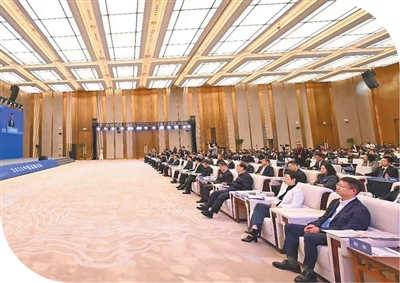
超6000亿元险资涌入科创赛道 能否开启科技与资本共赢新局?
Mei Ri Jing Ji Xin Wen· 2025-11-11 14:00
保险资金加速涌入科创赛道,耐心资本的价值愈发凸显。 在政策引导下,保险资金通过"直接+间接"方式覆盖科技企业投资。据国家金融监督管理总局(以下简 称金融监管总局)数据,截至2024年末,险资通过上市公司股票、直接股权投资、创业投资基金 (VC)和私募股权基金(PE)等方式,投向科技类企业的资金规模已超6000亿元,投资版图全面覆盖 先进制造、人工智能、半导体、新能源、生物医药等新质生产力核心赛道。 在业内看来,保险资金的"长钱"属性与科创产业的发展规律高度适配,成为保险资金赋能新质生产力的 核心优势。保险资金独特的"长坡厚雪"特质,也是支持科技创新的核心禀赋,有望成为推动金融动能高 效转化为科技势能、产业势能的重要力量。 政策引擎持续驱动 近年来,监管通过一系列政策组合拳,引导保险资金为科技创新、创业投资等产业发展提供支持,服务 新质生产力发展。 2023年9月,金融监管总局优化偿付能力监管标准,将保险资金投资战略性新兴产业未上市股权的风险 因子调整为0.4;投资科创板企业股票风险因子从0.45下调到0.4;科技保险适用财产险风险因子计量的 最低资本要求,按照90%计算偿付能力充足率。在不加大资金占用的情况下 ...
服务区域战略 践行金融担当 交通银行四川省分行荣获金鼎奖“年度支持地方经济奖”
Mei Ri Jing Ji Xin Wen· 2025-11-11 13:45
Core Viewpoint - The article highlights the achievements of the Bank of Communications Sichuan Branch in supporting local economic development, emphasizing its strategic commitment and innovative financial services that contribute to high-quality regional growth [1][3]. Group 1: Financial Support and Achievements - The Sichuan Branch has provided over 20 billion yuan in new loans to support the real economy since 2025, ranking among the top in the system [1]. - The branch signed a strategic cooperation agreement with the Sichuan provincial government, committing to provide 800 billion yuan in special credit support during the 14th Five-Year Plan period [4]. - As of September, the branch has engaged with 14,000 enterprises, with a total credit amount exceeding 50 billion yuan, including nearly 400 first-time loan recipients [5]. Group 2: Sector-Specific Financial Initiatives - The branch has established specialized teams for technology finance, inclusive finance, and green finance, resulting in a 14.9% increase in technology finance loans and serving over 4,500 technology enterprises [6]. - Green finance loans have increased by 19.3%, with significant projects funded, including major green initiatives in the solar industry [7]. - Inclusive finance loans have also seen a 17.9% increase, serving over 14,000 clients [7]. Group 3: Digital and Innovative Financial Solutions - The branch has integrated digital operations into its management, launching various online agricultural loans that have driven strong growth in online business [8]. - It has developed tailored financial solutions for the cultural and tourism sectors, supporting key projects and enhancing consumer spending [11]. Group 4: Strategic Vision and Future Plans - The branch aims to align its development with regional economic strategies, focusing on a credit resource allocation system that supports the real economy, small and micro enterprises, and rural revitalization [10]. - Future plans include innovative financial service models and a commitment to contribute significantly to the modernization of Sichuan [12].


科技保险发展驶入“快车道”:前三季度保费激增30%,有望迎来历史性机遇
Mei Ri Jing Ji Xin Wen· 2025-11-11 13:30
Core Insights - The development of technology insurance in China is accelerating due to dual drivers of policy and industry, with a significant increase in premium income and a growing demand for risk management solutions [1][11][12] Group 1: Industry Growth and Demand - As of 2024, the insurance industry is expected to provide approximately 9 trillion yuan in technology insurance coverage, reflecting a robust growth trajectory [2] - The number of enterprises insured under patent insurance has increased significantly, with over 28,000 companies covered for more than 110 billion yuan in risk protection from 2011 to 2022 [2] - The number of technology and innovation SMEs in China has surpassed 600,000, highlighting a pressing need for insurance solutions due to high R&D costs and long return cycles [2][12] Group 2: Challenges in Risk Management and Pricing - The primary challenges facing technology insurance include difficulties in risk control and pricing, stemming from the complexity and uniqueness of high-tech industries [2][3] - The lack of historical data and the rapid evolution of risks complicate the development of accurate pricing models for technology insurance [3][11] Group 3: Policy Support and Implementation - Recent policies aim to enhance the technology insurance framework, including the expansion of coverage for first-of-its-kind technology equipment and the introduction of innovative compensation mechanisms [5][6] - Local governments, such as those in Shenzhen and Shanghai, are actively implementing plans to support technology insurance in emerging sectors like artificial intelligence and digital economy [6][7] Group 4: Innovative Insurance Products - New insurance products are emerging to fill gaps in coverage, such as the "Drug Research Insurance" for pharmaceutical R&D and "Smart Research Insurance" for AI and robotics [8][9] - These products address specific risks associated with innovation, providing comprehensive coverage throughout the R&D process [8][9] Group 5: Future Outlook - The technology insurance sector is expected to see further growth driven by policy support and the increasing pace of technological innovation, with a projected 30% year-on-year increase in premium income by the end of 2025 [11][12] - The integration of digital tools and collaborative insurance models is anticipated to enhance risk management capabilities and support the development of cutting-edge technologies [11][12]
青岛首单股权投资机构科技创新债券落地,省内率先实现科创债发行“三类主体”全覆盖
Sou Hu Cai Jing· 2025-11-11 12:31
Core Points - Qingdao Chengtou Venture Capital Co., Ltd. successfully issued the first phase of technology innovation bonds for 2025, marking it as the first equity investment institution in Qingdao to issue such bonds [1] - The bond issuance scale is 500 million yuan, with a term of 5 years and a coupon rate of 2.23%, aimed at replacing fund contributions invested in technology innovation enterprises within one year [1] - Since the launch of the "technology board" in May, Qingdao has achieved full coverage of technology innovation bond issuance among three types of entities: technology enterprises, financial institutions, and equity investment institutions [1] Summary by Category Bond Issuance - The total issuance scale of technology innovation bonds in Qingdao has reached 5 billion yuan, with 2 technology enterprises, 2 financial institutions, and 1 equity investment institution successfully issuing bonds [1] - The issuance includes the first "green + two new" technology innovation bond in the national consumer industry and the first technology innovation financial bond for rural commercial banks in the country [1] - One technology enterprise has been approved for an additional bond registration quota of 7 billion yuan, and one private equity investment institution has a quota of 300 million yuan, both of which will issue bonds at an appropriate time [1] Future Plans - The People's Bank of China Qingdao Branch plans to further consolidate and expand the achievements of technology innovation bond development, enhance policy promotion efforts, and continuously explore and cultivate new bond issuers [2] - There will be a deepening of the collaboration mechanism among government, banks, and enterprises to expand the issuance scale of technology innovation bonds and improve the bond market's service efficiency for "technology finance" [2]
中信证券总经理邹迎光:市场奠定低波动慢牛基础
Zhong Guo Jing Ji Wang· 2025-11-11 11:20
Core Viewpoint - The Chinese capital market is entering a new phase, characterized by increased vitality and new opportunities for investment, as highlighted during the 2025 Capital Market Annual Conference with the theme "Striving for a New Journey" [1] Global Background - China's international influence and capabilities in global governance are significantly improving, with a 7.1% increase in exports in the first three quarters of this year, showcasing the resilience of Chinese manufacturing amidst global tariff challenges [1] - The demand from emerging markets and "Global South" countries, along with their resource endowments and market potential, will support Chinese enterprises' global expansion [1] Technological Trends - The Chinese capital market is experiencing a shift towards new development, driven by breakthroughs in industries such as artificial intelligence, biotechnology, and aerospace, which are enhancing risk appetite among investors [2] - The market structure is evolving, with the market capitalization of the electronic industry in A-shares surpassing that of the banking sector this year, indicating a trend towards greater representation of new productive forces [2] Macroeconomic Outlook - The Chinese economy is expected to show moderate recovery with structural differentiation next year, supported by the development of new productive forces that will stabilize economic growth over the next five years [4] - The "technology-industry-finance" cycle is anticipated to create more structural opportunities in the market [4] Institutional Environment - The capital market's inclusiveness and adaptability are improving, which is expected to bring a new atmosphere to the market ecosystem, particularly in supporting technological innovation and enhancing wealth effects [4][5] - There is a notable trend of converting household savings into investments, with significant room for increasing the proportion of equity assets compared to developed markets [5] - Future reforms will focus on creating a more attractive environment for long-term investments and enhancing the supply of quality financial products [5]

下一阶段货币政策主要思路,央行最新披露
Di Yi Cai Jing· 2025-11-11 09:43
Core Viewpoint - The People's Bank of China (PBOC) has implemented a moderately accommodative monetary policy in 2023, aiming to create a favorable monetary environment for economic recovery and financial market stability [1][2]. Monetary Policy Implementation - The PBOC has maintained reasonable growth in money and credit by utilizing various monetary policy tools such as open market operations and medium-term lending facilities to ensure ample liquidity [1][2]. - The central bank aims to reduce the overall financing costs in society by enhancing the market-oriented interest rate adjustment framework, leading to a decline in both deposit and loan rates [1][2]. - The PBOC is focusing on optimizing the credit structure by utilizing 500 billion yuan for consumption and pension-related loans, as well as increasing support for technology innovation and transformation [1][3]. Exchange Rate Stability - The PBOC emphasizes maintaining basic stability in the exchange rate, allowing the market to play a decisive role in its formation while ensuring it serves as a stabilizer for the macro economy and international balance of payments [1][4]. Financial Risk Management - The central bank is committed to systematically addressing financial risks by enhancing monitoring, assessment, and early warning systems for key financial sectors [2][6]. - The PBOC plans to maintain reasonable growth in financial aggregates and ensure that social financing conditions remain relatively loose, adapting to changes in the economic and financial landscape [2][6]. Financial Market Development - The PBOC is focused on accelerating the development of the bond market, particularly for technology enterprises, and enhancing the legal framework for corporate bonds [5]. - The central bank aims to promote the internationalization of the renminbi and expand its use in cross-border trade and investment [5].
摸清科技企业“成长路线图”,深圳建行让金融服务“不脱节”
2 1 Shi Ji Jing Ji Bao Dao· 2025-11-11 09:38
Core Viewpoint - Chinese technology companies are accelerating their internationalization but face challenges such as cross-border financing difficulties, complex capital operations, and significant risk management pressures [1] Group 1: Company Case Study - R Company, specializing in image intelligent perception technology, is in a critical phase of business expansion and preparing for a Hong Kong IPO, requiring substantial financial support [3][4] - The intervention of Shenzhen Construction Bank (CCB) provided comprehensive support, including loans and tailored financial solutions, to meet R Company's complex needs [5][6] - R Company has submitted its IPO application, reflecting the effectiveness of CCB's coordinated services [7] Group 2: Financial Support Mechanism - CCB's approach involved a deep understanding of R Company's business model and development plans to create customized financial service solutions [5][8] - The bank established a communication mechanism among its domestic and international branches to ensure clear responsibilities and efficient service delivery [6][8] - CCB's financial services included local credit support, cross-border account and settlement services, and IPO sponsorship, addressing R Company's diverse financial needs [6][9] Group 3: Service Optimization and Coordination - CCB implemented a collaborative mechanism to identify client needs, coordinate across regions, design tailored solutions, and continuously optimize services based on feedback [8][9] - The bank's ability to adapt its services to the dynamic changes in R Company's operations ensured competitiveness in the market [9][10] - This case provides a reference for banks to support technology companies in their international ventures, emphasizing the importance of resource integration and specialized services [9][10]
摸清科技企业“成长路线图”,深圳建行让金融服务“不脱节”
21世纪经济报道· 2025-11-11 09:12
Core Viewpoint - Chinese technology companies are accelerating their internationalization journey while facing challenges such as cross-border financing difficulties, complex capital operations, and significant risk management pressures [1][4]. Group 1: Company Case Study - R Company, specializing in image intelligent perception technology, is in a critical phase of business expansion and preparing for a Hong Kong IPO, requiring comprehensive financial support [3][4]. - China Construction Bank (CCB) provided R Company with a full-chain support model, including domestic and international services, which helped the company address its multifaceted financial needs [3][5]. - By the end of September 2025, CCB's technology loan balance exceeded 2.5 trillion yuan, with over 20,000 technology companies receiving financing support, showcasing its leading position in the industry [3][4]. Group 2: Financial Support Mechanism - CCB's approach goes beyond merely providing loans; it focuses on understanding the company's business model and development plans to tailor suitable financial service solutions [5][8]. - The bank established a communication mechanism with its international branches to coordinate responsibilities effectively, ensuring a seamless service experience for R Company [5][8]. - CCB designed a comprehensive financial service plan that includes financing, settlement, and risk management, ensuring R Company receives all-around support for its cross-border operations [6][8]. Group 3: Dynamic Service Optimization - CCB implemented a collaborative mechanism that involves deep customer demand exploration, cross-regional coordination, customized solution design, and continuous service optimization [8][9]. - The bank's ability to adapt its services based on R Company's feedback and changing market conditions has been crucial for maintaining competitiveness [9]. - This case provides a reference for banks serving technology companies in their international ventures, emphasizing the importance of resource integration, professional services, and risk management [9].

东吴证券:以初心和使命践行投资者保护新范式
Zhong Guo Jing Ji Wang· 2025-11-11 08:04
Core Viewpoint - Protecting the legal rights and interests of investors, especially small and medium-sized investors, is the most important task for Dongwu Securities, reflecting the political and people-oriented nature of capital market work [1][2]. Group 1: Investor Protection System - Dongwu Securities integrates investor rights protection into its internal system, corporate culture, and business development strategy, ensuring that awareness of investor rights protection permeates all business areas and processes [3]. - The company has established various governance documents, including the "Investor Relations Management System" and "Investor Rights Protection Management Measures," to serve as fundamental guidelines for investor protection [3]. - The governance documents cover aspects such as online voting for small shareholders, equal information rights, performance briefings, and independent directors' opinions, providing a comprehensive framework for investor protection [3]. Group 2: Local Financial Advisory Role - As the only publicly listed state-controlled brokerage in Suzhou, Dongwu Securities collaborates with local governments across Jiangsu to support regional economic growth and the development of the capital market [4]. - The company emphasizes the importance of investor education and protection as a fundamental responsibility to promote a healthy securities market [4]. Group 3: Investor Education Initiatives - In 2020, Dongwu Securities, in collaboration with Suzhou Bank and Dongwu Life Insurance, established an investor education base, which has hosted over 7,000 events and attracted 240,000 participants, achieving a satisfaction rate of 99.36% [5]. - The base has been recognized as a national-level and provincial-level investor education base, serving as a platform for promoting financial knowledge and risk prevention [5]. Group 4: Cultural Integration in Financial Education - Dongwu Securities aims to integrate traditional culture into investor education, creating engaging educational products that resonate with investors [9][10]. - The company has produced award-winning educational materials that combine cultural elements with investment knowledge, promoting rational investment awareness [10]. Group 5: Collaborative Investor Education Activities - Dongwu Securities organizes various activities, such as marathons and live broadcasts, to promote investor education, with participation exceeding 300,000 individuals [11][12]. - The company actively collaborates with regulatory bodies and exchanges to enhance investor education and awareness of market reforms [12]. Group 6: Commitment to Investor Education - Dongwu Securities remains committed to providing specialized and innovative investor education services, recognizing the ongoing responsibility to protect investor rights [13]. - The company aims to cultivate a distinctive financial culture while enhancing the depth and breadth of its investor education and protection efforts [13].
