低空经济

Search documents
西测测试:无人机等低空经济方面检测业务占比非常小
Jin Rong Jie· 2026-01-20 01:16
Core Viewpoint - The company is recognized as one of the leading third-party testing institutions in China, providing comprehensive testing services primarily focused on environmental reliability, electromagnetic compatibility, component testing, and electrical assembly services [1] Group 1 - The company offers specialized technical services for clients in the aerospace and aviation sectors [1] - Current testing services are mainly concentrated in environmental reliability testing, electromagnetic compatibility testing, component testing, and electrical assembly [1] - The share of testing services related to low-altitude economy, such as drones, is currently very small [1]
飞行汽车发展报告2.0发布 飞行汽车迈入产业破局新阶段
Huan Qiu Wang Zi Xun· 2026-01-20 01:08
《报告》显示,在技术层面,载荷航程、适航安全、智能驾驶与动力系统构成飞行汽车产业规模化发展 的核心瓶颈,尤其是城市密集区飞行所需的空中自控能力已成为国际共识的强标要求。虽然动力系统呈 现"纯电先行、混动主导、氢能并行"的趋势,但满足应急自控的轻量化混动技术仍需突破。 来源:科技日报 "飞行汽车是面向空地一体交通的电动垂直起降航空器,是定义规则、引领生态的新型交通物种,是低 空经济的战略主赛道。"1月19日,清华大学车辆与运载学院教授张扬军在《飞行汽车发展报告2.0:迈 向空地一体交通新时代》(以下简称《报告》)发布现场表示,飞行汽车的发展标志着低空经济产业 从"工具革新"到"生态重塑"的范式跃迁。 《报告》显示,飞行汽车预计在2025—2030年迎来商用爆发,其应用场景将呈现专业化与大众化双线并 行推进的特征。 "专业化场景将率先突破,应急救援、警用装备升级、公路巡检等成为首批落地领域。大众化场景则按 照'文旅先行、接驳跟进、通勤压轴'的路径演进。目前,亿航智能等企业的文旅飞行项目已落地,机场 与市区的短途接驳、城市群城际交通将成为下一阶段规模化重点,而城市内通勤则作为长远目标逐步推 进。"中国国际工程咨询有 ...
西测测试(301306.SZ):无人机等低空经济方面相关检测业务占比非常小
Ge Long Hui· 2026-01-20 01:04
Core Viewpoint - The company, Xicetest (301306.SZ), is recognized as one of the leading third-party testing institutions in China, providing comprehensive testing services primarily in the aerospace and aviation sectors [1] Group 1: Company Overview - The company specializes in environmental reliability testing, electromagnetic compatibility testing, component testing, and electrical assembly services [1] - The current focus remains on traditional testing services, with a minimal share of business related to low-altitude economy sectors such as drone testing [1]
飞行汽车未来5年或迎商业爆发时代
Ke Ji Ri Bao· 2026-01-20 00:30
Core Viewpoint - The development of flying cars signifies a paradigm shift in the low-altitude economy from "tool innovation" to "ecological restructuring," with commercial explosion expected between 2025 and 2030 [1] Group 1: Industry Outlook - Flying cars will see dual-track advancement in specialized and popularized application scenarios, with emergency rescue and police equipment upgrades being the first areas to break through [1] - The popularization path will follow "cultural tourism first, shuttle follow-up, and commuting as the final goal," with existing projects like EHang's cultural tourism flights already in operation [1] - Urban commuting is viewed as a long-term goal, while short-distance connections between airports and urban areas will be a focus for scaling [1] Group 2: Challenges in Scaling - Multiple systemic challenges exist for the large-scale development of flying cars, including technical bottlenecks in payload range, airworthiness safety, intelligent driving, and power systems [2] - The lack of vertical take-off and landing infrastructure and a "low-altitude smart network" is a significant barrier, with current planning still in pilot exploration stages [2] - Regulatory frameworks for airworthiness certification and airspace management are still under construction, necessitating improved inter-departmental collaboration and sandbox regulatory mechanisms [2] Group 3: Recommendations for Development - Policy guidance is needed to establish airworthiness certification mechanisms and regulatory standards that align with the technological iteration and large-scale production needs of flying cars [3] - A collaborative working group for low-altitude flight technology should be formed to tackle common technical challenges in flight control and power systems [3] - The integration of the automotive and aviation industries is essential, leveraging the approximately 70% technological commonality between flying cars and new energy vehicles to reduce costs and enhance efficiency [3]
十九城产业新坐标·河南经济新方位丨安阳 低空翱翔 筑梦蓝天 无人机全链激活新动能
He Nan Ri Bao· 2026-01-19 23:57
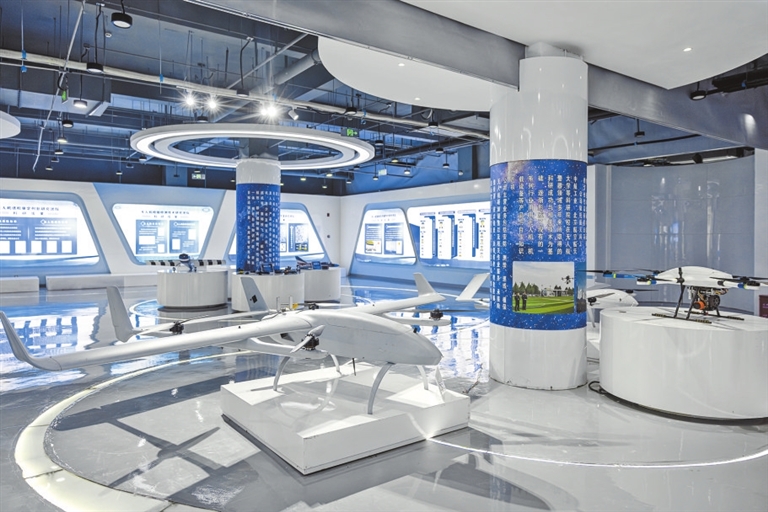
Core Insights - The article highlights the development of a comprehensive drone manufacturing ecosystem in Anyang, showcasing a "one-stop manufacturing" process that includes component production, core engine manufacturing, complete assembly, flight control system integration, and flight services [1][2] Group 1: Industry Development - Anyang's drone industry park exemplifies the city's commitment to low-altitude economic growth, with daily operations reflecting a vibrant manufacturing environment [1] - The park has established a mature industrial chain that encompasses component manufacturing, complete machine production, flight services, quality inspection, and aerial operations [2] - The city has attracted over 200 low-altitude economy enterprises, with 102 projects initiated in the past year, including 15 specialized and innovative companies [4] Group 2: Technological Innovation - The Blue Sky Laboratory serves as a core engine for innovation, focusing on collaborative industry models and providing comprehensive support in terms of policies, funding, and infrastructure [2][4] - Research teams at the laboratory are working on advanced topics such as intelligent control and low-altitude communication, with multiple results already in the transformation phase [4] - The laboratory has contributed to the establishment of 14 national standards and has facilitated the authorization of 240 patents for enterprises [4] Group 3: Future Outlook - Anyang plans to continue leveraging the Blue Sky Laboratory to create an innovative model that integrates research, production, testing, and market application [5] - The city aims to develop a comprehensive regulatory service platform for low-altitude flight and unify operational standards to provide a replicable model for national low-altitude economic development [5]


深化场景定制 补全基础设施:低空经济冲刺规模化商业闭环
Zhong Guo Zheng Quan Bao· 2026-01-19 23:16
Core Viewpoint - The low-altitude economy is transitioning from early-stage large-scale applications to a critical phase of deep penetration, with a focus on converting blueprints into valuable commercial scenarios [1] Industry Challenges - The low-altitude economy faces several challenges before achieving large-scale operations, including the need for improved infrastructure networks, significant technological iteration pressure, and precise market demand alignment [1] - Current low-altitude infrastructure is not yet complete, necessitating accelerated development of takeoff and landing points, application scenarios, and demonstration zones [4] Infrastructure Development - Shenzhen plans to establish over 1,200 low-altitude takeoff and landing points and open more than 1,000 low-altitude commercial flight routes by the end of 2026 [5] - Chongqing aims to build over 1,500 new general aviation takeoff and landing points by 2027, promoting a "town-to-town" low-altitude flight network [5] - The construction of a comprehensive low-altitude perception network and unified control platform is essential to address the complexities of high-density and frequent low-altitude operations [5] Technological Advancements - Tilt-rotor technology is becoming a core development direction for aviation-grade drones, combining the advantages of vertical takeoff and landing with high-speed cruising [3] - Companies are focusing on industrial-grade drones and large unmanned transport aircraft, with clearer commercialization paths [2] Regulatory Environment - The new Civil Aviation Law of the People's Republic of China has restructured the airworthiness management system, allowing for "special flight certificates" for aircraft that have not yet obtained airworthiness certificates, thus providing a legal flight path while ensuring safety [6] Financial Support and Investment - The industry requires substantial financial backing due to rapid technological updates and long R&D cycles, with investments often reaching billions [7] - There is a structural mismatch between traditional financial products and the characteristics of technology companies, leading to high financing costs and limited efficiency [7]
新浪财经资讯AI速递:昨夜今晨财经热点一览 丨2026年1月20日
Xin Lang Cai Jing· 2026-01-19 23:12
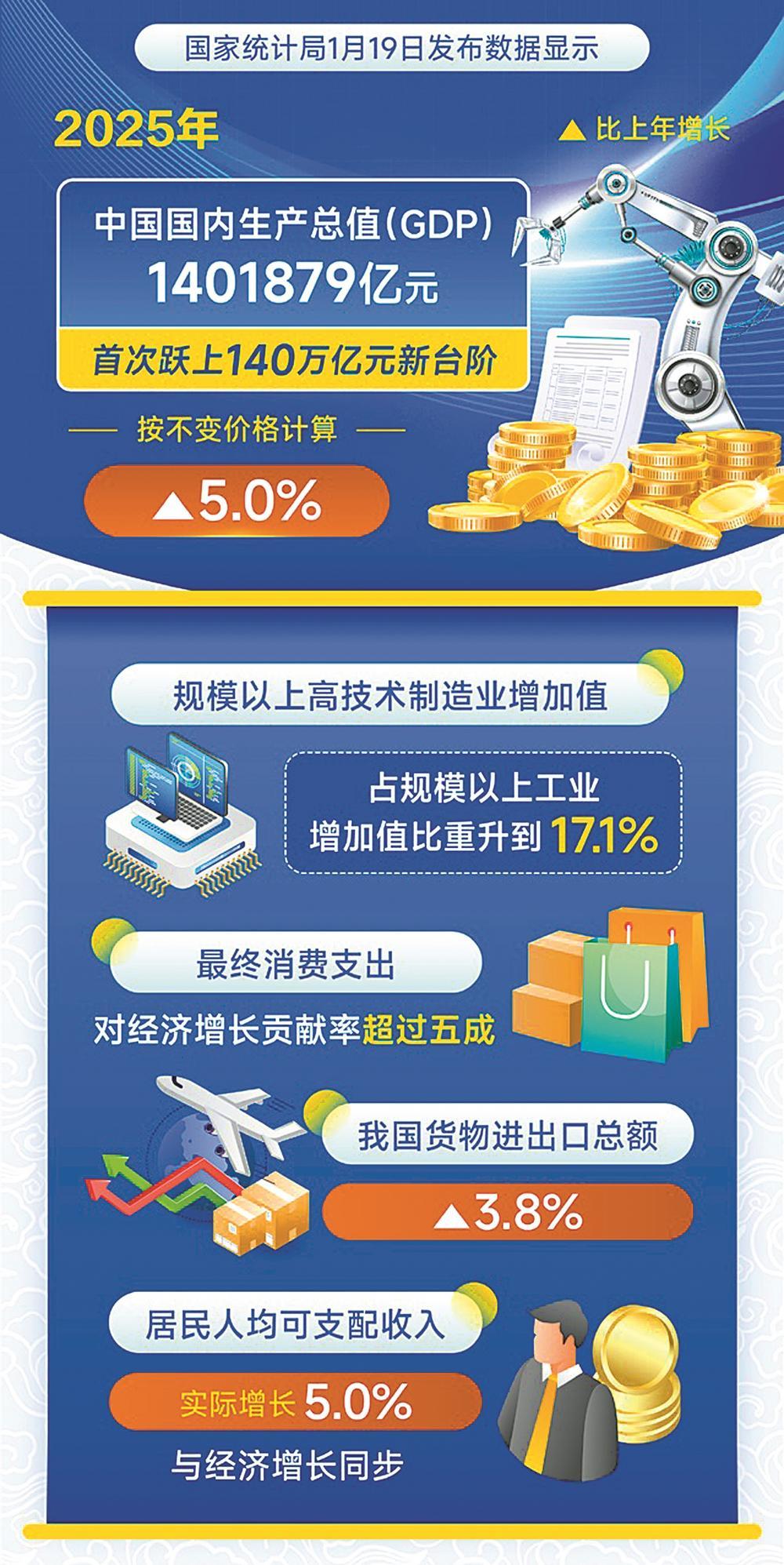
Group 1 - China's GDP has surpassed 140 trillion yuan for the first time, with a year-on-year growth of 5.0%, indicating a stable economic performance amidst challenges [1][11] - The growth is driven by strategic emerging industries, with significant contributions from high-tech manufacturing and innovation [1][12] - The production of civilian drones increased by 37.3%, and AI development boosted storage chip production by 22.8%, highlighting the strong momentum of new productive forces [1][12] Group 2 - The cryptocurrency market faced a collective sell-off, with Bitcoin dropping below $92,000 and over 247,000 liquidations occurring within 24 hours [2][13] - Concerns about institutional fund instability, profit-taking, and regulatory uncertainties have pressured the market, revealing vulnerabilities in Bitcoin's inflation hedge narrative [2][13] Group 3 - China's foreign trade reached a total value of 45.47 trillion yuan, growing by 3.8%, with Anhui becoming the ninth province to exceed one trillion in foreign trade [2][14] - Anhui's strong growth of 17.3% is attributed to robust industrial support, particularly in automobile exports [2][14] Group 4 - The Chinese pig farming company Xinwufeng is expected to report a net loss of 700 million to 960 million yuan in 2025, despite selling 5.42 million pigs, which is an increase of over 25% from the previous year [3][15] - The loss is primarily due to a significant decline in pig prices and inventory write-downs [3][15] Group 5 - China XD Electric is positioned as a global leader in transformers, benefiting from increased electricity demand driven by AI development and aging power grids in Europe and the US [3][16] - The company has a unique capability in producing complete sets of power transmission and distribution equipment and has secured multiple major projects [3][16] Group 6 - WuXi AppTec plans to acquire Easton Biopharmaceuticals for up to 2.79 billion Hong Kong dollars, aiming to enhance its capabilities in the ADC drug sector [3][17] - The acquisition reflects WuXi's strong performance and expansion strategy, despite Easton's recent revenue and profit declines [3][17] Group 7 - The semiconductor industry is experiencing a new super cycle, with significant price increases expected for traditional products like DDR4, projected to rise by 50% in Q1 2026 [3][18] - The demand for advanced process products is squeezing mature process capacity, leading to tighter supply in traditional storage chips [3][18] Group 8 - Financial data from multiple provinces indicate a strong increase in household savings, with Zhejiang's per capita savings exceeding 170,000 yuan [6][20] - The trend reflects a "save more, borrow less" behavior among residents, while corporate credit has seen significant growth due to policy support [6][20] Group 9 - The EU's Carbon Border Adjustment Mechanism (CBAM) will significantly impact China's steel industry, with potential costs exceeding 800 yuan per ton for exports to Europe [6][22] - The mechanism requires companies to provide EU-recognized carbon emission data, or face higher default values, pushing Chinese steel companies towards green transformation [6][22]
“稳、进、新、韧” ——四个关键字透视2025年中国经济
Zhong Guo Zheng Quan Bao· 2026-01-19 21:53
Core Viewpoint - In 2025, China's GDP reached 140.19 trillion yuan, marking a 5.0% increase from the previous year, reflecting a stable and progressive economic environment despite various challenges [1][2]. Economic Stability - The GDP growth of 5.0% in 2025 is significant for a large economy like China, which also maintained an average urban unemployment rate of 5.2% and achieved record high trade volumes with foreign exchange reserves exceeding 3.3 trillion USD [2]. - The total retail sales of consumer goods surpassed 50 trillion yuan, growing by 3.7%, indicating a strong consumer market supported by various policy measures [2]. - Industrial production contributed significantly to economic stability, with the industrial added value reaching 41.7 trillion yuan, a 5.8% increase, contributing 35% to economic growth [2]. Economic Progress - Despite complex internal and external environments, China accelerated the transformation of old and new growth drivers, with high-tech manufacturing's added value rising to 17.1% of total industrial output [4]. - The contribution of final consumption expenditure to economic growth exceeded 50%, showcasing a shift towards a consumption-driven economy [4]. - The total import and export volume grew by 3.8%, reflecting a robust trade environment [4]. Innovation and New Growth Drivers - In 2025, R&D expenditure intensity reached 2.8%, surpassing the OECD average for the first time, with total R&D spending at 39.26 billion yuan [6]. - China became the first country with over 5 million valid invention patents, and its PCT international patent applications ranked first globally for six consecutive years [6]. - The manufacturing sector saw significant growth in digital products, with a 9.3% increase in output, and the information technology services sector grew by 11.1% [7]. Resilience - Despite global economic challenges, China's economy demonstrated resilience, achieving a growth rate of 5.0% and contributing approximately 30% to global economic growth [8]. - The diversification of foreign trade has accelerated, with China becoming a major trading partner for over 150 countries, focusing on high-tech and high-value-added exports [8]. - The foundation laid during the 14th Five-Year Plan is expected to support continued high-quality development into the 15th Five-Year Plan [9].
签约重磅项目 发布机会清单
Xin Lang Cai Jing· 2026-01-19 18:12
Group 1 - Chengdu and the Yangtze River Delta have initiated a series of cooperative agreements, including three industrial parks in Wuhou District, Pidu District, and Jintang County, which will collaborate with innovation platforms, research institutes, and industry associations from the Yangtze River Delta to build an industrial synergy and talent cultivation platform [1] - Six key industrial projects from the Yangtze River Delta have been signed, covering areas such as low-altitude economy, artificial intelligence, biomedicine, and advanced energy [1] - The establishment of an innovation collaborative platform between the Zhongke Yangtze River Delta Artificial Intelligence Innovation Center and Wuhou District aims to support cross-regional joint research and achievement transformation, facilitating the orderly flow of talent, technology, and data [1] Group 2 - A comprehensive job fair was held, featuring over 100 key employers from Chengdu focusing on cutting-edge fields such as artificial intelligence, software and information services, advanced energy, and new materials, releasing more than 600 quality job positions with the highest annual salary reaching 1.5 million [1] - Chengdu Jinyang High-tech Development Co., Ltd. is seeking software architects and product managers, emphasizing the importance of talent from the electronic information industry in Hangzhou for overcoming technical bottlenecks [2] - The job fair showcased 147 local products, creating an immersive interactive experience, and included a "talent achievement exhibition" displaying high-level talent innovation outcomes alongside cultural and culinary showcases from the region [2]
140万亿元! 中国经济再上新台阶
Xin Lang Cai Jing· 2026-01-19 18:12
Economic Growth - China's GDP reached 140 trillion yuan in 2025, marking a significant milestone with a year-on-year growth of 5.0% at constant prices, achieving a "four consecutive jumps" during the 14th Five-Year Plan period [4] - The contribution rate of China to global economic growth is expected to be around 30%, making it the most stable and reliable source of global economic growth [4] Production and Industry - China's grain production has stabilized at 1.4 trillion jin for two consecutive years, and the manufacturing value added has remained the highest in the world for 16 years [5] - The service sector's value added has increased to 57.7% of GDP, supported by the world's largest and most comprehensive network infrastructure [5] - During the 14th Five-Year Plan period, China's average annual economic growth is projected to be 5.4%, significantly surpassing the global average [5] Innovation and Technology - China has entered the top ten in global innovation index rankings, with R&D expenditure intensity reaching 2.8%, exceeding the OECD average for the first time [5] - Significant technological advancements include successful launches of the "Nine Sky" drone and the Tianwen-2 mission, as well as the commissioning of the first electromagnetic aircraft carrier [5] Emerging Industries - New energy vehicles accounted for over 50% of domestic new car sales, with production of civilian drones and industrial robots increasing by 37.3% and 28% respectively [6] - Continuous investment and expansion in high-end equipment, green energy, and smart manufacturing are driving the integration of technological and industrial innovation [6] Consumer Market - The total retail sales of consumer goods surpassed 50 trillion yuan, with a year-on-year growth of 3.7%, reflecting new retail experiences and the integration of digital technologies [7] - The per capita disposable income of residents increased by 5.0%, and the urbanization rate reached 67.89%, indicating positive progress in social welfare sectors [7]