太空光伏

Search documents
太空光伏落地预期升温!光伏ETF(159857)标的指数冲击五连阳,机构:反内卷带来行业拐点,光伏新技术引领突围
Sou Hu Cai Jing· 2026-01-09 03:35
Group 1 - The core viewpoint of the news highlights the significant growth and potential of the photovoltaic (PV) industry, particularly with the emergence of space-based solar power as a new frontier for development [2][3] - The photovoltaic ETF (159857) has shown a trading volume of 188 million yuan with a turnover rate of 8.29%, indicating strong market interest [1] - The underlying index, the CSI Photovoltaic Industry Index (931151), has experienced a five-day consecutive rise, reflecting positive market sentiment towards the sector [1] Group 2 - Major players in the photovoltaic industry, such as JinkoSolar and Trina Solar, are focusing on space solar power, with JinkoSolar's chairman stating that solar components in space can generate 7 to 10 times more energy than on Earth [2] - The potential of perovskite technology is being recognized, with companies like GCL-Poly and Lightyear Technology considering it as an ideal solution for space applications due to its lightweight and high conversion efficiency [3] - The domestic photovoltaic installation capacity from January to October reached 252.87 GW, a year-on-year increase of 39%, driven by policy incentives and a surge in installations [3]






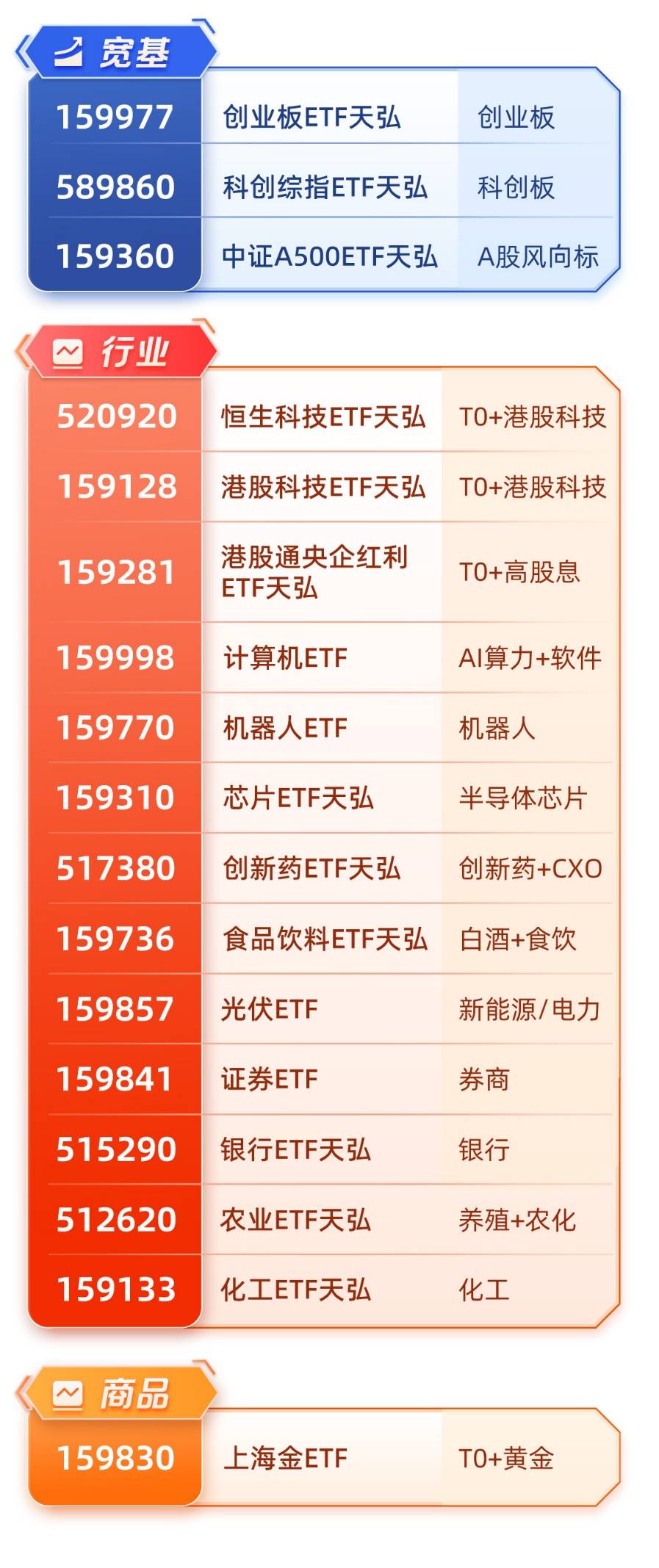
光伏技术革新赋能未来能源,光伏ETF嘉实(159123)一键布局光伏产业链
Xin Lang Cai Jing· 2026-01-09 03:13
Group 1 - The core viewpoint of the articles highlights the growth and commercialization of space photovoltaic technology, which offers significant advantages over traditional ground-based data centers, including higher deployment efficiency, better energy efficiency, and lower cooling costs [1] - The China Securities Index indicates that the photovoltaic industry index has seen a rise of 0.82%, with notable increases in component stocks such as Robotech (up 7.25%) and Dier Laser (up 5.81%) [1] - The global photovoltaic installation capacity is expected to continue growing over the next 3-5 years, with an estimated new installation capacity of 630-650 GW by 2026, although growth rates may slow to single digits [1] Group 2 - As of December 31, 2025, the top ten weighted stocks in the photovoltaic industry index include TBEA, LONGi Green Energy, and Sungrow Power, collectively accounting for 55.11% of the index [2] - The photovoltaic ETF managed by Harvest (159123) tracks the China Securities photovoltaic industry index, providing a convenient tool for investing across the entire photovoltaic industry chain [2] - Investors can also access photovoltaic industry investment opportunities through the off-market connection of the photovoltaic ETF (014605) [3]
商业航天迎来放量元年
Jin Rong Shi Bao· 2026-01-09 00:46
Core Viewpoint - The commercial aerospace sector is gaining significant attention and investment, with a projected acceleration in industrialization and commercialization by 2026, driven by policy, technology, and capital support [1][2][8]. Group 1: Market Performance - The Wind Commercial Aerospace Theme Index has seen a cumulative increase of over 60% since December 2025, reflecting the rising interest in commercial aerospace stocks such as Aerospace Electric, Parker New Materials, and Aerospace Electronics [1]. - Analysts predict that the commercial aerospace industry will experience a "triple resonance" of policy, technology, and capital in 2026, indicating a vast market potential [1][2]. Group 2: Policy Support - The importance of commercial aerospace has transcended its industry boundaries, becoming a strategic priority for national power and security, with a focus on self-sufficiency [2]. - The Central Economic Work Conference has identified commercial aerospace as a strategic emerging industry, with continuous support outlined in government work reports for 2024 and 2025 [2][3]. Group 3: Technological Advancements - The commercial aerospace industry encompasses satellite manufacturing, rocket launches, and satellite applications, characterized by a market-driven approach and clear profit models [2]. - In 2025, China is expected to achieve multiple breakthroughs in manned spaceflight, deep space exploration, and commercial aerospace, with a total of 92 rocket launches, an increase from 68 in 2024 [4]. Group 4: Capital Market Activity - Blue Arrow Aerospace's IPO application has been accepted, aiming to raise 7.5 billion yuan for reusable rocket capacity and technology enhancement projects [7]. - Several commercial rocket companies are preparing for IPOs, indicating a robust interest in capitalizing on the commercial aerospace sector [7][8]. Group 5: Future Outlook - The commercial aerospace industry is projected to enter a golden development period from 2025 to 2030, with the market size expected to reach 8 trillion yuan by 2030 [6]. - The emergence of "space computing" is anticipated to complement ground-based computing, addressing challenges related to energy consumption and resource allocation [6].
太空光伏专题汇报-巡天驭光-搭建天基算力核心
2026-01-08 16:02
Summary of Space Photovoltaics Conference Call Industry Overview - The space photovoltaics market is significantly driven by the rapid development of commercial aerospace and the increasing demand for low Earth orbit satellites. The Jin Gui battery is gradually replacing gallium arsenide batteries due to its cost advantages and applicability. Space photovoltaics exhibit clear inflation attributes and market drivers [1][2]. Market Potential - In the communication satellite sector, assuming 4,000 satellites are launched annually with each having a solar wing area of 100 square meters, the market size could reach 80 billion yuan. The implementation of space computing planning could lead to an unexpected market space, potentially reaching several hundred billion or even over a trillion yuan if 100 GW of space computing data centers are built in the next 4-5 years [1][4][13]. Technological Developments - The current mainstream technology is multi-junction gallium arsenide, but it is costly. In the short to medium term, P-type heterojunctions may lead due to their higher radiation resistance and suitability for thin-film applications. The next generation of technology is expected to focus on perovskite and crystalline silicon tandem cells, which balance stability and power generation [1][5][9]. Key Players in the Market - Several companies are actively investing in the space photovoltaics sector: - Jun Da Co. has made strategic investments in optical electronics. - Dongfang Risen has achieved small-scale delivery of P-type ultra-thin heterojunction batteries. - Tianhe Energy is leveraging national laboratories to develop multi-junction gallium arsenide, heterojunctions, and perovskite crystalline silicon tandem technologies [1][6][17][18]. Special Requirements for Space Solar Systems - Space solar systems must meet extreme performance and reliability standards to withstand harsh conditions such as extreme temperatures, ultraviolet radiation, and high-energy radiation. The design of these systems differs significantly from terrestrial systems due to the absence of atmosphere and the high cost of sending materials into space [3][8]. Impact of Commercial Aerospace - The development of commercial aerospace, particularly through reusable rocket technology, has led to an increase in launch frequency. This trend is expected to continue, with a significant rise in the demand for power systems as satellite systems upgrade to include more core equipment [11]. Global Low Earth Orbit Satellite Plans - There are three major low Earth orbit satellite constellations currently being focused on: SpaceX's "Starlink," China's "GW" plan, and Yuanxin Satellite's "Qianfan" plan. China currently lags behind in the number of satellites in orbit compared to leading companies, primarily due to the immaturity of reusable rocket technology [12]. Future Trends in Space Photovoltaics - The evolution of solar cell technology is moving towards materials that efficiently match the solar spectrum while providing radiation resistance and high-temperature durability. Flexible solar wings are becoming a mainstream direction for space power systems due to their advantages in peak power, mass ratio, and power density [10][9]. Conclusion - The space photovoltaics market is poised for significant growth driven by technological advancements and increasing demand from the commercial aerospace sector. Key players are actively investing in innovative technologies and solutions to meet the unique challenges of space environments.
晶科能源20260108
2026-01-08 16:02
Summary of JinkoSolar's Conference Call Company and Industry Overview - **Company**: JinkoSolar - **Industry**: Photovoltaic (PV) Technology Key Points and Arguments 1. **Collaboration with Jintai Holdings**: JinkoSolar is partnering with Jintai Holdings to leverage AI and robotics in reshaping PV research and development, focusing on perovskite tandem technology to accelerate its commercialization [2][3] 2. **AI for Science Platform**: Jintai Holdings' AI platform is globally leading, with over 200 proprietary AI models and a large-scale data mining platform that enhances data collection efficiency [2][5] 3. **High-Throughput Laboratory**: The collaboration aims to establish a high-throughput intelligent perovskite laboratory and develop the first 1,000 square meter AI tandem solar demonstration line [2][6] 4. **Cost Reduction Potential**: Perovskite products are expected to reduce the levelized cost of electricity (LCOE) from traditional ground-mounted PV systems by over 20% [2][7] 5. **Market Applications**: The technology has broad applications in electric vehicles, consumer electronics, and space, with plans for commercial-scale production within three years and gigawatt-level production by 2028 [2][7] 6. **Technological Leadership**: JinkoSolar has invested over 20 billion in R&D, holding 32 world records in cell efficiency or module power, and achieved a record efficiency of 34.76% for TOPCon perovskite tandem cells [3][4] 7. **Stability Solutions**: AI models are being used to address material stability issues, accelerating the commercialization process [4][9] 8. **Space PV Development**: JinkoSolar is focusing on space PV, where perovskite cells show advantages in efficiency, weight, and cost compared to traditional gallium arsenide cells [10][14] 9. **Future Vision**: The company aims to develop all key elements of space PV over the next 20 years, ensuring equitable access to energy and computational resources [8][10] 10. **AI and Automation Impact**: The integration of quantum computing, AI, and robotics is expected to significantly enhance R&D efficiency and reduce costs, with potential reductions in R&D cycles by over 70% [16][19] Additional Important Content 1. **Data Acquisition Strategies**: Both companies are utilizing various data sources, including public literature and proprietary methods, to enhance their material science data capabilities [21] 2. **Material Science Advancements**: JinkoSolar has developed a ternary material system and is in the fine-tuning phase, achieving a device performance of 35% [22][23] 3. **Competitive Edge**: JinkoSolar maintains its technological edge through continuous upgrades and investments in new technologies, particularly in tandem technology [24]
不怕高的都是航天人!
Datayes· 2026-01-08 11:04
Core Viewpoint - The article emphasizes the resurgence of the aerospace sector as a leading investment theme in the A-share market, highlighting significant developments and market reactions related to space technology and companies involved in this industry [1]. Group 1: Aerospace Sector Developments - The aerospace sector has regained its status as a market leader, with nearly 50 stocks in this sector hitting the daily limit up [11]. - Key events include the upcoming launch of the "Vesta-1 Sea Launch" commercial rocket by Xinhai Power and the construction of China's first offshore reusable rocket production base by Arrow Yuan Technology [11][15]. - The market is reacting positively to the news that SpaceX will begin factory inspections in mid-January, which is expected to boost interest in space photovoltaic concepts [11]. Group 2: Market Performance and Trends - The A-share market experienced a slight decline, with the Shanghai Composite Index down 0.07% and total market turnover at 28,265.33 billion yuan, a decrease of 552.34 billion yuan from the previous day [11]. - Despite the overall market decline, the aerospace sector saw significant investment, with stocks like Jun Da Co. and Maiwei Co. reaching their daily limit up [11]. - The article notes a strong interest in the space photovoltaic concept, particularly in perovskite battery technology, which is viewed as a promising route for future developments [11][4]. Group 3: Regulatory and Industry News - A recent meeting involving the State Administration for Market Regulation addressed monopoly risks in the photovoltaic industry, leading to a drop in the main contract for polysilicon [6]. - The meeting included major players in the photovoltaic sector, indicating a regulatory focus on ensuring fair competition and compliance within the industry [6]. Group 4: Investment Sentiment and Capital Flows - The net inflow of capital into the defense and military industry was the largest among sectors, with significant investments in companies like Yanshan Technology and Aerospace Electronics [22]. - The article highlights the growing enthusiasm for domestic chip concepts and the active participation of various sectors in the market, reflecting a shift in investor sentiment towards technology and innovation [11][22].


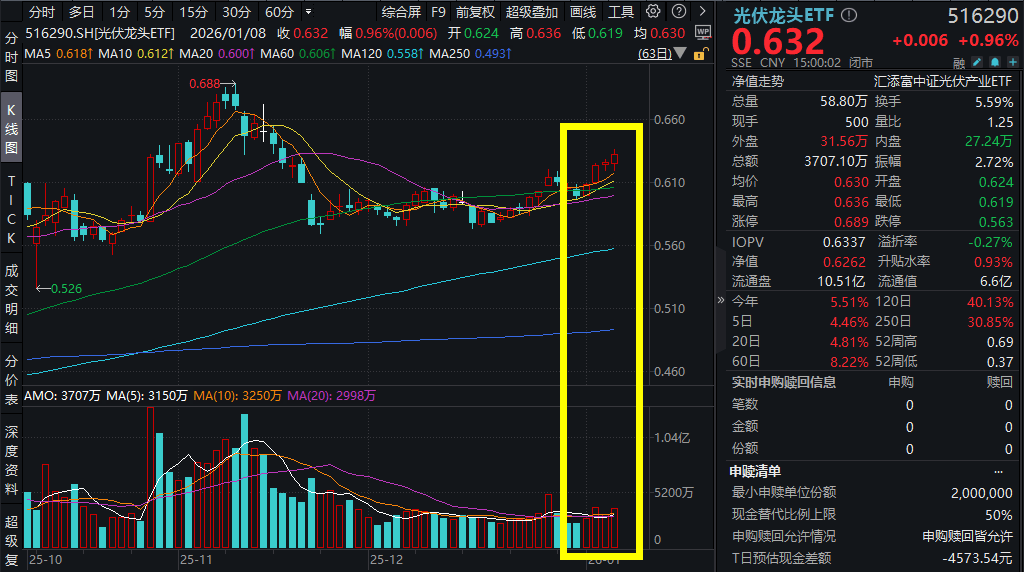
太空光伏梦想将照进现实!马斯克发布每年100GW太空光伏计划,光伏龙头ETF(516290)再涨近1%强势四连阳!奔赴星辰大海,太阳光伏万亿空间可期
Sou Hu Cai Jing· 2026-01-08 09:50
光伏龙头ETF(516290)标的指数成分股多数冲高,迈为股份涨超15%,奥特维涨超11%,钧达股份涨停,东方日升、捷佳伟创涨超6%,正泰电 气、TCL中环等涨超1%,阳光电源、TCL科技等跌超1%,特变电工等回调。 截至15:00,成分股仅做展示使用,不构成投资建议, 消息面上,近期,马斯克抛出每年向太空部署100GW(吉瓦)的计划,并瞬间引爆太空光伏概念。 晶科能源董事长在新年致辞中表示,同样一块板子,在太空的平均发电量比地球上安装的要高出7至10倍,破解了间歇性和衰减性的瓶颈,原则上 它可以一直用,一直发电。 天合光能董事长也在新年致辞中表示,新的一年,天合将加快推进钙钛矿量产化、商业化进程,开启太空光伏、星际算力新纪元。 【成长空间:AI催生太空算力需求,太空光伏有望步入万亿市场空间】 1月8日,A股窄幅整理,沪指微跌仍录得连续15个阳线,太空光伏概念活跃,截至收盘,同类费率最低档的光伏龙头ETF(516290)收涨0.96%, 喜提四连阳! 【光伏龙头ETF(516290)标的指数前十大成分股】 【行业发展:太空光伏迎技术成果商业化加速发展期,钙钛矿产业化进展加速】 中金公司表示,短期内钙钛矿-晶硅 ...
港股收评:连跌2日!科技、金融齐挫,军工股逆势走强
Ge Long Hui· 2026-01-08 08:50
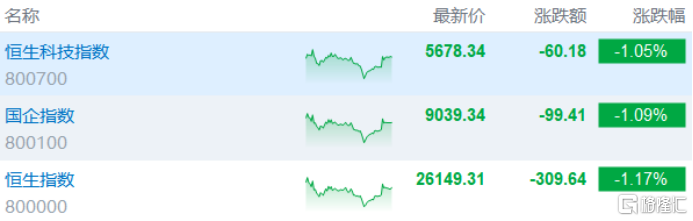
Market Overview - The Hong Kong stock market indices continued to decline for two consecutive days, with the Hang Seng Index closing down 1.17%, the Hang Seng Tech Index down 1.05%, and the Hang Seng China Enterprises Index down 1.09% [1][2]. Sector Performance - Major technology stocks and large financial stocks (banks, insurance, brokerage) showed weak performance, with Meituan and Baidu both dropping over 3% [2][4]. - Gaming stocks continued to decline, with Sands China, Wynn Macau, and Melco International hitting new lows [2][7]. - Conversely, military stocks surged, with companies like AVIC and China Shipbuilding Defense rising over 6% [12]. - Semiconductor stocks generally increased, with Tianzu Intelligent Chip rising over 8% [13]. - Coal stocks were active, with Jinma Energy rising over 11% [15]. Specific Stock Movements - Lenovo Group fell over 5%, while other tech stocks like Meituan, Baidu, Kuaishou, Alibaba, JD.com, and Tencent also experienced declines [4][5]. - In the gambling sector, Sands China fell 4.49%, Melco International dropped 2.84%, and Wynn Macau decreased by 2.00% [7]. - In the automotive sector, Baiteli Holdings plummeted over 14%, with other dealers like Xin Feng Tai Group and Zhongsheng Holdings also declining [9]. - Apple-related stocks weakened, with Sunny Optical Technology dropping over 4% [10]. Economic Indicators - The Macau Gaming Inspection and Coordination Bureau reported that the gross gaming revenue for December 2025 was MOP 20.89 billion, a year-on-year increase of 14.8% [6]. - The China Automobile Dealers Association indicated a decrease in customer traffic and a contraction in demand, predicting a 7% decline in car sales for 2026, marking the first annual drop since 2020 [8]. Investment Outlook - Huatai Securities forecasted that the Hong Kong stock market will exhibit a "high first, low later" trend in the first half of 2026, with potential upward movement before the earnings season, but short-term caution is advised due to concerns over profit realization [22].
钙钛矿技术领涨太空光伏,商业航天引爆390亿美元新蓝海
Jin Rong Jie· 2026-01-08 08:19
Core Insights - Recent focus on space photovoltaics has significantly increased among listed companies in the photovoltaic sector, including Junda Co., JinkoSolar, and Trina Solar, with a particular emphasis on the application prospects of perovskite technology in space [1] - Junda Co. has shown active trading behavior, achieving two trading limits within three days, while other companies like Hanhua Steel and JinkoSolar have also experienced varying degrees of stock price increases [1] - According to Huajin Securities, the global in-orbit data center market is projected to reach $39.09 billion by 2035, indicating a strong demand for lightweight, high-efficiency energy solutions that align well with the advantages of space photovoltaics [1] - Dongwu Securities believes that the rapid development of commercial space and low-orbit satellites will enhance the performance of space photovoltaic energy supply [1] - Guohai Securities suggests that the acceleration of the commercialization process in the space industry will provide more momentum for development [1] Industry and Company Analysis Perovskite Batteries - Jinjing Technology focuses on glass manufacturing, positioned as an upstream TCO glass supplier with a transmittance rate of 94%, already applied in leading perovskite production lines, and possesses full-chain autonomous production capabilities [1] - Wanrun Co. specializes in the R&D and production of perovskite-related materials, positioned as an upstream supplier covering various material categories, with bulk sales to clients like GCL-Poly Energy in the first half of 2025 [2] - Jing Shan Light Machine is engaged in the R&D and manufacturing of photovoltaic equipment, positioned as a midstream RPD equipment supplier, with orders from GCL-Poly Energy and a coating equipment capacity of 15 GW [2] Commercial Space - Shunhao Co. is involved in new tobacco and eco-friendly packaging materials, positioned as a participant in the commercial space sector, having invested 110 million yuan in Orbit Chen Guang, holding a 19.3% stake, focusing on building space data centers [3] - Xice Testing provides environmental reliability testing services, positioned as a commercial space testing service provider, enhancing capabilities for thermal vacuum experiments and satellite payload testing [3] - Zhenlei Technology specializes in the R&D and manufacturing of electronic components for specialized fields, positioned as a supplier of commercial aerospace-grade devices, with products applied in satellite internet [3] Photovoltaics - Tongwei Co. covers silicon materials and battery cells in photovoltaic product R&D and production, positioned as a multi-segment supplier, having established an advanced battery laboratory for perovskite/silicon tandem battery R&D, achieving a conversion efficiency of 34.69% [4] - Longi Green Energy focuses on silicon wafers and modules, positioned as a manufacturer of photovoltaic products, participating in industry capacity integration discussions [4] - Sungrow Power Supply specializes in photovoltaic inverter R&D and manufacturing, positioned as an inverter supplier with capabilities for both string and centralized inverters [4] - Jingyuntong is involved in photovoltaic equipment and silicon wafer production, positioned as a supplier in these segments, with a focus on monocrystalline silicon wafer production and monocrystalline furnace equipment manufacturing [4]



太空算力,HJT或为能源系统最优解!光伏ETF华夏(515370)上涨1.26%,钧达股份涨停
Mei Ri Jing Ji Xin Wen· 2026-01-08 07:01
Group 1 - The core viewpoint of the article highlights the transition of space photovoltaic technology from experimental to commercial acceleration, addressing the energy supply challenges in various applications such as space computing, deep space exploration, and remote area power supply [1] - The new "space computing" model, which operates in low/mid orbits, offers significant advantages over traditional ground data centers, including higher deployment efficiency, better energy efficiency, and lower cooling costs [1] - The cost of energy systems accounts for 22% of the overall economic viability of satellites, making it a critical factor in the development of space photovoltaic systems [1] Group 2 - The photovoltaic ETF Huaxia (515370) tracks the CSI Photovoltaic Industry Index, which includes upstream, midstream, and downstream companies in the photovoltaic industry, providing a comprehensive reflection of the industry's overall performance [2] - The index has a photovoltaic content of 83.64%, ranking first in the entire market dimension [2]