
互利共赢

Search documents
国际朋友圈:中国和小伙伴们的“相爱相杀”经济学
Sou Hu Cai Jing· 2025-07-01 17:19
Group 1 - The article highlights the shifting dynamics in international relations, where China has emerged as a key economic supporter for countries like Russia, Iran, and Cuba, previously seen as adversaries to the U.S. [1] - In 2023, China imported 86.25 million tons of crude oil from Russia, accounting for nearly 40% of Russia's total oil exports, which has helped stabilize the Russian economy amidst Western sanctions [1] - Iran has benefited from China's oil purchases, allowing it to regain some economic stability and assertiveness in nuclear negotiations, as U.S. sanctions have severely impacted its oil exports [1] Group 2 - Cuba, facing decades of U.S. blockade, has received comprehensive support from China, including food supplies and infrastructure development, which has contributed to its economic revival [1] - The mutual support between China and these countries has created a protective layer for China, allowing it to focus on its own development while these nations engage in geopolitical maneuvers [2] - China's robust economic position has positioned it as the core player in international cooperation, demonstrating that the essence of modern geopolitics is based on mutual benefit and collaboration [2]

摩洛哥-土耳其自贸协定焕发新活力
Shang Wu Bu Wang Zhan· 2025-07-01 17:07
会议探讨了扩大摩洛哥对土耳其市场出口的途径,着力解决贸易失衡问 题。双方重申将秉持"互利共赢"原则建立伙伴关系,确保公平可持续地共享协 定红利。为此,摩土两国同意审议技术委员会工作报告——该报告梳理了贸易 往来现状,指出贸易商面临的实际困难,并提出激活双边合作的具体机制。 据摩洛哥《晨报》6月24日报道,6月23日(周一)在土耳其首都安卡拉举 行的第六届摩洛哥-土耳其自由贸易协定(FTA)联合执行委员会会议上,摩土 双方重点讨论了如何加强双边贸易往来、建立更平衡的经济伙伴关系。 会议由摩洛哥工业与贸易部负责对外贸易的国务秘书奥马尔·海吉拉与土耳 其商务部副部长穆斯塔法·图兹库共同主持。根据会后发布的联合声明,本次会 议是摩洛哥2025-2027外贸行动计划的重要组成部分,旨在评估自2006年1月生 效的摩土自贸协定实施情况。 (原标题:摩洛哥-土耳其自贸协定焕发新活力) 双方达成了一系列具体措施,包括通过加强两国工业一体化将目前约50亿 美元的贸易额进一步提升,在1年内筹办"土耳其-摩洛哥商业投资论坛",以及 举办联合投资促进会议和洽谈活动。此外,摩土两国决定在两部委之间建立直 接沟通渠道,以消除障碍、改善贸 ...
专访丨中国与南亚国家分享新发展机遇“蛋糕”——访斯里兰卡商贸高官萨马拉辛哈
Xin Hua Wang· 2025-06-29 12:57
Core Viewpoint - China is sharing new development opportunities with South Asian countries, aiming for mutual benefit and win-win cooperation [1][2] Group 1: Economic Cooperation - The 9th China-South Asia Expo showcased China's achievements in economic development, technological innovation, and transformation [1] - Sri Lanka emphasizes the importance of deepening economic ties with China and learning from its development experience [1] - The signing of the Memorandum of Understanding on Industrial and Supply Chain Cooperation reflects a strong consensus between China and Sri Lanka on maintaining global supply chain stability [1] Group 2: Strategic Positioning - Sri Lanka's geographical advantage as a key location on the Indian Ocean route presents new opportunities for cooperation with China [2] - The long-standing friendship between Sri Lanka and China is highlighted, with a commitment to expanding investment and trade cooperation [2]
印力集团携手泰国The Mall集团达成战略合作
Nan Fang Du Shi Bao· 2025-06-26 03:40
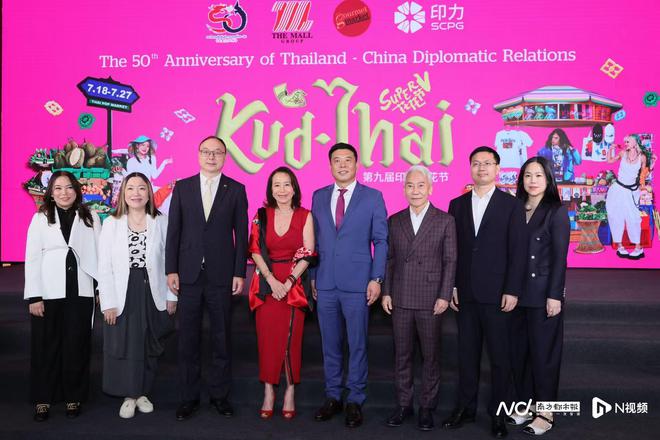
Core Viewpoint - The collaboration between Inli Group and The Mall Group aims to create a new commercial bridge between China and Thailand, focusing on cultural empowerment and innovative business models to enhance regional economic integration [1][6]. Group 1: Strategic Cooperation - A strategic cooperation agreement was signed between Inli Group and The Mall Group, focusing on three core areas: IP linkage and scene innovation, mutual membership system, and brand ecosystem alliance [3][5]. - The first collaboration will take place during the "9th Super-V Flower Festival" from July 18 to 27, featuring the "Kuad-Thai" IP to present Thai culture and lifestyle [5]. Group 2: Cultural and Economic Impact - The partnership is recognized as a model for government-business cooperation, promoting creative economies and cultural exchanges between the two countries [5][9]. - The collaboration is expected to enhance Thailand's international image and inject new vitality into regional tourism and retail through the integration of culture and commerce [9][11]. Group 3: Future Outlook - The partnership is seen as a new opportunity for deepening diplomatic and economic ties between China and Thailand, with a focus on mutual benefits and sustainable growth [6][11]. - Both companies aim to create a new paradigm of "retail + culture," establishing a bridge that connects the hearts of the people from both nations [11].
“朋友圈”“加速器”“强枢纽”——这些关键词诠释“南博之约”
Xin Hua Wang· 2025-06-21 03:32
Core Insights - The 9th China-South Asia Expo has opened in Kunming, showcasing opportunities for trade and cooperation between China and South Asian countries amidst global economic challenges [1][2] - The trade volume between China and South Asian countries is projected to approach $200 billion in 2024, having doubled over the past decade, with China being the largest trading partner for countries like Pakistan and Bangladesh [2] - The expo features over 2,500 enterprises from 73 countries and regions, highlighting the growing economic ties and collaborative potential in various sectors [2] Group 1: Trade Opportunities - South Asian countries are increasingly focusing on the Chinese market, recognizing its vast consumer base as a significant growth opportunity [2] - The expo serves as a vital platform for South Asian businesses to enter the Chinese market, particularly in sectors like agriculture and dairy, where technology cooperation can enhance production efficiency [2][3] - The event emphasizes green trade, digital trade, and service trade, with specialized pavilions showcasing advanced manufacturing and clean energy [5] Group 2: Regional Cooperation - Yunnan province is positioning itself as a hub for trade with South Asia and Southeast Asia, with trade volumes exceeding 100 billion RMB for seven consecutive years [5] - The expo is part of a broader strategy to enhance regional connectivity through infrastructure projects and digital platforms, facilitating trade efficiency and collaboration [5] - The event fosters a spirit of cooperation and mutual development among participating countries, aiming to build a community of shared interests and prosperity [3][4]
联合国前秘书长潘基文将出席“2025中国企业出海高峰论坛”
凤凰网财经· 2025-06-20 13:42
Group 1 - The article emphasizes the challenges posed by unilateralism, trade barriers, and the increasing global governance deficit, highlighting the need for multilateralism as an effective response to common challenges [2][3] - It discusses the complex global landscape characterized by geopolitical conflicts, climate crises, and uncertain economic recovery, stressing the pressure on the global governance system [2][3] - The article calls for a return to the logic of "mutual benefit and win-win" to overcome the current globalization crisis, advocating for deeper cooperation in digital trade rules and green tariff systems [3] Group 2 - It outlines China's proactive role in promoting inclusive globalization through initiatives like the Belt and Road Initiative and RCEP, which enhance connectivity and supply chain cooperation [5][6] - The article provides data indicating that in 2024, China imported 9.86 trillion yuan from Belt and Road countries, accounting for 53.6% of total imports, and plans to implement zero-tariff treatment for all least developed countries [5] - It highlights the importance of regional cooperation and resilience in the face of unilateralism and protectionism, advocating for stronger regional production networks and supply chains [6] Group 3 - The article notes that in 2023, China's non-financial outward investment enterprises increased by 23.1% in number and 11.4% in total amount, demonstrating the active global expansion of Chinese companies [7] - It mentions that Chinese companies are building a global community of shared interests through technology sharing and localized operations, despite facing structural challenges and external constraints [7] - The need for a systematic collaborative platform for Chinese companies to navigate the challenges of geopolitical shifts and supply chain restructuring is emphasized [8] Group 4 - The upcoming "2025 China Enterprises Going Global Summit" aims to connect policy benefits, technological innovations, and market opportunities, featuring global governance leaders and industry representatives [8][10] - The article promotes the idea that true globalization is not a zero-sum game but a journey of technological innovation and cultural integration [8][10] - It invites participation from businesses at various stages of international expansion, offering insights and strategies for success in global markets [10]

社评:从日内瓦到伦敦,世界期待美方以行践诺
Huan Qiu Wang· 2025-06-11 16:32
来源:环球时报 目前本次会议的具体细节还没有公布,但双方在会后都表达了积极态度。中方一再强调,对经贸磋商是 有诚意的,也是有原则的。中国人一向言必行、行必果,希望美方拿出恪守承诺的诚信精神和切实履行 共识的努力行动,与中方相向而行,共同维护来之不易的对话成果。对美方来说,排除各种干扰甚至破 坏,尤为重要。日内瓦会谈后中美经贸关系一度重陷僵局,根本原因就是美方一些人仍抱持着零和博弈 思维和冷战逻辑,对中美双方的互信造成损害。而在关税风暴下,美国企业和消费者首当其冲,怨声载 道。美方应当吸取其中教训,纠正错误做法。 中美经贸关系的本质是互利共赢,中美在经贸领域合则两利、斗则俱伤,这已被历史和现实反复证明。 中国美国商会会长何迈可此前表示,关税战就像一场"事实验证",证明中国是美国重要的商品市场,也 是美国商品重要的供应来源。美国有线电视新闻网(CNN)则称,两国在伦敦举行的磋商意义重 大,"没有人希望回到4月的对峙局面"。还有英国企业家表示,中美保持稳定的贸易关系对全球经济始 终有益。"秉持平等态度,尊重各自关切,争取双赢结果",是中方对经贸磋商机制的基本态度,它同样 应成为美方的一份政治理性。 还应看到,除了高 ...
构建互利共赢的国际科技合作新格局
Ke Ji Ri Bao· 2025-06-11 08:18
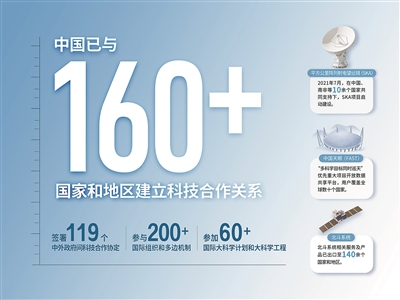
Core Viewpoint - China emphasizes open scientific cooperation to benefit humanity, establishing partnerships with over 160 countries and regions, and signing 119 intergovernmental agreements on scientific collaboration [2][5]. Group 1: International Cooperation Platforms - The SKA project, known as the "Earth's Giant Eye," is being developed with support from China and over ten other countries, aiming to create the world's largest radio telescope [3]. - China plays a significant role in the SKA project, contributing to key technology development and infrastructure construction [3]. - The FAST telescope, known as "China's Eye," has an open data sharing platform that serves users from dozens of countries, showcasing international collaboration in scientific research [3]. Group 2: Equal International Dialogue - Chinese and German academic institutions have innovated cooperation models, fostering a new generation of young academic leaders through various collaborative initiatives [6]. - The "Tengchong Scientist Forum" in Yunnan has become a platform for advanced academic exchanges and international cooperation in science and technology [7]. Group 3: Effective Innovation Networks - China has established over 70 "Belt and Road" joint laboratories in various fields, enhancing international scientific collaboration [8]. - The "China-Uruguay Joint Laboratory" focuses on soybean genetics research and aims to become an international scientific innovation platform [9]. Group 4: Nurturing a Cooperative Ecosystem - The "Xishuangbanna Biodiversity Platform" was launched to provide a new window for exploring tropical biodiversity, showcasing collaborative efforts in ecological research [11]. - The Chinese government is committed to creating a conducive environment for scientific innovation and cooperation, focusing on practical and efficient funding mechanisms [12].
中美经贸关系优势互补、共生共赢(钟声)
Ren Min Ri Bao· 2025-06-09 21:56
Group 1 - The core viewpoint emphasizes the importance of the first meeting of the China-U.S. economic and trade consultation mechanism in London, highlighting it as a significant opportunity for both parties to resolve differences through equal dialogue [1] - The article discusses the balanced benefits of China-U.S. trade relations, noting that the U.S. trade deficit with China is a result of structural issues in the U.S. economy and the comparative advantages of both countries [1][2] - It is mentioned that the U.S. service trade surplus with China is projected to reach $27.3 billion in 2024, indicating a significant advantage for the U.S. in the service sector [1] Group 2 - The article points out that the U.S. trade deficit with China, when calculated based on trade value added, would be significantly reduced, suggesting that China does not actively pursue a trade surplus [2] - It highlights that the U.S. trade deficit with China has decreased as a percentage of its total trade deficit, from 47.5% in 2018 to 24.6% in 2024, indicating a shift in the U.S. trade dynamics [2] - The article criticizes the U.S. for politicizing economic issues and implementing discriminatory measures against China, which hinder U.S. companies from capitalizing on market opportunities in China [2] Group 3 - China is actively promoting high-level openness and expanding imports, providing more opportunities for countries, including the U.S., through various trade exhibitions and initiatives [3] - The article asserts that the true nature of China-U.S. economic relations is one of complementary advantages and mutual benefits, advocating for the removal of artificial barriers to enhance cooperation [3] - It expresses optimism that through equal consultation and pragmatic cooperation, both countries can find mutually beneficial solutions that will contribute to global economic recovery and growth [3]
新华时评丨校正中美关系巨轮航向须“把好舵、定好向”
Xin Hua She· 2025-06-06 16:23
中美日内瓦经贸会谈之所以取得实质性成果,正是延续了互利共赢的逻辑。习近平主席在通话中指出, 双方要"用好已经建立的经贸磋商机制,秉持平等态度,尊重各自关切,争取双赢结果"。这为未来的经 贸磋商指明了方向和原则。中方言出必行,在日内瓦会谈后便积极采取措施,取消或暂停相关关税,展 现了维护对话成果的最大诚意。但正如习近平主席强调的,中方"同时也是有原则的"。这个原则,就是 坚决维护国家的核心利益和人民的根本利益,坚决维护国际公平正义和多边贸易体制。在涉及国家主权 和尊严的问题上,中方绝不会有任何妥协退让。对美方而言,当务之急则是"实事求是看待取得的进 展,撤销对中国实施的消极举措"。这不仅是兑现承诺的应有之义,更是推动务实合作的必要前提。 中美关系这艘巨轮行稳致远,还需要在更广阔的领域拓展积极议程,并妥善管理分歧。习近平主席在通 话中倡议,"双方应增进外交、经贸、军队、执法等各领域交流,增进共识、减少误解、加强合作"。这 为双边关系的发展开辟了更广阔的空间。同时,特朗普总统也表示,"美方欢迎中国留学生来美学习"。 此外,维护好中美关系的政治基础,是确保这艘大船不偏航、不触礁的根本前提,必须高度警惕并妥善 处理可能 ...