
农业科技创新

Search documents
海南新增14家国家级科技小院
Hai Nan Ri Bao· 2025-10-30 03:30
Core Points - The establishment of 14 new national-level technology small institutes in Hainan aims to enhance agricultural technology innovation, social services, and talent cultivation in the agricultural sector [2][3] - A total of 195 technology small institutes have been approved nationwide, with Hainan contributing 14, bringing the total number of provincial and above technology small institutes in the province to 136 [2] - The technology small institutes are designed to support rural science popularization, modern agricultural technology promotion, and contribute to rural revitalization efforts [2][3] Summary by Categories - **Establishment and Coverage** - Hainan has successfully established 14 new technology small institutes, contributing to a total of 136 provincial-level and above institutes in the province [2] - The newly established institutes include various agricultural specialties such as mango, lychee, and coffee [2] - **Functions and Objectives** - The technology small institutes serve three main functions: agricultural technology innovation, agricultural social services, and talent cultivation [2] - They aim to create an innovative development model that involves collaboration among various stakeholders, including educational institutions and local experts [2][3] - **Future Plans and Support** - The provincial government plans to collaborate with multiple departments to enhance management and services for the technology small institutes [3] - The focus will be on strengthening local talent development and supporting rural industry growth, governance, and overall rural revitalization [3]
用好农业科技“金钥匙”
Jing Ji Ri Bao· 2025-10-28 22:24
Core Viewpoint - Food security and agricultural technology innovation are becoming central to national strategic deployment, with a focus on modernizing agriculture and rural areas, emphasizing the importance of addressing "three rural issues" [1] Group 1: Agricultural Technology and Productivity - Under policy guidance, China's agricultural technology collaboration is advancing, with a projected agricultural technology contribution rate of 63.2% in 2024 and a comprehensive mechanization rate of over 75% for crop farming [2] - The coverage rate of improved seeds exceeds 96%, and the national grain yield per mu has increased by 5.1 kg compared to the previous year, with single yield improvements contributing over 80% to grain production growth [2] - Regions are exploring unique agricultural technology development paths, such as Henan focusing on wheat production modernization and Heilongjiang implementing digital management for corn and soybean [2] Group 2: Policy Framework and Support - The government has introduced several major guiding policies to promote agricultural technology innovation, including the "National Smart Agriculture Action Plan (2024-2028)" and "Opinions on Further Deepening Rural Reform" [3] - These policies aim to provide direction for key technological breakthroughs and accelerate the integration of technology with agricultural production, supporting the cultivation of new agricultural productivity [3] Group 3: Challenges in Agricultural Technology - The agricultural technology support system faces challenges, including insufficient collaborative innovation mechanisms and low technology transfer rates, with some research results remaining unutilized in practical production [3] - There are disparities in regional development, particularly between eastern and central/western regions regarding research investment and technological infrastructure, affecting the penetration of new agricultural productivity [3] Group 4: Future Directions for Agricultural Innovation - Future efforts should focus on enhancing the national agricultural technology collaborative innovation system, breaking down barriers between research and application, and establishing platforms for collaborative research among various stakeholders [4] - Increased investment in research funding, talent, and infrastructure in central and western regions is essential to promote agricultural technology demonstration zones and digital farms [4] Group 5: Empowering Farmers and Local Initiatives - Enhancing farmers' skills and motivation is crucial, with a focus on improving agricultural technology promotion systems and encouraging local practitioners to become advocates for agricultural technology innovation [5] - Utilizing technology to empower agriculture is seen as a necessary path to strengthen national food security and ensure that innovative results are effectively implemented in the field [5]
当拼多多把“中国模式”带上联合国讲台
Sou Hu Cai Jing· 2025-10-28 11:37
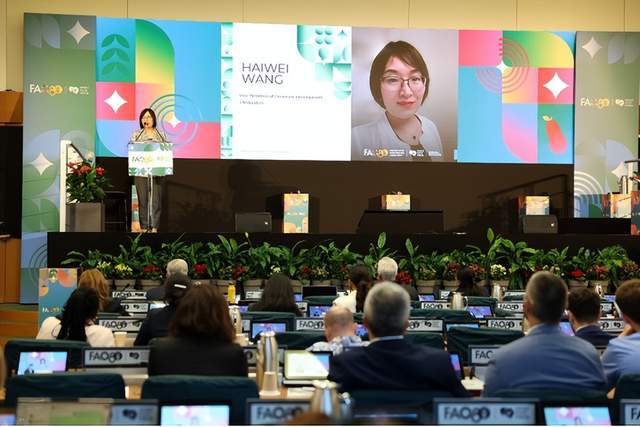
Core Insights - The 2025 World Food Forum highlighted Pinduoduo's role in showcasing China's digital agriculture practices, with the company's VP Wang Haiwei sharing insights on a global stage [1][3] - The recognition from the Food and Agriculture Organization (FAO) underscores Pinduoduo's innovative model of "competition discovery + platform empowerment + market connection" as a significant example of global agricultural technology innovation [3] Group 1: Global Agricultural Innovation Competitions - The "2025 Global Agri-Entrepreneur Competition," co-hosted by FAO, Zhejiang University, and Pinduoduo, attracted 519 applications from 97 countries, with the Tanzanian project "SafeSip" winning the gold award [4] - Pinduoduo's support enabled the silver and bronze award-winning teams from China and the U.S. to present their projects at the World Food Forum, enhancing their global visibility [4][10] - The competition aims to bridge global agricultural innovation and connect young agri-entrepreneurs with practical solutions [5][8] Group 2: Agricultural Technology Innovation Ecosystem - Pinduoduo supports various competitions like the "Duoduo Agricultural Research Technology Competition" to stimulate youth innovation in agriculture through competitive research [7] - The "Duoduo Agricultural Research Technology Competition" focuses on breakthroughs in single crop technologies, while the "National Science Small Courtyard Competition" emphasizes talent cultivation linked to rural revitalization [7] - The competitions collectively form a comprehensive agricultural technology innovation ecosystem, addressing various agricultural challenges and fostering regional development [8] Group 3: Practical Applications and Market Integration - The "Real-time Pig Herd Defense" project showcased at the forum utilizes AI and multi-sensor technology for early disease detection in pigs, significantly improving monitoring efficiency [10][11] - The "Verdia Diagnostics" project offers an intelligent solution for crop pest and disease management, demonstrating effective early detection capabilities [10][11] - These projects exemplify Pinduoduo's commitment to transforming research into marketable solutions, enhancing agricultural productivity and sustainability [11] Group 4: Strategic Funding and Support - Pinduoduo's "100 Billion Subsidy" plan aims to reduce costs for merchants and increase funding for innovative agricultural projects, providing robust support for technology application and promotion [12][13] - The plan includes significant financial resources for competitions, with winning teams receiving substantial monetary rewards, fostering a culture of innovation [13] - Pinduoduo connects technology teams, platform merchants, and farmers, creating a collaborative innovation ecosystem that enhances agricultural efficiency [12][13] Group 5: Internationalization of Chinese Agricultural Technology - The global recognition of Pinduoduo's initiatives reflects the internationalization of Chinese agricultural technology, with teams gaining exposure on global platforms [15] - Pinduoduo facilitates exchanges between Chinese and international agricultural teams, promoting the sharing of technology and experiences [15] - The invitation from FAO to Pinduoduo signifies the company's role in the global agricultural transformation, showcasing a replicable and scalable model for agricultural innovation [15]


中非农业科技创新联盟大会聚焦农业现代化
Xin Hua Wang· 2025-10-28 05:40
Core Points - The 2025 China-Africa Agricultural Technology Innovation Alliance Conference opened in Addis Ababa, Ethiopia, with over 200 representatives discussing cooperation paths and development blueprints for agricultural modernization [1][2] - The establishment of the China-Africa Agricultural Technology Innovation Alliance is timely and strategically significant, addressing structural bottlenecks in Africa's agricultural food system [1] - China has established over 20 agricultural technology demonstration centers in Africa, promoting over 300 advanced applicable technologies that benefit more than 1 million smallholder farmers [1] Summary by Sections Alliance Formation - The China-Africa Agricultural Technology Innovation Alliance is co-led by the Chinese Academy of Agricultural Sciences and the African Academy of Sciences, with 52 Chinese member units and 39 African member units from 23 African countries [2] - The conference marked the first meeting of the alliance, which aims to gather wisdom and resources from both sides to focus on agricultural technology innovation [1][2] Action Plan - The conference unveiled the "Three-Year Action Plan for the China-Africa Agricultural Technology Innovation Alliance," outlining key tasks in joint research and development, technology demonstration, capacity building, and industry connection for the next three years [2]
第32届中国杨凌农高会推介大会暨集中签约活动举办
Shan Xi Ri Bao· 2025-10-27 23:05
Group 1 - The 32nd China Yangling Agricultural High-tech Fair was held with the theme "Technology Empowering New Quality Agricultural Productivity," attracting nearly 400 participants from various sectors [1] - A total of 61 projects were signed on-site with a total investment of 16.23 billion yuan, and an additional 61 projects will be signed later, amounting to 8.76 billion yuan, covering areas such as seed industry, smart agriculture, medicine, medical devices, and agricultural cultural tourism [1] - The Vice President of Northwest A&F University released the "2025 China Agricultural Industry Investment Report," highlighting the acceleration of capital inflow into emerging sectors like smart agriculture and biological breeding driven by policy and technology [1] Group 2 - The Secretary-General of the National Agricultural Technology Innovation Investment Consortium presented the "2025 China Agricultural Technology Innovation Investment Report," indicating that agricultural technology venture capital is focusing on sectors such as agricultural biotechnology, smart agriculture, innovative food and nutrition, and green low-carbon initiatives [1] - The Director of the Yangling Demonstration Zone Investment Promotion Bureau introduced the investment environment and invited global partners to collaborate in five key areas: seed industry, deep processing of agricultural products, biomedicine and health, smart agriculture and intelligent equipment manufacturing, and agricultural technology services [1] - Representatives from agricultural companies, including Beijing Dabeinong Technology Group and AgroFresh, shared cutting-edge technologies, new models, and practical cases during the event [2]

河南印发《科技赋能农业强省建设三年行动方案》 强化科技与改革双轮驱动
He Nan Ri Bao· 2025-10-24 02:49
Core Insights - The article emphasizes that technological innovation is the core driving force for building a strong agricultural province in Henan, as outlined in the newly released "Three-Year Action Plan for Technological Empowerment of Agricultural Strong Province Construction (2025-2027)" [1] Group 1: Strategic Framework - The plan aligns with national agricultural technology development goals while addressing local agricultural needs, focusing on enhancing the role of technological innovation in agricultural development [1] - It establishes a comprehensive framework centered on three core directions: activating agricultural development dynamics, stimulating rural construction vitality, and increasing farmers' wealth effectiveness [2] Group 2: Key Initiatives - The plan prioritizes seed industry innovation, aiming to create a modern breeding technology system that integrates advanced biological breeding and information technology across various agricultural sectors [2] - It seeks to build a full-chain innovation platform network that connects basic research, technology development, and results transformation, facilitating the aggregation of innovation resources to the industry front line [2] Group 3: Mechanisms and Incentives - The plan introduces a dual-driven approach of technology and reform to enhance agricultural technology innovation, industry competitiveness, and overall productivity [2] - It proposes a stable support and competitive focus model for agricultural research projects, ensuring long-term support for breeding innovation and avoiding short-sighted research practices [2] Group 4: Expected Outcomes - By 2027, the plan aims for significant breakthroughs in agricultural modernization, with grain production capacity stabilized at over 1,300 billion jin, and advancements in breeding technology and agricultural equipment [3]
北京100余家企业组团亮相农交会
Zhong Guo Jing Ji Wang· 2025-10-22 00:51
Core Insights - The 22nd China International Agricultural Products Trade Fair has opened in Tianjin, showcasing over 800 agricultural products from more than 100 enterprises in Beijing, aimed at enhancing the "Beijing Excellent Agriculture" brand's national recognition and influence [1][4] - The event's theme is "Strengthening Brands to Revitalize and Boost Consumption," covering a total area of 100,000 square meters, with the Beijing exhibition area spanning over 1,200 square meters [1][2] - During the fair, the Beijing exhibition group achieved over 6 million yuan in on-site sales and over 300 million yuan in intended transactions [1] Group 1: Exhibition Overview - The Beijing exhibition area is a key part of the "Beijing-Tianjin-Hebei Pavilion," focusing on green and low-carbon initiatives, featuring a comprehensive exhibition area and three specialized exhibition areas [2] - The exhibition integrates elements of Beijing's regional characteristics, designed to reflect the capital's historical and cultural heritage [1][2] Group 2: Agricultural Innovations - The seed industry exhibition area highlights Beijing's role as a "Seed Industry Capital," showcasing six representative enterprises and their core competencies in seed cultivation and results transformation [3] - The smart agriculture exhibition area presents advanced technologies, including a model developed by the Beijing Academy of Agriculture and Forestry Sciences for comprehensive agricultural services [3] - The brand agriculture exhibition area features nearly 100 outstanding agricultural enterprises, with over 50 representing the "Beijing Excellent Agriculture" brand, displaying a diverse range of high-quality products [3] Group 3: Future Goals - The Beijing exhibition group aims to continue promoting high-quality agricultural products nationwide, contributing to the construction of a strong agricultural nation and enhancing rural revitalization efforts [4]
积极助推农业科技创新和成果转化 更好服务农业现代化走在前
Xin Hua Ri Bao· 2025-10-21 20:29
Group 1 - The provincial political advisory group conducted a special research on agricultural technology innovation and achievement transformation, focusing on the theme of "promoting industry, strengthening counties, and enriching the people" [1][2] - The research team visited the rice experimental field at the Provincial Academy of Agricultural Sciences, noting the healthy growth and full grains of the rice, and encouraged researchers to enhance innovation capabilities to support rural industrial integration and improve agricultural efficiency [1][2] - The team emphasized the importance of breakthroughs in key core technologies across the entire agricultural industry chain, particularly in areas such as biological breeding, smart agriculture, modern agricultural machinery, and green agriculture [2] Group 2 - The provincial agricultural academy was recognized for its strong innovation atmosphere and fruitful results, contributing positively to the province's agricultural high-quality development and rural revitalization [2] - The research group highlighted the need for greater efforts in the transformation and promotion of agricultural technology achievements, advocating for innovative mechanisms and optimized resource allocation to convert more agricultural technology results into practical productivity and farmer benefits [2] - There is a call for strengthening the construction of a talent team in agricultural technology, focusing on training more agricultural technology talents and enhancing services for rural development [2]

吃得更健康 科技范更强——展会里的乡村产业发展新动向
Xin Hua Wang· 2025-10-21 14:04
Core Insights - The 113th National Sugar and Wine Products Trade Fair and the 22nd China International Agricultural Products Trade Fair showcased new agricultural products and technologies, reflecting evolving industry trends and consumer preferences [1] Group 1: Technological Innovations - The introduction of a digital traceability system allows over 70 types of fruits and vegetables to be tracked from soil to table, enhancing food safety and quality [3] - The development of proprietary seed varieties, such as "Damo Jiaozi No. 1," demonstrates advancements in agricultural biotechnology, contributing to improved nutritional content [2] - The integration of smart management systems in livestock farming has reduced costs by over 30%, showcasing the impact of technology on agricultural efficiency [3] Group 2: Health and Consumer Trends - The rising demand for low-GI (glycemic index) foods has led to significant growth in product offerings, with sales of low-GI items increasing from under 1 million yuan to nearly 60 million yuan in just a few months [4] - Consumers are increasingly prioritizing health, as evidenced by the popularity of low-sugar bread and the demand for high-quality agricultural products with traceability [4] Group 3: New Business Models - The combination of online and offline sales strategies is transforming the agricultural market, with e-commerce and live-streaming becoming essential tools for product promotion [5] - The rural online retail market is projected to reach 2.56 trillion yuan in 2024, indicating a significant increase in digital commerce within the agricultural sector [5] Group 4: Trade Fair Dynamics - The trade fairs have evolved into comprehensive platforms that connect industry, consumers, and various business models, attracting thousands of exhibitors and professional visitors [6] - The 113th Sugar and Wine Fair attracted around 4,000 exhibitors and over 400,000 professional visitors, highlighting its significance in the industry [6]

2025年世界粮食论坛举行 共促全球农业和粮食体系转型(国际视点)
Ren Min Ri Bao· 2025-10-20 22:41
Core Insights - The 2025 World Food Forum, hosted by the Food and Agriculture Organization (FAO), took place in Rome, marking the FAO's 80th anniversary, with over 25,000 representatives discussing food security, climate change, and technological innovation [1][2] Group 1: Global Hunger and Food Security - Approximately 673 million people globally face hunger, with 2.3 billion in food insecurity and 2.6 billion unable to afford healthy diets [2] - The number of people facing hunger decreased by 15 million from the previous year, primarily due to improvements in Southeast Asia, South Asia, and South America, although regions like Africa and West Asia continue to see worsening conditions [2] - Conflict is identified as the leading cause of acute food insecurity, affecting around 140 million people across 20 countries, with Sudan confirmed to be experiencing famine [2] Group 2: Food Prices and Economic Challenges - Rising food prices are a critical global challenge, exacerbating food insecurity and malnutrition, with the FAO's September 2025 food price index significantly higher than the previous two years [3] - Since 2020, global food price inflation has consistently outpaced overall inflation, hindering improvements in food security [3] Group 3: Agricultural Development and Innovation - The forum emphasized the need for structural reforms and increased investment to promote resilient and sustainable agricultural development [4][6] - The FAO launched the Agricultural Food Systems Technology and Innovation Initiative, providing policy recommendations for agricultural technology innovation in low- and middle-income countries [4] - Innovative agricultural solutions, such as AI-driven irrigation optimization systems, are being tested in countries like Tajikistan and Georgia [4] Group 4: International Cooperation and Funding - The FAO's "Hand in Hand" initiative has attracted participation from over 80 countries, raising over $8 billion to support agricultural projects [5] - The "Global Alliance Against Hunger and Poverty," initiated by Brazil, includes 105 countries and aims to enhance cooperation in food security [5] - The FAO recognized China's significant contributions to global food security, with over $130 million invested in various projects benefiting over 1 million farmers [7][8]