
平谷大桃

Search documents
“看着乡亲们的腰包越来越鼓,我打心底里高兴”
Ren Min Ri Bao Hai Wai Ban· 2026-02-26 23:11
Core Viewpoint - The article highlights the transformative journey of Yue Qiaoyun, a new farmer and national representative, who has successfully integrated technology and community engagement to revitalize agriculture and improve the livelihoods of local farmers in Pinggu, Beijing [3][4][12]. Group 1: Agricultural Transformation - Yue Qiaoyun emphasizes the shift from traditional farming methods to technology-driven practices, showcasing the use of soil monitoring devices and smart irrigation systems that enhance productivity [6][7]. - The introduction of scientific approaches has led to a significant increase in the quality and quantity of peach production, with sales exceeding 1 billion yuan and reaching international markets [7][8]. - The establishment of the "Agricultural Silicon Valley" has attracted experts and researchers to support local farmers, enhancing agricultural innovation and education [6][8]. Group 2: Community Engagement and Support - Yue has initiated a cooperative model that benefits over 3,000 fruit farmers, providing them with access to technology, marketing channels, and financial security [4][11]. - The cooperative has facilitated training for over 51,000 farmers in e-commerce, enabling them to sell their products online and improve their income [7][8]. - Yue's commitment to community welfare is evident through her financial support for local infrastructure and educational initiatives, fostering a sense of trust and collaboration among farmers [11][12]. Group 3: Policy Advocacy - Yue is actively preparing policy suggestions for the upcoming National People's Congress, focusing on enhancing agricultural social services and promoting rural tourism [4][5]. - Her proposals aim to secure government support for technology integration and tourism development, which are crucial for sustaining rural economies [5][12]. - The emphasis on policy advocacy reflects her role as a bridge between farmers' needs and governmental action, ensuring that local voices are heard in national discussions [5][12].

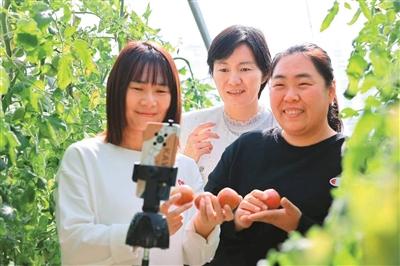
看着乡亲们的腰包越来越鼓,我打心底里高兴
Ren Min Ri Bao· 2026-02-26 22:02
Core Viewpoint - The article highlights the transformation of agriculture in Pinggu, Beijing, through the efforts of a new farmer, Yue Qiaoyun, who has successfully integrated technology and community engagement to enhance agricultural productivity and rural tourism, ultimately improving the livelihoods of local farmers [4][5][6]. Group 1: Agricultural Transformation - Yue Qiaoyun has transitioned from a city executive to a farmer, revitalizing the Pinggu peach industry through technology and community cooperation [4][12]. - The introduction of smart agricultural technologies, such as soil monitoring devices and intelligent irrigation systems, has modernized traditional farming practices, leading to increased efficiency and productivity [7][8]. - The establishment of a cooperative has allowed over 3,000 fruit farmers to benefit from shared resources, technology, and market access, significantly boosting their incomes [12][13]. Group 2: Community Engagement and Policy Advocacy - Yue Qiaoyun actively participates in policy-making, advocating for agricultural social services and rural tourism development to support local farmers [5][6]. - The cooperative model has fostered a sense of community among farmers, enabling them to work together for mutual benefit and shared prosperity [12][13]. - Initiatives such as training programs for e-commerce and live streaming have empowered local farmers to market their products directly, enhancing their income potential [8][9]. Group 3: Economic Impact - The cooperative's sales have surpassed 1 billion yuan, with products reaching both national and international markets, demonstrating the economic viability of modern agriculture [8][9]. - Farmers' average annual income has increased to 60,000-70,000 yuan, with many achieving even higher earnings, reflecting the positive economic impact of the cooperative and technological integration [13]. - The community has seen a revival of previously abandoned farmland, contributing to the overall economic development of the region [12][13].
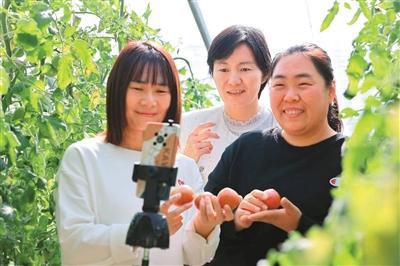
市政协委员陈俊炜:借助新媒体平台让京郊文旅更有“记忆点”
Bei Jing Shang Bao· 2026-01-26 12:40
Core Viewpoint - The development of suburban cultural tourism in Beijing is essential for rural revitalization and meeting citizens' high-quality leisure demands, but it faces challenges such as homogenization, service quality, and brand influence [4]. Group 1: Current State of Suburban Cultural Tourism - Suburban cultural tourism in Beijing has shown steady growth but still has gaps compared to the capital's standards and high-quality rural revitalization requirements [4]. - Current tourism projects are primarily traditional, focusing on activities like fruit picking and outdoor barbecues, leading to low-value-added consumption and a lack of diverse experiences [4]. - Successful examples, such as the Gubei Water Town and the integration of local culture with tourism, highlight potential pathways for development [4]. Group 2: Recommendations for Improvement - Strengthening brand development is crucial to create memorable experiences in suburban cultural tourism, utilizing new media and tourism exhibitions to establish new popular destinations [5]. - Promoting the integration of various tourism formats can enhance vitality, transforming single projects into a comprehensive industry chain that meets urban residents' short-term vacation needs [6]. - Addressing service shortcomings is necessary to enhance the warmth of suburban cultural tourism, including improving transportation, service standards, and developing nighttime economy facilities [6].

“联小农、强服务、促链接” 农业社会化服务高质量发展交流会在北京平谷召开
Huan Qiu Wang· 2026-01-19 06:59
Core Viewpoint - The conference focused on advancing high-quality agricultural social services, emphasizing the integration of small farmers with modern agricultural practices and the development of a comprehensive service system [1][2]. Group 1: Conference Overview - The Agricultural Social Service High-Quality Development Exchange Conference was held in Pinggu District, Beijing, attracting experts and entrepreneurs from across the country [1]. - The conference aimed to implement the spirit of the 20th Central Committee and promote rural revitalization and modernization of agriculture [1]. - Key discussions included the construction of a technology-enabled, efficient agricultural service system and the integration of small farmers into modern agricultural development [1]. Group 2: Key Presentations and Agreements - Notable presentations were made by leaders and researchers on topics such as agricultural social services and their role in modern agricultural development [1][2]. - A strategic cooperation agreement was signed for the establishment of the Agricultural Social Service Professional Committee in Pinggu, which will serve as a think tank for the region's agricultural transformation [2]. Group 3: Pinggu District's Initiatives - Pinggu District is leveraging its strengths in high-tech agriculture, logistics, and leisure to create a comprehensive agricultural service model [3]. - The district is developing a "Pinggu Plan" that integrates high-tech solutions into agricultural services, enhancing efficiency and value [3]. - Pinggu is positioned as a logistics hub, facilitating the efficient distribution of agricultural products and connecting to major markets [3]. Group 4: Systematic Development and Collaboration - The district is constructing a systematic agricultural social service network characterized by a full-chain empowerment approach [4]. - Collaborations among companies for digital platform development, smart machinery sharing, and agricultural production management were highlighted, showcasing the potential for practical implementation of agricultural social services [5]. - The conference marked a significant step towards transforming agricultural social service concepts into tangible operations and projects [5].
三十载耕耘只为一份甜蜜承诺
Xin Lang Cai Jing· 2025-12-25 16:20
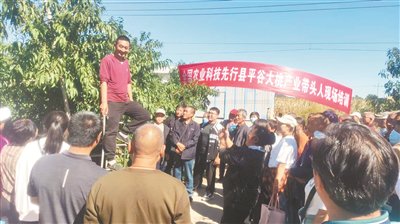
Core Viewpoint - The article highlights the journey of Zhang Baozhi, a dedicated peach farmer in Pinggu, who transformed the local peach industry by focusing on quality and sustainability, ultimately benefiting both his community and the environment [3][4][5]. Group 1: Industry Background - Pinggu is renowned as "China's Peach Town," with over 220,000 acres dedicated to peach cultivation, supporting the livelihoods of more than 100,000 peach farmers [4]. - The local peach industry has a history of 70 years, but faced challenges with declining quality due to a focus on yield and chemical fertilizers [4]. Group 2: Innovations and Practices - Zhang Baozhi implemented a set of refined and ecological management techniques, including thinning trees for better airflow, using organic fertilizers, and employing pest control methods that avoid chemical herbicides [4][5]. - His peaches gained recognition for their uniform size, vibrant color, and exceptional taste, leading to numerous awards in various competitions [5]. Group 3: Community Engagement and Education - Zhang Baozhi actively shares his knowledge with local farmers, conducting free training sessions to improve their cultivation techniques and promote sustainable practices [6][7]. - He was appointed as a "local expert" to teach peach management techniques across multiple towns, contributing to the overall improvement of peach quality in the region [6][7]. Group 4: Future Aspirations - In 2019, Zhang founded the Beijing Guyu Xing Fruit and Vegetable Production and Marketing Cooperative to promote standardized and large-scale production, aiming to enhance the resilience and competitiveness of local farmers [7]. - The cooperative seeks to provide comprehensive support, from technical assistance to sales, ensuring the sustainable development of the Pinggu peach industry [7].
北京100余家企业组团亮相农交会
Zhong Guo Jing Ji Wang· 2025-10-22 00:51
Core Insights - The 22nd China International Agricultural Products Trade Fair has opened in Tianjin, showcasing over 800 agricultural products from more than 100 enterprises in Beijing, aimed at enhancing the "Beijing Excellent Agriculture" brand's national recognition and influence [1][4] - The event's theme is "Strengthening Brands to Revitalize and Boost Consumption," covering a total area of 100,000 square meters, with the Beijing exhibition area spanning over 1,200 square meters [1][2] - During the fair, the Beijing exhibition group achieved over 6 million yuan in on-site sales and over 300 million yuan in intended transactions [1] Group 1: Exhibition Overview - The Beijing exhibition area is a key part of the "Beijing-Tianjin-Hebei Pavilion," focusing on green and low-carbon initiatives, featuring a comprehensive exhibition area and three specialized exhibition areas [2] - The exhibition integrates elements of Beijing's regional characteristics, designed to reflect the capital's historical and cultural heritage [1][2] Group 2: Agricultural Innovations - The seed industry exhibition area highlights Beijing's role as a "Seed Industry Capital," showcasing six representative enterprises and their core competencies in seed cultivation and results transformation [3] - The smart agriculture exhibition area presents advanced technologies, including a model developed by the Beijing Academy of Agriculture and Forestry Sciences for comprehensive agricultural services [3] - The brand agriculture exhibition area features nearly 100 outstanding agricultural enterprises, with over 50 representing the "Beijing Excellent Agriculture" brand, displaying a diverse range of high-quality products [3] Group 3: Future Goals - The Beijing exhibition group aims to continue promoting high-quality agricultural products nationwide, contributing to the construction of a strong agricultural nation and enhancing rural revitalization efforts [4]
产量高品质优 中国水果“圈粉”全球
Yang Shi Wang· 2025-09-20 12:53
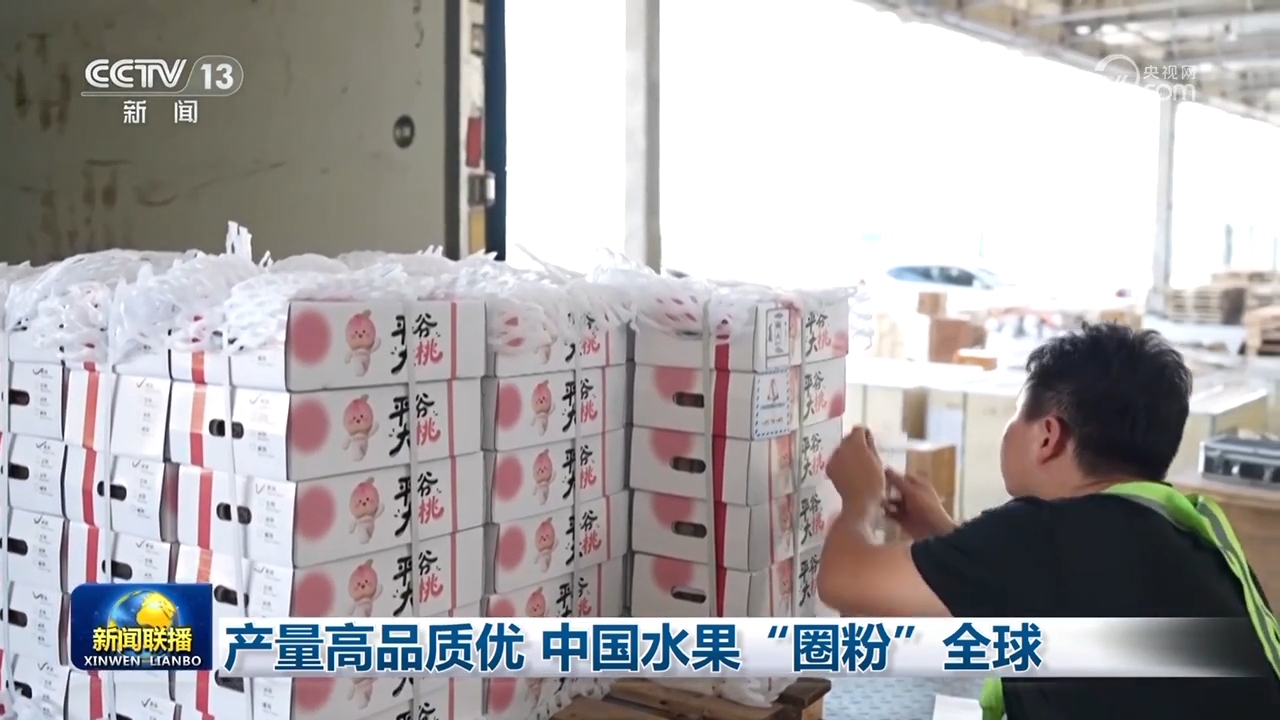
Core Viewpoint - China is the world's largest fruit producer and consumer, accounting for approximately one-third of global fruit production, with a significant increase in domestic consumption and global exports [1]. Group 1: Domestic Production and Consumption - China is experiencing a fruitful season with a diverse range of fruits, which is boosting domestic consumption [1]. - In Beijing's Pinggu District, local farmers are preparing for the export of a new batch of peaches, marking the first export of Pinggu peaches to countries like Singapore and Ghana [3]. Group 2: Export Structure and Trends - The structure of fruit exports from China is undergoing transformation, with traditional categories like citrus and apples continuing to dominate, while new varieties such as grapes and bayberries are also emerging [5]. - A new variety of pomelo, "June White," from Fujian's Pinghe County has made its debut in the New Zealand market [5]. Group 3: Market Response and Growth - With advancements in variety technology and brand quality, Chinese fruits are responding to global market demands, leading to an increase in both volume and price, thereby reshaping the global fruit market [7]. - In the first half of the year, China's total fruit exports reached 2.1578 million tons, representing a year-on-year growth of 5.69% [7].
北京“头雁”携百余种京郊特色农产品集中进城展销
Xin Jing Bao· 2025-09-20 09:04
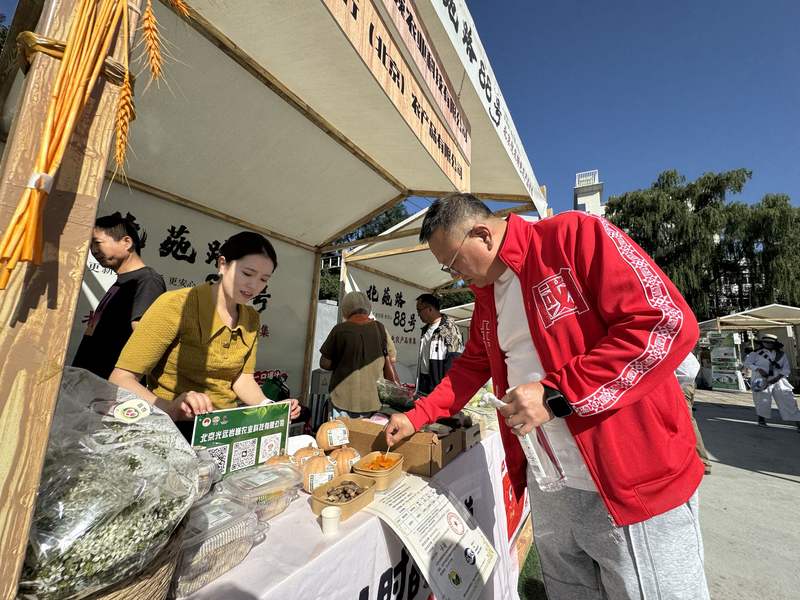
Core Points - The event "京味农韵 共赴头雁之约" was held on September 20, 2025, in Beijing, showcasing over a hundred types of agricultural products from 37 "head goose" units across ten suburban districts [1][3] - The market featured a variety of local specialties, including Huairou honeysuckle tea, Tongzhou sweet corn, and Pinggu peaches, highlighting the rich agricultural diversity of Beijing [3] - The event also included cultural elements such as traditional crafts and a tasting area for consumers to experience fresh local flavors and engage in agricultural activities [3] Industry Insights - The Beijing Municipal Bureau of Agriculture and Rural Affairs initiated the "head goose" project in 2022 to promote rural industry development and entrepreneurship, indicating a strategic focus on rural revitalization [3] - The establishment of the Rural Industry Revitalization Head Goose Development Promotion Association in 2025 marks a significant step in enhancing collaboration and leadership within the agricultural sector [3] - The event served as a platform for product sales, achievement displays, experience sharing, and interactive experiences, reinforcing the role of "head goose" talents in leading and coordinating development [3]

北京平谷桃香寻秘
Jing Ji Ri Bao· 2025-09-15 07:40
Core Insights - The article highlights the significance of Pinggu peaches as not only a fruit but also a cultural and economic symbol for the region, showcasing the integration of technology and culture in agriculture [1][2][5]. Agricultural Innovation - Pinggu peaches benefit from unique geographical conditions, including micro-acidic sandy soil and a favorable climate, which contribute to their superior quality [3][4]. - The introduction of smart agriculture technologies, such as drones and sensors, has revolutionized peach farming, allowing for precise management and real-time monitoring of growth conditions [4]. - The variety of peach types cultivated in Pinggu includes over 200 varieties, with 40 core cultivation types, enhancing the region's reputation as a genetic resource hub for peaches [3]. Cultural Integration - The cultural significance of peaches is emphasized through local creative industries that produce peach-themed products, enhancing the cultural narrative surrounding the fruit [5][6]. - Events like the Peach Blossom Festival and various art festivals have transformed peach orchards into tourist attractions, promoting rural revitalization [6]. Economic Development - The sales of Pinggu peaches have evolved from traditional methods to modern e-commerce and live-streaming sales, significantly increasing market reach and efficiency [7]. - In 2024, online sales of Pinggu peaches are projected to reach 1.1 million pounds, with online sales accounting for 35.6% of total sales, up from 26.7% in 2023 [7][8]. - The total output value of Pinggu peaches is expected to exceed 1.5 billion yuan in 2024, with brand value surpassing 10 billion yuan [8].
从枝头“鲜”到餐桌 中国水果如何跨越山海“圈粉”全球?
Yang Shi Xin Wen Ke Hu Duan· 2025-09-07 01:08
Core Insights - China is the world's largest fruit producer and consumer, accounting for about one-third of global fruit production [1] - In the first half of this year, China's fruit exports reached 2.1578 million tons, a year-on-year increase of 5.69%, indicating a trend of rising volume and prices [1] Fruit Export Trends - The export of Pinghe pomelo has successfully entered international markets, with a total export volume of 200,000 tons last year, doubling in five years [2] - Europe imported 160,000 tons of traditional white pomelo last year, while the U.S. and Canada prefer red pomelo for its appearance and sweetness [3] - Pinghe pomelo has recently made its debut in the New Zealand market, with the new variety "June White" being particularly well-received [4][5] Technological Advancements - Technology plays a crucial role in ensuring the quality of fruits during long-distance transportation, with innovations such as physical preservation paper extending the shelf life of peaches [7][8] - The introduction of a "fresh green channel" by customs has expedited the export process, allowing for quick clearance and ensuring the freshness of exported fruits [9] Market Penetration in Indonesia - China has been the largest source of imported fruits in Indonesia for several years, with apples, grapes, and citrus fruits being the top exports [10] - Chinese fruits account for over 70% of the imported fruit market in Indonesia, with apples alone making up 90% of the market share [12] - The success of Chinese fruit exports is attributed to innovative varieties, advanced planting techniques, and efficient cold chain logistics [12]