房住不炒

Search documents
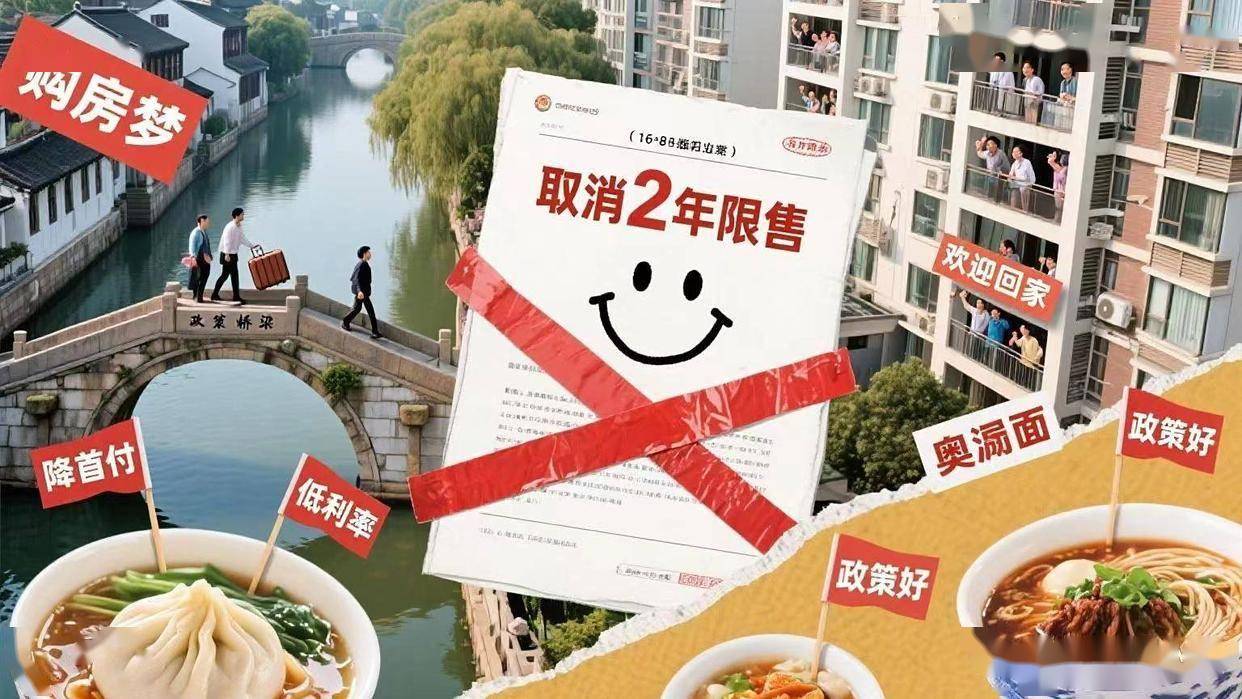
苏州取消市区新房2年限售,专家:交易活跃有望带动信心回归
Yang Guang Wang· 2025-09-04 06:26
Core Viewpoint - Suzhou has announced the cancellation of the two-year restriction on the transfer of newly built commercial housing in the urban area, which is expected to enhance market liquidity and support housing demand for upgrades [1] Group 1: Policy Changes - The Suzhou Housing and Urban-Rural Development Bureau has lifted the restriction that required new commercial housing to obtain property registration certificates for two years before being transferred, with exceptions for properties with special transfer restrictions [1] - This policy change is part of a broader trend, as major cities like Beijing and Shanghai are also implementing new real estate policies to relax purchase restrictions [1] Group 2: Market Implications - Analysts believe that the removal of the housing sales restriction will facilitate better matching of supply and demand, thereby promoting a healthy cycle in the real estate industry [1] - The policy is expected to boost market activity and restore confidence among buyers, as indicated by increased inquiries and viewings in Shanghai following similar policy announcements [1]
9月以后,如果房价持续出现“暴跌”,有可能出现4大“困局”
Sou Hu Cai Jing· 2025-09-03 12:14
Core Viewpoint - The current real estate market in China is experiencing significant adjustments, with concerns about potential price declines affecting both individual homeowners and the broader economy [3][4][5]. Group 1: Market Trends - Recent data indicates a 0.3% month-on-month decline and a 1.7% year-on-year drop in the property price index across 70 major cities in China as of mid-2025 [3]. - First-tier cities show relative stability, while some third and fourth-tier cities have experienced price drops exceeding 5% [3][4]. Group 2: Individual Impact - Homeowners are facing psychological stress due to fears of "negative equity," where property values fall below outstanding mortgage balances, potentially affecting 8% of mortgage-holding families if prices drop by 20% [4][5]. - Behavioral changes among consumers, such as delaying major life decisions and reducing spending, are observed as a response to market uncertainties [4][5]. Group 3: Industry Effects - The real estate sector's downturn could disrupt related industries, including construction materials and home furnishings, leading to a significant decline in orders and sales [5][6]. - A notable 12% drop in sales of major home appliances linked to real estate transactions was reported in the second quarter of 2025 [6]. Group 4: Fiscal Consequences - Local governments are likely to face reduced revenue from land sales, which constituted 16.8% of their total financial resources in 2024, leading to potential cuts in public services and infrastructure projects [7][8]. - A specific city reported an 18% year-on-year decline in land sale revenues, impacting planned public projects [7]. Group 5: Financial System Risks - The banking sector is exposed to risks from real estate loans, with approximately 27% of total bank loans tied to the sector, raising concerns about rising default rates if property values decline [8]. - The non-performing loan ratio for residential mortgages has been on a slight upward trend, indicating growing financial strain [8]. Group 6: Recommendations and Future Outlook - Homeowners are advised to maintain a rational perspective on property value fluctuations and consider diversifying income sources to mitigate financial risks [9][11]. - Potential buyers should make informed decisions based on their financial capabilities, avoiding impulsive actions driven by market fears [11]. - Investors are encouraged to diversify their asset portfolios beyond real estate to reduce risk exposure [13].

对未来楼市,有了新判断
3 6 Ke· 2025-09-03 03:20
Core Viewpoint - The real estate market in 2025 is still undergoing deep adjustments, with many industry players feeling confused about the ongoing decline despite government efforts to stabilize the market [1] Market Trends - The real estate sector is experiencing "three changes and three constants": policy direction has shifted from deleveraging to risk prevention, demand has diversified, and competition has moved from scale expansion to quality comparison, while urbanization and the pursuit of a better life remain unchanged [4][5] - The market has shown signs of weakness again in April and May, indicating ongoing uncertainty in the industry [3] Investment Strategies - Major real estate companies are adopting cautious land acquisition strategies, focusing on first and second-tier cities to ensure certainty in investments [8] - Green City has actively acquired land with a total value exceeding 90 billion, with 88% in first and second-tier cities, but plans to slow down in the second half of the year [9] - Yuexiu emphasizes a strategy of selecting small plots for quick turnover and low risk, with 92% of investments concentrated in core areas [10] - Longhu has prioritized debt safety and project delivery over new investments, acquiring only four plots in key cities this year [10] Product Development - The emphasis on product quality has become crucial for navigating market cycles, with companies recognizing that strong product capabilities are essential [11] - The concept of "product equality" is emerging, where high-quality features previously exclusive to luxury projects are now becoming standard across various market segments [11][12] Profitability Trends - Many real estate companies are facing profit declines, with over 60% of listed firms expecting losses, primarily due to reduced sales and asset impairment losses [16][17] - Some companies, like China Overseas and China Resources Land, are still reporting strong profits due to strategic investments in core urban areas and effective cost management [18][19] - China Overseas reported a net profit of 9.53 billion, maintaining a high profit margin despite a slight year-on-year decline [20]



环比下跌近50%,国务院会议定调,未来楼市要止跌了?
Sou Hu Cai Jing· 2025-09-02 16:25
Group 1 - The core viewpoint is that a new round of policy easing for the real estate market is imminent due to poor market conditions and declining sales figures [1][3] - The State Council held its 9th plenary meeting on August 18, emphasizing the need for strong measures to stabilize the real estate market, indicating a more proactive approach compared to previous statements [3] - July data shows a significant decline in the real estate market, with national commercial housing sales area at 0.57 billion square meters and sales revenue at 0.53 trillion yuan, marking the lowest sales area since 2009 and the worst sales revenue since 2015 [3][4] Group 2 - Both buyers and developers are showing a lack of confidence, with real estate development investment decreasing by 12% year-on-year from January to July, the largest drop in 28 months [3][4] - The inventory of unsold properties is increasing, with the available area rising to 7.6 billion square meters by the end of July, contrary to the goal of reducing stock [4] - There is an expectation for policy measures in September and October aimed at inventory reduction, such as encouraging demand for improved housing and government purchases [5] Group 3 - The goal of the upcoming policies is to stabilize the market rather than stimulate it, with a clear message that real estate will no longer be used as a quick economic stimulus [5][6] - The recovery of the real estate market is expected to be slow, structural, and differentiated, dependent on the overall economic environment and public income expectations [5][6] - The potential for a temporary opening in the market exists with the introduction of new policies, but true recovery will rely on economic revival and restored consumer confidence [6]

王石再一次预言未来房价走势,如果不出意外,这回大概率又又又是对的
Sou Hu Cai Jing· 2025-09-01 01:06
Core Viewpoint - The real estate market is undergoing significant changes, with predictions indicating a prolonged adjustment period for housing prices, which have already seen substantial declines in some areas [8][11]. Group 1: Expert Predictions - Vanke founder Wang Shi emphasizes that the adjustment in the real estate market will take several years, and current price declines are not indicative of a quick recovery [8]. - He suggests that ordinary individuals should refrain from rushing to buy properties and should instead adopt a wait-and-see approach [8]. - Wang Shi predicts a severe polarization among real estate companies, where those with high debt and poor product quality may face bankruptcy or mergers, while financially stable companies focusing on quality will thrive [11]. Group 2: Market Trends - The explosive demand for housing has largely been exhausted, with urbanization rates stabilizing at over 65% as of 2023, indicating a shift in market dynamics [16]. - Housing prices in major cities have escalated significantly over the past two decades, making them less accessible even after recent declines [16]. - The demographic shift, including a decrease in newborns and an aging population, is expected to further alter housing demand [16]. Group 3: Investment Strategies - Wang Shi advises monitoring price differentiation trends, noting that major cities and new first-tier cities like Wuhan and Chengdu will likely maintain stronger price support compared to third- and fourth-tier cities facing population outflows [18]. - There may be opportunities in the market for improved housing, as older properties become less desirable due to maintenance issues, leading to a preference for low-density, well-managed communities [18]. - The overall sentiment aligns with previous views that purchasing in core urban areas is advisable for self-use, while speculative investments should be approached with caution [20].



未来五年:房地产行业变革趋势深度洞察
Sou Hu Cai Jing· 2025-08-31 13:49
Policy Direction - The long-term policy anchor of "housing is for living, not for speculation" stabilizes the market, ensuring housing returns to its residential essence and mitigating excessive financialization and speculation [2][3] - In the next five years, both central and local governments will implement diversified regulations on land supply, financial credit, and taxation to promote a more rational real estate market [2][3] Market Supply and Demand - The real estate market's supply-demand relationship will undergo significant changes influenced by demographic, economic, and social factors [4][5] - On the demand side, an aging population will increase the demand for senior housing, while younger generations will focus on personalized and high-quality housing, with smart and eco-friendly homes becoming popular [4][5] - On the supply side, land supply regulation will lead to more reasonable housing supply, prompting developers to adjust strategies to meet market demand, particularly in high-quality housing [4][5] Technology Application - The application of emerging technologies will enhance operational efficiency and service quality in the real estate industry [6][7] - Big data analysis will help better understand market demands and customer preferences, providing a basis for corporate decision-making [6][7] Regional Differentiation - There are significant differences in the real estate market across different regions, with first-tier and some second-tier cities having mature markets and strict policies, while third and fourth-tier cities have substantial potential but face challenges like population outflow [9] - Future development in third and fourth-tier cities may focus on unique characteristics, such as tourism and industrial real estate, supported by policy [9] Transformation Direction and Key Features - The real estate industry is expected to transition towards a stable, healthy, and diversified direction over the next five years [11] - Key features include normalized policy regulation, optimized supply-demand structure, widespread technology application, and ongoing regional differentiation [11] - Real estate companies should align with policy directions, monitor market demand changes, enhance technological innovation, and develop strategies based on regional characteristics [11]

一夜之间,房价又给我们开了个天大的玩笑,买不买房心里清楚了!
Sou Hu Cai Jing· 2025-08-30 13:05
实话说,预判房价走势如同预测天气,并非易事。然而,经历了这一轮又一轮的波澜起伏,我倒是领悟到一个道理:购房绝非单纯的投资决策,而是一种生 活方式的选择,一种对未来安稳生活的期许。 房价的玩笑,到底开给了谁? 盛夏时节,楼市风云再起。某地楼盘再度祭出降价大旗,某市调控政策又出新招,更有专家抛出惊人论断,引发市场热议。每逢此类消息,总有人欢欣鼓 舞,亦有人愁眉不展。 绕不开的终极命题:当下,究竟是该果断出手,还是继续观望? 时光回溯十年,多少人翘首以盼房价下跌,结果却眼睁睁看着房价一路飙升。那些果断出手的人,意外地收获了财富的增长;而那些持币观望的人,则错失 了购房良机,徒留遗憾。 夏日楼市众生相:购房迷局中的取舍之道 如今,部分城市房价真的开始松动,可出人意料的是,却有不少人反而不敢贸然出手。市场之微妙,莫过于此,总能在不同阶段,用不同的方式与我们开着 玩笑。 仔细思量,房价波动真正开的玩笑,是给那些渴望通过炒房一夜暴富的人。对于真正需要房子来自住的人而言,短期的价格波动带来的影响,其实远没有想 象中那么大。 你,究竟是否需要一套属于自己的房子? 这个问题,最终的答案,只能由你自己揭晓。 倘若你即将步入婚姻殿堂 ...
深圳二手房录得量8月有望再破5000套
Sou Hu Cai Jing· 2025-08-30 09:22
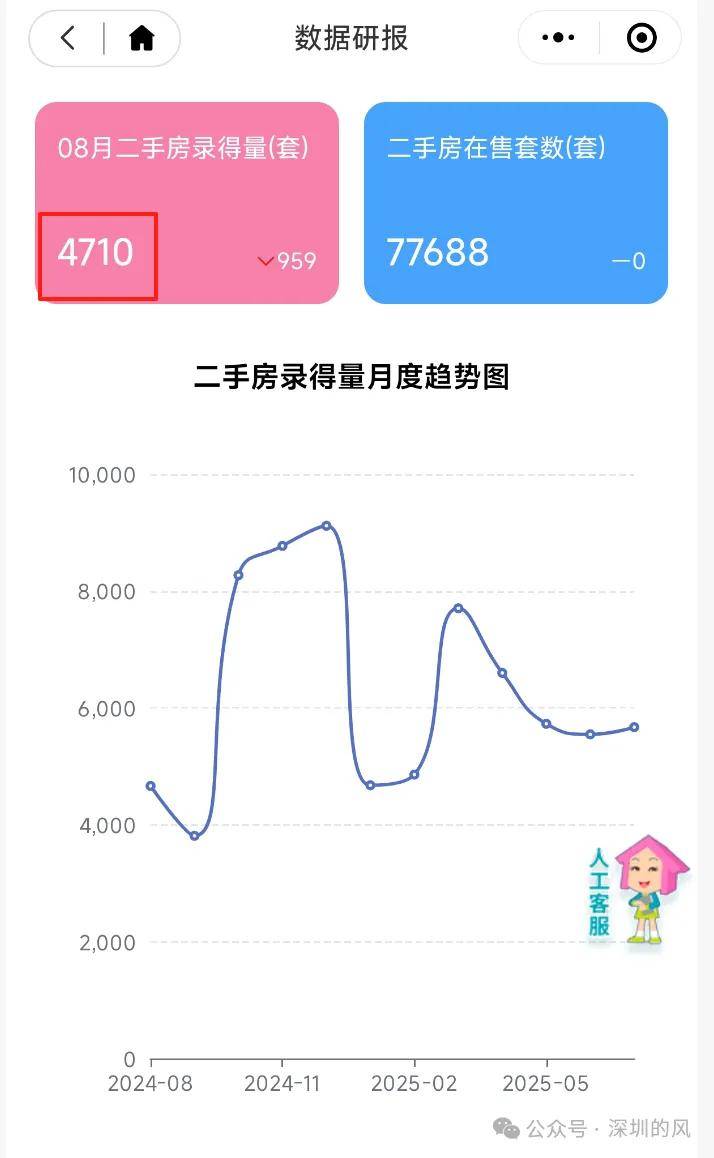
Core Insights - The Shenzhen real estate market is showing signs of recovery, with the second-hand housing market expected to surpass 5,000 transactions in August, indicating a positive market sentiment [1][3] - The transaction structure for both new and second-hand homes is shifting towards more affordable options, with a notable decline in luxury property demand [4][7] Group 1: Second-Hand Housing Market - As of August 28, the recorded transactions in the second-hand housing market reached 4,710 units, maintaining a high level despite slight month-to-month fluctuations [3] - The current inventory of second-hand homes stands at 77,688 units, indicating stable market supply [3] - The viewing-to-transaction rate for second-hand homes has increased to 4.33%, the first time surpassing 4% since April, reflecting a rebound in buyer confidence [3] Group 2: New Housing Market - The new housing market is characterized by a shift towards affordable and practical housing options, with a decrease in demand for high-end properties [4][7] - The purchasing power in the new housing market is increasingly concentrated on mid-to-low price segments, indicating a more rational market approach [7] Group 3: Market Trends and Outlook - The overall resilience of the Shenzhen real estate market is highlighted by a nearly 30% year-on-year increase in transaction volume, outperforming Beijing by 11 percentage points [12] - The ongoing adjustment in housing prices since Q3 2023 suggests a reduction in market speculation, with a gradual return to a focus on residential needs [12] - With the traditional sales peak season approaching and favorable policies from surrounding cities, Shenzhen's real estate market is expected to experience a moderate recovery [12]
马云预言要应验了?2026年的房价,已经出现4个信号,提前了解
Sou Hu Cai Jing· 2025-08-30 00:52
2026年中国房地产市场:四大信号预示新格局 信号一:政策导向的根本转变——从抑制到扶持 追根溯源,人口流动是驱动这一分化的核心因素。能够持续吸引高素质人才流入的城市,其房地产市场自然拥有坚实的支撑;而人口流出的地区,房地产市 场则将面临严峻挑战。2026年,这种由人口基本面决定的分化格局,将进一步拉大差距。 信号三:购房理念的深刻变革——从"投机"到"安居" "现在是不是买房的好时机?"这个问题,在当前的房地产市场背景下,显得尤为引人关注。开发商的促销常态化,新规下房屋得房率和品质的提升,以及令 人心动的价格,都让不少购房者跃跃欲试。然而,与五年前的简单答案相比,如今的市场已然发生了翻天覆地的变化。 回首多年前,马云关于"未来房子不值钱"的论断曾引来诸多不解甚至嗤笑,然而,时间的流逝和市场变迁,无疑是对他远见的最好证明。展望2026年,房价 的走势并非无迹可寻,最近的市场表现和政策动向,已经清晰地传递出四大重要信号,预示着中国房地产市场正迈入一个全新的发展阶段。 过去数年,楼市调控的"组合拳"——限购、限贷、限售,以及不断提高的贷款门槛,无一不指向"抑制炒房"这一核心目标。然而,时至今日,我们欣喜地看 到政 ...

苏州楼市“松绑”!取消市区新房2年限售,这波操作你怎么看?
Sou Hu Cai Jing· 2025-08-28 03:38
Core Viewpoint - The cancellation of the two-year sales restriction on newly built commercial housing in Suzhou is seen as a significant move to invigorate the real estate market and enhance liquidity, allowing homeowners greater flexibility in selling their properties [1][3]. Group 1: Policy Changes - The new policy allows homeowners to sell their properties immediately after obtaining the property rights certificate, eliminating the previous two-year waiting period [3]. - This change is expected to increase the number of properties available for sale, with predictions of over 2,000 new listings within two hours of the announcement [3]. Group 2: Market Implications - The removal of the sales restriction is anticipated to boost market activity, providing more options for buyers and intensifying negotiations between buyers and sellers, which may lead to subtle changes in property prices [3]. - Concerns about potential market disruption from investors are mitigated by the policy's stipulation that certain properties with special transfer restrictions remain unaffected, maintaining a balance between market activity and the principle of "housing for living, not for speculation" [4]. Group 3: Overall Impact - The policy aims to meet the demand for improved housing options among residents and promote a healthy cycle in the real estate market, reflecting a bold attempt to adapt to current market conditions [4].