
资产多元化

Search documents
How to invest in gold: A beginner's guide
Yahoo Finance· 2026-03-18 21:05
Core Viewpoint - Gold remains a unique alternative asset for investors seeking diversification beyond traditional stocks and bonds, but it has trade-offs that need to be understood before investing [1][2]. Group 1: Advantages of Investing in Gold - Gold serves as an inflation hedge, maintaining its value when the purchasing power of paper currencies declines [8]. - It provides portfolio diversification due to its low correlation with stocks and bonds, which can reduce overall portfolio volatility [8]. - Gold acts as a safe haven during economic downturns, geopolitical crises, and financial market stress, often retaining or gaining value when riskier assets decline [8]. Group 2: Methods of Investing in Gold - Physical gold can be purchased outright, with government-minted coins being a common starting point for beginners [7]. - Gold ETFs offer a simple and accessible way to invest, trading like stocks and allowing for fractional shares [10][19]. - Gold mining stocks provide exposure to gold prices but come with company-specific risks unrelated to gold price movements [12][15]. - Gold IRAs allow for tax-advantaged retirement savings while holding physical gold, though they involve additional fees [16]. - Gold futures and options are leveraged instruments for speculating on price movements, suitable for experienced traders [17]. Group 3: Gold Pricing and Market Dynamics - Gold is priced per troy ounce, with one troy ounce equaling 31.1 grams [4]. - Central banks measure large gold holdings in metric tonnes, with one metric tonne equaling 32,150.7 troy ounces [5]. - Gold prices are influenced by macroeconomic factors, including inflation and interest rates, central bank demand, and geopolitical events [21][22][23].
金价春节现过山车行情
Sou Hu Cai Jing· 2026-02-24 23:11
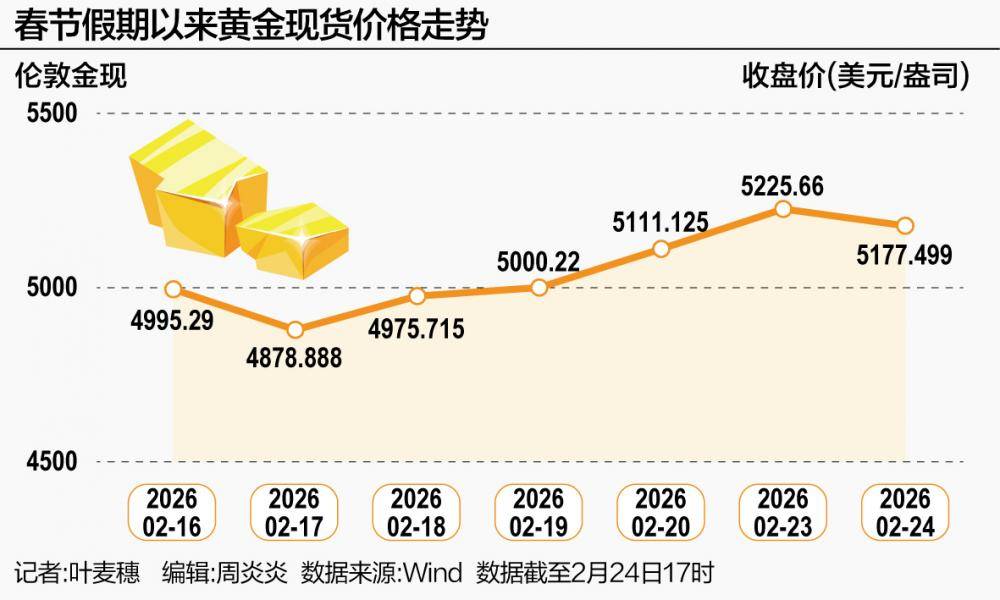
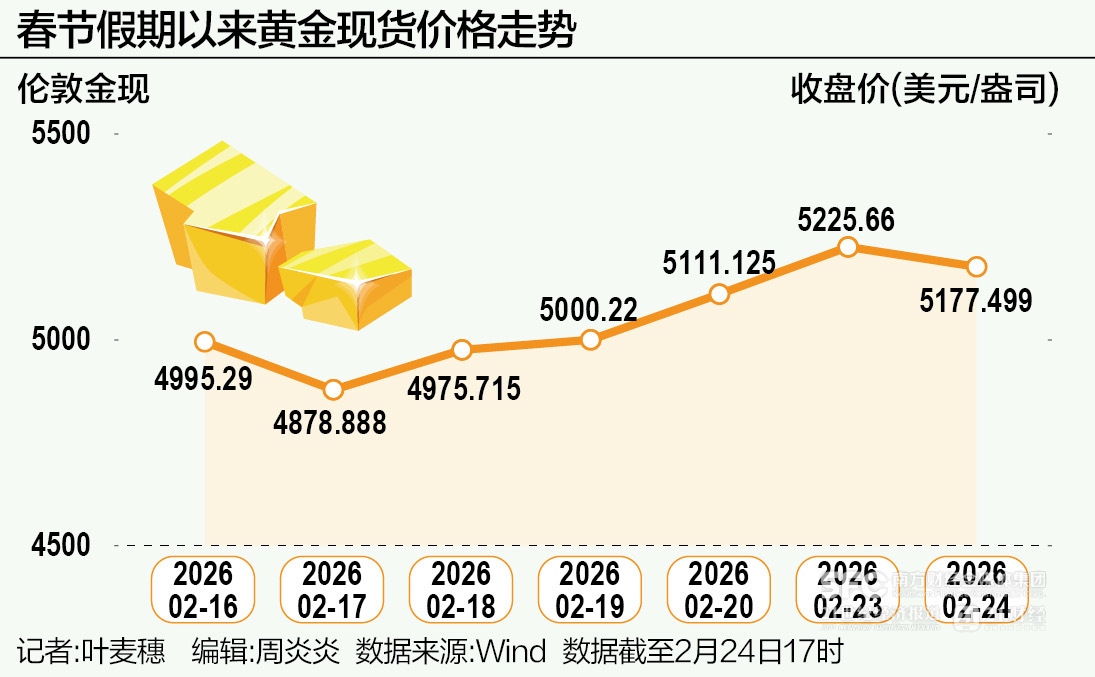
Group 1: Market Trends - During the Spring Festival holiday, gold and silver experienced significant price fluctuations, with gold prices dropping on February 16 and 17, followed by a five-day increase from February 18 to 23 due to uncertainties in U.S. trade policy and tensions in Iran [1] - Silver saw even more volatility, with a cumulative increase of nearly 17% during the holiday period, including a notable rise of 8.19% on February 20 [1] - On February 24, gold prices reached as high as $5,237 per ounce, while silver peaked at $88.9 per ounce [1] Group 2: Consumer Behavior - The Spring Festival is a peak consumption period for precious metals, with consumers showing strong interest in purchasing gold, including significant single purchases of nearly 80,000 yuan [4] - Younger consumers, particularly those born after 1995, are becoming the main force in gold consumption, favoring small, creatively designed gold items [4] - Many consumers are also purchasing gold as gifts for friends and family, with 10-gram gold bars being particularly popular [4] Group 3: Price Adjustments - Following the price increases in gold and silver, multiple gold retailers announced plans to raise prices [10] - Notable retailers like Lao Pu Gold and Chow Tai Fook are expected to adjust their prices, with increases ranging from 15% to 30% for certain products [12] Group 4: Global Demand and Investment - The World Gold Council's report indicates that global gold demand is projected to exceed 5,000 tons by 2025, reaching a record high of 5,002 tons, with a total demand value soaring to $555 billion, a 45% year-on-year increase [8] - Investment demand for gold is expected to rise to 2,175 tons, driven by a surge in interest from investors seeking safe-haven assets and portfolio diversification [9] - Central banks are projected to purchase 863 tons of gold in 2025, maintaining a historically high level of gold acquisition [9] Group 5: Geopolitical Factors - The recent increase in gold prices is attributed to several factors, including renewed concerns over U.S. tariffs and geopolitical tensions with Iran, which have heightened market risk aversion [6][7] - The Federal Reserve's internal divisions regarding interest rate policies also contribute to the favorable environment for gold, as uncertainty surrounding future monetary policy persists [7] Group 6: Market Sentiment - A recent survey by Bank of America indicates that buying gold has become the most crowded trade for the second consecutive month, with 50% of fund managers indicating a bullish stance on gold [14] - However, some analysts, like those from Citigroup, warn that gold prices may have become detached from rational valuations, predicting potential declines in the future [15]

沪金、沪银马年“开门红” 多家金店宣布近期将涨价
2 1 Shi Ji Jing Ji Bao Dao· 2026-02-24 12:31
Market Trends - During the Spring Festival holiday, gold and silver experienced significant price fluctuations, with gold prices dropping on February 16 and 17, followed by a five-day increase from February 18 to 23 due to uncertainties in U.S. trade policies and escalating tensions in Iran [1][5] - Silver showed even more volatility, with a cumulative increase of nearly 17% during the holiday, including a notable 8.19% surge on February 20 [3][5] Consumer Behavior - The Spring Festival is a peak consumption period for precious metals, with consumers showing strong interest in gold purchases, including significant single transactions of nearly 80,000 yuan [4] - Younger consumers, particularly those born after 1995, are becoming the main force in gold consumption, favoring small, creatively designed gold items as gifts [4] Price Adjustments - Following the holiday, domestic gold and silver prices saw a rebound, with Shanghai gold futures rising by 3.5% and silver by 12.7% [5] - Several gold retailers announced price increases, with some stores indicating potential hikes of 15% to 30% for certain products [9][8] Global Demand and Supply - The World Gold Council's report indicates that global gold demand is expected to exceed 5,000 tons by 2025, driven by investment demand and geopolitical tensions [6][7] - Central bank gold purchases remain high, with a total of 863 tons expected in 2025, although the pace has slowed compared to previous years [7] Geopolitical Factors - The resurgence of U.S. tariffs and tensions with Iran are contributing to increased demand for gold as a safe-haven asset, with market participants reacting to geopolitical uncertainties [5][6] - The Federal Reserve's mixed signals regarding interest rates are also influencing gold prices, with a potential decrease in rates expected to support gold in the long term [5][6] Investment Sentiment - A recent survey indicated that buying gold remains one of the most crowded trades among fund managers, with 50% indicating a bullish stance on gold [11] - However, some analysts express concerns that gold prices may have become detached from rational valuations, warning of potential corrections in the future [12]
全球抛美债潮来袭!中国净买4600亿,为何还减持4亿?
Sou Hu Cai Jing· 2026-02-23 01:11
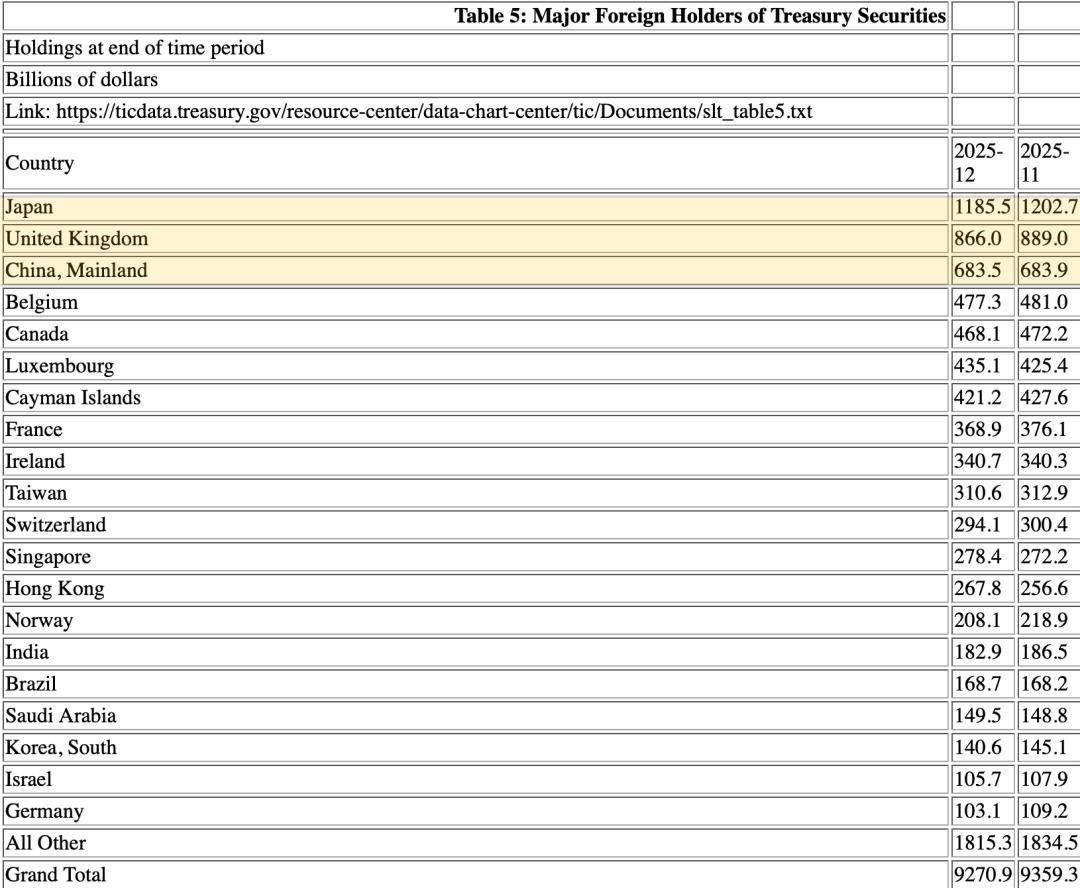
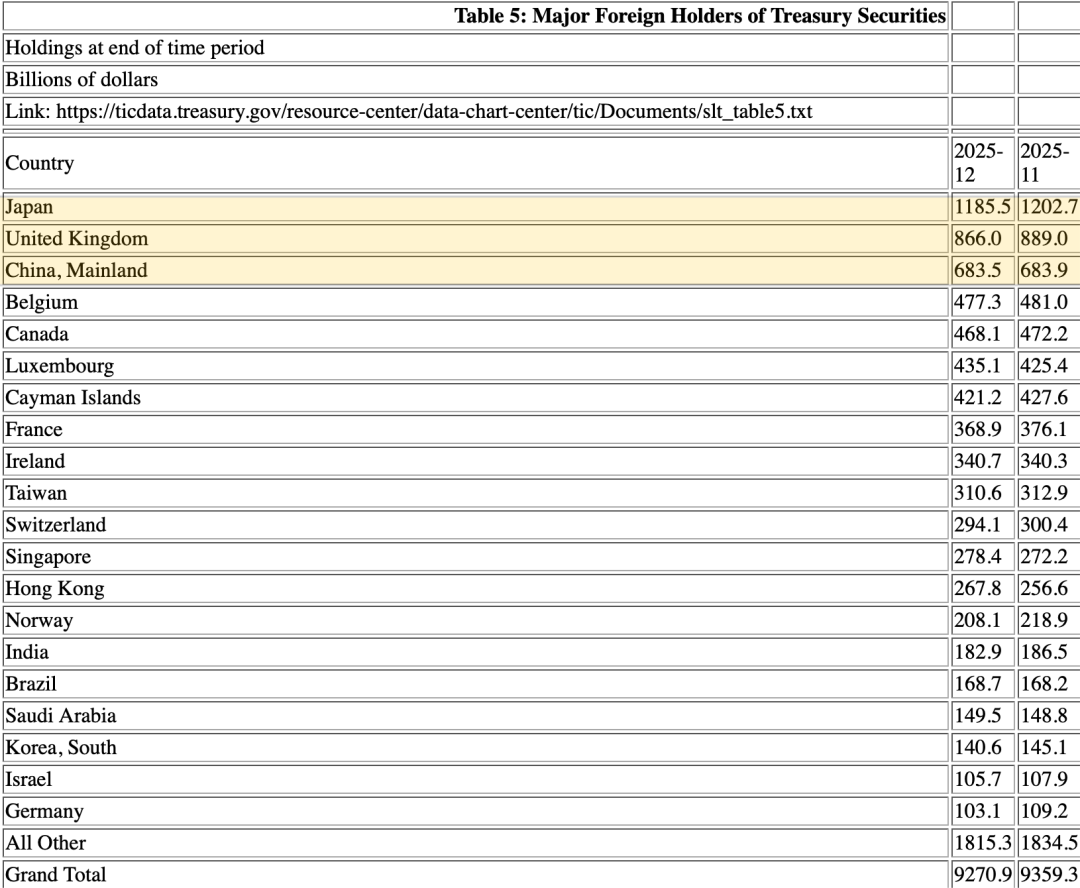
Core Viewpoint - The article discusses the contrasting actions in the global bond market, highlighting China's significant net purchase of US Treasury bonds while also reporting a slight reduction in its holdings, raising questions about the apparent contradiction in these actions [1][3]. Group 1: Global Bond Market Trends - A global trend of selling US Treasury bonds has emerged, with countries like Japan and the UK reducing their holdings, leading to a significant drop in bond prices and a spike in yields [3]. - In December 2025, the global reduction in US Treasury holdings approached $90 billion in a single month, indicating a widespread "flight from US bonds" sentiment [3]. Group 2: China's Actions Explained - China reported a net purchase of $460.7 billion in medium to long-term US Treasury bonds, significantly outpacing other buyers, despite a reported reduction of $4 million in total holdings, which fell to $683.5 billion [3]. - The net purchase figure reflects transaction flow, with $570.6 billion in purchases and $109.9 billion in sales of maturing short-term bonds, indicating a strategic increase in long-term bond holdings [3]. - The reduction in holdings is attributed to a decline in market prices, resulting in a decrease in the book value of the bonds held, rather than an active sale of assets [3]. Group 3: Strategic Rationale Behind China's Bond Purchases - China's strategy involves a clear logic of managing foreign exchange reserves, favoring medium to long-term bonds for their stability while allowing short-term bonds to mature [4]. - The long-term trend shows a significant reduction in US Treasury holdings from a peak of $1.32 trillion in 2013 to under $700 billion now, reflecting a diversification strategy that includes increasing gold reserves [4]. - The apparent contradiction between short-term net purchases and long-term reductions is framed as a tactical approach to managing foreign exchange, emphasizing a balanced and flexible strategy rather than a simplistic buy-or-sell decision [4].
港交所:目前488家企业正在排队香港上市,IPO审核绝不松懈
Sou Hu Cai Jing· 2026-02-20 06:14
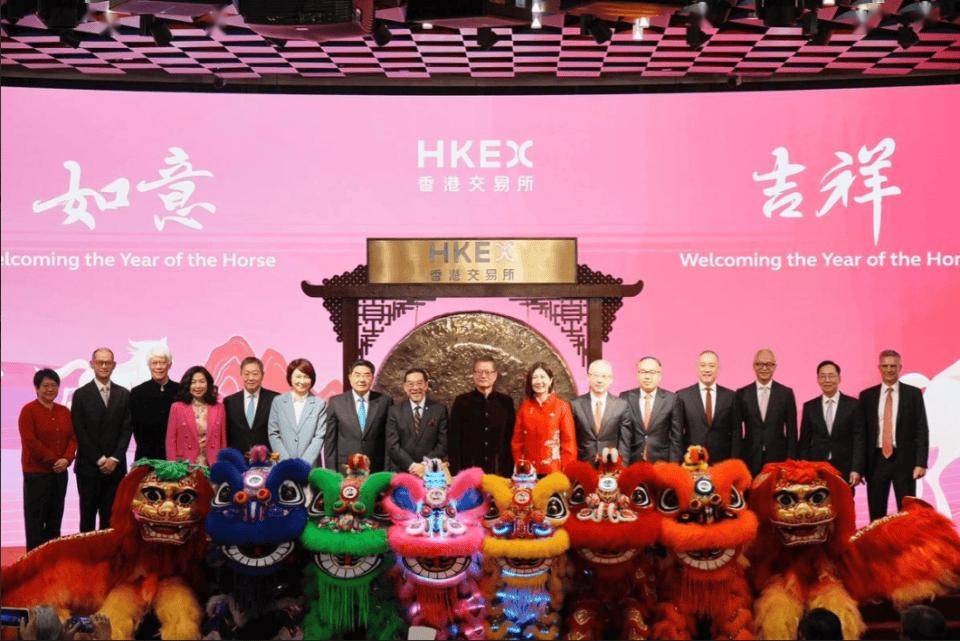
Group 1 - The Hong Kong Stock Exchange (HKEX) held a New Year opening ceremony, with Chairman Tang Ka Sing expressing hopes for a positive market atmosphere throughout the Year of the Horse, noting that 24 new stocks have been listed this year, raising over 87 billion HKD, and 488 companies are awaiting listing [3] - Tang emphasized that while the number of new listings has increased, the review process remains stringent to ensure Hong Kong's reputation as a high-quality market. The securities market achieved record daily trading volumes, with an average of nearly 250 billion HKD last year and over 278 billion HKD in January this year, with some trading days exceeding 300 billion HKD, reflecting the effectiveness of liquidity enhancement measures [3] - HKEX plans to advance various initiatives this year, including the release of a consultation document on improving listing systems and the implementation of a T+1 settlement system, as well as narrowing bid-ask spreads by mid-year, aiming to enhance market competitiveness and efficiency [3] Group 2 - HKEX CEO Charles Li highlighted the increasing global interest in Asian markets, noting that HKEX's participation in international events like Davos has garnered more attention, indicating that global investors are actively considering asset diversification and investment opportunities in Hong Kong, mainland China, and Asia [4] - The range of companies listed in Hong Kong now includes sectors such as renewable energy, artificial intelligence, electric vehicles, and biotechnology, showcasing a diverse array of securities products available for investors. HKEX plans to continue introducing innovative derivative products [4] - In addition to equities, international investors are also diversifying into bonds, currencies, and commodities. HKEX is actively expanding its fixed income, currency, and commodities business, viewing these areas as "blue oceans" and aiming to create a comprehensive ecosystem that encompasses products, trading, settlement, and data services to enhance market scale and growth opportunities for Hong Kong's financial market [4]

减持!美国前三大“债主”齐出手
Sou Hu Cai Jing· 2026-02-20 04:04
Core Viewpoint - The U.S. Treasury Department's TIC report reveals a significant reduction in U.S. Treasury holdings by major foreign creditors, indicating a shift in investment strategies and potential concerns regarding U.S. economic policies [1][3]. Group 1: Major Foreign Holders' Actions - In December 2025, 14 major countries and regions collectively reduced their U.S. Treasury holdings by $88.4 billion, bringing the total foreign holdings down to $9.27 trillion [1][3]. - The top three foreign holders—Japan, the United Kingdom, and China—each decreased their U.S. Treasury holdings, with Japan reducing by $17.2 billion to $1.1855 trillion, the UK by $23 billion to $866 billion, and China by $0.4 billion to $683.5 billion, marking its lowest level since 2008 [3][4]. - Other notable reductions included Norway ($10.8 billion), France ($7.2 billion), and several countries like the Cayman Islands, Switzerland, and Germany, each reducing their holdings by over $6 billion [3][4]. Group 2: Market Dynamics and Trends - Despite a net buying trend from overseas investors, there is a noticeable structural shift, with significant sell-offs from entities like Denmark's pension fund and the Netherlands' largest pension fund, raising market concerns [4]. - The U.S. Treasury market is under pressure due to factors such as the rapid expansion of federal debt, ambiguous Federal Reserve policies, and ongoing trade threats from the Trump administration [4]. - There is a growing trend of diversification away from U.S. assets, with capital flowing to other regions, as indicated by comments from investment leaders seeking to reduce U.S. bond exposure [7]. Group 3: Shift to Alternative Assets - Gold is increasingly becoming a focal point for global central bank reserves, with the International Monetary Fund reporting a decline in the dollar's share of global foreign exchange reserves below 60%, the lowest in decades [7]. - In 2025, global central bank gold purchases remained high, with official institutions adding 863 tons of gold, and approximately 95% of central banks expect to continue increasing their gold holdings in the future [8].
港交所指有逾10家国际公司轮候在港上市
Xin Lang Cai Jing· 2026-02-20 03:20
Group 1 - The core message emphasizes the increasing global interest in Asian markets, particularly Hong Kong, as investors seek diversification opportunities [1] - The Hong Kong Stock Exchange (HKEX) has seen a diverse range of companies listed in recent years, including those in hot sectors like renewable energy, AI, electric vehicles, and biotechnology, indicating a rich variety of investment options available [1] - HKEX plans to expand its offerings in fixed income, currencies, and commodities, viewing these areas as "blue oceans" for growth, aiming to create a comprehensive ecosystem similar to its stock market [1] Group 2 - Over 20 new stocks have been listed in Hong Kong this year, raising over $10 billion, which is more than 25% of last year's total fundraising of approximately $38 billion [2] - There are currently 488 companies waiting to be listed in Hong Kong, with over 10 being international firms, indicating strong demand for the Hong Kong capital market [2] - The HKEX has invested in the Hong Kong Monetary Authority's clearing house to enhance its capabilities in fixed income, currencies, and commodities, aiming to facilitate more diversified investment options for international investors [2]
美国前三大“债主”,齐出手!
Zhong Guo Ji Jin Bao· 2026-02-19 09:28
Core Viewpoint - The December 2025 TIC report reveals significant reductions in U.S. Treasury holdings by major foreign holders, indicating a shift in investment strategies among global investors [1][2]. Group 1: Major Foreign Holders' Actions - In December 2025, 14 major countries and regions collectively reduced their U.S. Treasury holdings by $88.4 billion, bringing the total foreign holdings down to $9.27 trillion [2]. - The top three foreign holders—Japan, the United Kingdom, and China—each decreased their U.S. Treasury holdings, with Japan reducing by $17.2 billion to $1.1855 trillion, the UK by $23 billion to $866 billion, and China by $0.4 billion to $683.5 billion, marking its lowest level since 2008 [3][4]. Group 2: Broader Market Implications - The overall reduction in U.S. Treasury holdings is attributed to factors such as the rapid expansion of federal debt, ambiguous Federal Reserve policies, and ongoing trade tensions under the Trump administration [5]. - Despite a net buying trend from overseas investors, there is a notable structural divergence, with significant sell-offs from entities like Denmark's pension fund and the Netherlands' largest pension fund, raising concerns in the market [5]. Group 3: Shift in Investment Preferences - U.S. Treasury securities are facing pressure as global investors seek diversification, with some describing the trend as a "quiet" sell-off of U.S. bonds [6]. - There is a growing preference for gold among central banks, with the IMF reporting that the dollar's share in global foreign exchange reserves has fallen below 60%, the lowest in decades, while central banks increased gold purchases by 863 tons in 2025 [6].
A股节后怎么投资?多家券商发“干货”!
天天基金网· 2026-02-18 07:30
Core Viewpoint - The article emphasizes the ongoing investment opportunities in the A-share market, particularly in AI applications and various asset classes, despite the market being closed during the Spring Festival [4][5][6][7]. Group 1: AI Applications - The AI application industry is expected to establish a trend, with a potential "double hit" by 2026, as some companies have over 10% of their revenue from AI orders [5]. - Four key directions for investment in AI applications are identified: super entry points, AI infrastructure, high growth sectors, and high barrier industries [5]. - The production paradigm of animated dramas is being restructured by AI, marking a "golden window period" for this sector [6]. Group 2: Asset Class Analysis - Cash assets are under pressure due to low interest rates, with annual returns around 1.5%-2%, but they provide liquidity advantages [6]. - Bond assets are reasonably valued, but there is pressure on long-term yields; high-grade bonds can offer stable returns [6]. - A-shares are currently at historically low valuations, making them attractive compared to global markets, while high-dividend sectors are also seen as reasonable [6][7]. Group 3: Investment Strategy - The trend of converting household savings into investments continues, with a conservative risk appetite favoring high-dividend and stable bonds [7]. - A pyramid model for asset allocation is suggested, with 40%-50% in stable assets, 30%-40% in growth assets focusing on utility and consumer leaders, and 10%-20% in opportunities like industrial metals and frontier sectors [7]. - The article encourages dynamic adjustment of asset weights based on the characteristics of 2026 [7].

2025年全球黄金总需求达5002吨、需求金额5550亿美元
Xin Lang Cai Jing· 2026-02-14 02:59
Core Insights - The article highlights a significant increase in global gold demand, reaching a record high of 5,002 tons in 2025, driven by geopolitical and economic uncertainties [1] - Investment demand for gold surged to a milestone level of 2,175 tons, becoming the main driver of total demand growth [1] - Global investors have heavily allocated to gold ETFs, resulting in a net increase of 801 tons for the year, further supporting the rise in demand [1] Summary by Category Gold Demand - Total global gold demand reached 5,002 tons, marking the highest level in history [1] - The total monetary value of gold demand for the year amounted to $555 billion [1] Investment Trends - Gold investment demand rose to 2,175 tons, significantly contributing to the overall demand increase [1] - There was a substantial net increase of 801 tons in gold ETFs as investors sought safe-haven assets and diversification [1]