
智能体

Search documents
会思考会决策的城市长啥样?
Xin Lang Cai Jing· 2026-01-06 19:29
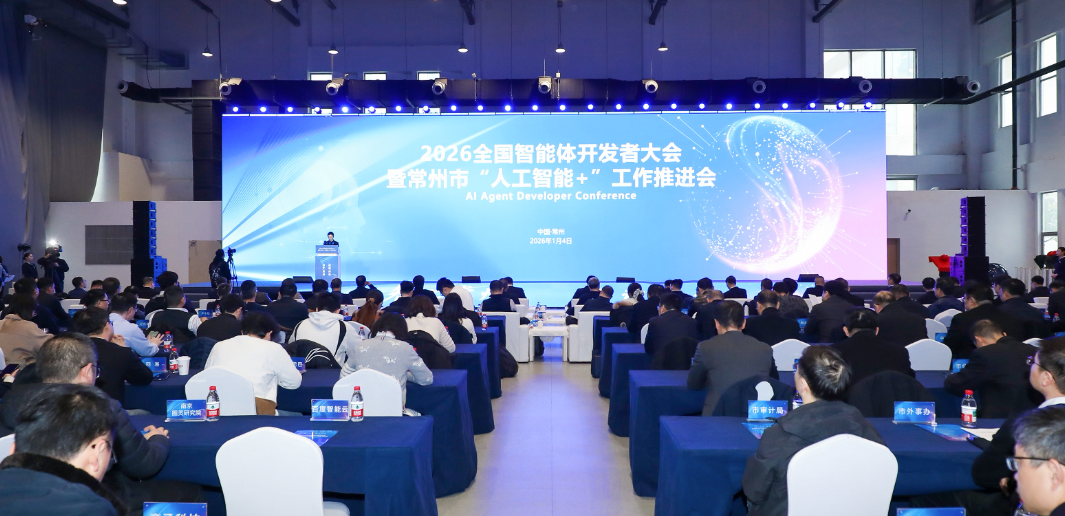
(来源:新华日报) □ 本报记者 张 宣 1月4日,全国智能体开发者大会暨常州市"人工智能+"工作推进会在常州召开,院士专家、政企代表与 开发者齐聚,以"智汇常州,能动未来"为主题,共话智能体技术创新与场景落地。 这场大会集中展示了常州打造"城市级智能体"的阶段性成果,成为观察江苏全域推进智能体建设的窗 口。如今,智能体已不再是实验室里的抽象概念,而是渗透到江苏产业升级、民生服务、城市治理的方 方面面。 什么是智能体?城市级智能体为何成为城市竞争的新赛道?江苏各地又如何让这一"超级大脑"服务于生 活?一系列实践正在给出答案。 智能体破解城市治理难题 "智能体的价值,在于让城市更智慧、让生活更美好。"常州市委书记王剑锋在大会上精准点出了智能体 的核心要义。对于普通市民而言,智能体并非高深技术,而是能主动解决问题的"数字伙伴"。行业专家 通俗地解释,智能体是依托大模型技术,具备感知、决策、执行和学习能力的智能系统,就像拥有自主 思考能力的"数字助手",在工厂里,它能自动检测产品缺陷;在医院里,它可辅助医生诊断病情;在社 区中,它能精准调度公共服务。 而城市级智能体,则是将这种"数字助手"升级为覆盖全城的"超级大脑 ...


2026年我国将推出30余项数据领域国家标准
Yang Shi Xin Wen· 2026-01-06 11:23
Core Insights - In 2026, China will introduce over 30 national standards in the data sector, accelerating the development of standards in emerging fields [1] - The focus will be on cutting-edge areas such as intelligent agents and embodied intelligence, as well as urgent standards for public data, high-quality datasets, and data infrastructure [1] - The establishment of key standards for urban digital transformation and a national integrated computing network will also be prioritized [1] - The National Data Standardization Technical Committee indicates that China is a global leader in both the development and application depth of data standards, leveraging vast data and market scale [1] - In 2025, China developed 48 national standards and technical documents in the data field, with over one-third undergoing simultaneous pilot verification during the drafting process [1]
江苏常州:加快打造全国“智能体+场景应用”示范城市
Xin Lang Cai Jing· 2026-01-05 11:29
常州市委书记王剑锋在致辞中表示,常州积极拥抱人工智能浪潮,一体推进数据、算力、模型、场景、生态融合发展,加快建设全国"智能体+场景应 用"示范城市,打造"国际化智造名城、长三角创新高地"。未来,常州将以更有力的政策举措、更贴心的服务保障,与大家同心同行,共同逐浪人工智 能时代。 中国人工智能学会西太湖创新基地在会上正式入驻。中国人工智能学会理事长、中国工程院院士戴琼海表示,学会围绕西太湖人工智能产业技术研究院 等平台,推动产学研用一体化发展,不仅为智能体训练、验证与部署提供了基础,也为技术在公共服务与产业现场的可持续应用创造条件。"2025年, 智能体迎来了爆发式增长与广泛应用的历史性节点,这一技术正在深刻重塑企业的工作流与运营效率,并将在未来进一步跨越行业边界。"中国人工智 能学会副理事长、中国工程院院士何友在主旨交流中表示。 (图为活动现场) 江苏省副省长赵岩发言指出,江苏正聚力创新策源,打赢关键核心技术攻坚战;聚力产业强链,构筑具有竞争力的创新企业集群;聚力场景赋能,深入 实施"人工智能+"行动;聚力生态营造,筑牢算力、数据、人才三大支柱,将人工智能作为打造具有全球影响力的产业科技创新的核心引擎。常州是 ...
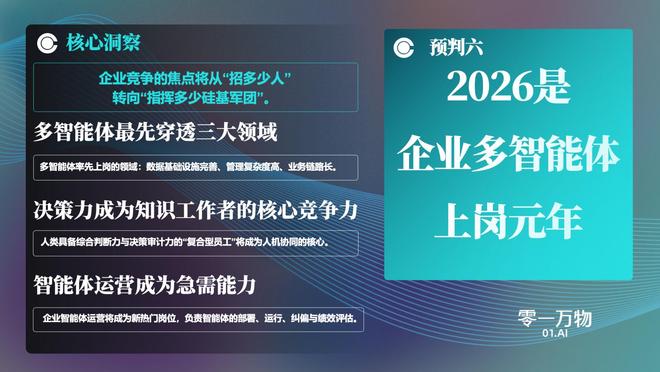
“一人一团队”来了,企业预测2026年将成多智能体“上岗”元年
第一财经· 2026-01-05 11:07
Core Insights - The article discusses the critical transformation period for enterprise-level AI, highlighting the shift from single-tool usage to multi-agent collaboration, with 2026 predicted to be the year of large-scale deployment of enterprise multi-agents [2] - It emphasizes that multi-agents must incorporate three key elements: Team Operations, Business Disruption, and Business Reconstruction (TAB), with China positioned as a global leader in this transition [2] - The article notes that companies are increasingly integrating AI capabilities closer to management levels, moving beyond frontline applications [2] Group 1 - The concept of multi-agents evolving from "one person, one tool" to "one person, one team" is outlined, indicating a significant shift in how AI is utilized within organizations [2] - The article mentions that the past year has seen practical implementations of AI across various industries, including energy, mining, manufacturing, aquaculture, and retail, indicating a growing acceptance and integration of AI technologies [2] - The article highlights the competitive landscape, with major players like Microsoft and Google making strides in multi-agent frameworks, while domestic companies like Volcano Engine are also making significant advancements [3] Group 2 - The article discusses the differences in approach between large companies and startups, noting that large firms often struggle with understanding customer needs, leading to delivery issues and mismatched expectations [3] - It points out that startups are more agile in exploring new models to reduce delivery costs and improve communication with clients, which can lead to more successful project outcomes [3] - The article raises the debate on whether "model equals product," suggesting that while large models may dominate, there will still be a distinction between models and applications in the short to medium term [4] Group 3 - The article asserts that agents possess capabilities such as memory, tool invocation, and multi-agent adversarial analysis, which single models typically lack, especially in enterprise contexts [4] - It suggests that while the ultimate goal may be to achieve a state where "model equals agent," the timeline for reaching this level of AGI remains uncertain [4]
“一人一团队”来了,企业预测2026年将成多智能体“上岗”元年
Di Yi Cai Jing Zi Xun· 2026-01-05 09:33
零一万物预测,智能体将从"一人一工具"进阶"一人一团队",多智能体需具备TAB( 团队作战、业务裂 变、商业重构)三要素,中国将成为全球多智能体"超级引擎","一把手工程"是赢取AI红利的关键路 径,智能体反哺将开启数字基建"自主进化",以及2026年是企业多智能体上岗元年。 从基础模型研发到推动AI落地提效,大模型正在越来越靠近一线生产端。过去一年时间,零一万物团 队在能源、采矿、制造、养殖、零售等行业落地实践,发现企业已不再满足于只在一线使用AI,而是 越来越大胆地将AI能力向上推,与公司管理层、经营层越来越近。 作为AI落地形式之一,Agent在2025年被热议。从行业技术发展脉络来看,智能体经历过工作流、推理 Agent、多智能体阶段。国际市场中,微软推出 AutoGen 框架实现智能体分工协作,谷歌 DeepMind 通 过多智能体强化学习攻克复杂任务,国内火山引擎等企业也在相关领域布局,行业竞争日趋激烈。 对于与大厂之间的差异,零一万物中国区解决方案和交付总经理韩炜在采访中表示,零一万物不再沿用 大厂销售标准化产品模式,而是更注重基于客户需求进行梳理和设计,将其转化为产品原型。他认为以 往大厂的产 ...
智能体催生“超级个体”,长三角多城抢滩OPC新赛道
2 1 Shi Ji Jing Ji Bao Dao· 2026-01-05 07:44
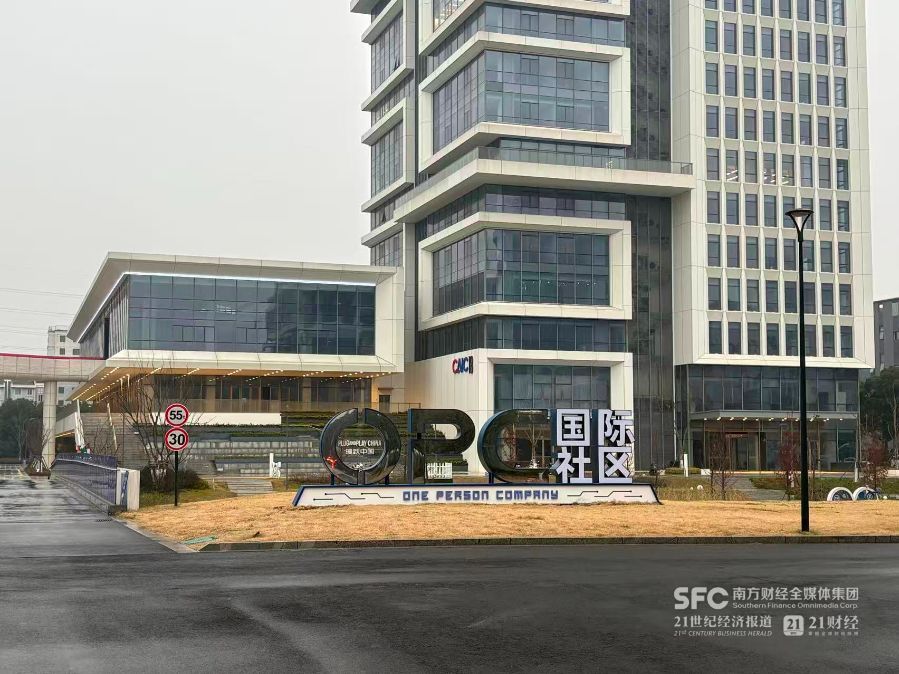
Core Insights - The article discusses the launch of two OPC communities in Changzhou, marking a significant step in the development of the "One Person Company" (OPC) model, which allows individuals to independently manage the entire business process from creativity to customer service [1] - The rapid advancement of intelligent agents, particularly driven by large language models like ChatGPT, has enabled the OPC model to thrive, allowing individual entrepreneurs to leverage AI for various tasks [3][4] - Changzhou aims to become a national demonstration city for "intelligent agents + application scenarios," promoting the integration of AI into urban governance and services [8] Group 1: OPC Model and Development - The OPC model allows individuals to utilize public computing resources and algorithms to independently complete the entire business chain, gaining popularity since late 2025 [1] - The concept has seen widespread adoption in the Yangtze River Delta region, with multiple cities launching OPC communities and policies to support this entrepreneurial model [1] Group 2: Role of Intelligent Agents - Intelligent agents have evolved from simple tools to autonomous executors, taking over repetitive tasks and acting as "digital employees" within the OPC framework [3] - The transition from single to multiple intelligent agents enables individual entrepreneurs to overcome limitations, effectively creating a team-like structure with various specialized agents [3] Group 3: Application Scenarios and Industry Focus - Changzhou has identified 130 typical application scenarios across 16 sectors, focusing on manufacturing, where OPCs can address digital transformation challenges [7] - The city aims to leverage its manufacturing base to develop industrial intelligent agents that can solve issues like predictive maintenance and quality inspection [7] Group 4: Strategic Initiatives and Support Measures - Changzhou has proposed initiatives to attract AI talent and build high-quality OPC communities, emphasizing the importance of a skilled workforce for the success of the OPC model [9] - Supporting measures in the Yangtze River Delta include financial incentives for new OPC enterprises, such as free computing resources to foster innovation [9]

常州“新年第一会”聚焦智能体 以城市为场景驱动AI向实
Zhong Guo Xin Wen Wang· 2026-01-05 06:29
常州此次高规格聚焦智能体,源于其产业转型的内在需求与现实优势。作为近代工业重镇,常州拥有扎 实的制造业基础与完整的产业链条,这为人工智能技术提供了丰富的落地场景与持续的迭代反馈。 中新网常州1月5日电从智能制造的精密生产线,到智慧医疗的精准诊断系统;从行业领先的大语言模型 研发,到全球影史动画片票房榜冠军《哪吒之魔童闹海》中的人工智能渲染技术——在江苏常州,一场 以"人工智能+"为核心的产业变革正深入经济社会各领域。 2026年1月4日,元旦假期后首个工作日,2026全国智能体开发者大会在常州拉开帷幕。大会聚焦AI Agent(智能体)技术创新与产业落地,旨在搭建全国性前沿技术交流与生态共建平台,进一步夯实常州 在人工智能,尤其是智能体技术产业化赛道上的先发优势。本次大会吸引了全国人工智能领域的企业代 表、创投机构、青年开发者及高校院所代表汇聚一堂。江苏省副省长赵岩,清华大学副校长吴华强,中 国人工智能学会理事长、中国工程院院士戴琼海,常州市委书记王剑锋、常州市市长周伟等出席活动。 赵岩在致辞中指出,江苏正将人工智能作为推动产业科技创新的核心引擎,聚力创新策源、产业强链、 场景赋能与生态营造。常州作为全省人工 ...
2026年,AI将从炒作走向务实
Xin Lang Cai Jing· 2026-01-05 03:29
Core Insights - 2026 is anticipated to be a pivotal year for AI, transitioning from large-scale model development to practical applications that integrate AI into real-world workflows [2][34] - The focus is shifting towards deploying lightweight models and embedding intelligence into physical devices, moving away from mere demonstrations to targeted deployments [2][34] Group 1: Scaling Law and Model Development - The AI industry is nearing the limits of the Scaling Law, prompting a shift towards new architectural research and smaller, more efficient models [4][21] - Experts suggest that smaller language models (SLMs) will become the standard in AI applications by 2026 due to their cost-effectiveness and performance advantages [5][22] - The trend towards SLMs is supported by advancements in edge computing, making them more suitable for deployment on local devices [6][22] Group 2: World Models and Gaming Industry - 2026 is expected to be a key year for world models, which learn how objects interact in three-dimensional space, enhancing predictive capabilities [8][25] - The gaming industry is projected to see significant growth in the world model market, with estimates rising from $1.2 billion in 2022 to $27.6 billion by 2030 [9][25] Group 3: Agent Integration and Practical Applications - The introduction of the Model Context Protocol (MCP) is seen as a critical advancement, enabling AI agents to interact with external tools and databases, thus facilitating their integration into real-world systems [11][27] - As MCP reduces friction in connecting AI agents to practical systems, 2026 may mark the year when these agents transition from demonstration to everyday use [12][28] Group 4: Human-AI Collaboration - There is a growing belief that AI will enhance human workflows rather than replace them, with expectations of new job roles emerging in AI governance and data management [14][31] - The narrative is shifting towards how AI can assist human tasks, with predictions of a low unemployment rate as companies begin to hire for new roles related to AI [14][31] Group 5: Physical AI and Market Trends - Advances in small models, world models, and edge computing are expected to drive the adoption of physical AI applications, including robotics and wearable devices [16][34] - The market for physical AI is anticipated to grow, with wearable devices becoming a cost-effective entry point for consumers [17][34]
深度|2026年,AI将从炒作走向务实
Z Potentials· 2026-01-05 03:08
Core Insights - The article posits that 2026 will mark the transition of AI from hype to practical application, focusing on deploying lightweight models in real-world scenarios and integrating AI into human workflows [3][4]. Group 1: AI Development Trends - The industry is shifting from large-scale model expansion to new architectural research, emphasizing targeted deployment and collaboration tools that enhance human work [4]. - Many researchers believe the AI industry is nearing the limits of Scaling Law, indicating a need for new approaches beyond merely increasing model size [9]. - Smaller, fine-tuned language models (SLMs) are expected to become standard tools for mature AI enterprises by 2026 due to their cost and performance advantages [10]. Group 2: World Models and Gaming - 2026 is anticipated to be a pivotal year for world models, which learn how objects interact in three-dimensional space, enabling predictive capabilities [14][15]. - The gaming industry is projected to see significant growth, with the world model market expected to increase from $1.2 billion in 2022 to $276 billion by 2030, driven by the technology's ability to create interactive environments [16]. Group 3: Agent Integration and Automation - The introduction of Model Context Protocol (MCP) is seen as a key development that will facilitate the integration of AI agents with real-world systems, potentially marking 2026 as the year these agents transition from demonstration to practical application [18][19]. - There is a belief that AI will enhance rather than replace human workflows, with new job opportunities emerging in AI governance, transparency, and data management [21]. Group 4: Physical AI and Market Adoption - Advances in small models, world models, and edge computing are expected to drive the adoption of physical AI applications, with wearable devices becoming a cost-effective entry point for consumers [24]. - The market for physical AI, including robotics and autonomous vehicles, is projected to grow, although training and deployment costs remain high [24].

常州设立五十亿元人工智能专项基金
Xin Hua Ri Bao· 2026-01-04 22:18
大会还发布了全国十大智能体典型应用案例,覆盖工业制造、智慧城市、健康医疗、金融保险等多个关 键领域,凝聚了行业前沿实践成果,常州国创决策智能技术研究所"Delta Deep Research"、理想工业智 能科技(江苏)有限公司"连山多智能体协作Agent"入选;同期发布江苏省"人工智能+"应用场景案例和常 州市智能体应用场景揭榜挂帅需求清单。此外,国家试点——中国常州城市可信数据空间正式上线,通 过"试技术融合、试场景支撑、试标准验证、试机制建设",构建覆盖常州、辐射全国的数据基础设施底 座。 当天,随着常州市人工智能智库专家的聘任、中国人工智能学会西太湖创新基地入驻、中国移动 (600941)(常州)OPC社区、常州硅基智能OPC社区及首届中国"人工智能+"创新创业挑战赛同步启 动,常州全维度构筑人工智能发展全要素支撑的产业生态。 本报讯(记者徐维庆)1月4日,2026全国智能体开发者大会暨常州市"人工智能+"工作推进会在西太湖(常 州)人工智能国际社区会展中心举行,推动智造名城常州成为具有全域感知、精准赋能的"城市级智能 体";同时设立总规模50亿元、首期10亿元的人工智能专项基金,打造全国"智能体+场 ...