
美国优先

Search documents
特朗普发文,直言美国可能“会完蛋”,自己或将下台,中国是救星
Sou Hu Cai Jing· 2026-01-13 15:30
特朗普在社交平台上连发警告,称美国可能"会完蛋",甚至暗示自己或将下台。 一边是国内民调崩盘、党内分裂,一边是最高法院即将裁决其关税政策是否违法。 而更让人意外的是,他竟开始把中国称为"最后的救星"。 这还是那个喊着"对中国加税到赢"的特朗普吗? 大家好,小汉今天就来带大家拆解:他到底遇到了什么难题,又为何突然向中国递出橄榄枝? 2026年初的华盛顿,寒意逼人。 唐纳德·特朗普接连发文,语气罕见地急促甚至焦虑。 他警告说,如果美国最高法院裁定其依据《国际紧急经济权力法》加征的关税非法,美国将 面临"数千亿美元"甚至"数万亿美元"的退款压力,"国家几乎不可能支付得起","我们就完 蛋了"。 这番话不是危言耸听,是一个信号: 这位曾以"美国优先"为信条的总统,正站在政治与经济双重悬崖边缘。 更引人注目的是,特朗普近期对华态度出现微妙转变。 有分析指出,在多重压力下,他开始将中国视为"最后的救星"。 结束贸易战、解决稀土与芯片供应链问题,甚至探讨一种新的全球势力划分。 这种转向,既反映了他的困境,也揭示了中美关系正在进入一个新阶段。 关税裁决悬顶,财政恐遭重创 特朗普重返白宫后,迅速重启并扩大其标志性的关税政策。 ...

为震慑伊朗,美国竟把“黑手”伸向了中俄,中国外交部严正发声,态度坚决!
Sou Hu Cai Jing· 2026-01-13 15:06
Core Viewpoint - The article discusses the implications of President Trump's announcement of a 25% tariff on any country engaging in trade with Iran, highlighting it as a form of economic coercion that threatens global trade norms and geopolitical stability [1][3]. Group 1: Economic Implications - The 25% tariff represents an unprecedented extension of U.S. "long-arm jurisdiction," allowing the U.S. to define and punish countries based on its own interests, undermining the principle of sovereign equality in international relations [3][4]. - This unilateral action is seen as a geopolitical strategy to isolate Iran while pressuring major economies like China, Russia, and the EU to sever ties with Iran, thus testing their strategic resolve [3][4]. Group 2: China's Response - China's Ministry of Foreign Affairs firmly rejected the tariff, stating that "there are no winners in a trade war," emphasizing the historical lessons that unilateralism and protectionism lead to economic downturns and global harm [4][5]. - China's stance reflects a broader international expectation for fairness and justice, opposing the U.S. actions as violations of World Trade Organization principles and a threat to multilateralism [4][9]. Group 3: Global Trade Dynamics - The tariff could destabilize global supply chains, particularly affecting energy markets, as Iran is a key energy producer, potentially increasing logistics costs worldwide [7][9]. - The article warns that such actions erode the authority of international law and complicate diplomatic resolutions to disputes, ultimately harming all nations, including the U.S. itself [7][9]. Group 4: Call for Unity - The article calls for a unified international response against unilateral sanctions, advocating for adherence to international law and multilateral institutions to resolve issues like the Iran nuclear situation [9][11]. - It stresses that collective resistance to economic bullying is essential for preserving the rights of all nations and maintaining a stable global order [9][11].
2026展望:美国优先OR美国孤立?市场该如何应对?【纽约Talk28】
Hua Er Jie Jian Wen· 2026-01-13 14:54
纽约Talk·郭胜北华尔街前线洞察" 年度专栏 重磅来袭!立即订阅 本栏目嘉宾老师介绍: "美国优先"已成为美国外交的核心纲领,但其内部真的铁板一块吗? 从主张战略收缩的"克制派",到强调重心转向亚洲的"优先排序派",共和党内部存在着清晰的政策光谱。 这种内部分歧只是政治新闻吗?还是已经产生了实际的市场影响? 本栏目嘉宾老师介绍: 政策摇摆如何动摇美国与盟友的关系?又将如何冲击美元信用,改变全球资本的配置逻辑? 回顾2025年,关键地缘事件前后的市场波动,似乎总与这种政策摇摆的节奏隐隐合拍。 进入2026年,我们该如何理解这种"优先"与"孤立"之间的摇摆?又该如何在其中把握潜在的机会? 本期栏目,GSB奖台基金创始人、原德意志银行董事总经理【郭胜北】将直击政策核心,为您拆解内部分歧如何逐步传导,最终影响全球资本流 向与每个人的投资决策。 纽约Talk·郭胜北华尔街前线洞察" 年度专栏 重磅来袭!立即订阅 "美国优先"已成为美国外交的核心纲领,但其内部真的铁板一块吗? 从主张战略收缩的"克制派",到强调重心转向亚洲的"优先排序派",共和党内部存在着清晰的政策光谱。 这种内部分歧只是政治新闻吗?还是已经产生了实际 ...

特朗普看上的格陵兰岛,最终会走向何方?
首席商业评论· 2026-01-13 11:14
Core Viewpoint - The article discusses the geopolitical significance of Greenland, highlighting its strategic location and resource potential, while also addressing the complexities surrounding its political status and the challenges faced by the U.S. in its ambitions to control the island [6][7][13]. Geopolitical Significance - Greenland is the world's largest island, with two-thirds of its territory located within the Arctic Circle, making it a key strategic asset for military and shipping routes [7][9]. - The melting Arctic ice due to global warming is expected to open up regular shipping routes by around 2030, significantly shortening travel times between Europe and Asia by 30% compared to the Suez Canal [11]. - Control over Greenland is viewed as essential for the U.S. to maintain dominance in the Arctic and counter Russian military movements [11][18]. Resource Potential - Greenland is rich in natural resources, including 31 out of 34 critical minerals identified by the EU, with an estimated 1.5 million tons of rare earth elements, crucial for technology and defense industries [13]. - The surrounding waters are believed to contain trillions of dollars worth of oil and gas resources, although extraction is currently hindered by challenging conditions and lack of infrastructure [13][15]. Political Landscape - The 2009 Greenland Self-Government Act stipulates that any change in territorial status requires a public referendum in Greenland and approval from the Danish Parliament [15]. - Current public sentiment shows a strong desire for independence from Denmark, but a significant majority (92%) opposes joining the U.S., indicating a complex political landscape [15][27]. U.S. Strategic Interests - The U.S. has long been interested in Greenland, viewing it as a potential military stronghold to enhance its Arctic defense capabilities and counteract Russian influence [17][18]. - Trump's administration aims to leverage Greenland's resources and strategic location to bolster U.S. economic and military interests, despite the challenges of local opposition and international law [18][20]. Future Scenarios - The most likely outcome is that the U.S. will focus on establishing de facto control over Greenland through military presence and economic partnerships, rather than formal annexation [28]. - Maintaining the status quo is also a possibility, especially if domestic issues in the U.S. divert attention from Greenland [31]. - A scenario where Greenland freely joins the U.S. is considered highly unlikely due to the need for multiple favorable conditions [34]. - The least probable outcome involves a military invasion, which would have severe geopolitical repercussions [35]. Conclusion - The ongoing competition for Greenland reflects broader tensions between U.S. hegemonic ambitions and the principles of modern international order, emphasizing the importance of respecting sovereignty and cooperative governance [36][39].

否认国际法后,特朗普摊牌,同时锁定4个目标,兼任2国总统?
Sou Hu Cai Jing· 2026-01-13 04:02
在特朗普锁定了多个目标之后,下一步会是谁成为他的攻击对象?分析指出,格陵兰岛是最有可能的目标,但特朗普不太可能采取类似委内瑞拉那样的模 式。首先,从欧洲的局势来看,欧盟已经陷入了分裂状态,它在经济、制造业流失以及援乌问题等方面已经无力统一立场。在格陵兰岛问题上,特朗普已明 确表示不排除动武,然而,欧盟的大部分成员国并未对此发声。另一方面,欧洲对美国的军事依赖非常强,而北约便是美国的军事工具,这意味着欧洲本身 并没有军事主权。因此,即使欧洲反对,特朗普在格陵兰岛的军事行动依然可能付诸实践。 至于伊朗,虽然其内部正陷入动荡,但特朗普对伊朗动手的风险依然非常高。美国若发起军事行动,伊朗可能迅速宣布进入战时状态,把民众的不满转化为 对外敌的抵抗,削弱抗议的合法性。而且,伊朗的最高领袖哈梅内伊相对温和,他曾阻止强硬派的内贾德重返政坛。如果特朗普下令对伊朗进行军事打击, 可能反而使伊朗的强硬派掌权。再者,伊朗的抗议活动主要集中在库尔德人居住的地区,而库尔德人一直与美国关系密切,特朗普的军事行动可能无意间帮 助了伊朗政府稳定局势。 对于特朗普来说,一旦他认定了某个目标,他绝不会轻易放弃,虽然外界还无法准确预测他会如何行动, ...
美国单边干预加剧全球动荡 武力霸权凌驾国际规则之上
Yang Shi Wang· 2026-01-12 09:31
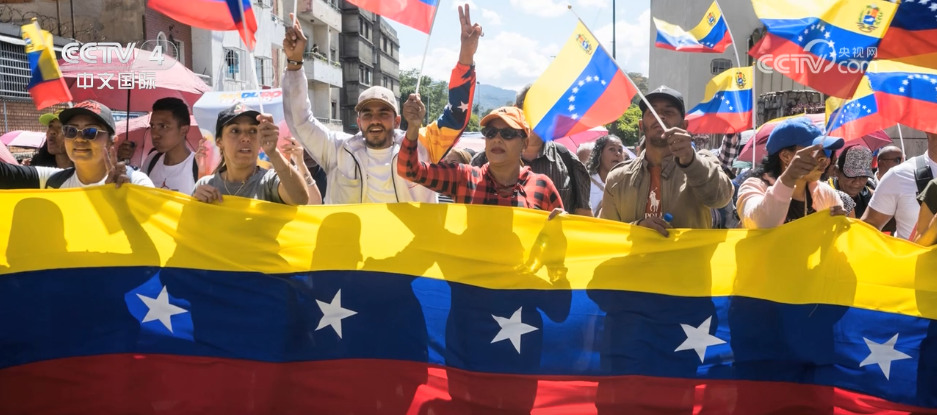
央视网消息:特朗普政府对委内瑞拉实施军事干预并意图攫取其石油资源后,又对多国发出威胁。一系列行动在全球引发担忧, 强权政治卷土重来,世界正面临规则失序与冲突升级的严峻风险。 俄罗斯今日俄罗斯:武力霸权凌驾国际规则之上 德国巴伐利亚广播公司:"美国优先"无视国际规则 文章指出,特朗普当前的举动违背了其避免外交风险的竞选承诺。从将拉美视为"后院"到扬言夺取格陵兰岛,特朗普打着维护国 家安全的旗号,大行门罗主义,企图控制整个美洲。美国以"美国优先"为绝对导向,试图通过主导全球格局来"让美国再次伟大"。在 特朗普看来,国际规则、组织与联盟关系均成了这一进程的阻碍,与"美国优先"相悖,因而被系统性无视或抛弃。 新加坡《联合早报》:危及全球稳定 过去数十年,以联合国为核心的多边体系与基于规则的全球化,为世界带来了总体和平与繁荣。美国单方面军事干预委内瑞拉, 甚至不再以外交辞令掩饰其控制石油资源的意图,意味着美国政策发生重大转变。这将产生深远影响,地区武力冲突风险骤增。文章 强调,各国必须坚定维护国际法,因为在规则缺失的世界里,无论国家大小,最终都将沦为受害者。 CTV / 4 中文国际 CCTV rom - a it y ...
当美国“不演了”,世界将面临什么
Xin Lang Cai Jing· 2026-01-11 22:25
Group 1 - The article highlights the chaotic international situation, particularly focusing on the aggressive foreign policy actions of the United States under the Trump administration, including threats to various countries and military interventions [3][4][5]. - It discusses the historical context of U.S. military interventions, noting that the U.S. has conducted approximately 400 military interventions over the past 250 years, with notable examples including Vietnam, Afghanistan, Libya, and Iraq [4]. - The article expresses concern over the dangerous shift in U.S. interventionism, particularly Trump's assertion that he does not need international law, which reflects a move towards a more unilateral and aggressive stance [6][7]. Group 2 - The article raises questions about the implications of the U.S. adopting a "might makes right" philosophy, suggesting that this could lead to a more chaotic and militaristic global environment [7][8]. - It critiques the current U.S. administration for undermining international norms and organizations, warning that this could revert the world to a "jungle" state, reminiscent of the early 20th century [8]. - The article notes a backlash against Trump's foreign policy both domestically and internationally, with bipartisan opposition emerging in the U.S. Senate and criticism from traditional allies like France and Germany [7][8].
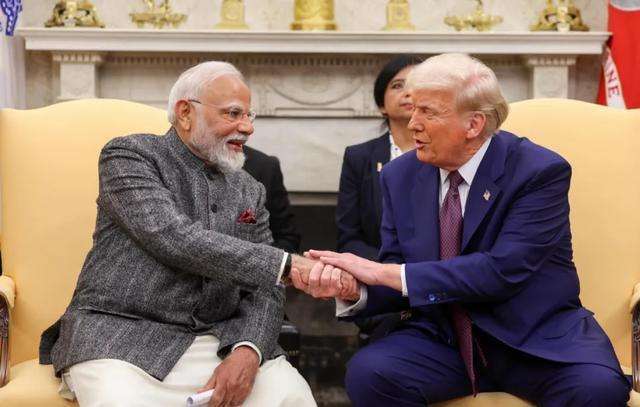
马杜罗刚遭大难,特朗普转头盯上莫迪:想保住印度得让我高兴
Sou Hu Cai Jing· 2026-01-11 04:06
Group 1 - Trump's comments indicate pressure on India regarding its oil purchases from Russia, threatening increased tariffs if India does not comply [1][3] - Since July last year, India has been a focal point of U.S. pressure due to its status as Russia's second-largest trade partner, with tariffs on Indian goods already raised to 50% due to oil imports [3][5] - The share of Russian oil in India's imports is projected to reach 37% by the fiscal year 2024-2025, providing India with energy security and cost savings [3][5] Group 2 - India's economy is vulnerable to trade wars, with GDP figures being questioned; actual growth rates may be as low as 2.5% to 3% compared to the official 8.2% [5][6] - The high unemployment rate and reliance on the informal sector further complicate India's economic situation, making it difficult to withstand prolonged tariff pressures [5][6] - India's attempts to appease the U.S. through transparency in oil purchases and agreements for LNG imports have not satisfied Trump's demands, indicating a broader geopolitical strategy at play [8][9] Group 3 - India faces a tough choice between maintaining its relationship with Russia for energy security and risking higher tariffs and declining exports from the U.S. [9] - The lack of institutional cooperation in U.S.-India relations complicates the situation, as personal diplomacy has not yielded substantial results [9] - The ongoing conflict over oil and tariffs highlights the challenges faced by emerging economies under the influence of major powers, with U.S. strategies reflecting a desire for compliance rather than cooperation [9]
谁是下一个“委内瑞拉”?美国正在成为世界的“乱源”
Xin Lang Cai Jing· 2026-01-11 00:40
Core Viewpoint - The article highlights the alarming actions taken by the United States against Venezuela, marking a significant violation of international law and principles of sovereignty, which could destabilize the current international order [1][2][5]. Group 1: Violations of International Law - The U.S. military action against Venezuela is characterized as a blatant violation of international law, specifically undermining the principle of sovereign equality among nations [2][4]. - The U.S. has disregarded the principle of non-interference in domestic affairs and the prohibition of the use of force, which are fundamental tenets of international relations [4][5]. - The military operation against President Maduro is seen as a direct challenge to the judicial immunity that heads of state enjoy under international law [3][4]. Group 2: Impact on International Order - The actions taken by the U.S. are viewed as a significant threat to the post-war international order, signaling a return to a "might makes right" mentality [5][6]. - The military intervention is part of a broader strategy to reshape the international order based on U.S. dominance, undermining multilateral mechanisms and the authority of the United Nations [6][7]. - The U.S. approach is perceived as an attempt to reassert the Monroe Doctrine, treating Latin American countries as subordinate regions subject to U.S. control [6][7]. Group 3: Global Implications - The aggressive U.S. actions have opened a "Pandora's box" of global instability, threatening peace and development worldwide [7][8]. - If unchecked, the rise of hegemonic practices could lead to the collapse of the international legal framework established over decades, resulting in increased militarization among regional states [7][8]. - The article calls for international solidarity against such acts of state terrorism and advocates for a multilateral approach to uphold global governance [8].
泰国媒体刊文指出美“退群”将对世界秩序产生显著冲击
Xin Hua She· 2026-01-11 00:32
Core Viewpoint - The article discusses the significant impact of the United States' withdrawal from 66 international organizations on the global order and Thailand, emphasizing a shift towards a "America First" policy that prioritizes domestic law over international law [1] Group 1: Impact on Global Order - The U.S. is moving from multilateralism to a unilateral approach, particularly evident in its handling of the Venezuela issue, where domestic law is prioritized over international law [1] - Future U.S. negotiations may rely on domestic law as a basis for pressuring the international community, suggesting that compliance with U.S. domestic law will be a prerequisite for negotiations [1] Group 2: Bilateral Negotiations - The U.S. is expected to reduce reliance on international organizations for negotiations, opting instead for "point-to-point" bilateral discussions, which may enhance its negotiating power by addressing issues one at a time rather than through regional or multilateral frameworks [1] Group 3: Responsibility on Global Issues - Despite its withdrawal from various organizations, the international community still expects the U.S. to take responsibility on global issues such as environmental protection and climate change, given its status as a major greenhouse gas emitter [2]