
自由贸易

Search documents
李强同加拿大总理卡尼会谈
Xin Lang Cai Jing· 2026-01-15 11:53
新华社北京1月15日电(记者董雪、陆君钰)国务院总理李强1月15日下午在北京人民大会堂同来华进行 正式访问的加拿大总理卡尼举行会谈。 李强表示,在双方共同努力下,中加关系实现转圜,受到两国各界普遍欢迎。中加关系保持健康稳定发 展,符合两国的共同利益。习近平主席将同总理先生举行会晤,为推动两国关系稳定向好进一步指明方 向。站在新的起点上,中方愿同加方坚持战略伙伴定位,加强对话沟通,增进政治互信,尊重彼此核心 利益,求同存异、聚同化异,不断拓展务实合作,为两国发展增添更多动力。 李强指出,中加经济互补性强,两国合作具有很强内生动力和广阔空间。中方愿同加方加强发展战略对 接,继续恢复和推进各领域各层级交往,用好两国政府间经贸、科技、农业等对话机制,促进双边贸易 稳定增长,提升贸易便利化水平,深化清洁能源、数字技术、现代农业、航空航天、先进制造、金融等 领域合作,培育更多新的经济增长点。中方欢迎更多加拿大企业来华投资,希望加方为赴加投资的中国 企业提供公平、非歧视的营商环境。双方要继续积极支持教育、文化、旅游、体育、青年、地方等领域 交流合作,便利人员往来,传承深化两国民间的友好感情。中方愿同加方加强在联合国、世贸组 ...
中方是否推动与加拿大达成自贸协定?商务部回应
Yang Shi Xin Wen· 2026-01-15 07:29
Core Viewpoint - Both China and Canada support economic globalization and trade liberalization, highlighting their shared interests and significant cooperation potential in the economic and trade sectors [1] Group 1: Economic Cooperation - China is actively expanding high-level opening-up and aligning with international high-standard economic and trade rules [1] - The country is steadily increasing institutional openness and is willing to sign bilateral and regional trade investment agreements with willing countries and regions [1] Group 2: Global Trade and Investment - The efforts aim to further promote the liberalization and facilitation of global trade and investment [1] - China emphasizes the importance of taking concrete actions to maintain the hard-won free trade and multilateral trading system [1]
欧盟—南共市自贸协定向正式签署迈进
Jing Ji Ri Bao· 2026-01-14 22:09
Core Viewpoint - The European Union (EU) and the Southern Common Market (Mercosur) have reached a significant milestone by voting to approve a free trade agreement, marking the end of long negotiations and paving the way for formal signing, which is expected to reshape transatlantic trade structures and impact global supply chains over the coming years [1][5]. Group 1: Agreement Details - The EU-Mercosur free trade agreement consists of two parts: the EU-Mercosur Partnership Agreement (EMPA) covering political, cooperation, and trade rules, and the Interim Trade Agreement (iTA) for early implementation of trade liberalization before the full agreement takes effect [2]. - The agreement aims to eliminate most tariffs on industrial goods and services in phases, facilitate investment, and reduce barriers to cross-border services, particularly in digital and financial services [2]. - EU companies will gain easier access to the South American market, while Mercosur member countries will benefit from more favorable export conditions to the EU [2]. Group 2: Reactions and Implications - Supporters view the agreement as a "historic breakthrough," while critics, particularly from France, express concerns over increased imports of cheap agricultural products harming local farmers [3]. - Environmental organizations criticize the agreement for potentially undermining climate efforts and promoting the import of high-pollution goods [3]. - In response to criticisms, the EU Commission announced a package of measures to protect sensitive agricultural products and enhance regulatory oversight [3]. Group 3: Economic Impact - The agreement is expected to benefit the EU's industrial and manufacturing sectors, particularly in high-value industries such as automotive, machinery, and aerospace [4]. - For Mercosur member countries, exports in agriculture, mining, and primary processed goods are anticipated to grow, attracting foreign investment and technological cooperation [4]. Group 4: Geopolitical Significance - The agreement is seen as a response to rising protectionism, showcasing the ability of large trade blocs to promote rule-based cooperation [5]. - It may also influence free trade negotiations in the Asia-Pacific and Africa regions and help the EU and South America mitigate external risks amid complex global power dynamics [5]. - Discussions surrounding the balance between openness and protection, fairness and efficiency, and growth versus green transition are expected to continue, highlighting the agreement's role as a key indicator of EU-South America relations [5].
【财经分析】意大利视角下的欧盟-南共市自贸协定:出口机遇与农业挑战并存
Xin Hua Cai Jing· 2026-01-14 06:02
Core Viewpoint - The European Union (EU) member states voted to approve the EU-Mercosur Free Trade Agreement, paving the way for its formal signing, despite strong domestic opposition in Italy [1][2]. Group 1: Trade Agreement Details - The agreement is expected to be the largest trade deal in EU history, significantly reducing tariffs on a wide range of products between the EU and Mercosur countries [2]. - Italy's support for the agreement reflects a pragmatic balance between domestic pressures and external changes, as the EU accelerates the agreement's implementation [2]. - The agreement will lower import tariffs on EU products such as cars, machinery, and pharmaceuticals from Mercosur countries, while the EU will reduce trade barriers on meat and grains from Mercosur [2]. Group 2: Economic Implications for Italy - The trade agreement presents a "double-edged sword" for Italy, potentially expanding export opportunities and enhancing industrial competitiveness, but also posing challenges to the agricultural sector [2]. - Italy's economy is heavily reliant on exports, and the Mercosur market is seen as a vital avenue for risk diversification amid global trade uncertainties [2]. - The Italian Agricultural Machinery Manufacturers Association indicates that the agreement will benefit Italian companies by reducing export costs, simplifying customs procedures, and enhancing cooperation in agricultural technology and food supply chains [3]. Group 3: Agricultural Sector Concerns - Despite potential benefits, significant risks remain for the agricultural sector, particularly due to competitive pressures from Mercosur countries in beef, poultry, and sugar markets [5]. - Italian farmers have expressed concerns that the agreement could undermine local agriculture, especially for products not covered by geographical indications [5]. - The Italian Small Farmers Association emphasizes the need for strict compliance with EU environmental and food safety standards for imported products to protect local farmers [5]. Group 4: Upcoming Signing and Future Challenges - The EU-Mercosur Free Trade Agreement is scheduled to be signed on January 17 in Asunción, Paraguay, after delays due to internal disagreements among EU member states [6]. - The Italian government faces the critical challenge of balancing export competitiveness with agricultural stability in the wake of the agreement [7].
从历史中汲取智慧,在合作中扩大共识(大使随笔)
Ren Min Ri Bao· 2026-01-13 23:17
Group 1 - The core viewpoint of the articles emphasizes the improvement and strategic direction of China-Canada relations, marking a significant development after seven years of challenges [1][4] - The historical context of China-Canada relations is highlighted, showcasing the long-standing friendship and cooperation between the two nations, including contributions from Chinese workers in Canada and the legacy of Dr. Norman Bethune [2] - The economic complementarity between China and Canada is noted, with China being Canada's second-largest trading partner and significant trade figures, such as a bilateral trade volume of $82.15 billion in the first eleven months of 2025 [3] Group 2 - The articles discuss the mutual benefits and cooperation potential in various sectors, including trade, energy, agriculture, finance, and tourism, with a record number of Canadian companies participating in the China International Import Expo [3] - The shared values of multilateralism and free trade between China and Canada are emphasized, with both countries advocating for global ecological governance and addressing global challenges together [3] - The importance of mutual respect and understanding in the relationship is stressed, with a call for both nations to view each other as partners and to respect core interests, particularly regarding the One China principle [4]
全球贸易格局生变!22万亿美元经济体联手,反击特朗普关税大棒?
Sou Hu Cai Jing· 2026-01-12 12:13
Group 1 - The EU and the Southern Common Market, led by Brazil, signed a free trade agreement that emphasizes the importance of multilateralism and international law, contrasting sharply with U.S. hegemonic actions [1][4] - The agreement covers 720 million consumers with a combined GDP of $22.4 trillion, positioned between the U.S. ($29 trillion) and China ($19 trillion, in terms of purchasing power parity) [1] - The EU aims to reduce reliance on the U.S. and China through this agreement, indirectly criticizing Trump's tariff policies while promoting global trade aspirations [1][3] Group 2 - The agreement faced delays, initially planned for December when Brazil held the rotating presidency of the Southern Common Market, but was postponed due to opposition from Italian farmers [3] - Italy's support was crucial, as it is the third most populous country in the EU, and the final agreement received majority support from 21 countries, despite opposition from agricultural nations like France and Poland [3][4] - Brazil's agricultural advantages, particularly in the Cerrado region, have significantly increased its food production, making it a major player in global meat exports, which poses competition to U.S. and EU agriculture [3][4] Group 3 - The agreement stipulates that the Southern Common Market will eliminate 91% of tariffs on EU companies within 15 years, while the EU will remove 95% of tariffs on Southern Common Market goods within 12 years [4] - Sensitive agricultural products like beef will have import quotas, with the EU's quota for Brazil set at 3% of total imports, while Brazil's quota for the EU is 9% [4] - The agreement is expected to enhance trade in products like coffee and sugar, facilitating Brazilian coffee's entry into the European market [4]

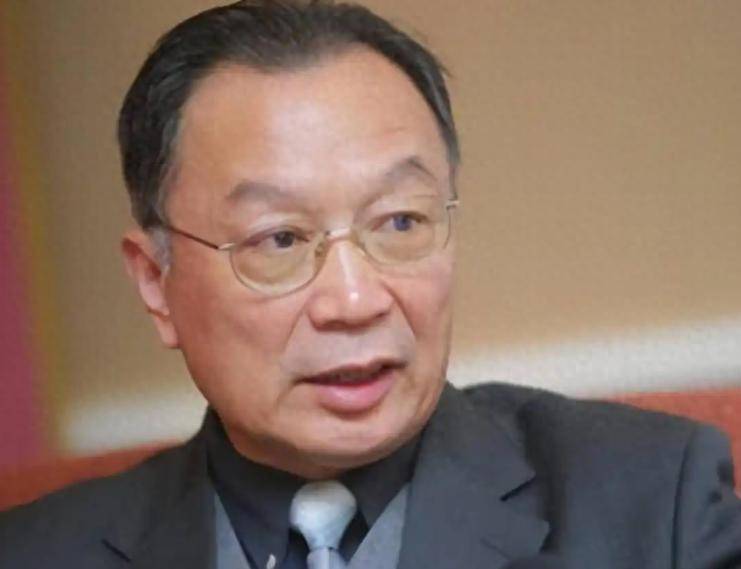
WTO已成弃子?温铁军揭露:全球化本质不在自由贸易
Sou Hu Cai Jing· 2026-01-12 07:24
有人至今还把全球化简单理解为自由贸易,以为这只是市场自发发展的结果。但温铁军一句话就打破了这种幻想:全球化从一开始就不是单纯的自由贸易, 而是霸权体系的一部分!所谓自由贸易只是表面现象,背后的真相是,规则的制定者从未真正参与公平博弈,而是以国家利益为最终考量,在制定、修改甚 至废除规则时,始终把自身利益放在首位。 二战后,美国是无可争议的最大赢家。它不仅经济实力雄厚,还承担了西方大部分战后重建工作。通过出口装备,美国成为全球最大的债权国,其他国家不 得不赚美元来偿还债务。为了让美国商品、资金和货币顺利渗透全球,美国建立了三大利器:GATT(关税与贸易总协定)、世界银行(WB)和国际货币 基金组织(IMF)。 GATT帮助美国工业品出口扫清关税障碍,推动全球降税;世界银行和国际货币基金组织则名义上提供发展援助,实质上让其他国家对美元资本形成结构性 依赖。美国一边出口商品,一边放贷,同时控制各国货币命脉——你买我的货、用我的钱、还得用我发的货币偿债。这才是真正的世界经济霸主地位。 即便拥有这三大工具,美国在农业和金融两块仍然动不了。农业方面,大多数国家土地有限、人口众多,难以抗衡美国大型农场机械化低成本的冲击。如 ...
European Union Agrees to Landmark Free-Trade Deal With South America
Nytimes· 2026-01-09 13:08
The agreement with Argentina, Brazil, Paraguay and Uruguay represents a push for deeper global cooperation, in contrast to the United States turning to coercion in its dealings with other countries. ...

爱尔兰总理上海行:共同推进开放交流与自由贸易
Xin Lang Cai Jing· 2026-01-08 13:53
转自:北京日报客户端 爱尔兰总理马丁8日在上海表示,与上海这座中国的经济中心城市一样,爱尔兰也将开放交流与自由贸 易刻在成长基因里,双方有许多互补性与合作空间。 20多年前,马丁第一次访问上海。在他眼中,上海是一座具有磁石般吸引力的非凡城市。 此次访沪,有三件事令马丁印象深刻:一是迄今已有150多家爱尔兰企业落户上海,其中一家从事食品 贸易和研发的企业,已由最初的几个员工扩展至1400多名员工,显示爱中经贸合作潜力巨大;二是越来 越多的中国游客将爱尔兰作为旅行目的地,与爱尔兰人民交流互动;三是上海与爱尔兰第二大城市科克 建立友好城市关系20多年来,在经贸、卫生、教育等领域合作成果丰硕。 他建议爱中双方开辟上海至爱尔兰直飞航线,共同推进开放交流与自由贸易。"如果能实现上海直航爱 尔兰,双方一定可以拓展更多的增长空间。"马丁说。 马丁主张以科克与上海两座城市间的友好关系为基础,强化爱中两国在金融、生物医药、集成电路、人 工智能、可再生能源等领域的合作,并拓展人文领域交流合作。 马丁一行4日至8日访华,于6日晚抵沪。在沪期间,马丁出席了爱尔兰方面举办的旅游和食品推广活 动,与爱中两国企业开展交流。 他表示,面对不稳 ...
21专访丨爱尔兰投资发展局中国区总监张哲伟:爱尔兰可扮演中企走出去的“安全港”
2 1 Shi Ji Jing Ji Bao Dao· 2026-01-08 05:37
Core Insights - Ireland supports free trade and multilateralism, serving as a model for EU-China cooperation, particularly in trade, investment, and education [1][3] - The bilateral trade volume between China and Ireland is projected to reach $23.42 billion in 2024, with a significant increase since the establishment of the strategic partnership in 2012 [1][5] - China is Ireland's fourth-largest trading partner, with Ireland maintaining a trade surplus with China for several years [4][5] Trade and Investment - In 2023, China's direct investment in Ireland was $380 million, with a total stock of $2.04 billion by the end of the year, creating approximately 5,000 jobs [2][6] - The trade structure between China and Ireland is highly complementary, with Ireland exporting high-value, knowledge-intensive products to China and importing machinery and textiles [1][5] - Ireland is a stable investment destination for Chinese companies, encouraging them to leverage its EU membership for localizing supply chains and accessing the European market [2][10] Economic Cooperation - The visit of the Irish Prime Minister to China is expected to deepen political, cultural, and economic ties, with discussions on investment and trade opportunities [3][4] - Ireland's favorable business environment, including a low corporate tax rate of 12.5%, attracts foreign investment and supports R&D initiatives [7][9] - The country has a strong talent pool and a robust educational system, contributing to its appeal as an investment location [8][9] Future Prospects - The bilateral trade volume between China and the EU is expected to approach $800 billion in 2024, highlighting the vast potential for cooperation in areas like green transition and digital governance [1][3] - Ireland's role as a gateway to the EU market is reinforced by its unique position as the only English-speaking country in the Eurozone, making it an attractive base for Chinese enterprises [7][10]