车路云一体化

Search documents
万马科技与百度合作升级 拓展自动驾驶生态运营
Zheng Quan Shi Bao Wang· 2025-11-13 11:01
Core Insights - Wanma Technology's subsidiary, Youka Technology, has entered into a deep strategic partnership with Baidu's Apollo Intelligent Driving, transitioning from basic service cooperation to a comprehensive collaboration aimed at global markets [1][2] - Youka Technology has evolved from a vehicle networking service provider to a high-end networking solution supplier, enhancing its leadership position in the high-end networking sector [2] Group 1: Strategic Partnership - The partnership will leverage Youka Technology's full-chain technical capabilities to provide integrated hardware and software solutions for Robotaxi services [1] - The high-end networking solution includes global connectivity, high-precision positioning, AI networks, smart hardware, and comprehensive services, significantly improving the reliability and responsiveness of autonomous driving services [1][2] Group 2: Market and Policy Context - The collaboration aligns with the global commercialization and expansion of Robotaxi services, supported by China's push for "vehicle-road-cloud integration" in 20 pilot cities and the opening of over 35,000 kilometers of test roads [2] - Morgan Stanley identifies autonomous driving as a key opportunity in the automotive industry, predicting a potential market value increase of $2 trillion to $3 trillion [3] - The National Intelligent Connected Vehicle Innovation Center forecasts that by 2030, the total output value of the "vehicle-road-cloud integration" industry in China will reach 2.58 trillion yuan, with a compound annual growth rate exceeding 28% [3]


万马科技与百度阿波罗智能驾驶 “技术+市场”深度合作 打造无人驾驶商业化新方案
Quan Jing Wang· 2025-11-13 06:14
Core Viewpoint - The strategic partnership between Wanma Technology's subsidiary Youka Technology and Baidu's Apollo Intelligent Driving aims to leverage their respective strengths to enhance the Robotaxi ecosystem and expand their market presence globally [1][3]. Group 1: Strategic Cooperation - Youka Technology has signed a strategic cooperation agreement with Apollo Intelligent Driving to provide integrated high-level connected solutions, including cloud computing [1][2]. - The collaboration will focus on exploring the Robotaxi sector and developing a comprehensive "vehicle-road-cloud" integrated operational solution [1][4]. Group 2: Market Potential - The global Robotaxi market is projected to grow from $4.4 billion in 2025 to $188.9 billion by 2034, with a compound annual growth rate (CAGR) exceeding 50% [3]. - China is expected to become the largest market for Robotaxi, with a fleet size reaching 1.9 million vehicles by 2035, accounting for 25% of the global shared mobility vehicles [3]. Group 3: Technological Advancements - Youka Technology has achieved over 16 million connected vehicles, with more than 1 million connections overseas, utilizing advanced technologies such as 5G and AI [2]. - The partnership aims to enhance the reliability and responsiveness of Robotaxi services through improved network solutions [2][4]. Group 4: Industry Transformation - The collaboration signifies a shift from a single technology cooperation to a deep strategic binding of "global market + full-stack technology," which is expected to expand business boundaries and strengthen competitive advantages in the autonomous driving sector [3][4]. - The focus on key areas such as energy replenishment, intelligent computing, and smart cockpit development will drive the integrated development of the "vehicle-road-cloud" ecosystem [4]. Group 5: Future Outlook - The partnership represents a significant upgrade in Youka Technology's service capabilities and business model, moving towards a comprehensive "communication + positioning + computing + service" solution for Robotaxi [5]. - The ongoing collaboration is anticipated to reshape the company's valuation logic and open new growth opportunities in the intelligent mobility sector [4][5].
勾勒“数智交通”蓝图 赋能自贸港大交通建设——专访海南高速董事长陈泰锋
Shang Hai Zheng Quan Bao· 2025-11-12 17:51
Core Viewpoint - Hainan Highway is undergoing a strategic transformation from a traditional road construction company to a smart transportation service provider, leveraging digital technologies and integrating various transportation-related services to enhance operational efficiency and market competitiveness [3][4][6]. Group 1: Strategic Transformation - Hainan Highway is focusing on "smart transportation" as a new growth area, integrating digital economy with traditional transportation to adapt to future developments [3][4]. - The company has established a unique underwater computing center to reduce operational costs and provide robust computing services for smart transportation and supply chain sectors [4]. - The restructuring of Hainan Transportation Group has positioned Hainan Highway as the core listed platform for provincial transportation development, enhancing its strategic role [5]. Group 2: Business Expansion and Integration - Hainan Highway is enhancing its core business capabilities, with transportation business revenue increasing to 67.07% in 2024, through projects like provincial road construction and maintenance [5]. - The planned acquisition of a 51% stake in Jiaokong Petrochemical aims to integrate energy services into its transportation ecosystem, creating a comprehensive service model [6]. - The company is set to capitalize on the upcoming Hainan Free Trade Port's full closure in December 2025, which is expected to boost infrastructure demand and expand market opportunities [7][8]. Group 3: Future Outlook - Hainan Highway aims to become a key hub connecting logistics and tourism in the Free Trade Port, leveraging new assets like Jiaokong Petrochemical to enhance non-fuel business operations [8]. - The company is committed to enhancing its comprehensive service capabilities and technological innovation to meet the growing infrastructure demands and contribute to high-quality transportation development in Hainan [8].


车路云一体化规模发展时机已至
Zhong Guo Qi Che Bao Wang· 2025-11-12 10:21
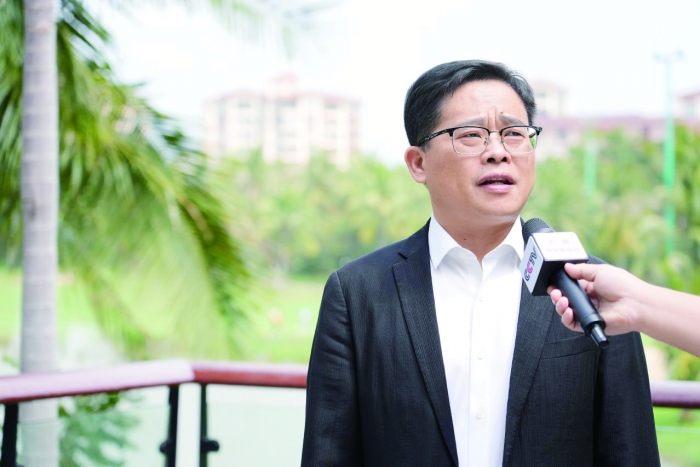
重庆市经济和信息化委员会副主任涂兴永称,重庆当前车路云一体化应用试点范围已超5000平方公里, 道路里程超2500公里,率先建成标准化城市级云控基础平台,实现94个应用生态服务接口开放共享,直 连通信建设规模和车辆推广数量居全国前列。 在东风汽车集团有限公司原董事长竺延风看来,汽车产品正经历从集成机械技术高效的、点对点的个性 化交通方式,到集移动办公、休闲娱乐、社交互动于一体的第三生活空间,再到有温度、会思考、能决 策的移动智能体转变。在这一变革中,传统的汽车边界正在被打破,全新的生态系统不断被构建,车路 云一体化让汽车与交通、城市实现深度互联。 伴随人工智能、大数据等技术的突飞猛进,智能网联汽车已成为全球汽车业新的竞争高地。自2024 年7月全国20个城市(联合体)确定为首批车路云一体化应用试点以来,我国在推进车路云一体化发展 上取得诸多成效,为全球智能网联汽车发展贡献中国方案。 我国智能网联汽车已实现全球"并跑" 据工业和信息化部装备工业发展中心主任瞿国春介绍,今年1~7月,我国具备L2级组合驾驶辅助功能 的乘用车销量约776万辆,渗透率已达62%。目前,我国已累计开放测试示范道路3.5万公里,发放测试 ...

为道路植入“神经” 理工光科激活“智慧的路”
Shang Hai Zheng Quan Bao· 2025-11-11 19:13
Core Viewpoint - The commercialization of Robotaxi is accelerating globally, but the reliance on single-vehicle intelligence models is limiting scalability due to the lack of road-side collaborative perception. The company, Wuhan Ligong Optical Technology Co., Ltd., is addressing this issue with its core technology in grating array sensing, enabling real-time, all-weather perception of road conditions and traffic status [3][5]. Group 1: Technology and Applications - The company has implemented smart pavement and structural health monitoring systems across various highways, airports, and major bridge projects, transitioning traffic safety from reactive to proactive measures [3][8]. - At Hubei Ezhou Huahu International Airport, nearly 50,000 grating array sensors have been embedded in the runway, allowing for comprehensive, real-time monitoring and service capabilities [4][6]. - The company's optical fiber sensing technology allows for high-density data collection without significantly increasing costs, enhancing the monitoring capabilities compared to traditional methods [4][5]. Group 2: Market Potential and Development - The integration of "vehicle-road-cloud" systems is still heavily focused on single-vehicle intelligence and cloud data analysis, with limited road-side perception methods currently available [5][9]. - The company is collaborating with partners to develop smart pavement systems that can monitor road hazards and operational status, aiming to minimize casualties and property damage during natural disasters [8][9]. - With over 180,000 kilometers of highways in China, there is significant market potential for the deployment of optical fiber sensing technology, although engineering application challenges remain [8][9].

城市24小时 | 手握新“王牌” 江苏“黑马”三天两度部署
Mei Ri Jing Ji Xin Wen· 2025-11-11 16:47
"泰州发布"消息,11月9日,泰州市召开做好"苏超夺冠"后半篇文章工作部署会,围绕如何放大"苏超夺 冠"效应,做好"后半篇文章"进行专题部署。 泰州市委书记姜冬冬指出,今年的"苏超",泰州队一路黑马成功夺冠,以逆袭传奇创造了建市近30年来最 具影响力的破圈爆点,不仅为泰州带来巨大的流量,更是一种永不言败的自我超越,充分展现了泰州奋进 之城的良好形象。 姜冬冬强调,要按照大抓经济、大抓产业、大抓项目"三个大抓"的既定安排,强执行、强配合、强担当, 真正把赛事"流量"转化为消费"留量"、发展"增量",努力书写从"夺一次冠"到"兴一座城"的精彩篇章。 11月11日,当地媒体评论指出,"如何将一次夺冠的泼天流量转化为城市发展的持久动力,实现从赛事出 圈到城市出彩、从一战成名到持久荣耀,是当下泰州迫切需要思考的课题。"从近期一系列动作来看,泰 州已在积极行动。 比如交通方面,作为江苏最后一个未通高铁的地级市,泰州正致力打造长三角区域性综合交通枢纽城市, 以北沿江高铁、盐泰锡常宜铁路为骨干的"十"字形高铁正逐步落地。今年,泰州市铁路建设计划投资71.2 亿元,截至目前累计完成投资56.4亿元,铁路建设投资位居江苏全省前列 ...

城市24小时 | 手握新“王牌”,江苏“黑马”三天两度部署
Mei Ri Jing Ji Xin Wen· 2025-11-11 16:33
泰州市委书记姜冬冬指出,今年的"苏超",泰州队一路黑马成功夺冠,以逆袭传奇创造了建市近30年来最具影响力的破圈爆点,不仅为泰州带来巨大的流 量,更是一种永不言败的自我超越,充分展现了泰州奋进之城的良好形象。 姜冬冬强调,要按照大抓经济、大抓产业、大抓项目"三个大抓"的既定安排,强执行、强配合、强担当,真正把赛事"流量"转化为消费"留量"、发展"增 量",努力书写从"夺一次冠"到"兴一座城"的精彩篇章。 解读:作为一座在江苏省内存在感不高的城市,自"一黑到底"拿下苏超冠军以来,泰州的喜庆氛围已经到了"奖状贴脑门上"的程度: 不仅"苏超冠军城 泰州欢迎您"这里是泰州 我们是冠军"等标语随处可见,泰州还正在加紧打造"冠军之城"新地标,建设冠军奖杯打卡点。 每经记者|刘艳美 每经编辑|杨欢 "泰州发布"消息,11月9日,泰州市召开做好"苏超夺冠"后半篇文章工作部署会,围绕如何放大"苏超夺冠"效应,做好"后半篇文章"进行专题部署。 如何做好"苏超夺冠"后半篇文章,则是泰州近期关注的焦点。 梳理公开信息,除11月9日的部署会外,11月7日,泰州市委就曾召开专题会议,研究做好"苏超夺冠"后半篇文章。会上,姜冬冬谈到,要承接 ...

智造大变革·网联化丨打破信息孤岛,汽车“第三空间”崛起
Xin Jing Bao· 2025-11-11 09:25
Core Insights - The automotive industry is undergoing a profound transformation centered around electrification, intelligence, and connectivity, with connectivity reshaping product forms and the industry ecosystem [1] - 2025 is identified as a critical year for the industry's transformation, with policies and technologies advancing simultaneously to lay the groundwork for connectivity development [1] Connectivity Development - Initially, automotive connectivity was limited to basic communication and entertainment needs, lacking systematic applications and relying heavily on simple connections [2] - The shift from "auxiliary functions" to "core engines" of automotive competitiveness has been achieved through the integration of 5G, IoT, and big data, enabling real-time information exchange and improved travel efficiency [2] Interior Cabin Transformation - The transformation of the vehicle interior reflects the deep impact of connectivity, with features like central control screens and multi-modal interaction methods enhancing user experience [3] - The vehicle interior is evolving into a multi-functional space for work, entertainment, and rest, supported by integrated software and hardware resources [3] Regulatory Framework and Market Growth - By 2025, a comprehensive regulatory framework will support the large-scale implementation of smart connected vehicles, with numerous national and industry standards established [4] - The market for smart connected vehicles is expected to experience explosive growth, with significant increases in new car sales and connectivity configurations becoming a core consideration for consumers [4] Business Model Evolution - The automotive business model is shifting from one-time hardware sales to providing full lifecycle services, with companies establishing ongoing service relationships with users [5] - Revenue models are diversifying, allowing for subscription-based access to enhanced vehicle features and integrated entertainment content [5] Future Outlook - By 2026, significant advancements in connectivity technology are anticipated, with a projected 50% penetration rate for 5G vehicles and 7.5% for C-V2X direct communication vehicles [6] - The automotive industry is expected to integrate deeply with various sectors, transforming vehicles into smart hubs that connect various aspects of daily life [7]
打破信息孤岛,汽车“第三空间”崛起
Xin Jing Bao· 2025-11-11 09:20
Core Insights - The automotive industry is undergoing a profound transformation centered around electrification, intelligence, and connectivity, with connectivity reshaping product forms and the industry ecosystem [1] - 2025 is identified as a critical year for the industry's transition, with policies and technologies advancing simultaneously to lay the groundwork for connectivity development [1] Connectivity Development - Initially, automotive connectivity was limited to basic communication and entertainment needs, lacking systematic applications and relying heavily on mobile devices [2] - The shift from "auxiliary functions" to "core engines" of automotive connectivity has been facilitated by the integration of 5G, IoT, and big data, creating a high-speed interconnected network [2] - "Vehicle-road-cloud integration" has become the mainstream direction, enabling vehicles to access real-time traffic information and optimize decision-making through cloud computing [2] Interior Cabin Transformation - The transformation of the vehicle interior reflects the deep impact of connectivity, with features like central control screens and multi-modal interaction methods becoming standard [3] - The vehicle interior is evolving into a multi-functional space for work, entertainment, and rest, with new modes like X-Play and X-Sleep catering to diverse user needs [3] - Enhanced data security measures are being implemented to protect user information amidst increasing data exchanges [3] Regulatory Framework and Market Growth - By 2025, a comprehensive regulatory framework for intelligent connected vehicles is being established, with 88 national and industry standards published [4] - The market for intelligent connected vehicles is expected to experience explosive growth, with L2 passenger car sales reaching 7.76 million units and a penetration rate exceeding 62% in the first seven months of 2025 [4] - The focus of automotive marketing is shifting towards user needs and scenario-based design, transforming vehicles into mobile living spaces [4] Business Model Evolution - The automotive business model is transitioning from one-time hardware sales to providing full lifecycle services, with subscription-based models for enhanced vehicle features [5] - The integration of entertainment content and services through in-car systems is creating new revenue streams for automotive companies [5] Future Outlook - By 2026, significant breakthroughs in connectivity technology are anticipated, with 5G vehicle penetration expected to reach 50% and C-V2X direct communication penetration at 7.5% [6] - The intelligent cabin is set for revolutionary upgrades, enabling proactive user demand prediction and personalized services [6] - The automotive sector is expected to evolve into a core node of smart cities, integrating with various domains such as traffic management and energy systems [7] - Collaboration between automotive companies, tech firms, and telecom operators will intensify, driving innovation and commercialization while prioritizing data security and privacy [7]
填补燃油税收入缺口!英国将对电动汽车驾驶者征收按里程计费税,每英里征收3便士【附新能源汽车行业市场分析】
Qian Zhan Wang· 2025-11-10 10:53
Group 1 - The UK government plans to introduce a mileage-based tax for electric vehicle (EV) drivers, marking the end of the tax exemption era for EVs. This tax will be set at 3 pence per mile, which translates to an annual cost of £435 for drivers covering 8,000 miles, including the existing vehicle excise duty [2] - The new tax policy is expected to be officially launched in 2028 after public consultation, aiming to address the revenue shortfall from the transition from fuel vehicles to electric vehicles [2] - In the first five months of 2023, the UK saw a 37.6% year-on-year increase in new energy vehicle sales, with a penetration rate of 28.1%. Battery Electric Vehicles (BEVs) and Plug-in Hybrid Electric Vehicles (PHEVs) accounted for nearly 36% of total vehicle sales [3] Group 2 - China is the largest market for new energy vehicles, projected to sell over 11 million units in 2024, which would represent 66% of global sales, significantly outpacing Europe [3] - By the first three quarters of 2025, China is expected to contribute 68% of the global increase in new energy vehicle sales, with a penetration rate reaching 40.3% [4] - BYD's sales in the UK have surged, reflecting the global expansion of Chinese automotive brands. In Q2 2025, BYD is projected to hold a 22% market share globally, selling over 850,000 vehicles, which is more than three times the total annual sales of new energy vehicles in the UK [7] Group 3 - The UK faces challenges in its electric vehicle supply chain, with local battery production meeting only 10% of demand and over 95% reliance on imported raw materials. The impact of Brexit has further increased supply chain costs by 12%-18% [7] - The development of smart connected vehicles is seen as a key trend in the new energy vehicle industry, with China leading the way in proposing integrated vehicle-road-cloud solutions [10]