量化私募

Search documents
内斗升级 知名私募紧急声明!
Zhong Guo Ji Jin Bao· 2025-08-07 16:28
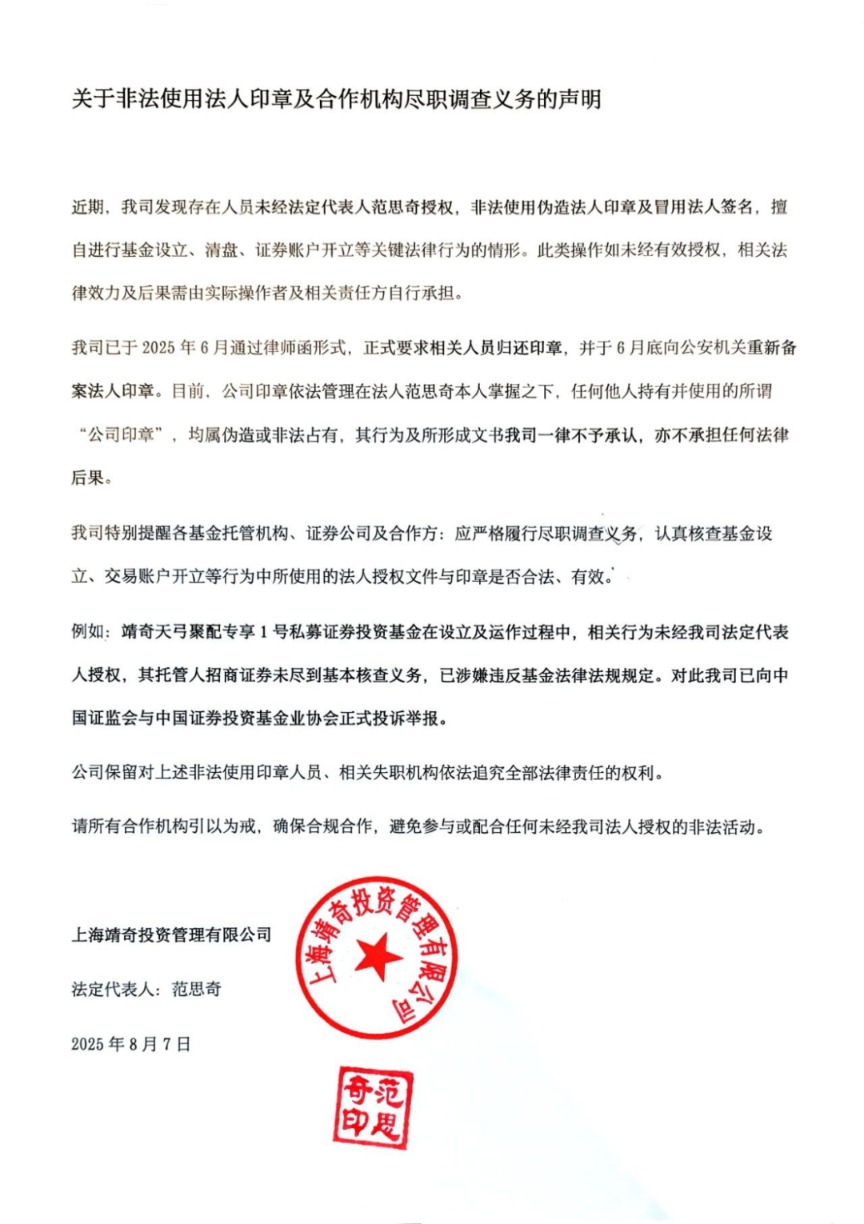
【导读】靖奇投资官微发布声明:存在人员非法使用伪造法人印章 从今年6月至今,知名私募内斗升级。 8月7日下午,靖奇投资官微突然发布《关于非法使用法人印章及合作机构尽职调查义务的声明》(以下简称《声明》)。对此,公司相 关合伙人回应了中国基金报记者。 靖奇投资官微发布声明 在《声明》中,靖奇投资表示,近期,公司发现存在人员未经法定代表人范思奇授权,非法使用伪造法人印章及冒用法人签名,擅自进 行基金设立、清盘、证券账户开立等关键法律行为的情形。此类操作如未经有效授权,相关法律效力及后果需由实际操作者及相关责任 方自行承担。 靖奇投资强调,公司已于今年6月通过律师函形式,正式要求相关人员归还印章,并于6月底向公安机关重新备案法人印章。目前,公司 印章由法人范思奇依法管理,任何他人持有并使用的所谓"公司印章",均属伪造或非法占有,其行为及所形成文书,公司一律不予承 认,亦不承担任何法律后果。 公司还特别提醒各基金托管机构、证券公司及合作方,应严格履行尽职调查义务,认真核查基金设立、交易账户开立等行为中所使用的 法人授权文件与印章是否合法、有效。 靖奇投资风险控制官唐人靖称,公司公众号于8月6日被人挂失了,找回需要权限 ...

8.7犀牛财经早报:7月私募产品新备案数量创近两年月度新高 人保健康领115万元罚单
Xi Niu Cai Jing· 2025-08-07 01:35
Group 1: Private Equity Market - In July, the number of newly registered private equity securities investment funds increased by nearly 20% compared to June, reaching a two-year monthly high [1] - Nearly 70% of the new registered private equity products were stock strategy funds, totaling 887, which represents a month-on-month growth of 24.58% [1] - Year-to-date, the number of new registered private equity securities investment funds has increased by over 60% compared to the previous year, with a total of 6,759 funds registered by the end of July [1] Group 2: Quantitative Private Equity - The issuance of quantitative private equity products has surged, with July seeing a total of 1,298 registered securities products, an 18% increase month-on-month, marking a 27-month high [2] - The top ten registered funds in July were all from billion-dollar quantitative institutions, indicating a rapid growth in their management scale [2] Group 3: Disney's Financial Performance - Disney's third-quarter revenue exceeded expectations, with a 2.1% increase to $23.7 billion, driven by growth in theme parks and streaming services [3] - The theme park division saw a revenue increase of 13% to $2.52 billion, while streaming services achieved a quarterly profit of $346 million [3] - Traditional entertainment television revenue declined by 28%, and the film studio reported losses amid a broader industry contraction [3] Group 4: Gree Electric's Chip Development - Gree Electric has a chip team of nearly 1,000 people, with over 60% being technical personnel, indicating a strong focus on semiconductor development [9][10] - The company has been involved in the chip sector since 2015, establishing multiple research and development entities for various semiconductor products [10] Group 5: Market Trends - The U.S. stock market saw all three major indices rise, with the Dow Jones up 0.19%, the Nasdaq up 1.21%, and the S&P 500 up 0.73% [11] - Apple announced a significant investment plan in the U.S. to avoid potential tariffs, contributing to a surge in its stock price [11]

税优保障如何成为私募精英的“隐形铠甲”?
私募排排网· 2025-08-04 03:36
Core Insights - The A-share market showed a trend of fluctuating growth in the first half of 2025, with quantitative private equity becoming a prominent investment force, achieving an average return of 8.32% across all private equity securities products, and 10% for stock strategy private equity [1] - Among 1,243 quantitative long strategy products, 93.32% achieved positive returns, with an average return rate of 15.42%, significantly outperforming other sub-strategies [1] - A wave of dividends emerged in the industry, with 558 private equity products distributing dividends, accounting for 14.09% of the total, amounting to 5.655 billion yuan [1] - High income for private equity managers leads to increased tax burdens, prompting them to seek legal and compliant tax optimization strategies [1] Group 1: Investment Performance - The average return for private equity securities products in the first half of 2025 was 8.32% [1] - Stock strategy private equity led with an average return of 10% [1] - Quantitative long strategy products had a remarkable average return of 15.42%, with 93.32% achieving positive returns [1] Group 2: Dividend Distribution - By the end of June 2025, 558 private equity products had distributed dividends, representing 14.09% of the total products with performance data [1] - The total amount of dividends distributed reached 5.655 billion yuan [1] Group 3: Tax Optimization Strategies - High income levels for private equity managers result in significant tax liabilities, including corporate income tax and value-added tax [1] - The need for tax optimization strategies is emphasized due to the high tax burden faced by managers in the quantitative private equity sector [1] Group 4: Risk Management and Insurance - Private equity managers face core risks including compliance, investment, operational, liquidity, reputation, and ethical risks throughout the fundraising, investment, management, and exit processes [3] - Professional liability insurance is deemed essential for private equity managers to mitigate risks associated with investment decisions and internal management [3][4] - The selection of professional liability insurance should focus on coverage that matches core business risks, including management and professional liability [4] Group 5: Employee Benefits and Insurance - The importance of a comprehensive employee benefits and insurance system is highlighted for attracting and retaining top talent in private equity firms [5] - Group accident insurance and employer liability insurance are included in the core benefits to provide comprehensive protection for employees [5] Group 6: Tax-Advantaged Insurance - The organization considers tax-advantaged insurance options, such as supplementary medical insurance, which can be deducted from total wages within 5% to reduce tax burdens [6] - The focus is on balancing tax compliance, employee needs, and cost-effectiveness when selecting insurance products [6] Group 7: Insurance Configuration Recommendations - Recommendations for insurance configurations for different roles within private equity firms include high-end medical insurance, critical illness insurance, and professional liability insurance [10][12][13][15] - Specific insurance products are suggested based on the unique risks associated with investment research, marketing, and operational roles [10][12][13][15]
A股走势如期变盘的几个核心因素,适度减仓
鲁明量化全视角· 2025-08-03 05:12
Group 1 - The core viewpoint indicates that the A-share market is experiencing a significant shift, with a recommendation to moderately reduce positions due to anticipated volatility and risks [3][5]. - The market saw a decline in major indices, with the CSI 300 index down by 1.75%, the Shanghai Composite Index down by 0.94%, and the CSI 500 index down by 1.37% [3]. - The fundamental factors affecting the market include unexpected challenges in the US-China economic relations and a slight decline in China's official PMI data, leading to a cautious outlook for the Chinese economy in the second half of the year [3][5]. Group 2 - Institutional caution is increasing, as indicated by weakening fund flow indicators, suggesting a potential continuation of market adjustments [4][5]. - The recent non-farm payroll data from the US has shown significant weakness over the past three months, reinforcing concerns about the US economic outlook [3][5]. - The recommendation for the main board is to reduce positions to a medium level in response to the market's changing signals, while the small-cap sector should also follow suit due to its high beta characteristics [7]. Group 3 - There is a notable correlation between the market's significant adjustment and the timing of a new product subscription window for a quantitative private equity fund, although the actual impact on the market was limited [8].

7月证券私募基金备案数量大增 私募募资端两极分化
Zhong Guo Zheng Quan Bao· 2025-07-31 21:09
Group 1 - The private equity securities investment fund market in China is experiencing a recovery, with 1,203 funds registered in July, marking a new monthly high for the year [2][4] - Quantitative products remain the main force in the registration of new private equity funds, with several well-known quantitative private equity firms launching new products [2][3] - Some quantitative private equity firms have announced the suspension of fundraising for certain products due to increased market volatility and to focus on existing investors [3][4] Group 2 - The issuance market shows uneven performance, with quantitative private equity firms attracting more capital compared to subjective private equity firms, which are struggling to raise funds [4][5] - The overall market environment is favorable for quantitative strategies, leading to a significant demand for popular quantitative products [5]
灵均投资36.79%领跑!量化1000指增策略碾压300指增,中小盘风格主导私募业绩分化
Sou Hu Cai Jing· 2025-07-26 16:41
Core Insights - Quantitative private equity has shown significant performance differentiation in the market this year, with small and mid-cap strategies outperforming large-cap strategies, reflecting structural changes in the market that deeply impact different investment strategies [1] Group 1: Performance of Quantitative Strategies - As of July 11, the Quantitative 1000 index enhancement strategy has performed the best, with Lingjun Investment leading at a 36.79% year-to-date return, while other institutions like Xinhong Tianhe, Longqi, and Qilin also surpassed the 30% mark [3] - The Quantitative 500 index enhancement strategy also performed well, with Xinhong Tianhe and Abama's related products achieving over 30% year-to-date returns [3] - In contrast, the Quantitative 300 index enhancement strategy lagged, with the highest year-to-date return at only 19.13% [3] - The Quantitative stock selection strategy demonstrated the strongest profitability, with Xiaoyong's strategy leading the market at 46.26% year-to-date return, and other institutions like Ruishengming and Ziwuyou also exceeding 40% [3] Group 2: Market Trends and Structural Changes - The market this year has clearly favored small and mid-cap stocks, providing abundant sources of excess returns for related quantitative strategies [4] - The CSI 1000 index, primarily composed of small and mid-cap stocks, has significantly outperformed the CSI 300 index, benefiting from policies favoring specialized and innovative enterprises [4] - The lower research coverage of small and mid-cap stocks leads to more pricing discrepancies, creating opportunities for quantitative strategies to capture excess returns [4] - Increased market volatility has also created a favorable environment for quantitative strategies, as small and mid-cap stocks typically exhibit higher volatility, allowing strategies to profit from capturing liquidity premiums [4] Group 3: Scale Effects and Strategy Differentiation - Billion-yuan private equity firms exhibit clear scale advantages in index enhancement strategies, dominating the top 20 in both the Quantitative 1000 and 500 index enhancement strategies [5] - Large institutions, with assets under management exceeding 5 billion, achieved an average return of 18.30% in their index enhancement products, with a staggering 99.25% of products generating positive excess returns [5] - Medium-sized private equity firms had an average return of 17.30%, while small firms saw their average return drop to 16.41% [5] - The performance differentiation among quantitative private equity firms is increasingly evident, with over a 15 percentage point difference between the highest and the 20th return in the Quantitative 1000 index enhancement strategy [5]

百亿私募大洗牌:近两成换了“新面孔”,量化占比反超主观
Xin Lang Cai Jing· 2025-07-24 02:01
Group 1 - The core viewpoint of the article highlights a significant reshuffling within the billion-yuan private equity sector, with a notable increase in quantitative private equity firms and a decline in subjective ones [1][6][11] - As of July 23, the number of billion-yuan private equity firms stands at 91, with 16 firms dropping out and 19 new entrants, indicating that nearly 20% of the members are new faces compared to the beginning of the year [1][4] - Among the 91 billion-yuan private equity firms, 42 are quantitative, 40 are subjective, and 8 are a combination of both, reflecting a trend of "quantitative explosion and subjective decline" [1][4] Group 2 - Notable firms that have dropped below the billion-yuan threshold include He Yuan Private Equity and Yi Cun Investment, with the latter recently rebranded as "Shanghai Chengyi Private Equity" [4][5] - The article lists several firms that have successfully crossed the billion-yuan mark this year, including Shanghai Dapu Investment and Rido Investment, among others [4][8] - The performance of some firms, such as He Yuan Private Equity, has been underwhelming, with certain products experiencing cumulative losses exceeding 22% [5][6] Group 3 - The article notes that 12 subjective private equity firms have fallen below the billion-yuan scale this year, while 7 have successfully entered the billion-yuan club, resulting in a net decrease of 5 firms in this category [7][11] - In contrast, the quantitative private equity sector has seen a net increase of 10 firms reaching the billion-yuan scale, with 11 firms raising their management scale to over 100 billion yuan [6][10] - The average return for subjective long-only products in the first half of the year was 11.57%, while quantitative long-only products achieved an average return of 17.54% [11]

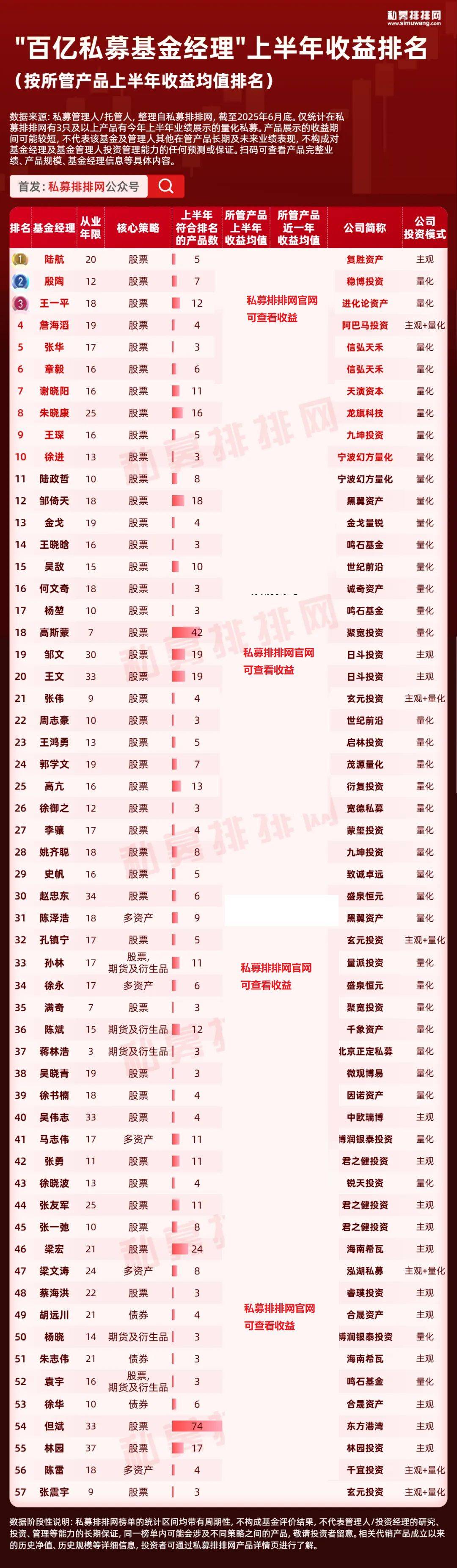
百亿私募大佬排名大洗牌,陆航逆袭夺冠!10强基金经理出炉!
Sou Hu Cai Jing· 2025-07-19 02:50
Core Insights - The overall performance of private fund managers in the first half of 2025 shows an average return of approximately 10.56%, significantly outperforming the Shanghai Composite Index (2.76%) and the Shenzhen Component Index (0.48%) [1][2][3] Group 1: Performance by Fund Size - Fund managers from private funds with a scale of 10-20 billion have led in average returns, followed by those from funds over 100 billion [2] - Among the 513 fund managers with three or more products displayed, 73 achieved returns above a certain threshold [2] - In the top 10 fund managers across six size categories, five champions came from subjective private funds, while the top managers in funds over 50 billion were predominantly from quantitative private funds [2][3] Group 2: Top Performers in 100 Billion and Above - The top fund manager in the 100 billion and above category is Lu Hang from Fusheng Asset, with an average return of approximately ***% [3][8] - Other notable managers in this category include Yin Tao from Wengbo Investment and Wang Chen from Jiukun Investment, both of whom also achieved significant returns [3][9] Group 3: Top Performers in 50-100 Billion - The champion in the 50-100 billion category is Tong Xun from Tongben Investment, focusing on large consumer sectors [10][13] - The top five managers in this category predominantly employ stock strategies [10] Group 4: Top Performers in 20-50 Billion - The top fund manager in the 20-50 billion category is Shi En from Yunqi Quantitative, with an average return exceeding ***% [14][16] - This category also features a mix of subjective and quantitative fund managers [14] Group 5: Top Performers in 10-20 Billion - The champion in the 10-20 billion category is Sun Jie from Nengjing Investment Holdings, with a focus on subjective investment strategies [17][20] - The top five managers in this category are all from subjective private funds [17] Group 6: Top Performers in 5-10 Billion - The top fund manager in the 5-10 billion category is Chen Long from Youbo Capital, with a strong performance in stock strategies [21][24] - The top five managers in this category are primarily from subjective private funds [21] Group 7: Top Performers in Below 5 Billion - In the below 5 billion category, all top managers are from subjective private funds, with Liu Xianglong from Fuyuan Capital leading the pack [25][26] - The average return for this group is also noteworthy, although specific figures are not disclosed [25]
67家公司年内71次询价转让!百亿私募频繁现身,凌顶投资受让47家公司
Sou Hu Cai Jing· 2025-07-18 05:46
Core Insights - The A-share market has seen a significant increase in the number of listed companies engaging in inquiry transfers, becoming an important investment channel for private equity institutions [1] - The formal implementation of the inquiry transfer system on the ChiNext board has revitalized this trading model, with a notable increase in participation from ChiNext companies [3] - Quantitative private equity firms have demonstrated unique advantages in inquiry transfers, leveraging their strategies to enhance participation and investment opportunities [5] Group 1: Inquiry Transfer Growth - As of July 17, 67 listed companies have announced 71 inquiry transfers in 2023, compared to a total of 155 companies and 231 transactions since the pilot program began in 2020 [1] - The ChiNext board has seen a surge in inquiry transfer activity, with 25 out of 55 announcements coming from ChiNext companies, indicating a nearly 50% participation rate [3] Group 2: Private Equity Participation - Twelve private equity institutions have participated in inquiry transfers at least 10 times this year, with most managing over 2 billion yuan [4] - Lingding Investment stands out, appearing in the transfer lists of 47 companies, focusing on quantitative arbitrage trading with a management scale between 5-10 billion yuan [4] - Other notable private equity firms include Shengquan Hengyuan, Jinde Private Equity, and Kangmand Capital, each involved in multiple inquiry transfers [4] Group 3: Advantages of Quantitative Strategies - Quantitative private equity firms have actively engaged in inquiry transfers, utilizing models for comprehensive evaluations of listed companies to enhance pricing strategies [5] - The inquiry transfer process typically offers discounts compared to market prices, providing private equity firms with opportunities for rapid large-scale investments [5] - The requirement for a minimum transfer of 1% of total shares and a six-month lock-up period favors larger private equity firms, enabling them to participate in multiple inquiry transfers simultaneously [5]

头部券商金工首席转型,进军量化私募,卖方转型私募不少见,但成功不易
Feng Huang Wang· 2025-07-17 00:17
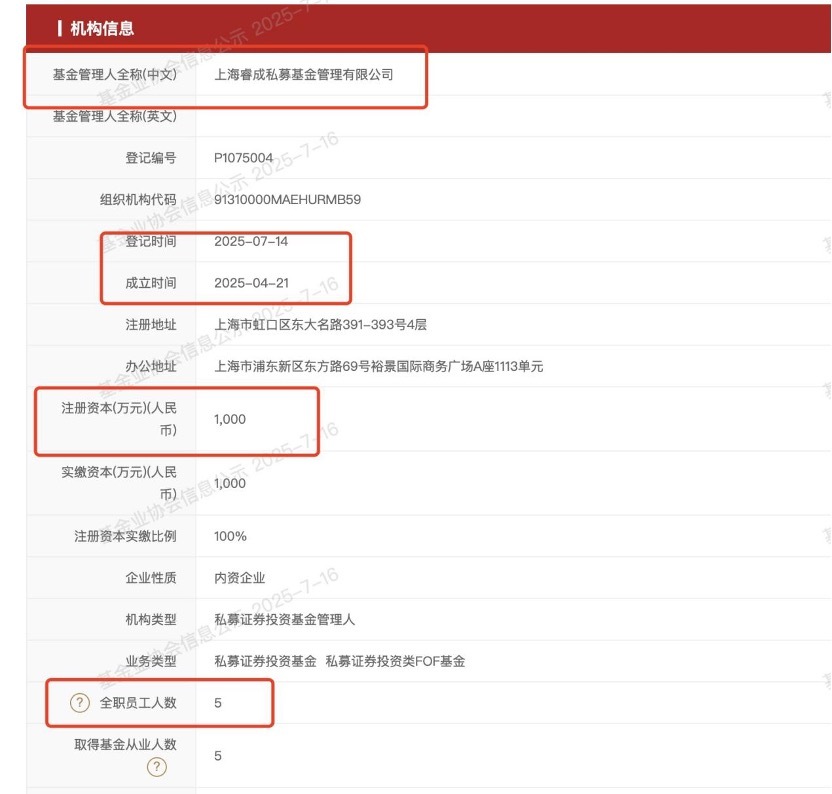
Group 1 - The core viewpoint of the news is the transformation of a well-known sell-side analyst, Ding Luming, into a private equity fund manager, establishing Shanghai Ruicheng, which aims to implement quantitative investment strategies [1][2][5] - Shanghai Ruicheng was officially registered as a private fund management company on July 14, 2023, with a registered capital of 10 million RMB, and Ding Luming holds 90.2% of the shares [2][3] - Ding Luming has over 16 years of experience in securities research, having worked at Haitong Securities and CITIC Securities, where he rose to the position of Executive General Manager [3][4] Group 2 - Ding Luming announced his ambition to become the best fund manager in China, reflecting his long-standing commitment to the investment industry since his internship in 2006 [5][6] - The investment philosophy of Shanghai Ruicheng will incorporate economic cycle theories and various quantitative strategies to meet the comprehensive research needs of investors [6][7] - The trend of sell-side analysts transitioning to private equity is noted, with several examples of analysts who have made similar moves, although the transition is often challenging [7][13]