AI医疗

Search documents
AI医生上岗 看病方便多了
Xin Lang Cai Jing· 2026-01-31 07:07
Core Viewpoint - Multiple hospitals in the city have recently launched various AI tools aimed at enhancing patient convenience during medical visits, including AI assistants for navigation, real-time consultations, and traditional Chinese medicine diagnostics [1][9]. Group 1: AI Medical Assistants - The "Health Smart Person" service at the Japan-China Friendship Hospital provides comprehensive assistance, including route guidance, appointment reminders, and medication consultations [3][4]. - The AI assistant proactively sends reminders based on the patient's progress through key stages such as registration, waiting, payment, examination, and medication collection [4]. Group 2: AI Doctors - An AI doctor developed by Ditan Hospital can assess symptoms and provide personalized advice for common illnesses like flu and respiratory infections, with input from nearly 60 infection specialists [7][8]. - The AI doctor is designed to assist in preliminary risk assessments before medical visits and offer medication explanations and recovery guidance afterward [8]. Group 3: Traditional Chinese Medicine Integration - Beijing Friendship Hospital is researching the integration of AI with traditional Chinese medicine, specifically using tongue diagnosis to assess liver disease risks [9][10]. - The goal is to enable patients to use a mobile app to take pictures of their tongues and receive quick assessments of liver fibrosis risk, with a standardized tool for image capture expected to be developed by the end of the year [10][11].


药易购分析,立足医药科技,加码创新业务筑长期价值
Quan Jing Wang· 2026-01-30 14:41
Core Insights - The pharmaceutical industry is undergoing a digital transformation, with a structural change in the supply chain, shifting competition towards technology empowerment and model innovation [1] - The company, YaoYigou, is positioned as a leader in the A-share entrepreneurial board of the pharmaceutical supply chain, focusing on upgrading its core business while continuously investing in innovative ventures [1][2] - The market for pharmaceutical supply chains is expected to expand significantly, with sales projected to reach 2.95 trillion yuan by 2024, including a retail market of 650 billion yuan [1] Industry Trends - The integration of AI technology into the pharmaceutical supply chain is addressing traditional pain points such as slow inventory turnover and service homogenization [2] - The "AI empowerment + fundamental reversal" is anticipated to be a core growth engine for the industry, particularly as the AI medical sector is expected to reach a turning point by 2026 [1][2] Company Strategy - YaoYigou's core strategy involves leveraging technology to enhance its supply chain, with a focus on digitalization and intelligence [2] - The company has developed its own AI model, "Tokamak," which has reduced inventory turnover days to 28, nearing the efficiency of global leaders in AI healthcare [2] - The company has established a comprehensive service network covering 80,700 outpatient terminals and links with over 1,800 pharmaceutical companies, forming a complete industrial chain [2] Financial Performance - Despite facing short-term pressures from retail adjustments and shifts in grassroots demand, the company’s long-term strategy remains intact, presenting opportunities for capital market investments [3] - The innovative business segment is showing steady performance, contributing positively to revenue and profitability, and is expected to support the company's long-term value [3] Growth Opportunities - The company is actively pursuing multiple high-growth new sectors, including MAH (Marketing Authorization Holder), traditional Chinese medicine, new retail, chronic disease management, and AI healthcare [3] - The MAH business model is characterized by low investment and high returns, with several products in the pipeline expected to launch within two years, enhancing the company's bargaining power [3] - The chronic disease management sector has significant growth potential, given the market size of over 400 million chronic disease patients in China [3] Investment Outlook - Continuous investment in innovative business areas is crucial, even as these segments are still in the nurturing phase and may impact current profits [4] - The company is committed to long-term growth, with investments in cutting-edge technologies and applications in AI healthcare and big data, which are expected to enhance profitability and attract capital market attention [4] - The core pharmaceutical supply chain business is operating steadily, with efforts to optimize accounts receivable, reduce inventory, and tighten expenses to improve operational efficiency [4] Conclusion - The pharmaceutical industry is witnessing a multi-faceted growth trajectory, with YaoYigou's strategic positioning and innovative initiatives likely to attract ongoing capital market interest [5]

医渡科技周内5次回购超950万港元 携手南山医院推出国内首个“AI+健康管理”创新体系
Zhi Tong Cai Jing· 2026-01-30 12:49
Core Viewpoint - The company, Yidu Tech (02158), is actively repurchasing shares, signaling confidence in its long-term value while also making significant strides in business collaborations within the healthcare sector [1] Group 1: Share Repurchase - On January 30, Yidu Tech repurchased approximately 786,000 shares at around HKD 5.8 per share, costing over HKD 4.5 million [1] - The total amount spent on share repurchases over the past five days exceeds HKD 9.5 million, indicating a strong commitment to enhancing shareholder value [1] Group 2: Business Collaborations - Yidu Tech has established a strategic partnership with the Nanshan District People's Hospital in Shenzhen, launching the first domestic "AI + Health Management" innovative system that covers "full-time, full-domain, full-population, and full-cycle" [1] - This initiative aims to create a closed-loop AI medical ecosystem from research and development to application and transformation, marking a significant step in the implementation of smart healthcare solutions [1] Group 3: Market Developments - The company has reported that the number of participants in the 2026 "Beijing Universal Health Insurance" program has surpassed 4.5 million, showcasing its operational capabilities [1] - Additionally, Yidu Tech has collaborated with the First Affiliated Hospital of Chongqing Medical University to launch an "AI Assistant for General Medicine," further expanding its influence in the healthcare sector [1] - Market observers note that the combination of continuous share repurchases and multiple business collaborations highlights the company's dual strategy of "technological breakthroughs + scenario implementation," deepening its impact in the fields of medical intelligence and universal health [1]
讯飞医疗(02506)的增长逻辑:从科大讯飞70%利润增长看AI医疗的估值重构
智通财经网· 2026-01-30 07:15
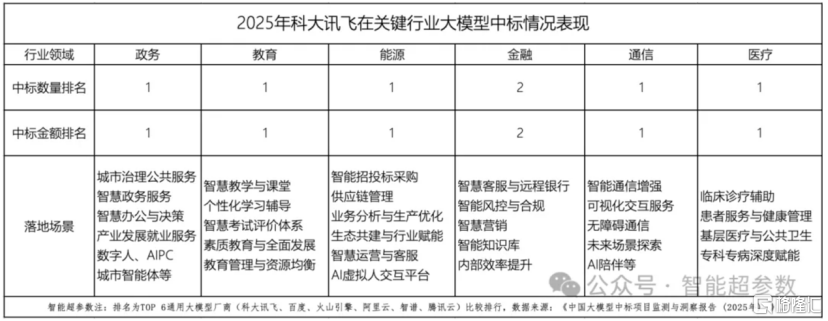
Core Viewpoint - The announcement from Keda Xunfei regarding its 2025 profit forecast indicates a projected net profit growth of 40% to 70%, highlighting the resilience of its core business and signaling that AI-driven vertical commercialization has entered a harvest phase [1] Group 1: Company Performance - Keda Xunfei's growth is attributed to its "platform + scenario" strategy, with the medical sector being a significant contributor to this growth [2] - The medical business has achieved substantial market penetration, with over 77,000 grassroots medical institutions deploying its core product, the Intelligent Medical Assistant [2] - The download count for the personal health assistant app "Xunfei Xiaoyi" has surpassed 26 million, indicating strong user engagement and service capability [2] Group 2: Technological Advancements - The "Xunfei Spark" large model is the only mainstream model in China trained on domestically produced computing power, maintaining competitive technical indicators globally [3] - The medical deep reasoning model, based on the Spark model, has outperformed leading models like GPT-5 in various medical applications, achieving capabilities equivalent to senior hospital physicians [3] - In 2025, Keda Xunfei's large model projects won contracts worth 2.316 billion yuan, surpassing the combined total of the second to sixth competitors in the industry [3] Group 3: Market Dynamics - The global AI medical market is projected to exceed $100 billion by 2025, with a compound annual growth rate of over 25%, driven by the demand for AI applications in grassroots healthcare [5] - Keda Xunfei is positioned to leverage its domestic experience to address global healthcare challenges, particularly in emerging markets [6] - The company is actively exporting its successful grassroots medical AI solutions, aiming to capture growth opportunities in the global market [6] Group 4: Investment Implications - The profit growth forecast from Keda Xunfei signals to the capital market that medical AI has transitioned from concept to scalable profitability, with the company positioned as an industry leader [7] - Unlike many US competitors that remain unprofitable, Keda Xunfei has achieved profitability and continues to optimize its business model, suggesting significant valuation upside [7] - The sustainable technological barriers established by Keda Xunfei, through its comprehensive ecosystem of large models, data, and application scenarios, provide a strong foundation for long-term valuation support [7] Conclusion - Keda Xunfei's 2025 profit forecast reflects confidence in the commercialization of AI, indicating not only a spillover effect on the parent company's performance but also the independent commercial value of its medical technology [8] - The company is carving out a unique path in AI medical commercialization, deeply embedding itself in the transformation of China's healthcare system [8]

讯飞医疗的增长逻辑:从科大讯飞70%利润增长看AI医疗的估值重构
Zhi Tong Cai Jing· 2026-01-30 07:14
Core Viewpoint - The announcement from Keda Xunfei (002230) regarding its 2025 annual performance forecast indicates a projected net profit growth of 40% to 70% year-on-year, highlighting the resilience of its core business and signaling that AI-driven vertical scene commercialization has entered a harvest phase [1] Group 1: Company Performance - Keda Xunfei's growth is attributed to its "platform + scene" strategy, with the medical sector being a significant contributor to this growth [1] - The medical segment has achieved substantial market penetration, with core product "Smart Medical Assistant" deployed in over 77,000 grassroots medical institutions nationwide [2] - The company reported that its medical AI projects won contracts worth 2.316 billion yuan in 2025, surpassing the combined total of the second to sixth competitors in the industry [3] Group 2: Technological Advancements - The "Xunfei Spark" large model is the only mainstream model in China trained on domestically produced computing power, maintaining competitive technical indicators globally [3] - The medical deep reasoning model, based on the Spark model, has outperformed competitors like GPT-5 and DeepSeek V3.2-Exp in various medical applications [3] - The company has established a complete ecosystem combining large models, data, and application scenarios, creating a competitive advantage that is difficult for peers to replicate [7] Group 3: Market Trends - The global AI medical market is projected to exceed $100 billion by 2025, with a compound annual growth rate of over 25%, particularly in grassroots medical AI applications [5] - Keda Xunfei is positioned to provide replicable solutions for global healthcare challenges, leveraging its experience in the Chinese market [6] - The company is seen as a leader in the AI medical sector, with its valuation expected to rise as it continues to optimize its business model and maintain its technological barriers [7] Group 4: Future Outlook - The performance forecast serves as a confidence vote for the commercialization of AI, indicating that Keda Xunfei's medical technology is not only a spillover effect from its parent company but also a signal of its independent commercial value [8] - The company is on a unique path of AI medical commercialization, deeply embedded in the transformation of the Chinese healthcare system [8]
以国产化铸壁垒,讯飞医疗(2506.HK)凭全栈能力掘金AI医疗资本市场
Ge Long Hui A P P· 2026-01-30 07:08
Core Insights - Data security and domestic substitution have become the core benchmarks for government and enterprise procurement, particularly in the medical technology sector, where competition has shifted from pure technology comparison to a comprehensive contest of full-stack capabilities and commercial implementation [1] Group 1: Company Performance - In 2025, iFlytek secured 210 large model bidding projects with a total bid amount of 2.316 billion yuan, ranking first among the top six general large model vendors [1] - iFlytek's medical sector leads in both the number and amount of bids, becoming a core growth driver for the company in the large model arena [1][3] - The company anticipates a net profit growth of 40% to 70% year-on-year for 2025, with non-recurring net profit expected to grow by 30% to 60% [2] Group 2: Market Position and Competitive Advantage - iFlytek's medical model orders have seen explosive growth, showcasing significant growth potential and establishing a unique full-stack capability that differentiates it from competitors like Baidu and Alibaba Health [3][4] - The "iFlytek Spark" model is the only mainstream large model in China trained on fully domestic computing power, achieving global leading performance in various sectors including education and healthcare [4] - The company has established a strong foothold in the CDSS market for grassroots medical institutions, achieving a market share of 61.5% in 2023 [10] Group 3: Policy Alignment and Market Demand - iFlytek's technology aligns well with national policies aimed at improving grassroots medical service capabilities and optimizing healthcare resource allocation, making its medical large model a key tool in government procurement [7][8] - The company's intelligent medical assistant has covered over 77,000 grassroots institutions across 31 provinces, providing 1.1 billion diagnostic suggestions, thus enhancing the quality of care in line with national healthcare policies [8] Group 4: Long-term Growth Potential - iFlytek's unique position as the "first stock of medical large models" provides it with significant capital market recognition and advantages in resource integration [9] - The GBC (Global Business Collaboration) commercial loop enhances its long-term growth value by effectively linking technology implementation with commercial monetization [10][11] - The company reported a revenue of 299 million yuan in the first half of 2025, a year-on-year increase of 30.26%, with a significant reduction in net losses by 42.86% [11]
“政策引导、技术支持”助力AI医疗崛起,蚂蚁阿福或成C端应用范例
Xinda Securities· 2026-01-30 05:45
Investment Rating - The investment rating for the pharmaceutical and biotechnology industry is "Positive" [2] Core Insights - The report emphasizes the clear trend of AI in the healthcare industry, driven by policy implementation and technological breakthroughs. Key policies include the State Council's directive on AI in healthcare, aiming for widespread application of AI in diagnosis, health management, and insurance services by 2030 [10][11] - The report identifies the G-end and B-end commercial models as relatively mature, while the C-end applications, particularly the Ant Financial's "Afu" app, are still developing. The app has over 30 million monthly active users, with a significant portion from lower-tier cities [11][12] - The report highlights the importance of monitoring upcoming catalysts in 2026, including AI partnerships and new model releases from major tech companies [10][11] Summary by Sections 1. AI Empowering Healthcare Industry Development - AI is set to enhance the healthcare industry chain, with policies accelerating the integration of AI in medical services, public health, and health industry development [13] - The report outlines various AI application scenarios in healthcare, including intelligent diagnosis and drug development [13][15] 2. AI Healthcare Stock Price Movements - Stock price drivers in AI healthcare include policy changes, technological advancements, and performance realization [4] - The report notes significant technological breakthroughs and product applications in the past three years, with a focus on upcoming key events in 2026 [4][11] 3. G-end and B-end Commercialization - The G-end and B-end business models are highlighted as more established, with G-end focusing on government and healthcare needs, while B-end targets hospitals and pharmaceutical companies [11] - The C-end model is primarily based on drug sales through AI health applications, with the Ant Financial's "Afu" app leading in user engagement [11][12] 4. Key Investment Targets - The report suggests focusing on companies such as MedLinker, JD Health, Alibaba Health, iFlytek Medical Technology, Ping An Good Doctor, and Ruanda Medical for potential investment opportunities [12][11]

20cm速递|关注科创创业ETF国泰(588360)投资机会,把握AI投资机遇
Sou Hu Cai Jing· 2026-01-30 03:45
Group 1 - The core viewpoint of the article highlights the ongoing investment opportunities in AI applications, particularly focusing on sectors with clear business models and rapid implementation, such as AI marketing, AI healthcare, and AI programming [1] - The Guotai Innovation and Entrepreneurship ETF (588360) has experienced a decline of over 0.7%, indicating market volatility while emphasizing the importance of seizing AI investment opportunities [1] - The AI application sector is seen as a new entry point for traffic monetization, with the establishment of AI marketing business models accelerating within the AI application industry chain [1] Group 2 - The Guotai Innovation and Entrepreneurship ETF tracks the Sci-Tech Innovation 50 Index (931643), which includes 50 large-cap emerging industry companies selected from the Sci-Tech Board and the Growth Enterprise Market, reflecting the overall performance of representative emerging industry securities [1] - The index focuses on high-tech industries such as electronics, power equipment, communications, and biomedicine, showcasing significant technological attributes and growth potential [1] - Leading companies both domestically and internationally are rapidly expanding into the AI healthcare sector, which possesses strong commercial potential due to its "rigid demand" and "depth of payment" [1]

资金为何密集涌入医疗ETF?
Xin Lang Cai Jing· 2026-01-30 02:49
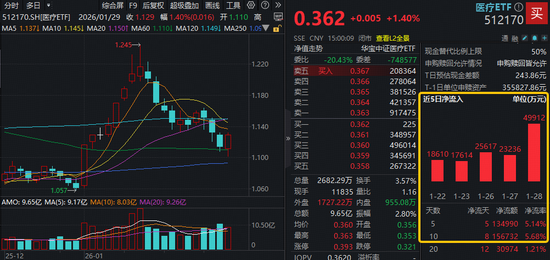
Core Viewpoint - The medical sector is showing signs of recovery in 2026, driven by policy clarity and the realization of innovative outcomes, leading to increased investment interest in medical ETFs [1][19]. Group 1: Current Core Logic and Positive Factors in the Medical Sector - The transition from "selling expectations" to "performance realization" is evident, with domestic medical device innovations gaining global recognition, thus becoming a new growth engine for the industry [3][21]. - The medical sector is experiencing a high proportion of companies meeting or exceeding their 2025 performance forecasts, indicating a favorable industry outlook [3][21]. - The recent surge in AI medical technologies is not just speculative but demonstrates clear cost-reduction and efficiency-enhancing capabilities in hospital operations and drug development [4][23]. Group 2: Policy Environment Changes - The policy environment has shifted from a "speed over quality" approach to one of "value co-creation," with recent signals indicating a more favorable stance on centralized procurement and medical insurance negotiations [6][24]. - Optimizations in the approval process for innovative medical devices and continuous improvements in procurement rules are expected to enhance the competitive landscape and restore profitability for companies [8][26]. - The introduction of a market exclusivity period in the revised Drug Administration Law is expected to boost long-term investment confidence in pharmaceutical R&D [9][27]. Group 3: Financial Support for Medical Equipment Updates - The national "two new" policy, focusing on large-scale equipment updates and consumer goods replacement, has allocated 62.5 billion yuan in special bonds to support medical equipment upgrades, benefiting listed companies in the medical device sector [10][28]. - There is a significant demand for replacing outdated medical equipment in domestic healthcare institutions, coupled with policies favoring domestic alternatives, leading to increased orders and market share for leading companies in imaging, surgical robots, and in-vitro diagnostics [10][28]. Group 4: Reasons for Recent Fund Inflows into Medical ETF (512170) - The medical ETF (512170) has seen substantial inflows, with a single-day capital increase of 499 million yuan on January 28, 2026, and a total of 1.8 billion yuan over nine consecutive trading days, reflecting a shift in market sentiment towards value recovery [1][19][14]. - The medical ETF is currently one of the largest medical-themed ETFs in A-shares, with a market size exceeding 26 billion yuan, driven by high cost-effectiveness and a consensus on bottom valuations [14][32]. - The ETF closely tracks the CSI Medical Index, with significant allocations in medical devices (53.17%) and medical services, making it an attractive option for both institutional and retail investors [14][32][34].
读完这篇文章,你会比95%的人更懂Hims & Hers
GLP1减重宝典· 2026-01-29 15:39
Core Viewpoint - Hims & Hers Health is redefining healthcare delivery by focusing on consumer relationships and subscription-based services rather than traditional one-time medical consultations [5][11]. Company Overview - Hims & Hers Health, founded in 2017 and headquartered in San Francisco, is a publicly traded company centered on DTC digital healthcare, initially addressing male health issues like erectile dysfunction and hair loss through online consultations and direct medication delivery [6][8]. Business Structure - The user journey is standardized, where users complete health questionnaires online, receive prescriptions after review, and have medications delivered, primarily through cash payments, minimizing reliance on insurance [9]. - Hims views telehealth as a subscription service for chronic health needs, focusing on long-term relationships rather than one-time visits, leading to predictable cash flow and higher customer lifetime value [11]. Product Selection Capability - Hims' success is attributed to its clear and validated product selection criteria, focusing on long-term demand, manageable medical risks, and high consumer sensitivity to privacy and convenience [12][14]. - The company has introduced new product categories, particularly in weight management, integrating them into existing subscription models to foster long-term service relationships [14]. AI Integration in Business - AI is embedded in Hims' operations for user onboarding, service scheduling, and long-term management, enhancing decision-making based on user health data rather than replacing medical professionals [15][17]. - AI aids in structuring user interactions, analyzing behavior data, and optimizing product offerings, creating a data-driven cycle for service and product iteration [17]. Competitive Advantage - Hims' competitive edge stems from a multi-layered approach, including a deep understanding of compliance, data accumulation from subscription relationships, and establishing itself as a health management entry point for users [18][20].