生成式AI

Search documents
高通发布AI200与AI250,升级数据中心AI推理解决方案
Huan Qiu Wang· 2025-10-28 12:47
Core Insights - Qualcomm has launched next-generation AI inference optimization solutions for data centers, including acceleration cards and rack systems based on Qualcomm AI200 and AI250 chips, focusing on rack-level performance and memory capacity optimization to support generative AI inference across various industries [1][3]. Group 1: Qualcomm AI200 and AI250 Solutions - The Qualcomm AI200 solution is designed for rack-level AI inference, targeting large language models (LLM), multimodal models (LMM), and other AI workloads, with advantages in low total cost of ownership and performance optimization. Each acceleration card supports 768GB LPDDR memory, meeting high memory capacity needs while controlling costs [3][4]. - The Qualcomm AI250 solution introduces a near-memory computing architecture that achieves over 10 times effective memory bandwidth improvement while significantly reducing power consumption, enhancing efficiency and performance for AI inference workloads. It also features decoupled AI inference capabilities for efficient hardware resource utilization [3][4]. Group 2: Common Features and Software Support - Both Qualcomm AI200 and AI250 rack solutions share several common technical designs, including support for direct liquid cooling to enhance thermal efficiency, compatibility with PCIe vertical expansion and Ethernet horizontal expansion to meet various deployment needs, and built-in confidential computing features to ensure the security of AI workloads. The total power consumption for the entire rack is controlled at 160 kilowatts, aligning with data center energy management standards [3][4]. - Qualcomm provides a large-scale AI software stack that covers the entire link from application layer to system software layer, optimized for AI inference scenarios. This software stack supports mainstream machine learning frameworks, inference engines, generative AI frameworks, and decoupled services for LLM/LMM inference optimization [4][5]. Group 3: Future Plans - The Qualcomm AI200 is expected to be commercially available by 2026, while the AI250 is planned for market launch in 2027. Qualcomm aims to iteratively advance its data center product technology roadmap annually, focusing on optimizing AI inference performance, energy efficiency, and total cost of ownership to better meet the evolving demands of generative AI [5].



豆包凶猛,深度解析字节AI战略
3 6 Ke· 2025-10-28 12:27
Core Insights - The generative AI market is highly competitive, with ByteDance's Doubao model regaining its position among the top players after a quiet start in early 2023 [1] - ByteDance's AI strategy is characterized by a "one chessboard" approach, which is relatively rare among major domestic companies [7][8] Group 1: Doubao App Strategy - Doubao App has become the largest AI chat assistant in China, with over 157 million monthly active users as of August 2025, surpassing competitors like DeepSeek [2] - The app is designed to be user-friendly and accessible, featuring a cartoon character as its icon and supporting various communication modes [2][3] - Concerns have been raised about Doubao's ability to handle complex queries, but ByteDance claims this is intentional to cater to a broader audience [3] - The appointment of Zhao Qi to lead Doubao indicates a shift towards accelerating user growth and monetization strategies [3] Group 2: Doubao Model Positioning - Doubao's underlying model is competitive with other leading domestic models like DeepSeek and Alibaba's Qwen, but still lags behind the most advanced international models [4][5] - The Doubao model has seen rapid growth, with daily token usage exceeding 30 trillion by September 2025, reflecting significant adoption since the release of version 1.6 in June [5] - Despite its domestic success, Doubao's international presence is limited, with low engagement in overseas markets [5][6] Group 3: "One Chessboard" Strategy - ByteDance's "one chessboard" strategy integrates branding, product interaction, and commercialization across its AI offerings [8] - The Doubao model has been effectively utilized in various applications, including mobile devices and smart vehicles, enhancing its market reach [8][10] - The integration of Doubao's capabilities into existing ByteDance products has created a closed-loop system that facilitates user engagement and monetization [11] - ByteDance's internal testing of AI products before external release ensures a robust product-market fit [11] Group 4: Future Challenges - ByteDance faces challenges in keeping pace with global giants like OpenAI and Google while exploring monetization pathways in both domestic and international markets [12] - The company must also address infrastructure and ecosystem complexities as it continues to develop its AI capabilities [12]
海兰信(300065):盈利质量提升、产能布局加速,为长期竞争力奠定坚实基础
Soochow Securities· 2025-10-28 11:05
Investment Rating - The investment rating for the company is "Buy" (maintained) [1] Core Insights - The company reported a significant increase in revenue and net profit for the first three quarters of 2025, with total revenue reaching 580 million yuan, a year-on-year increase of 128.52%, and a net profit of 39.81 million yuan, up 290.58% compared to the previous year [1][7] - The growth in revenue is primarily driven by concentrated deliveries of smart navigation and subsea data center orders, which have led to a substantial increase in operating profit [7] - The company has a lower asset-liability ratio of 21.83%, down 3.4 percentage points year-on-year, indicating a stronger financial position for future expansion [7] Financial Performance Summary - Revenue projections for 2023A, 2024A, 2025E, 2026E, and 2027E are 753.69 million, 383.94 million, 1,037.75 million, 1,188.89 million, and 1,365.33 million yuan respectively, with a notable year-on-year growth of 170.29% in 2025E [1][8] - The forecasted net profit for 2025E is 98.93 million yuan, reflecting a significant increase of 1,105.68% compared to the previous year [1][8] - The company's earnings per share (EPS) is projected to be 0.14 yuan in 2025E, with a price-to-earnings (P/E) ratio of 148.42 [1][8] Cash Flow and Operational Efficiency - The operating cash flow for the first three quarters of 2025 was -28 million yuan, primarily due to upfront equipment procurement costs for subsea data center projects [7] - The company expects to achieve positive operating cash flow by the end of the year as customer payments peak in Q4 [7] - The inventory has decreased by 17.35% year-on-year, indicating manageable inventory risk [7]

种子轮、2500 万美金,营销 Agent 创业公司,帮客户销售额增长 40%
Founder Park· 2025-10-28 06:04
Core Insights - MAI, a marketing AI agent company, has raised $25 million in seed funding led by Kleiner Perkins, with participation from other investors [3][7] - The company aims to address the challenges faced by small and medium-sized enterprises (SMEs) in utilizing advertising platforms like Google Ads effectively [5][6] Group 1: Product and Market Positioning - MAI's first product, "Google Ads Agent," is designed to enhance advertising effectiveness for brands by leveraging their data for better ad spending and conversion rates [6][7] - The AI agent operates 24/7, automatically managing ad campaigns, adjusting spending, and optimizing performance in real-time [9][11] - MAI has reportedly helped clients achieve over 40% sales growth and manage millions of dollars in monthly Google Ads spending autonomously [7][11] Group 2: Technology and Innovation - The platform integrates deeply with unique business data, allowing for real-time multi-variable optimization and proactive issue detection [11][16] - MAI's approach democratizes access to advanced advertising technology, enabling SMEs to compete with larger firms without needing extensive technical teams [14][17] - The advent of generative AI allows for customized marketing solutions tailored to individual business needs, enhancing overall efficiency [18][19] Group 3: Investor Perspective - Investors are attracted to MAI's potential to disrupt the marketing landscape dominated by large corporations, recognizing the founders' deep expertise in advertising technology [23] - The integration of AI into marketing decision-making processes is seen as a transformative step, moving away from traditional experience-based strategies to data-driven optimization [23]

韩国总统给游戏正名背后
3 6 Ke· 2025-10-28 05:20
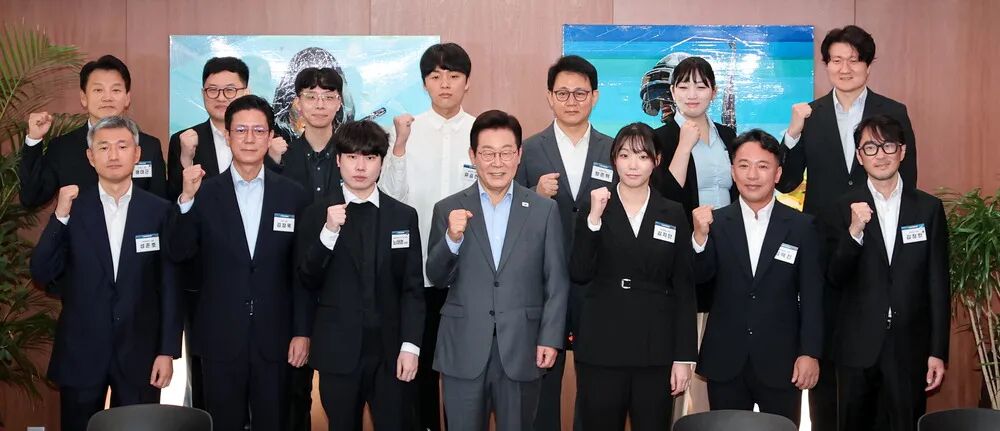
Core Viewpoint - The South Korean government, under President Lee Jae-myung, has shifted its stance on the gaming industry, recognizing it as a vital cultural sector rather than a substance of addiction [1][8][36]. Group 1: Government's New Policies - President Lee Jae-myung has publicly redefined gaming, stating it should not be classified alongside addictive substances like drugs and alcohol, which has previously stifled the industry [8][9]. - The government has abolished the controversial Game Rating and Administration Committee's pre-approval system, which had complicated the game approval process [9][10]. - Financial support has been allocated for the development of AI games and to assist small and medium-sized gaming companies in expanding overseas [10][11]. - The government has proposed to delay the classification of "gaming disorder" as a disease, aiming to reduce the stigma associated with gaming [11][12]. Group 2: Historical Context and Industry Challenges - For over 20 years, the South Korean gaming industry faced strict regulations, including the "Cinderella Law" and the classification of games as addictive substances [17][18]. - Despite these challenges, the gaming sector remained a significant source of foreign exchange, but recent years have seen a decline in growth and profitability [18][20]. - In 2023, the gaming industry experienced its first decline in 14 years, with over 40% of gaming companies reporting no profits and an annual operating profit decrease of nearly 60% [18][20]. Group 3: Global Trends and Competitiveness - Other countries, such as Saudi Arabia and India, are increasingly recognizing the strategic importance of the gaming industry, integrating it into national development plans [22][23]. - The European Union has also begun to support its gaming industry through legislation aimed at fostering growth [25]. - South Korea's shift in policy is seen as a necessary response to the competitive landscape, where it risks losing its status as a leading gaming nation if it continues to view gaming negatively [28][29]. Group 4: Broader Implications of Gaming - The global gaming industry is valued at approximately $170 billion, surpassing the combined revenues of the music and film industries [39]. - Gaming is not merely an entertainment sector; it plays a crucial role in cultural output and national soft power [42]. - The technological advancements in gaming have significant spillover effects, influencing various fields such as AI, graphics, and communications [46][50].
AI不再「炫技」,淘宝要让技术解决用户每一个具体问题
机器之心· 2025-10-28 04:31
Core Viewpoint - The article discusses the transformative impact of generative AI on productivity and the evolution of e-commerce, particularly focusing on Alibaba's Taobao and its advancements in AI technology [2][6][11]. Group 1: AI Technology Evolution - The evolution of AI technology has accelerated, leading to the emergence of various models and applications, with a focus on multi-modal capabilities [3][11]. - Taobao has integrated AI deeply into its operations, upgrading its AIGX technology system to cover all necessary e-commerce scenarios [3][11]. - The introduction of generative AI is expected to bring a generational leap in productivity, with multi-modal intelligence becoming a core technology [11][12]. Group 2: Taobao's AI Innovations - Taobao launched RecGPT, a recommendation model with 100 billion parameters, enhancing the user experience by providing personalized recommendations [14][21]. - The generative recommendation algorithm can create new content based on user preferences, moving beyond traditional recommendation systems [16][20]. - The AI-driven video generation model, Taobao Star, automates the creation of promotional videos, significantly reducing content production costs for merchants [25][27]. Group 3: Open Source and Industry Impact - Taobao has open-sourced its reinforcement learning framework ROLL, aimed at improving user experience and enhancing model training efficiency [38][39]. - The company is gradually releasing its validated capabilities to the external market, fostering industry growth towards a "superintelligent" era [39][40]. - The rapid advancements in AI processing complexity and reduction in error rates suggest that narrow AGI could be achieved within 5-10 years [40].


顶级阵容集结|李开复出席GOTC 2025主论坛,定义生成式AI下一站
Sou Hu Cai Jing· 2025-10-28 03:02
Core Insights - The GOTC Global Open Source Technology Summit (GOTC 2025) will take place in Beijing from November 1 to 2, featuring Dr. Kai-Fu Lee, CEO of 01.AI and Chairman of Innovation Works, as a keynote speaker [1][3] - Dr. Lee will discuss the advancements and opportunities in generative AI, focusing on the transition from ChatBots to autonomous decision-making agents [3][4] - The summit aims to connect global open source and AI ecosystems, gathering top scholars, industry leaders, and technical practitioners to explore innovative integration and high-quality development in the intelligent era [4] Company Insights - 01.AI, founded by Dr. Lee, is positioned as a leading player in the AI 2.0 wave, focusing on developing a global large language model platform and industry applications [3] - The company is recognized as a unicorn in the large model sector, emphasizing the rapid advancement of generative AI and the disruptive innovation of AI agents [3][4] - During the summit, 01.AI will launch the "Open Agent Kit platform," designed to provide intelligent solutions for enterprises and facilitate the integration of various open-source large models [4]

2025站酷设计周开幕 设计行业专属AI Agent发布
Xin Lang Ke Ji· 2025-10-28 02:32
Core Insights - The founder and CEO of Meitu, Wu Xinhong, discussed the impact of generative AI on designers, suggesting that technology accelerates the improvement of design work [1] - Wu emphasized that AI has shifted the role of designers from hands-on creation to defining visions and providing feedback, as basic design tasks are increasingly automated [1] - Meitu announced the launch of an AI design tool aimed at helping designers build AI-driven workflows, indicating a trend where major design platforms like Adobe and Figma are integrating AI technology [2] Group 1 - Generative AI is seen as a catalyst for change in the design industry, enhancing the role of designers rather than replacing them [1] - The shift in designers' roles involves a focus on deep thinking, precise prompt generation, aesthetic judgment, and project coordination among multiple AI agents [1] - The newly launched AI design tool by Meitu is positioned as a "super designer" AI agent, designed to support various design scenarios and integrated with the Zcool community [2]
关于生成式AI,这三个问题很关键
Jing Ji Guan Cha Wang· 2025-10-27 14:12
Core Insights - The rise of generative AI is reshaping industries, presenting unprecedented opportunities for technological innovation, process automation, and customer interaction experiences [1] - A report by Akamai Technologies and IDC indicates that 79% of surveyed enterprises believe generative AI will have a disruptive impact on their business within the next 18 months, with 37% already deploying it in production environments and 61% in testing and proof-of-concept stages [1] Group 1: Edge Services vs. Traditional Cloud Services - By 2027, 80% of CIOs are expected to adopt edge services to replace traditional cloud services, driven by the need for real-time performance and faster response times in AI applications [2] - Edge services, a distributed computing model, move computing, storage, and networking functions closer to the user, reducing data transmission distances and latency [2] - In scenarios like smart driving, edge services ensure quick data processing and response, enhancing safety by handling large volumes of sensor data in real-time [2] Group 2: Opportunities and Challenges in China - Key edge applications driving generative AI deployment include generative AI itself, predictive AI for business forecasting, and video editing/processing [4] - Chinese enterprises face unique opportunities with edge computing, enabling them to provide competitive AI applications globally, leveraging local innovation capabilities [4] - Challenges include compliance and data privacy issues, particularly with generative AI involving personal data, necessitating adherence to local laws and regulations [5] Group 3: Global Competitive Advantage through Edge Services - Among Chinese enterprises adopting generative AI, 96% utilize public cloud IaaS for training and inference workloads, surpassing the average in the Asia-Pacific region [7] - Edge computing supports Chinese companies in enhancing their global competitiveness by providing low-latency, high-reliability services in overseas markets [7] - The complexity of managing multi-cloud environments poses a challenge for 49% of enterprises, particularly in the context of rapid generative AI development [6][8] Group 4: Strategic Necessity of Edge Services - The rapid development of generative AI is transforming edge services from an auxiliary option to a strategic necessity for enterprises [8] - Companies must focus on achieving seamless data transfer and network connectivity across multi-cloud environments to leverage the benefits of generative AI and edge computing [8] - The goal for Chinese enterprises in their global expansion is shifting from merely cost advantages to establishing competitive barriers in intelligent experiences and service real-time capabilities [8]

在 Sora 诞生之前,胡修涵做了两年多的「二次元版 Sora」
Founder Park· 2025-10-27 12:30
Core Insights - Sora has rapidly gained millions of users globally, creating significant buzz in a short time [2] - The initial excitement around Sora has diminished, with users moving on from the novelty of the product [3] - A month after its launch, Sora has seen a surge in user-generated content, particularly on video platforms [4][5] - The product is appealing to a different user base than those who initially discussed it, indicating a shift in its audience [6] User Engagement and Content Creation - Sora's user engagement is characterized by a high volume of remix videos, with millions of views and likes, showcasing its viral potential [5][6] - The platform has similarities to a domestic startup, Nie Ta, which has been developing similar content creation tools for two years prior to Sora's launch [7] - The founder of Nie Ta, Hu Xiuhan, emphasizes that traditional frameworks may hinder the understanding of Sora's innovative nature [8][25] Market Position and Product Comparison - Sora is often compared to platforms like TikTok, but this comparison may limit the understanding of its unique value proposition [22][25] - The product is still in the process of defining its core needs and has not yet fully established its market position [22][25] - Sora's design allows for easy user interaction, enabling users to create content effortlessly [26] Community and User Dynamics - The community aspect of Sora is crucial, with a focus on user-generated content and the importance of fostering creativity among users [42][106] - The platform has seen a rise in user-organized activities and communities, enhancing engagement and content diversity [38][119] - The "Thousand Faces Plan" initiative has successfully attracted users to participate in collaborative content creation, leading to a vibrant community [115][118] Technological Integration and Future Directions - Sora's integration of AI and user-generated content is seen as a significant advancement in the content creation landscape [70][100] - The platform's ability to facilitate multi-modal content creation is a key differentiator, allowing for diverse user expressions [91][100] - Future developments will focus on balancing user engagement with the ease of content creation, ensuring a sustainable growth trajectory [108][112]