
数字金融

Search documents
稀土稳定币——奏响数字金融与战略资源融合的华美乐章
Sou Hu Cai Jing· 2025-08-13 14:43
Core Viewpoint - The launch of the rare earth-backed digital stablecoin represents a significant innovation in the digital finance sector, combining strategic resources with digital currency to enhance value stability and market resilience [1][3]. Group 1: Digital Stablecoin Overview - The rare earth stablecoin is anchored to rare earth resources, providing a tangible value basis that mitigates price volatility commonly seen in traditional digital currencies [3]. - The project leverages advanced technologies such as blockchain, big data, and artificial intelligence to create a secure, efficient, and transparent financial platform [3][4]. Group 2: Technological Applications - Blockchain technology ensures the authenticity and reliability of asset anchoring information and transaction records through its immutable and traceable characteristics [3]. - The use of big data allows for precise forecasting of rare earth resource reserves, production, and market demand, supporting the issuance and circulation of the stablecoin [3]. - Artificial intelligence enhances financial transaction monitoring and risk warning systems, ensuring the stable operation of the financial platform [3]. Group 3: Benefits for Stakeholders - The project creates a win-win situation for core state-owned enterprises and participating financial and technology institutions, showcasing their strengths and fostering resource sharing [6]. - Industry participants gain access to more convenient financing channels and lower-cost funding support through the stablecoin, addressing cash flow challenges [6]. - Institutional investors and individual users are presented with a new investment option that combines the convenience of digital currency with the stability of rare earth assets, offering potential for value preservation and appreciation [6]. Group 4: Economic Impact - The participation model encourages the formation of a new digital economy ecosystem for rare earth resources, promoting efficient utilization and deep integration of the rare earth industry with digital finance [6].


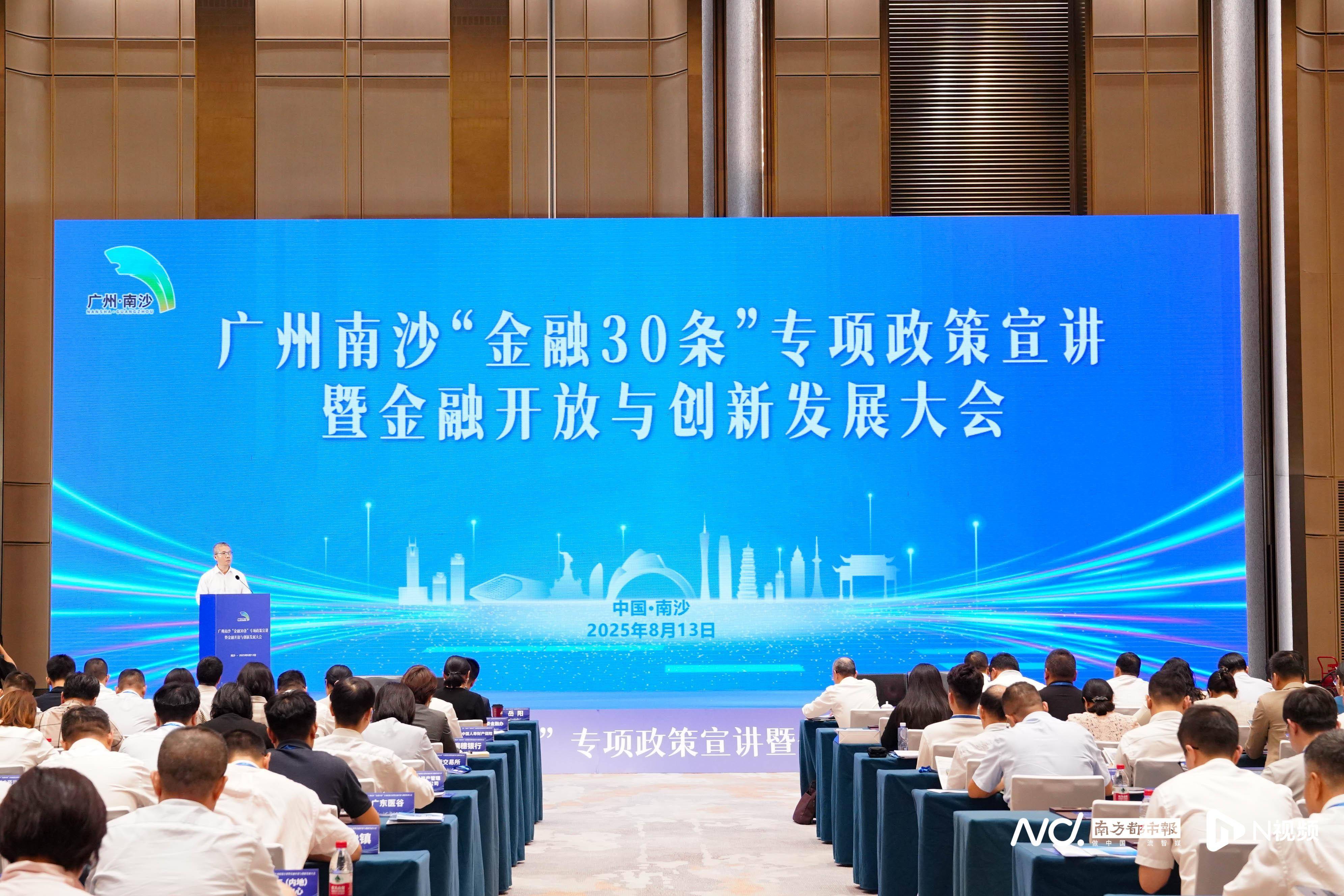
“南沙金融30条”有了实施方案!力争6年实现这个国际目标
Sou Hu Cai Jing· 2025-08-13 14:40
Core Viewpoint - The "Nansha Financial 30 Measures" aims to enhance financial support for the Guangdong-Hong Kong-Macao Greater Bay Area, with a focus on cross-border finance, climate investment, and leasing industries, establishing Nansha as a key international financial hub by 2025-2030 [1][5][19]. Implementation Plan - The implementation plan includes 88 specific measures across seven areas: improving financial services for innovation and entrepreneurship, enhancing financial services for social welfare, developing specialized financial services, promoting financial market connectivity, facilitating cross-border financial innovation, refining financial regulatory mechanisms, and ensuring supportive measures [5][8]. - The plan prioritizes support for technology innovation industries, high-end manufacturing, digital industries, marine industries, and youth entrepreneurship [5][6]. Digital Industry Focus - The plan emphasizes attracting key digital service institutions in blockchain and artificial intelligence, fostering local quality digital service providers, and establishing data computing centers and regulatory platforms [6][8]. - The integration of AI algorithms in trading and risk management is highlighted as a significant opportunity for the futures industry [6]. Financial Ecosystem Development - Nansha is implementing a comprehensive policy system to support the development of a unique financial port, enhancing the financial ecosystem and attracting high-end financial talent with rewards up to 18 million yuan [7][8]. - Financial support measures include subsidies for commercial factoring, financing guarantees, and insurance services to improve the quality of financial services for the real economy [8]. Key Projects and Initiatives - A series of key projects were signed during the financial innovation and development conference, including initiatives related to cross-border credit sharing and climate investment platforms [10][18]. - The Nansha Futures Industry Park, the first of its kind in the country, is set to officially open on September 30, 2024, covering an area of approximately 47,000 square meters and aiming to become a national hub for the futures financial industry [19].
稀土稳定币——开启数字金融新时代的大门
Sou Hu Cai Jing· 2025-08-13 13:13
Core Viewpoint - The introduction of the rare earth-backed digital stablecoin in China represents a significant innovation in the digital finance sector, leveraging rare earth resources as a core asset to enhance the stability and recognition of the digital currency in international markets [1][3]. Group 1: Project Overview - The rare earth stablecoin pilot project is a collaboration among central enterprises, financial institutions, and technology organizations, aiming to revitalize China's digital finance landscape [1]. - The stablecoin is anchored by rare earth mineral reserves and production, providing a tangible "hard asset support" that stabilizes its value [1][3]. Group 2: Technological Framework - The project utilizes a central bank alliance blockchain to create a secure, transparent, and efficient financial system, ensuring the authenticity and reliability of asset anchoring information [3]. - Blockchain technology enables real-time monitoring of rare earth resources, linking the stablecoin's value closely to the actual value of these resources [3]. - Advanced security measures, including encryption algorithms and identity authentication, are implemented to safeguard the issuance and circulation of the stablecoin [3]. Group 3: Market Participation - The pilot phase is open to select industry participants, institutional investors, and compliant individual users, fostering deep integration between industry and finance [4]. - Participants can benefit from the stablecoin's development, enhancing their core competitiveness and achieving asset preservation and appreciation [4]. Group 4: International Trade Implications - The rare earth stablecoin can serve as a new settlement currency in international trade, reducing reliance on traditional currencies like the US dollar and mitigating exchange rate risks [6]. - It offers a fast, convenient, and low-cost solution for cross-border payments, enhancing efficiency in global trade and investment [6]. - The stablecoin is positioned to provide a stable value benchmark for digital assets, promoting healthy market development [6].
广州出台88条金融举措支持南沙建设
Nan Fang Ri Bao Wang Luo Ban· 2025-08-13 08:38
Core Insights - The implementation plan aims to enhance financial support for Nansha, positioning it as a key financial hub in the Guangdong-Hong Kong-Macao Greater Bay Area and a demonstration window for financial openness in China [1][3] Group 1: Financial Support for Innovation and Entrepreneurship - The plan includes measures to promote innovative financial services, such as developing new bill discount products and enhancing financing support for technology and advanced manufacturing sectors [1] - It emphasizes the establishment of technology branches by commercial banks in Nansha to explore mixed financing models [1] Group 2: Social and Livelihood Financial Services - Initiatives to facilitate cross-border banking services for Hong Kong and Macao residents, including online credit card activation and digital RMB pilot projects, are outlined [2] Group 3: Development of Specialized Financial Services - The plan supports the Guangzhou Futures Exchange in researching electricity futures and launching more renewable energy futures [2] - It encourages the issuance of green and sustainable bonds by Greater Bay Area enterprises in Hong Kong and Macao [2] Group 4: Interconnectivity of Financial Markets - The plan aims to enhance the functionality of the free trade account system and promote cross-border cooperation between the Guangzhou Futures Exchange and the Hong Kong Stock Exchange [2] Group 5: Cross-Border Financial Innovation and Exchange - Proposals include establishing an international commercial bank in Nansha and attracting foreign sovereign wealth funds and venture capital firms [2] Group 6: Financial Regulatory Mechanisms - The plan emphasizes the need for improved coordination between central and local regulatory bodies and the establishment of risk prevention mechanisms in the Nansha Free Trade Zone [3] Group 7: Support Measures - The implementation plan includes policies to attract international financial talent and support the construction of an international talent special zone in Nansha [3]
Sea(SE.US)市值直逼星展集团,东南亚龙头宝座争夺战再起
Zhi Tong Cai Jing· 2025-08-13 07:21
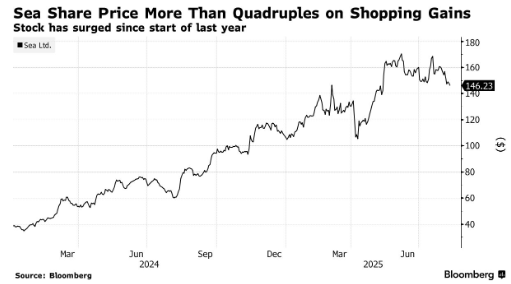
Group 1 - Sea's soaring sales are positioning it to reclaim the title of Southeast Asia's most valuable company, with a market valuation nearing $103 billion, just behind DBS Group's $113 billion [1] - The company's recent performance alleviated market concerns regarding its core e-commerce business, Shopee, as Southeast Asian consumers increasingly shift to online shopping [1][2] - Sea's revenue for the quarter ending June grew by 38% to a record $5.26 billion, surpassing analyst expectations of $5 billion, marking the largest stock price increase in over two years [2] Group 2 - Sea's logistics network, SPX Express, has significantly improved customer experience, contributing to nearly 30% growth in total e-commerce orders and gross merchandise value [2] - The company has raised merchant commission rates by approximately one-third in core markets since early last year, indicating confidence in attracting and retaining merchants due to its large user base and mature logistics services [2][3] - Sea's financial services segment, Monee, saw a 70% increase in sales to $882.8 million, while its gaming division, Garena, experienced a 23% revenue growth [3] Group 3 - Analysts expect that the growth across Sea's three main business segments will lead to a quadrupling of net profit by 2025, driven by strong momentum in the first half of the year and continued growth in the third quarter [3] - Improvements in advertising technology are anticipated to increase merchant spending and the number of advertisements, further enhancing monetization rates [3] - The scale effects, particularly in Brazil, are expected to lower average costs and enhance overall e-commerce profitability, with self-operated logistics remaining a key competitive advantage [3]


云知声再涨超10%破顶 公司积极投身AI领域 机构料其有望下月入通
Zhi Tong Cai Jing· 2025-08-13 07:12
Core Viewpoint - Yunzhisheng (09678) has seen a significant increase in stock price, rising over 10% and reaching a new high of 798.5 HKD, indicating strong market interest and potential growth opportunities [1] Group 1: Company Developments - In July, Yunzhisheng signed a memorandum of understanding with South Pacific Digital Technology Holdings to collaborate on the application of artificial intelligence technology, focusing on stablecoin issuance management and smart financial technology innovation [1] - The company is expected to be included in the Hong Kong Stock Connect program in September, as predicted by Huatai Securities, which could enhance its market visibility and liquidity [1] Group 2: Technological Strength - Yunzhisheng possesses strong technical capabilities, highlighted by its self-developed "Shanhai Model" with 60 billion parameters, ranking first in the MedBench evaluation in the medical field [1] - The company's applications span across various scenarios, including smart living and medical AI, with its voice interaction system utilized in smart homes, commercial spaces, and subways [1] Group 3: Market Applications - In the medical AI sector, Yunzhisheng provides voice input for medical records and quality control systems, serving 166 hospitals, which significantly enhances data entry efficiency and quality control standards [1]
券商多项排名首次公布!中信证券、中信建投等领先
Zheng Quan Shi Bao Wang· 2025-08-13 05:51
Core Insights - The China Securities Association (CSA) has released the results of a trial evaluation for securities firms, indicating that the scores will be used as the main basis for formal evaluations [1] - The evaluation system has shifted to a quantitative focus, with 90 points allocated to quantitative indicators and 10 points to qualitative indicators, along with an additional 5 points for specific contributions [2] Group 1: Evaluation Metrics - The quantitative evaluation measures performance in five key areas, including technology finance (50 points), green finance, inclusive finance, pension finance, and digital finance [2] - Specific metrics under technology finance include bond financing, equity financing, mergers and acquisitions, equity investment, and private equity investment [2] Group 2: Leading Firms - Major securities firms dominate the rankings in various categories related to the "Five Major Articles" in finance, with CITIC Securities and CITIC Construction dominating in technology bond underwriting and equity financing for tech companies [3][4] - In the ranking for underwriting technology innovation bonds, the top five firms are CITIC Securities (128.19 billion), CITIC Construction (89.86 billion), Guotai Junan Securities (63.68 billion), CICC (58.80 billion), and Huatai Securities (34.22 billion) [3] Group 3: Specific Rankings - In the ranking for serving technology companies in major asset restructuring transactions, the top five firms are CITIC Securities (32.07 billion), CITIC Construction (15.39 billion), China Galaxy Securities (11.50 billion), CICC (7.62 billion), and Huatai Securities (7.31 billion) [4] - For underwriting green bonds and low-carbon transition bonds, the leading firms are CITIC Securities (16.54 billion), CITIC Construction (12.29 billion), Guotai Junan Securities (11.14 billion), CICC (8.84 billion), and招商证券 (5.41 billion) [4] Group 4: Pension Products and Awards - In the ranking for selling personal pension products, the top five firms are CICC (24.83 million), China Galaxy Securities (18.06 million), Guotai Junan Securities (17.18 million),招商证券 (13.91 million), and Guosen Securities (13.78 million) [5] - The CSA also announced awards for financial technology development, with Guotai Junan Securities and CITIC Securities receiving first prizes for their respective projects [5]




太平人寿:以金融五篇大文章书写高质量发展新答卷
Jin Rong Shi Bao· 2025-08-13 02:26
Core Viewpoint - Taiping Life Insurance is committed to high-quality development in the financial industry, focusing on serving the public and fulfilling national responsibilities, as evidenced by its strong performance and innovative approaches in various financial sectors [1]. Group 1: Performance and Growth - In the first half of 2025, Taiping Life's core operating indicators showed positive trends, with original insurance premiums reaching 115.06 billion yuan, a year-on-year growth of 5.4%, maintaining a leading position in the industry [1]. - The company has launched a total of 258 commercial annuity products by the end of July 2025, covering various types of retirement insurance, including tax-deferred and personal pension insurance [2]. Group 2: Elderly Care and Pension System - Taiping Life is actively building a multi-tiered pension security system to address the aging population, enhancing product offerings, deepening ecological collaboration, and improving service quality [2]. - The company has established a comprehensive pension product system that includes exclusive commercial pension insurance, whole life insurance, and pension annuities, with 12 products approved for inclusion in the personal pension insurance product list [2]. Group 3: Ecological Collaboration - The company has integrated insurance products with medical, rehabilitation, and elderly care services, creating a closed-loop ecosystem that covers the entire life cycle of financial services [3]. - By mid-2025, Taiping Life's national elderly care service network covered 27 provinces and 54 cities, achieving comprehensive coverage [3]. Group 4: Service Quality Enhancement - Taiping Life has implemented technology-driven solutions for elderly care, creating a "barrier-free digital business hall" that utilizes remote identity verification and AI technology to provide convenient services for elderly clients [4]. - Offline service points have undergone comprehensive renovations to ensure a welcoming environment for elderly customers [4]. Group 5: Inclusive Finance Initiatives - The company has expanded its "Warm Series" products aimed at underserved populations, providing multi-layered insurance coverage for medical, disease, and accident risks [5]. - Taiping Life has launched the "Taiping Warm Forward Specific Industry Accident Insurance" targeting new citizens in five specific high-risk industries, enhancing risk protection for this demographic [6][7]. Group 6: Digital and Green Finance - Taiping Life has made significant strides in digital finance, achieving rapid claim processing times and enhancing customer experience through online and offline service integration [9]. - The company has invested over 420 billion yuan in technology finance and provided 117.1 billion yuan in green insurance coverage, supporting sustainable development initiatives [10]. Group 7: Future Commitment - Taiping Life aims to continue its commitment to high-quality development by enhancing product offerings, improving service efficiency, and fulfilling its responsibilities in building a strong financial nation [11].
东南亚网购热潮持续推高业绩 Sea(SE.US)Q2营收大增38%创新高
智通财经网· 2025-08-12 12:03
Group 1 - Sea's Q2 revenue exceeded analyst expectations, driven by increasing online shopping trends in Southeast Asia, with a record revenue of $5.26 billion, up 38% year-over-year [1] - Net profit rose significantly from $79.9 million to $414.2 million, although it slightly missed analyst forecasts of $444 million [1] - The performance alleviated concerns regarding the growth prospects of its e-commerce platform, Shopee, which faces intense competition from TikTok Shop and Lazada [1] Group 2 - Shopee has raised merchant commission rates by approximately one-third since early last year to enhance profitability, resulting in a 34% year-over-year revenue increase to $3.8 billion [2] - Sea is expanding into digital finance and logistics to solidify its market position, with its logistics service, SPX Express, handling a significant portion of Shopee's deliveries, and its financial service, Monee, reporting a 70% sales increase to $882.8 million [3] - The gaming segment, Garena, also saw a 23% increase in bookings, indicating a recovery in its financial health [3] Group 3 - Despite strong performance, competition remains a potential risk, with Shopee's monthly active users (MAU) remaining flat while competitors like Temu and TikTok saw significant growth [3] - In Southeast Asia, Shopee's MAU growth was stagnant, while Temu's increased by 55%, and in Brazil, Shopee's MAU grew by 4.6% compared to MercadoLibre's 5% and Temu's 35% [3]
“南沙金融30条”施工图出炉 88项举措推动政策加快落地
2 1 Shi Ji Jing Ji Bao Dao· 2025-08-12 10:49
Core Points - The Guangzhou government has officially released the implementation plan for the "Nansha Financial 30 Measures," aimed at enhancing financial support for the Guangdong-Hong Kong-Macao Greater Bay Area cooperation [1][2] - The implementation plan includes 88 specific measures across five key areas, building on the initial "Nansha Financial 30 Measures" released in May [1][3] Group 1: Key Highlights of the Implementation Plan - The plan emphasizes three main highlights: focusing on the Bay Area for innovation, facilitating financial services in collaboration with Hong Kong and Macau, and promoting high-level institutional openness to the world [3] - Specific measures include the introduction of innovative financial products, support for technology innovation, and encouragement for domestic insurance institutions to establish private equity funds in Nansha [3][4] Group 2: Financial Services for Social Welfare - The plan aims to enhance financial services for residents from Hong Kong, Macau, and international individuals, including facilitating cross-border payment services and credit financing [5][6] - It proposes expanding the scope of cross-border payment services and promoting the use of digital RMB in various sectors such as consumption, tourism, and education [6] Group 3: Cross-Border Financial Innovation and Exchange - The implementation plan positions Nansha as a financial innovation hub and a demonstration window for financial openness, with specific measures to develop unique financial services and enhance market connectivity [7][8] - It includes initiatives to attract international financial institutions and promote cross-border RMB business innovation, aiming to establish a comprehensive service base for the Belt and Road Initiative [8]