制度创新

Search documents
海南封关与海南产业发展座谈会:自贸港的“贸”是“大经贸”
Jing Ji Guan Cha Wang· 2025-12-02 02:46
Core Insights - Hainan Free Trade Port will officially start its full island closure operation on December 18, 2025, aiming to explore a development path with Chinese characteristics while enhancing international discourse power and economic governance [2][3] Group 1: Economic Development and Challenges - The "trade" aspect of Hainan Free Trade Port encompasses a broad range of economic activities, including investment, trade, and the flow of production factors, emphasizing the importance of institutional innovation [3] - Hainan has three major resource advantages: a vast sea area of 200,000 square kilometers, a tropical climate, and the Wenchang commercial satellite launch base, alongside ten policy advantages including five tax incentives [4] - Challenges include high logistics costs, a small market scale, and an unsatisfactory business environment, necessitating a focus on building a modern industrial system that leverages Hainan's unique strengths [4] Group 2: Taxation and Policy Framework - The tax system design for Hainan Free Trade Port is based on principles of "zero tariffs, low tax rates, simplified tax systems, strong rule of law, and phased implementation," with key tax incentives including zero tariffs on imported goods and a 15% corporate and personal income tax rate [5] - The consensus among experts emphasizes the need to adhere to market economy principles, streamline the relationship between administration and the market, and implement a broad economic trade approach [5] Group 3: Health Industry Opportunities - The "zero tariff" policy post-closure will significantly reduce costs in key areas such as medical devices and pharmaceuticals, with expected cost reductions of 15%-20% for high-end equipment [6] - The introduction of tax incentives and enhanced R&D deductions will attract global pharmaceutical and medical enterprises, fostering a comprehensive ecosystem from "introduction to transformation to production" [6] - The integration of traditional Chinese medicine, sports rehabilitation, and modern healthcare will highlight Hainan's unique advantages in health and wellness, aiming to create a high-end medical and wellness industry hub [6]


以更多突破性制度创新 推动营商环境再优化
Hai Nan Ri Bao· 2025-12-02 02:22
Core Viewpoint - The article emphasizes the importance of innovative institutional reforms to further optimize the business environment in Hainan Free Trade Port, aiming to establish it as a significant gateway for China's new era of opening up [1][2]. Group 1: Institutional Innovations - Hainan has established the first provincial-level business environment construction bureau in the country, creating a "1322" work system that integrates government services, regulatory inspections, data sharing, and social credit [2]. - The "legal diagnosis" mechanism reform has been implemented, which coordinates across regions, levels, and departments to effectively resolve complex historical issues [2]. Group 2: Business Environment Improvements - The reforms have led to significant improvements in the business environment, with businesses reporting a reduction in the number of administrative processes, indicating a more streamlined approach [2]. - The focus remains on creating a market-oriented, law-based, and international business environment through continuous innovative reforms [2].
外贸企业从被动候检到主动控链 松江从“世界工厂流水线”放眼“全球资源
Jie Fang Ri Bao· 2025-12-02 01:55
Core Insights - The article discusses the significant transformation in cross-border logistics in Shanghai, particularly through the establishment of the Songjiang Air Pre-Station, which enhances efficiency and redefines air transport processes [1][4][6]. Group 1: Infrastructure and Policy Changes - The Songjiang Air Pre-Station, launched in July and officially opened in November, represents a pioneering model in cross-border logistics, integrating "district-port linkage" to optimize air transport processes [1][4]. - The transition from a traditional export processing zone to a comprehensive bonded zone has positioned Songjiang as an "innovation engine" for foreign trade, leveraging policy advantages and manufacturing strengths [2][3]. Group 2: Efficiency Improvements - The Air Pre-Station allows for efficient sorting, booking, and customs pre-declaration, significantly reducing the time and costs associated with traditional airport logistics, with customs efficiency improved by 30% and logistics costs decreased by 15% [4][6]. - The new logistics model enables enterprises to proactively manage their supply chains, transforming the logistics process from a passive waiting game to a streamlined operation [5][6]. Group 3: Economic Impact and Market Dynamics - The article highlights the diversification of Songjiang's foreign trade, with private enterprises showing a 40.3% year-on-year increase in import and export volume, now accounting for 40.2% of total trade [8]. - The shift from a reliance on a few dominant players to a more varied market landscape is evident, with new technology products driving growth and non-U.S. markets seeing significant increases, particularly in Belt and Road countries [8][9]. Group 4: Strategic Initiatives and Future Outlook - Songjiang is exploring the expansion of the Air Pre-Station's capabilities and considering future railway hub developments to enhance its integration into global supply chains [6][8]. - The region's approach combines institutional innovation and ecosystem development, aiming to transition from a manufacturing hub to a global resource allocation center [7][9].
2026年中国经济怎么看、怎么干?刘世锦、李扬、蔡昉、杨瑞龙最新发声
证券时报· 2025-12-01 14:16
Core Insights - The article discusses key recommendations from prominent economists at the China Macro Economic Forum (CMF) regarding China's economic development during the "14th Five-Year Plan" period and beyond, emphasizing the importance of structural reforms and innovation to stimulate domestic vitality [1][2]. Group 1: Economic Growth and Consumption - Liu Shijun advocates for increasing the consumption share of GDP by 1 percentage point annually during the "14th Five-Year Plan" period, highlighting the need to stabilize and expand terminal demand to boost investment [6][8]. - The report presented by Liu Xiaoguang suggests setting cross-cycle targets for economic growth, including a real GDP growth target of 4.5%-5% and a CPI target of 1%-3% for 2026 [2]. Group 2: Financial Factors and Market Opportunities - Li Yang identifies four major financial factors influencing economic operations from 2026 onwards: changes in social financing structure, declining interest rates, new opportunities in capital markets, and a new paradigm for monetary policy [4]. - The phenomenon of "disintermediation" is noted as a positive trend, with funds flowing out of the banking system, which could create better conditions for capital market development [3][4]. Group 3: Employment and Income Distribution - Cai Fang emphasizes the need for a coordinated approach to promote employment, increase income, and stabilize expectations, proposing a framework of "five combinations" to address these issues [10][11]. - The focus on increasing per capita income and improving income distribution is critical, with suggestions to enhance labor remuneration and expand public services to reduce disparities [12][13]. Group 4: Long-term Economic Strategy - Yang Ruilong stresses the importance of addressing short-term economic challenges with a long-term perspective, advocating for the modernization of the industrial system and the integration of technological innovation [14][15]. - The article concludes that despite current pressures, the fundamental trend of China's economy remains positive, with potential for sustainable growth through structural reforms and innovation [1][15].

新疆外贸发展活力持续迸发
Jing Ji Ri Bao· 2025-11-29 23:49
Group 1 - Xinjiang's foreign trade reached a historical high in the first three quarters, with a total import and export value of 393.14 billion yuan, a year-on-year increase of 22.1% [1] - The growth in foreign trade is attributed to Xinjiang's geographical advantages, policy dividends, and the active release of reform vitality, with a continuous increase in the proportion of private enterprises [1] - Since the establishment of the Xinjiang Free Trade Zone, 76.3% of the reform pilot tasks outlined in the overall plan have been implemented and achieved phased results [1] Group 2 - The customs, railways, border inspection, and local government departments are collaborating to enhance the efficiency of railway port operations through initiatives like "digital ports" and "paperless customs clearance" [2] - As of October, the number of China-Europe (Central Asia) trains passing through the Horgos railway port exceeded 50,000, marking a significant achievement in the reform [2] - In the first three quarters, cargo volumes at Xinjiang's road, rail, and air ports increased by 23.6%, 11.6%, and 104.8% respectively, with 13,000 China-Europe (Central Asia) trains entering and exiting through Xinjiang, a growth of 9.2% [2]
给公园立新规矩是大城精治题中之义
Bei Jing Qing Nian Bao· 2025-11-29 23:26
Core Viewpoint - The revision of the Beijing Park Regulations aims to enhance the management and operation of parks, reflecting the city's commitment to improving urban governance and meeting the diverse needs of its citizens [1][2][4] Group 1: Legislative Changes - The revised draft includes detailed regulations on classification and grading management, pet entry rules, park information systems, and operational standards [1] - The revision emphasizes the need for precise policies that respect the diversity of park development and aims to elevate successful practices into legal frameworks [2][4] Group 2: Park Development Goals - By the end of 2024, Beijing is expected to have 1,100 parks, with a coverage rate of 92.92% for park green space within a 500-meter radius [1] - The city plans to establish 25 urban park recreation vitality circles in the next five years, aiming for a total of 1,300 parks by 2035 [2] Group 3: Addressing Citizen Needs - The revision responds to the evolving demands of citizens for parks, shifting from basic recreational needs to more diverse activities such as camping, fitness, and cultural events [2][3] - It introduces a balance between leisure and ecological protection, and aims to clarify the rights and responsibilities of park users and managers [3] Group 4: Governance and Management - The revision reflects a shift from a prohibition-based management model to a service-oriented approach, focusing on enhancing citizens' sense of happiness and safety in parks [4] - It highlights the importance of using legal frameworks to address urban governance challenges and to solidify effective management practices [4]
前三季度进出口总值同比增长超两成 新疆外贸发展活力持续迸发
Jing Ji Ri Bao· 2025-11-29 23:02
Core Insights - Xinjiang's foreign trade reached a historical high in the first three quarters, with a total import and export value of 393.14 billion yuan, representing a year-on-year growth of 22.1% [1] - The growth is attributed to Xinjiang's geographical advantages, policy benefits, and ongoing reforms that enhance the vitality of foreign trade enterprises, particularly private enterprises [1] - The establishment of the Xinjiang Free Trade Zone has led to significant institutional innovations, with 76.3% of the reform pilot tasks outlined in the overall plan having been implemented by August this year [1] Trade Performance - The customs, railways, border inspection, and local government departments are collaborating to enhance the efficiency of railway port operations through initiatives like "digital ports" and "paperless customs clearance" [2] - As of October, over 50,000 China-Europe (Central Asia) freight trains have passed through the Horgos railway port, marking a significant achievement in the region's logistics capabilities [2] - In the first three quarters, cargo volumes at Xinjiang's road, rail, and air ports increased by 23.6%, 11.6%, and 104.8% respectively, with 13,000 China-Europe (Central Asia) freight trains entering and exiting through Xinjiang, a growth of 9.2% [2] Institutional Innovations - The implementation of 27 customs reform pilot experiences from the State Council has been effective in Xinjiang, along with five provincial-level institutional innovations such as the "port + unloading site" joint supervision model for imported copper concentrate [1] - The focus remains on enhancing regulatory efficiency and service levels to support the development of industrial clusters along the Silk Road Economic Belt [2]
陕西高水平对外开放蹄疾步稳
Shan Xi Ri Bao· 2025-11-27 22:36
Group 1: Core Insights - The article highlights the significant progress made by Shaanxi in integrating into the Belt and Road Initiative, with local enterprises expanding their overseas operations and enhancing logistics capabilities [1][2] - Shaanxi has implemented over 20 innovative reforms in its Free Trade Zone, significantly improving customs clearance efficiency and reducing transportation costs [2][5] - The province has established 14 overseas agricultural technology demonstration parks, creating a comprehensive supply chain for agricultural products [3] Group 2: Trade and Economic Development - Shaanxi is focusing on cultivating new foreign trade growth drivers by promoting service trade innovation and expanding into new markets [5][6] - The province's high-tech and electromechanical product exports are projected to grow significantly, with service trade expected to increase by 30.3% in 2024 [6] - The establishment of the Shaanxi Silk Road Data Trading Center aims to enhance data service trade, with expected transaction volumes reaching over 1 billion yuan by 2025 [5] Group 3: Investment and Infrastructure - The province has improved its business environment through optimized government services and financial support, facilitating faster project approvals and construction timelines [7][8] - Shaanxi has seen an increase in foreign investment, with the number of trade partner countries rising from 194 to 218, and over 200 Fortune 500 companies investing in the region [9]
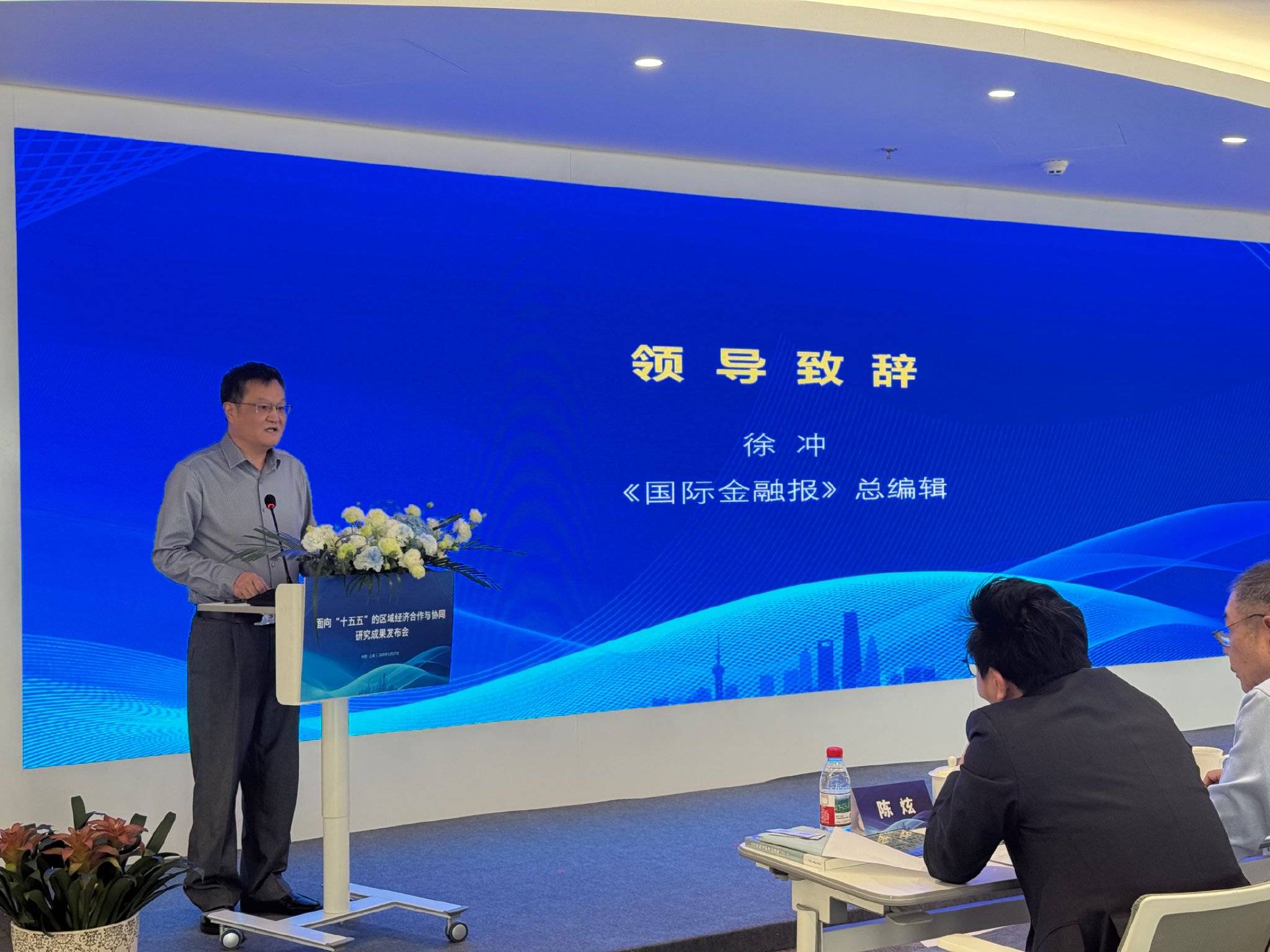
《国际金融报》总编辑徐冲:区域协同发展不仅需要“硬联通”,更需要“软联通”
Sou Hu Cai Jing· 2025-11-27 09:40
Core Viewpoint - The conference focused on the "14th Five-Year Plan" achievements and the new challenges and tasks for the "15th Five-Year Plan," emphasizing the importance of understanding the internal logic of regional coordinated development [3][4]. Group 1: Regional Economic Cooperation - The conference was organized by multiple institutions to release research results related to regional economic cooperation and collaboration under the "15th Five-Year Plan" [1]. - The aim is to provide intellectual support and practical references for high-quality regional economic development through the release of mid-term research results and application system construction [1]. Group 2: Role of Media - The media's role in regional coordinated development is evolving, serving as a platform for dialogue and experience sharing among various stakeholders [4]. - The media aims to present economic news in a more engaging and insightful manner, revealing the internal logic and future trends of regional collaborative development [4]. Group 3: Infrastructure and Innovation - The "15th Five-Year Plan" requires not only hard connectivity through infrastructure but also soft connectivity through institutional mechanisms, innovative elements, and public services [5]. - The conference is expected to spark new ideas and insights that will contribute to regional coordinated development in the context of China's modernization efforts [5].
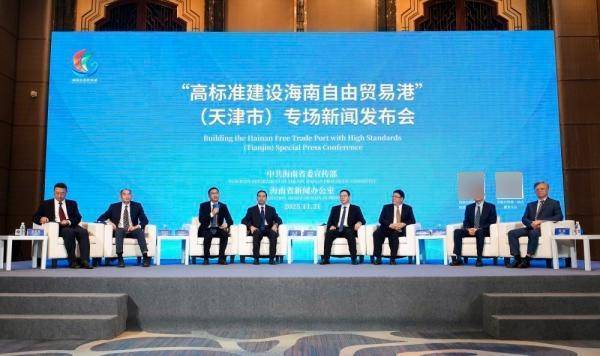
中国南北“自贸联动”推进制度创新
Sou Hu Cai Jing· 2025-11-22 16:43
Core Viewpoint - The press conference highlighted the progress and future prospects of the Hainan Free Trade Port and its collaboration with Tianjin, emphasizing the institutional innovations achieved through "free trade linkage" between the two regions [2][3]. Group 1: Cooperation and Achievements - The cooperation between Tianjin and Hainan has deepened over the past year, resulting in significant achievements [2]. - A comprehensive cooperation framework agreement was signed between the first free trade pilot zone in northern China and the Hainan Free Trade Port, outlining 24 collaborative initiatives in various sectors such as marine cooperation, healthcare, and green technology [2]. - Strategic cooperation agreements have been established, including a zero-carbon international hub port initiative and a new model for cross-regional development in the national fishing port economic zone [2]. Group 2: Innovations and Regulatory Framework - Innovations in customs supervision have been made, including the signing of a memorandum for cross-border bonded display trading, marking the first such transaction in the country [3]. - The two regions are aligning their cooperation with international trade rules, such as CPTPP and DEPA, to enhance their regulatory frameworks [3]. - The construction of free trade pilot zones is a strategic initiative by the central government to promote reform and opening up, marking a milestone in China's economic development [3]. Group 3: Future Prospects - The full closure operation of the Hainan Free Trade Port is set to commence on December 18, 2025, which is expected to provide new opportunities for deepening the "free trade linkage" between the two regions [4]. - Tianjin aims to leverage the closure of Hainan to upgrade cooperation from framework implementation to deeper integration, fostering innovative pilot projects with high replicability [4]. - The goal is to create a high-level free trade network that integrates and serves national strategic initiatives, enhancing the competitive advantages of both regions [4].