
半导体国产替代

Search documents
新莱应材拟投资20亿元 建半导体核心零部件项目
Zheng Quan Shi Bao· 2025-10-23 17:19
Core Viewpoint - The company Xinlai Materials is expanding its semiconductor core component project through its subsidiary Fangxin Precision, which is expected to significantly enhance its revenue scale and core competitiveness in the semiconductor industry [1][3]. Group 1: Project Announcement - On October 23, Xinlai Materials announced that its wholly-owned subsidiary Fangxin Precision plans to further invest and expand in Kunshan, establishing a semiconductor core component project [1]. - Fangxin Precision signed a project investment framework agreement with the Kunshan Lujia Town government, aiming to create a long-term cooperation mechanism to strengthen the semiconductor industry chain [1]. Group 2: Project Details - The project will focus on the research, production, and sales of gas distribution plates and semiconductor aluminum chambers, providing precision cleaning services for semiconductor, TFT, and OLED equipment [1]. - Upon reaching full production, the project is expected to generate an annual output value exceeding 1.5 billion yuan, with a total investment of 2 billion yuan [1]. Group 3: Company Performance - Xinlai Materials specializes in the research, production, and sales of clean application materials and ultra-pure materials, primarily serving the food safety, biomedicine, and semiconductor sectors [2]. - In the first half of 2025, Xinlai Materials reported a revenue of 1.409 billion yuan, a year-on-year decrease of 0.62%, and a net profit attributable to shareholders of 108 million yuan, down 23.06% year-on-year [2]. Group 4: Strategic Importance - The agreement with the Kunshan government is seen as a key move to leverage the domestic substitution strategy in the semiconductor sector, enhancing the company's sustainable development capabilities [3]. - The signing of this agreement is not expected to impact the company's existing business operations or its financial results for 2025 significantly, with future impacts dependent on subsequent project cooperation agreements [3].

20亿!这只牛股拟投建新项目
Zhong Guo Ji Jin Bao· 2025-10-23 13:17
Core Viewpoint - Company Xinlai Materials (新莱应材) has signed a project investment framework agreement with the government of Kunshan, aiming to invest 2 billion yuan in expanding its semiconductor core component project, which is crucial for the domestic semiconductor industry chain [1][2]. Investment and Project Details - The project will focus on the research, production, and sales of gas distribution plates and semiconductor aluminum chambers, providing precision cleaning services for semiconductor, TFT, and OLED equipment [2]. - The total investment for the project is estimated at 2 billion yuan, with an expected annual output value exceeding 1.5 billion yuan upon reaching full production [2]. - The funding for this project will come from the company's own or self-raised funds, although the timeline for completion has not been disclosed [2]. Financial Overview - As of mid-2025, the company's total assets are approximately 5.3 billion yuan, with net assets of 2.064 billion yuan, making the investment amount comparable to its latest net assets [2]. - In the first half of this year, the company's operating revenue was 1.409 billion yuan, while the total operating revenue for the previous year was 2.849 billion yuan [2]. - The company has seen a rising debt ratio in recent years, which may be impacted further by this new investment project [2][3]. Financial Risk Indicators - The company's current ratio has decreased from 1.446 in 2020 to 1.321 in 2024, indicating a decline in short-term financial health [3]. - The quick ratio has also shown a downward trend, from 0.706 in 2020 to 0.655 in 2024, reflecting potential liquidity issues [3]. - The debt-to-asset ratio has increased from 52.05% in 2020 to 61.53% in 2024, suggesting growing financial leverage [3]. Growth Potential - Xinlai Materials has experienced rapid growth in revenue and net profit from 2016 to 2022, but has faced challenges since 2023, with revenue showing minimal growth and net profit declining [4]. - The company’s total operating revenue for 2022 was 2.849 billion yuan, with a year-on-year growth rate of 5.08% [5]. - Despite recent challenges, the company's stock price has performed well, increasing nearly fourfold from around 16 yuan to a recent high of 78 yuan, with a market capitalization of 23.38 billion yuan as of October 23 [5].

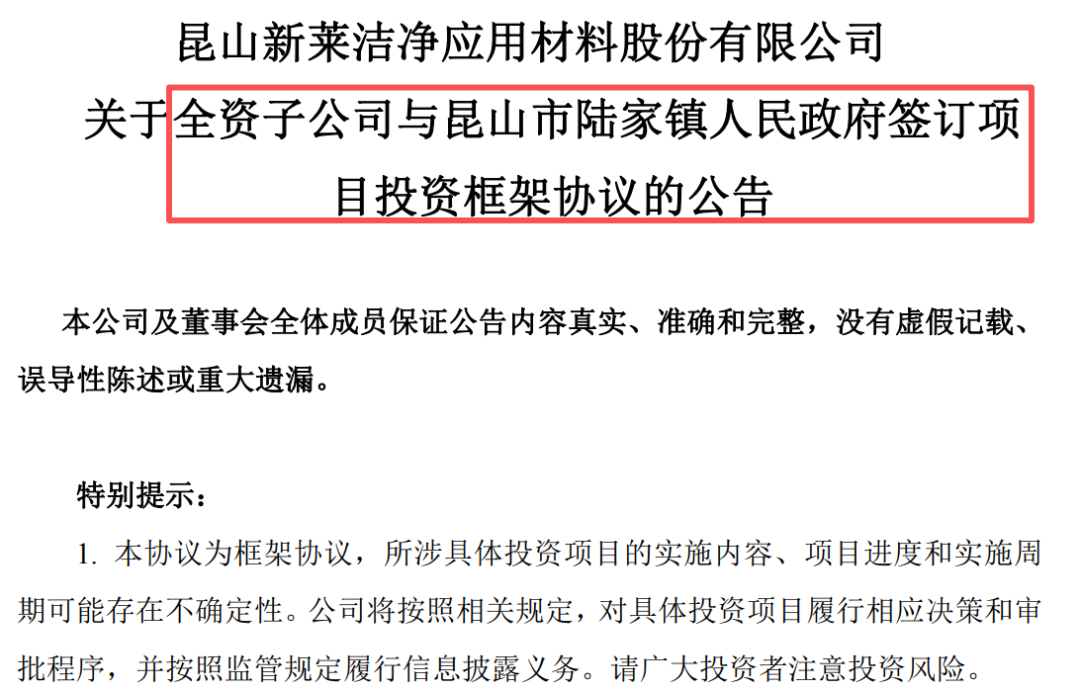
20亿!这只牛股拟投建新项目
中国基金报· 2025-10-23 13:09
Core Viewpoint - New Lai Ying Material plans to invest 2 billion yuan in a semiconductor core component project, while its debt ratio has been rising in recent years [2][6]. Investment Project Summary - The project will focus on the research, production, and sales of gas distribution plates and semiconductor aluminum chambers, providing precision cleaning services for semiconductor, TFT, and OLED equipment. It is considered a crucial part of the national semiconductor industry chain's domestic substitution strategy. The total investment is expected to be 2 billion yuan, with an anticipated annual output value exceeding 1.5 billion yuan upon reaching full production [5][6]. Financial Overview - As of mid-2025, the company's total assets are approximately 5.3 billion yuan, and net assets are about 2.064 billion yuan. The planned investment amount is roughly equivalent to the company's latest net assets. In the first half of this year, the company's operating revenue was 1.409 billion yuan, compared to 2.849 billion yuan for the entire previous year [5][6]. Funding and Debt Concerns - The funding for this investment project will come from self-owned or self-raised funds, but the company has not disclosed the timeline for completion. As of the first half of this year, the company's cash reserves were less than 500 million yuan, insufficient to cover short-term debts, including short-term loans and non-current liabilities due within one year. The company's debt ratio has been on the rise, raising concerns about the impact of this new project on its financial stability [6][7]. Financial Risk Indicators - The company's financial risk indicators show a rising debt ratio, which was 61.53% as of December 31, 2024, up from 52.05% in 2020. The current ratio has decreased from 1.446 in 2020 to 1.321 in 2024, and the quick ratio has also declined from 0.706 to 0.655 during the same period [7]. Growth Performance - From 2016 to 2022, the company experienced rapid growth in both operating revenue and net profit. However, in 2023, it faced a bottleneck, with operating revenue showing only slight increases and net profit declining. By the first half of 2025, operating revenue had turned negative, and net profit continued to decrease [8][9]. Stock Performance - Since the "9.24" market event last year, the company's stock price has performed well, rising from around 16 yuan to a recent high of approximately 78 yuan, representing an increase of nearly four times. Despite a recent pullback, the stock has still gained over 200% since the "9.24" event. As of October 23, the company's total market capitalization was 23.38 billion yuan [9][10].

新莱应材子公司拟20亿投资半导体核心零部件项目 把握半导体国产替代战略机遇
Zheng Quan Shi Bao Wang· 2025-10-23 12:20
Core Viewpoint - New Lai Materials' subsidiary, Fangxin Precision, is expanding its operations in Kunshan by investing in a semiconductor core component project, which is expected to significantly enhance the company's capabilities in the semiconductor industry and contribute to the domestic semiconductor supply chain [1][3]. Company Summary - New Lai Materials specializes in the research, production, and sales of clean application materials and high-purity materials, primarily serving the food safety, biomedicine, and semiconductor sectors [2]. - The company’s clean application materials utilize key technologies such as heat exchange, homogenization, and fluid processing, while its high-purity materials meet the stringent requirements of the semiconductor manufacturing process [2]. Financial Performance - In the first half of 2025, New Lai Materials reported a revenue of 1.409 billion yuan, a year-on-year decrease of 0.62%, and a net profit attributable to shareholders of 108 million yuan, down 23.06% year-on-year [2]. Project Details - The new project will focus on the research, production, and sales of gas distribution plates and semiconductor aluminum chambers, along with precision cleaning services for semiconductor, TFT, and OLED equipment [1]. - The project is expected to achieve an annual output value exceeding 1.5 billion yuan, with a total investment of 2 billion yuan [1]. Strategic Importance - The agreement between Fangxin Precision and the Kunshan government aims to establish a long-term cooperative mechanism, leveraging each party's strengths to enhance the semiconductor core component project, which is crucial for capitalizing on the domestic semiconductor substitution strategy [3]. - This initiative is anticipated to significantly boost the company's revenue scale, core competitiveness, and sustainable development capabilities, positively impacting its long-term growth [3].
深圳和上海两地符合“小市值、国资背景、有重组潜力”条件的上市公司梳理
Sou Hu Cai Jing· 2025-10-21 01:21
Group 1 - The article highlights several small-cap companies in Shenzhen and Shanghai with state-owned backgrounds and potential for restructuring or reverse mergers [2][3][4][5] - Companies like Shen Zhen Zhen Ye A (000006) and Shen Fang Zhi A (000045) are under pressure to transform due to their core business challenges, with market speculation about potential asset injections from state-owned enterprises [2][3] - Sha He Co., Ltd. (000014) is noted for its "shell resource" characteristics, with strong market expectations for a reverse merger due to its small market capitalization and synergy with state-owned tax-free businesses [4] Group 2 - The article discusses the potential for companies like Tefa Information (000070) to adapt to new technologies, such as AI, through asset injections, although the specific direction remains unclear [4] - Yue Ling Co., Ltd. (002725) has undergone a change in actual control, clearing the way for potential asset injections, particularly in the lithium battery copper foil sector [5] - The article emphasizes the importance of verifying information, as many of the restructuring opportunities are based on market rumors and have not been officially confirmed by the companies [6][8] Group 3 - The characteristics of companies likely to be targeted for reverse mergers include small market capitalization, high state-owned shareholding, and operational pressures, making restructuring a necessity [8] - The article notes the risks associated with speculative trading in these stocks, particularly for small-cap companies like Sha He Co., Ltd., which are more susceptible to price volatility based on rumors [8] - Current national strategies, such as state-owned enterprise reform and domestic semiconductor substitution, are driving expectations for consolidation among state-owned companies in Shenzhen [8]

金信基金三季报出炉:押注科技主线,金信精选成长A、金信稳健策略A年内收益超60%
Xin Lang Ji Jin· 2025-10-20 08:40
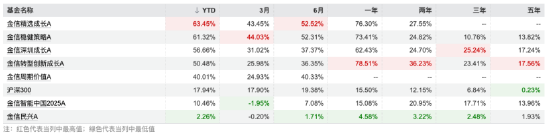
Core Insights - The third-quarter reports of the 2025 funds show a significant divergence in performance, with equity products focused on technology innovation outperforming bond and diversified industry products, indicating a concentrated market interest in technology innovation [1][3] Fund Performance - Jin Xin Selected Growth A leads with a year-to-date return of 63.45%, managed by veteran Kong Xuebing, with a scale of 427 million yuan and a quarterly growth of 31.8 million yuan, achieving a one-year return of 76.30% [3] - Jin Xin Steady Strategy A follows with a year-to-date return of 61.32% [3] - Jin Xin Shenzhen Growth A, managed by Huang Biao and Yang Chao, achieved a year-to-date return of 58.66%, with its scale increasing to 988 million yuan [3] - Jin Xin Transformation Innovation Growth A also performed well with a year-to-date return of 50.48% and a one-year return of 78.51% [3] - These four equity products significantly outperformed the CSI 300 index, highlighting the strong momentum in the technology sector [3] Portfolio Composition - Jin Xin Fund's concentrated investment in the semiconductor equipment sector has been a key driver of performance, with Jin Xin Steady Strategy A's top ten holdings including Chip Source Micro, which accounts for 9.90% and has risen 39.13% in the last three months [3] - Other significant holdings include Zhongwei Company and Tuo Jing Technology, with respective holdings of 9.70% and 9.56%, both seeing increases of over 64% in the last three months [3] Diverse Strategies - Jin Xin Cycle Value A, established in February, achieved a return of 40.01% in eight months, showcasing a more diversified portfolio beyond semiconductor stocks [8] - Jin Xin Intelligent China 2025 A, a flexible allocation fund, recorded a year-to-date return of 10.46% and a one-year return of 15.08%, indicating steady growth despite not matching the technology-focused products [10] Market Outlook - The fund managers express optimism about the semiconductor domestic substitution trend, driven by high R&D, accelerated product validation, and AI sovereignty demands, suggesting a long-term positive outlook [12] - The focus remains on identifying high-growth potential companies within the technology sector while managing risks associated with valuation pressures as tech stocks rise [13]
首批主动权益基金三季报出炉,普遍维持高仓位,知名产品规模增超40%
Bei Jing Shang Bao· 2025-10-19 14:41
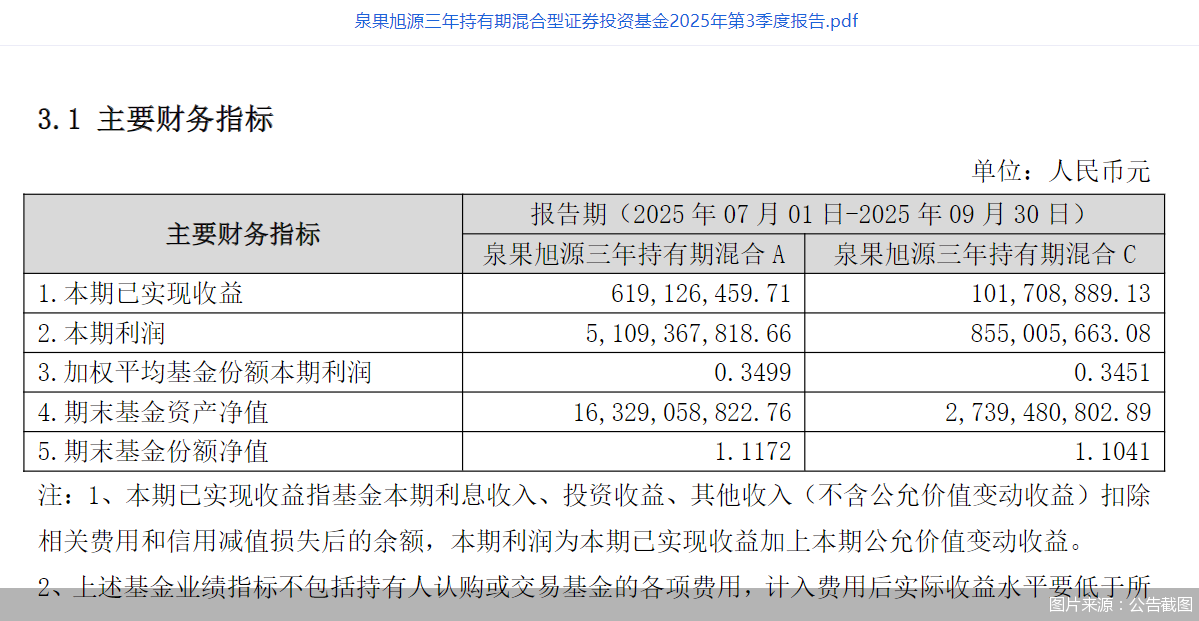
Core Insights - The recent quarterly reports from active equity funds indicate a strong confidence in the A-share market, with many funds maintaining high equity positions and some increasing their investment ratios [1][4][5] - Fund managers express optimism about future A-share performance, citing low market valuations, increased policy support, and gradual economic recovery as key factors [1][8][9] Fund Performance and Size - Several active equity funds reported significant growth in size, with the "Quanguo Xuyuan Three-Year Holding Period Mixed Fund" leading at 19.069 billion yuan, a 45.77% increase [4] - The "Shangyin Digital Economy Mixed Fund" saw its size surge from 13.69 million yuan to 260 million yuan, marking a notable increase [4][5] - Out of 21 disclosed active equity funds, 14 experienced size growth in Q3, with three funds doubling their size [4][5] Equity Positioning - A majority of the funds reported maintaining high equity positions, with 17 out of 21 funds having over 80% of their assets in stocks [5] - Many funds, including "Jinxin Intelligent China 2025 Flexible Allocation Mixed Fund," increased their stock positions during Q3, while a few, like "Shangyin Digital Economy Mixed Fund," made slight reductions [5][6] Portfolio Adjustments - The "Quanguo Xuyuan Three-Year Holding Period Mixed Fund" made significant changes to its top holdings, adding stocks like "Tianqi Lithium" and "Alibaba," while reducing positions in "Ningde Times" and "Tencent" [6] - The "Shangyin Digital Economy Mixed Fund" underwent a complete overhaul of its top holdings, focusing on semiconductor and AI-related stocks [6][7] Market Outlook - Fund managers are generally optimistic about the A-share market's future, anticipating steady economic recovery and favorable policies to drive growth [8][9] - The upcoming "14th Five-Year Plan" is expected to provide direction for domestic economic development, with a focus on consumption and technology as key growth areas [8][9]
港股午评|恒生指数早盘跌1.61% 燃气股逆市走高
智通财经网· 2025-10-17 04:10
Market Overview - The Hang Seng Index fell by 1.61%, down 415 points, closing at 25,472 points, while the Hang Seng Tech Index dropped by 2.81%. The early trading volume in the Hong Kong market was HKD 153.2 billion [1] Energy Sector - Gas stocks rose, with Zhongyu Energy (03633) increasing by over 10%. This surge is attributed to the early initiation of winter heating in Gansu and other regions due to continuous temperature drops, leading to increased natural gas demand [1] Biotechnology Sector - Newly listed stock Xuan Zhu Bio-B (02575) surged over 13%, reaching a new high, and is up more than 190% from its IPO price. Yimai Sunshine (02522) rose over 4% following the global launch of its medical imaging model product AIR. The performance of medical stocks varied, with Yaojie Ankang-B (02617.HK) up over 21%, Baize Medical (02609) up over 5%, while Kangfang Biotech (09926) fell by 2%. Kangning Jereh Pharma-B (09966) increased by over 13% after announcing a share buyback plan, with market attention on significant data from the ESMO conference [2] Precious Metals Sector - Laopu Gold (06181) rose over 4%, benefiting from increased channel expansion and upgrades, with institutions indicating that rising gold prices favor its high-end brand positioning [3] Hospitality Sector - Wanda Hotel Development (00169) increased by over 10% after completing a sale and announcing a special dividend of HKD 0.462 per share to be paid next month [4] Digital Assets Sector - Delin Holdings (01709) rose over 3% after entering a strategic cooperation agreement with Antalpha to promote business in the digital asset sector [5] Telecommunications Sector - Changfei Optical Fiber and Cable (06869) fell over 6%, having dropped 40% from its September peak due to declining fiber optic prices and shareholder sell-offs. Cryptocurrency-related stocks collectively declined, with Bitcoin experiencing significant volatility and a recent incident in the US stablecoin market. Mi Strategy (02440) fell by 4.36%, and OSL Group (00863) dropped by 3.99% [6] Semiconductor Sector - Chip stocks continued to decline, with SMIC (00981) down over 5% and Huahong (01347) down over 3%, as US export controls accelerate domestic semiconductor replacements [6]
恒生指数早盘跌1.61% 燃气股逆市走高
Zhi Tong Cai Jing· 2025-10-17 04:06
Group 1: Market Overview - The Hang Seng Index fell by 1.61%, down 415 points, closing at 25,472 points, while the Hang Seng Tech Index dropped by 2.81% [1] - The early trading volume in the Hong Kong stock market reached HKD 153.2 billion [1] Group 2: Sector Performances - Gas stocks rose, with Zhongyu Energy (03633) increasing by over 10% due to the early start of winter heating in Gansu and other regions, leading to a peak in natural gas demand [1] - Newly listed stock Xuan Bamboo Biotechnology-B (02575) surged over 13%, reaching a new high, and has increased over 190% from its IPO price [1] - Medical stocks showed mixed performance, with Yaojie Ankang-B (02617.HK) rising over 21%, Baize Medical (02609) up over 5%, while Kangfang Biotech (09926) fell by 2% [1] - Kangning Jereh Pharmaceutical-B (09966) increased by over 13% after announcing a share buyback plan, with market attention on significant data from the ESMO conference [1] - Old Puhuang Gold (06181) rose over 4% due to enhanced channel development and an upgrade strategy, benefiting from rising gold prices [1] - Wanda Hotel Development (00169) increased by over 10% after completing a sale and announcing a special dividend of HKD 0.462 [1] - Delin Holdings (01709) rose over 3% after entering a strategic cooperation agreement with Antalpha to promote digital asset business [1] Group 3: Declining Stocks - Changfei Optical Fiber (601869) and Optical Cable (06869) fell over 6%, with a 40% drop from September highs due to declining fiber prices and shareholder sell-offs [2] - Cryptocurrency-related stocks collectively declined, with Bitcoin experiencing significant volatility and issues in the stablecoin market, leading to declines in stocks like Mi Strategy (02440) down 4.36% and OSL Group (00863) down 3.99% [2] - Chip stocks continued to decline, with SMIC (00981) down over 5% and Huahong (01347) down over 3%, impacted by accelerated semiconductor domestic substitution due to U.S. export controls [2]
港股异动 | 芯片股继续走低 中芯华虹均跌超5% 美国出口管制加速半导体国产替代
智通财经网· 2025-10-17 02:11
Core Viewpoint - Semiconductor stocks continue to decline, influenced by new U.S. export control measures targeting China, which may accelerate domestic industry self-sufficiency and promote domestic substitution [1] Group 1: Market Performance - Semiconductor stocks such as SMIC (00981) fell by 5.07% to HKD 70.15, Hua Hong Semiconductor (01347) decreased by 4.91% to HKD 77.45, and Shanghai Fudan (01385) dropped by 2.78% to HKD 40.64 [1] Group 2: Regulatory Impact - On October 7, the U.S. House of Representatives' "Special Committee" released a significant report on semiconductor export controls concerning China, proposing nine recommendations to expand export restrictions [1] - According to CICC, the U.S. semiconductor export controls signify a shift in trade friction towards core technologies and raw materials, which may lead to accelerated domestic industry self-sufficiency and promote domestic substitution [1] Group 3: Industry Outlook - Huatai Securities reported that concerns about a potential bubble in the global AI market exist, but overall optimism remains, supported by strong growth in token usage, which bolsters AI investment confidence [1] - TSMC's progress in building factories in the U.S. is on track, although supporting facilities still need improvement, with expectations to maintain high gross margins due to technological advantages [1] - Advanced packaging is highlighted as a key technology that may sustain Moore's Law in the AI era, presenting investment opportunities for related foundries and equipment companies [1]
