合规经营

Search documents
公司快评︱卫宁健康董事长及子公司行贿被罚,法律红线不可触碰
Mei Ri Jing Ji Xin Wen· 2025-11-06 08:41
Core Viewpoint - The recent bribery case involving the chairman of Weining Health and its subsidiary has raised significant concerns regarding corporate governance and internal controls, leading to a notable decline in investor confidence and market image [1][2]. Financial Performance - Shenzhen Weining Zhongtian achieved revenues of 23.68 million yuan in 2022, 15.64 million yuan in 2023, and 13.65 million yuan in 2024, representing a small proportion of the overall revenue of the listed company [2]. - For the first three quarters of 2025, Weining Health reported revenues of 1.296 billion yuan and a net loss attributable to shareholders of 241 million yuan, indicating a challenging overall operational status [2]. Corporate Governance and Compliance - The bribery incident highlights serious flaws in Weining Health's corporate governance and internal supervision, necessitating the establishment of robust internal monitoring mechanisms to enhance transparency and effectiveness [2]. - The company is urged to strengthen compliance with laws and regulations to mitigate legal risks and reputational damage [2]. Risk Management and Communication - Weining Health should improve its information disclosure practices to ensure timely, accurate, and complete communication of significant matters to maintain market confidence [2]. - The company needs to enhance risk management strategies to assess and manage potential internal and external risks that could impact operations [2]. Industry Implications - The bribery case serves as a warning to the entire listed company sector, emphasizing the need for strict regulation and effective legal measures to curb illegal activities and ensure the long-term health of the capital market [3].

罚没总额超9000万,民生银行业绩连降、频繁违规
阿尔法工场研究院· 2025-11-06 00:07
Core Viewpoint - The article discusses the significant regulatory penalties imposed on China Minsheng Bank, highlighting ongoing compliance issues and challenges in financial performance, including declining profits and increasing credit impairment losses [5][13][17]. Regulatory Penalties - Recently, the National Financial Supervision Administration fined China Minsheng Bank 58.65 million yuan for imprudent management of loans, bills, and interbank business, as well as non-compliance in regulatory data reporting [5][6]. - This is the second major penalty for the bank this year, following a fine of 17.05 million yuan in January for multiple violations, including account management and anti-money laundering regulations [5][10]. - Since 2008, the total fines against China Minsheng Bank have reached 504 million yuan, with 72 penalties issued in 2025 alone, totaling 94.90 million yuan [10][11]. Financial Performance - For the first three quarters of 2025, China Minsheng Bank reported revenue of approximately 108.51 billion yuan, a year-on-year increase of 6.74%, but the net profit attributable to shareholders decreased by 6.38% [13]. - The bank has experienced negative growth in net profit for seven consecutive quarters since Q1 2024 [13]. - As of September 30, 2025, the bank's total assets were 7.87 trillion yuan, a slight increase of 0.74% from the previous year, while total loans and advances decreased by 0.31% [17]. Loan Quality and Credit Impairment - The bank's non-performing loans totaled 65.86 billion yuan, with a non-performing loan ratio of 1.48%, slightly up from the previous year [17]. - Credit impairment losses surged significantly, with the bank reporting 38.80 billion yuan in losses for the first nine months of 2025, an increase of 28.36% year-on-year [17][18]. - The average return on total assets was 0.49%, with a net interest margin of 1.42% for the same period [15]. Operational Challenges - The bank's operational challenges include a decline in personal loans by 3.17% and a decrease in corporate deposits by 2.65% [17]. - The bank's average total assets yield dropped to 0.36% in Q3 2025, indicating potential issues in asset management and profitability [15].



三项违规被罚377万元!宝付回应:已完成自查整改工作
Guo Ji Jin Rong Bao· 2025-11-05 06:23
Core Viewpoint - Baofu Network Technology (Shanghai) Co., Ltd. has been fined for violating merchant management, clearing management, and account management regulations, indicating regulatory scrutiny in the payment industry [1] Group 1: Regulatory Actions - The People's Bank of China Shanghai Branch issued a warning to Baofu and imposed a fine of 3.77 million yuan, along with the confiscation of illegal gains amounting to 11,291.48 yuan [1] - An individual, Chen, was also penalized with a warning and a fine of 160,000 yuan for direct responsibility in the violations [1] Group 2: Company Response - Baofu has accepted the regulatory actions and established a special team to follow up on the guidance and opinions from the regulatory authority, indicating a commitment to compliance [1] - The company claims that its business remains stable and unaffected by the regulatory actions, emphasizing its focus on compliance and risk management for future operations [1] Group 3: Company Information - Baofu is a wholly-owned subsidiary of Shanghai Mandao Digital Information Technology Co., Ltd., established in 2011, and holds a payment business license issued by the People's Bank of China [2] - The company operates under the business type "Stored Value Account Operation I" and has a license valid until December 21, 2026, with a renewal date of August 1, 2024 [2]
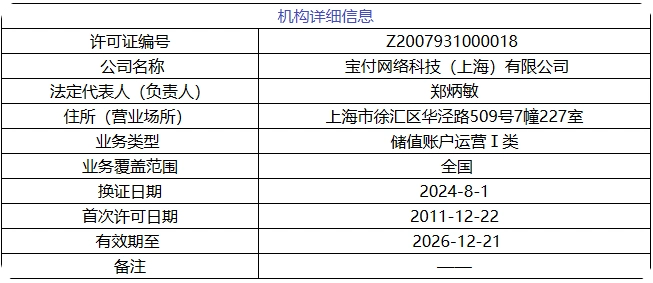
强监管下 银行须坚守底线合规经营
Jin Rong Shi Bao· 2025-11-05 02:19
Core Insights - Financial regulatory scrutiny remains high, with a significant increase in penalties issued to financial institutions in Q3 2025, totaling 2,133 fines amounting to 1.024 billion yuan, marking a quarter-on-quarter increase of 36.12% and 190.91% respectively [1][2] - The banking sector, particularly joint-stock banks, has seen a notable rise in penalties, with 1,448 fines issued in Q3 alone, reflecting an 18.3% year-on-year increase and a staggering 84.63% increase in penalty amounts [1][2][3] - Violations in credit business continue to be a major concern, with issues such as inadequate due diligence, improper fund management, and new patterns of fund misappropriation emerging [1][4][5] Regulatory Trends - The total number of penalties across various bank types reached 997 in the first three quarters, with a total fine amount of 981 million yuan, indicating a fluctuating but overall increasing trend in regulatory actions [2] - Q3 2025 marked a peak in penalties, with 5.38 billion yuan in fines, driven by several high-value penalties primarily affecting joint-stock banks [2][3] - The shift in focus towards joint-stock banks reflects a deeper regulatory concern regarding their growing influence and associated risks [3] Compliance and Risk Management - Experts emphasize the need for banks to enhance internal control mechanisms and compliance culture to address the rising trend of violations, particularly in credit management [1][9][10] - The increase in penalties related to internet banking operations indicates a growing need for banks to refine their compliance frameworks in line with innovative business practices [7][8] - Recommendations for banks include strengthening risk management systems, fostering a culture of compliance, and adapting to more detailed regulatory requirements to mitigate risks and ensure sustainable growth [9][10]
合规经营诚信纳税案例丨税务合规托举“小块头”迸发“大能量”
Sou Hu Cai Jing· 2025-11-03 10:04
Core Insights - The article emphasizes the importance of compliance in the growth of specialized and innovative "little giant" enterprises in Zhejiang, which play a crucial role in the new industrialization process [1][2][6] Group 1: Growth of "Little Giant" Enterprises - Zhejiang has over 1,800 national-level specialized and innovative "little giant" enterprises, ranking among the top three in China [1] - Hangzhou and Ningbo have 478 and 418 such enterprises respectively, placing them in the top ten cities nationwide [1] - Compliance in operations is highlighted as a key factor for the growth of these enterprises [2][4] Group 2: Risk Management - Specialized and innovative enterprises face significant challenges in risk management compared to larger companies [2] - The president of Ningbo Haiber Group emphasizes the need for enhanced compliance, particularly in financial and tax matters, to mitigate risks [2][4] Group 3: Compliance and Internal Control - Haiber Group has established a comprehensive internal control system integrating finance, customs, legal, and business operations, which has helped avoid potential risks and recover losses exceeding 10 million yuan [4] - The internal control system standardizes operations across various business processes, significantly reducing tax-related risks [4][5] Group 4: Tax Benefits and Compliance - Zhejiang Shuangyuan Technology has benefited from various tax incentives, including over 9 million yuan in VAT reductions and more than 4 million yuan in corporate income tax exemptions over the past five years [7][9] - The company's dedicated tax compliance department ensures timely adaptation to new tax policies and conducts regular risk assessments [9] Group 5: Credit as a Competitive Advantage - "Little giant" enterprises prioritize credit building as a core competitive asset, with Ningbo David Medical Instruments emphasizing the importance of maintaining a high tax credit rating [11][13] - David Medical's A-level tax credit has provided significant advantages in competitive bidding processes, leading to a higher success rate in securing contracts [13][14] Group 6: Incentives for Compliance - Tax authorities in Hangzhou and Ningbo are expanding incentives for A-level taxpayers, enhancing the value of maintaining a good tax credit rating [14]

出海老人,“搞丢了”自己的上市公司
创业邦· 2025-11-01 10:06
Core Viewpoint - The article discusses the rise and fall of the cross-border e-commerce giant "Youkeshu," highlighting its rapid growth, subsequent financial struggles, and the implications for the industry as a whole. It emphasizes the shift from a reliance on platform traffic to the necessity of brand building and compliance in the evolving market landscape [6][8][24]. Group 1: Company Background and Growth - Youkeshu was founded by Xiao Siqing in 2010, capitalizing on the cross-border e-commerce boom, leveraging Shenzhen's supply chain advantages to sell high-quality products globally [11][12]. - The company experienced rapid expansion, reaching 200 employees by 2013 and becoming a sought-after investment target, completing multiple funding rounds that culminated in a peak valuation of 30 billion yuan in 2017 [10][13][14]. - In 2016, Youkeshu reported a revenue of 2.49 billion yuan, marking a 141% increase from the previous year, and became known as the "first stock" in cross-border e-commerce after listing on the New Third Board [14][18]. Group 2: Challenges and Decline - Following its acquisition by Tianze Information in 2018, Youkeshu faced stringent performance targets, which became increasingly difficult to meet due to external market pressures, including a crackdown on Chinese sellers by Amazon [19][20]. - The company suffered significant losses, reporting 2.705 billion yuan in 2021, 361 million yuan in 2022, and 491 million yuan in 2023, leading to a debt crisis and eventual bankruptcy restructuring in 2024 [21][24]. - Internal conflicts arose during the restructuring process, culminating in a complete overhaul of the board, with the original management team being replaced in 2025 [22][23]. Group 3: Industry Implications - The decline of Youkeshu reflects a broader shift in the cross-border e-commerce industry from a focus on traffic-driven growth to the importance of brand establishment and compliance with regulations [24]. - The article underscores the necessity for companies to adapt to stricter compliance requirements and to build sustainable business models that do not solely rely on platform traffic [24]. - Youkeshu's trajectory serves as a cautionary tale for other companies in the sector, illustrating that short-term gains from capital and traffic cannot substitute for robust governance and compliance practices [24].

中行、农行、民生、平安、浦发五家银行合计被罚超2.15亿元
Jing Ji Guan Cha Bao· 2025-11-01 07:34
Core Viewpoint - The tightening of financial regulation is leading to increased scrutiny and penalties for major banks in China, highlighting compliance failures and internal control weaknesses across the industry [2][8][9]. Group 1: Regulatory Actions - Five major banks, including Bank of China, Agricultural Bank of China, Minsheng Bank, Ping An Bank, and Pudong Development Bank, were collectively fined over 215 million yuan for various violations [2][4]. - The penalties reflect a broader trend of intensified regulatory oversight aimed at improving risk management and compliance within the banking sector [3][8]. Group 2: Specific Bank Penalties - Bank of China received the highest fine of 97.9 million yuan, with penalties against responsible individuals totaling 300,000 yuan, primarily due to issues identified during a risk management inspection [4][5]. - Agricultural Bank of China was fined 27.2 million yuan, with a focus on non-compliance in product sales and loan management practices [5]. - Minsheng Bank faced a fine of 58.65 million yuan, with violations related to loan management and regulatory data reporting [6]. - Ping An Bank was penalized 18.8 million yuan for issues in internet lending and product distribution management [6]. - Pudong Development Bank was fined 12.7 million yuan, primarily for similar issues in internet lending and product distribution [6]. Group 3: Industry Implications - The penalties indicate a systemic issue within the banking sector, where even large institutions struggle with compliance and internal controls, particularly in the context of rapidly evolving financial products [7][9]. - The regulatory environment is shifting towards a model where compliance is becoming a core competitive advantage for financial institutions, necessitating proactive risk management strategies [9].




新疆友好集团修订公司章程 注册资本3.11亿元 优化治理结构与业务布局
Xin Lang Cai Jing· 2025-10-29 11:50
Core Viewpoint - Xinjiang Youhao Group has revised its articles of association to enhance corporate governance, adapt to market demands, and improve operational efficiency and transparency [1][5]. Group 1: Corporate Governance Structure - The board of directors will consist of 9 members, including 1 employee representative, with 2 independent directors who must have accounting backgrounds [2]. - The board will establish four specialized committees: audit, strategy, nomination, and remuneration & assessment, with the audit committee taking over the responsibilities of the supervisory board [2]. - Shareholders holding 1% or more of shares can propose temporary motions, while those with 10% or more can call for temporary shareholder meetings [2]. Group 2: Business Expansion - The company has significantly expanded its business scope, now including over 20 licensed activities such as food sales, pharmaceutical retail, catering services, and transportation [3]. - New general projects include internet sales (excluding licensed goods), housing leasing, advertising design, and conference exhibition services, totaling over 40 new activities [3]. Group 3: Financial and Profit Distribution Policies - The statutory reserve fund will be set at 10% of after-tax profits, with no further contributions required once it exceeds 50% of registered capital [4]. - Cash dividends will be prioritized when profits are positive, with a minimum of 30% of the average distributable profit over the last three years allocated for cash dividends [4]. - The audit committee will be responsible for hiring accounting firms to ensure the accuracy and completeness of financial information [4]. Group 4: Shareholder Constraints - New restrictions prevent controlling shareholders from misusing company funds or engaging in unfair related-party transactions [5]. - Share pledges must maintain control stability, and any share transfers must adhere to lock-up commitments [5]. - If directors or executives are instructed to engage in harmful actions, they will be jointly liable with the relevant parties [5].

中通快递,被约谈
Sou Hu Cai Jing· 2025-10-28 14:30
Core Viewpoint - The State Post Bureau of China has criticized ZTO Express for non-compliance in its operations, highlighting issues related to service quality and the protection of delivery personnel's rights [1] Group 1: Regulatory Actions - The State Post Bureau held a meeting with ZTO Express, pointing out irregularities in the company's operational practices [1] - ZTO Express was specifically called out for arbitrary adjustments to operational rules and inadequate service quality [1] Group 2: Company Response - In response to the meeting, ZTO Express stated it would strictly adhere to the requirements set forth, conducting a comprehensive review and rectification of the identified issues [1] - The company committed to enhancing service quality, compliance in operations, and the protection of the legal rights of its network and employees [1]
中通快递回应被约谈:全面整改
Xin Lang Cai Jing· 2025-10-28 13:07
Core Viewpoint - Zhongtong Express has been summoned by the State Post Bureau due to irregular business practices and issues related to service quality and employee rights protection, committing to comprehensive rectification and compliance with regulatory requirements [1][2]. Group 1: Regulatory Actions - The State Post Bureau criticized Zhongtong Express for non-compliance in operational rules, low service quality, and inadequate protection of courier rights, demanding improvements in service quality and compliance systems [1]. - Zhongtong Express responded by pledging to address the issues raised and enhance service quality and compliance [1]. Group 2: Business Performance - As of June 30, 2025, Zhongtong Express reported a revenue of 22.723 billion yuan, a year-on-year increase of 9.85%, while net profit decreased by 2.6% to 3.932 billion yuan [2]. - In Q2 2025, Zhongtong handled 9.85 billion packages, a 16.5% year-on-year increase, with revenue reaching 11.83 billion yuan, up 10.3% [4]. - The company adjusted its annual package volume guidance to a range of 38.8 billion to 40.1 billion packages, indicating a growth rate of 14.0% to 18.0% [5]. Group 3: Market Position - Zhongtong Express has 94 sorting centers and over 31,000 collection and delivery points, with approximately 6,000 direct network partners and 10,000 self-owned vehicles, enhancing its operational capacity [2]. - The company has seen a strong growth momentum in its parcel business, particularly in the scattered goods segment, contributing positively to overall profit margins [4].