品牌出海

Search documents
2025家居年度盘点|产品加码全球布局 企业深耕品牌化出海新路径
Bei Jing Shang Bao· 2025-12-24 13:01
Core Insights - The home furnishing industry is entering a new phase of strategic deepening in overseas markets by 2025, moving beyond reliance on traditional markets in Europe and the U.S. to explore emerging markets in Southeast Asia, Latin America, and Africa [1][4] - Companies are accelerating their transition from "OEM export" to "brand export," with leading firms speeding up their global expansion [1][6] Group 1: Market Expansion and Investment - In November, Dongfang Yuhong's subsidiary plans to invest approximately 144 million RMB to acquire 60% of Brazil's Novakem [1] - In the same month, Zhongyuan Home plans to invest 16 million USD in a production base in Vietnam [1] - In September, Kuka Home intends to invest 1.124 billion RMB to establish an overseas production base in Indonesia [1] - Aili Home's factory in Mexico officially commenced production in May [1] Group 2: Strategic Focus and Localized Operations - 2025 is seen as a critical year for the home furnishing industry to shift from scale expansion to quality enhancement, emphasizing technological innovation and localized operations as key to building long-term competitive advantages [4][5] - Southeast Asia is identified as a core hub for home furnishing companies due to its geographical advantages and potential for consumer upgrades [5] - Kuka Home's dual-line strategy in Southeast Asia aims to enhance market penetration, with a focus on the North American electric sofa market [5] Group 3: Performance Metrics and Growth - Companies like Dream Lily reported overseas sales of 1.515 billion RMB in the first three quarters of 2025, a year-on-year increase of 2.09%, while online overseas sales surged by 76.36% to 1.664 billion RMB [6] - Zhigang Home achieved overseas revenue of 217 million RMB, reflecting a 65% year-on-year growth [6] - Other companies, including Mousse and Jianlang Hardware, also reported significant increases in overseas revenue, with growth rates ranging from 25.99% to 73.97% [6] Group 4: Challenges and Compliance - Despite the growth opportunities, Chinese home furnishing companies face challenges in establishing brand recognition in global markets, particularly due to compliance barriers in the U.S. and Europe [9][10] - The industry is transitioning from being "behind-the-scenes manufacturers" to "frontline brand owners," necessitating a shift in strategy and operations [9] - Compliance with various regulations, such as the U.S. STURDY Act and EU REACH regulations, poses significant challenges for companies aiming to penetrate these markets [9][10] Group 5: Localization and Digital Innovation - Companies are adopting localized strategies, such as "one country, one policy," to tailor products and channel models to different markets [8] - The emphasis is on building local teams and utilizing digital channels to navigate cultural differences and enhance market integration [10] - A focus on localized design and digital supply chains is seen as essential for creating competitive advantages in international markets [10]



2026前夜,徕芬上紧了发条
雷峰网· 2025-12-24 10:43
Core Viewpoint - The article discusses the rapid growth and challenges faced by the brand Leifen, highlighting its journey from a single product success to a multi-category brand, while addressing quality control issues and the need for a robust supply chain and distribution strategy [2][3][45]. Group 1: Sales Performance and Market Position - In 2025, Leifen achieved a sales revenue of 7.1 billion, with 2 million units sold and a nearly 30% year-on-year growth, maintaining its leadership in the high-speed hair dryer market for the fourth consecutive year [2]. - The brand's electric shaver, which recently entered the market, has captured nearly 10% of the e-commerce market share, with its P3Pro model topping the sales charts [2][3]. Group 2: Product Development Challenges - Leifen faced significant challenges with its first electric toothbrush, which suffered from quality issues, leading to a major reputational crisis [7][8]. - The founder acknowledged that the product failures were due to insufficient R&D and quality control capabilities, which delayed the launch of the shaver due to a pursuit of perfection [7][8]. Group 3: Supply Chain and Manufacturing Strategy - To address quality control issues, Leifen invested 20 million to establish a reliability laboratory, becoming one of the strictest quality control facilities in the personal care industry [9]. - The company launched its Zhuhai super factory in August 2025, which spans over 200,000 square meters and employs over 4,000 people, aiming to regain control over its supply chain [18][20]. Group 4: Distribution and Market Expansion - Leifen's initial distribution strategy relied heavily on online sales, but the company recognized the need to diversify and strengthen its offline presence [28][29]. - By 2025, Leifen began opening its own retail stores, with plans to expand to 300 stores across 20 cities by 2026, aiming to enhance brand recognition and customer engagement [35][36]. Group 5: International Expansion Aspirations - Leifen is looking to expand internationally, with a focus on the European market, and has appointed a new international manager to lead this effort [41][42]. - The brand aims to implement a dual strategy of "brand export + D2C" to penetrate overseas markets, although it faces challenges in brand recognition and local market adaptation [41][42].

为什么真正的出海,一定要先学会亏损?| 卓立出海谈
吴晓波频道· 2025-12-24 00:31
Core Viewpoint - The article discusses the overseas expansion strategy of the company, focusing on its current losses as a strategic choice to capture market share rather than immediate profitability [2][4][5]. Group 1: Long-term Value through Overseas Expansion - The company aims to replicate its domestic success internationally, with a target of creating a $20 billion overseas business, currently at about $1 billion [4]. - The CEO acknowledges that the overseas business is in a phase of strategic losses, which are seen as necessary for future growth and market dominance [5][8]. - The strategy emphasizes rapid market penetration and establishing a leading position, even at the cost of increased losses [6][10]. Group 2: Strategic Partnerships for Market Entry - The company initially entered the overseas market in 2017, motivated by a successful trial in South Korea, which boosted confidence for further expansion [13][14]. - Collaborations with local strong companies are a key strategy, allowing the company to leverage existing market presence and expertise [15]. - This approach is likened to "borrowing a boat to go to sea," facilitating smoother entry into new markets [15]. Group 3: Challenges of Localization - The company faces significant challenges in localizing its advertising strategies, as understanding local consumer preferences is crucial [16][18]. - The CEO believes that while the company can sell advertising space, it has yet to reach the level of providing comprehensive brand strategy support as it does in China [17][18]. - The use of AI tools is being explored to assist overseas teams in generating localized advertising content, although there are still hurdles to overcome [19][20]. Group 4: Brand and Market Positioning - The article highlights that brand recognition and consumer perception are critical barriers for Chinese brands entering foreign markets [22][23]. - The first brand to establish itself in a new market often gains a significant competitive advantage, making early entry essential [24]. - The CEO emphasizes that deep distribution capabilities and quick responses to local needs will determine success in overseas markets [23][25].


单家企业最高奖300万元 深圳为何给这些跨境大卖发钱
Shen Zhen Shang Bao· 2025-12-23 23:31
Group 1 - Shenzhen has announced rewards for 21 cross-border e-commerce companies, totaling 32.319 million yuan for 36 projects, with notable companies like Saiwei and Chuangxiang Sanwei receiving significant amounts [1] - Six companies, including Xing Shang Chuang Xin and Yun Ji Zhi Neng, received the maximum reward of 3 million yuan each, while others received 2 million and 1 million yuan [1] - Shenzhen is recognized as a core hub for cross-border e-commerce, with policies supporting the development of independent sites to enhance international market competitiveness [1][2] Group 2 - The Shenzhen Municipal Bureau of Commerce has outlined support policies for 2025, encouraging cross-border e-commerce companies to build their own brands and independent sites, with a maximum reward of 1 million yuan per site [2] - Over 100 independent brand sites have been established in Shenzhen, which are becoming crucial for the international expansion of Shenzhen brands [2] - The awarded projects exhibit three characteristics: focus on niche markets, multi-market strategies, and strong technological R&D capabilities [2] Group 3 - Shenzhen's cross-border e-commerce is transitioning from platform dependency to brand building, as traditional sellers seek new growth avenues amid rising platform costs and stricter compliance [3] - The shift from "platform dependency" to "brand creation" marks a new era for Shenzhen's cross-border e-commerce, emphasizing the importance of independent sites [3] - The integration of independent sites and platforms is seen as a strategy to enhance customer acquisition and brand value, positioning brand expansion as a key growth driver for cross-border e-commerce [3]
深圳为何给这些跨境大卖发钱
Shen Zhen Shang Bao· 2025-12-23 18:13
Core Insights - Shenzhen has announced rewards for 21 cross-border e-commerce companies, totaling 32.319 million yuan for 36 projects, highlighting the city's support for independent site development in the cross-border e-commerce sector [1][2]. Group 1: Reward Distribution - Six companies, including Xing Shang Innovation and Yun Ji Intelligent, received the maximum reward of 3 million yuan each [1]. - Three companies, such as An Pei Times and Ji Teng Network, were awarded 2 million yuan each [1]. - Other notable companies like Sai Wei and Yun Jing Intelligent received 1 million yuan each [1]. Group 2: Policy Support - The Shenzhen Municipal Bureau of Commerce has introduced policies to support cross-border e-commerce, encouraging companies to build independent sites and enhance their brand marketing channels [2]. - Over 100 independent brand sites have been established in Shenzhen, which are now crucial for the international expansion of Shenzhen brands [2]. Group 3: Characteristics of Awarded Projects - Awarded projects focus on vertical niches, covering areas such as smart home, new energy, consumer electronics, and sports technology, emphasizing differentiated product competitiveness [2]. - Many companies are targeting multiple markets, expanding beyond single-country operations to include the US, UK, Germany, and Japan [2]. - The awarded companies demonstrate strong technical R&D capabilities, focusing on innovation to avoid low-price competition [2]. Group 4: Industry Transformation - Shenzhen's cross-border e-commerce is transitioning from platform dependency to brand building, with a focus on creating independent site operations [3]. - The shift from "platform reliance" to "brand creation" marks a new era for Shenzhen's cross-border e-commerce, moving towards a model driven by technology innovation and brand value [3]. - The integration of independent sites and platforms is seen as a strategy to enhance customer acquisition and brand asset retention, creating a synergistic effect [3].
《生而全球 · 闪耀世界》卖家全球拓展案例集-亚马逊全球开店
Sou Hu Cai Jing· 2025-12-23 18:10
Core Insights - The report highlights Amazon's "Born Global" vision, focusing on how sellers can efficiently expand into global markets through a comprehensive approach that includes product export, brand development, supply chain management, and service integration [1][5][7] Group 1: Seller Success Stories - The "Pioneer" section showcases successful case studies of companies like GaiShi XiaoJi and XiHao, which have leveraged Amazon's full-chain solutions to achieve global expansion, breaking the stereotype of "Made in China" [1][2] - These companies have either tapped into emerging markets or iterated their products based on user feedback, providing replicable paths for others [1][2] Group 2: Efficient Market Entry - The "Easy to Start" section emphasizes simplifying the startup phase for sellers, utilizing tools like Amazon's product selection compass and opportunity detector, combined with AI to drive data-driven product selection [1][2] - The North America Remote Fulfillment (NARF) program allows sellers to launch products with zero inventory costs, significantly reducing market entry risks, as demonstrated by KUAILU's 10x growth in the Canadian market [1][2] Group 3: Logistics as a Key Support - The "Easy to Ship" section underscores the importance of logistics in global expansion, with Amazon's Supply Chain Solutions (SCA) integrating services like AGL, FBA, and AWD to help sellers reduce costs and improve efficiency [2][38] - Companies like Juxing Technology and Beisiqi have optimized last-mile delivery through FBA and inventory management via AWD, achieving productivity increases of over 200% and significant reductions in warehousing costs [2][38] Group 4: Long-term Brand Growth - The "Easy to Grow" section focuses on long-term brand development, where sellers utilize Amazon's brand flagship stores and advertising systems to build brand awareness and customer loyalty [2][38] - Successful strategies include leveraging promotional events and external marketing to drive traffic and sales, as seen with KingPavonini's 1100% sales growth over two years [2][38] Group 5: Overall Value Proposition - The overall narrative illustrates how Amazon provides a "light startup, rapid coverage, and stable growth" global expansion strategy through its comprehensive tools, logistics systems, and brand services [2][5] - The core value lies in demonstrating that Chinese sellers can effectively tap into global markets by combining "Chinese intelligence and global pathways" through precise product selection, compliant operations, intelligent logistics, and brand building [2][5]


中国品牌全球净信任度达到32%
Sou Hu Cai Jing· 2025-12-23 14:19
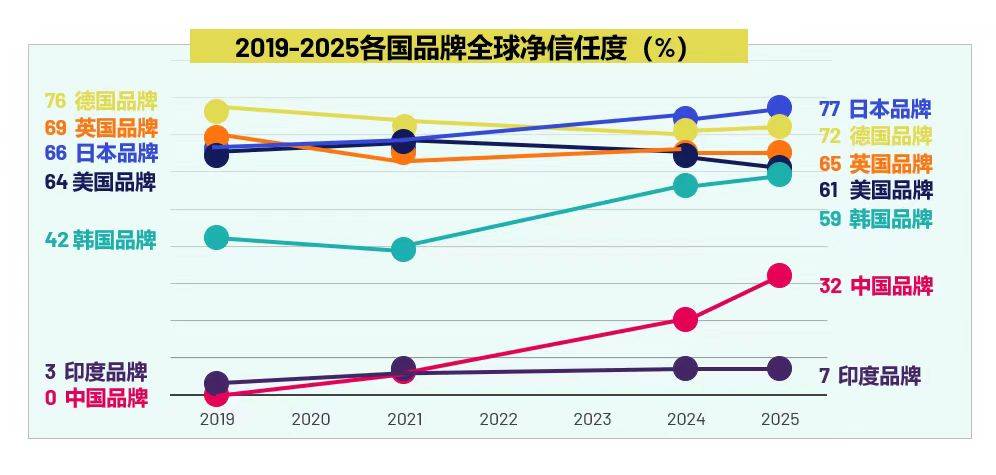
钛媒体App 12月23日消息,益普索发布的《2025中国品牌全球信任指数》报告显示,全球品牌信任格局正发生深刻变革,欧美品牌持续下滑 与中日韩品牌稳步上扬形成鲜明对比。这一变化在国家形象认知层面已率先显现,根据益普索北美《Know the New America》研究,49%的全 球民众认为中国对世界事务产生积极影响,较2024年上升10个百分点,这一比例十年来首次超越美国,为中国品牌出海奠定了良好的认知基 础。 在品牌信任表现上,中国品牌全球净信任度达到32%,较2024年大幅提升12个百分点,信任比例持续攀升。日本品牌以77%的净信任度继续位 居榜首,韩国品牌59%的净信任度与美国品牌61%已基本持平,而美国品牌从2021年的68%持续下滑至2025年的61%,其中在发达市场下滑幅 度最为显著,一年之内下降6个百分点至43%。(广角观察) ...
《2025中国品牌出海十大行业研究报告》发布 世纪华通成游戏行业典型案例
Xin Lang Cai Jing· 2025-12-23 12:09
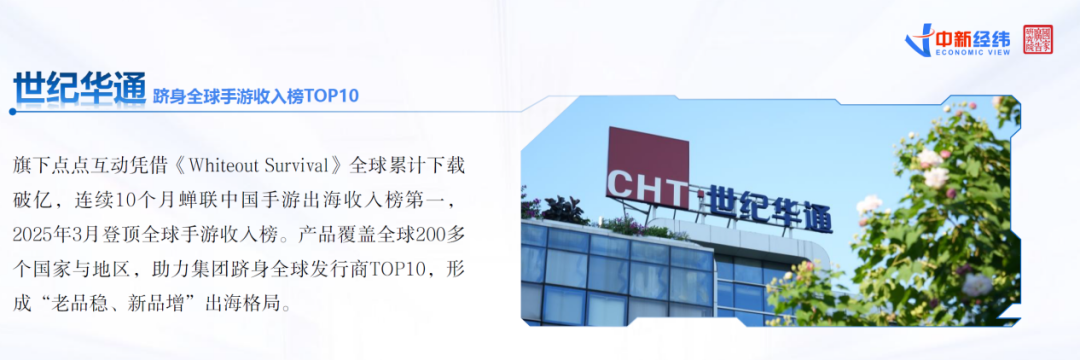
Core Insights - The report highlights the significant growth of Chinese self-developed games in overseas markets, with Century Games being a notable example of success in this sector [1][7]. Industry Overview - The global video game market is expected to exhibit characteristics of accelerated technological integration and diverse content supply by 2025 [3][10]. - Chinese game brands are increasingly applying AI technology across the entire development and operational chain, enhancing efficiency and localization [3][10]. - In the first half of 2025, actual sales revenue from Chinese self-developed games in overseas markets increased by 11.07% year-on-year, with the top 30 products generating a total of $5.8 billion [3][10]. Company Performance - Century Games, a subsidiary of Century Huatuo, has achieved over 100 million downloads for its game "Whiteout Survival," maintaining the top position in China's mobile game overseas revenue rankings for over ten months [3][10]. - The company has established itself among the top 10 global publishers, with a strategy that balances stable revenue from existing products and growth from new releases [3][10]. - Century Games has integrated AI deeply into its operations, significantly improving production efficiency in art asset creation by 60% to 80% [5][12]. Competitive Position - Century Huatuo's competitive advantage lies in its data-driven methodology, which includes low-cost experimentation, large-scale promotion, rapid iteration, and strong collaborative efforts [5][12]. - Despite strong performance and core competencies, Century Huatuo's current valuation is below the industry average, indicating potential for recovery [6][13]. - The chairman of the company identified three key reasons for the undervaluation: unrecognized valuation premiums for overseas leaders, insufficient recognition of the mobile gaming sector's importance, and overlooked scarcity of scale and growth [6][13].

“耕耘市场,最重要的是下慢功夫”
Ren Min Ri Bao· 2025-12-23 09:56
Group 1 - The core viewpoint of the articles highlights the successful entry and growth of Chinese smartphone brand Honor in the UK market, emphasizing its focus on high-end products and strategic partnerships with local operators [2][3][4] - Honor's product offerings include high-end smartphones priced between £700 and £1700, with a significant market share in the premium segment, which accounts for 70% of the UK smartphone market [2] - The company has established a presence in over 2,600 retail stores in the UK, utilizing promotional strategies such as "phone + tablet" bundles to attract consumers and enhance brand visibility [3][4] Group 2 - Honor's strategy includes launching lightweight and stylish foldable smartphones that have gained consumer interest, showcasing the brand's commitment to innovation and design [3][4] - The company emphasizes building trust with consumers and partners, focusing on optimizing product design, customer service, and collaboration models to enhance its brand image [4] - Honor has expanded its operations to nearly 30 European countries, offering a range of products beyond smartphones, including laptops, tablets, and smartwatches, indicating a broadening of its market reach [4] Group 3 - The article also discusses the success of another Chinese brand, Smog, which specializes in imaging accessories and has seen over 30% of its global revenue coming from the European market, with a projected sales growth of 22% for 2023-2024 [5] - Smog has developed over 2,700 customized imaging accessory products since its inception, leveraging a strong manufacturing supply chain in the Pearl River Delta region to achieve rapid product development [5][6] - The brand focuses on user-specific design considerations, such as ergonomic adjustments for European consumers and technology adaptations for extreme weather conditions, indicating a tailored approach to product development [6]

中国电子产品受到欧洲消费者喜爱
Ren Min Ri Bao· 2025-12-23 08:29
Group 1 - Chinese electronic products, particularly smartphones, are gaining popularity among European consumers, with a notable presence in the UK market [2][3] - Honor smartphones have been well-received since their entry into the UK market in late 2021, with high-end models priced between £700 and £1700 [2] - The UK smartphone market is characterized by a 70% share of high-end devices and a 70% reliance on operator channels, indicating strong brand loyalty and demand for premium products [2] Group 2 - Honor has focused on foldable smartphones, which are recognized for their lightweight design and strong performance, appealing to consumers [3] - The company employs a "phone + tablet" promotional strategy in collaboration with operators, enhancing customer value and expanding market reach [3] - Honor's products are now available in over 2,600 retail stores across the UK, reflecting its growing market presence [3] Group 3 - The company emphasizes building trust in overseas markets, understanding local consumer needs, and optimizing product design and customer service [4] - Honor operates in nearly 30 European countries, offering a range of products including computers, tablets, and smartwatches, alongside smartphones [4] - The brand collaborates with both Chinese and international partners, establishing R&D centers in various countries to enhance technological integration [4] Group 4 - Smaller Chinese brands, such as Smog, are also finding success in Europe, with over 30% of their global revenue coming from this market and a projected sales growth of 22% for 2023-2024 [5] - Smog has developed over 2,700 customized imaging accessories since its inception, leveraging a strong manufacturing supply chain in the Pearl River Delta [5][6] - The brand focuses on user-specific product design, adapting to regional needs such as ergonomic considerations for European consumers and weather-resistant technology for Nordic climates [6]