文明互鉴

Search documents
世界青年和平倡议(全文)
Xin Hua She· 2025-07-29 14:10
Group 1 - The core message emphasizes the importance of youth in maintaining global peace and unity, especially in the context of the 80th anniversary of the victory in World War II and the establishment of the United Nations [2][3] - The initiative calls for youth to act as defenders of peace, drawing lessons from history to oppose war, violence, unilateralism, and hegemony, while supporting the UN-centered international system [3] - The initiative encourages youth to promote mutual understanding among civilizations, advocating for dialogue and inclusivity to overcome cultural barriers and conflicts [3][4] Group 2 - The initiative highlights the role of youth as advocates for cooperative development, emphasizing the need for collaboration to bridge global development gaps and support the UN's 2030 Sustainable Development Agenda [3][4] - It calls for youth to take action against climate change, urging participation in global efforts to address environmental challenges and enhance ecological governance [4] - The initiative promotes the idea of youth as facilitators of technology for good, encouraging engagement in emerging fields like artificial intelligence to ensure technological advancements benefit all humanity [4]
以“上海精神”共绘文明互鉴新图景 ——上海合作组织媒体智库峰会成果丰硕
Jing Ji Ri Bao· 2025-07-26 22:27
Group 1 - The Shanghai Cooperation Organization (SCO) Media Think Tank Summit was held in Zhengzhou, China, from July 23 to 27, focusing on themes such as enhancing strategic alignment and deepening political trust among member states [1][2] - The summit emphasized the "Shanghai Spirit," which includes mutual trust, mutual benefit, equality, consultation, respect for diverse civilizations, and seeking common development [1][2] - The SCO has expanded from 6 member states to 26 over 24 years, becoming the largest regional cooperation organization in terms of area and population [2] Group 2 - The report titled "Guarding the Treasures of Human Civilization: The Concept and Practice of Cultural Heritage Protection in New Era China" highlights China's achievements in cultural heritage protection and its commitment to sharing benefits with the public [2] - Experts at the summit recognized the importance of cultural heritage protection as a shared global challenge, advocating for collaborative efforts to preserve human civilization [2][3] - The summit featured over 400 participants from nearly 200 media, think tanks, government institutions, and international organizations, facilitating in-depth discussions and exchanges [3][4] Group 3 - Cultural exchange activities showcased Henan's unique heritage, including traditional tea ceremonies and non-material cultural heritage experiences, fostering mutual understanding among international guests [3][4] - The summit included various forums and activities, such as the "Ambassador's Tea House" and cultural heritage protection discussions, enhancing the collaborative spirit among SCO members [3][4] - The event highlighted the role of media and think tanks in promoting practical cooperation and a shared future for the SCO [4]
在河南 遇见上合丨共建美好家园 共绘上合蓝图——上海合作组织媒体智库峰会全体会议侧记
He Nan Ri Bao· 2025-07-25 23:17
Group 1 - The Shanghai Cooperation Organization (SCO) Media Think Tank Summit was held in Zhengzhou, focusing on international media cooperation and global cultural governance [1][2] - The theme of the summit was "Promoting the Shanghai Spirit to Build a Better Home," emphasizing unity and cooperation in addressing global challenges [2] - Nearly 400 guests from around 200 media, think tanks, and government institutions participated, highlighting the importance of media and think tanks in promoting dialogue and mutual understanding [2][3] Group 2 - The summit featured cultural performances, including Shaolin Kung Fu and traditional Chinese dance, showcasing the unique charm of Chinese civilization [3] - A special exhibition area displayed cultural heritage, such as Jun porcelain and Bian embroidery, facilitating cultural exchange and appreciation [3][4] - The summit resulted in the release of several reports, including the "Zhengzhou Consensus," providing guidelines for future cooperation among SCO member states [4]
上合组织国家在天津共倡文明互鉴
Zhong Guo Xin Wen Wang· 2025-07-23 13:18
Core Points - The Shanghai Cooperation Organization (SCO) is prioritizing cultural and philosophical exchanges among member states, emphasizing the importance of human exchanges and people-to-people diplomacy [1] - The 2025 SCO Civilizational Dialogue has commenced in Tianjin, with over 300 representatives discussing the deepening of civilizational mutual learning and human exchanges to build a closer SCO community [1] - The increasing interest from various countries to formally join the SCO highlights the organization's civilizational appeal and the vitality of the "Shanghai Spirit," which includes mutual trust, mutual benefit, equality, consultation, respect for diverse civilizations, and the pursuit of common development [1] Group 1 - SCO Deputy Secretary-General Sohail Khan stated that the organization is advancing multi-field exchanges, with human exchanges being a core agenda item [1] - Pakistani Prime Minister's special representative Zafar Uddin Mahmood emphasized the value of diversity in human civilization and suggested enhancing youth exchanges in education, sports, and culture [1] - The dialogue aims to inject "SCO vitality" into the development of human civilization through deepened cooperation [1] Group 2 - Russian Cultural Center Director Wu Danna highlighted the importance of language as a bridge connecting different civilizations within the SCO and proposed the establishment of a "Language Bridge" network [2] - Suggestions include creating language learning centers and developing immersive VR language learning platforms to enhance mutual understanding among member states [2] - Chinese Foreign Language Bureau Director Du Zhanyuan expressed China's willingness to strengthen cooperation with SCO countries in publishing, media, and think tanks to promote civilizational dialogue and modernization [2]
世界青年共建人类文明百花园
Zhong Guo Qing Nian Bao· 2025-07-21 01:50
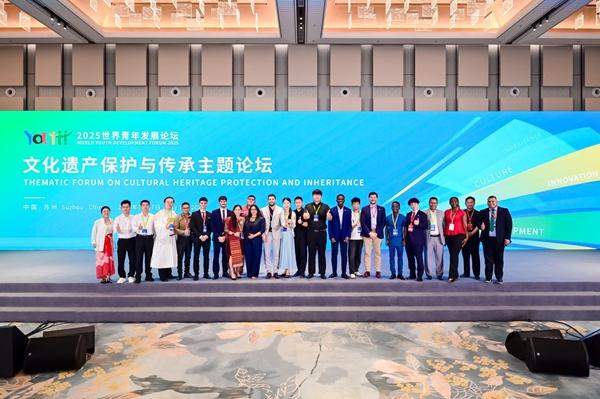
Core Points - The 2025 World Youth Development Forum's Cultural Heritage Protection and Transmission Forum was held in Suzhou, China, with over 200 participants from 83 countries and 8 international organizations discussing the importance of youth in preserving cultural heritage [2][3] - The forum emphasized the role of youth in fostering international cooperation and innovative approaches to cultural heritage protection, highlighting the need for creative transformation and development of traditional culture [3][5] - Various initiatives, such as joint archaeological teams and digital projects, were discussed to enhance cultural exchange between countries, particularly between China and Egypt [4][6] Group 1: Cultural Heritage Protection - The forum served as a platform for youth to engage in dialogue about innovative technologies and methods for the protection of endangered cultural heritage [2][3] - The importance of cultural heritage as a shared memory and wealth of humanity was underscored, with calls for youth to actively participate in its preservation [3][5] - The concept of building "cross-national bridges" for cultural heritage protection was highlighted, showcasing successful examples of international collaboration [3][4] Group 2: Youth Engagement and Innovation - Youth are seen as key players in the creative industries, with examples from Mongolia where young people are developing digital games that incorporate local history and culture [5][6] - The integration of new technologies, such as virtual reality and digital storytelling, is enabling the dynamic transmission of cultural heritage, making it more accessible to a broader audience [7][8] - The role of social media and community-driven initiatives in promoting cultural heritage and enhancing cultural exchange was emphasized, particularly in the context of tourism [6][7] Group 3: Technological Empowerment - Digitalization efforts, such as those by the Dunhuang Research Academy, are being led by a predominantly young team, showcasing the potential of technology in cultural heritage preservation [8][9] - Innovative approaches, including the use of drones and AI for heritage management, are being implemented to enhance the protection and understanding of cultural sites [8][9] - The fusion of traditional craftsmanship with modern technology, as demonstrated by young artisans, is revitalizing cultural heritage practices and making them relevant in contemporary contexts [9][10]

“在彼此的故事中更好照见自己”(金台随笔)
Ren Min Ri Bao· 2025-07-15 22:10
Core Insights - The charm of cross-cultural exhibitions stems from curiosity about "the other" and a re-examination of "the self" [1][2][3] - These exhibitions serve as a bridge for cultural exchange, allowing audiences to explore diverse civilizations and enhance their understanding of their own cultural identity [2][3] Group 1: Exhibition Impact - The large-scale exhibition of ancient Egyptian artifacts in Shanghai has attracted over 2 million visitors since its opening in July 2024, highlighting the growing trend of cross-cultural exhibitions in China [1] - In 2024, China is set to host over 100 exhibitions featuring cultural relics from both domestic and international sources, showcasing the country's commitment to cultural exchange [1] Group 2: Cultural Exchange - Cross-cultural exhibitions are not merely collections of artifacts but are designed as cultural narratives that foster deep dialogue and understanding among different civilizations [3] - Notable exhibitions, such as "Daedalus: Myths of Crete," utilize dual narrative structures to enhance audience engagement and understanding of historical contexts [3] Group 3: Global Context - In an era of rising globalization challenges, cross-cultural exhibitions act as a "gentle spring" that nurtures connections among people worldwide, promoting empathy and understanding [2] - Exhibitions like "The Forbidden City and Versailles" and the Asian Art Museum's focus on ancient Chinese bronzes serve as cultural bridges, connecting diverse histories and fostering appreciation across cultures [2]
“三兔共耳”的文化启示(评论员观察)
Ren Min Ri Bao· 2025-07-13 22:20
Group 1 - The article emphasizes the importance of cultural exchange and mutual learning in addressing common challenges and fostering a better future, highlighting the "Three Hares" motif as a symbol of this cultural dialogue [1][2][3] - The "Three Hares" motif, originating from Dunhuang, illustrates the rich history of the Silk Road and the ongoing narrative of cultural exchange, showcasing the inclusivity and peaceful nature of Chinese civilization [2][3] - The article discusses the significance of the "Belt and Road Initiative" in revitalizing ancient trade routes and promoting international cooperation, reflecting China's diplomatic philosophy of unity and mutual benefit [2][3] Group 2 - The historical wisdom of civilization exchange is highlighted, with the "Three Hares" motif appearing in various forms across different cultures, demonstrating the beauty of cultural diversity and mutual influence [3] - The article mentions the symbolic significance of the pomegranate, representing shared destiny and friendship, and its historical journey from Central Asia to China, reinforcing the theme of cultural connection [3]
国际纵横谈丨搭建文明互鉴之桥 凝聚发展进步合力
Xin Hua Wang· 2025-07-12 14:19
Core Viewpoint - The global dialogue on civilization is essential for fostering mutual understanding and cooperation among nations, with China taking a leading role in promoting this initiative [1][2][3]. Group 1: Conference Overview - The global dialogue ministerial meeting held in Beijing gathered over 600 guests from approximately 140 countries and regions to discuss the path of mutual learning among civilizations and the future of peaceful development [1]. - The meeting resulted in the "Beijing Declaration" and an action plan containing 110 items, reflecting a high level of consensus among participants [3]. Group 2: China's Role and Initiatives - China emphasizes a civilization perspective that values equality, mutual learning, dialogue, and inclusiveness, aiming to build a global network for dialogue and cooperation [1][2]. - The establishment of the "Global Civilization Research Institute" and a fund for cultural exchange were announced, along with plans for 50 development cooperation projects in the cultural field over the next five years [3]. Group 3: Global Perspectives - Various international leaders expressed their support for China's global civilization initiative, highlighting its importance in addressing contemporary global challenges and fostering a more just and inclusive world [2][7]. - The meeting underscored the need for dialogue to resolve differences and enhance understanding among diverse civilizations, with many participants advocating for a collaborative approach to global governance [7][8].
倾听尼山2025|中华与埃及两大文明一场跨越时空的对话
经济观察报· 2025-07-11 12:17
Core Viewpoint - The article emphasizes the historical and cultural connections between Chinese and Egyptian civilizations, highlighting their mutual influences and the importance of dialogue in fostering understanding and cooperation between the two cultures [1][3][5]. Group 1: Historical Context - The dialogue between Chinese and Egyptian civilizations has been ongoing for centuries, facilitated by trade routes such as the Silk Road, which allowed for the exchange of goods and ideas [7][10]. - Both civilizations originated from major rivers—China from the Yellow River and Egypt from the Nile—leading to distinct agricultural practices and social structures shaped by their respective environments [6][11]. Group 2: Modern Relations - Since establishing diplomatic relations in 1956, China and Egypt have developed a comprehensive strategic partnership, with China becoming Egypt's largest trading partner and a significant investor in various sectors [9][14]. - As of May 2025, over 2,800 Chinese enterprises have invested in Egypt, with total investments exceeding $8 billion, particularly in infrastructure and technology [14]. Group 3: Cultural Exchange - The article discusses the increasing cultural exchanges between China and Egypt, including archaeological collaborations and cultural exhibitions, which enhance mutual understanding [15][18]. - The establishment of a joint platform for cultural research and exchange is proposed to deepen cooperation in archaeology, youth dialogue, and heritage ethics [18][19]. Group 4: Future Prospects - The dialogue at the forum reflects a broader trend of civilizations moving from mere recognition to active learning and cooperation, aiming for shared development and cultural narratives [16][17]. - The article concludes with a call for a collaborative approach to global cultural narratives, emphasizing the importance of cultural confidence and the role of civilizations in shaping global discourse [20].

倾听尼山2025 |中华与埃及两大文明一场跨越时空的对话
Jing Ji Guan Cha Wang· 2025-07-11 04:10
Group 1 - The 11th Nishan World Civilization Forum was held in Qufu, Shandong, focusing on the dialogue between Chinese and Egyptian civilizations, attracting nearly 90 guests from cultural, academic, and diplomatic fields [2] - The forum has become a significant international platform for civilizational dialogue since its establishment in 2010, promoting mutual understanding and consensus among civilizations [2] - The dialogue highlighted the commonalities and differences between the two ancient civilizations, emphasizing their agricultural roots linked to the Yellow River and the Nile River [3][4] Group 2 - Historical interactions between China and Egypt have been facilitated through trade routes, with significant exchanges of goods and cultural artifacts occurring over 1500 years ago [4] - The establishment of diplomatic relations in 1956 marked the beginning of a strong bilateral relationship, which has evolved into a comprehensive strategic partnership [5] - The cultural exchange has been enriched by mutual learning, with both civilizations sharing wisdom and concepts related to harmony and balance [6] Group 3 - China has become Egypt's largest trading partner, with over 2,800 Chinese enterprises investing in various sectors, totaling more than $8 billion in investments [7] - Major infrastructure projects in Egypt, such as the Suez Canal Bridge and the new administrative capital, showcase the growing collaboration between the two nations [8] - Cultural exchanges are increasing, with archaeological cooperation and exhibitions being organized to promote mutual understanding [8] Group 4 - The dialogue at the Nishan Forum reflects a progression from initial recognition to deeper learning and cooperation between the two civilizations [9][10] - Proposals for establishing a joint platform for civilizational research and exchange were made, aiming to enhance archaeological collaboration and cultural dialogue [10] - The forum emphasized the importance of cultural confidence and the role of civilizations in shaping global narratives and promoting cooperation [10]