智慧港口

Search documents
交通运输部:全面推进内河航运全要素全链条高质量发展
Di Yi Cai Jing· 2025-06-27 05:04
Core Viewpoint - Inland waterway transportation is a crucial part of the comprehensive transportation system, characterized by large capacity, low cost, and green low-carbon advantages [1][2] Group 1: Development and Infrastructure - By 2024, the total length of Class III and above waterways in China will reach 16,000 kilometers, a 62% increase from 2012 [1] - The cargo volume of inland waterways is projected to reach 4.95 billion tons in 2024, which is 2.2 times that of 2012, while the cargo turnover is expected to be 22 trillion ton-kilometers, 2.9 times that of 2012 [1] - The construction of major projects like the Jianghan Canal and Jianghuai Canal is accelerating, enhancing the capacity of key waterways [1] Group 2: Policy and Strategic Support - Under the national "two new" policy, 2,500 old vessels will be dismantled in 2024, and a new batch of large-scale, standardized, specialized, and clean vessels will be built [2] - The application of new energy and clean energy vessels has reached a scale of over 1,000 inland vessels [2] - The use of shore power for vessels in the Yangtze River Economic Belt has become routine [2] Group 3: Challenges and Opportunities - Current challenges in inland waterway transportation include bottlenecks in key waterways and insufficient port hub radiation capacity [3] - The Ministry of Transport has issued action plans to enhance the inland waterway transport system, focusing on 23 key tasks across seven areas [3] - The development of inland waterway transportation involves infrastructure, equipment manufacturing, transportation organization, and resource utilization, necessitating coordinated efforts among various departments [3][4] Group 4: Technological Advancements - The Ministry of Transport will focus on the smart transformation of waterway infrastructure, promoting intelligent collaboration among vessels, ports, and waterways [4] - Plans include establishing evaluation standards for smart ports and waterways, and applying technologies like digital twins and blockchain to enhance operational efficiency [4] - The 2025 China Maritime Day will be held in Hainan, focusing on "green navigation and new strength," with initiatives to promote green, low-carbon, and smart development in shipping [4]

向海而兴 智创未来
Qi Lu Wan Bao· 2025-06-25 22:00
Core Viewpoint - The construction of the Qingdao International Shipping Center is a strategic initiative aimed at enhancing the port's role in global shipping and supporting national development strategies, with a focus on innovation, openness, and high-quality economic development [2][8]. Strategic Blueprint - In 2024, Qingdao released a three-year action plan to establish itself as a Northeast Asia shipping hub, with a dedicated task force led by city officials to oversee the initiative [3]. - The task force has held over 20 meetings to address practical challenges, demonstrating a commitment to rapid response, proactive planning, and high-quality execution [3]. Infrastructure Development - Qingdao Port is undergoing significant infrastructure upgrades, with 15 major projects planned for 2025, totaling an investment of 77 billion yuan, aimed at enhancing cargo handling capacity [4]. - The construction of the Dongjiakou Port area is expected to increase cargo throughput capacity to over 700 million tons, effectively doubling the port's capabilities [4]. Shipping Network Expansion - Qingdao Port has expanded its shipping routes, adding 13 new "Belt and Road" routes and 18 foreign trade routes in 2024, enhancing its logistics network across land and sea [5]. - The port aims to create a seamless logistics network that connects Shandong, the Yellow River basin, Central Asia, and the global market [5]. Technological Innovation - The port is implementing advanced automation technologies, achieving significant efficiency improvements in cargo handling, with a record of 62.62 natural boxes per hour for crane operations [6]. - The development of an industrial internet platform has enabled the port to transition from isolated intelligence to comprehensive data-driven operations [6]. Green Transformation - Qingdao Port is pioneering green shipping initiatives, including the use of biofuels and hydrogen-powered vessels, marking significant steps towards sustainable operations [7]. - The port has developed a carbon footprint accounting platform and aims to achieve 100% clean energy for short-distance vehicles by 2025 [7]. Global Connectivity - The port's strategic location and innovative policies are designed to attract international shipping alliances, enhancing its competitive edge in the global shipping industry [7][8]. - The focus on service capability and innovation ecosystem is central to the port's strategy to establish itself as a world-class shipping center [8].
【专访】哪吒科技总经理黄桁:激活创新动能 参与国际竞争
Sou Hu Cai Jing· 2025-06-24 10:01
Core Viewpoint - Nezha Technology has enhanced its comprehensive smart logistics service capabilities following the introduction of key shareholders during its shareholding reform, marking a significant milestone in its development [1][3]. Group 1: Company Development - Nezha Technology completed its shareholding reform on December 9, 2024, transitioning from Nezha Port and Shipping Smart Technology (Shanghai) Co., Ltd. to Nezha Smart Technology (Shanghai) Co., Ltd. [3] - The new shareholding structure includes key shareholders China Merchants Port (15%) and Shanghai Zhenhua Heavy Industries (4.18%), while the shareholding of the Shanghai Port Group decreased from 60% to approximately 48.49% [3][5]. - Nezha Technology aims to expand beyond port and shipping, as indicated by the removal of "port and shipping" from its name, signaling its entry into logistics and transportation markets [3][5]. Group 2: Market Performance - In 2024, Nezha Technology processed over 90 million TEUs, capturing 27% of the national market share, and has maintained a compound annual growth rate (CAGR) of nearly 40% in revenue and 25% in profit over the past three years [3][5]. - The company has expanded its product coverage to over 60 cities in China and has begun international operations, including projects in Peru and other countries [5][10]. Group 3: Technological Advancements - Nezha Technology has achieved a full domestic replacement of its smart port operation system, completing the first systematic old terminal renovation project in China, which includes a comprehensive "end-to-end" terminal management system [5][6]. - The company has developed a modular product strategy to address international market challenges, allowing for flexible combinations of its solutions to meet diverse client needs [12][13]. Group 4: Future Strategy - Nezha Technology plans to focus on expanding its international presence, particularly in the "Belt and Road" initiative, with the goal of establishing its first overseas company by 2025 [12][13]. - The company is also targeting the aviation, railway, and road logistics sectors for future growth, leveraging data intelligence to drive high-quality development in the transportation market [11][12].
陆海新通道“最强大脑” 带动国际货运由“智”到“质”高质量发展
Zhong Guo Xin Wen Wang· 2025-06-23 02:21
Core Viewpoint - The Beibu Gulf Port in Guangxi is enhancing its capabilities as a key international gateway for China towards ASEAN, focusing on digitalization and smart port construction to improve operational efficiency and service quality [1][2]. Group 1: Smart Port Development - The Beibu Gulf Port is actively embracing digital transformation, aiming to build a modern, efficient, intelligent, green, and safe international hub port [1]. - The port has implemented a fully automated container terminal in Qinzhou, utilizing innovative U-shaped technology that increases operational density by 50% and reduces equipment movement distance by 35% [1][2]. - The integration of rail and sea transport has been optimized, creating a seamless logistics ecosystem that enhances the efficiency of multi-modal transport [1]. Group 2: Technological Innovations - Various technological advancements have been introduced, such as optimized magnetic nail layouts, dual small crane bridges, and a new intelligent charging robot with a 373 kWh lithium iron phosphate battery that can fully charge in just one hour [2]. - The overall operational efficiency of the port has improved by 30% due to the integrated operational model, while real-time rail-sea connections have increased container transfer efficiency by approximately 50% [2]. - The "Port-Shipping-Gate" information linkage project is expected to save significant labor hours annually, enhancing management efficiency and service levels [2]. Group 3: Performance Metrics - In the first quarter of this year, the Beibu Gulf Port achieved a container throughput of 2.1739 million TEUs, marking a year-on-year increase of 12.06% [2]. - The volume of rail-sea intermodal containers has surged from 21,700 TEUs in 2017 to 476,000 TEUs in 2024, representing a 21-fold increase [2]. - The port is on track to meet its 2025 goals of establishing first-class facilities, technologies, management, and services, continuously driving regional economic growth and international trade [3].

新华每日播报|6月19日
Xin Hua She· 2025-06-19 11:53
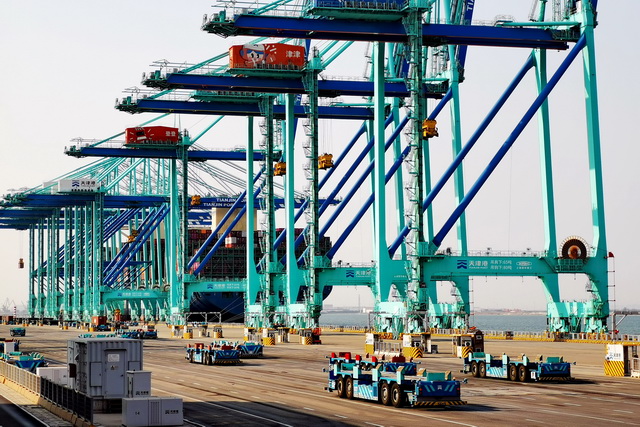
Group 1 - Tianjin Port is advancing its smart transformation, achieving full automation upgrades for container and bulk cargo terminals, with an automation rate exceeding 88% and an average operational efficiency increase of 15% [4] - The Three Gorges Ship Lock has facilitated over 22.4 billion tons of cargo since its opening 22 years ago, significantly enhancing the economic benefits of the Yangtze River waterway [6] - The industrial humanoid robot "Walker S1" has been mass-produced in Liuzhou, Guangxi, showcasing its adaptability for complex production line needs and multi-functional capabilities [8] Group 2 - The national wheat harvest has reached 96% completion, marking the end of large-scale mechanized harvesting for summer grain [11] - Zhejiang's Longxing Bridge Town has improved its ecological environment, leading to an increase in local wildlife, particularly wild birds, through effective water quality enhancement measures [13] - Japan's Nippon Steel has completed the acquisition of an American steel company, integrating it as a wholly-owned subsidiary [20] Group 3 - The Federal Reserve has decided to maintain the federal funds rate target range at 4.25% to 4.50%, marking the fourth consecutive meeting without a rate change [22]

科技创新动力足 从港口发展透视中国经济活力
Ren Min Wang· 2025-06-16 00:41
Core Insights - Tianjin Port has transformed into a world-class port connecting 180 countries and regions, showcasing China's vibrant openness to the world [1] - The port has optimized its services for China-Europe (Asia) freight trains, maintaining a leading position in cross-border land bridge transport volume among coastal ports [1][2] - The overall cargo throughput of Chinese ports has shown steady growth, with a total of 5.75 billion tons from January to April 2023, reflecting the resilience and potential of the port industry [2][3] Group 1 - Tianjin Port completed a cargo throughput of 207 million tons and a container throughput of 9.93 million TEUs from January to May 2023, with a year-on-year increase of 3.67% [1] - The port operates 37 sea-rail intermodal train routes, achieving a throughput of 638,000 TEUs, and has a total of 147 container shipping routes [1] - The national port industry is actively exploring smart and green development paths, with a focus on transitioning from a port power to a port stronghold [2][3] Group 2 - China's ports have built over 50 automated terminals, leading the world in both completed and under-construction projects, enhancing operational efficiency [3][4] - The integration of new technologies and the commitment to ecological development are transforming ports into key engines for economic growth [5] - The port economy in Chinese coastal cities is projected to reach 6.7 trillion yuan in 2024, contributing 13.6% to the total economic output of these cities, with a growth of 360.6 billion yuan compared to 2023 [5]

无人集卡穿梭 绿电覆盖七成:解码天津港“智慧+绿色”双核动力
Zhong Guo Xin Wen Wang· 2025-06-13 09:35
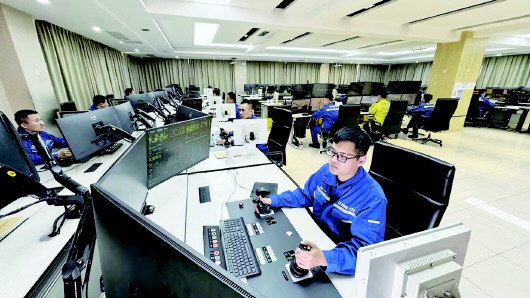
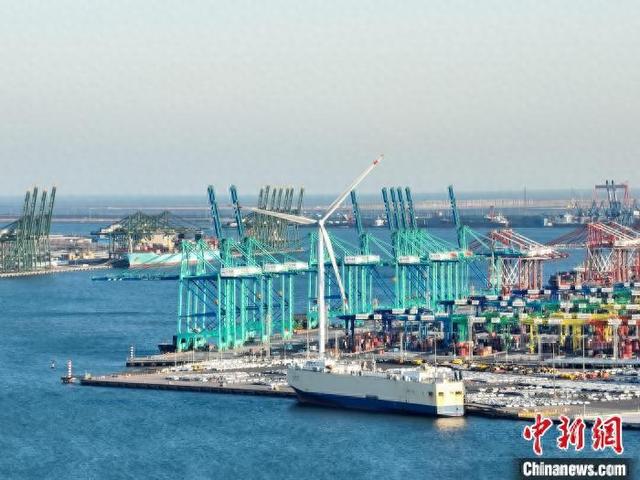
海面上,智能拖轮根据海况自动调整方向,稳稳牵引着巨型货轮靠岸;码头作业区,远程操控的智慧岸 桥整齐排列,无人集卡按照规划路线来回穿梭,呈现出一片繁忙而有序的景象。 中新网天津6月13日电 题:无人集卡穿梭 绿电覆盖七成:解码天津港"智慧+绿色"双核动力 中新网记者 刘文文 当前,天津港大力推动传统码头自动化升级。天津港大数据中心主任曲明对记者说,目前全港集装箱大 型装卸设备自动化占比超88%,稳居全球港口首位。集装箱智能理货业务实现全覆盖,岸桥司机、场桥 司机、理货员等现场操作岗位工作环境也得到极大改善。 绿色港口清新度超标 6月份的天津港,空气清新,海风宜人。走进码头作业区,电动集卡车队井然有序地在智能充电桩旁补 能。天津港在绿色发展上下足了功夫。往昔港口作业中柴油机械轰鸣、高能耗、重污染的场景已一去不 返。如今,电动集卡车组成的绿色运输队川流不息,大型设备全部接入岸电系统,同时,港区内还建设 了光伏电站和储能设施,全方位减少碳排放。 天津港集团环保管理部副总经理李磊介绍,天津港充分利用港区资源禀赋,创新性建设以分布式绿色能 源为主的新型电力系统。截至今年5月,天津港集团已建成新能源发电系统146.5兆瓦。 ...

“无人码头”运输忙 科技赋能港口提“智”增效
Zheng Quan Ri Bao· 2025-06-12 16:43
Group 1 - The first batch of AJ-type 65t quay cranes has successfully arrived at Xiaomo International Logistics Port, enhancing the operational efficiency and service experience of the port [1] - The quay cranes are specialized equipment for container handling, utilizing automated control systems for precise operations, contributing significantly to the shipping industry [1] - The introduction of these cranes is expected to boost Xiaomo Port's operational capacity and support the construction of a green and smart port, facilitating Shenzhen's development as a global logistics hub [1] Group 2 - Guangzhou Port's Nansha Phase IV terminal is an example of an "unmanned terminal," featuring several global firsts in automation and technology applications [2] - Shenzhen Port Group is advancing the construction of smart and efficient automated container terminals, integrating 5G applications and intelligent logistics solutions [2] - The implementation of AI and robotics in logistics operations is aimed at reducing costs and improving efficiency in cold storage and transportation [2] Group 3 - Qingdao Port's AGV technology utilizes innovative shallow charging techniques for continuous operation, enhancing loading and unloading efficiency [3] - The development of intelligent cargo handling robots at Rizhao Port incorporates advanced technologies for automated inventory management, replacing manual labor [3] - The increasing level of port automation is becoming a key indicator of competitiveness in the logistics sector, with expectations for further advancements driven by 5G and AI technologies [3] Group 4 - China Merchants Port's Mawan Smart Port is the first 5G smart port in the Guangdong-Hong Kong-Macao Greater Bay Area, significantly improving production efficiency and management levels [4] - Ningbo-Zhoushan Port is leveraging IoT, big data, and AI for intelligent port management, enhancing operational efficiency through real-time tracking and automated processes [4]



智利驻华大使冀拓智中冷链合作 推动智慧港口协同发展
Zhong Guo Xin Wen Wang· 2025-06-12 15:18
Core Insights - Chile and China are enhancing cooperation in green ports, smart ports, and cold chain logistics, with a focus on expanding trade opportunities for Chilean agricultural products in the Chinese market [1] - The launch of the "Cherry Express" in January 2024 will significantly improve the efficiency of Chilean cherries entering Northern China, creating more export opportunities for local agriculture [1] - Chilean ports are advancing environmental facility construction to promote decarbonization, and there is a desire for collaboration in green infrastructure and operational technology with Tianjin [1] Trade and Economic Cooperation - China has become Chile's largest trading partner, and the "Cherry Express" is expected to facilitate not only cherries but also other high-quality Chilean products like wine and salmon [1] - The 10th anniversary of "Chile Week" in China will take place in Tianjin in 2025, focusing on product promotion and cooperation, particularly in cold chain logistics [1] Cultural and Tourism Exchange - There has been a notable increase in Chinese tourists visiting Chile, and a visa exemption policy for ordinary passport holders from China will be trialed from June 2025 to May 2026, enhancing bilateral exchanges [1] Green Energy Collaboration - Chile has significant potential in green hydrogen production and export due to its natural advantages in solar and wind energy, opening new avenues for cooperation in the green economy between the two countries [1]
解码北方国际航运中心,“津港智慧”给全行业带来什么│一线调研
Di Yi Cai Jing· 2025-06-12 03:03
Core Insights - Tianjin Port is accelerating the development of a smart and green hub port, becoming a crucial strategic point for connecting domestic and international dual circulation in northern China [1][2] Group 1: Smart Port Development - Tianjin Port has achieved an automation rate of over 80% for large container handling equipment, with the new generation container terminal control system (JTOS) supporting complex port operations [1][2] - The port has established a main optical fiber network of 90,000 core kilometers and 190 5G base stations, making it the world's first fully IoT-enabled container terminal [1][5] - A total of 15 infrastructure projects are planned for the "14th Five-Year Plan" and "15th Five-Year Plan" periods, with an estimated total investment of approximately 22.9 billion yuan [2] Group 2: Cargo Throughput and Future Projections - From January to May this year, Tianjin Port handled a cargo throughput of 207 million tons, with a container throughput of 9.93 million TEUs, reflecting a year-on-year increase of 3.67% [2] - By 2035, the total cargo throughput is projected to reach around 750 million tons, with container throughput expected to hit 35 million TEUs [2] Group 3: Technological Innovations - Tianjin Port has implemented a fully automated and intelligent process for container operations, achieving zero carbon emissions during the entire terminal operation [5][6] - The port's new L4-level unmanned horizontal transport equipment has been developed and sold to other ports, contributing to technological advancements in the industry [6] Group 4: Environmental Initiatives - Tianjin Port has established the first ecological air quality monitoring platform in the national port industry, covering 139 monitoring points for real-time environmental monitoring [10] - The port's renewable energy generation system has a capacity of 146.5 megawatts, producing over 300 million kilowatt-hours annually, which accounts for nearly 70% of the group's electricity needs [10][12] - The port has eliminated high-emission equipment, achieving 100% low-emission port machinery, with nearly 60% being electric [12] Group 5: Integration with Local Economy - A strategic cooperation framework agreement has been signed to enhance collaboration in port-industry-city integration, attracting over 30,000 foreign enterprises to settle in Tianjin [7][9] - The port has opened a green channel to Xiong'an New Area, facilitating seamless logistics and transportation services for the Beijing-Tianjin-Hebei region [8][9]