
消费金融

Search documents
从领跑到受阻,马上消费IPO“迷途”何去何从?
Sou Hu Cai Jing· 2025-09-28 10:59
Core Viewpoint - The company, Mashang Consumer Finance, once a leader in the consumer finance industry, is facing significant challenges that threaten its IPO progress and future growth due to compliance, business model, and governance issues [2][4][10]. Group 1: Company Growth and Performance - Since its establishment in 2015, Mashang Consumer Finance has rapidly expanded its asset scale from less than 100 billion yuan in 2016 to 68.099 billion yuan by mid-2025 [3]. - The company reported a revenue of 8.734 billion yuan in the first half of 2025, marking a year-on-year increase of 12.96%, and a net profit of 1.154 billion yuan, up 8.07% from the previous year [3]. Group 2: Compliance Issues - The company has over 70,000 complaints on the Black Cat Complaint platform, highlighting serious compliance issues such as high-interest loans, aggressive collection practices, and personal information leaks [5]. - The actual annual interest rates for loans range from 7.2% to 36%, with some high-risk customers facing rates close to regulatory limits, raising concerns about the company's practices [5]. - The collection practices of some partner agencies have been criticized for using intimidation and harassment, particularly involving a subsidiary of a major shareholder [5]. Group 3: Business Model Challenges - The company relies on high-interest deposits from shareholders to ensure stable funding, which raises questions about potential conflicts of interest [6][7]. - Targeting high-risk, lower-tier customers has led to increased bad loan rates and collection costs, necessitating aggressive collection methods that may not be sustainable in the long term [6]. Group 4: Governance Structure Deficiencies - The board of directors has consistently had fewer than one-third independent directors, violating regulations and raising concerns about decision-making transparency [8]. - The company's ownership structure is fragmented, with no single shareholder holding more than 50%, which could lead to inefficiencies in decision-making and increased vulnerability to hostile takeovers [8]. Group 5: Path to Recovery - The company must shift from a scale-driven approach to one focused on compliance and quality to regain market and regulatory trust [10]. - Strengthening compliance management, improving customer service, and addressing consumer complaints are essential steps for rebuilding trust [11][13]. - The company should diversify its customer base and enhance risk management through technology to ensure sustainable growth [14]. - Increasing the proportion of independent directors and improving the ownership structure will enhance governance and decision-making efficiency [15].


民生信用卡加码“双节”福利金融赋能消费扩容提质
Cai Fu Zai Xian· 2025-09-28 03:27
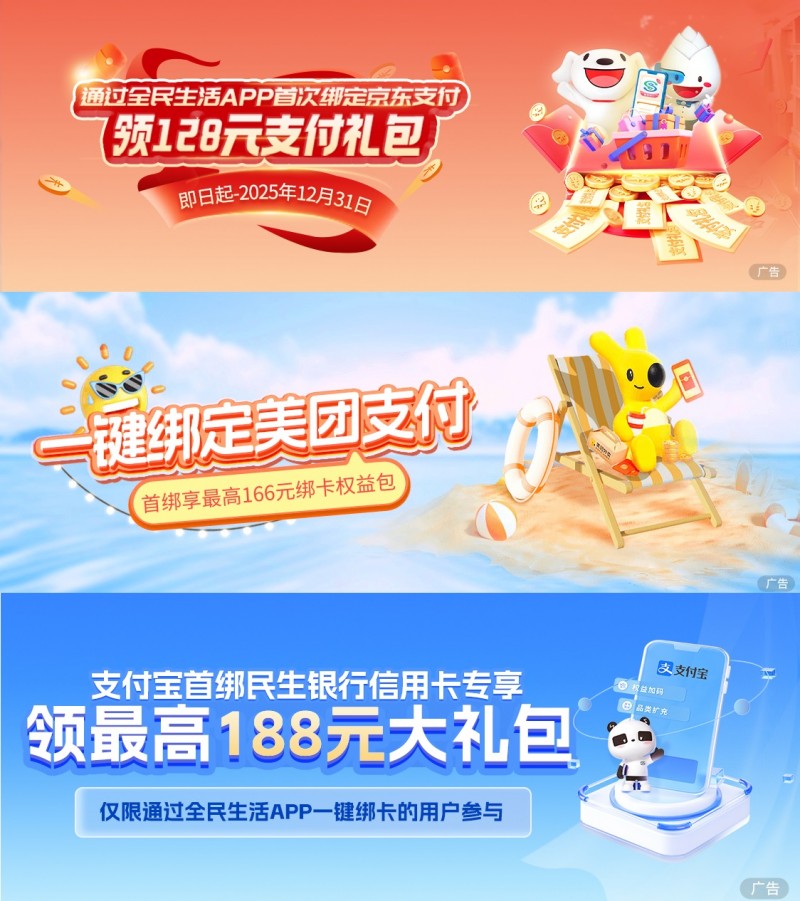
Core Viewpoint - The upcoming Mid-Autumn Festival and National Day holidays are expected to boost consumer spending, prompting financial institutions like China Minsheng Bank to enhance support for consumption through various promotional activities [1][2]. Group 1: Consumer Market Trends - The consumer market is entering a peak season as the dual holidays approach, with a focus on diverse consumer needs and quality service [1][2]. - The National Bureau of Statistics reported a 3.4% year-on-year increase in retail sales of consumer goods in August, indicating a growing demand for quality and service-oriented consumption [2]. Group 2: Financial Services Innovations - China Minsheng Bank's credit card center is launching a series of promotional activities, including exclusive offers for the Minsheng Sam's Club co-branded credit card and various discounts across multiple brands [2][3]. - The bank is collaborating with major platforms like JD.com, Meituan, and Alipay to enhance consumer experience through initiatives like the "One-Click Card Binding" campaign, offering up to 188 yuan in payment discounts [3][5]. Group 3: Enhancing Consumer Experience - The bank's "All-in-One Manager" service extends discounts to everyday life services, allowing cardholders to enjoy savings on utility payments and other daily expenses [5][6]. - The integration of financial services with daily consumer needs aims to create a more convenient and beneficial experience for customers, reflecting the bank's commitment to enhancing the quality of life [5][6]. Group 4: Future Outlook - The "Double Festival" activities are seen as a starting point for ongoing innovation in financial services, with the bank aiming to continuously optimize products and services to inject new momentum into the consumer market [6].

京东白条升级分期免息等多项服务
Zheng Quan Ri Bao Wang· 2025-09-25 12:12
Group 1 - The core viewpoint of the article highlights the upgrades to JD's BaiTiao service, which now includes interest-free installment plans, deferred payment options, and trade-in services to meet diverse consumer needs [1] - As of September 2025, JD BaiTiao has reached nearly 300 million consumers, over 2 million industrial merchants, and more than 100 financial institutions, continuously expanding its service experience of "consume first, pay later, real-time approval, and flexible installments" [1] - The cumulative interest-free subsidies provided to users by JD BaiTiao, in collaboration with financial institutions and merchants, have reached over 10 billion yuan [1] Group 2 - The introduction of interest-free installments has significantly boosted product conversion rates, with an average increase of over 32% [1] - In regions such as Beijing, Guangdong, and Jiangsu, the BaiTiao service has helped merchants achieve an average transaction volume increase of over 2.5 times following the expansion of 3C digital products [1]

消费贷贷余四年翻了一倍多,这家上市银行再获大股东增持
Sou Hu Cai Jing· 2025-09-24 13:24
Core Viewpoint - Nanjing Bank has seen significant shareholding increases from major shareholders, indicating confidence in the bank's future growth and value appreciation [2][3]. Shareholding Changes - Nanjing Gaoke Co., Ltd. increased its stake in Nanjing Bank from 9.00% to 9.99% by acquiring approximately 123 million shares between August 7 and September 18 [2]. - This follows a previous increase from 8.94% to 9.00% on August 4 [2]. - Other major shareholders, including Jiangsu Transportation Holding Co., Ltd. and Zijin Group, have also increased their holdings in recent months, reflecting a trend of increasing confidence among investors [3]. Financial Performance - For the first half of 2025, Nanjing Bank reported a revenue of 28.5 billion yuan, an increase of 8.64% year-on-year, and a net profit of 12.6 billion yuan, up 8.84% [6]. - As of June 30, total assets reached 2.9 trillion yuan, a nearly 12% increase from the previous year [6]. - The bank's deposit and loan scales were 1.64 trillion yuan and 1.38 trillion yuan, respectively, with growth rates of 9.98% and 10.41% [6]. Asset Quality - Nanjing Bank's non-performing loan (NPL) ratio stood at 0.84% as of June 30, with a provision coverage ratio of 311.65% [7]. Consumer Loan Growth - The bank's consumer loan business has experienced explosive growth, with the balance increasing from 94.5 billion yuan in 2020 to 203.8 billion yuan in 2024 [9]. - As of June 30, the consumer loan balance was 207.3 billion yuan, although growth has slowed [9]. - The acquisition of Suning Consumer Finance, now known as Nanjing Bank's consumer finance subsidiary, has significantly boosted the bank's consumer finance operations, with a loan balance of 50.8 billion yuan by the end of 2024, reflecting a growth rate of 63.32% [9].


国泰海通|非银20讲·深度研究系列电话会
国泰海通证券研究· 2025-09-15 03:24
Core Viewpoint - The article discusses the importance of asset allocation and the evolving landscape of non-bank financial institutions, highlighting various themes and insights from a series of presentations conducted by industry experts [5][6]. Group 1: Asset Allocation and Financial Institutions - The series of presentations emphasizes the significance of asset allocation strategies among non-bank financial institutions, analyzing their behavior and market dynamics [5]. - Insights into the insurance sector are provided, focusing on value and market analysis frameworks, which are crucial for understanding investment opportunities [5]. - The role of ETFs as strategic tools for asset allocation is explored, indicating their growing importance in financial management [5]. Group 2: Future Trends and Innovations - The presentations cover the future of brokerage advisory services, suggesting a transformative path for wealth management in the context of technological advancements [5]. - The application of AI and AIGC (Artificial Intelligence Generated Content) in financial technology is discussed, highlighting its potential to drive high-quality development in the sector [5]. - Consumer finance opportunities are identified against the backdrop of asset scarcity, with a research framework proposed for investment prospects up to 2025 [5]. Group 3: Market Dynamics and Structural Changes - The ongoing supply-side reforms are noted, with a focus on diversification of services and international expansion as key future trends for financial institutions [5]. - The article addresses the expansion and transformation challenges faced by proprietary fixed income operations over the past decade, indicating a need for adaptation [5]. - The analysis of the brokerage industry highlights the evolution of capital intermediation and the potential for new business models to emerge [6].


半年报中的新亮点丨商业银行发力消费金融
Jing Ji Ri Bao· 2025-09-11 01:58
经济日报记者 勾明扬 随着稳增长、惠民生、促消费、畅循环等系列政策效应加快释放,银行业金融机构正为消费市场注 入源源不断的金融动能。从多家上市银行近期披露的2025年半年报中可以看出,商业银行以消费贷款、 信用卡为抓手,培育新的业务增长点,切实发挥金融对消费的支持与促进作用。 加大贷款投放力度 今年国家提出要大力支持提振和扩大消费,作为个人贷款同业首家突破9万亿元的商业银行,中国 农业银行是怎么做到的?中国农业银行副行长林立给出的答案是:充分发挥横跨城乡、点多面广的优 势,聚焦扩内需、促消费、惠民生、乡村全面振兴等领域,持续加大个人贷款投放力度,助力经济社会 高质量发展。 "我们积极服务消费的新业态、新模式、新场景,实施全行提振消费贷款专项行动方案,优化准 入、授信、续贷、期限、利率等信贷政策和资源要素保障,增加个人信贷供给,助力健康、养老、旅 游、教育等热点领域消费增长。"林立介绍,农行深入推进消费金融场景融合,创新推出"随薪贷""尊悦 贷"等产品,优化组合办贷、调查作业等业务流程,个人消费类贷款期限由最长5年延长至7年。截至6月 末,农行全行个人贷款投放3.87万亿元,增量4932亿元,余额达9.31万亿 ...




加大贷款投放力度 商业银行发力消费金融
Jing Ji Ri Bao· 2025-09-11 00:57
随着稳增长、惠民生、促消费、畅循环等系列政策效应加快释放,银行业金融机构正为消费市场注入源 源不断的金融动能。从多家上市银行近期披露的2025年半年报中可以看出,商业银行以消费贷款、信用 卡为抓手,培育新的业务增长点,切实发挥金融对消费的支持与促进作用。 加大贷款投放力度 今年国家提出要大力支持提振和扩大消费,作为个人贷款同业首家突破9万亿元的商业银行,中国农业 银行是怎么做到的?中国农业银行副行长林立给出的答案是:充分发挥横跨城乡、点多面广的优势,聚 焦扩内需、促消费、惠民生、乡村全面振兴等领域,持续加大个人贷款投放力度,助力经济社会高质量 发展。 "我们积极服务消费的新业态、新模式、新场景,实施全行提振消费贷款专项行动方案,优化准入、授 信、续贷、期限、利率等信贷政策和资源要素保障,增加个人信贷供给,助力健康、养老、旅游、教育 等热点领域消费增长。"林立介绍,农行深入推进消费金融场景融合,创新推出"随薪贷""尊悦贷"等产 品,优化组合办贷、调查作业等业务流程,个人消费类贷款期限由最长5年延长至7年。截至6月末,农 行全行个人贷款投放3.87万亿元,增量4932亿元,余额达9.31万亿元,保持了可比同业的领 ...
商业银行发力消费金融
Jing Ji Ri Bao· 2025-09-10 22:05
随着稳增长、惠民生、促消费、畅循环等系列政策效应加快释放,银行业金融机构正为消费市场注入源 源不断的金融动能。从多家上市银行近期披露的2025年半年报中可以看出,商业银行以消费贷款、信用 卡为抓手,培育新的业务增长点,切实发挥金融对消费的支持与促进作用。 加大贷款投放力度 今年国家提出要大力支持提振和扩大消费,作为个人贷款同业首家突破9万亿元的商业银行,中国农业 银行是怎么做到的?中国农业银行副行长林立给出的答案是:充分发挥横跨城乡、点多面广的优势,聚 焦扩内需、促消费、惠民生、乡村全面振兴等领域,持续加大个人贷款投放力度,助力经济社会高质量 发展。 "我们积极服务消费的新业态、新模式、新场景,实施全行提振消费贷款专项行动方案,优化准入、授 信、续贷、期限、利率等信贷政策和资源要素保障,增加个人信贷供给,助力健康、养老、旅游、教育 等热点领域消费增长。"林立介绍,农行深入推进消费金融场景融合,创新推出"随薪贷""尊悦贷"等产 品,优化组合办贷、调查作业等业务流程,个人消费类贷款期限由最长5年延长至7年。截至6月末,农 行全行个人贷款投放3.87万亿元,增量4932亿元,余额达9.31万亿元,保持了可比同业的领 ...
线上线下双轮驱动,兴业消金迈入高质量发展新阶段
2 1 Shi Ji Jing Ji Bao Dao· 2025-09-03 08:10
Core Viewpoint - The consumer finance industry is experiencing favorable opportunities driven by national policies promoting consumption, with companies like Industrial Bank Consumer Finance achieving significant growth through strategic transformation and improved asset quality [1][2]. Financial Performance - In the first half of 2025, Industrial Bank Consumer Finance reported a net profit of 868 million yuan, a year-on-year increase of 213.43% [2]. - As of June 30, 2025, the company had issued loans exceeding 450 billion yuan and served over 28 million customers [2]. - The company achieved a reduction in non-performing loan balance to 2.105 billion yuan and a non-performing loan ratio of 2.61%, down by 295 million yuan and 0.32 percentage points respectively since the beginning of the year [2]. Risk Management - The company has implemented a dual strategy to manage credit risk, focusing on high-quality asset allocation and enhancing its comprehensive risk control system [3]. - Measures include detailed due diligence requirements, optimization of credit policies, and the introduction of multi-dimensional third-party data for customer verification [3]. Strategic Initiatives - Industrial Bank Consumer Finance is focusing on online transformation to adapt to changing consumer behaviors, creating a dual-driven model of online and offline services [4]. - The company is enhancing product adaptability to various consumer scenarios and improving service efficiency through digital technology [4]. - The launch of products like "Youke Tong" targets urban working-class consumers, providing comprehensive financial support across various life scenarios [4]. Market Positioning - The company plans to expand its online channels and focus on internet platforms with payment scenario data to enhance risk control and drive a differentiated development path among consumer finance companies [5]. - The recent implementation of a personal consumption loan interest subsidy policy by the government positions Industrial Bank Consumer Finance to offer competitive loan rates, contributing to consumer spending and economic circulation [6].

头部消费金融公司:业绩分化 前景可期
Jin Rong Shi Bao· 2025-09-02 23:47
Core Viewpoint - The performance of major consumer finance companies in China shows a mixed trend, with some experiencing significant growth while others face declines. The newly implemented personal consumption loan subsidy policy is expected to provide new growth opportunities for these institutions. Group 1: Company Performance - Ant Consumer Finance reported a revenue of 10.041 billion yuan and a net profit of 1.460 billion yuan for the first half of 2025, marking year-on-year increases of 67.77% and 57.84% respectively, with total assets reaching 306.47 billion yuan by the end of June [1] - Industrial Bank Consumer Finance achieved a net profit of 868 million yuan in the first half of 2025, a remarkable year-on-year growth of 213.43% [2] - Bank of China Consumer Finance reported a revenue of 3.681 billion yuan and a net profit of 150 million yuan for the first half of 2025, showing a year-on-year revenue increase of 2.8% and a turnaround from a net loss of 306 million yuan in the previous year [2][3] - China United Network Communications' subsidiary, China United Consumer Finance, saw a decline in revenue and net profit, with figures of 7.899 billion yuan and 1.504 billion yuan respectively, representing year-on-year decreases of 14.77% and 13.34% [3] Group 2: Policy Impact - The Ministry of Finance, the People's Bank of China, and the financial regulatory authority jointly issued a personal consumption loan subsidy policy, which aims to stimulate consumption and support economic growth [4] - The four major consumer finance companies, including Ant Consumer Finance, China United Consumer Finance, Industrial Bank Consumer Finance, and Bank of China Consumer Finance, are included as eligible institutions for the subsidy, which is expected to enhance their business development momentum [4][5] - Experts believe that the subsidy policy will work in conjunction with other consumption-boosting measures to invigorate market activity and unleash consumer potential [5]