稀土产业链

Search documents
稀土究竟是什么?为什么可以卡住了美国的重要命脉?一看就懂!
Sou Hu Cai Jing· 2025-06-16 10:43
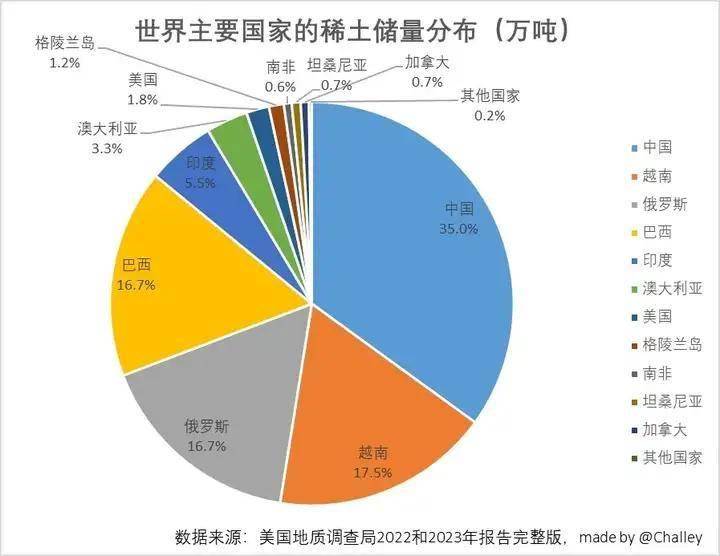
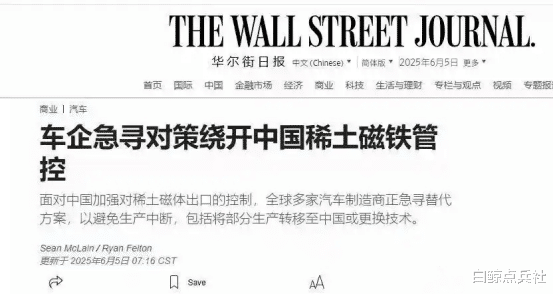
2025年6月,美国《华尔街日报》一篇关于稀土的报道再次引发热议。文章直言:"如果中国彻底切断对美稀土供应,美国军工、电子、新能源等关键产业将 面临'断粮'风险。"这不是危言耸听,而是现实。那么问题来了——稀土到底是什么?为什么它能卡住美国的命脉? 中国的稀土优势,不只是产量大根据美国地质调查局(USGS)发布的2024年数据:全球稀土总产量约为30万吨; 其中中国产量为20.8万吨,占比高达 69.23%; 而稀土储量方面,中国占全球约37%,位居第二; 但更关键的是——中国控制了全球超过90%的稀土加工和提纯能力。 这才是真正的"杀手锏"。 你以为美国不挖稀土吗?不是不挖,是不敢挖、也挖不起。稀土矿虽然分布广泛,但开采过程极其污染环境。过去几十年,中国为此付出了巨大的生态代 价。赣州、包头这些地方,曾经因为盗采稀土,导致山体塌陷、水土流失、重金属污染严重,修复费用动辄数十亿起步。而美国呢?上世纪也曾拥有全球最 大稀土矿——加州芒廷帕斯矿。但由于环保压力和技术门槛,一度关闭多年,直到近年才重新启动。即便如此,其稀土原料仍需运往中国进行提纯。换句话 说,美国不是没有稀土,而是无法快速、低成本地完成整个产业链闭 ...

稀土锁喉:中国卡死美军工命门
Sou Hu Cai Jing· 2025-06-16 07:45
Group 1 - Rare earth elements are a strategic resource that can significantly constrain the U.S. military supply chain [3] - Samarium, a rare metal, plays a crucial role in military applications, particularly in missile and aircraft technology [4][5] - China currently holds a near-monopoly on samarium supply, with major U.S. defense contractor Lockheed Martin being the largest importer [6] Group 2 - China has recently suspended exports of seven types of rare earths, including dysprosium and terbium, which are essential for automotive production [8] - China accounts for over 90% of the global supply of dysprosium and terbium, putting many automotive manufacturers in Europe and the U.S. at risk of production halts [8] - The recent trade tensions and restrictions imposed by Western countries have led China to leverage its rare earth resources as a countermeasure [10][11] Group 3 - Despite holding only one-third of global rare earth mines, China dominates the separation capacity, controlling over 90% of the global processing capabilities [11][12] - Other countries, including the U.S. and Japan, have attempted to develop their own rare earth processing capabilities, but their output is insufficient to meet market demands [13] - China's control over the rare earth supply chain positions it as a critical player in the global industrial landscape, creating significant leverage over other nations [13]
巴西想取代中国给美国供稀土?难度太大了
Sou Hu Cai Jing· 2025-06-16 01:53
我问你个问题:稀土这玩意儿,到底是谁的底牌? 不是谁家有矿就能端起桌子说话的。最近巴西又被推上风口浪尖,说是想取代中国,接手给美国供稀土的活。我一开始也挺好奇,翻了好几份资料,结果 看完只想说一句:理想很丰满,现实是真骨感。 先看这事怎么起的。美国最近对中国稀土出口设限一事有点紧张,尤其军用级中重稀土的供给,几乎全靠中国。拜登又不能公开说咱离不开中国,就拐弯 抹角找替代。卢拉这边刚好也眼热,觉得自己坐拥全球第二大稀土储量,总得捞点大的。但你仔细一看就会发现,这个第二,光听着响,实际掏出来根本 不够看。 美国地质调查局2024年初发布的报告里写得很明白:巴西确实有稀土,约2100万吨,但大头是轻稀土。而美国真正焦虑的是中重稀土,比如铽、镝、钇这 些,在航天、军工、芯片里的地位几乎不可替代。这类元素,全球90%以上的精炼量来自中国。你说你想取代谁?得先看看自己兜里有没有那几样货吧。 我不怀疑巴西的野心,也理解它的机会主义思路,毕竟拉美不少国家都在中美之间找战略模糊位置。但稀土这事真不是靠几句外交辞令就能改局的。产业 链这东西,越底层越难动,根扎得太深。中国就是靠这种难啃的工程积累,才有了如今的卡位优势。 回头再想 ...
美国不让中国碰乌克兰稀土,背后藏着3个算盘
Sou Hu Cai Jing· 2025-06-14 08:09
Core Viewpoint - The United States is reportedly pressuring Ukraine to sign a "China-exclusion clause," explicitly prohibiting Chinese companies from participating in the post-war development of Ukraine's rare earth resources [1][9]. Group 1: U.S. Strategy and Interests - The U.S. sees Ukraine as a strategic resource hub in the context of geopolitical competition, particularly concerning rare earth elements [9][12]. - The U.S. aims to prevent China from gaining access to Ukraine's rare earth resources, which are critical for high-end military and industrial applications [6][11]. - The U.S. has prioritized investment in Ukraine's reconstruction, ensuring that it retains exclusive rights to new investment projects [9][11]. Group 2: Rare Earth Elements Significance - Rare earth elements, often referred to as "industrial vitamins," are essential for various technologies, including smartphones, missiles, and satellites [4][6]. - Although Ukraine's rare earth reserves are not among the top three globally, they contain unique minerals like dysprosium and terbium, which are highly sought after [6][12]. - China currently dominates over 90% of the global rare earth refining and processing capacity, making it a critical player in the supply chain [4][11]. Group 3: Potential Outcomes and Dynamics - Ukraine's need for funding and technology post-war may lead it to reconsider its options, potentially opening doors for Chinese investment despite U.S. pressure [12][13]. - The international political landscape is fluid, and changes in U.S. administration could alter the current stance on Ukraine and China [12][13]. - Ultimately, the health of the global rare earth supply chain may depend on cooperation rather than confrontation, as market dynamics often override political mandates [13].

美企向中国稀土“宣战”,只要1年时间,就能缓解特朗普心腹大患
Sou Hu Cai Jing· 2025-06-14 07:37
Core Viewpoint - The article discusses the ongoing struggle between the United States and China over rare earth elements, highlighting the U.S. efforts to develop its own rare earth capabilities while facing challenges in breaking China's dominance in this strategic resource. Group 1: U.S. Efforts and Challenges - The U.S. is attempting to control global rare earth sources while negotiating with China, but has not achieved its goals after ten years of research and development [1][3][20] - A U.S. rare earth manufacturer claims it can make progress in one year, which could alleviate concerns for the Trump administration [5][32] - The U.S. military and industrial sectors are heavily reliant on rare earth elements, and the lack of domestic production poses significant challenges [20][22] Group 2: China's Dominance - China holds the largest rare earth reserves at 44 million tons and has a production capacity of up to 270,000 tons per year, making it the world's leading supplier [16][18] - China's rare earth processing technology has reached a purity level of 99.9%, and it has developed environmentally friendly extraction methods [18][30] - The U.S. has struggled to establish a competitive rare earth supply chain, relying heavily on imports from China [20][28] Group 3: Future Prospects - The U.S. government is actively supporting domestic rare earth projects and seeking international partnerships to build a non-China dependent supply chain [25][27][33] - Analysts suggest that while breakthroughs in rare earth technology are possible, achieving the same level as China will take several years and significant investment [30][35] - The U.S. rare earth companies acknowledge the challenges ahead but are determined to gradually advance their capabilities in the sector [32][38]

印度对中国提出一个请求,话说得比特朗普还猛,不允许中国不答应
Sou Hu Cai Jing· 2025-06-12 10:08
Group 1 - India is negotiating with China regarding rare earth issues, indicating that India is facing challenges and is anxious about its position [1][5] - China's control over rare earth exports has significant implications for Western industrial nations, as 87% of the global permanent magnet market is dominated by China [5][7] - China's rare earth production accounts for 61% of the global total, with a substantial reserve in Inner Mongolia, which could last for 200 years [7][19] Group 2 - India's rare earth production is only 2,900 tons annually, which is insufficient for its automotive industry, highlighting its dependency on China [7][19] - The Indian government has invested 137 billion RMB in a "National Critical Minerals Mission" to address the rare earth crisis, but the initiative has significant gaps [19][24] - India's attempts to establish a complete rare earth supply chain could take at least 10 years, while current inventories are insufficient to last even 30 days [21][24] Group 3 - India's reliance on China for raw materials is evident, as seen in the pharmaceutical sector where imports from China increased by 13% despite previous investments [22][24] - The Indian government has not shown willingness to engage in meaningful technology cooperation with China, unlike other countries that have successfully negotiated partnerships [26][29] - Historical opportunities for India to collaborate with China on rare earth standards and initiatives have been missed, emphasizing the need for a more constructive approach [29][31]

美国稀土库存即将耗尽,军工巨头面临停工!特朗普向中国紧急求助
Sou Hu Cai Jing· 2025-06-11 05:43
Group 1 - The core issue of the recent US-China trade talks is the critical role of rare earth elements, particularly samarium, which is essential for military applications and is predominantly sourced from China [3][4][6] - The US is facing a depletion of its rare earth inventory due to China's strict export controls implemented after the tariff war initiated by the Trump administration [2][3] - China currently holds a 92% share of the global rare earth refining capacity, establishing a dual monopoly from resource extraction to processing, making it difficult for the US to bypass China's rare earth supply chain [8] Group 2 - The US is seeking assistance from China to maintain its military capabilities, indicating a shift in the power dynamics where the US must approach China for cooperation [2][8] - China's strategy includes export controls and advanced extraction technologies, which have significantly reduced production costs and environmental impact, allowing China to dominate the rare earth market [6][8] - The expectation that China will fully lift its export restrictions on military-related rare earth products is low, as the US officials aim to negotiate but face significant challenges [8]
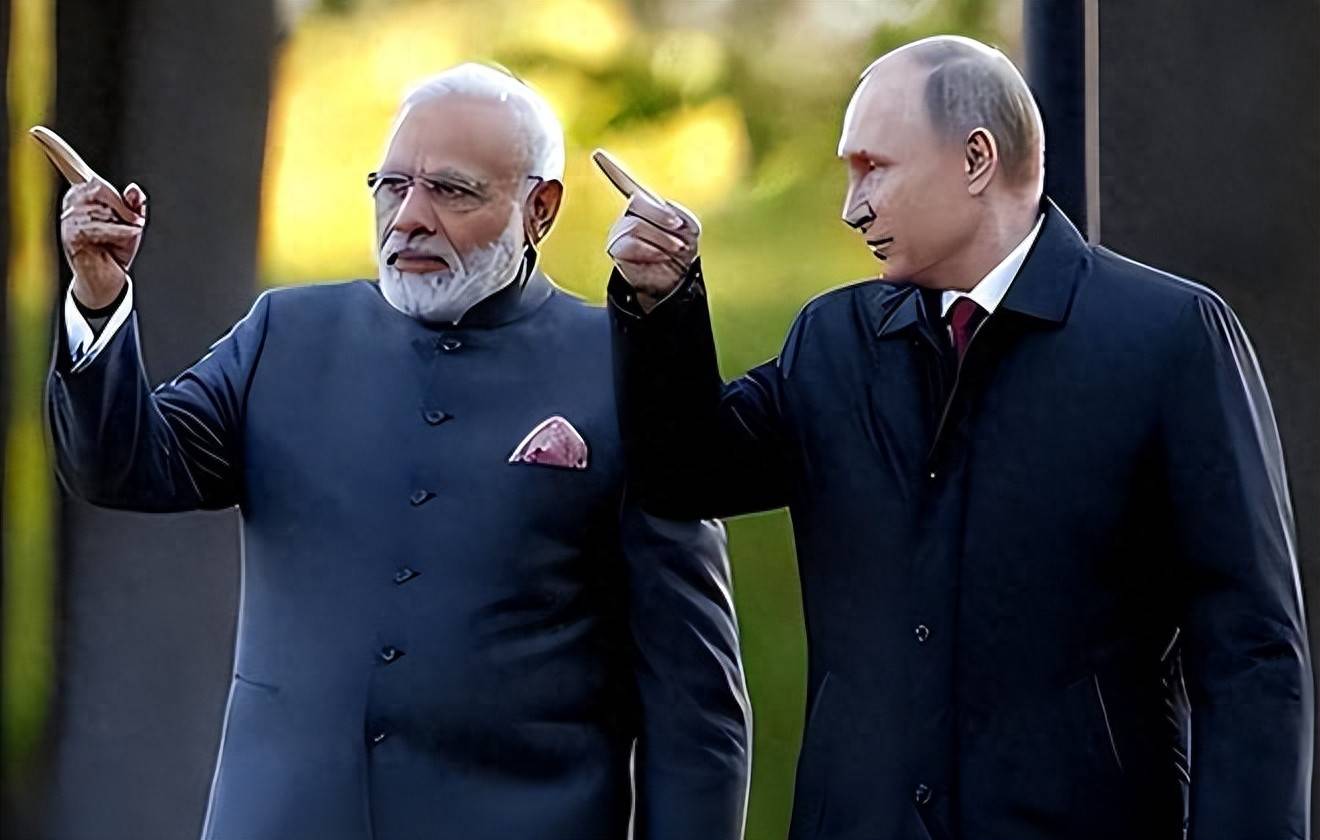
为打破中国稀土垄断,俄罗斯印度携手,我方一口气三大动作反制
Sou Hu Cai Jing· 2025-06-08 11:05
Core Viewpoint - The article discusses the strategic importance of rare earth elements (REEs) in modern technology and highlights China's dominant position in the global REE market, while also addressing the challenges faced by Russia and India in attempting to break this monopoly [1][9]. Group 1: China's Dominance in Rare Earths - China is referred to as the "unofficial king" of the global rare earth industry, holding a significant technological lead over Russia and India, which have substantial reserves but lack the capability to compete effectively [1][9]. - The country has a complete control over the REE supply chain, from resource extraction to advanced technology development, making it difficult for other nations to replicate this model [17][25]. - Approximately 85% of the world's permanent magnet production capacity is concentrated in China, underscoring its critical role in various high-tech applications [15]. Group 2: Russia and India's Challenges - Russia possesses 3.8 million tons of rare earth reserves, but 80% of these are located in the Arctic, making extraction costly and technologically challenging [3]. - India has 6.9 million tons of rare earth reserves but relies heavily on imports from China to meet its military needs, spending $1.2 billion on Chinese permanent magnet materials last year [3][7]. - The proposed strategic cooperation between Russia and India aims to establish a processing facility to bypass China, but both countries face significant technological and infrastructural hurdles [3][4]. Group 3: China's Strategic Actions - China has implemented three major actions to maintain its leading position in the REE market, including strategic integration of state-owned enterprises to consolidate resource allocation and industry development [9][11]. - Chinese companies are actively acquiring overseas REE mines, such as the acquisition of Australia's PEK company, which includes significant reserves in Tanzania and a refining facility in the UK [11][13]. - The focus has shifted from merely selling resources to enhancing technological depth and the completeness of the industrial chain, making it harder for competitors to catch up [13][17]. Group 4: Technological Advancements - China has made significant breakthroughs in rare earth technologies, such as magnetic refrigeration, which could be applied in cutting-edge fields like quantum computing [15]. - The number of patents related to rare earth materials in China has surged, with over 5,800 new patents filed in 2024 alone, far surpassing those from Japan, South Korea, and the United States [15]. - The complete control over the REE supply chain, from resource extraction to technological innovation, creates a robust competitive advantage that is difficult for other nations to replicate [17][25]. Group 5: Future Considerations - The competition for rare earths is not only about market dynamics but also involves national governance and the ability to prevent technology leakage and corruption within the industry [23][25]. - Continuous reform and innovation in technology and talent development are essential for maintaining a strong position in the global REE market [27]. - The geopolitical landscape surrounding rare earths is evolving, with the potential for significant impacts on global technology industries depending on which nation can effectively control these resources [27].
欧美稀土“慌”,凸显大国如何获得博弈筹码
Guan Cha Zhe Wang· 2025-06-06 01:36
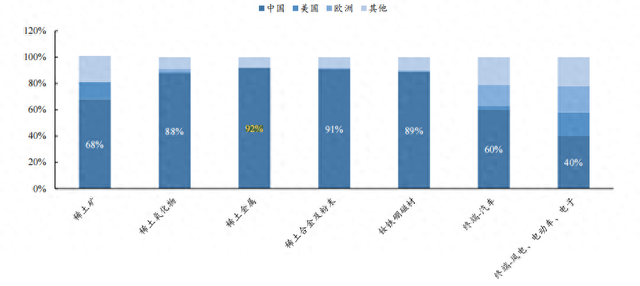
Group 1 - The EU is lobbying China to establish a special channel for expedited approval of rare earth export licenses amid rising protectionism [1][2] - The U.S. and EU's protectionist measures are causing significant pressure on their industries, particularly in the automotive sector, due to China's strict rare earth export controls [3][4] - China has been strategically consolidating its rare earth industry since 2011, leading to a more optimized supply structure [4][6] Group 2 - China is expanding its rare earth industry into high-value downstream products, transitioning from primary products to critical manufacturing materials [5][6] - By 2024, China is projected to dominate global rare earth supply with shares of 68% for rare earth ores, 88% for rare earth oxides, and 92% for rare earth metals [6][8] - The complete rare earth supply chain in China positions it as a key player in the global market, especially as demand surges in sectors like electric vehicles and high-tech applications [10][12] Group 3 - The demand for rare earth elements is expected to rise significantly due to the explosive growth in the electric vehicle market, with projections of 17 million units sold globally by 2024 [12][13] - The U.S. military's reliance on rare earth elements for advanced weaponry highlights the strategic importance of these materials [16][18] - The increasing use of rare earth materials in humanoid robots and other high-tech applications further emphasizes the critical nature of these resources [20][21] Group 4 - China's recent export controls on rare earths are seen as a necessary response to an increasingly unequal international trade environment, aiming to protect its own interests [22][23] - The global shift towards green technology and smart revolution underscores the strategic significance of rare earth materials in future industrial competitiveness [22][23]
一位美国稀土专家说:从地下开采出稀土,最后还得运到中国加工
Sou Hu Cai Jing· 2025-06-03 09:52
Core Viewpoint - The article highlights the dominance of China in the rare earth industry, emphasizing that despite the U.S. efforts to revive its own rare earth mining and processing capabilities, it remains heavily reliant on China for the entire supply chain [2][6][11]. Group 1: Industry Dynamics - Mountain Pass is the only active rare earth mine in the U.S., which resumed operations in 2017, but the entire processing chain is still controlled by China [2]. - China holds 92% of the global refined rare earth production capacity, with a near monopoly on heavy rare earth elements [4]. - The U.S. attempts to establish processing facilities, such as MP Materials in Texas, are significantly outpaced by China's production capabilities [4][6]. Group 2: Technological Advancements - Chinese scientists have developed advanced techniques for separating rare earth elements, including a new method using nanopores and machine learning, which allows for precise identification of elements [4]. - The U.S. struggles with technological limitations and has faced challenges in establishing competitive processing facilities due to high costs and regulatory hurdles [6][9]. Group 3: Policy and Market Challenges - U.S. tariffs on Chinese imports, such as the 125% tax imposed by Trump in 2025, have severely impacted American companies' ability to compete in the rare earth market [6]. - China's government has implemented strict export quotas on rare earth elements, further solidifying its control over the market [6][8]. Group 4: Strategic Implications - The U.S. Department of Defense acknowledges the risks of relying on Chinese rare earth supplies, particularly for critical technologies like the F-35 fighter jet [8]. - The article suggests that the competition for rare earth resources is not just a technical battle but a broader struggle for industrial supremacy, with China having established a robust supply chain over decades [9][11].