
自由贸易

Search documents
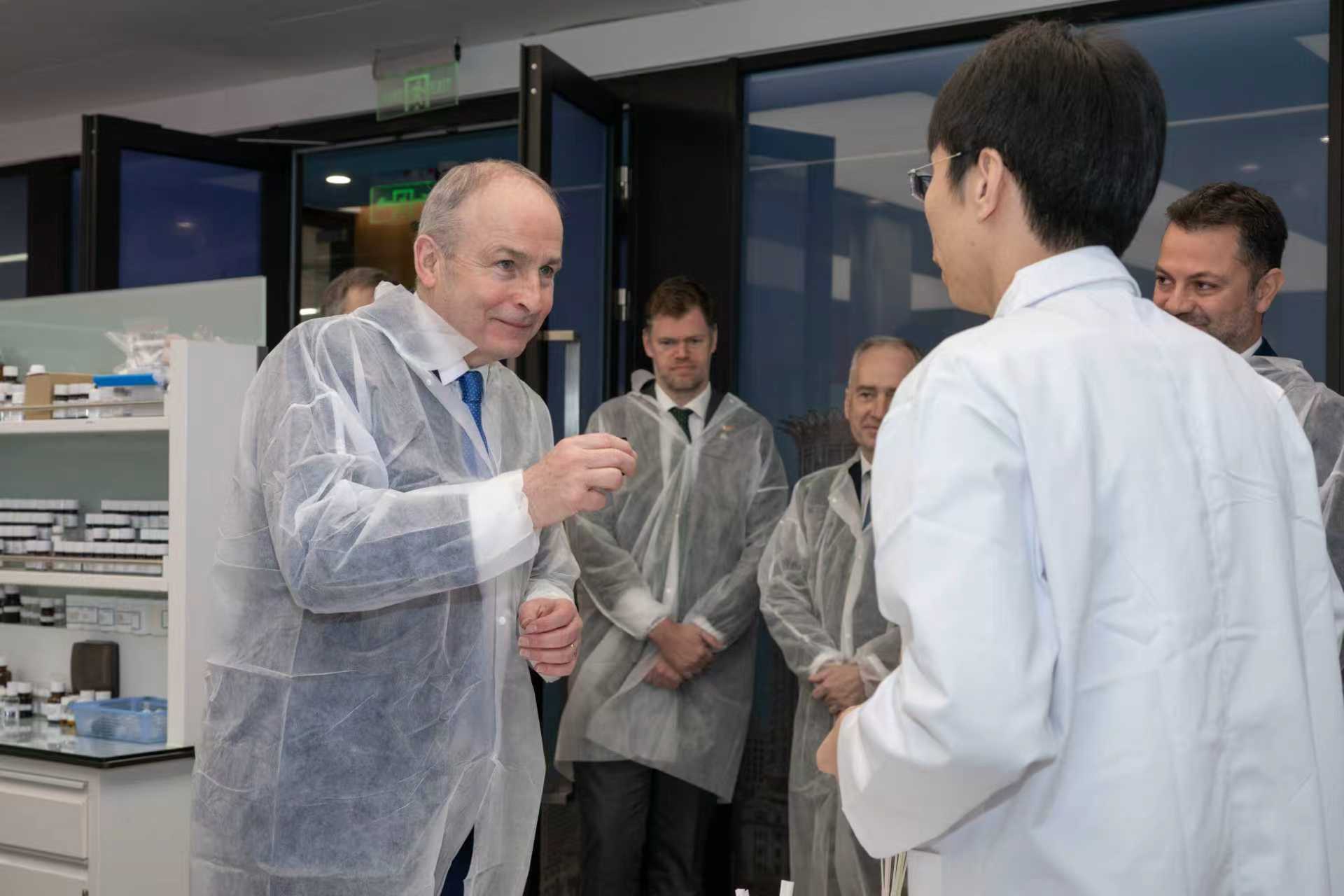
爱尔兰总理时隔14年访华,“探路”新时代中欧关系
2 1 Shi Ji Jing Ji Bao Dao· 2026-01-07 12:24
Group 1: Overview of the Visit - Irish Prime Minister Martin's visit to China from January 4 to 8 marks a significant moment in Sino-European relations, being the first visit by a European leader to China in 2023 and the first by an Irish Prime Minister in 14 years [2][3] - The visit aims to deepen bilateral cooperation between China and Ireland, particularly in trade and investment, while also serving as a demonstration of stabilizing Sino-European relations during a period of structural adjustment [2][5] Group 2: Economic Cooperation - China and Ireland are looking to expand cooperation in various sectors, including aircraft leasing, insurance, healthcare, green energy, digital economy, artificial intelligence, and life sciences [2][3] - The bilateral trade volume between China and Ireland has reached approximately €46 billion, with Ireland maintaining a trade surplus with China for several years [6][7] - In 2023, Chinese direct investment in Ireland amounted to $380 million, with a total stock of direct investment reaching $2.04 billion by the end of the year [7] Group 3: Education and Cultural Exchange - Education is a key area of focus, with both countries emphasizing the importance of higher education and continuing education as pillars of cooperation [8][9] - As of July 2025, there are expected to be 110 cooperative educational institutions and projects between China and Ireland, with over 12,000 students enrolled [9] - The signing of new cooperative education projects between Irish and Chinese universities highlights the ongoing commitment to educational collaboration [8][9]

王毅同芬兰外长瓦尔托宁通电话
Xin Hua She· 2026-01-06 17:04
Group 1 - The core viewpoint of the article emphasizes the stable development and mutual benefits in China-Finland relations, highlighting the importance of respect and equality in bilateral cooperation [1][2] - Wang Yi expressed China's commitment to high-level opening up and willingness to strengthen cooperation with Finland in areas such as energy transition, circular economy, artificial intelligence, green environmental protection, and the silver economy [1] - The article discusses the importance of cooperation in the context of China-EU relations, urging Finland to play a positive role in promoting a rational understanding of China within the EU and to consider strategic alignment between the Belt and Road Initiative and the EU's Global Gateway plan [1] Group 2 - Finland's Foreign Minister Valtonen conveyed President Stubb's greetings to President Xi Jinping, reaffirming Finland's adherence to the one-China policy and the desire for closer high-level exchanges and cooperation in various fields [2] - The article highlights the shared interests and broad cooperation potential between China and Finland in green energy and technological innovation, emphasizing the importance of maintaining constructive relations in climate and energy sectors [2] - Both parties exchanged views on the current situation and prospects of the Ukraine crisis, indicating ongoing geopolitical discussions [3]
李强同爱尔兰总理马丁会谈
Xin Hua She· 2026-01-06 12:17
Core Viewpoint - The meeting between Chinese Premier Li Qiang and Irish Prime Minister Martin emphasizes the deepening of the China-Ireland strategic partnership, focusing on enhancing political trust and practical cooperation across various sectors [1][2]. Group 1: Economic Cooperation - Both countries have strong economic complementarity and should strengthen development strategy alignment to explore cooperation potential in various fields [2]. - China aims to expand bilateral trade and improve service trade in sectors such as aircraft leasing, insurance, healthcare, and wellness to better meet the needs of both nations [2]. - There is a mutual interest in seizing future development opportunities in green energy, digital economy, artificial intelligence, information technology, and life sciences [2][3]. Group 2: Cultural and People-to-People Exchanges - The two nations plan to enhance cultural, tourism, education, and local exchanges to solidify the friendly foundation between their peoples [2][3]. - Ireland welcomes more Chinese enterprises to invest in the country, indicating a desire for increased bilateral investment [3]. Group 3: Multilateral Cooperation - Both parties express a commitment to strengthening communication and collaboration within multilateral mechanisms like the United Nations to uphold multilateralism and free trade [2][3]. - Ireland, set to assume the EU presidency in the second half of the year, is expected to play a constructive role in promoting China-EU dialogue and cooperation [2][3].
李强同爱尔兰总理会谈
Yang Shi Wang· 2026-01-06 12:11
央视网消息(新闻联播):国务院总理李强1月6日下午在京同来华进行正式访问的爱尔兰总理马丁举行 会谈。 李强表示,昨天,习近平主席同总理先生举行会晤,就深化中爱关系作出战略指引。在中爱共同努力 下,两国互惠战略伙伴关系持续走深走实,各领域合作不断取得新的成果。中方愿同爱方巩固增强政治 互信,照顾彼此重大利益和核心关切,高质量推进务实合作,推动双边关系不断迈上新台阶,实现更高 水平的互利共赢。 马丁表示,爱尔兰坚定致力于进一步深化两国互惠战略伙伴关系,愿同中方加强各层级交往,促进经 贸、绿色经济、人文等领域交流合作。欢迎更多中国企业赴爱投资。爱方愿同中方密切多边协调,反对 单边主义、保护主义,共同维护世界和平稳定与发展繁荣。爱方愿为促进欧中对话与合作发挥建设性作 用。 吴政隆参加上述活动。 李强指出,中爱两国的经济互补性强,双方应当加强发展战略对接,深挖各领域合作潜力。中方愿同爱 方拓展飞机租赁、保险、医疗、健康等服务贸易,深化绿色能源、数字经济、人工智能等领域合作,同 时进一步便利人员往来,加强人文领域交流合作,不断夯实两国友好的民意基础。当前,国际经贸秩序 遭受严重冲击。中方愿同爱方加强多边沟通协作,维护多边 ...
李強會見韓國總統李在明
智通财经网· 2026-01-06 09:57
李在明表示,昨天我同習近平主席舉行了成功會談,就推動韓中戰略合作伙伴關係發展達成重要共識。 韓中是近鄰和友鄰,韓方高度重視對華關係,願尊重彼此核心利益,密切雙邊對話交往,深化經貿等各 領域互惠合作,與時俱進、合作共贏,爲兩國人民帶來更多福祉。韓方積極鼓勵韓國企業擴大對華合 作,歡迎中國企業赴韓投資興業。韓方願同中方加強多邊溝通協調,共同維護自由貿易,促進地區和國 際和平穩定。 吳政隆參加會見。 1月6日上午,國務院總理李強在北京釣魚臺國賓館會見來華進行國事訪問的韓國總統李在明。 李強表示,當前,在兩國元首戰略引領下,中韓關係呈現新氣象。昨天,習近平主席同總統先生舉行會 談,爲深化發展中韓戰略合作伙伴關係作出戰略指引,注入強勁動力。中方始終將對韓關係置於周邊外 交的重要位置,願同韓方一道堅持睦鄰友好,加強戰略溝通,鞏固政治互信,求同存異、聚同化異,推 動兩國關係沿着正確軌道不斷向前發展,更好惠及兩國人民。 李強指出,中韓互爲重要經貿夥伴,建交30多年來充分發揮經濟互補優勢,取得豐碩合作成果,有力促 進了共同發展。兩國的經濟聯繫緊密,交通運輸高效,產供鏈深度互嵌,應當摒棄零和思維,堅持良性 競合,通過加強合作爲彼 ...
李强会见韩国总统李在明
Xin Lang Cai Jing· 2026-01-06 09:49
新华社北京1月6日电(记者董雪)1月6日上午,国务院总理李强在北京钓鱼台国宾馆会见来华进行国事 访问的韩国总统李在明。 新华社北京1月6日电(记者董雪)1月6日上午,国务院总理李强在北京钓鱼台国宾馆会见来华进行国事 访问的韩国总统李在明。 李强表示,当前,在两国元首战略引领下,中韩关系呈现新气象。昨天,习近平主席同总统先生举行会 谈,为深化发展中韩战略合作伙伴关系作出战略指引,注入强劲动力。中方始终将对韩关系置于周边外 交的重要位置,愿同韩方一道坚持睦邻友好,加强战略沟通,巩固政治互信,求同存异、聚同化异,推 动两国关系沿着正确轨道不断向前发展,更好惠及两国人民。 李强指出,中韩互为重要经贸伙伴,建交30多年来充分发挥经济互补优势,取得丰硕合作成果,有力促 进了共同发展。两国的经济联系紧密,交通运输高效,产供链深度互嵌,应当摒弃零和思维,坚持良性 竞合,通过加强合作为彼此发展提供更多确定性。中方愿同韩方加强市场开放联通,积极推进高端制 造、人工智能、新能源等新兴领域合作,深化产业融合对接,携手培育新的发展动能。中方欢迎韩国企 业扩大对华投资,希望韩方为中国企业赴韩投资提供便利。中韩应当一道坚持多边主义、自由贸 ...
爱尔兰总理时隔14年再次访华,称“中国市场至关重要”
2 1 Shi Ji Jing Ji Bao Dao· 2026-01-06 07:19
Group 1: Bilateral Relations - Ireland emphasizes the importance of developing relations with China and aims to deepen political trust and expand practical cooperation in trade and cultural sectors [2][3] - The meeting between Irish Prime Minister Martin and Chinese leaders was described as "enthusiastic and constructive," reaffirming the commitment to a solid mutual strategic partnership [2][4] - Both parties agreed to promote EU-China relations towards a more stable and constructive direction, particularly in trade, advocating for open and fair competition [2][3] Group 2: Economic Cooperation - The bilateral trade between Ireland and China has grown significantly over the past decade, reaching approximately €46 billion, indicating substantial cooperation potential [5] - In the first seven months of 2025, bilateral trade amounted to $13.474 billion, a year-on-year decrease of 4.6%, with Irish exports to China increasing by 15.3% to $3.245 billion [5] - Ireland welcomes more Chinese investments, particularly in biopharmaceuticals and financial services, positioning itself as a gateway for Chinese companies into the EU market of 450 million consumers [6] Group 3: Sectoral Collaboration - The food and beverage industry is crucial for Irish enterprises, with Ireland maintaining high quality and safety standards in beef, dairy, and infant formula [4] - Life sciences and technology sectors are also key areas for bilateral cooperation, with an emphasis on research and development partnerships [4][5] - A new stem cell research center is being established between Hebei Medical University and the National University of Ireland Galway, focusing on diabetes and other health issues [5] Group 4: Cultural and Educational Exchange - Cultural and educational exchanges are vital to the Ireland-China relationship, with a growing network of cooperation among higher education institutions [6] - Approximately 50,000 Chinese nationals and students are currently living, studying, and working in Ireland, enhancing bilateral ties [6] - A visa waiver policy for ordinary passport holders from Ireland has been extended until December 31, 2026, facilitating travel and exchanges [6] Group 5: International Cooperation and Trade Principles - Both parties recognize the need to strengthen the rules-based international order through UN reforms and emphasize the importance of international law in resolving disputes [3][7] - Ireland advocates for open trade and fair competition, opposing tariff measures and supporting a stable and predictable trade relationship, particularly between China and the EU [7] - The current global trade tensions necessitate a focus on overall frameworks rather than specific issues, promoting a balanced approach to economic security and trade openness [7]
进口牛肉保障措施: 权衡自由贸易与国内产业
Sou Hu Cai Jing· 2026-01-04 17:31
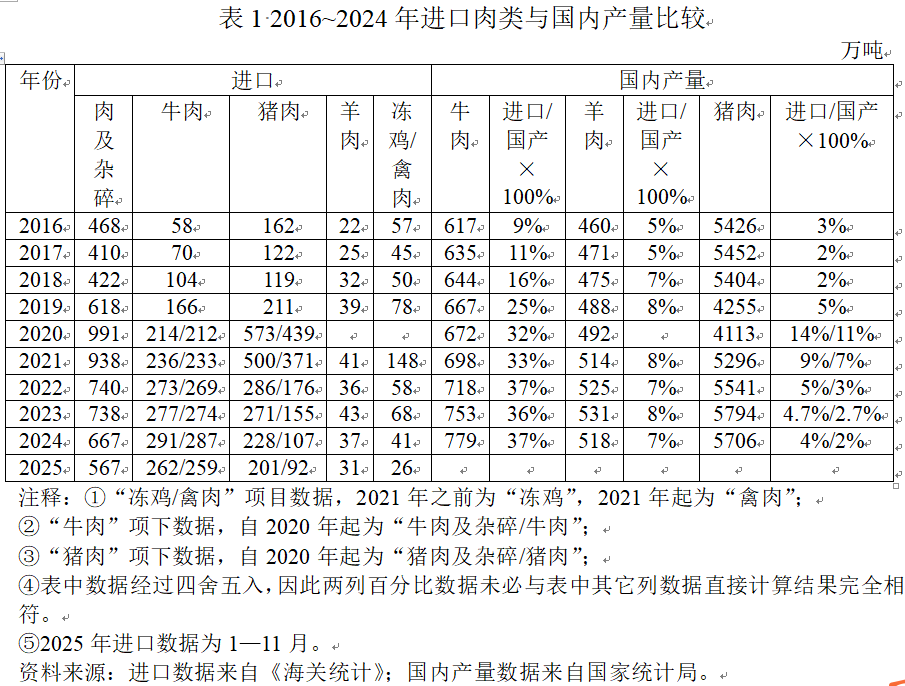
Core Viewpoint - China's meat production, particularly pork, has a comparative advantage, while beef and lamb production lacks this advantage, necessitating adjustments in domestic livestock farming structures and the development of related industries like prepared foods for export to balance trade and domestic needs [1][2][8]. Group 1: Trade Measures and Investigations - In 2024, the Ministry of Commerce initiated trade remedy investigations on imported pork and beef, with final rulings released in December 2025 confirming dumping and substantial damage to domestic industries [1][2]. - The Ministry of Commerce announced safeguard measures for imported beef in December 2024, recognizing that increased imports severely harmed domestic industries, leading to a three-year quota and tariff system starting January 2026 [2]. Group 2: Meat Production Trends - From 1996 to 2024, China's population grew from 1.22389 billion to 1.40828 billion, while meat production increased from 45.84 million tons to 97.799 million tons, reflecting a long-term growth trend despite setbacks from events like the African swine fever [3]. - In 2024, China imported 6.67 million tons of meat while exporting only 630,000 tons, indicating a significant trade imbalance in the meat sector [4]. Group 3: Import and Export Dynamics - In 2024, China imported 2.91 million tons of beef, with 2.87 million tons being beef alone, while sheep meat imports fluctuated significantly [5]. - The import of beef surpassed pork in 2023, with beef imports accounting for 37% of domestic production by 2024, compared to pork's much lower import ratio [9][10]. Group 4: Economic and Agricultural Implications - Maintaining a balance between domestic production and imports is crucial for economic security, with a focus on ensuring food security while expanding import capabilities [6][7]. - The comparative advantage of pork production supports a higher self-sufficiency rate, while beef and lamb production face challenges, suggesting a need for strategic adjustments in livestock production [10][11]. Group 5: Future Strategies - To enhance trade balance, it is recommended to reduce beef and lamb production while increasing pork production, alongside developing the prepared food industry to meet both domestic and international demands [11][12].
进口牛肉保障措施:权衡自由贸易与国内产业
Di Yi Cai Jing· 2026-01-04 13:15
Core Viewpoint - China's livestock industry needs to adjust its production structure based on comparative advantages, with pork production having a comparative advantage while beef and lamb production lacks it [1][3][10]. Group 1: Trade Measures and Investigations - In 2024, China's Ministry of Commerce initiated trade remedy investigations on imported pork and beef, with final rulings expected by December 2025 [2]. - The Ministry of Commerce found that imported pork and related products from the EU were being dumped, causing substantial harm to the domestic industry, with a final ruling confirming this in December 2025 [2][3]. - A safeguard investigation on imported beef was announced in December 2024, leading to a ruling in December 2025 that recognized serious damage to the domestic industry due to increased imports [2]. Group 2: Production and Import Trends - China is both a major meat producer and importer, with meat production increasing from 45.84 million tons in 1996 to 97.8 million tons in 2024, despite challenges like the African swine fever [4][5]. - In 2024, China imported 6.67 million tons of meat while only exporting 0.63 million tons, indicating a significant trade imbalance [5][8]. - The import of beef and lamb has been rising, with beef imports reaching 2.91 million tons in 2024, while lamb imports fluctuated significantly [8][11]. Group 3: Comparative Advantage and Future Outlook - The lack of comparative advantage in beef and lamb production suggests that import levels will remain high in the foreseeable future, while pork production benefits from a strong comparative advantage [10][12]. - The domestic supply of beef and lamb is heavily reliant on imports, with the import ratio for beef reaching 37% of domestic production by 2024, compared to only 2-4% for pork [11][12]. - The focus on pork production aligns with sustainable agricultural practices, as pig manure is more beneficial for soil health compared to that of cattle and sheep [12][13]. Group 4: Strategic Recommendations - To balance free trade and domestic industry needs, adjustments should be made to reduce beef and lamb production while increasing pork production [14]. - Developing the prepared food industry can enhance import demand for agricultural products and meet the growing overseas market for convenient food options, serving as a cultural export as well [14].
推动中瑞关系不断迈上新台阶
Xin Lang Cai Jing· 2026-01-01 22:55
Core Viewpoint - The communication between Chinese President Xi Jinping and Swiss Federal President Parmelin highlights the strengthening of bilateral relations and cooperation in free trade amidst rising unilateralism and protectionism [1] Group 1: Bilateral Relations - Xi Jinping congratulated Parmelin on his assumption of the presidency and emphasized the importance of the China-Switzerland Free Trade Agreement (FTA) upgrade negotiations, which have made positive progress under Parmelin's leadership [1] - The year 2026 marks the 10th anniversary of the China-Switzerland innovative strategic partnership and the beginning of China's 14th Five-Year Plan, presenting significant opportunities for innovation cooperation between the two countries [1] Group 2: Economic Cooperation - The collaboration between China and Switzerland in supporting free trade is portrayed as a reflection of the high-level development of their relationship, contributing to global stability and prosperity [1] - Xi expressed a commitment to expanding mutually beneficial cooperation and advancing the China-Switzerland relationship to better serve the peoples of both nations [1]