金融强国建设

Search documents
夯实文化软实力 积极履责显担当 | 华金证券党委书记、总裁燕文波:以文化软实力铸就高质量发展硬支撑
Zhong Guo Zheng Quan Bao· 2025-12-29 23:08
Core Viewpoint - The article emphasizes the importance of cultural construction and social responsibility for securities companies in achieving high-quality development, as outlined in the "14th Five-Year Plan" [1] Group 1: Cultural and Strategic Development - The company focuses on optimizing its financial institution system, enhancing governance, and developing a unique brand that aligns with national strategies [2][3] - The strategic layout of the company leverages its unique position in the Guangdong-Hong Kong-Macao Greater Bay Area and the Yangtze River Delta, aiming to create a competitive securities brand [3][4] Group 2: Governance and Compliance - The company has established a governance structure that integrates party leadership with corporate governance, ensuring alignment with national strategies and industry directions [4] - A comprehensive compliance and risk control culture is being developed, emphasizing the importance of compliance as a core value and operational necessity [6][7] Group 3: Human Resources and Employee Engagement - The company is building a talent management system that aligns with its strategic goals, focusing on performance evaluation that balances financial and compliance metrics [8] - Employee care is a key component of the corporate culture, enhancing employee cohesion and commitment to the company's development [9] Group 4: Social Responsibility and Market Engagement - The company aims to fulfill its economic and social responsibilities by promoting its research and business highlights in various financial sectors [10][11] - It actively engages in investor education and protection, reflecting its commitment to social responsibility and community engagement [12]
奋楫扬帆“十四五”,金融报国谱新篇——2025年中国人寿保险股份有限公司高质量发展回望
Xin Lang Cai Jing· 2025-12-29 03:09
Core Viewpoint - In 2025, despite external uncertainties, China's economy is expected to reach 140 trillion yuan, solidifying its position as the world's second-largest economy, driven by strong leadership and a focus on high-quality development [1] Group 1: Economic and Industry Overview - The insurance sector is highlighted as a stabilizer in the economy, benefiting from enhanced macro policies and a refined regulatory framework [1] - China Life Insurance Company (China Life) is aligning its strategies with national policies to accelerate its transformation and aim for becoming a world-class insurance company [2] - The company emphasizes its role in supporting national development and addressing public needs, showcasing its commitment to high-quality service [2] Group 2: Financial Performance - In the first three quarters of 2025, China Life achieved total premiums of 669.645 billion yuan, a 10.1% increase year-on-year, with new premiums growing by 10.4% [7] - The company reported a strong growth in new business value, up 41.8%, and maintained high solvency levels with core solvency ratio at 137.50% [7] - Total assets reached 74,179.81 billion yuan, with investment assets growing by 10.2% compared to the previous year [7] Group 3: Business Strategy and Innovation - China Life is focusing on value creation and efficiency, diversifying its product offerings across life, annuity, and health insurance [8] - The company is enhancing its digital operations, utilizing AI and big data to improve customer service and operational efficiency [20][21] - A significant increase in the proportion of floating income products has been noted, with a 45 percentage point rise in the first-year premium share [8] Group 4: Social Responsibility and Community Engagement - China Life is actively involved in rural revitalization efforts, supporting low-income families and contributing to local economic development [17][18] - The company has established numerous assistance points and invested in educational programs to enhance rural skills and promote local industries [18] - It has also expanded its healthcare insurance services, ensuring a stable service level for insured populations [13] Group 5: Future Outlook - Looking ahead, China Life aims to deepen its involvement in various financial sectors, including pension and inclusive finance, while enhancing its governance and risk management [26][27] - The company is committed to maintaining its market leadership and adapting to complex external environments to ensure sustainable growth [26][27]



奋楫扬帆“十四五” 金融报国谱新篇——2025年中国人寿保险股份有限公司高质量发展回望
Jin Rong Jie Zi Xun· 2025-12-29 03:01
Core Viewpoint - In 2025, despite external uncertainties, China's economy is expected to reach 140 trillion yuan, solidifying its position as the world's second-largest economy, driven by strong leadership and a focus on high-quality development [1] Group 1: Economic and Industry Overview - The insurance sector is highlighted as a stabilizer in the economy, benefiting from enhanced macro policies and a refined regulatory framework [1] - China Life Insurance Company is aligning its strategies with national priorities and regulatory guidance to accelerate its transformation and solidify its position as a leading insurance provider [2] Group 2: Corporate Governance and Leadership - The company emphasizes the importance of high-quality party building to ensure high-quality development, with a focus on political construction and organizational strength [3] - By the end of 2025, China Life had established 5,885 party organizations, ensuring coverage in all business areas [4] Group 3: Financial Performance - In the first three quarters of 2025, China Life achieved total premiums of 669.645 billion yuan, a 10.1% increase year-on-year, with new premiums growing by 10.4% [7] - The company maintained a strong solvency position, with a core solvency ratio of 137.50% and total assets reaching 74,179.81 billion yuan, reflecting a 9.6% increase from the previous year [7] Group 4: Investment Strategy - China Life is committed to long-term, value-driven investments, achieving a net profit of over 167.8 billion yuan, a 60.5% increase year-on-year [11] - The total investment income reached 368.55 billion yuan, marking a 40% increase compared to the previous year [11] Group 5: Social Responsibility and Community Engagement - The company has engaged in extensive rural support initiatives, establishing 1,085 assistance points and investing over 90 million yuan in educational support [19] - China Life has developed 23 specialized insurance products aimed at rural revitalization, enhancing its role in community development [19] Group 6: Customer Experience and Digital Transformation - The company has focused on enhancing customer experience through digital transformation, achieving a 99.99% paperless application rate for individual long-term insurance [24] - China Life's digital initiatives have led to a significant increase in customer engagement, with over 53.66 million participants in various service activities [24] Group 7: Future Outlook - Looking ahead, China Life aims to deepen its involvement in national development, enhance its service offerings, and maintain its market leadership through strategic investments and innovation [30][29]

为金融强国建设贡献期货力量
Qi Huo Ri Bao Wang· 2025-12-29 01:03
Core Viewpoint - The 20th Central Committee's Fourth Plenary Session emphasizes the importance of accelerating the construction of a financial power and outlines the strategic blueprint for the 14th Five-Year Plan, guiding the futures industry to align with national economic and social development goals [1][2]. Group 1: Party Leadership - The principle of "upholding the Party's overall leadership" is identified as the foremost guideline for economic and social development during the 14th Five-Year Plan, highlighting the political advantages of China's financial development [2]. - The Futures Industry Association (FIA) is committed to integrating Party leadership with business development, implementing various measures to strengthen Party building within the industry [2][3]. Group 2: People-Centric Approach - The session stresses "putting people first," with a focus on improving the quality of life for the populace as a primary goal for the 14th Five-Year Plan [4]. - The futures industry is encouraged to incorporate social responsibility into its development strategy, particularly through the "insurance + futures" model to support rural revitalization [4][5]. Group 3: Economic Development Focus - The session emphasizes the need to focus on the real economy, advocating for intelligent, green, and integrated development [6]. - The FIA is guiding futures firms to innovate in service tools and models to better support the real economy, with significant financial services provided to small and medium-sized enterprises [6]. Group 4: Financial Innovation - The 14th Five-Year Plan calls for the development of various financial sectors, including technology finance, green finance, and inclusive finance [7]. - The FIA aims to deepen the understanding of the futures industry's role in supporting national strategies and enhancing financial services for the real economy [7]. Group 5: Cultural Development - The session highlights the importance of cultivating a distinctive financial culture, with the FIA promoting principles of compliance, integrity, professionalism, and responsibility within the industry [8][9]. - The FIA is implementing measures to integrate cultural development into business strategies and governance, ensuring alignment with the core values of the financial sector [9].
尚福林:加快建设金融强国,是质的有效提升和量的合理增长有机统一
Zheng Quan Ri Bao· 2025-12-28 14:30
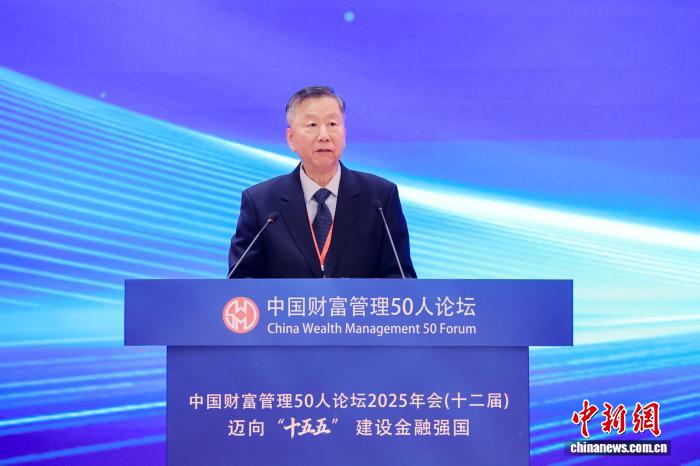
本报讯 (记者熊悦)12月27日至28日,中国财富管理50人论坛2025年会(十二届)(以下简称"年 会")举办,年会以"迈向'十五五'建设金融强国"为主题。 中国财富管理50人论坛理事长、原银监会主席、证监会原主席尚福林在年会上表示,2025年10月份,党 的二十届四中全会,明确将加快建设金融强国作为"十五五"时期的重要战略目标。这既是对"十四五"时 期金融高质量发展成就的赓续升华,更是立足中国式现代化全局作出的战略部署。 尚福林表示,回望"十四五"时期,我国金融业实现了规模增长与质量提升的历史性跨越,为金融强国建 设奠定了坚实基础。 尚福林表示,建设金融强国是一项开创性的系统工程,需要不懈努力。"十五五"时期是关键攻坚期,要 深刻把握金融工作的政治性、人民性,扎实推进各项任务落实;要强化金融人才队伍建设,培养一批兼 具专业素养、国际视野和家国情怀的金融人才,为金融强国建设提供智力支撑;要坚持守正创新,既要 遵循现代金融发展规律,又要立足我国国情,不断探索中国特色金融发展新模式。 (文章来源:证券日报) 他表示,"十五五"时期金融发展仍将面临一些结构性和机制性挑战。比如,社会资金配置结构不平衡问 题仍有待解 ...
浦发银行行长谢伟:以“AI+金融”赋能新质生产力 服务“十五五”金融强国建设
Zheng Quan Ri Bao Zhi Sheng· 2025-12-28 11:41
Group 1 - The core objective of building a strong financial nation during the "14th Five-Year Plan" period requires the financial industry to take on a more significant historical mission, which includes better serving the real economy and actively driving technological innovation and industrial upgrading [1] - The financial industry needs to undergo three key upgrades: role upgrade from being a "stabilizer" of the economic cycle to an "incubator" of new productive forces, model innovation from scale-driven broad services to intelligent-driven precise responses, and momentum upgrade from single-point breakthroughs in AI applications to core-driven advancements [1][2] - The integration of artificial intelligence with finance is fundamentally changing the value creation logic in the financial industry, impacting service models, risk control paradigms, and financial inclusivity [2] Group 2 - Shanghai Pudong Development Bank is advancing the "AI + Finance" initiative with an engineering mindset, launching the "Artificial Intelligence Implementation Action Plan (2026)" to systematically promote the deep application of AI across business areas [3] - The bank aims to build a diversified financial technology ecosystem and contribute to the positive cycle of "technology-industry-finance" [3] - Shanghai Pudong Development Bank is committed to collaborating with various parties to create a new ecosystem of "AI + Finance" that empowers the digital transformation of various industries [3]

尚福林:加快建设金融强国的四点核心内涵
Xin Lang Cai Jing· 2025-12-27 12:31
Core Viewpoint - The speech by Shang Fulin emphasizes the importance of accelerating the construction of a financial power during the "14th Five-Year Plan" period, highlighting the achievements and challenges faced in the financial sector, and outlining four core aspects for the "15th Five-Year Plan" [2][4][5]. Group 1: Achievements in the Financial Sector - During the "14th Five-Year Plan" period, China's financial industry experienced significant growth in both scale and quality, laying a solid foundation for the construction of a financial power [4]. - Key achievements include optimized credit structures, increased financial support for technology innovation and green transformation, ongoing capital market reforms, and effective financial risk prevention measures [4][5]. Group 2: Challenges Ahead - The financial sector will face structural and institutional challenges during the "15th Five-Year Plan" period, such as imbalances in social capital allocation, difficulties in financing for private and small enterprises, and the need for improved direct financing ratios [5][6]. - New risks arising from financial technology and the complexities of cross-border risk transmission will require enhanced regulatory measures [5][6]. Group 3: Core Aspects for the "15th Five-Year Plan" - The first core aspect focuses on enhancing financial services for the real economy, emphasizing the need for optimized financial resource allocation and support for key sectors [6][7]. - The second aspect involves deepening financial system reforms to establish a modern financial system that aligns with Chinese characteristics [7][8]. - The third aspect stresses the importance of balancing development and security to ensure financial stability [8]. - The fourth aspect advocates for a gradual advancement of high-level openness to enhance global financial governance [8][9]. Group 4: Future Directions - The construction of a financial power is described as a systematic project requiring continuous effort, with a focus on cultivating a skilled financial workforce and exploring new models of financial development that align with China's national conditions [9].
尚福林、杨伟民、白重恩、高培勇,最新发声!
Sou Hu Cai Jing· 2025-12-27 09:27
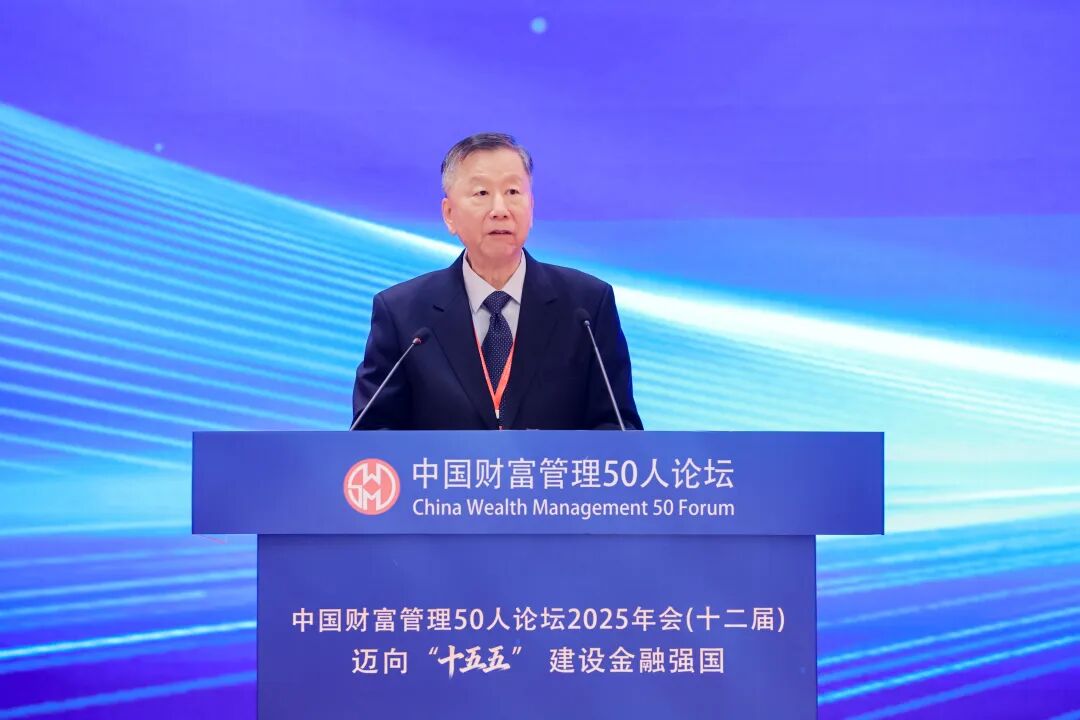
最新发声。 12月27日,在中国财富管理50人论坛2025年会上,原银监会主席、证监会原主席尚福林,第十三届全国 政协经济委员会副主任杨伟民,清华大学经济管理学院院长白重恩,中国社会科学院学部委员高培勇等 专家学者就当前多个宏观经济热点发表见解。 4.政策不仅要聚焦扩大需求、优化供给,也要优化分配,形成供给、需求、分配三位一体、方向一致的 系统性政策。 来看会上重要观点: 1. 迈向"十五五",加快建设金融强国,是质的有效提升和量的合理增长有机统一,是综合性、系统性、 引领性的跃升。 2. 保持制造业合理比重包含两层含义:一是我国制造业占GDP的比重保持在合理水平;二是我国制造业 占全球制造业比重能够保持基本稳定。 3. 凝聚新质生产力的新制造,不再是过去烟囱林立、管道密集、劳动密集的产业,而是科技创新与产 业、产品创新"前店后厂"式,研发人员密集,知识产权密集的制造业,新制造恰恰应该布局在中心城市 及其城市群地区,因为研发人员主要在这里。 其中,在金融体制改革层面,要构建与中国式现代化相匹配的"六大支柱"体系。要完善中央银行制度, 构建科学稳健的货币政策体系和覆盖全面的宏观审慎管理体系,畅通货币政策传导机制 ...
尚福林、杨伟民、白重恩、高培勇,最新发声!
证券时报· 2025-12-27 09:14
Core Viewpoint - The conference emphasized the importance of accelerating the construction of a financial power during the "15th Five-Year Plan" period, focusing on the organic unity of qualitative improvement and reasonable quantitative growth, as well as comprehensive, systematic, and leading advancements [2][5]. Group 1: Financial Development - The financial sector in China has achieved historic growth in scale and quality during the "14th Five-Year Plan," laying a solid foundation for building a financial power [5]. - Challenges remain in the financial development landscape, including imbalances in social capital allocation and the need for traditional financing and risk control models to adapt to new economic realities [5][6]. - The "15th Five-Year Plan" suggests focusing on financial services for the real economy, deepening financial system reforms, and enhancing global financial governance [5][6]. Group 2: Manufacturing and New Quality Productivity - The conference highlighted the need to maintain a reasonable proportion of manufacturing in GDP and globally, emphasizing that new quality productivity should not be confined to traditional industrial models [2][8]. - New manufacturing should focus on technology and product innovation, with a concentration of research and development personnel in central cities and urban clusters [10][8]. - The development of emerging and future industries is expected to primarily occur in key regions such as Beijing, Shanghai, and the Guangdong-Hong Kong-Macau Greater Bay Area [10][8]. Group 3: Policy Optimization - Policies should not only focus on expanding demand and optimizing supply but also on optimizing distribution to create a cohesive system of supply, demand, and distribution [3][12]. - The transition from consumption stimulus policies to income distribution adjustment policies is necessary to enhance the income of low-income groups and ensure that disposable income growth outpaces economic growth [12][11]. Group 4: Debt Management and Reform Investment - The proposal to replace local government debt with national bonds aims to alleviate repayment pressure on local governments, improve their cash flow, and foster economic growth [15][13]. - Investment in reform is crucial, with a focus on using fiscal and monetary policies to support the transitional costs of reforms, thereby facilitating better conditions for future reforms [14][15].

尚福林:金融服务应聚焦实体经济
Zhong Guo Xin Wen Wang· 2025-12-27 07:47
尚福林:金融服务应聚焦实体经济 中新网北京12月27日电 (陶思阅)中国财富管理50人论坛2025年会(第十二届)27日在北京举行。中国财富 管理50人论坛理事长、原银监会主席、证监会原主席尚福林表示,应更加聚焦金融服务实体经济的根本 宗旨,努力做好金融"五篇大文章"。 12月27日,中国财富管理50人论坛2025年会在北京举行。中国财富管理50人论坛理事长尚福林发表 致辞。中国财富管理50人论坛 供图 尚福林在致辞中指出,"十五五"时期金融发展仍将面临一些结构性和机制性挑战。比如,社会资金配置 结构不平衡问题仍有待解决,低利率、低息差时代的到来也增大了资产配置难度,传统的融资和风控模 式与新经济新业态的现实需求不够适配,民营、小微企业融资难、融资贵仍不同程度存在。 他还提到,应该优化金融机构体系,强化金融机构服务实体经济的主体责任,培育一批具有国际竞争力 的一流金融机构;持续全面深化资本市场改革,提高机构投资者占比,完善信息披露等基础性制度,提 高资本市场制度包容性、适应性,提升资本市场的价格发现、资源配置和风险管理等功能。 在尚福林看来,要处理好发展与安全的辩证关系,通过高质量发展增强风险抵御能力,以安全 ...