AI推理

Search documents
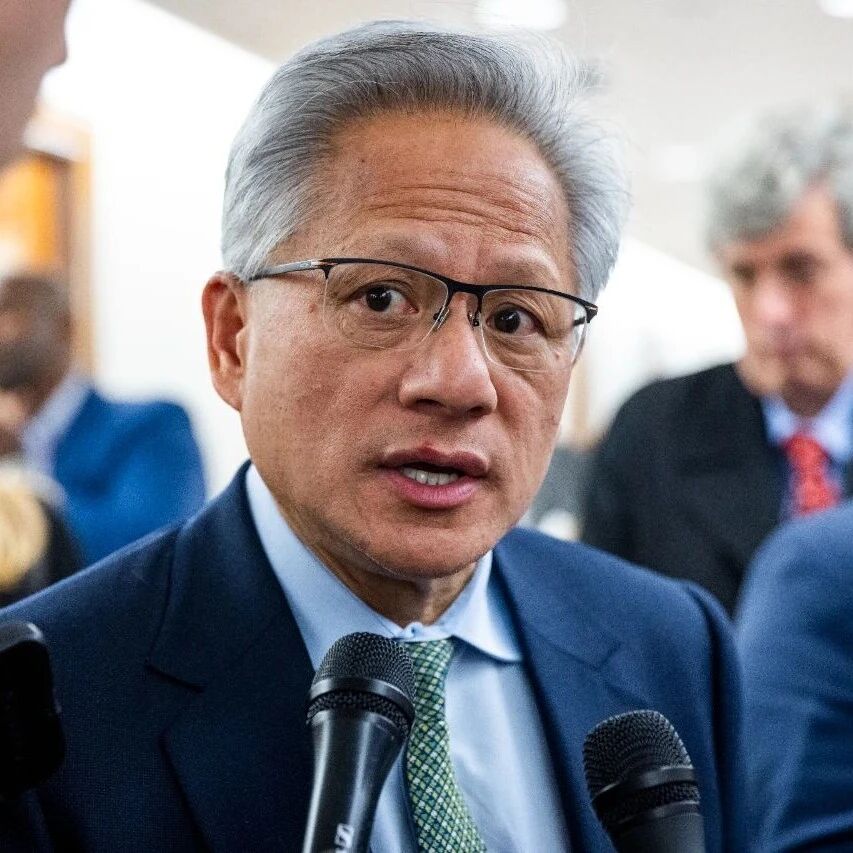
黄仁勋200亿美元带走「TPU核心班底」
36氪· 2025-12-25 06:44
Core Viewpoint - Nvidia's strategic move to acquire technology and talent from Groq, a startup specializing in AI inference, highlights its focus on enhancing capabilities in the AI inference market, particularly as workloads shift from model training to inference [28][29]. Group 1: Acquisition Details - Nvidia announced a $20 billion cash deal with Groq, marking its largest transaction to date, surpassing the $7 billion acquisition of Mellanox in 2019 [5]. - Shortly after the announcement, both Nvidia and Groq clarified that the deal is not an acquisition but a non-exclusive technology licensing agreement, allowing Nvidia to integrate Groq's products into its future offerings [8][9]. - The deal includes the transfer of Groq's core team, including its CEO and president, to Nvidia, while Groq will continue to operate independently under its CFO [16][18]. Group 2: Strategic Intent - Nvidia's CEO Jensen Huang indicated that the integration of Groq's low-latency processors into Nvidia's AI infrastructure aims to support a broader range of AI inference and real-time workloads [28]. - Groq's technology is noted for its efficiency, claiming to run large models ten times faster than traditional methods while consuming only one-tenth of the energy [28]. - The acquisition of Groq's talent, particularly its founder who was a key developer of Google's TPU, positions Nvidia to better compete against its rivals in the AI chip market [29][30]. Group 3: Financial Context - As of October 2025, Nvidia holds $60.6 billion in cash and short-term investments, a significant increase from $13.3 billion at the beginning of 2023, providing ample resources for further acquisitions [32]. - Nvidia has also made investments in other AI-related companies, including Crusoe and Cohere, and plans to invest up to $100 billion in OpenAI [33][34]. Group 4: Industry Trends - The trend of "acqui-hire" is becoming prevalent among tech giants, allowing them to acquire talent and technology while avoiding regulatory hurdles associated with traditional mergers [19]. - Other companies, such as Intel, are also pursuing acquisitions in the AI chip space, indicating a competitive landscape where major players are actively seeking to absorb potential disruptors [36].


黄仁勋200亿美金“招安”高中辍学生!英伟达挖空Groq TPU核心人才,逼财务官上位CEO,英特尔18A遭弃
AI前线· 2025-12-25 05:52
Core Viewpoint - Nvidia has acquired a non-exclusive license for technology from AI chip startup Groq, which is valued at $20 billion, significantly higher than Groq's previous valuation of $6.9 billion in September 2024 [2][6]. Group 1: Acquisition Details - The deal includes key personnel from Groq, such as founder Jonathan Ross and president Sunny Madra, joining Nvidia [2]. - Nvidia plans to integrate Groq's low-latency processors into its AI factory architecture to enhance capabilities for AI inference and real-time workloads [4]. - Groq's flagship product, the Language Processing Unit (LPU), is claimed to be ten times faster than Nvidia's GPUs while consuming only one-tenth of the energy [4][5]. Group 2: Technology and Performance - Groq's LPU features deterministic design, allowing precise control over computation timing, which contrasts with traditional nondeterministic chips that can experience unexpected delays [4]. - The LPU incorporates hundreds of megabytes of on-chip static random-access memory (SRAM), outperforming high-bandwidth memory (HBM) used in GPUs in terms of speed and energy efficiency [5]. - Groq's RealScale interconnect technology addresses the "crystal-based drift" issue, which has previously hindered AI server collaboration by automatically adjusting processor clock frequencies [5]. Group 3: Company Operations and Future Outlook - Despite losing much of its leadership team, Groq will continue to operate as an independent company, with CFO Simon Edwards stepping in as CEO [6]. - Groq, founded in 2016, focuses on developing chips that accelerate AI inference, with projected revenue of $500 million by the end of 2024 [8]. - The company offers chip usage services through its GroqCloud platform, which includes an open-source AI model library and tools for processing user prompts [8].
英伟达200亿美元收购!
国芯网· 2025-12-25 04:49
Core Viewpoint - The article discusses the collaboration between AI chip startup Groq and Nvidia, focusing on the licensing agreement for Groq's inference technology, while clarifying that Nvidia has not acquired Groq but will work with them to enhance and scale their technology [2][4]. Summary by Sections Collaboration Details - Groq has entered a non-exclusive licensing agreement with Nvidia, with key team members joining Nvidia to advance the licensed technology [2]. - Groq will continue to operate independently, with Simon Edwards taking over as CEO, and its cloud services will remain unaffected by this partnership [4]. Technology Highlights - Groq's LPU inference chip, developed by a team led by Jonathan Ross, is optimized for AI inference, achieving 5 to 18 times the inference speed of Nvidia's H100 GPU, with a first token response time of just 0.2 seconds [5]. - The LPU's architecture and on-chip SRAM memory design contribute to its low latency, high energy efficiency, and rapid inference capabilities, addressing traditional GPU limitations [5]. Financial Aspects - Groq recently completed a funding round of $750 million, bringing its post-money valuation to $6.9 billion, with total funding exceeding $3 billion [5]. - Despite not being acquired, Groq stands to gain significant technology licensing revenue while maintaining its operational independence and leveraging Nvidia's support for business expansion [6].
TPU惹急黄仁勋,200亿美元拿下「TPU之父」核心团队、技术授权
机器之心· 2025-12-25 03:12
Core Viewpoint - The article discusses Nvidia's strategic move to secure talent and technology from AI chip startup Groq through a non-exclusive licensing agreement, highlighting the competitive pressure from Google's TPU and Groq's LPU technology in the AI chip market [1][3][14]. Group 1: Nvidia's Strategic Move - Nvidia has entered a non-exclusive licensing agreement with Groq, allowing it to acquire key personnel, including Groq's CEO and several core engineers, without a direct acquisition [3][4]. - The deal is valued at approximately $20 billion, significantly higher than Groq's previous valuation of $6.9 billion [3][4]. - Groq will continue to operate independently, with its CFO taking over as CEO, and its GroqCloud service will remain functional [4]. Group 2: Groq's Technology and Competitive Edge - Groq's LPU (Language Processing Unit) is designed specifically for AI inference, claiming to operate at speeds up to 10 times faster than Nvidia's GPUs while consuming only one-tenth of the energy [4][11]. - The architecture of Groq's LPU eliminates traditional hardware schedulers, relying instead on a compiler to manage data flow, which enhances performance and reduces latency [9][11]. - Groq's memory design integrates SRAM directly on the chip, achieving a bandwidth of 80TB/s, which is over 20 times that of traditional HBM solutions, although it results in a smaller chip capacity [11]. Group 3: Market Dynamics and Competition - The AI computing market is shifting from training to inference, with predictions indicating that inference will account for 75% of total AI computing by 2030, reaching a market size of $255 billion [14]. - Google's TPU has shown a cost advantage over Nvidia's systems, with reports indicating a 30-40% lower total cost of ownership for TPU v7 [14]. - Groq has gained attention in the market, recently signing a $1.5 billion deal with Saudi Aramco to build a large AI inference data center and completing a $750 million funding round, increasing its valuation to $6.9 billion [15][16].

黄仁勋200亿美元带走「TPU核心班底」
创业邦· 2025-12-25 03:08
Core Viewpoint - Nvidia announced a record $20 billion cash deal with AI chip startup Groq, marking its largest transaction ever, surpassing the $7 billion acquisition of Mellanox in 2019 [2][4] Group 1: Transaction Details - Shortly after the announcement, both Nvidia and Groq clarified that the deal is not an acquisition but a non-exclusive technology licensing agreement [4][5] - The agreement allows Nvidia to integrate Groq's products into its future offerings while Groq continues to operate independently [7][8] - Groq's core team, including CEO Jonathan Ross and President Sunny Madra, will join Nvidia to advance the application of the licensed technology [7][12] Group 2: Strategic Intent - Nvidia's CEO Jensen Huang indicated that the strategic intent behind the deal is to integrate Groq's low-latency processors into Nvidia's AI infrastructure, targeting the AI inference market [12][14] - Groq specializes in high-performance AI accelerator chips, with its technology reportedly running large models ten times faster than traditional solutions while consuming only one-tenth of the energy [12][14] Group 3: Market Context - The transaction reflects a trend in Silicon Valley known as "acqui-hire," where companies acquire talent and technology without triggering antitrust issues [6][8] - Other tech giants have engaged in similar transactions, indicating a competitive landscape where major players are absorbing potential disruptors [8][22] - Nvidia's financial position is strong, with $60.6 billion in cash and short-term investments, enabling it to pursue significant acquisitions and investments in the AI sector [16]
200亿美元收购AI芯片初创公司?英伟达解释
Xin Lang Cai Jing· 2025-12-25 02:45
Core Viewpoint - Groq, an AI chip startup, has entered into a non-exclusive licensing agreement with NVIDIA for its inference technology, allowing Groq to operate independently while benefiting from NVIDIA's resources and expertise [3][8]. Group 1: Agreement Details - The agreement includes key personnel from Groq, such as founder Jonathan Ross and president Sunny Madra, joining NVIDIA to enhance the licensed technology [3][8]. - Groq will continue its operations as an independent company, with Simon Edwards taking over as CEO, and its cloud services will remain unaffected by this partnership [3][8]. Group 2: Technology and Performance - Groq's LPU inference chip is specifically optimized for AI inference scenarios, achieving inference speeds 5 to 18 times faster than NVIDIA's H100 GPU, with a first token response time of just 0.2 seconds [4][9]. - The LPU design addresses traditional GPU limitations, such as high latency and memory constraints, while also reducing computational costs [4][9]. Group 3: Financial and Market Implications - Groq recently completed a funding round of $750 million in September, resulting in a post-money valuation of $6.9 billion, with total funding exceeding $3 billion [10]. - Although NVIDIA did not acquire Groq, the partnership allows Groq to gain significant licensing revenue while maintaining operational independence, leveraging NVIDIA's market presence to expand its business [10]. - NVIDIA's stock closed at $188.61 on December 24, with a slight after-hours decline of 0.32%, reflecting a rational market response to the strategic adjustment, while the stock has seen a year-to-date increase of over 35% [10]. Group 4: Industry Context - The global AI industry is transitioning from model training to large-scale inference deployment, making low-latency and high-efficiency inference capabilities essential [5][11]. - The collaboration between NVIDIA and Groq exemplifies a new model of "technology licensing and talent integration," providing a framework for cooperation between tech giants and emerging startups [5][11].
英伟达豪掷200亿美金,谷歌TPU之父连夜投奔老黄
3 6 Ke· 2025-12-25 02:17
圣诞前夕,英伟达也没闲着。 一大早,CNBC独家爆料称,英伟达斥资史上最大200亿美金,一举收购了AI芯片初创Groq。 然而,实际上这并非是一场「收购」。 Groq官方发文做出回应:英伟达与Groq达成了一项推理技术授权协议。 与此同时,Groq创始人&CEO Jonathan Ross(谷歌TPU之父)、总裁Sunny Madra等工程团队一并加入英伟达。 这家Groq初创公司,未来还将独立运营,任命新的CEO。 这种合作方式,已经在业内成为「基操」,比如Meta与Scale AI、谷歌与Windsurf、微软与InfectionAI.... 不是收购,是「技术授权」 Groq在官网声明中强调,英伟达达成了「非独占性」技术授权协议(non-exclusive licensing)。 这意味着,英伟达将获得Groq核心推理技术使用权。未来,他们还计划将其低延迟芯片整合进产品体系中。 另外,Groq仍将独立运营,其云业务(GroqCloud)不受影响,新任CEO将由原财务主管Simon Edwards担任。 截至目前,这笔交易未披露具体细节。 仅有CNBC最初爆料称,将会达200亿美金级别,堪称英伟达史上最大 ...

英伟达斥巨资收购Groq?官方回应!
半导体行业观察· 2025-12-25 01:32
公众号记得加星标⭐️,第一时间看推送不会错过。 据 CNBC 报 道 , 英 伟 达 已 同 意 以 200 亿 美 元 的 全 现 金 交 易 收 购 高 性 能 人 工 智 能 加 速 芯 片 设 计 商 Groq。该报道援引 Disruptive 首席执行官兼这家初创公司的长期支持者 Alex Davis 的话说,这笔 交易很快就完成了,就在 Groq 以约 69 亿美元的估值筹集了 7.5 亿美元之后几个月。 自 2016 年成立以来,Disruptive 已向该公司投资超过 5 亿美元。最近一轮融资吸引了包括贝莱德、 纽伯格伯曼、三星、思科、Altimeter 和 1789 Capital 在内的投资者。 戴维斯表示,Groq预计将于周三晚些时候向投资者通报这笔交易。虽然此次收购包括Groq的资产, 但其早期云业务并不包含在交易范围内。 这家初创公司由谷歌张量处理单元(TPU)背后的前工程师创立,TPU 是一款旨在与英伟达在人工 智能工作负载领域竞争的芯片。 如果交易完成,这将是英伟达迄今为止规模最大的收购,凸显了该公司致力于加强其在先进人工智能 硬件领域地位的决心。 对此,英伟达否认有关交易,澄清 ...

黄仁勋200亿美元带走「TPU核心班底」
量子位· 2025-12-25 00:27
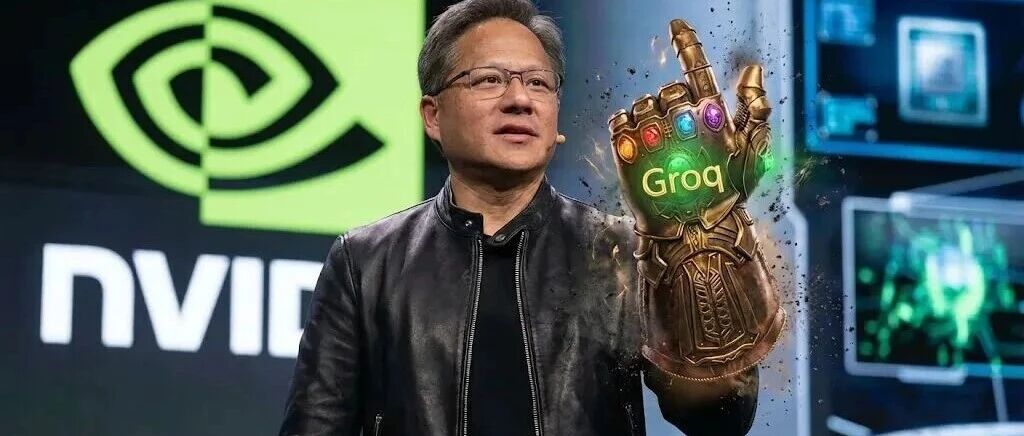
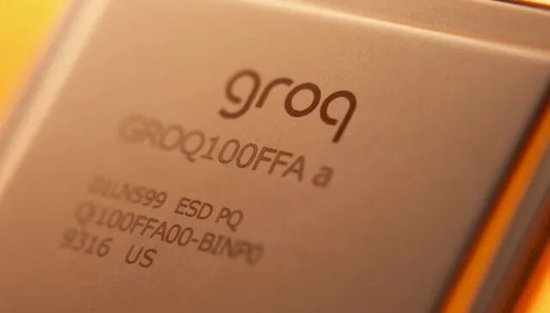
英伟达官宣:以200亿美元现金与AI芯片初创公司Groq达成交易。 消息一出迅速引发市场轰动,因为这是英伟达有史以来最大规模的一笔交易, 远超2019年收购Mellanox的70亿美元 。 但仅仅几小时后,画风突变。 英伟达和Groq双双发表声明,对交易性质进行了澄清,并非收购。Groq在官方博客中写道: 梦晨 发自 凹非寺 量子位 | 公众号 QbitAI 平安夜老黄没有休息,一项 200亿美元 创纪录芯片收购消息,轰动硅谷。 我们与英伟达签订了一份非排他性技术许可协议。 英伟达方面也明确表态: 我们不是在收购Groq这家公司,我们只是获得技术授权,并将Groq的产品整合到未来的产品中。 看起来老黄也学会了"人才收购"这招:重金掏空一家公司的人才和核心资产,但又避免触发反垄断。 所以这200亿美元到底买了什么? 席卷硅谷的"人才收购" 答案是:技术授权,加上一整支核心团队。 最先爆料的是Groq主要投资方Disruptive,其CEO透露英伟达已同意以200亿美元现金收购Groq的资产,交易进展非常迅速。 就在9月,Groq刚刚完成了一轮7.5亿美元的融资,估值达到约69亿美元。 自2016年Groq成立以 ...
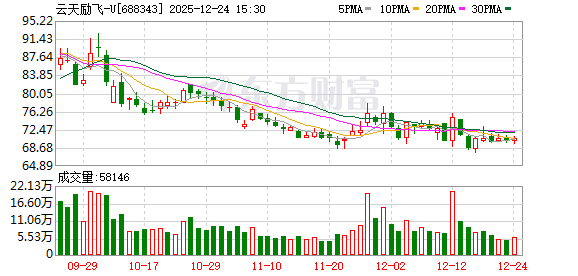
专访云天励飞董事长陈宁:AI推理时代已至,推理芯片崛起将是中国科技复兴巨大机遇
Mei Ri Jing Ji Xin Wen· 2025-12-24 08:35
Core Insights - The article discusses the ongoing transformation in the AI industry, highlighting the shift from training to inference as a pivotal moment for the sector, with 2025 anticipated as a year of significant AI application growth [2][3]. Industry Overview - The AI industry is evolving through three distinct phases: 1. The "Intelligent Perception" era (2012-2020), characterized by fragmented solutions driven by small models [3]. 2. The "AIGC" era (2020-2025), where large models demonstrate impressive content generation capabilities but struggle to find profitable business models [3]. 3. The upcoming "Agentic AI" era, where intelligent agents will integrate large models, operating systems, and hardware to perform complex tasks independently, marking a true industrial revolution [3][4]. Market Dynamics - The transition to inference-focused computing is seen as a fundamental shift, requiring a focus on cost-effectiveness and market economics rather than just performance [3][4]. - The emergence of dedicated inference chips is expected to disrupt Nvidia's dominance established during the training era, as companies like Google and Broadcom pivot towards specialized inference solutions [5][6]. Opportunities for China - China is positioned to capitalize on the inference chip market, as it faces fewer barriers compared to the training sector, where it lags behind Nvidia due to advanced process limitations and high CUDA ecosystem barriers [5][6]. - The rise of inference chips is viewed as a significant opportunity for China's technological resurgence, aligning with its strengths in providing high-cost performance products [5][6]. Technological Innovations - The introduction of the GPNPU architecture aims to address the unique demands of inference tasks, optimizing performance, storage bandwidth, and capacity while reducing costs [6]. - The goal is to lower the total cost of ownership (TCO) for users by enhancing energy efficiency and minimizing operational costs through innovative chip technologies [6]. Future Projections - The demand for inference computing is expected to surge, with projections indicating that the daily token processing volume could reach 100 trillion by mid-next year, necessitating significant infrastructure investments [7]. - Companies are urged to reduce the comprehensive cost of processing "million tokens" to one cent, which will require architectural and technological innovations [7].