
全国统一大市场

Search documents
信息量巨大!重要发布会,刚刚公布
Sou Hu Cai Jing· 2025-08-15 05:42
Economic Overview - In July, China's national economy maintained a steady and progressive development trend, with industrial production and service sectors showing significant growth [2][4] - The industrial added value for large-scale enterprises increased by 5.7% year-on-year and 0.38% month-on-month, with equipment manufacturing and high-tech manufacturing growing by 8.4% and 9.3% respectively [2] - The service sector's production index rose by 5.8% year-on-year, indicating robust growth in modern services [2] Consumer Market - The total retail sales of consumer goods reached 38,780 billion yuan in July, reflecting a year-on-year growth of 3.7% [3] - From January to July, the retail sales of consumer goods increased by 4.8%, with service retail sales growing by 5.2%, demonstrating overall stability in consumption [8] Supportive Factors for Economic Growth - Market demand is expanding, supported by consumption-boosting initiatives, with a notable increase in household appliance and communication equipment retail sales by 30.4% and 22.9% respectively from January to July [9] - High-tech manufacturing added value grew by 9.5% year-on-year, with significant contributions from electronic and communication equipment manufacturing, as well as aerospace manufacturing [8] - The contribution rate of final consumption expenditure to economic growth reached 52% in the first half of the year, an increase of 7.5 percentage points compared to the previous year [9] Policy Impact - The implementation of more proactive macroeconomic policies has effectively stimulated production demand and supported stable economic growth [9] - The International Monetary Fund has raised its forecast for China's economic growth by 0.8 percentage points, reflecting increased confidence from the international community [10]

国家统计局:下半年国民经济有四方面支撑因素
Qi Huo Ri Bao· 2025-08-15 05:13
Core Viewpoint - The International Monetary Fund has raised its economic growth forecast for China by 0.8 percentage points for this year, indicating increasing confidence from the international community in China's economic development [1]. Group 1: Economic Growth Support Factors - Market demand is expanding, supported by the effectiveness of consumption-boosting initiatives and the continuous release of consumption potential [2]. - Despite facing high tariffs from certain countries, China's foreign trade entities are actively exploring diversified markets, leading to an increase in the quality and quantity of goods exports [2]. - New productive forces are developing positively, with various regions and departments promoting the integration of technological and industrial innovation [2]. - Continuous deepening of reform and opening-up is improving economic circulation and enhancing the resilience and vitality of foreign trade [2]. - The implementation of more proactive macroeconomic policies this year has stimulated production demand and promoted stable economic growth [2].
国家统计局:上半年最终消费支出对经济增长贡献率达到52%;1-7月份,全国网上零售额同比增长9.2%
Mei Ri Jing Ji Xin Wen· 2025-08-15 05:10
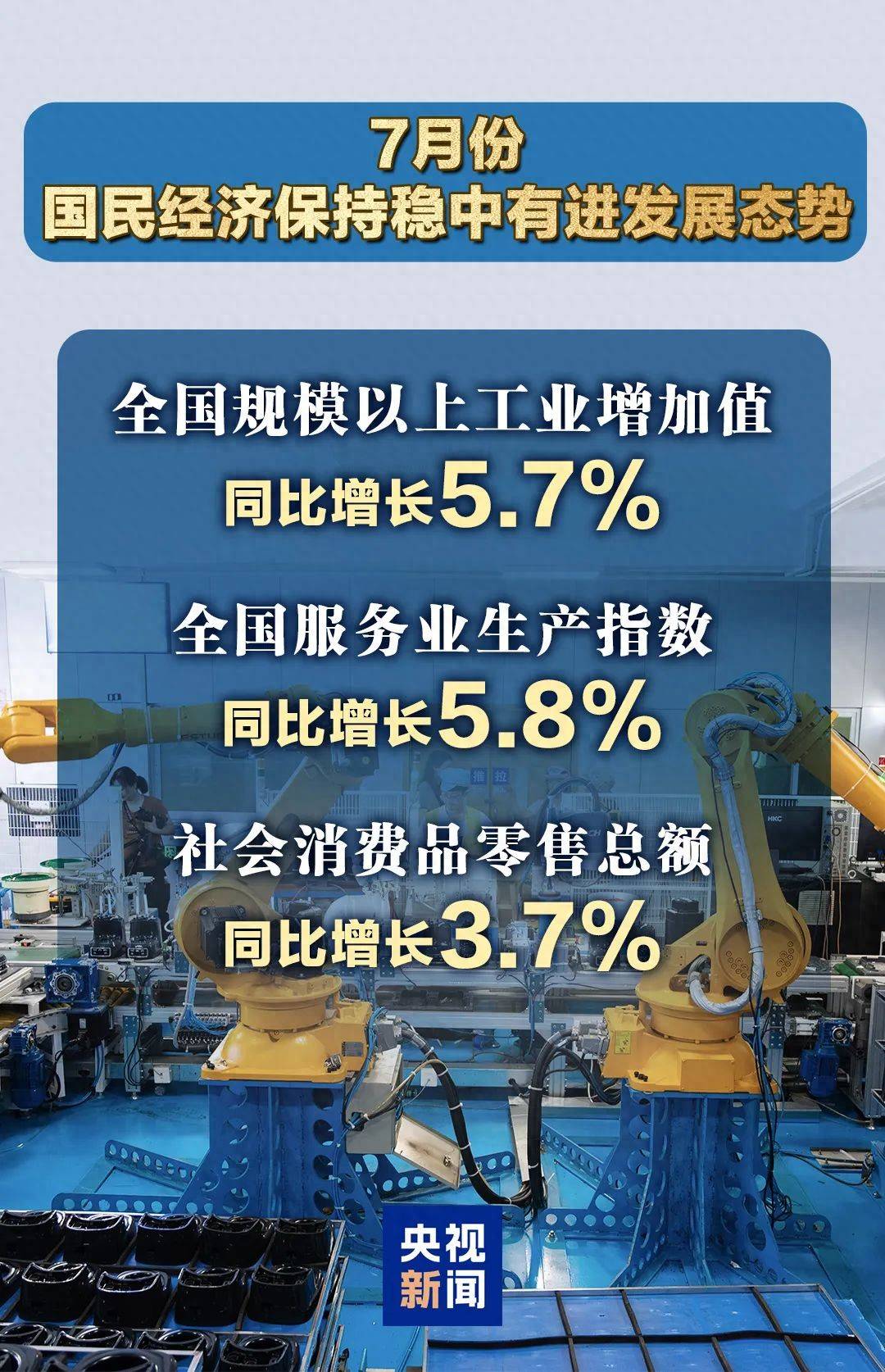
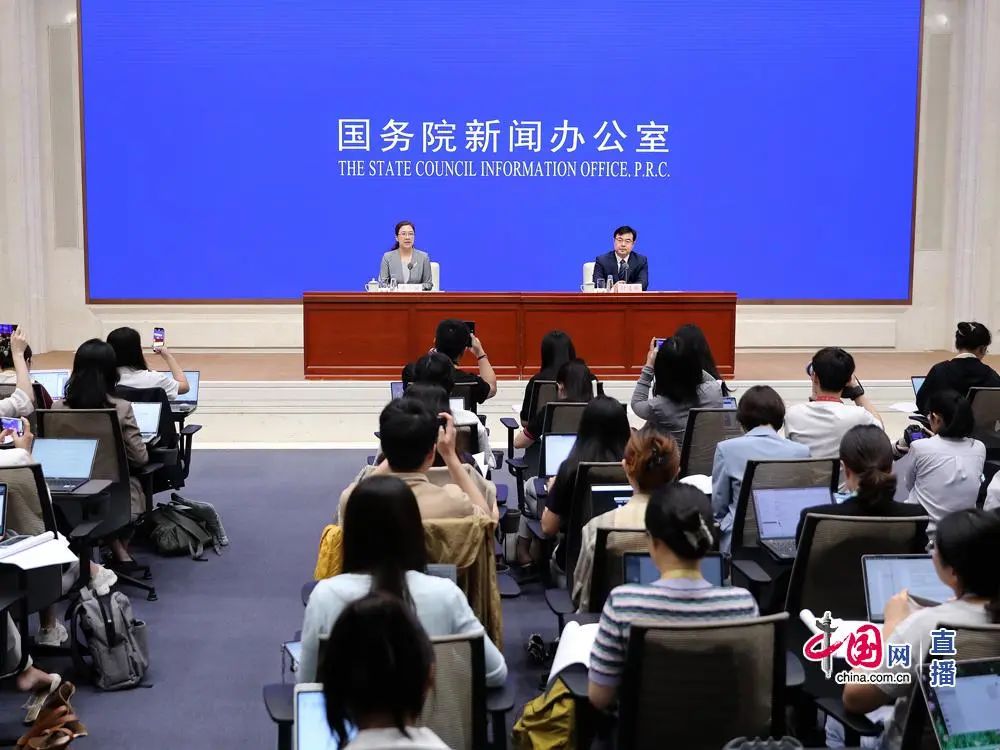
每经编辑|程鹏 今天(8月15日)上午,国务院新闻办召开新闻发布会,国家统计局公布了今年7月份经济数据。 7月份,全国规模以上工业增加值同比增长5.7%,全国服务业生产指数同比增长5.8%,社会消费品零售总额同比增长3.7%,国民经济保持稳中有进发展态 势,生产需求持续增长,就业物价总体稳定,新质生产力培育壮大,高质量发展取得新成效。 另外,8月15日,国家统计局新闻发言人付凌晖在发布会上表示,上半年最终消费支出对经济增长贡献率达到52%,比上年全年提升7.5个百分点。1-7月 份,货物进出口总额同比增长3.5%,货物周转量、旅客周转量均保持较快增长。随着全国统一大市场建设纵深推进,依法依规治理企业无序竞争,促进 核心CPI连续回升 1-7月全国网上零售额86835亿元 按消费类型分,7月份,商品零售额34276亿元,同比增长4.0%;餐饮收入4504亿元,增长1.1%。1—7月份,商品零售额252254亿元,增长4.9%;餐饮收 入31984亿元,增长3.8%。 同比增长9.2% 具体来看,工业生产较快增长,装备制造业和高技术制造业发展较好。7月份,全国规模以上工业增加值同比增长5.7%,环比增长0.38% ...
发布会纪要|消费趋势展望、反内卷成效......国家统计局最新回应
Di Yi Cai Jing· 2025-08-15 04:12
Group 1 - The trend of expanding consumption remains unchanged, with a solid foundation for reasonable price recovery [1][7] - The macroeconomic policies are showing effectiveness, supporting stable economic operation and improving development quality [5][9] - There are favorable conditions for export growth in the second half of the year, including diversification of foreign trade and enhanced competitiveness of export goods [6][10] Group 2 - The overall stability of consumer prices in July indicates positive changes, although supply remains strong and demand weak [7][8] - The governance of disorderly competition among enterprises is improving market supply-demand relationships, leading to positive price changes [8][9] - Investment growth faces temporary pressures, but there is still significant potential for investment expansion, especially in new productive forces and urban-rural coordination [10][12] Group 3 - The focus on green development is creating new growth points, with significant increases in the production of new energy products [12][13] - Industrial production remains stable, but challenges persist in certain sectors, necessitating a push for innovation and transformation in traditional industries [13]

人民眼·建设全国统一大市场丨长三角加力破除市场分割
Ren Min Ri Bao· 2025-08-15 04:09
Core Points - The integration of the Yangtze River Delta (YRD) region is crucial for establishing a unified national market, as highlighted by recent government meetings and initiatives [1][2][3] - The YRD is recognized for its high economic activity, openness, and innovation capabilities, which can serve as a model for national market integration [1][2] - The implementation of "cross-regional handling" and "one-stop service" platforms has significantly streamlined business operations, reducing the time and complexity involved in processes such as company relocation [2][4] Group 1: Market Integration and Efficiency - The "cross-regional handling" system allows businesses to complete relocation procedures in under a day, enhancing operational efficiency [2][3] - The establishment of a unified market access and exit system is underway, aimed at breaking down local protectionism and market fragmentation [3][4] - The "one-stop service" platform has enabled 203 high-frequency government services to be processed across provinces, improving service accessibility [4] Group 2: Transportation and Connectivity - The launch of the G8388 high-speed train has improved connectivity between major cities in the YRD, facilitating easier travel for business and tourism [5][6] - The train service has recorded over 116.7 million passengers in its first year, with an average occupancy rate of 80.5%, indicating strong demand for intercity travel [6] - The "江海一港通" model has transformed logistics for companies in Anhui, allowing them to ship products directly from local ports to international destinations, reducing costs and transit times [8] Group 3: Financial Support and Innovation - The establishment of the "E企融" platform has provided timely financial support to small and medium-sized enterprises (SMEs) in the YRD, facilitating access to loans without collateral [9][10] - Over 2,600 enterprises have registered on the platform, with a total loan amount exceeding 7 billion yuan, showcasing the effectiveness of financial integration [9] - The collaboration between different regions has enabled technology transfer and innovation, as seen in the case of a company successfully producing a new product with support from a talent center [10][11] Group 4: Consumer Services and Market Standards - The introduction of a unified return policy for products purchased across the YRD has enhanced consumer convenience and satisfaction [12][13] - The "异地异店退" service allows consumers to return products purchased in one city at a store in another, streamlining the return process [12][13] - The establishment of a digital traceability system for food products has improved safety and quality control, benefiting local food producers [20]
【数据发布】7月份国民经济保持稳中有进发展态势
中汽协会数据· 2025-08-15 04:07
Core Viewpoint - In July, the national economy maintained a steady and progressive development trend, with continuous growth in production and demand, overall stability in employment and prices, and significant achievements in high-quality development [2][11]. Group 1: Industrial Production - In July, the industrial added value of large-scale enterprises increased by 5.7% year-on-year and 0.38% month-on-month [3]. - The manufacturing sector grew by 6.2%, with equipment manufacturing and high-tech manufacturing increasing by 8.4% and 9.3%, respectively [3]. - The profit of large-scale industrial enterprises from January to June was 34,365 billion yuan, a year-on-year decrease of 1.8% [3]. Group 2: Service Sector - The service production index increased by 5.8% year-on-year in July, with significant growth in information transmission, software, and financial services [4]. - The business activity index for the service sector was at 50.0%, indicating stable business conditions [4]. Group 3: Market Sales - In July, the total retail sales of consumer goods reached 38,780 billion yuan, a year-on-year increase of 3.7% [5]. - Online retail sales amounted to 86,835 billion yuan, growing by 9.2% year-on-year, with physical goods online retail sales at 70,790 billion yuan [6]. Group 4: Fixed Asset Investment - From January to July, fixed asset investment (excluding rural households) was 288,229 billion yuan, a year-on-year increase of 1.6% [7]. - Manufacturing investment grew by 6.2%, while real estate development investment decreased by 12.0% [7]. Group 5: Trade and Exports - In July, the total value of goods imports and exports reached 39,102 billion yuan, a year-on-year increase of 6.7% [8]. - Exports grew by 8.0%, while imports increased by 4.8% [8]. Group 6: Employment - The urban surveyed unemployment rate in July was 5.2%, with a seasonal increase of 0.2 percentage points from the previous month [9]. - The average weekly working hours for employees were 48.5 hours [9]. Group 7: Consumer Prices - In July, the Consumer Price Index (CPI) remained flat year-on-year, with a month-on-month increase of 0.4% [10]. - The core CPI, excluding food and energy prices, rose by 0.8% year-on-year [11].

国家统计局:从未来发展看 我国投资空间潜力依然巨大
Zheng Quan Shi Bao Wang· 2025-08-15 03:18
人民财讯8月15日电,8月15日,国家统计局新闻发言人付凌晖表示,总的来看,我国投资规模继续扩 大,投资结构不断优化,投资增长面临的压力是阶段性的,对此要全面看待。从未来发展看,我国投资 空间潜力依然巨大,我国人均资本存量与发达国家相比仍有较大差距,未来加快发展新质生产力、促进 城乡区域协调发展、补齐民生短板都需要加大投入。下阶段,要坚持高质量发展不动摇,纵深推进全国 统一大市场建设,进一步优化投资环境,调动各方面投资积极性,激发民间投资活力,扩大有效投资, 促进供给结构持续优化,推动经济平稳健康发展。 ...
建设全国统一大市场 长三角加力破除市场分割
Ren Min Ri Bao· 2025-08-15 00:05
Core Viewpoint - The article discusses the integration of the Yangtze River Delta region as a model for establishing a unified national market, highlighting the benefits of streamlined processes, improved connectivity, and collaborative governance to enhance economic efficiency and resource sharing [1][2][3]. Group 1: Market Integration and Efficiency - The Yangtze River Delta region is actively working on breaking market segmentation through initiatives like "cross-regional handling" which allows businesses to complete migration processes in less than a day [3][4]. - A unified regulatory framework is being established to enhance market efficiency, reduce local protectionism, and facilitate smoother business operations across provinces [4][5]. - The "one network for all services" platform has enabled 203 high-frequency government services to be processed across provinces, significantly improving administrative efficiency [4][5]. Group 2: Transportation and Connectivity - The introduction of the G8388 high-speed train has improved connectivity between major cities in the Yangtze River Delta, facilitating easier travel for business and tourism [6][7]. - The "super ring line" has seen over 116.7 million passengers in its first year, with an average occupancy rate of 80.5%, demonstrating its impact on regional mobility [6][7]. - Waterway logistics have been enhanced through the "joint unloading" model, which has reduced transportation time by 50% and logistics costs by 30% for companies in Anhui [8][9]. Group 3: Financial and Resource Sharing - The establishment of the "E-Enterprise Loan" service platform has provided timely financial support to over 2,600 registered companies, facilitating loans exceeding 7 billion yuan [10][11]. - Collaborative financial initiatives have enabled companies to access resources across regions, exemplified by the partnership between Zhejiang and Shanghai for technology and funding [10][11]. - The G60 Innovation Corridor has fostered regional collaboration in technology and talent, enhancing the flow of innovative resources across cities [12]. Group 4: Consumer Services and Market Standards - The introduction of cross-regional return policies for retail products has improved consumer convenience, allowing customers to return items purchased in one city at stores in another [14][15]. - The establishment of a unified return mechanism has seen participation from 141 businesses, enhancing customer service and satisfaction across the region [15]. - The integration of digital tracking systems for food safety has improved product quality and consumer trust, with companies like "Guantao Stinky Tofu" benefiting from enhanced regulatory compliance [21][22]. Group 5: Regulatory Collaboration and Oversight - Cross-regional regulatory cooperation has been initiated to enhance market oversight, with joint inspections involving multiple jurisdictions to ensure compliance and protect intellectual property [17][18]. - The implementation of a unified regulatory framework aims to streamline inspections and improve efficiency in the tourism and transportation sectors [19][20]. - The development of a comprehensive data tracking system for food safety is underway, aiming to create a transparent supply chain from production to consumption [21][22].
陈济丁:内畅外联促交通运输提能增效
Jing Ji Ri Bao· 2025-08-15 00:02
Core Viewpoint - The establishment of a unified and open transportation market is crucial for effectively connecting supply and demand, thereby promoting a smooth national economic cycle. Despite having the world's largest transportation networks, there are still significant challenges in achieving seamless integration and collaboration across different regions and sectors [1][2]. Group 1: Current State of Transportation Market - China has built the largest high-speed railway network, highway network, postal express network, and world-class port clusters, with high-speed railway operating mileage reaching 48,000 kilometers and highway mileage exceeding 190,000 kilometers [1]. - The total mileage of the comprehensive three-dimensional transportation network exceeds 6 million kilometers, supporting the efficient operation of the world's second-largest economy [1]. - The logistics cost as a percentage of GDP is projected to decrease to 14.1% in 2024, with a targeted reduction in transportation costs of approximately 280 billion yuan, although this still lags behind international advanced levels [1]. Group 2: Policy and Strategic Directions - The complex international situation, including the U.S. implementation of "reciprocal tariffs," necessitates the acceleration of building a unified national market to counter uncertainties in international circulation [2]. - The Central Committee and State Council issued opinions in 2024 to systematically promote the construction of a unified and open transportation market, emphasizing the need for "five unifications and one openness" [2]. Group 3: Key Initiatives for Improvement - Efforts will focus on breaking through regional bottlenecks and promoting collaborative development among regional markets, enhancing the interconnectivity of transportation infrastructure [3]. - There is a push to lower overall logistics costs and improve the efficiency of resource circulation by integrating transportation logistics with key industrial chains and fostering new types of logistics integrators [4]. - The transformation of transportation services is aimed at enhancing consumer markets, including the development of a tourism transportation network and the expansion of new energy vehicle consumption [4]. Group 4: Regulatory Enhancements - Strengthening regulation is essential for promoting a healthy and orderly market development, including the implementation of unified standards for vehicle overload recognition and the establishment of regulatory frameworks for new business models like ride-hailing and online freight [5].
汽车消费便利化提速 统一大市场构建亟须攻克
Zhong Guo Chan Ye Jing Ji Xin Xi Wang· 2025-08-14 22:46
Group 1 - The automotive industry is a crucial pillar of the national economy, and the convenience and intelligence of the consumption process directly impact market vitality and consumer experience [1] - Since July, various regions have been promoting online services for new car purchases, insurance, tax payments, and license plate registration to enhance consumer experience and support the construction of a unified online automotive market [1][2] Group 2 - The Chinese government has been accelerating the establishment of a unified national market, with recent policies aimed at creating an efficient, fair, and open market for the automotive industry [2] - Long-standing issues in the automotive consumption process, such as multiple steps and lengthy procedures, have hindered market vitality and negatively affected consumer experiences [2] Group 3 - The Ministry of Public Security has launched a pilot program for new car registration across several cities, enhancing the efficiency of the car purchasing process [3] - The "Traffic Management 12123" app has been upgraded to provide a one-stop service for new car selection, insurance purchase, tax payment, and license plate registration, significantly simplifying the process [3][4] Group 4 - The implementation of AI and data sharing technologies has allowed for a significant reduction in vehicle registration times, with some cities reporting efficiency improvements of approximately 60% [4][6] - Several automotive companies are actively participating in digital reform initiatives, with some achieving a 100% inspection rate at the factory level through AI technology [5][6] Group 5 - The automotive market is transitioning from a seller's market to a buyer's market, necessitating better alignment with consumer demands [7] - Common challenges remain in the construction of a unified automotive market, including data barriers across departments and varying policies affecting online processes [7][8] Group 6 - The industry anticipates a clear timeline and roadmap for the establishment of a unified market, including the standardization of vehicle inspection processes and the expansion of the "Traffic Management 12123" app's functionalities [8] - Collaborative efforts among government, automotive companies, and service providers are essential for optimizing services and enhancing user experience in the automotive sector [8]


