生成式AI

Search documents
为什么谷歌搜不到“没有条纹的衬衫”
Hu Xiu· 2025-10-13 06:13
Core Insights - The article discusses the limitations of traditional search engines like Google, which primarily rely on keyword matching without understanding user intent, contrasting this with the capabilities of AI-driven search tools like Websets that aim to comprehend complex queries [2][4][24]. Group 1: Search Engine Limitations - Traditional search engines, such as Google, often fail to grasp the nuances of user queries, leading to irrelevant results [2][4]. - Google provides a plethora of links related to popular content rather than directly answering subjective questions, exemplified by the query about "the most beautiful woman" [13][14]. - The reliance on keyword indexing means that Google excels in factual queries but struggles with complex, multi-faceted tasks [22][24]. Group 2: Websets Capabilities - Websets is designed to handle structured queries and can process complex tasks that traditional search engines cannot, such as finding professionals with specific experiences [4][15]. - It utilizes a deep learning model to create a "semantic fingerprint" of web content, allowing it to match user queries with relevant data more effectively [28][30]. - The tool provides structured outputs, such as candidate lists for specific roles, demonstrating its ability to analyze and filter information based on user-defined criteria [27][30]. Group 3: Data Source Limitations - Websets relies heavily on LinkedIn for sourcing information, which may lead to biases and limitations in its results, particularly for experts not well-represented on that platform [40][41]. - The effectiveness of Websets diminishes in markets like China, where alternative professional networking platforms are more prevalent [41][42]. Group 4: Semantic Search Technology - Websets employs "embedding" technology, which compresses complex information into numerical representations, allowing for nuanced understanding of queries [24][46]. - This method, while effective for grasping overarching themes, may lose specific details during the compression process, highlighting a potential drawback in retrieving precise information [46][48]. Group 5: Market Context and Future Implications - The emergence of AI-driven search tools like Websets indicates a shift in search technology, suggesting a future where search engines may evolve to better understand user intent [50]. - The article emphasizes the importance of recognizing the trade-offs between convenience and the depth of information retrieval in modern search practices [62][63].


百亿美金独角兽的濒死挣扎与逆天改命
Hu Xiu· 2025-10-13 02:11
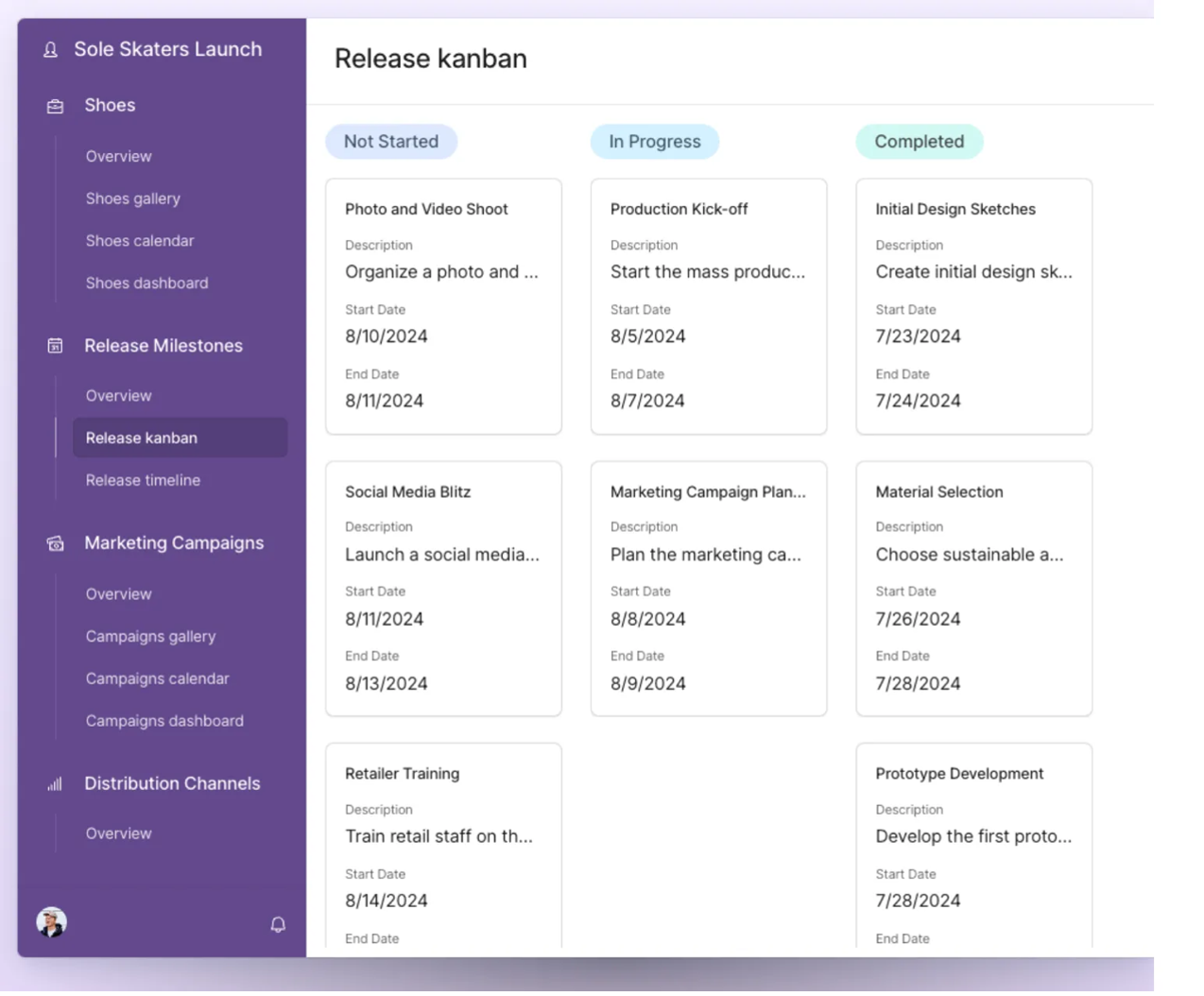
Core Insights - Airtable's capital story encapsulates the fervor and calm of different eras, transitioning from a "no-code" darling to facing significant challenges due to the rise of AI [1][3] - The company, once valued at $11.7 billion, has seen its valuation halved as it struggles to adapt to the AI-driven market [2][3] - Airtable's transformation into an AI-native platform is a gamble led by its founder, aiming to redefine its core offerings in the face of competition and market pressures [3][12] Funding and Valuation Journey - Since its founding in 2013, Airtable has raised a total of $1.4 billion across seven funding rounds [5] - The company reached a peak valuation of $11.7 billion in December 2021 after a $735 million Series F funding round [7] - Following a downturn in tech stocks, Airtable's valuation was adjusted to approximately $4 billion to $5 billion by Q1 2025, reflecting a decline of over 60% from its peak [8] AI Transformation Strategy - Airtable's core asset, its structured relational database, positions it well for an AI transformation, contrasting with competitors that prioritize document-first approaches [13] - The company aims to integrate AI deeply into existing workflows rather than treating it as a standalone feature, with a vision to become essential in the "vibe coding" era [15][12] - The transformation includes a series of product launches, starting with AI Field in September 2023, allowing users to embed generative AI capabilities directly into data tables [16] Product Development Phases - The first phase of the AI transformation involved exploratory product releases, leading to the introduction of the AI-driven no-code application generator, Cobuilder, in 2024 [16] - In April 2025, Airtable Assistant was launched, enabling users to build and modify applications through natural language interactions [17] - The major evolution occurred on June 24, 2025, when Airtable rebranded itself as an "AI-native platform," making AI a default experience for new users [18] Organizational Changes - To support its AI transformation, Airtable restructured its engineering, product, and design teams into "fast-thinking" and "slow-thinking" units, focusing on rapid iteration and long-term stability [19][20] - The founder, Howie Liu, has taken on a hands-on role as an "IC CEO," directly engaging in product development and fostering a culture of experimentation with AI tools among all employees [26][27] Market Competition and Challenges - Airtable faces intense competition from established players like Microsoft and emerging companies such as Notion, monday.com, and Smartsheet, all of which are integrating AI into their offerings [32][33] - Despite positive feedback from new users regarding AI features, long-term users have expressed dissatisfaction, citing issues with reliability and performance, indicating a challenging transition period [28][31] - The outcome of Airtable's transformation will not only determine its future but also serve as a reference for the broader SaaS industry in adapting to the AI era [33]
3万观众共赴日本NexTech Week秋季展 万兴科技(300624.SZ)ToMoviee AI日本首秀瞩目登场
智通财经网· 2025-10-13 01:35
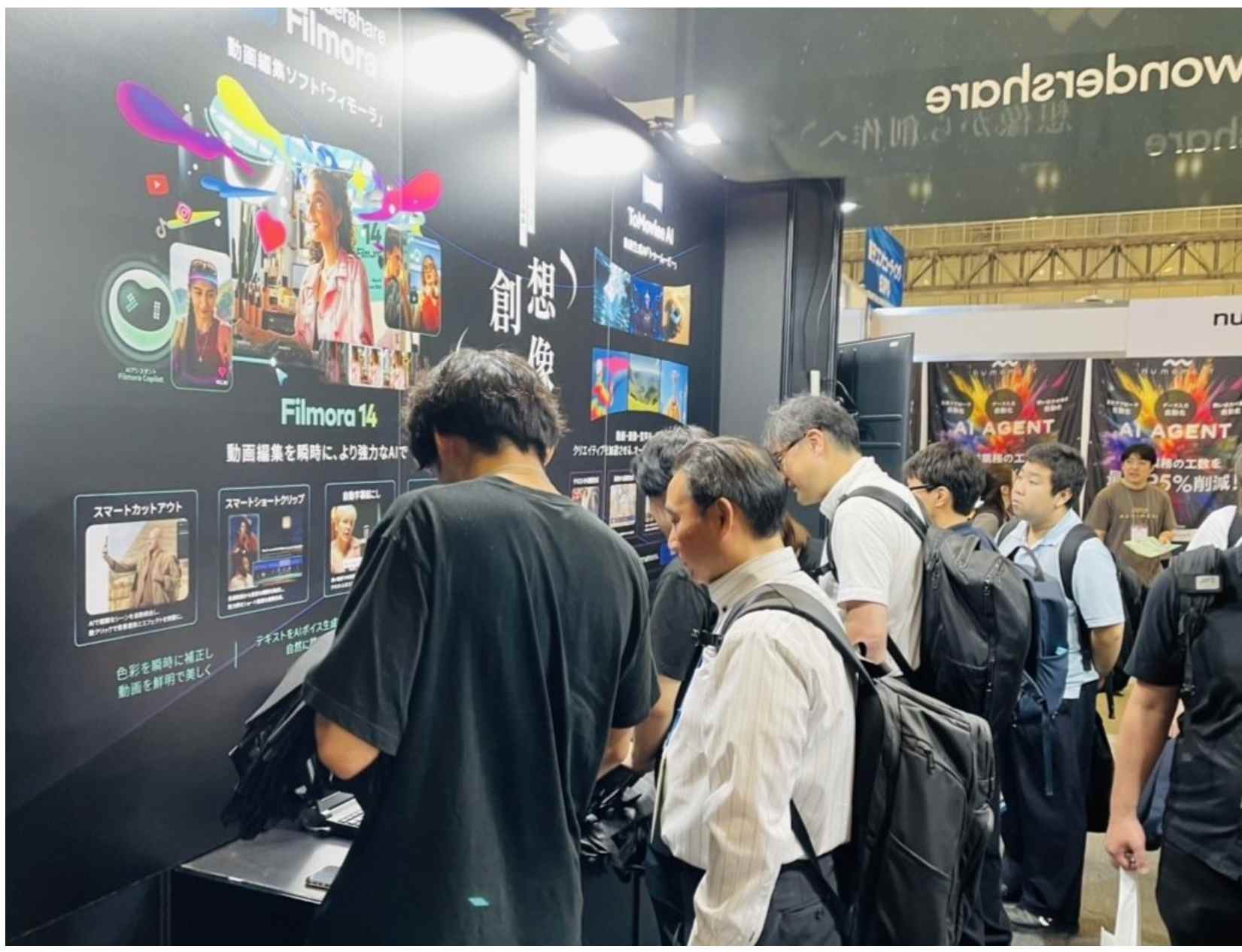
Core Insights - The NexTech Week 2025 AI Expo in Japan showcased the latest advancements in AI, with a focus on generative AI and digital transformation [3][6] - Wondershare Technology, a leading Chinese digital creative software company, presented its new AIGC video creation platform, ToMoviee AI, marking its debut in the Japanese market [1][6] - ToMoviee AI achieved a top 3 ranking in the global VBench-2.0 evaluation for generative video models, excelling in key performance metrics [4] Company Overview - Wondershare Technology has been operating in Japan for 14 years, establishing a strong presence with over 5,600 partners and 30 agents [7] - The company offers a wide range of digital creative products, including Wondershare Filmora and Wondershare PDFelement, which attracted significant attention at the expo [6][7] - The company has a global reach, with its products available in over 200 countries and regions, and a cumulative active user base exceeding 2 billion [7] Market Context - The Japanese AIGC industry is experiencing rapid growth, making it a key market for Wondershare's overseas strategy [3][6] - The NexTech Week 2025 event attracted over 30,000 attendees, highlighting the increasing interest in AI technologies and digital transformation [3]

美图公司20251010
2025-10-13 01:00
Summary of Meitu Company Conference Call Company Overview - **Company**: Meitu Company - **Date**: October 10, 2025 Key Points Industry and Product Innovations - **AI Technology Utilization**: Meitu utilizes AI technologies such as AI lighting and AI group photo features to enhance image quality and creativity, particularly excelling in the European market, leading to top rankings in multiple countries' iOS app charts [2][4] - **Paid Features**: Meitu Xiuxiu offers paid features like facial volumization and high-definition skin texture modification to meet user demands for anti-aging and beautification [2][5] - **E-commerce Tools**: Meitu Design Studio and Kaipai serve as tools for e-commerce material design and video production, respectively, lowering content creation barriers and improving user efficiency [2][7] - **We Wear Wow**: A new product based on AI fitting technology that provides realistic try-on experiences, enhancing online shopping and offering new marketing methods for e-commerce platforms [2][8] - **RoboNeo**: A newly launched AI agent product with applications in intelligent customer service, smart assistance, and content creation support, showcasing strong AI capabilities [2][9][10] User Demand and Market Trends - **User Needs in Portrait Beauty**: Meitu Xiuxiu addresses user needs for portrait beauty with various paid features, including wrinkle reduction and skin texture enhancement, catering to the demand for a youthful appearance [5][6] - **Video Editing with Wink**: Wink focuses on video editing, offering features like image quality restoration and portrait beautification, enhancing video quality significantly [11][12] E-commerce and Design Innovations - **AI Design Agent**: The new AI Design Agent channel in Meitu Design Studio helps merchants diversify SKU product images, reducing design cycles and increasing productivity, especially for platforms like Amazon [3][15][17] - **Batch Production of Marketing Materials**: Meitu's platform allows users to batch produce marketing materials efficiently, ensuring consistency and saving time [22] Market Performance and Strategy - **Overseas Market Growth**: Meitu's overseas market performance is strong, with significant growth in user engagement and revenue, despite competition from platforms like Google Banana [41][53] - **User Engagement**: The company emphasizes the importance of user engagement and feedback in product development, aiming to enhance user experience and satisfaction [45] Future Directions - **AI Integration**: Meitu plans to further integrate AI capabilities into its products, enhancing user experience and expanding its service offerings [36][59] - **Commercialization Strategy**: The company is focused on increasing membership features and introducing new payment points to enhance monetization capabilities [50][51] Challenges and Considerations - **Regulatory Risks**: Meitu acknowledges potential regulatory and legal risks associated with AI technology and is actively working with regulatory bodies to ensure compliance [48] - **Competition**: The company faces competition from both established players and new entrants in the AI and design space, necessitating continuous innovation and differentiation [49] User Feedback and Community Engagement - **User Creativity**: Users are increasingly sharing their AI-generated creations, indicating a shift in perception towards AI tools and their creative potential [34][35] Conclusion Meitu Company is leveraging AI technology to enhance its product offerings and user experience, focusing on e-commerce solutions and video editing tools. The company is well-positioned in the overseas market, with a strong emphasis on user engagement and feedback to drive future innovations and growth.
机器人核心技术之一,马斯克发力“世界模型”
Xuan Gu Bao· 2025-10-13 00:29
Group 1 - xAI, founded by Elon Musk, has hired AI experts from Nvidia to develop world models, which differ from traditional language models by training on vast amounts of video and robotic data to understand the physical laws of the real world [1] - World models are generative AI models that comprehend the dynamics of the real world, including physical and spatial properties, using inputs like text, images, videos, and motion data to generate video [1] - Nvidia has launched two tool products aimed at smart driving, robot training, and the development of industrial digital twins [1] Group 2 - CAE manufacturers in China have a significant advantage in understanding the application of physics in the industry due to their long-term accumulation of physical field simulation data [1] - Suochen Technology's "Tiangong·Kaiwu Platform" is based on generative physical AI technology and real scene rendering technology [1] - Energo Technology provides industrial digital twin solutions [2]


美图:凭AI“破壁式成长”,改写全球影像行业竞争格局
Zheng Quan Shi Bao· 2025-10-13 00:12
Core Insights - The article highlights the transformative impact of AI technology on Meitu's product offerings, particularly through the RoboNeo AI agent, which enables users to edit photos with simple commands, enhancing user experience and efficiency [1][3] - Meitu's global user base has reached 280 million, with nearly 100 million users outside mainland China, reflecting significant growth and the effectiveness of its AI-driven tools [1][3] - The company has strategically focused on localized solutions for different markets, adapting its products to meet specific cultural and functional needs, which has led to its success in various countries [2][6] User Growth and Market Expansion - As of June 30, 2025, Meitu's global monthly active users reached 280 million, marking an 8.5% year-on-year increase, while users outside mainland China grew by 15.3% to 98 million [3][4] - The introduction of AI features has accelerated Meitu's overseas expansion, with products like the beauty camera and AI tools achieving top rankings in app stores across multiple countries [2][3] Revenue and Business Performance - In the first half of 2025, Meitu's imaging and design product revenue grew by 45.2% year-on-year to 1.35 billion yuan, accounting for 74.2% of total revenue [4] - The company aims to evolve from merely providing tools to becoming an extension of user creativity, leveraging AI capabilities to enhance product positioning [4][5] Targeted Market Strategy - Meitu has adopted a differentiated approach by focusing on high-frequency vertical scenarios such as e-commerce and content creation, targeting small businesses and individual creators who require affordable and accessible design tools [5][6] - The company’s production tools have become essential for small merchants, particularly in regions like Yiwu, where the number of market entities has surpassed 1.2 million [5][6] Technological Innovation and R&D - Meitu has established a strong technological foundation through its MT Lab, which has been pivotal in developing AI capabilities in image processing and design, resulting in a competitive edge in the market [7][8] - The company invested 450 million yuan in R&D in the first half of 2025, a 6.1% increase, which has facilitated the creation of products that meet global user demands [7][8] Competitive Advantage - Meitu's core competitiveness lies in its ability to integrate AI technology with aesthetic understanding, allowing for more natural and appealing image enhancements compared to competitors [8][9] - The company employs over a hundred designers to continuously research design trends and develop new effects, creating a unique "aesthetic premium" that enhances its market position [9] Localization and Cultural Adaptation - Meitu's strategy emphasizes understanding local user needs and cultural differences, which is crucial for successful product design and market penetration [6][9] - Despite its long-standing global presence, the company acknowledges the need for deeper cultural insights, particularly in Western markets, to develop world-class products [9]
Waymo提出Drive&Gen:用生成视频评估端到端自动驾驶(IROS'25)
自动驾驶之心· 2025-10-12 23:33
Core Insights - The article discusses the emergence of two new players in the autonomous driving field: End-to-End (E2E) driving models and video generation models, highlighting their potential to simplify traditional systems and reduce testing costs [3][5] - A new framework called Drive&Gen is introduced, which aims to connect E2E driving models with generative world models for mutual evaluation and enhancement [6][8] Group 1: Background and Challenges - Traditional autonomous driving systems are complex and modular, while E2E models offer a streamlined approach by directly predicting driving decisions from raw sensor inputs [5] - The advancement of video generation models presents opportunities for creating "digital twin" environments for testing, but challenges remain in assessing the realism of generated videos and understanding the E2E model's decision-making process [5][6] Group 2: Drive&Gen Framework - Drive&Gen combines a controllable video generation model with an E2E driving planner, facilitating a collaborative evaluation process [8] - The framework utilizes a video diffusion model that can generate highly customized driving scenarios based on various conditions, such as weather and time of day [11] Group 3: Evaluation Metrics - A new evaluation metric called Behavioral Permutation Test (BPT) is proposed to assess the realism of generated videos, focusing on the driving decisions made by the E2E model [13] - BPT outperforms traditional metrics like Fréchet Video Distance (FVD) in capturing key differences that affect driving decisions, demonstrating its effectiveness in evaluating video quality [14][16] Group 4: Experimental Validation - Experiments show that the generated videos can lead to similar trajectory predictions as real videos, with a BPT failure rejection rate of 69.62%, indicating that the planner struggles to distinguish between real and generated videos [18] - The integration of synthetic data with real data significantly improves the E2E planner's performance, reducing the average displacement error (ADE@5s) from 0.7548 to 0.7333 [21] Group 5: Impact on Autonomous Driving - The framework allows for the creation of "out-of-distribution" scenarios, such as rainy and nighttime conditions, which are typically underrepresented in real-world data [21][23] - The results indicate that high-quality, controllable synthetic data can effectively supplement real-world data, enhancing the operational design domain of autonomous driving models [26]

台积电明年先进封装产能全面满载 日月光、京元电跟着旺
Jing Ji Ri Bao· 2025-10-12 23:08
Core Insights - The demand for AI and high-performance computing (HPC) remains strong, leading to full capacity utilization for TSMC's advanced packaging in the coming year [1] - Major players like ASE Technology and KYEC are also experiencing significant orders, prompting them to expand production [1] - The generative AI wave initiated by OpenAI is driving explosive growth in HPC orders from companies like NVIDIA and AMD, with demand expected to last at least until the end of next year [1] Group 1 - TSMC is the sole supplier of high-performance computing capacity for NVIDIA and AMD, with its 2nm and 3nm advanced processes and SoIC, CoWoS advanced packaging fully booked [1] - ASE Technology is accelerating its advanced packaging and testing outsourcing to meet the substantial demand from AI clients [1] - ASE's subsidiary, SPIL, is set to complete its new facilities in Erlin and Douliu next year, alongside the acquisition of a facility in Kaohsiung, enhancing its operational capacity [1] Group 2 - KYEC has successfully secured a major testing order from NVIDIA for high-performance computing, with GB200/300 orders currently in mass production [2] - The testing capacity for NVIDIA's upcoming Rubin platform is expected to commence by the end of this year [2]


腾讯研究院AI速递 20251013
腾讯研究院· 2025-10-12 20:56
Group 1 - Tao Zhexuan tested GPT-5 Pro, finding excellent performance in small-scale calculations and macro-level problem structuring, but limited assistance in mid-scale strategy selection and direction judgment [1] - Chamath Palihapitiya, a prominent Silicon Valley investor, has shifted significant workloads to the Chinese Kimi K2 model due to its strong performance and lower cost compared to OpenAI and Anthropic [2] - The State of AI Report 2025 has elevated China's AI status from "follower" to "parallel competitor" [2] Group 2 - David Fajgenbaum, a professor at the University of Pennsylvania, utilized blood sample analysis to discover an overactive mTOR pathway, successfully self-treating his disease with sirolimus [3] - Fajgenbaum founded the non-profit Every Cure to create the AI system MATRIX, which identifies treatment options among 75 million drug-disease combinations, significantly reducing the time for generating scores from 100 days to 17 hours [3] Group 3 - Andrew Tulloch, a legendary figure in AI, returned to Meta after previously rejecting a $1 billion offer, leaving his co-founded Thinking Machines Lab [4] - Thinking Machines Lab recently completed a $2 billion seed round led by a16z, with participation from Nvidia and AMD [4] Group 4 - The 2025 TIME Magazine Best Inventions list featured multiple Chinese products, including those from Huawei and DeepSeek, highlighting China's significant rise in global technological innovation [5][6] - The list included 300 inventions across 36 categories, showcasing advancements in AI, robotics, chips, and energy [6] Group 5 - Stanford University and other institutions introduced Agentic Context Engineering (ACE), allowing language models to self-improve without fine-tuning, reducing latency by 86.9% [7] - ACE's architecture enhances performance, with a 17.1% improvement on AppWorld benchmarks, bringing open-source models closer to top commercial systems [7] Group 6 - Rich Sutton, a Turing Award winner, warned of a potential $1 trillion AI bubble burst due to over-reliance on imitating limited human knowledge [8] - He emphasized that significant capital investments are influencing scientific research directions, with a risk of confidence collapse if technologies do not yield sufficient returns within three years [8] Group 7 - The State of AI Report 2025 declared 2025 as the "Year of AI Reasoning," but noted that most advancements fall within natural model fluctuations, indicating serious vulnerabilities [9] - NVIDIA's market capitalization surpassed $4 trillion, nearly monopolizing AI computing power, while Chinese open-source models like DeepSeek gained over 40% market share on Hugging Face [9] Group 8 - Geoffrey Hinton suggested that AI may already possess "subjective experience," which is not recognized due to human misunderstanding of consciousness [10] - Hinton highlighted the urgent need to address AI misuse and survival risks, advocating for international cooperation led by Europe and China [10]
AI再造「司美格鲁肽」?百亿美金涌向AI制药
GLP1减重宝典· 2025-10-12 11:42
Core Viewpoint - The article discusses the significant advancements in AI drug development, highlighting a transformative shift in the pharmaceutical industry where AI is moving from enhancing existing processes to enabling the creation of entirely new drug candidates through innovative design techniques [5][8][9]. Group 1: AI Drug Development Trends - AI drug development is gaining momentum, with several companies achieving substantial business development (BD) transactions, amounting to billions of dollars, indicating renewed investor confidence in the sector [6][7]. - Companies like YuanSi ShengTai and HuaShen ZhiYao have successfully navigated stringent selection processes of multinational pharmaceutical firms, demonstrating the effectiveness of AI in improving drug development success rates [6][7]. Group 2: Technological Advancements - The emergence of advanced AI models, such as AlphaFold 2, has revolutionized protein structure prediction, allowing for the rapid identification of protein structures that were previously difficult to obtain [10][11]. - New AI models, including Chai-2 and ESM3, have shown significant improvements in generating novel protein designs, enhancing the efficiency of drug discovery processes [11][12]. Group 3: Paradigm Shift in Drug Discovery - The traditional drug discovery process, characterized by extensive screening and empirical methods, is being replaced by a more rational and design-focused approach enabled by AI [9][13]. - AI's ability to design drugs from scratch (de novo design) is expected to unlock new therapeutic targets that were previously considered difficult to address, potentially leading to breakthroughs in treating chronic diseases [14][13]. Group 4: Industry Dynamics and Future Outlook - The article outlines three main types of players in the AI drug development space: tech giants with substantial resources, startup teams led by top AI and biological scientists, and traditional pharmaceutical companies leveraging AI for drug development [15][16]. - The future of drug development is anticipated to be heavily influenced by AI, with a focus on delivering viable drug candidates that meet market needs, thereby reshaping the competitive landscape of the pharmaceutical industry [17].