
绿色金融

Search documents
出口信用保险护航江苏企业绿色出海
Zhong Guo Jin Rong Xin Xi Wang· 2025-11-12 12:37
Core Viewpoint - The article highlights the role of China Export & Credit Insurance Corporation (Sinosure) in supporting green finance initiatives, particularly in Jiangsu province, to enhance the competitiveness of local enterprises in international markets through various insurance products and financing solutions [1][2][3][4]. Group 1: Green Finance Initiatives - Sinosure has been actively involved in supporting green energy projects since the issuance of the 2016 guidelines on building a green financial system, expanding its coverage to energy conservation, green transportation, and other sectors [1][2]. - In 2023, Sinosure Jiangsu branch supported green trade and project insurance amounting to $42.77 billion, showcasing its commitment to enhancing the competitiveness of Jiangsu's green industry overseas [2][3]. Group 2: Project Financing Solutions - Sinosure provided a comprehensive financing insurance solution for the construction of a waste-to-energy plant in Hanoi, helping secure approximately $200 million in financing, significantly lower than other financing methods [3][4]. - The company has developed tailored insurance policies for various projects, including overseas investment insurance and specific contract insurance, to facilitate smooth project execution and mitigate financial risks [2][3]. Group 3: Risk Management and Support - Sinosure has established a dynamic assessment system to address the complex risks associated with green projects, offering customized credit evaluations and industry risk analyses to help enterprises manage overseas risks effectively [3][4]. - The company aims to play a pivotal role in promoting high-quality green development by continuously increasing support for the green industry and leveraging its policy-oriented functions [4].
陈茂波:多举并措进一步深化京港合作
智通财经网· 2025-11-12 12:37
Group 1 - Hong Kong aims to leverage its role as a "super connector" to assist Beijing enterprises in expanding overseas, particularly in global supply chains and markets [1] - Over 230 Beijing enterprises are listed in Hong Kong, with a total market capitalization of HKD 13 trillion, representing about 25% of the Hong Kong stock market [1] - Hong Kong's stock and bond markets provide essential platforms for Beijing enterprises to raise funds for their international expansion [1] Group 2 - Hong Kong offers world-class professional services to support Beijing enterprises in trade financing, cross-border supply chain management, and compliance consulting [2] - The establishment of a dedicated task force in Hong Kong aims to coordinate resources to assist mainland enterprises in their overseas ventures [2] - Many mainland enterprises are using Hong Kong as their overseas headquarters and treasury center due to its lack of foreign exchange controls and currency stability [2] Group 3 - The Hong Kong government plans to increase support for the innovation and technology sector, focusing on commercializing research outcomes [3] - Hong Kong has a robust ecosystem of venture capital, angel funds, and private equity, managing approximately USD 230 billion in assets [3] - Recent updates to listing rules in Hong Kong aim to facilitate easier access to capital for biotech and hard tech companies [3] Group 4 - Strengthening green finance cooperation aligns with national "dual carbon" goals and presents significant business potential [4] - Hong Kong ranked first in Asia for green and sustainable debt issuance, totaling over USD 80 billion last year [4] - There is substantial room for growth in financing for national green transformation, which requires trillions of dollars annually [4]
金融“活水”精准“资”润 齐鲁银行滨州分行助力民营经济扬帆
Zhong Guo Jin Rong Xin Xi Wang· 2025-11-12 12:33
Core Viewpoint - Qilu Bank's Binzhou Branch is innovating financial services to support the high-quality development of local private enterprises by focusing on green finance, technology innovation finance, and specialized financial products [1][2][4][6]. Green Finance - Under the "dual carbon" goals, Qilu Bank's Binzhou Branch is exploring innovative paths in green finance, creating localized green financial products to support the low-carbon transformation of traditional industries [2]. - By June 2025, the bank's green loan balance reached 1.2 billion yuan, a significant increase of 59% from the beginning of the year, indicating a strong commitment to green financing [3]. - The bank has implemented a sustainable development-linked loan scheme based on hydrogen recovery metrics, establishing a market-driven incentive mechanism that promotes a cycle of emission reduction, cost reduction, and efficiency enhancement [2]. Technology Innovation Finance - Qilu Bank's Binzhou Branch has introduced a "Technology Innovation Finance Marketing Toolkit" to provide tailored financial services for technology enterprises, addressing traditional financing challenges [4]. - The bank has supported over 160 technology enterprises, including five national-level specialized "little giant" companies, by offering flexible and expedited financing solutions [4]. - The bank's efficient service model allows for loan disbursement within one week, helping enterprises save approximately 60,000 yuan annually in financing costs [4]. Specialized Financial Products - The bank has developed a series of inclusive financial products tailored to local industries, such as the "Cookware Loan" for the commercial kitchenware sector, which addresses the unique financing needs of small and micro enterprises [6][7]. - The "Cookware Loan" product enabled a company to expand its production capacity by 40% and create 20 new jobs, demonstrating the effectiveness of the bank's targeted financial solutions [6]. - In the first half of the year, the bank's inclusive financial products saw an increase in deployment of 264 million yuan, showcasing the vitality and effectiveness of its specialized financial offerings [7].


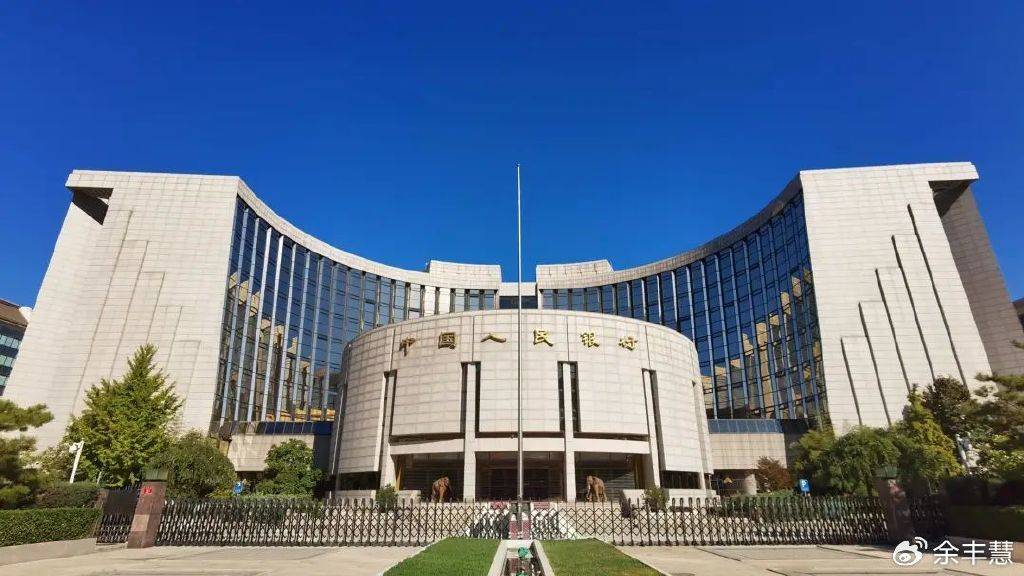
货币锚定高质量:A股结构性机遇与投资新范式
Sou Hu Cai Jing· 2025-11-12 12:29
Core Viewpoint - The People's Bank of China's monetary policy report for Q3 2025 emphasizes "moderate easing" and "connotative development," reshaping the interaction between finance and the economy, and providing a clear opportunity map for the A-share market and venture investors [1][9]. Macroeconomic Perspective - The report indicates a GDP growth rate of 5.2% year-on-year for the first three quarters, supporting the government's growth target of around 5% for the year, reflecting the effectiveness of counter-cyclical adjustments [3]. - The total social financing scale is 437 trillion yuan, with an increase rate exceeding 8%, aiming for precise credit allocation rather than mere scale expansion [3]. - The government's net financing through bonds is expected to exceed 12 trillion yuan, enhancing public spending efficiency through coordinated monetary and fiscal policies [3]. Financial Market Dynamics - Following the Federal Reserve's interest rate cuts, emerging market ETFs saw a weekly inflow of $17.7 billion, and the stabilization of the RMB has reduced foreign capital hedging costs, creating valuation recovery opportunities for A-shares [4]. - The report's focus on accelerating financial market institutional development and high-level opening aligns with global capital's demand for allocation in Chinese assets, as evidenced by BlackRock and Morgan Stanley's positive outlook on Chinese stocks [4]. Risk Management - Regulatory measures covering the non-bank sector are expected to lower systemic risk probabilities, enhancing market fund allocation efficiency [6]. - The market logic has shifted from "scale speculation" to "value focus," with the valuation of the entire A-share market at 18.68 times, which is at a moderate level globally, providing a safety net for value reassessment [6]. Structural Opportunities - The report highlights support for technology innovation and green finance, which are becoming core areas for capital accumulation, with loans in technology-related fields growing over 10% [6]. - The green finance sector is expected to benefit from optimized carbon reduction tools and accounting rules, aligning with the global "carbon neutrality" trend [6]. Consumer Sector Insights - The consumer sector is poised to benefit from the "wide credit" policy, which is expected to boost domestic demand, with significant financial support for the private economy and small enterprises enhancing profitability certainty for related listed companies [7]. - Venture investors are encouraged to focus on "light asset, high growth" areas such as AI applications and green technologies, which are receiving direct support from structural tools [7]. Investment Strategy - Investors are advised to adopt a value investment approach, avoiding reliance on traditional industries that depend solely on credit expansion, and to focus on three main areas: quality enterprises in technology innovation, high-dividend consumer leaders, and green finance-related assets [7]. - Asset allocation strategies should consider foreign institutions' "overweight A-shares" approach and utilize the capital return window created by the Federal Reserve's interest rate cuts to optimize global asset portfolios [7]. Long-term Implications - The central bank's monetary policy report signifies a shift from "scale expansion" to "efficiency enhancement" in financial resource allocation, indicating a long-term restructuring of development logic [9]. - Investors must align with policy directions and market demands to seize current opportunities while anchoring long-term value, reflecting the essence of healthy interaction between finance and the real economy [9].
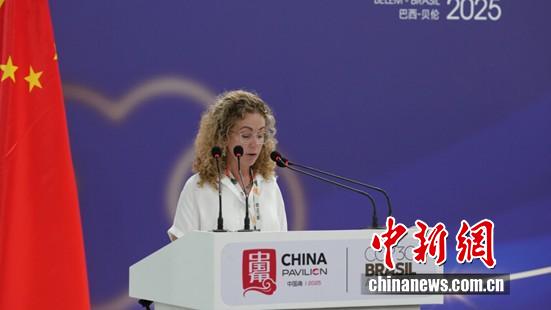
世界资源研究所高官:绿色增长是未来之路 中国对此理解透彻
Zhong Guo Xin Wen Wang· 2025-11-12 12:18
Core Viewpoint - Immediate action is required for a sustainable future, as emphasized by Adriana Lobo from the World Resources Institute during the COP30 event in China [1] Group 1: Climate Action Progress - The latest "2025 Climate Action Report" indicates that current global climate actions are insufficient to meet the emission reduction targets set by the Paris Agreement by 2030 [2] - There is a significant challenge in climate financing, with a need to achieve an annual financing goal of $1.3 trillion, particularly for developing countries [2] Group 2: China's Role in Green Transformation - China has made substantial progress by setting a comprehensive 2035 Nationally Determined Contribution (NDC) target, covering the entire economy [3] - The shift towards green finance in China is seen as a catalyst for economic transformation, positioning the country as a leader in climate change response and sustainable development [3][6] - China's initiatives, such as the CCICED and the Belt and Road Initiative, are fostering new international cooperation models that combine technology from developed countries with resources from developing nations [3] Group 3: Sustainable Trade Initiatives - Recent collaborations between China and Brazil in sustainable trade, particularly in beef and soybean procurement, are highlighted as win-win strategies that improve standards and reduce carbon emissions in supply chains [5] Group 4: Economic Growth and Climate Action - Climate action is not seen as contradictory to economic growth; rather, it promotes smarter growth strategies, with China being one of the countries that understands this balance well [6] - The event at COP30 emphasized the importance of collective efforts in climate action, where every participant plays a crucial role [6]
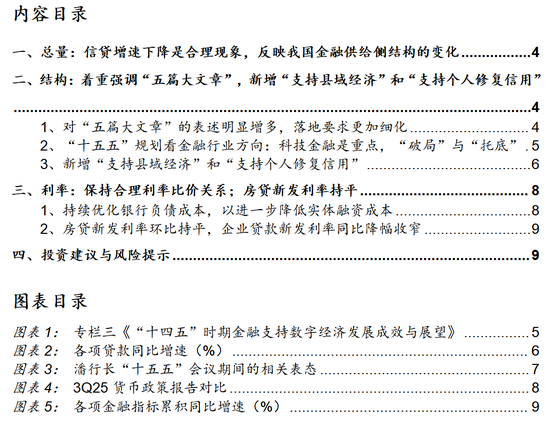
戴志锋:3Q25货币政策执行报告点评
Xin Lang Cai Jing· 2025-11-12 11:59
Summary of Key Points Overall Credit Growth - The decline in credit growth is a reasonable phenomenon, reflecting changes in China's financial supply-side structure. The focus should be on social financing scale and money supply as more comprehensive indicators compared to bank loans [1][8]. - Factors contributing to the decline include local special bonds replacing financing platform loans, the reform of small and medium-sized banks, and the trend of long-term economic structural evolution [9][12]. - Since last year, local governments have issued 4 trillion yuan in special refinancing bonds, with approximately 60-70% used to repay bank loans [10]. - In 2024, financial institutions are expected to write off about 1.3 trillion yuan in loans, with over 1 trillion yuan already written off in the first nine months of this year [11]. - The decline in real estate loans and the low credit dependence of light asset industries make it difficult to fill the gap left by real estate [12]. Structural Emphasis - The monetary policy report emphasizes the "Five Major Articles," with increased focus on supporting county economies and personal credit repair [2][18]. - The "14th Five-Year Plan" highlights technology finance as a key area, with policies aimed at breaking through economic growth ceilings and stabilizing macroeconomic environments [16]. - New measures include improving financial support mechanisms for county economic development and implementing policies for personal credit repair, which will not display certain default information in credit systems for individuals who have repaid loans [18][19]. Interest Rates - Maintaining a reasonable interest rate relationship is crucial, with new mortgage rates remaining stable [3][21]. - Continuous optimization of bank liability costs is necessary to lower financing costs for the real economy. The report notes that loan rates are decreasing faster than deposit rates, which compresses banks' net interest margins [21]. - As of September 2025, new loan rates for general loans, personal housing loans, and corporate loans are 3.67%, 3.06%, and 3.14%, respectively, with year-on-year declines of 48 basis points, 25 basis points, and 37 basis points [22]. Investment Recommendations - The banking sector is transitioning from a "pro-cyclical" to a "weak cyclical" phase, with a focus on the stability and sustainability of the sector [4]. - Two main investment lines are suggested: regional banks with strong certainty and high dividend stability, particularly in areas like Jiangsu, Shanghai, and Fujian [4].



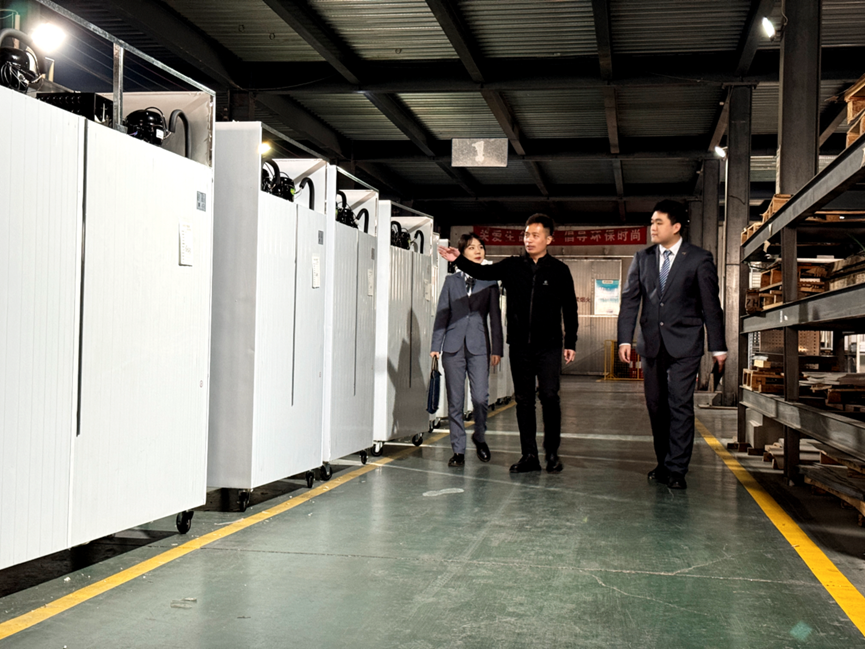
邱慈观专栏 | 新型储能发展中科技金融与绿色金融的接力路径
Xin Lang Cai Jing· 2025-11-12 08:03
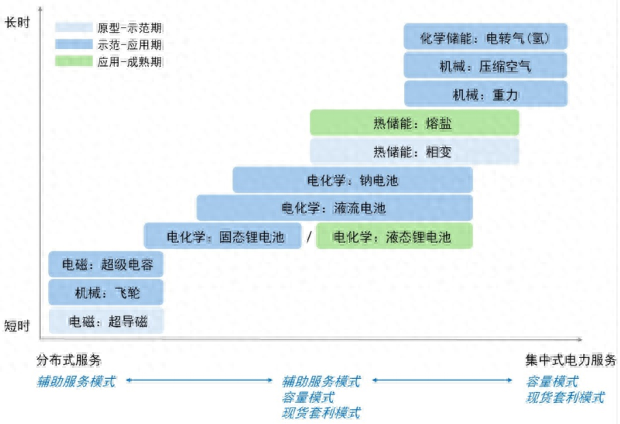
Core Viewpoint - The development of new energy storage technologies in China is crucial for the transition to a renewable energy-based power system, necessitating financial support to overcome challenges such as high costs and technological uncertainties [1][2][3]. Group 1: New Energy Storage Technologies - China's energy storage technologies are characterized by a "multi-path, stage-differentiated" complementary pattern, with overall technological maturity still low, requiring increased financial investment for scaling [3][5]. - Energy storage technologies can be categorized into five main types: electrochemical, mechanical, thermal, electromagnetic, and chemical, each serving different needs within the new power system [3][5]. - The commercial viability of energy storage technologies is influenced by their performance characteristics and market mechanisms, with various business models available for revenue generation [3][5]. Group 2: Financial Support Mechanisms - The capital market can play a significant role in supporting the development of new energy storage technologies through strategic investments and diverse financing tools [6][7]. - Green finance tools can guide funds towards new energy storage projects, facilitating their expansion and integration into the renewable energy system [7][8]. - The collaboration between technology finance and green finance is essential for nurturing early-stage technologies and scaling them post-validation, creating a sustainable financial support system for new energy storage [9][12]. Group 3: Future Outlook - There is a need for enhanced financing support for early-stage technologies, with government and market mechanisms working together to attract more capital [13]. - The establishment of unified green finance standards is crucial for expanding the scale of green financing and improving project comparability and transparency [14]. - The development of a mature electricity market mechanism will clarify the economic value of energy storage, thereby increasing investment willingness [14].
金融精准滴灌绿色发展,保障美丽中国建设
Jing Ji Ri Bao· 2025-11-12 07:05
Core Insights - The People's Bank of China reports rapid growth in green loans, highlighting the importance of green finance in supporting economic transformation and the construction of a beautiful China [1][2] - Financial institutions are enhancing the quality of financial supply for green transformation, with a focus on carbon reduction, pollution control, and expanding green initiatives [2][3] Credit Supply Increase - The green financial system in China is continuously improving, with the People's Bank of China encouraging financial institutions to increase credit supply to green sectors [2] - As of July, the balance of green loans at China Construction Bank exceeded 5.74 trillion yuan, accounting for over 20% of total loans [2] - By the end of Q3 2025, the balance of green loans reached 43.51 trillion yuan, a 17.5% increase from the beginning of the year [3] Product Innovation - Financial institutions are innovating in the carbon market, providing diverse green financial products to support low-carbon development [4] - The introduction of carbon pledge financing allows companies to use carbon emission quotas as collateral for loans, representing a significant financial innovation [4][5] Transition Finance - Transition finance is emerging to support high-carbon industries like steel and cement in their green transformation, addressing their unique financing needs [7][8] - The People's Bank of China has been actively developing transition finance standards to support traditional industries in their upgrade efforts [8][9] Information Disclosure - There is a need to improve the quality of information disclosure for transition entities, with clear requirements for sustainable planning and reporting [9]
ESG引领:协同共进
Sou Hu Cai Jing· 2025-11-12 06:14
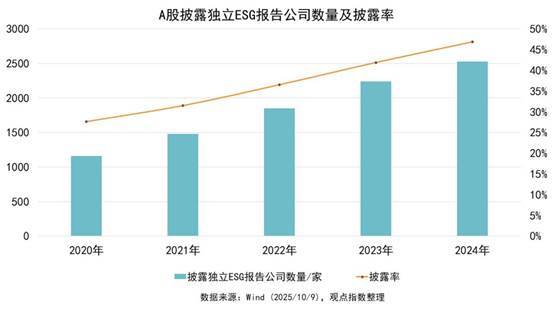
Core Insights - The Chinese economy is in a period of adjustment, with commercial real estate undergoing deep adjustments while retail consumption shows limited signs of recovery. Investment confidence and development motivation among enterprises remain insufficient, although some companies have resumed investment activities since late October [1] - Companies are actively expanding financing channels, particularly accelerating the implementation of public REITs for consumer infrastructure, while also deepening digital transformation and exploring diversified operations to enhance operational quality and consumer experience [1] - The "Performance Index • 2025 Annual Commercial Real Estate Performance Report" was released to provide practical references for market participants, helping the industry seek certain development paths amid uncertainties [1] ESG Practices - The ESG framework has emerged as a comprehensive assessment tool for investors, promoting corporate actions in environmental protection, social responsibility, and governance, thereby enhancing sustainable development levels [2] - Commercial real estate companies are increasingly engaging in ESG practices, contributing to job creation and resource efficiency through green buildings and energy-saving measures [2] - The industry faces challenges such as resource limitations for small and medium-sized enterprises in ESG practices and high thresholds for green finance [2][4] Policy and Regulatory Developments - Recent policies focus on information disclosure, green finance, corporate governance, and industry standards to promote the "dual carbon" strategy [4] - The Ministry of Finance and the Ministry of Ecology and Environment issued a draft for the "Corporate Sustainable Disclosure Standards No. 1 - Climate (Trial) (Draft for Comments)" to enhance climate-related information disclosure [5] - By 2027, a unified sustainable disclosure standard system is expected to be established in China, with local governments actively promoting green economic development [5][6] ESG Reporting Trends - The number of A-share companies disclosing independent ESG reports has increased, with a disclosure rate of 46.83% for the 2024 fiscal year, up from 41.86% in 2023 [7] - The real estate sector maintains a high disclosure rate of approximately 62.63%, although smaller firms still have significant room for improvement in ESG report quality [9] Energy Efficiency and Green Leasing - Energy efficiency improvements are crucial for commercial real estate, reducing operational costs and attracting quality tenants while aligning with environmental trends [16] - Companies are implementing various energy-saving measures, including smart energy management systems and green leasing practices, to share costs and benefits with tenants [20][21] - The demand for green leases is increasing, driven by tenant interest in sustainability and shared economic benefits [20] Green Building and Financial Trends - Green buildings enhance long-term asset returns, with studies indicating that certified buildings can command higher rents and lower operational costs [24][25] - The financing environment for the real estate sector remains tight, with green financing primarily accessible to leading state-owned and Hong Kong enterprises [29][31] Social Responsibility and Community Engagement - Companies are increasingly focusing on employee rights, community service, and supply chain management to enhance their social image and contribute to sustainable development [32] - Initiatives include employee welfare programs and community engagement projects, with significant financial contributions to social causes [32][35] Governance and Risk Management - Strong governance structures are essential for sustainable development, ensuring transparency and effective risk management [38][39] - Companies are establishing comprehensive risk management policies and committees to address environmental, social, and governance risks [40]
金融壹账通连续第四年荣获央行“金发奖”
Zheng Quan Ri Bao Wang· 2025-11-12 06:11
Core Insights - The People's Bank of China has announced the winners of the "2024 Financial Technology Development Award," with Financial One Account winning for the fourth consecutive year [1][2] Group 1: Award Recognition - Financial One Account, in collaboration with Ping An Life and Ping An Technology, received the second prize for the project "Data-Driven and Human-Machine Collaborative Comprehensive Digital Transformation in Life Insurance" [1] - The project aims to create an intelligent operational system covering customers, agents, and internal staff, driven by AI technology [1] Group 2: Innovation in Insurance - The project "New Energy 'Technology + Insurance' New Model Construction," developed by Ping An Property & Casualty and Financial One Account, focuses on the risk characteristics of the new energy industry [2] - It establishes a collaborative insurance ecosystem among car manufacturers, insurance companies, and car owners, promoting green financial innovation [2] - The project features a dynamic pricing model that integrates insurance companies, car manufacturers, and industry stakeholders, enabling automated accident responsibility determination and claims processing [2] - The integrated claims model reduces customer claim waiting time by 60% and decreases secondary accident occurrence by 26% [2] - An AI-based accident simulation platform supports product iteration for car manufacturers, enhancing risk reduction and industry collaboration [2] - The project also includes the development of a global risk map and quantitative model to provide safety and risk management support for new energy enterprises expanding internationally [2] Group 3: Future Outlook - Financial One Account plans to continue its role as a technology output window, collaborating with Ping An's ecosystem and industry partners to explore new intelligent financial models [2] - The company aims to contribute to the service of the real economy, foster new productive forces, and enhance financial risk prevention capabilities [2]